Position
Sun to part shade

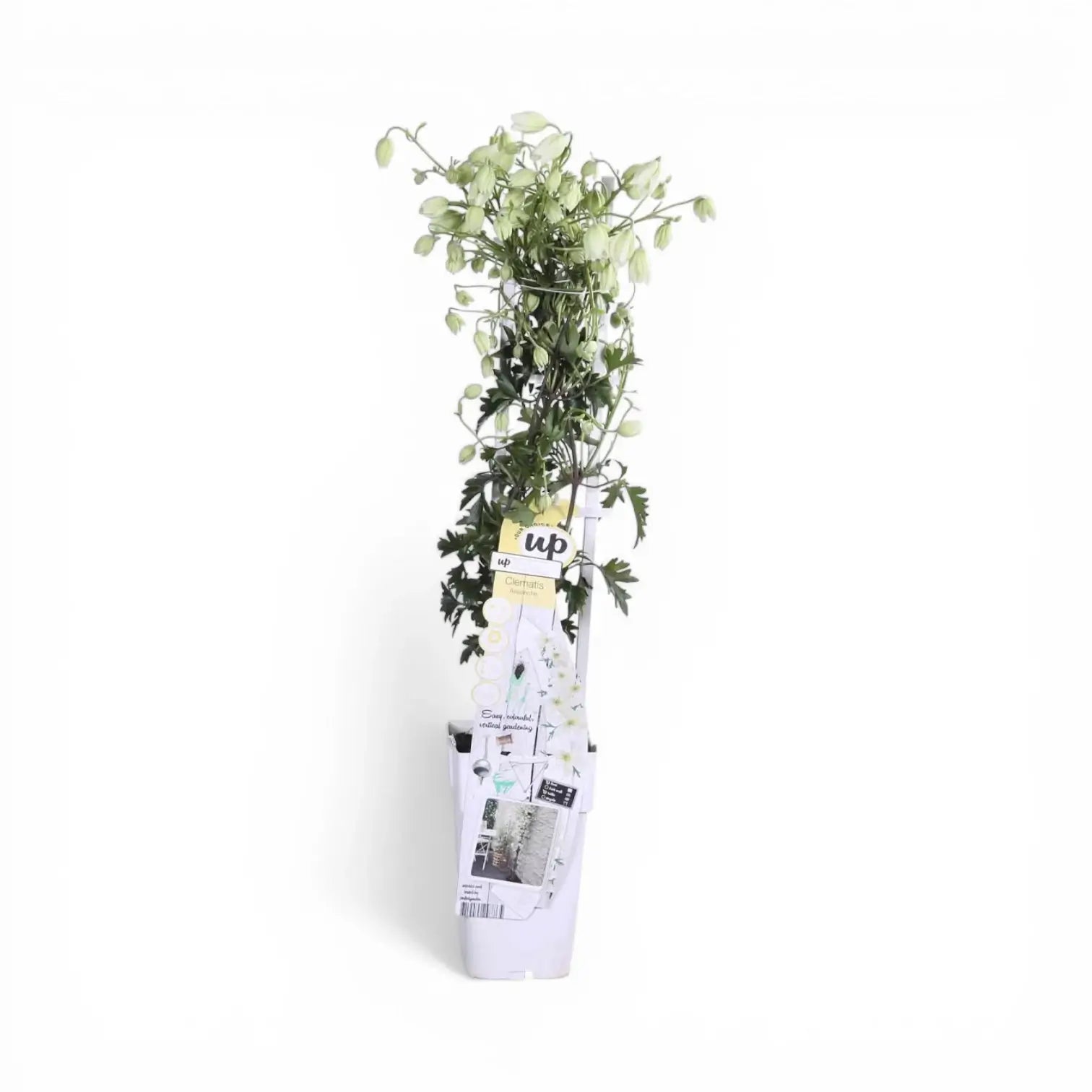
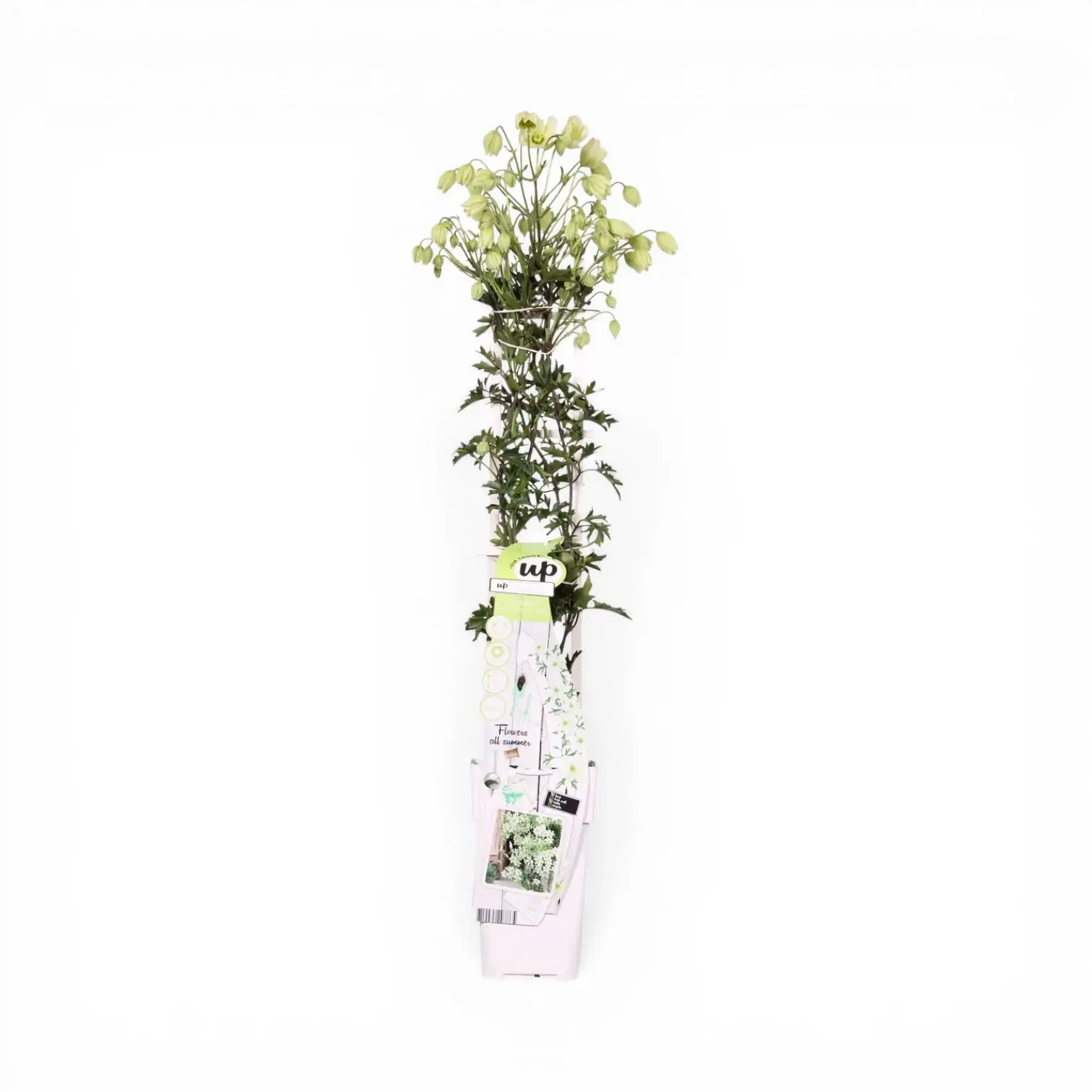
Clematis
VAT included · plus
Your outdoor plant has just been packed, transported and unpacked, so give it a calm start before planting or placing it permanently. Remove all packaging carefully, check the pot, stems, visible roots and substrate moisture, and settle any loose growing medium back around the root ball. Water if the root ball feels dry, but do not leave the pot standing in water. For the first few days, keep the plant in a sheltered spot suited to its light needs, away from strong midday sun, heavy wind, frost and heat stress.
Do not move the plant straight into full exposure, especially if it is young, newly flushed, evergreen, recently pruned or greenhouse-grown. Gradually introduce more sun, wind and temperature variation over several days. If cold nights, storms, intense sun or hot dry weather are expected, keep the plant protected until conditions are more stable. Do not fertilize immediately after delivery; let the plant settle first and resume feeding only when it is actively growing and conditions are suitable.
Outdoor plants may arrive in different seasonal stages. Depending on the time of year, your plant may be leafy, flowering, newly sprouting, recently pruned, dormant, partly bare or leafless. Adjust care to what the plant is doing: actively growing plants need closer moisture checks, while dormant plants usually need protection from extremes and only light moisture management until growth resumes.
Plant outdoors when the soil is workable and weather conditions suit the plant type. Avoid planting during frost, heatwaves, waterlogged soil or very dry windy periods. It is better to keep the plant protected in its pot for a short time than to plant into stressful conditions. After planting, water thoroughly so the root ball and surrounding soil connect properly, then monitor moisture while the plant establishes.
Secure shipping, carefully packed orders with safe delivery across the EU, UK and Switzerland.
28-day plant guarantee, if a plant arrives damaged or fails soon after delivery, we help you make it right.
Free returns, simple, cost-free returns according to our policy.
For full details, please see:
Please head to our FAQ Page or Contact us.
Evergreen climber
Position
Sun to part shade
Moisture
Moist
Drainage
Moisture-retentive, Well-drained
Hardiness
Hardy with shelter · -10°C
Mature size
250–400 × 150–250 cm
Winter habit
Evergreen
Bloom time
Spring
Containers
Good in pots
Support
TrellisWirePergola
Pruning
After flowering, Late spring
Evergreen garden hybrid from New Zealand clematis breeding, selected for dense spring flowering.
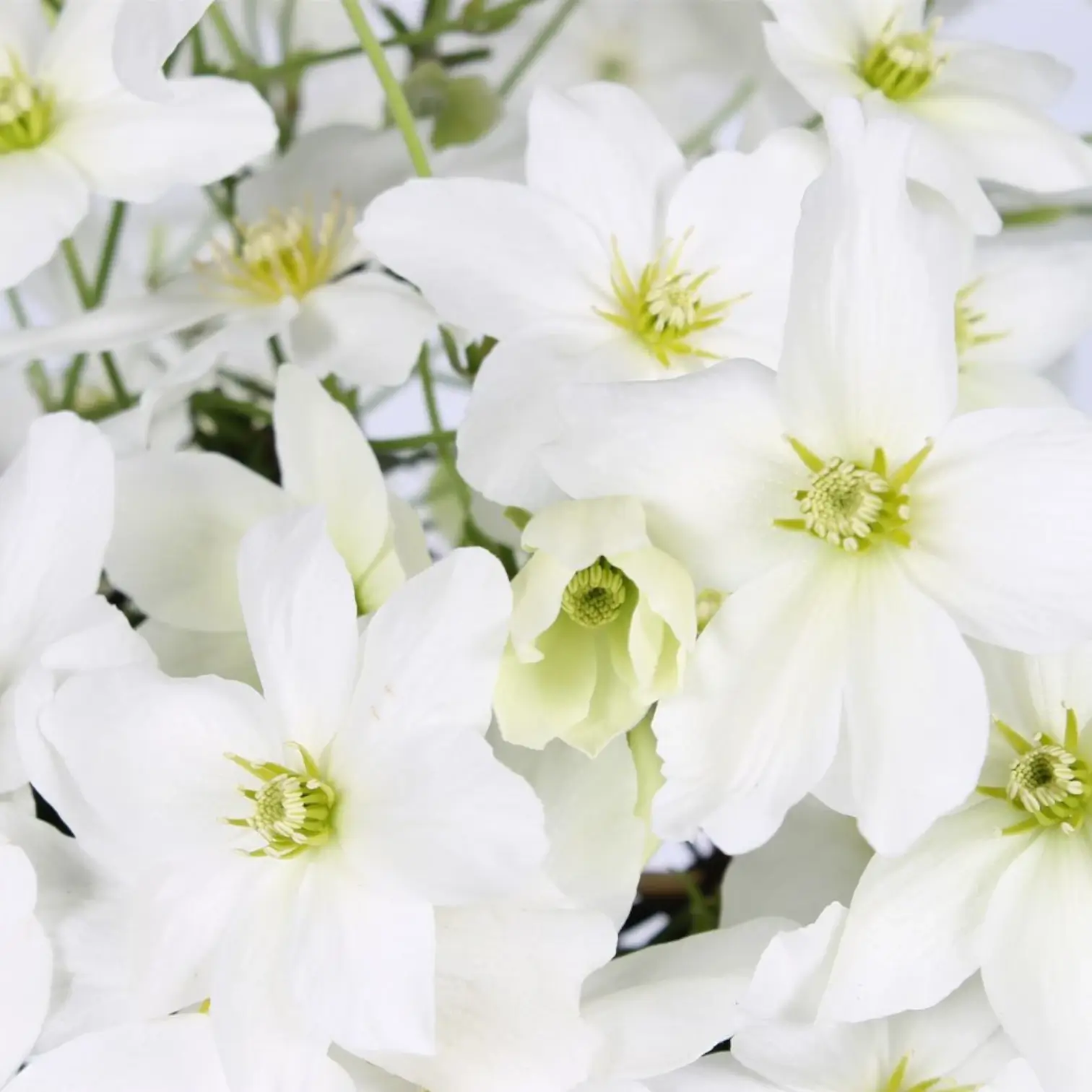
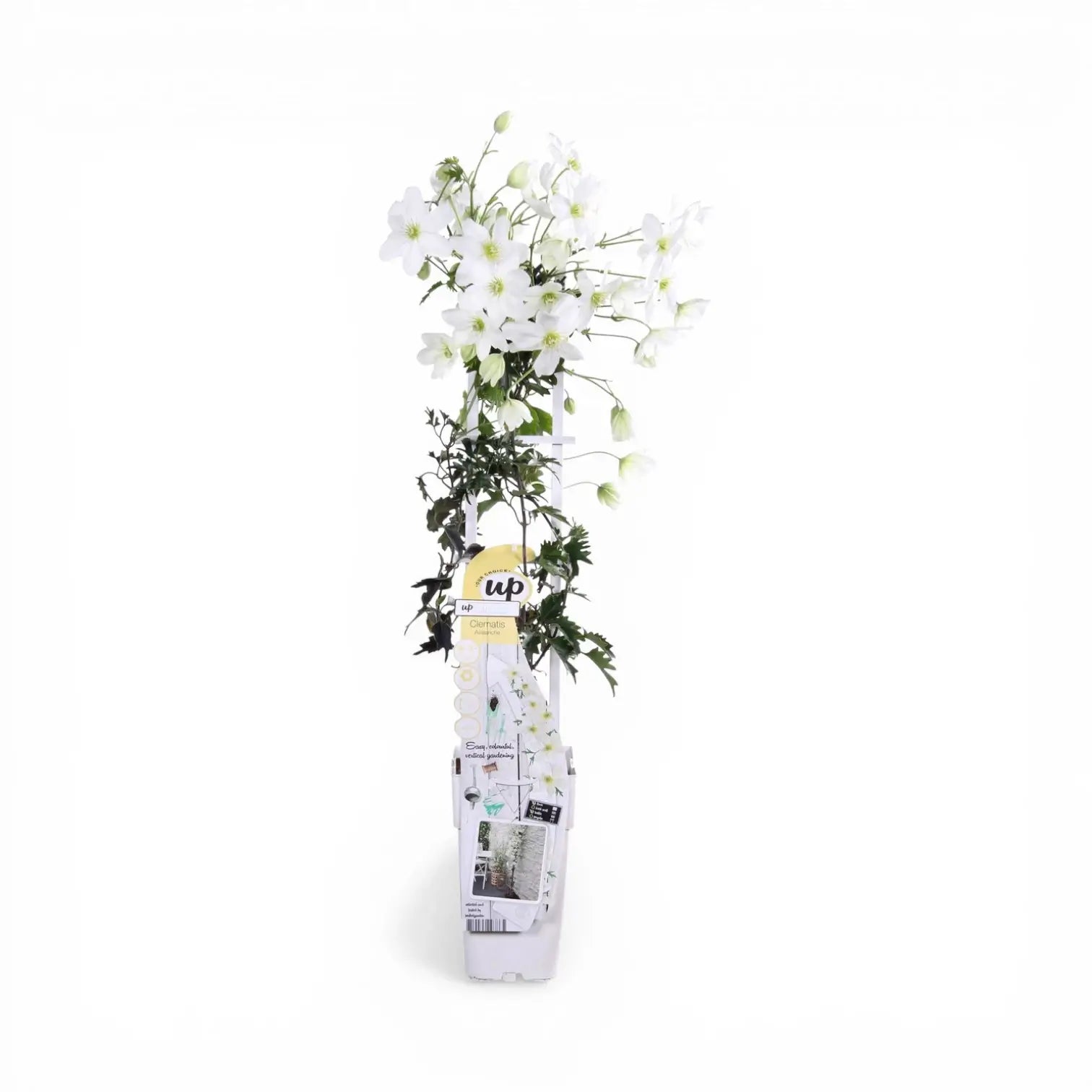
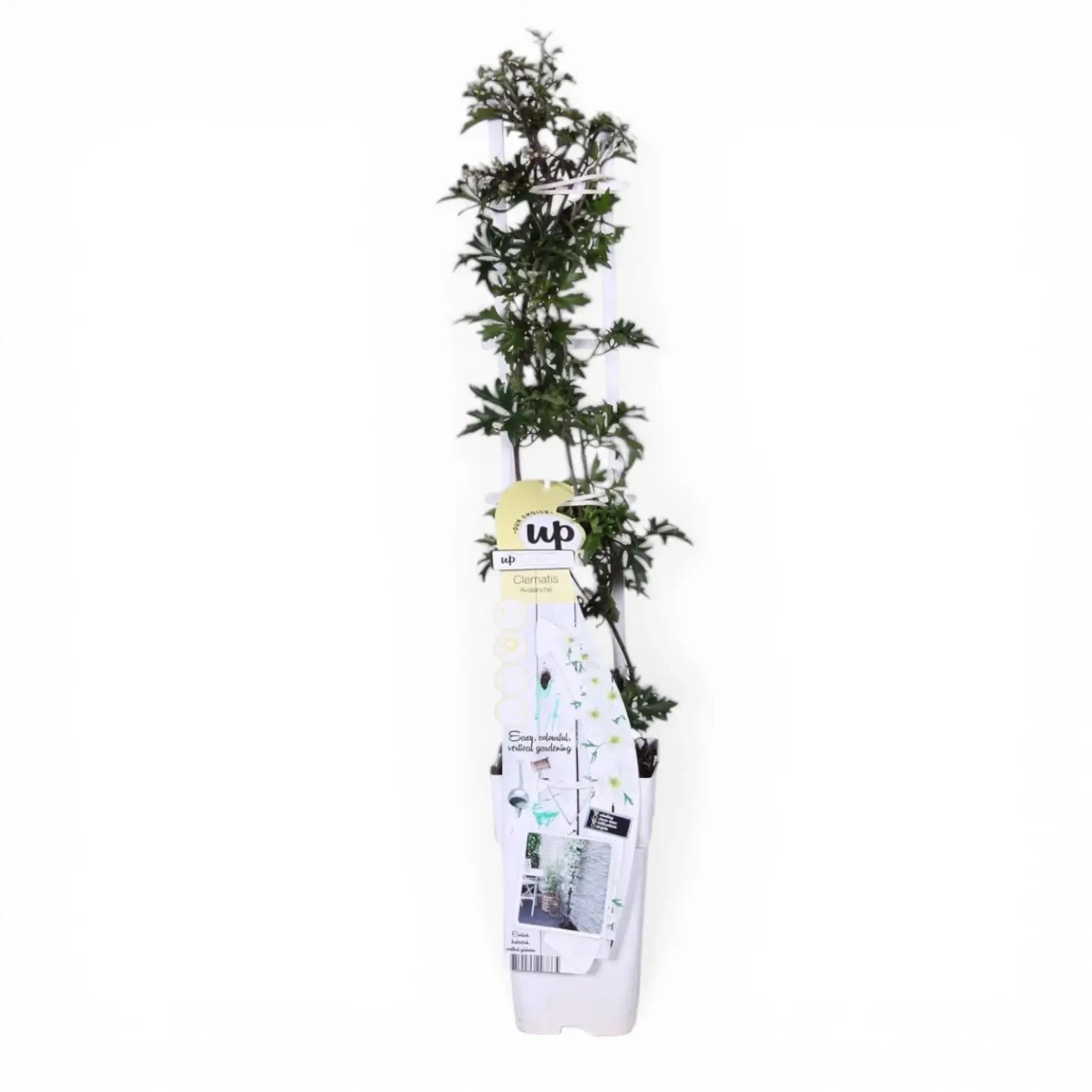
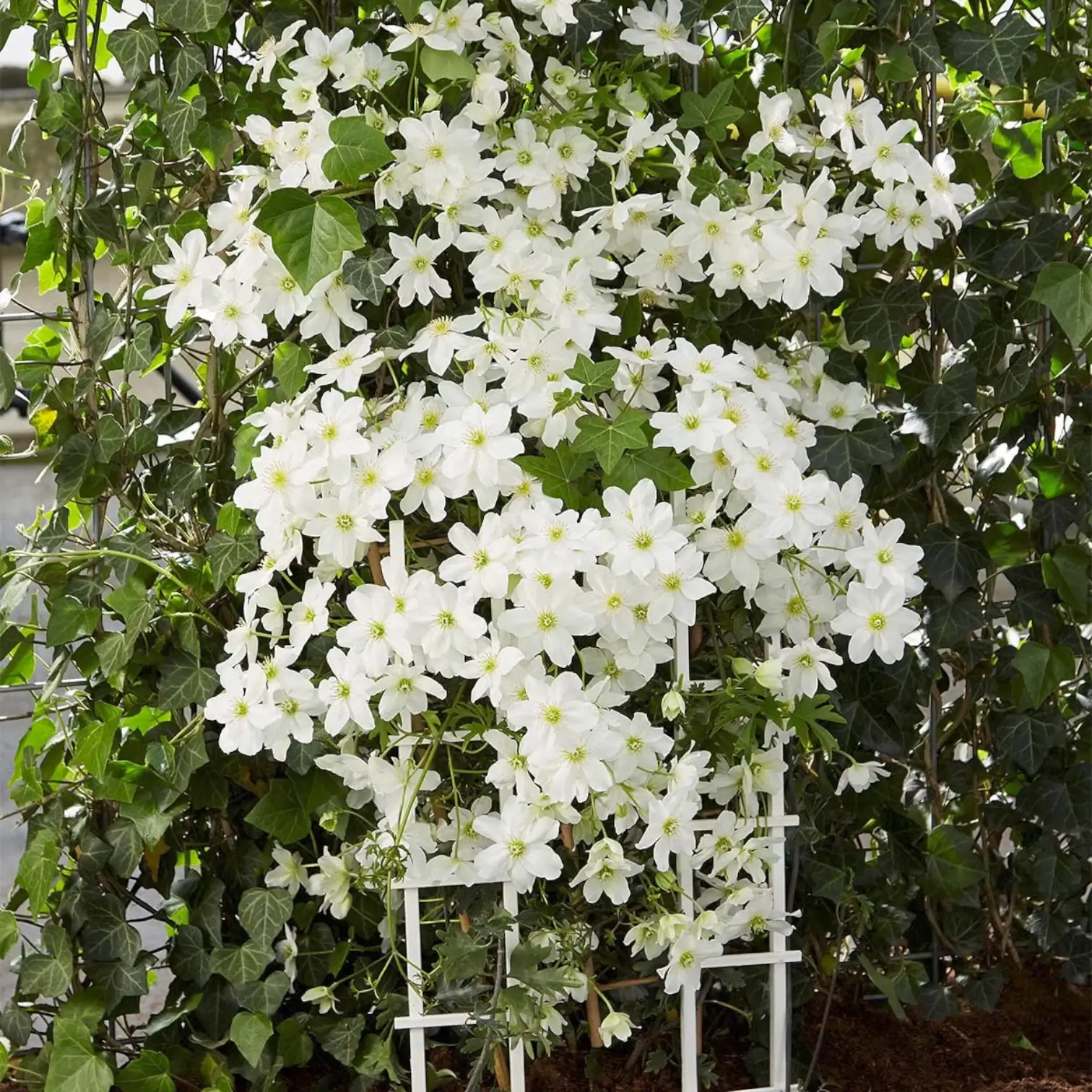
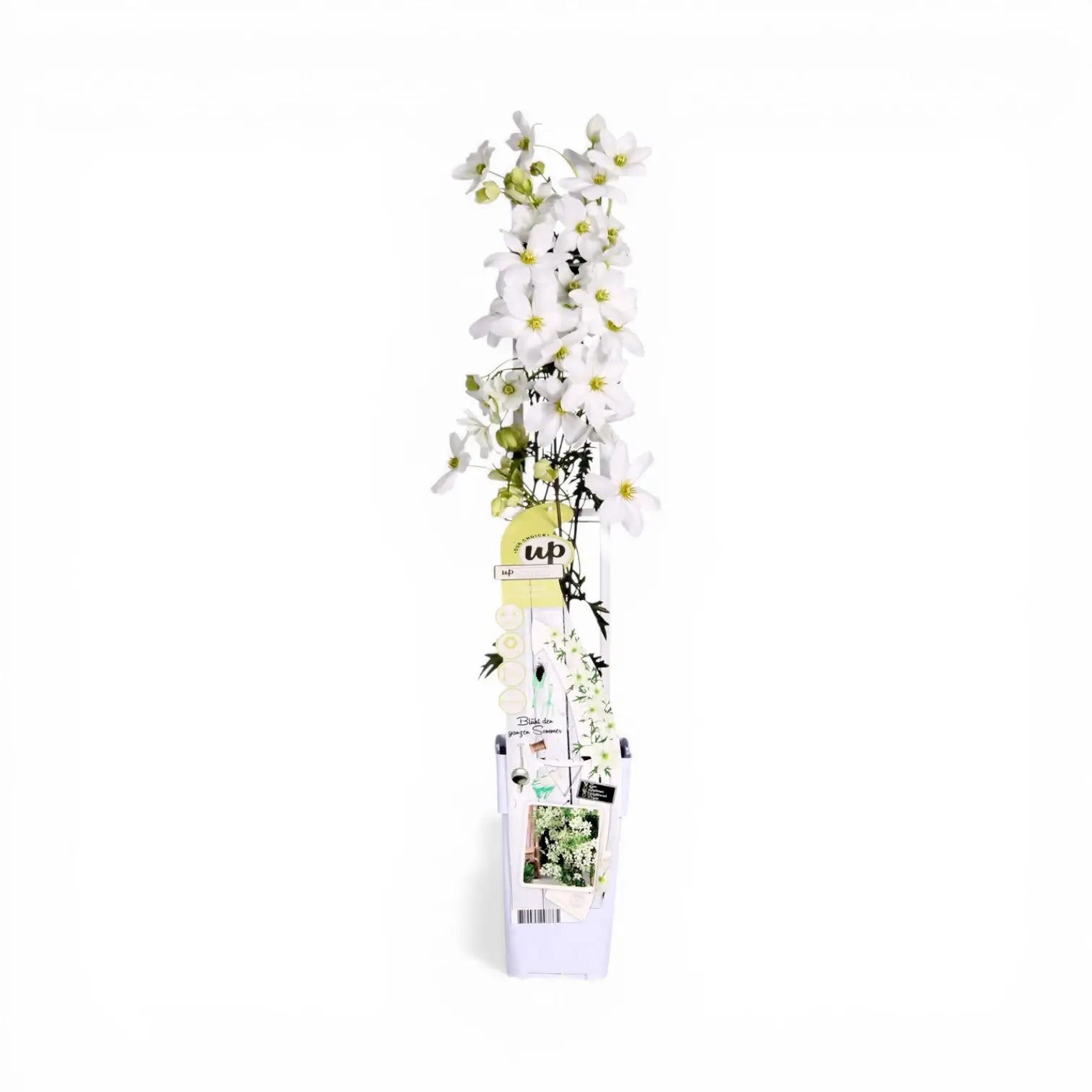
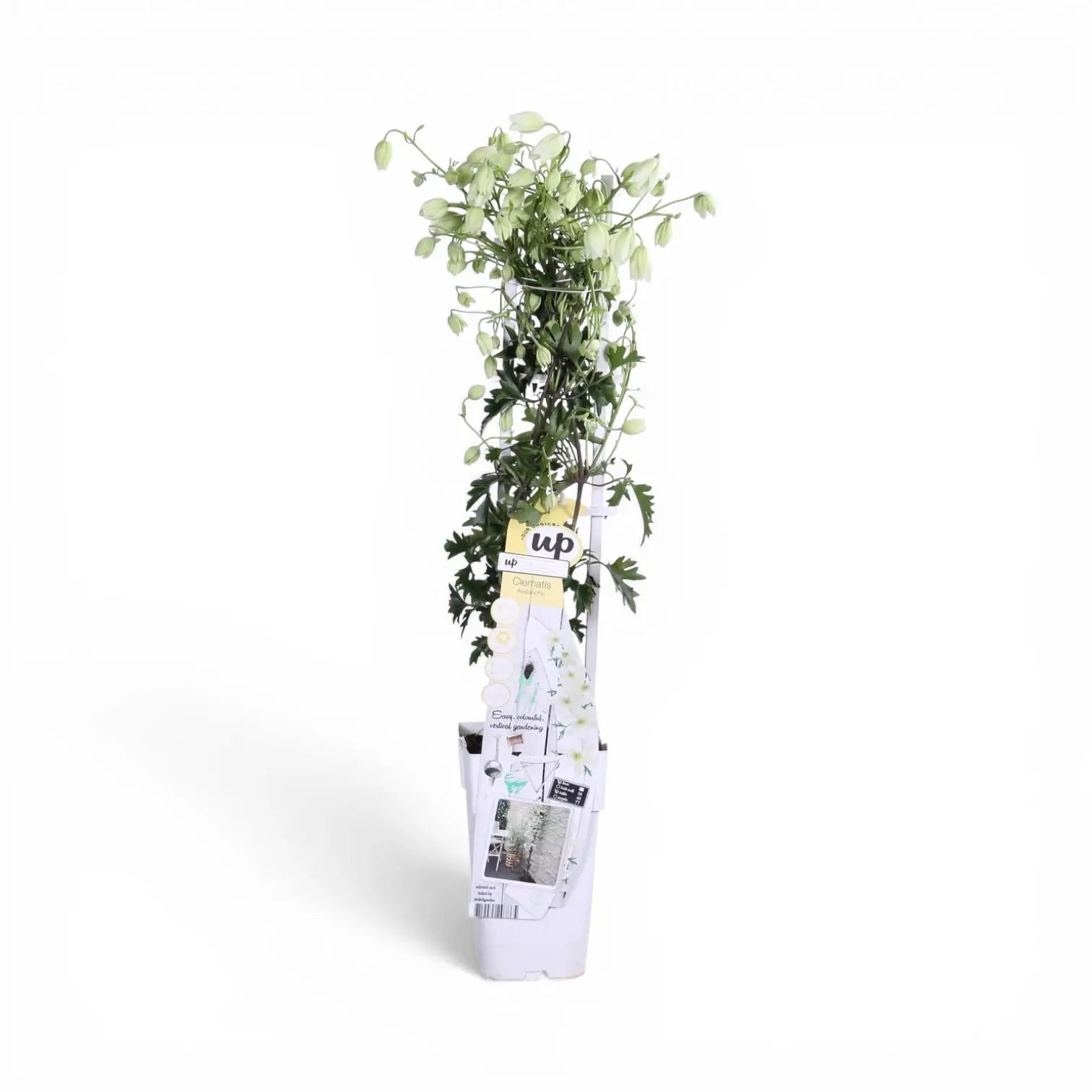
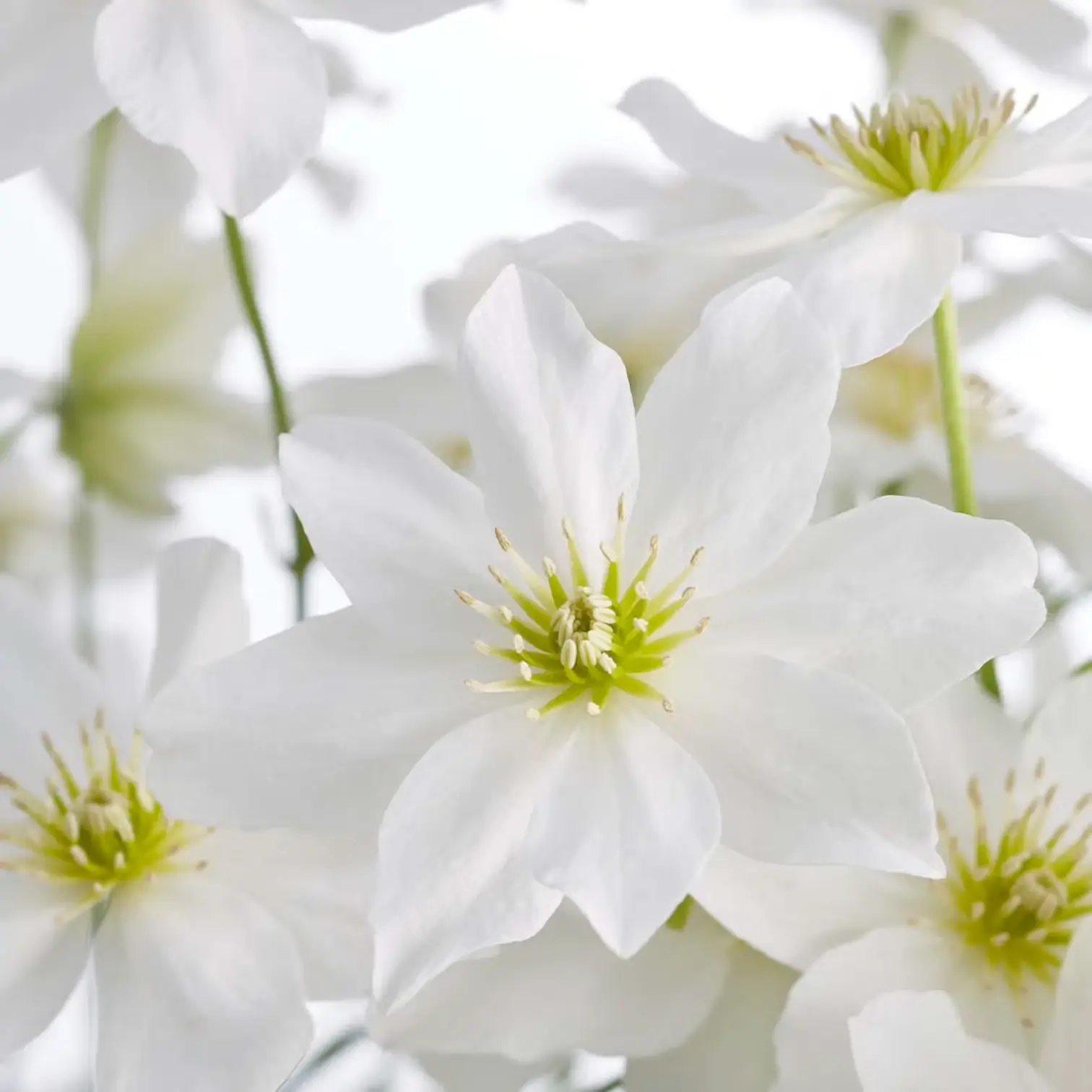
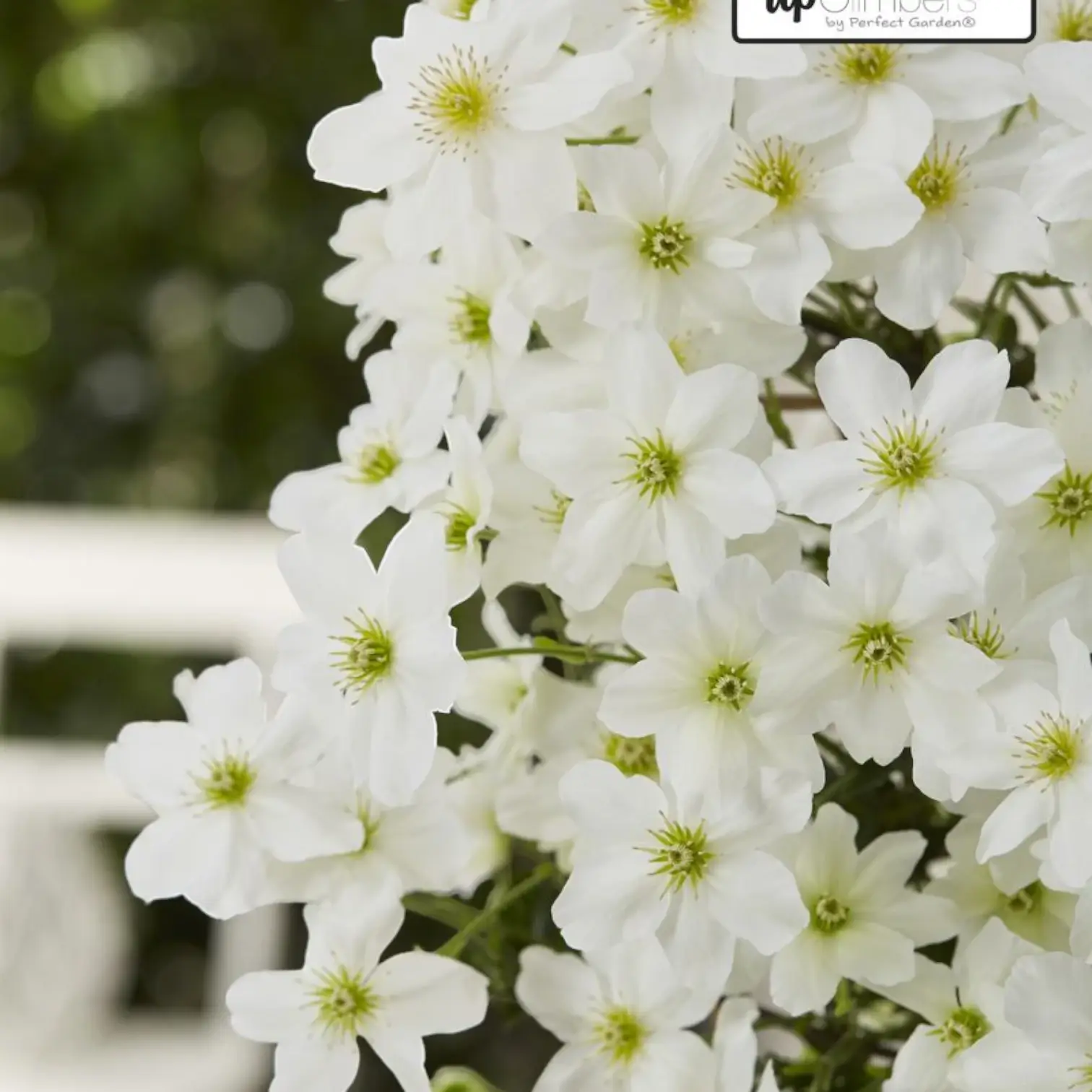
Clematis × cartmanii ‘Avalanche’ is an evergreen clematis that earns its name in late winter and spring, when stems can be smothered in small, star-shaped white flowers. It brings a fresh, bright look at a time when many climbers are still resting. The foliage stays glossy and green through the year, so the plant still contributes structure after flowering, even when blooms have finished.
Flowers are carried along established growth, so the plant becomes more impressive as the framework matures. As blooms fade, the focus shifts back to foliage: neat, evergreen leaves that sit well against brick, timber, and dark fencing. Eventual size in open ground is typically 2.5-4 m tall with a spread around 1.5-2.5 m, while regular shaping after flowering keeps it more compact and lets it sit comfortably on a pergola or wall wires.
In containers, growth stays smaller and slower than in open ground. That can be an advantage when you want evergreen coverage in a courtyard or on a terrace, but it also means the plant depends more on consistent watering and a stable, sheltered microclimate.
Give Clematis × cartmanii ‘Avalanche’ sun or bright part shade with protection from cold winds. A warm wall, sheltered pergola, or courtyard position suits it well, especially in regions with sharper winters. Because this clematis is evergreen, cold, drying winds in winter can cause leaf scorch and bud loss. A protected aspect helps leaves stay present and flowering stay reliable.
It climbs by twisting leaf stalks around slim supports, so set up wires, mesh, or a trellis before planting. A fan of horizontal wires works well on walls, while a pergola benefits from several points of attachment so stems can be spread and tied in as they lengthen.
‘Avalanche’ prefers a moist but well-drained root zone with plenty of air in the mix. Aim for deep, fertile soil with good structure: organic matter for nutrient and moisture buffering, plus coarse mineral material (grit or similar) to prevent the profile from compacting. Water should move through the soil, yet the root run should not swing from saturated to bone dry.
Soil pH can be acid, neutral, or alkaline. Practical success depends more on drainage and steady moisture than on chasing a precise pH number. If the site is heavy or tends to puddle, improving structure is the priority: incorporate coarse material and compost, then mound slightly so winter moisture sheds away from the crown.
Plant the crown at soil level and firm the soil so the root ball has full contact. Finish with a mulch layer to moderate temperature and reduce moisture loss. Root-zone shading is helpful for many clematis: a low groundcover or a broad mulch circle keeps the base cooler without creating competition for water. When planting near walls, set the plant away from the base so rainfall can reach the root zone and the planting area is not stuck in a dry rain shadow.
For pot culture, choose a generous container with depth and weight so the plant stays stable on its support. A soil-based compost mixed with coarse mineral material gives both nutrient reserve and drainage, and the larger soil volume buffers against sudden drying.
During the first growing season, keep moisture consistent so roots can explore and anchor. Once established, Clematis × cartmanii ‘Avalanche’ still responds best to even moisture, especially while setting buds and pushing new growth after flowering. In warm spells, a deep soak is more effective than frequent light watering because it encourages a deeper, more resilient root run.
Feed in spring with a balanced slow-release fertiliser, then top-dress with compost as growth begins. In containers, nutrients wash through faster, so a measured feed schedule plus a compost top-up keeps growth steady without pushing soft, weak stems.
‘Avalanche’ sits in pruning group 1. Pruning is mainly about shaping and guiding: once flowering finishes, shorten overlong stems and thin congested growth to keep air moving through the plant. This timing supports next year’s flowering because buds form on the framework you keep. Think in terms of maintaining a tidy skeleton; heavy annual cutting is not the goal.
When training onto wires, a simple fan shape gives good coverage and keeps weight balanced. Tie stems in loosely so they can thicken without restriction. If the plant has outgrown its space, a staged reduction over two seasons is gentler on an evergreen clematis than one heavy cut.
This evergreen clematis is less cold-tolerant than many summer-flowering types. In mild areas it can stay outdoors year-round, while colder gardens benefit from a sheltered site and some protection during severe frosts. Container plants are more exposed because the root ball cools faster than ground soil. Insulate the pot (wrap, move against a wall, or place in a protected corner) so the root zone stays stable, and keep the mix evenly moist going into cold snaps.
Many growers also treat ‘Avalanche’ as a patio or conservatory climber in colder climates. A bright, cool greenhouse or unheated conservatory can provide enough shelter for winter and early spring flowering, then the plant can spend summer outdoors once nights are consistently mild.
New growth can attract aphids in spring; a firm water spray and encouraging beneficial insects usually keeps colonies in check. If flowering drops, the most common causes are exposure to cold wind, a root zone that dries hard between waterings, or pruning at the wrong time. Keep the plant evenly watered, maintain a sheltered position, and prune only after flowering to preserve next season’s buds.
Good match if you want early white flowers with evergreen cover. Train Clematis × cartmanii ‘Avalanche’ onto a sheltered support and let it build a permanent green framework.
Choose options


Sign up for Foliage Factory newsletter for early access to new arrivals and practical care tips that work in real homes.