Position
Full sun

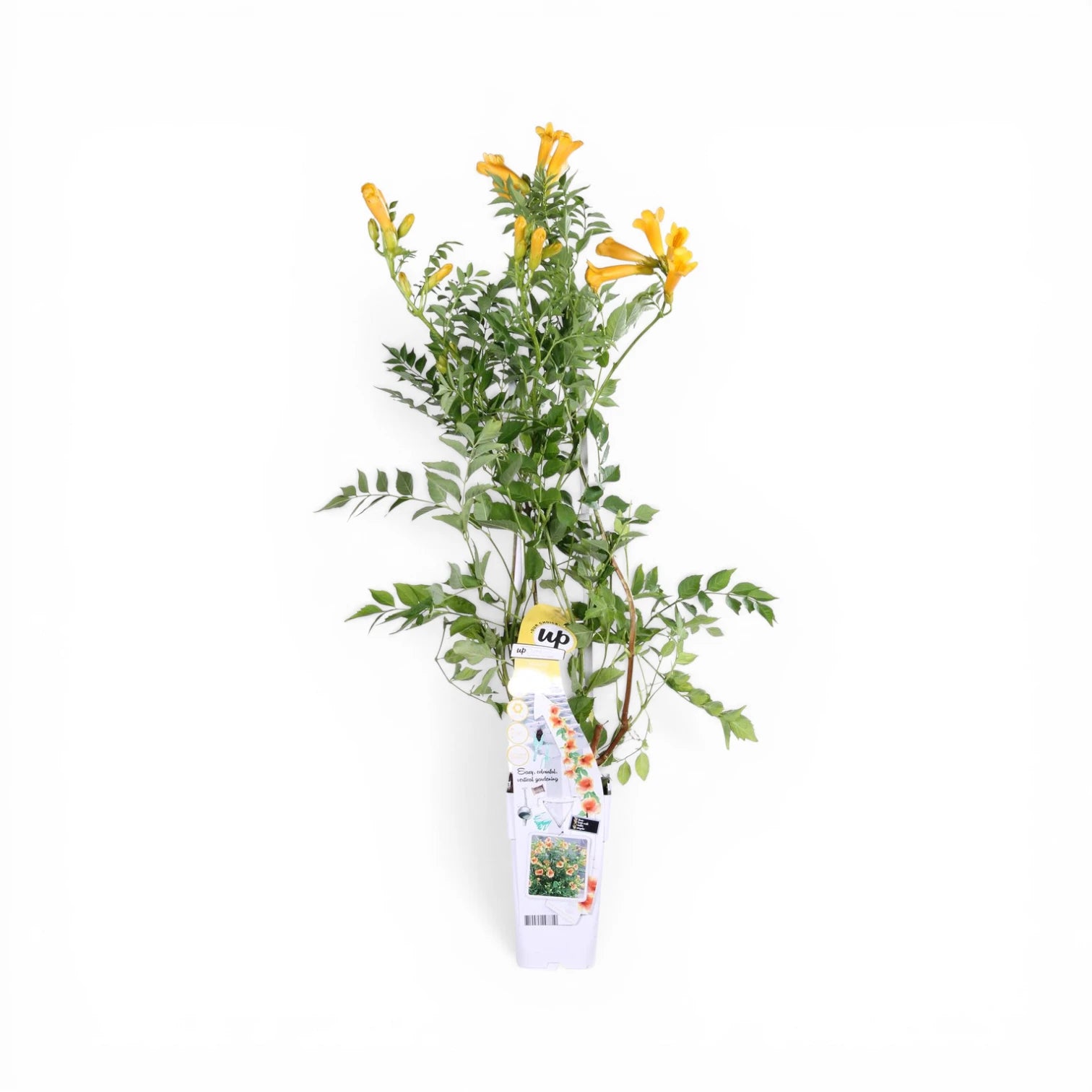
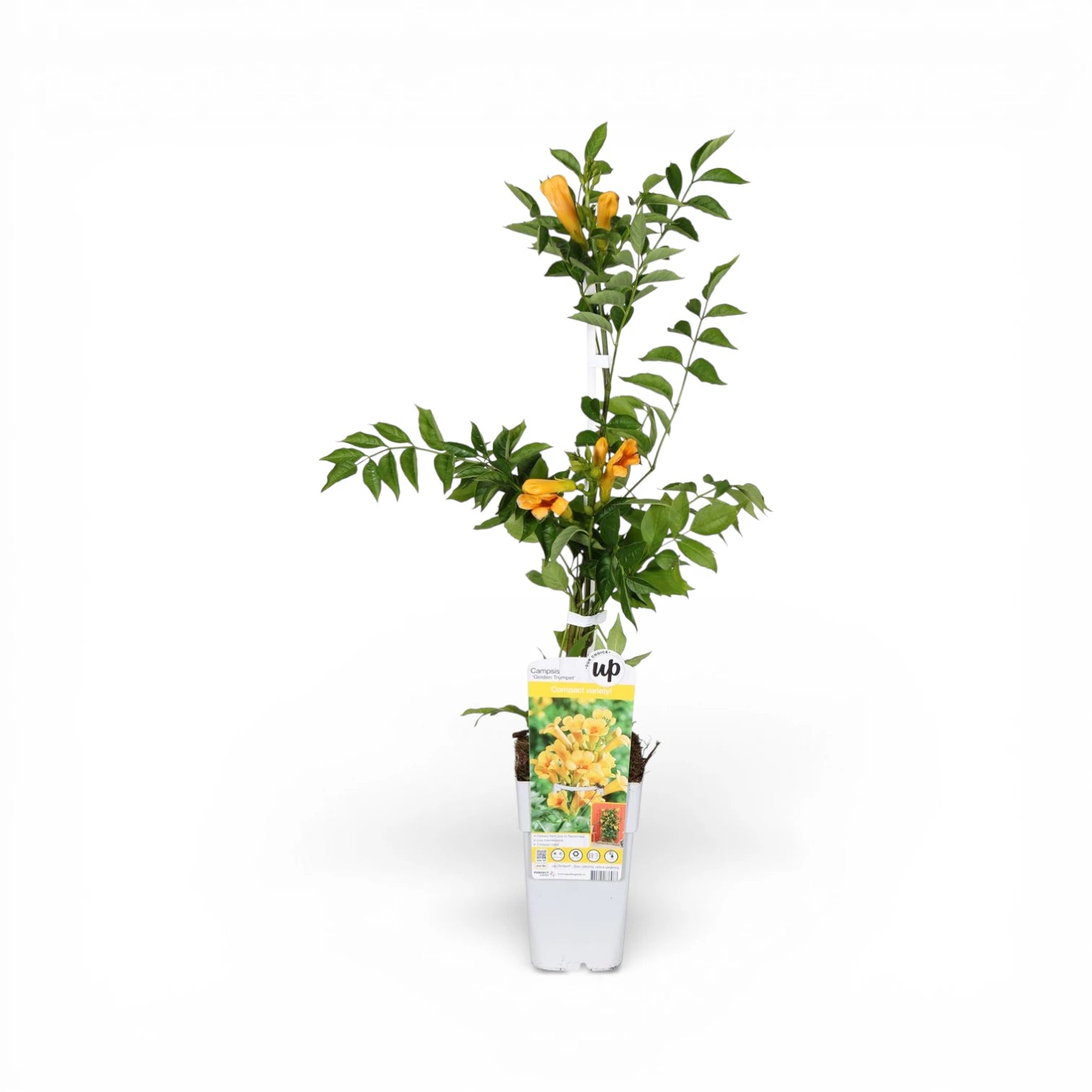
Campsis
VAT included · plus
Your outdoor plant has just been packed, transported and unpacked, so give it a calm start before planting or placing it permanently. Remove all packaging carefully, check the pot, stems, visible roots and substrate moisture, and settle any loose growing medium back around the root ball. Water if the root ball feels dry, but do not leave the pot standing in water. For the first few days, keep the plant in a sheltered spot suited to its light needs, away from strong midday sun, heavy wind, frost and heat stress.
Do not move the plant straight into full exposure, especially if it is young, newly flushed, evergreen, recently pruned or greenhouse-grown. Gradually introduce more sun, wind and temperature variation over several days. If cold nights, storms, intense sun or hot dry weather are expected, keep the plant protected until conditions are more stable. Do not fertilize immediately after delivery; let the plant settle first and resume feeding only when it is actively growing and conditions are suitable.
Outdoor plants may arrive in different seasonal stages. Depending on the time of year, your plant may be leafy, flowering, newly sprouting, recently pruned, dormant, partly bare or leafless. Adjust care to what the plant is doing: actively growing plants need closer moisture checks, while dormant plants usually need protection from extremes and only light moisture management until growth resumes.
Plant outdoors when the soil is workable and weather conditions suit the plant type. Avoid planting during frost, heatwaves, waterlogged soil or very dry windy periods. It is better to keep the plant protected in its pot for a short time than to plant into stressful conditions. After planting, water thoroughly so the root ball and surrounding soil connect properly, then monitor moisture while the plant establishes.
Secure shipping, carefully packed orders with safe delivery across the EU, UK and Switzerland.
28-day plant guarantee, if a plant arrives damaged or fails soon after delivery, we help you make it right.
Free returns, simple, cost-free returns according to our policy.
For full details, please see:
Please head to our FAQ Page or Contact us.
Deciduous climber
Position
Full sun
Moisture
Average to moist
Drainage
Moisture-retentive, Well-drained
Hardiness
Hardy with shelter · -10°C
Mature size
250–400 × 250–400 cm
Winter habit
Deciduous
Bloom time
Summer, Autumn
Containers
Good in pots
Support
TrellisWirePergola
Pruning
Late winter, Early spring
Selection within Campsis × tagliabueana (Campsis radicans × Campsis grandiflora); bred for a smaller habit and orange-yellow flowers.
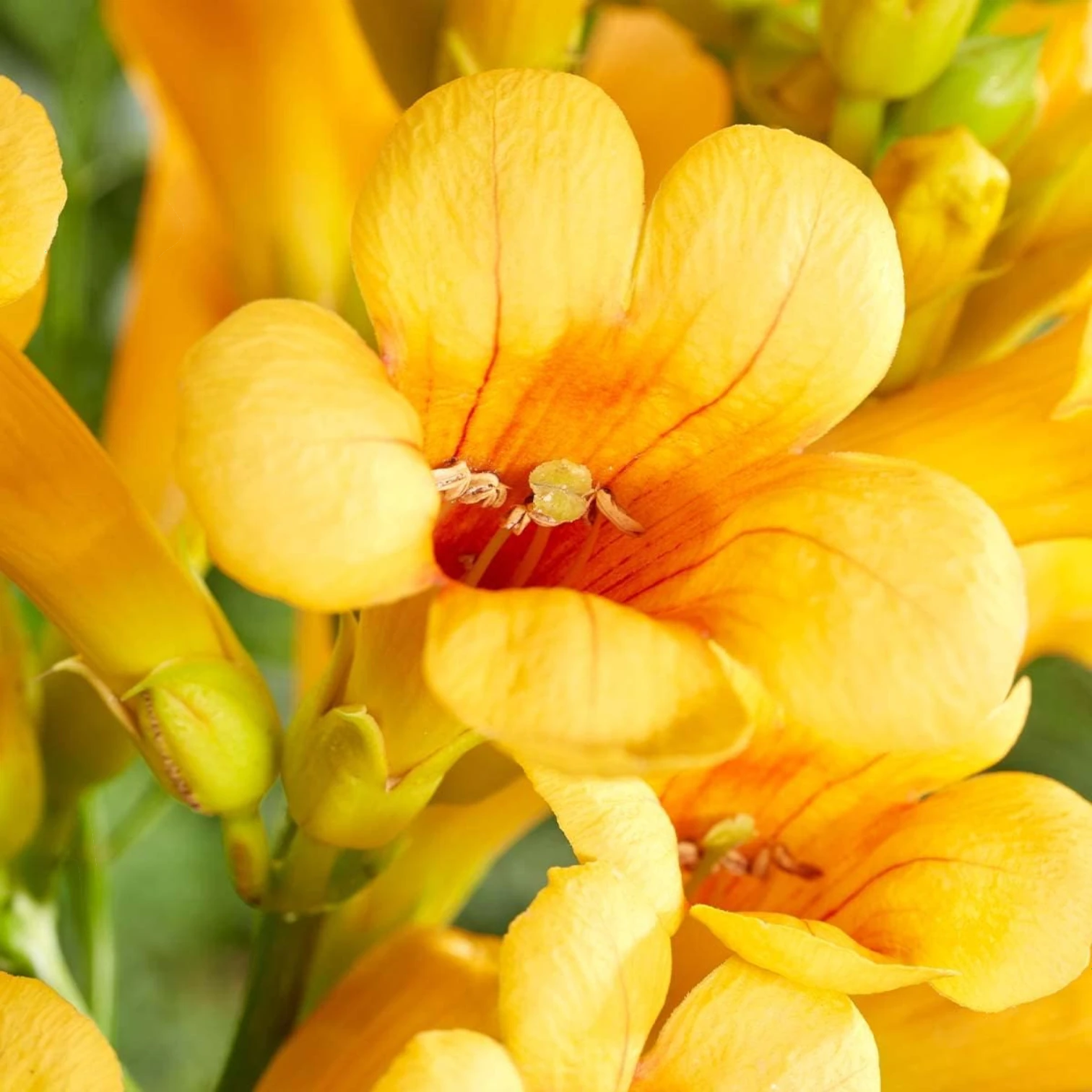
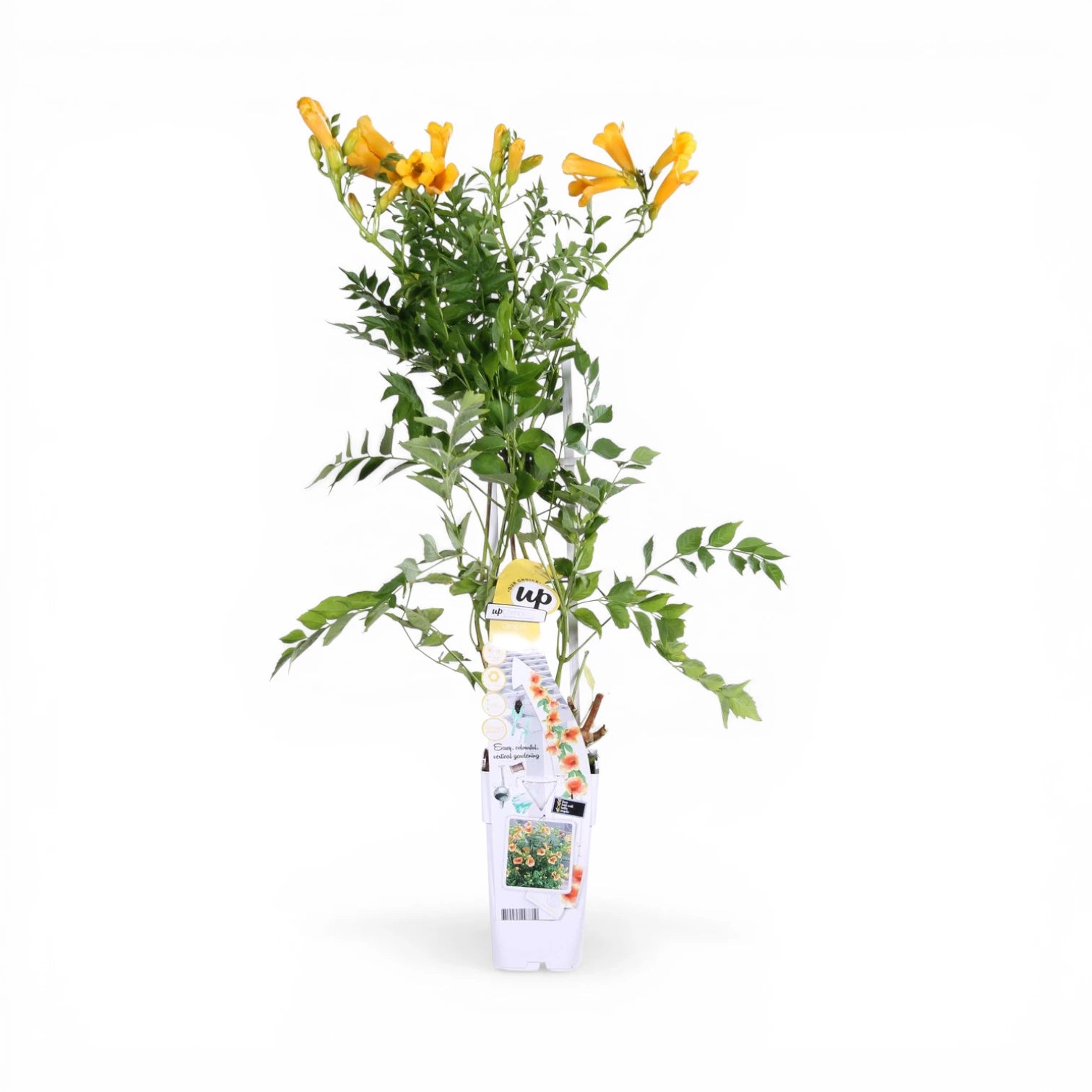
Campsis × tagliabueana 'Golden Trumpet' brings the trumpet-vine look in a form that fits more gardens than many older selections. It is a deciduous, woody climber with compound leaves and clustered, tubular flowers in shades of orange and yellow. When it is happy, it builds a tidy framework and then layers new flowering growth over the top from mid-summer into autumn.
This is a wall-and-support plant: it climbs by aerial rootlets, gripping rough surfaces and trained wires. The most reliable flowering comes from warmth and sun that help the stems ripen, so a sheltered, south- or west-facing position pays off. Expect a plant that improves with time as the permanent framework thickens and the annual flowering growth becomes more abundant.
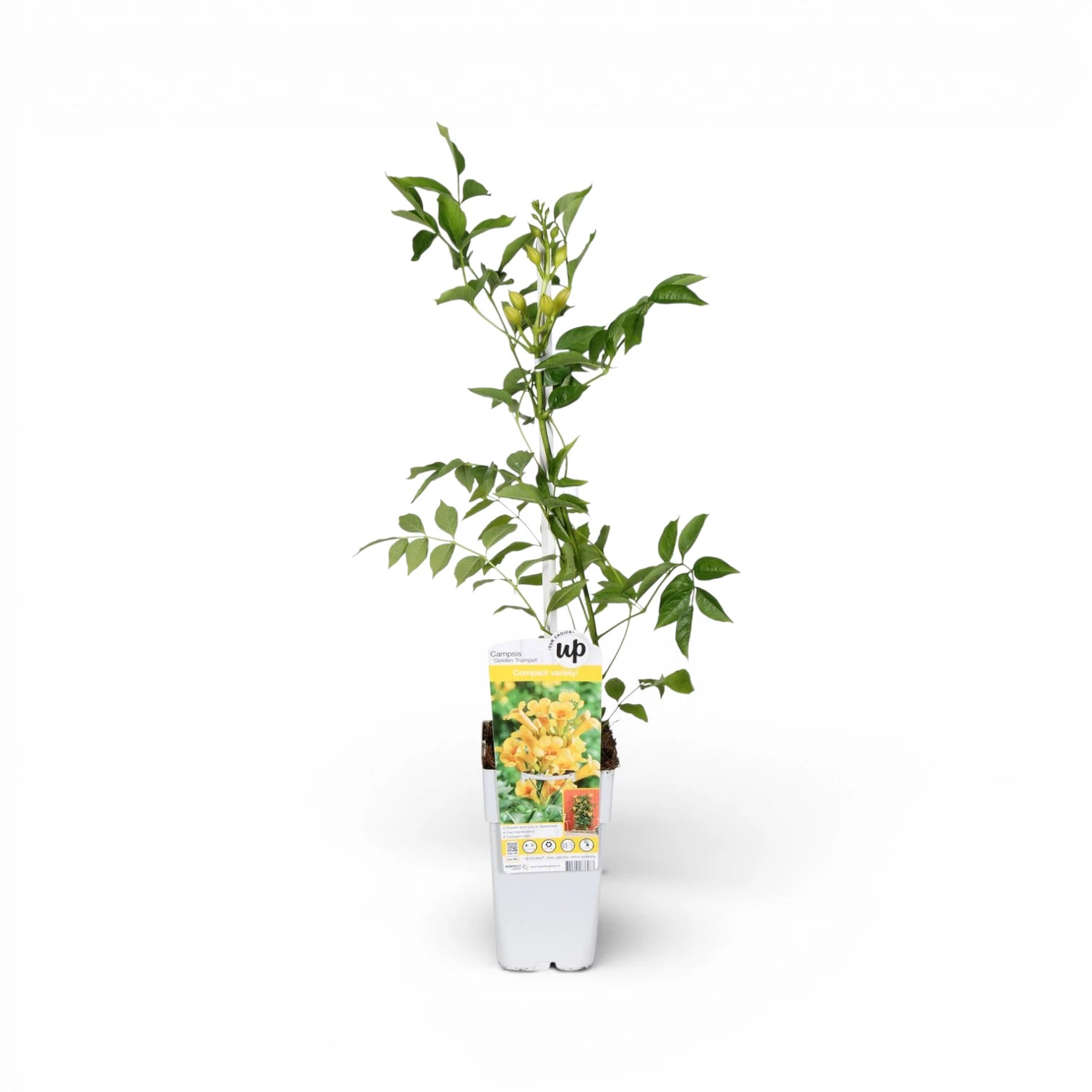
In open ground, 'Golden Trumpet' typically reaches 2.5-4 m in height and can spread 2.5-4 m across a wall or pergola once established. Growth is made up of a long-lived woody skeleton plus fresh extension shoots each season. The leaves are pinnate (made up of multiple leaflets) and create a dense summer screen that drops in autumn.
A young plant often spends its first season settling roots and finding its direction. After that, shoots lengthen more confidently, especially where the base stays cool and evenly moist and the top growth sits in sun. Give it enough horizontal space to fan out and it will flower along the current season’s shoots, with clusters forming along the length as well as at the top.
Full sun is the simplest route to strong flowering. A warm wall also protects buds and new growth from cold winds and helps the plant ripen wood before winter. If you are planting in a more open site, place the root zone where it stays reasonably cool and moisture-retentive, then guide growth upward into the sun.
'Golden Trumpet' is adaptable to most garden soils (chalk, clay, loam, or sand) as long as they drain well. It appreciates moisture through the growing season, especially while establishing, but it also benefits from air in the root zone. Improving heavy ground with grit and organic matter creates the combination it likes: moisture held in the soil body, with water moving through and air staying around the roots.
During dry spells, water deeply so moisture reaches the full depth of the rootball and the surrounding soil. A mulch of compost or fine bark keeps the root run cooler and reduces peaks and troughs in moisture. Once established, the plant becomes more tolerant of short dry periods, yet it still performs best when the soil never swings to extremes.
This climber becomes heavy as it matures, so the support needs to match the long-term load. For walls, use a set of horizontal wires fixed with vine eyes or wall anchors; for pergolas, plan for thickening stems and allow room for maintenance access.
If you prefer a clear framework with flowers at eye level, train stems sideways along wires, then let short flowering shoots rise from those laterals. That approach also makes pruning straightforward.
Campsis flowers on new growth, so pruning in early spring sets up the season. Start by removing winter-damaged tips and any stems that are crowding the centre. Then shorten the previous year’s side shoots to a few buds, keeping the main framework in place. The plant responds by pushing fresh extension growth that carries flower clusters later in the summer.
In summer, you can also lightly tip-prune overly long, whippy shoots to keep the outline close to the wall and encourage branching. Keep cuts clean and purposeful, and always preserve the main structural stems you have trained into place.
A modest approach works well: a spring mulch of compost and a balanced feed at the start of growth is usually enough. On very lean soils or in containers, a second light feed in early summer supports sustained flowering. Focus on consistent water and warm light first; those two factors do most of the work.
In a pot, growth stays smaller and slower than in open ground, which can make 'Golden Trumpet' easier to keep within a set footprint. Choose a heavy container that won’t topple, use a free-draining mix with a moisture-holding component, and add a robust obelisk or wall-fixed frame for the shoots to climb. Watering becomes the main job in summer, as a flowering climber in sun uses a surprising amount of moisture.
Over winter, protect the root ball from deep freezing with insulation around the pot and placement in a sheltered spot. A bright wall or courtyard corner often provides enough extra warmth for this cultivar’s H4 hardiness level, particularly when the roots stay protected.
If you want a trumpet vine with a bright, late-summer show and a size that can be planned around, Campsis × tagliabueana 'Golden Trumpet' is a strong fit for warm walls, pergolas, and large containers.

Choose options


Sign up for Foliage Factory newsletter for early access to new arrivals and practical care tips that work in real homes.