Position
Full sun

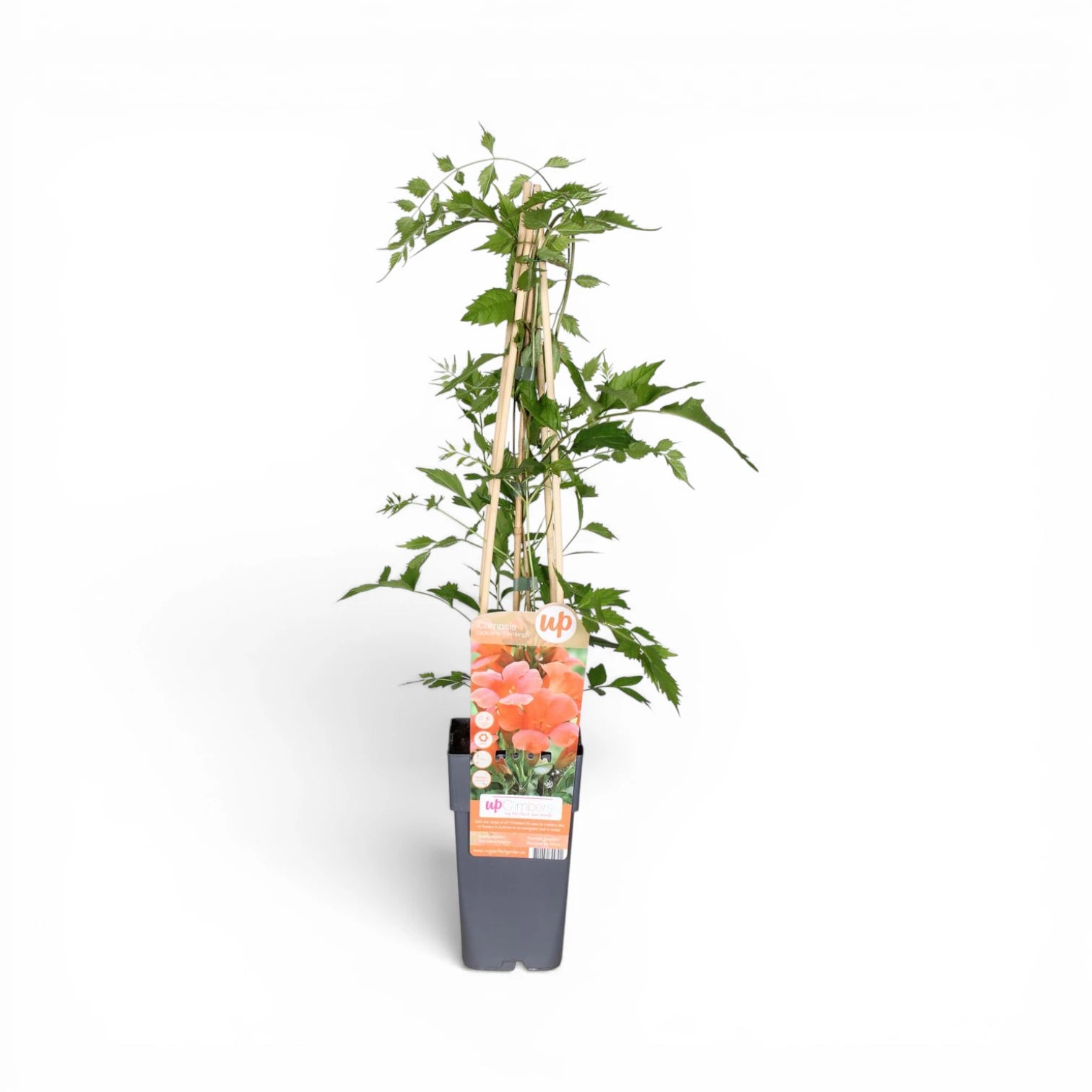
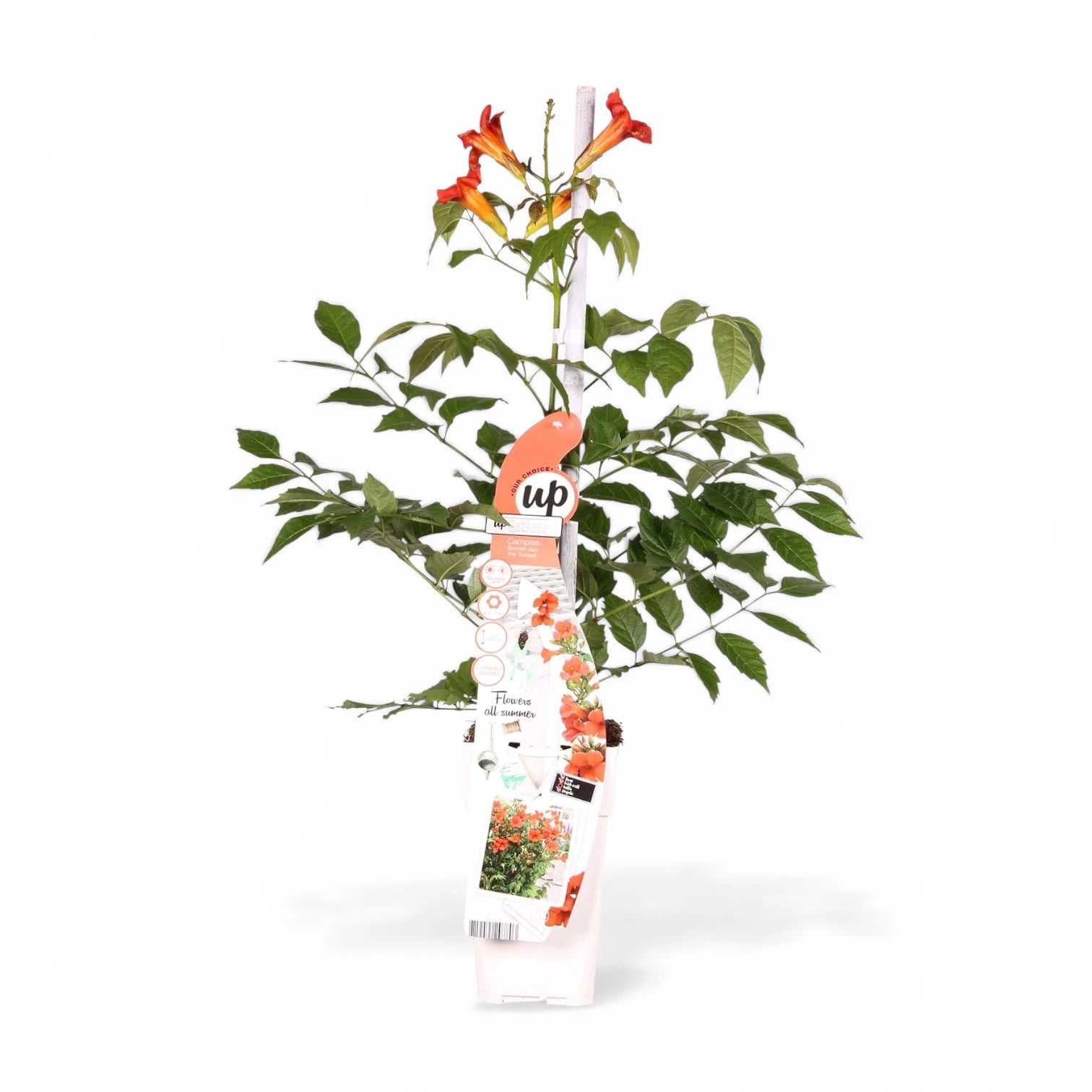
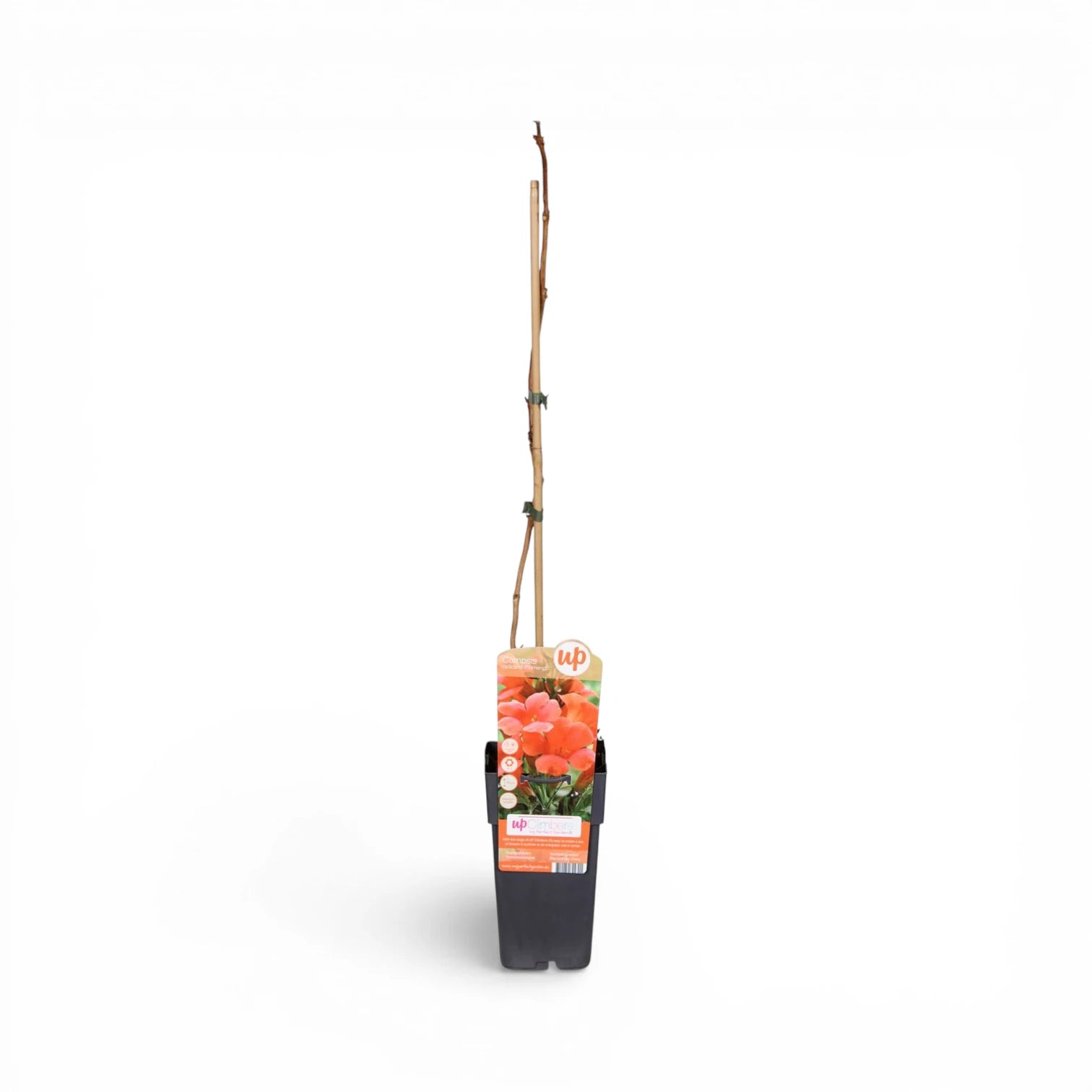
Campsis
VAT included · plus
Your outdoor plant has just been packed, transported and unpacked, so give it a calm start before planting or placing it permanently. Remove all packaging carefully, check the pot, stems, visible roots and substrate moisture, and settle any loose growing medium back around the root ball. Water if the root ball feels dry, but do not leave the pot standing in water. For the first few days, keep the plant in a sheltered spot suited to its light needs, away from strong midday sun, heavy wind, frost and heat stress.
Do not move the plant straight into full exposure, especially if it is young, newly flushed, evergreen, recently pruned or greenhouse-grown. Gradually introduce more sun, wind and temperature variation over several days. If cold nights, storms, intense sun or hot dry weather are expected, keep the plant protected until conditions are more stable. Do not fertilize immediately after delivery; let the plant settle first and resume feeding only when it is actively growing and conditions are suitable.
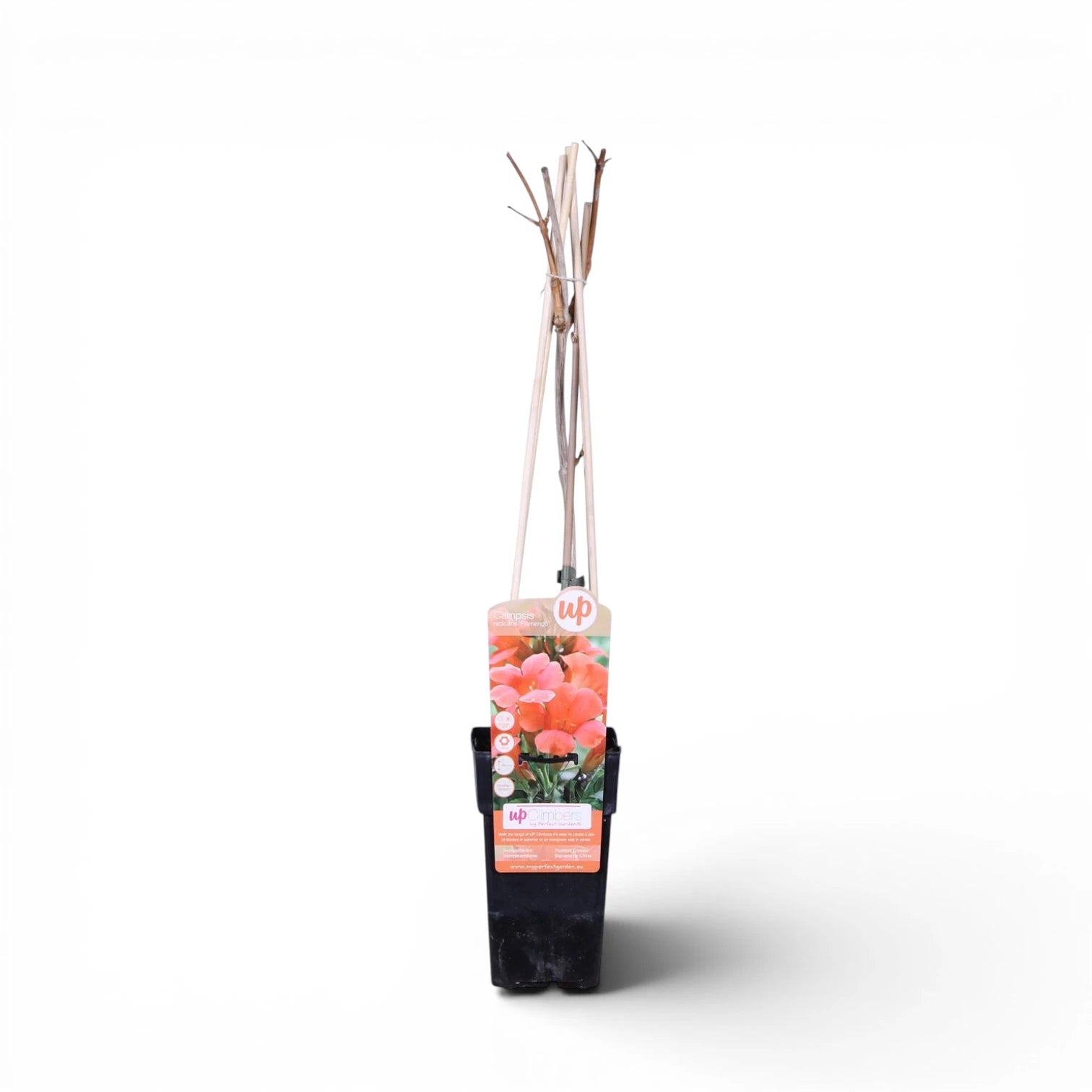
Outdoor plants may arrive in different seasonal stages. Depending on the time of year, your plant may be leafy, flowering, newly sprouting, recently pruned, dormant, partly bare or leafless. Adjust care to what the plant is doing: actively growing plants need closer moisture checks, while dormant plants usually need protection from extremes and only light moisture management until growth resumes.
Plant outdoors when the soil is workable and weather conditions suit the plant type. Avoid planting during frost, heatwaves, waterlogged soil or very dry windy periods. It is better to keep the plant protected in its pot for a short time than to plant into stressful conditions. After planting, water thoroughly so the root ball and surrounding soil connect properly, then monitor moisture while the plant establishes.
Secure shipping, carefully packed orders with safe delivery across the EU, UK and Switzerland.
28-day plant guarantee, if a plant arrives damaged or fails soon after delivery, we help you make it right.
Free returns, simple, cost-free returns according to our policy.
For full details, please see:
Please head to our FAQ Page or Contact us.
Deciduous climber
Position
Full sun
Moisture
Average to moist
Drainage
Moisture-retentive, Well-drained
Hardiness
Hardy with shelter · -10°C
Mature size
800–1200 × 250–400 cm
Winter habit
Deciduous
Bloom time
Summer, Autumn
Containers
Pots with support
Support
TrellisWirePergola
Pruning
Late winter, Early spring
Cultivar of Campsis radicans, native to eastern North America; vigorous, self-clinging climber for warm walls and late-season flowering.
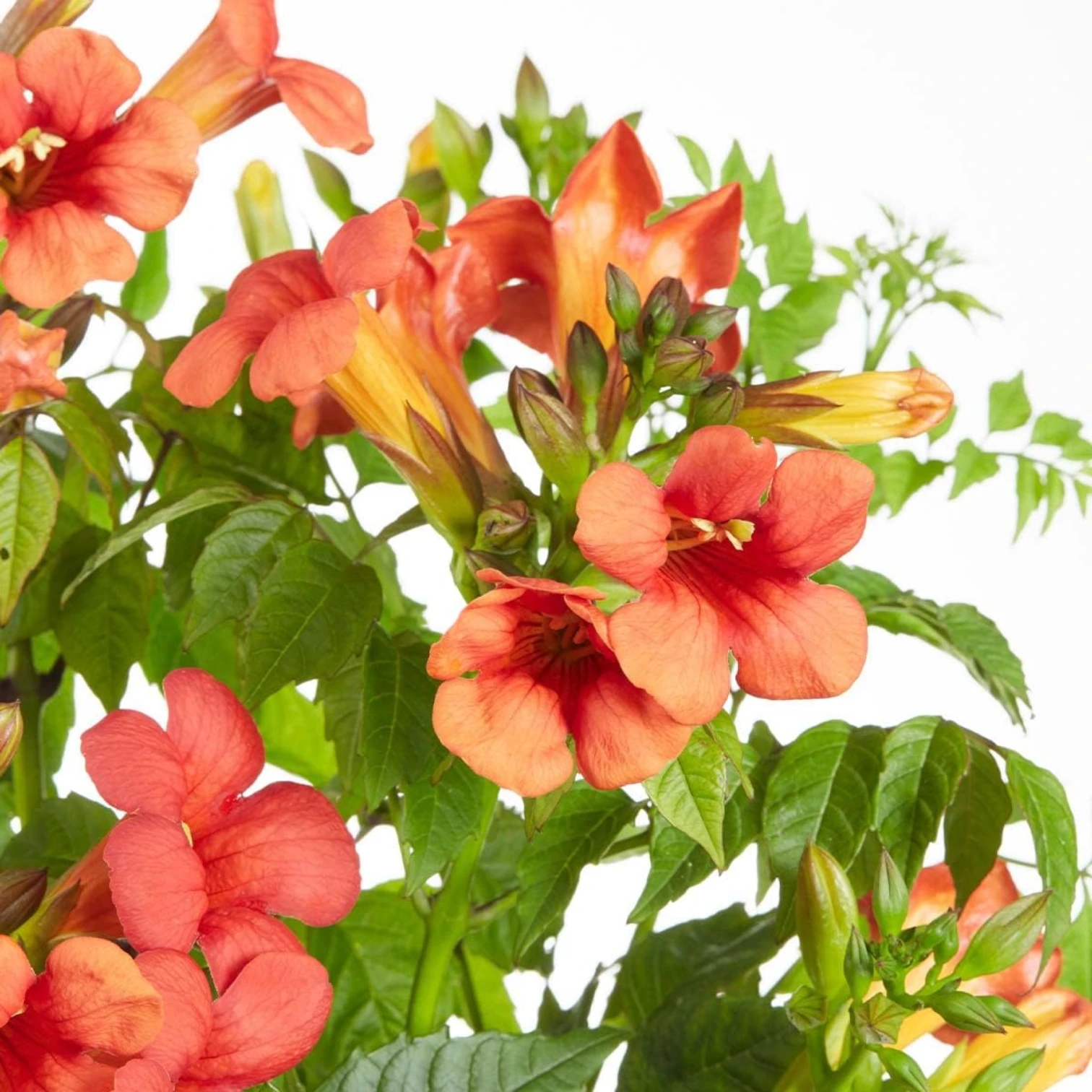
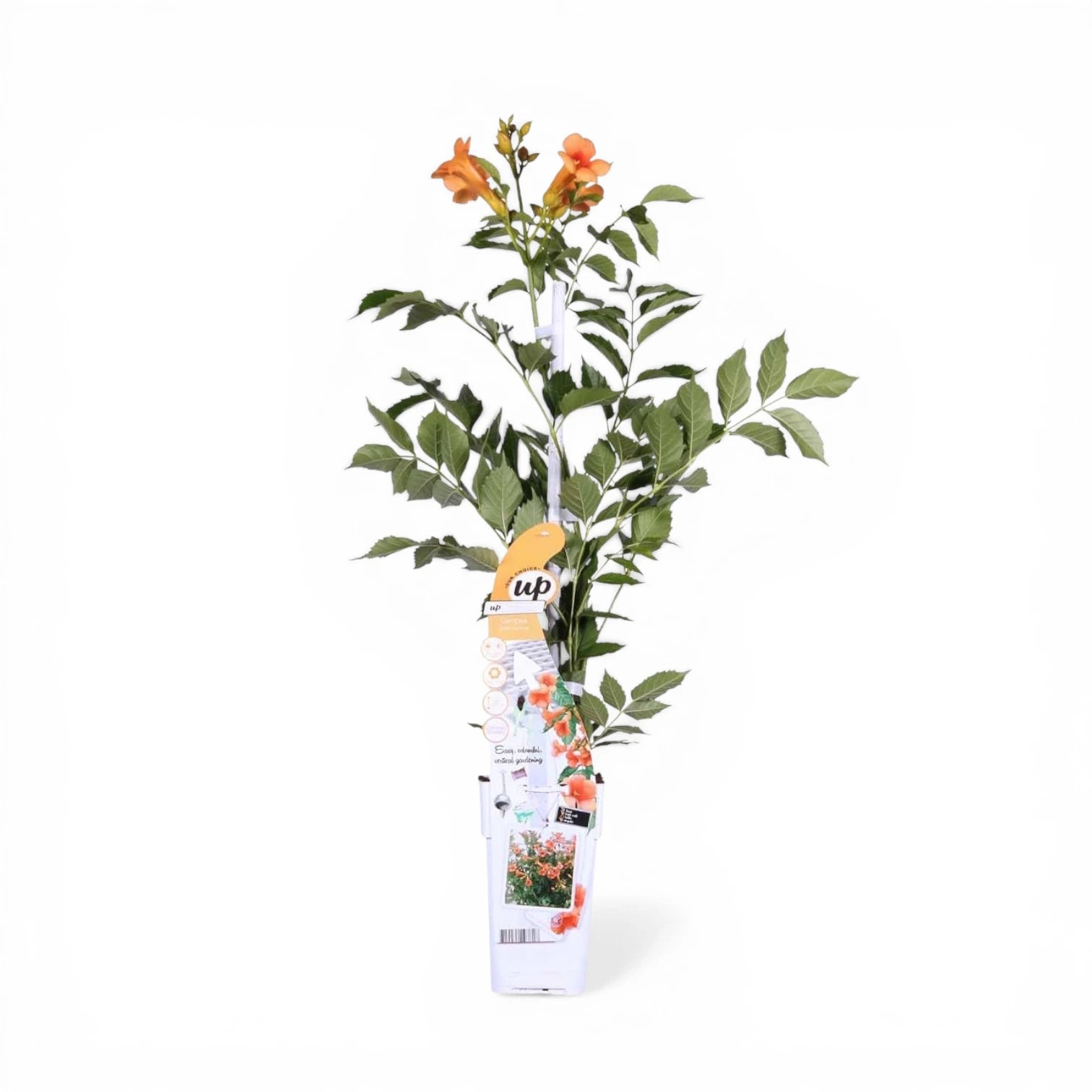
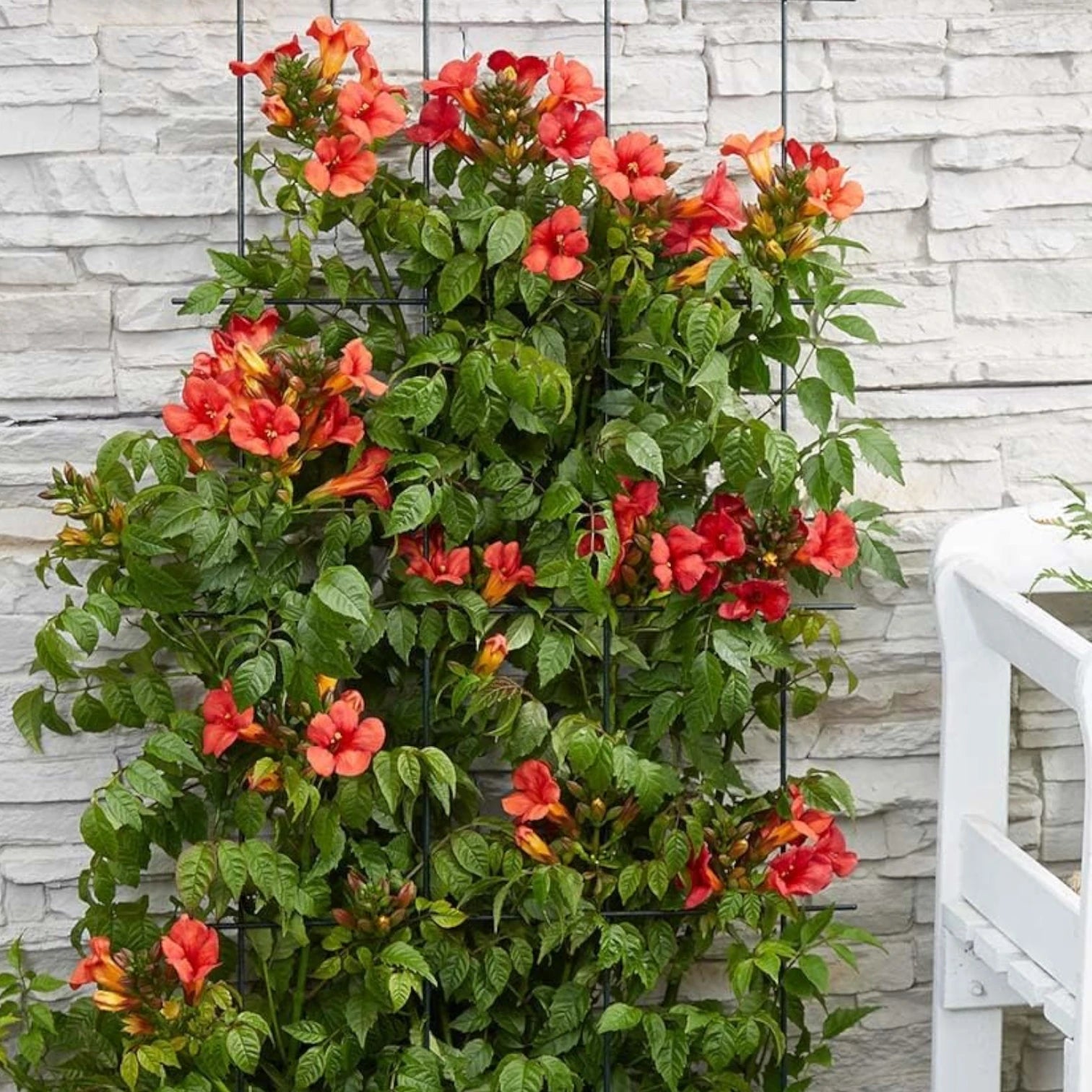
'Flamenco' is a selection of Campsis radicans, grown for its orange-red trumpet flowers and its ability to cover a support with a dense summer canopy. It is a deciduous, woody climber that attaches by aerial rootlets, gradually building a thick framework. Flower clusters appear from summer into autumn, bringing colour late in the season when many climbers have already peaked.
This is a climber for permanent structures: walls, pergolas, and large trellis systems. In the right spot, it matures into a long-lived plant with a substantial silhouette and a strong seasonal rhythm-leafy in summer, bare in winter, then quickly back into growth as temperatures rise.
Expect an ultimate height of 8-12 m in open ground, with a spread of 2.5-4 m across the support. The stems thicken steadily, and older plants carry real weight. That makes support planning non-negotiable: install a system that can handle thickening wood and wind load, and that still leaves access for pruning and tying-in.
Growth comes in two parts: a permanent woody framework and seasonal extension shoots. Those newer shoots are the ones that carry the flower clusters, so the aim is to keep the framework well placed and the seasonal growth renewed each year.
Full sun supports the best flowering, particularly in cooler summer regions. A sheltered, south- or west-facing wall helps ripen stems and encourages strong bud formation. In more open sites, the plant still grows, but flowering is usually more consistent where the top growth sits in a warm pocket and the roots stay evenly moist.
'Flamenco' grows in a wide range of soils, including chalk, clay, loam, and sand, and tolerates a broad pH range. The most useful soil improvement is structural: in heavy ground, add grit and organic matter to keep water moving; in very light soils, add compost to hold moisture in the root zone.
Water deeply through the establishment phase, especially in the first two summers. During dry spells, deep watering keeps growth steady and supports flower bud development. A mulch helps hold moisture and reduces overheating at the base-particularly valuable when the vine itself is sitting in full sun.
Young shoots are easy to position; older stems quickly become woody and set. For walls, use horizontal wires spaced to allow you to fan out the framework. Tie shoots in loosely and spread them out across the support so light reaches the canopy evenly.
Because flowers form on new growth, early spring pruning sets the tone for the season. Remove weak, congested, or poorly placed stems first, then shorten side shoots to a few buds. That pushes the plant into vigorous new extension growth, which is where the flower clusters form later in summer.
In summer, long soft shoots can be shortened to keep growth close to the support and encourage branching. Keep the cuts purposeful, and keep the main trained framework intact.
A spring mulch of compost and a balanced feed at the start of growth are usually sufficient in the ground. On very poor soils, a light top-up feed in early summer supports sustained growth and flowering. The most important inputs remain light, warmth, and steady moisture.
In a pot, growth stays smaller and slower than in open ground, which can be useful where space is limited. Choose a large container, use a free-draining mix, and provide a strong frame for climbing. Watering is the main difference: container plants dry faster in sun and need regular attention through summer. In winter, the root ball benefits from insulation and a sheltered position.
The trumpets are carried in small clusters and can reach around 8 cm in length, with orange-red colouring and warmer orange tones in the throat. Leaves are divided into 9 or 11 oval leaflets, often with a slightly downy underside, which adds texture when the plant is backlit on a wall. In late summer the combination of dense foliage and bold flower tubes gives a strong, architectural finish to the season.
This routine keeps flowering growth close to the framework and makes maintenance easier as the plant matures.
For a big, late-season climber with unmistakable trumpet flowers, Campsis radicans 'Flamenco' brings strong structure, fast summer coverage, and reliable colour on warm, sunny supports.

Choose options


Sign up for Foliage Factory newsletter for early access to new arrivals and practical care tips that work in real homes.