Position
Full sun, Part shade

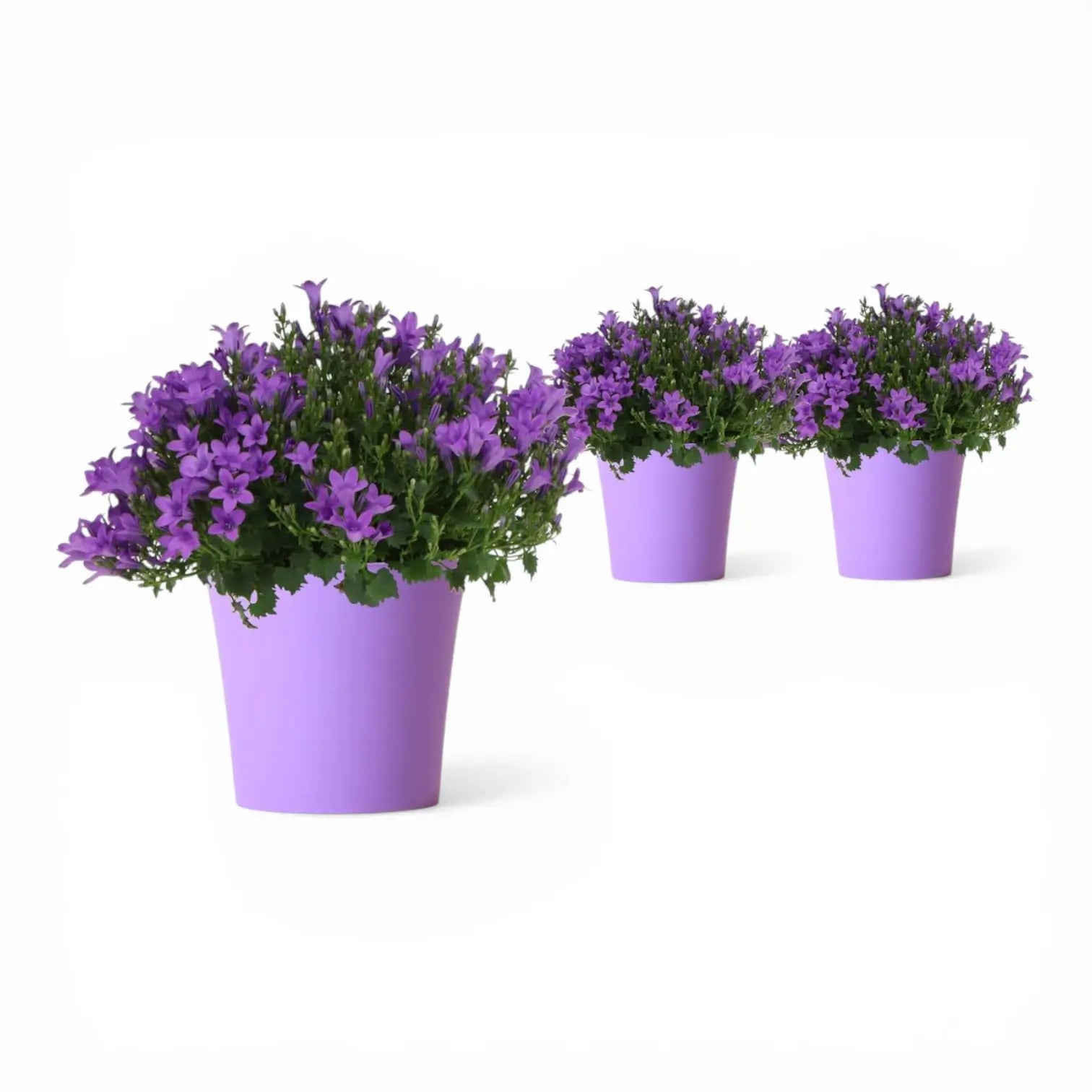
Campanula
VAT included · plus
Your outdoor plant has just been packed, transported and unpacked, so give it a calm start before planting or placing it permanently. Remove all packaging carefully, check the pot, stems, visible roots and substrate moisture, and settle any loose growing medium back around the root ball. Water if the root ball feels dry, but do not leave the pot standing in water. For the first few days, keep the plant in a sheltered spot suited to its light needs, away from strong midday sun, heavy wind, frost and heat stress.
Do not move the plant straight into full exposure, especially if it is young, newly flushed, evergreen, recently pruned or greenhouse-grown. Gradually introduce more sun, wind and temperature variation over several days. If cold nights, storms, intense sun or hot dry weather are expected, keep the plant protected until conditions are more stable. Do not fertilize immediately after delivery; let the plant settle first and resume feeding only when it is actively growing and conditions are suitable.
Outdoor plants may arrive in different seasonal stages. Depending on the time of year, your plant may be leafy, flowering, newly sprouting, recently pruned, dormant, partly bare or leafless. Adjust care to what the plant is doing: actively growing plants need closer moisture checks, while dormant plants usually need protection from extremes and only light moisture management until growth resumes.
Plant outdoors when the soil is workable and weather conditions suit the plant type. Avoid planting during frost, heatwaves, waterlogged soil or very dry windy periods. It is better to keep the plant protected in its pot for a short time than to plant into stressful conditions. After planting, water thoroughly so the root ball and surrounding soil connect properly, then monitor moisture while the plant establishes.
Secure shipping, carefully packed orders with safe delivery across the EU, UK and Switzerland.
28-day plant guarantee, if a plant arrives damaged or fails soon after delivery, we help you make it right.
Free returns, simple, cost-free returns according to our policy.
For full details, please see:
Please head to our FAQ Page or Contact us.
Evergreen to semi-evergreen perennial
Position
Full sun, Part shade
Moisture
Average
Drainage
Moisture-retentive, Well-drained
Hardiness
Hardy with drainage · -10°C
Mature size
10–25 × 30–50 cm
Winter habit
Semi-evergreen to evergreen
Bloom time
Spring, Summer
Containers
Good in pots
Pruning
After flowering
Compact flowering selection of Campanula portenschlagiana, a wall bellflower native to rocky parts of Croatia and Bosnia and Herzegovina, valued for dense growth and strong flower colour in pots, borders and rock gardens.
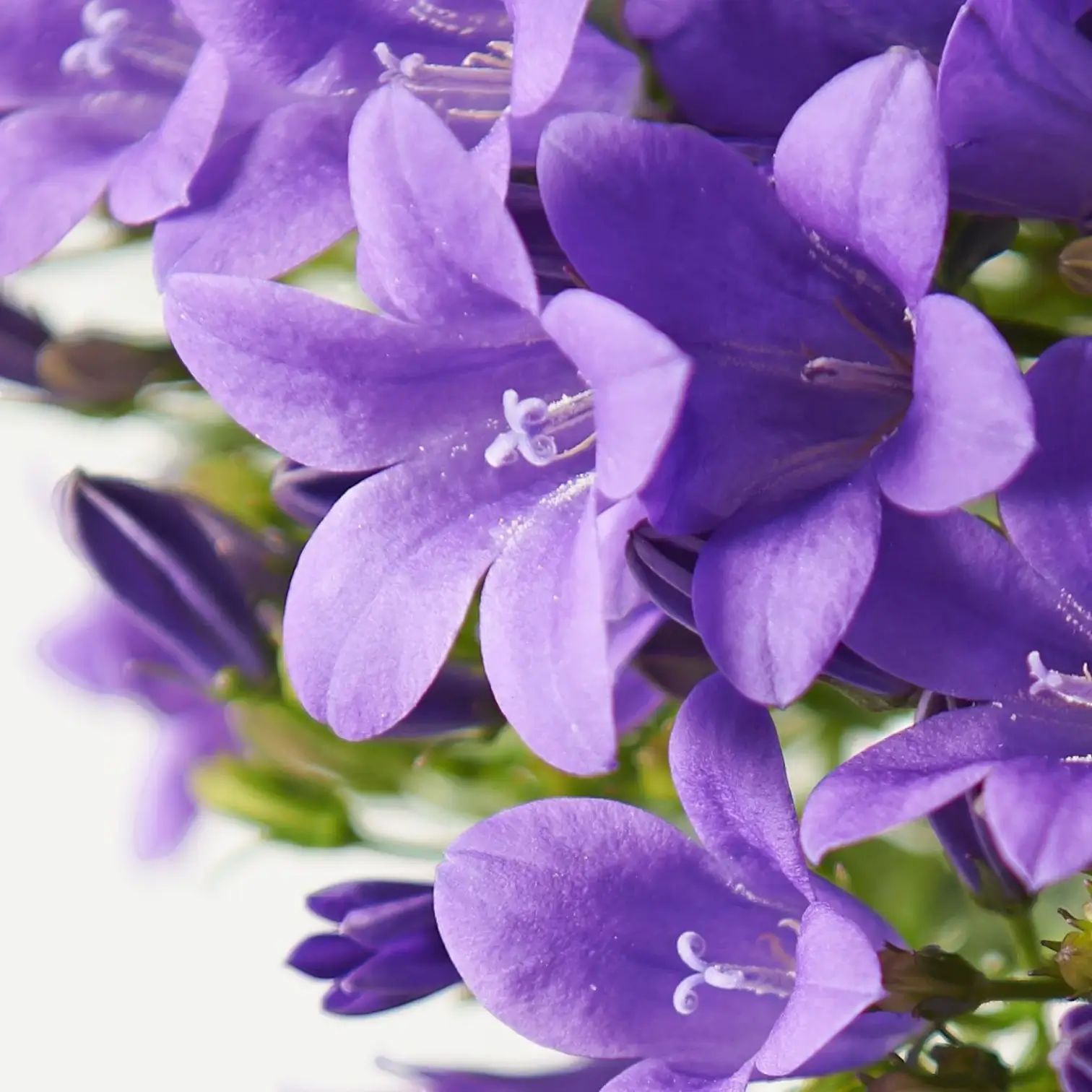
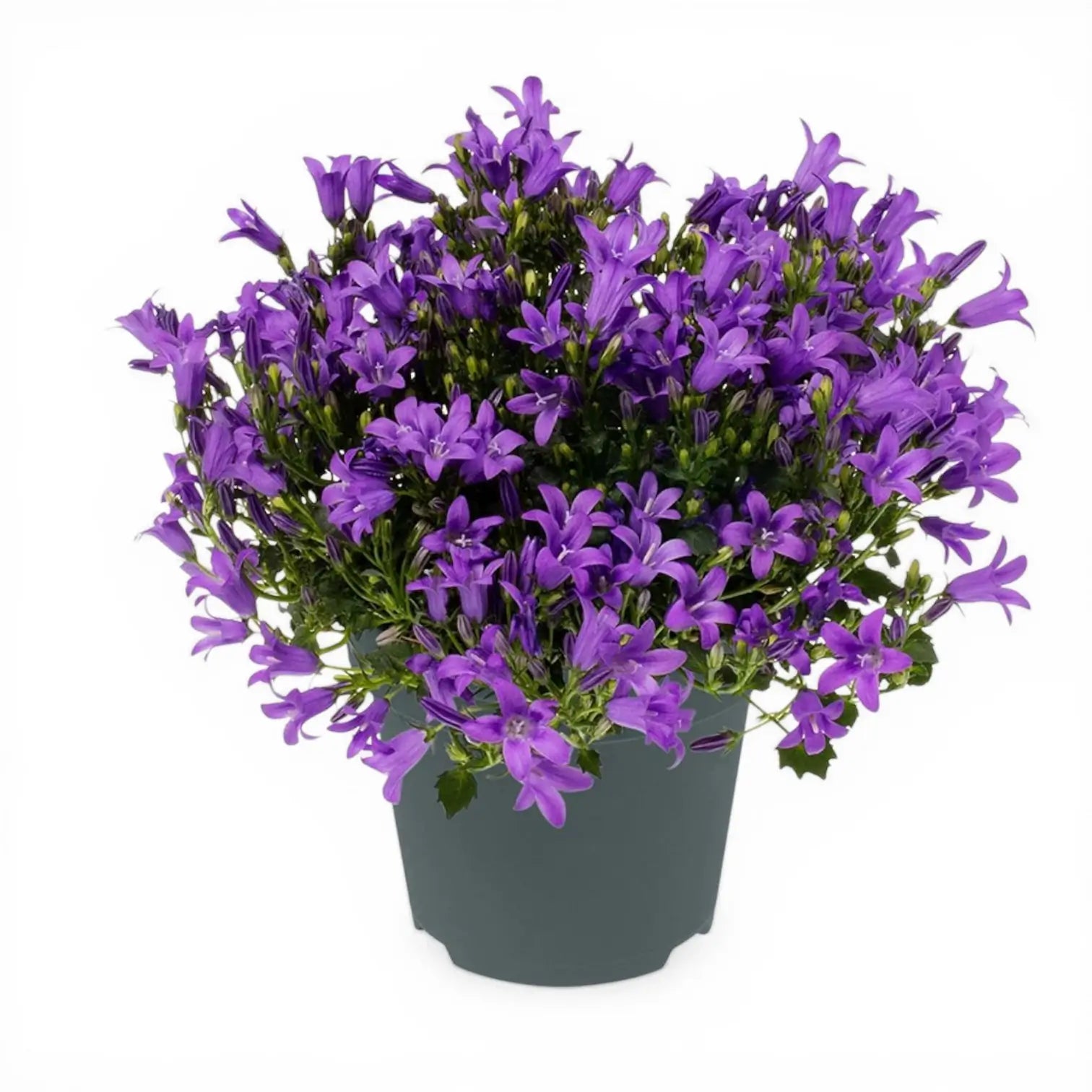
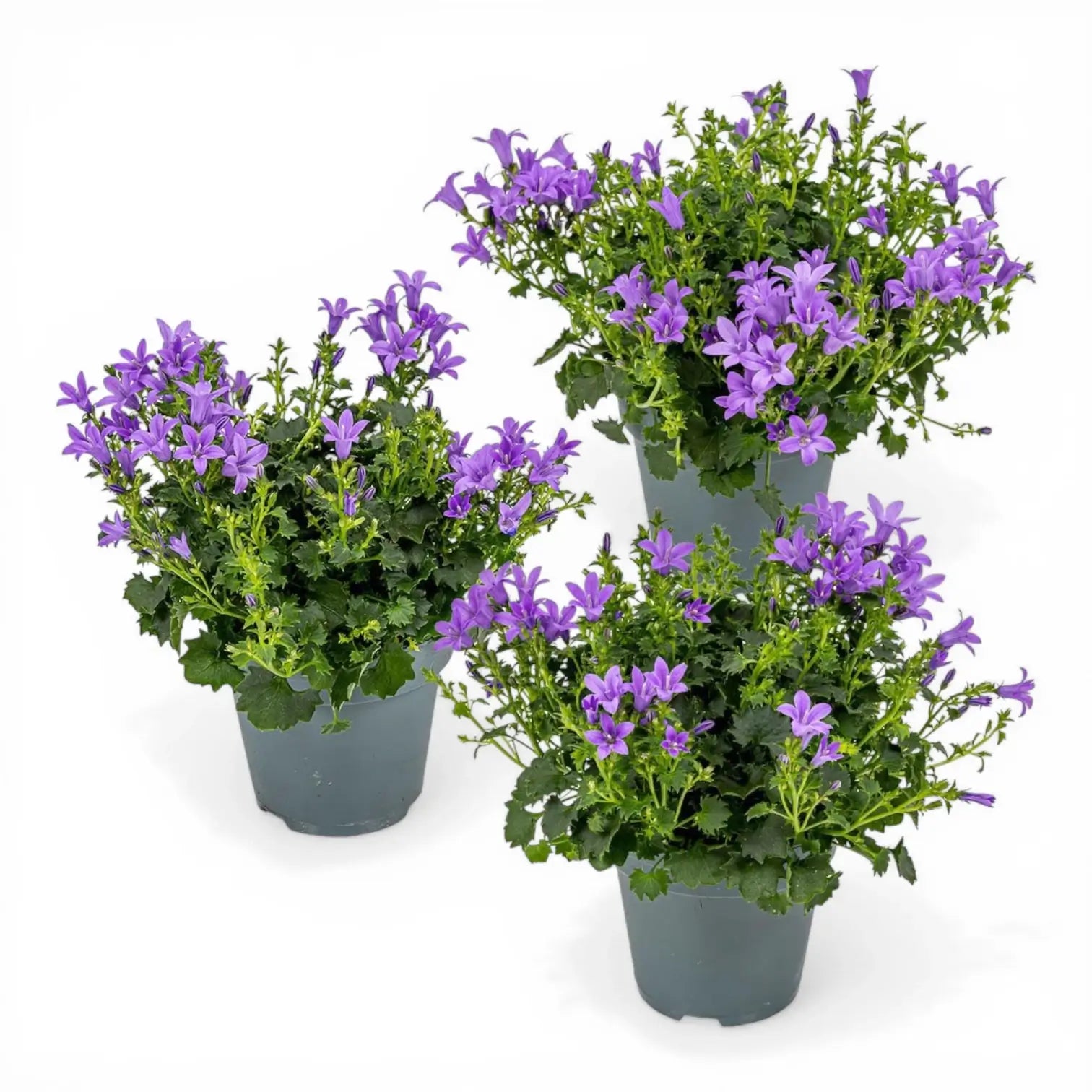
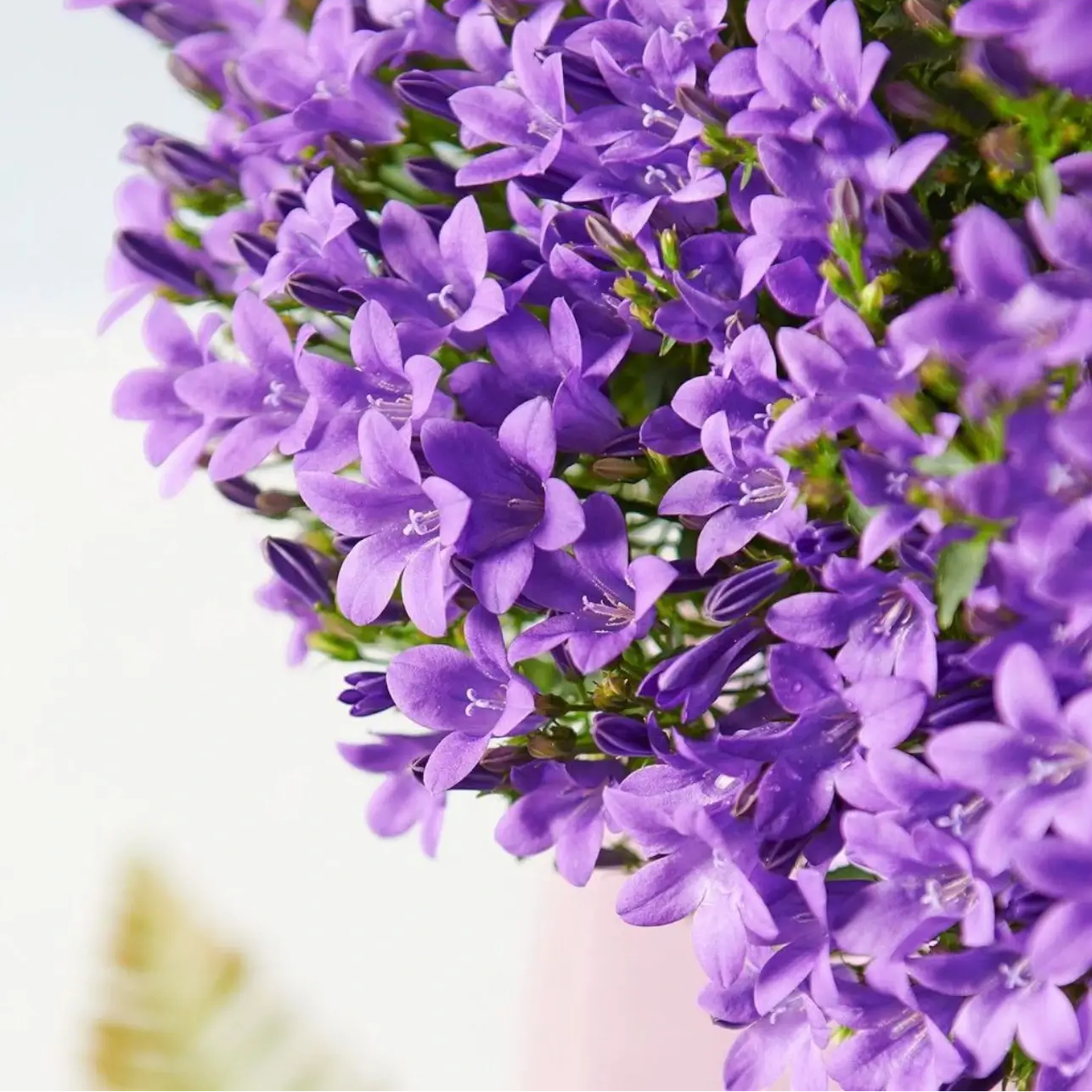
Campanula portenschlagiana Ambella Intense Purple is a compact wall bellflower that forms a neat, evergreen mat and flowers generously from spring into summer. Heart-shaped leaves knit together into a low cushion, then short stalks carry outward-facing bells in a saturated blue-violet. It is a strong choice for edges and hard landscaping where a plant needs to sit low, spill naturally, and flower for weeks.
In open ground, plants typically reach about 10-25 cm in height and spread to around 30-50 cm. In containers, growth stays more compact than in borders and watering becomes the main driver of flowering quality.
This cultivar shines in crevices, wall tops, raised beds, and troughs where stems can drape over edges. In borders, it works as a low ground cover at the front of beds or around the base of taller perennials, adding colour early in the season. It also suits gravel gardens where mineral soils keep crowns dry between rain events.
Full sun brings the heaviest flowering, while part shade keeps foliage fresher in hot locations and can preserve flower colour in strong summer light. Campanula portenschlagiana handles both sheltered and more open exposures, provided soil stays well-structured and drainage stays reliable through winter.
Chalk, loam, and sandy soils can all suit it, and pH can run from acid through neutral to alkaline when drainage stays open. The practical take-away is simple: roots appreciate moisture during active growth, and crowns stay healthiest when excess water clears quickly. A gravelly planting pocket or a raised edge gives consistent results, especially in climates with wet winters. In lighter soils, a modest addition of compost improves summer moisture retention while keeping the root zone open.
In borders, established plants cope with short dry spells, yet flowering is fuller when moisture stays steady through spring and early summer. Water deeply when the soil has dried, then allow it to drain and re-oxygenate. In containers, check moisture frequently in warm, windy weather. Water until the full pot depth is moist, then allow the top 20-30% of the pot depth to begin drying before watering again.
A light feed in late spring supports bud production in pots. A balanced fertiliser applied at low strength is usually enough; the goal is steady growth and continuous flowering, not soft, lush shoots.
In containers, treat watering as the main driver of repeat flowering: water when the top 20-30% of the pot depth feels dry, then let excess drain freely. A thin gravel top-dress helps keep the evergreen mat clean and reduces soil splash onto new growth.
After the main flowering wave, a quick shear keeps the plant dense and encourages fresh foliage. Time this for late spring to mid-summer, once most bells have finished. Trim the flowering stems back to just above the leaf mat, keeping the cut shallow so the cushion stays intact. In mild seasons, this tidy-up can be followed by a lighter repeat display later in summer.
Plants cope well in many gardens when the site is sheltered and soil structure stays free-flowing. Winter success improves when the crown sits slightly raised with mineral grit around it, helping rainwater pass through quickly. In containers, place pots on feet or a draining surface so water exits freely, and keep the plant under cover during prolonged winter rain if your patio stays saturated for days.
Use Ambella Intense Purple where the garden needs low structure and long flowering. It edges paths, softens stonework, fills troughs, and brings a rich purple accent that pairs well with silver foliage, small grasses, and spring bulbs. In pots, it also makes a dependable spiller for balcony planting, keeping the outline compact while the flowers trail over the rim.
Ambella Intense Purple works well in bowls and balcony containers where the trailing stems can soften edges. Combine it with compact grasses, small sedums, thyme, or spring bulbs, and use a free-flowing compost that keeps oxygen around the roots. In mixed pots, place the campanula near the rim so the mat can spread outward while taller plants rise through the centre.
Basal cuttings taken in spring are a reliable way to increase it. In practice, a few short cuttings taken from fresh spring growth root readily in a gritty mix kept lightly moist. Over time, mats can also be refreshed by lifting and replanting the most vigorous outer pieces. This keeps the planting dense and flowering-rich, especially in narrow wall pockets where soil volume is limited.
Choose options


Sign up for Foliage Factory newsletter for early access to new arrivals and practical care tips that work in real homes.