Position
Full sun

Armeria
VAT included · plus
Your outdoor plant has just been packed, transported and unpacked, so give it a calm start before planting or placing it permanently. Remove all packaging carefully, check the pot, stems, visible roots and substrate moisture, and settle any loose growing medium back around the root ball. Water if the root ball feels dry, but do not leave the pot standing in water. For the first few days, keep the plant in a sheltered spot suited to its light needs, away from strong midday sun, heavy wind, frost and heat stress.
Do not move the plant straight into full exposure, especially if it is young, newly flushed, evergreen, recently pruned or greenhouse-grown. Gradually introduce more sun, wind and temperature variation over several days. If cold nights, storms, intense sun or hot dry weather are expected, keep the plant protected until conditions are more stable. Do not fertilize immediately after delivery; let the plant settle first and resume feeding only when it is actively growing and conditions are suitable.
Outdoor plants may arrive in different seasonal stages. Depending on the time of year, your plant may be leafy, flowering, newly sprouting, recently pruned, dormant, partly bare or leafless. Adjust care to what the plant is doing: actively growing plants need closer moisture checks, while dormant plants usually need protection from extremes and only light moisture management until growth resumes.
Plant outdoors when the soil is workable and weather conditions suit the plant type. Avoid planting during frost, heatwaves, waterlogged soil or very dry windy periods. It is better to keep the plant protected in its pot for a short time than to plant into stressful conditions. After planting, water thoroughly so the root ball and surrounding soil connect properly, then monitor moisture while the plant establishes.
Secure shipping, carefully packed orders with safe delivery across the EU, UK and Switzerland.
28-day plant guarantee, if a plant arrives damaged or fails soon after delivery, we help you make it right.
Free returns, simple, cost-free returns according to our policy.
For full details, please see:
Please head to our FAQ Page or Contact us.
Evergreen perennial
Position
Full sun
Moisture
Dry to average
Drainage
Moisture-retentive, Well-drained
Hardiness
Hardy with drainage · -10°C
Mature size
15–20 × 25–30 cm
Winter habit
Evergreen
Bloom time
Spring, Summer
Containers
Good in pots
Pruning
After flowering
Coastal grassland, sea cliffs and rocky maritime slopes of Europe.
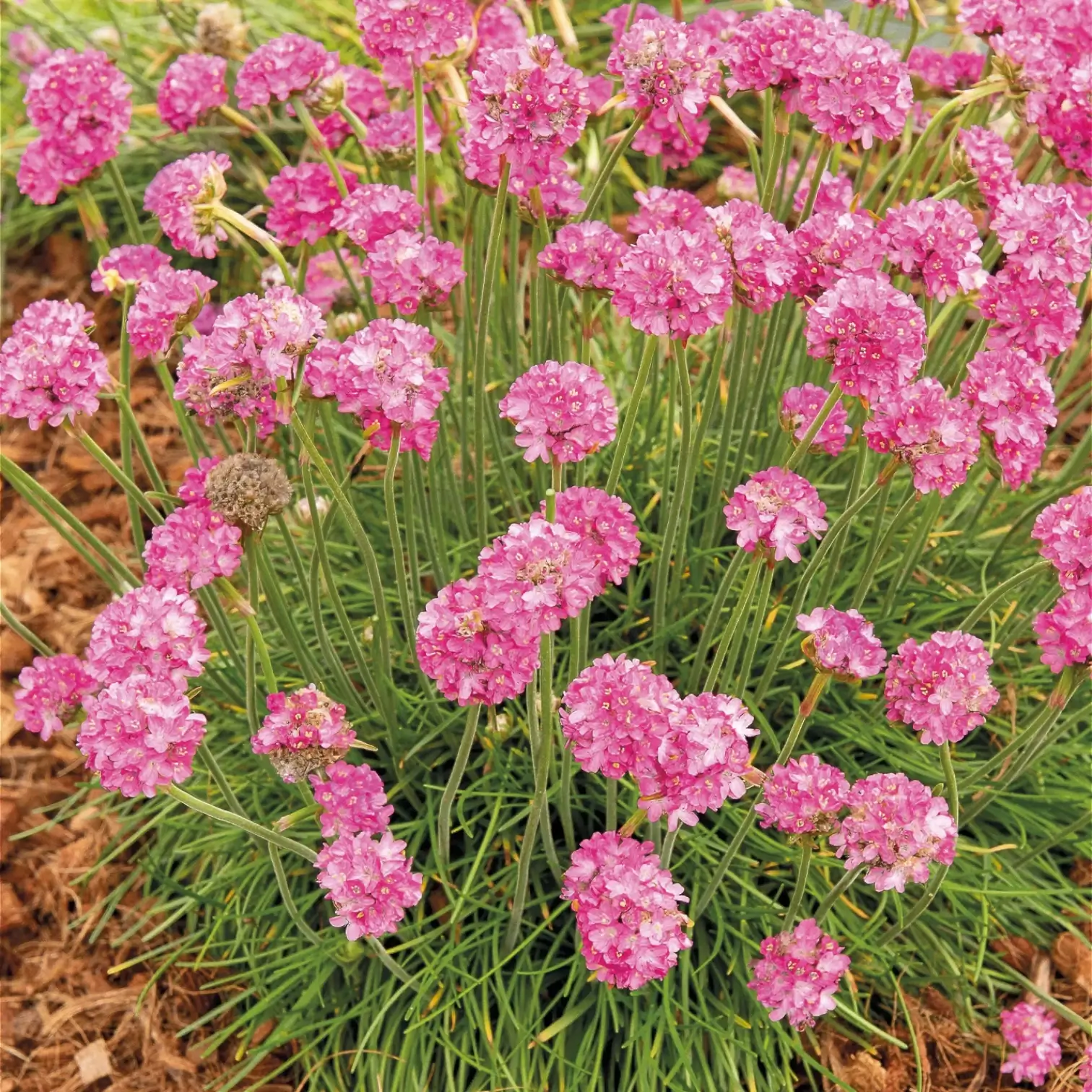
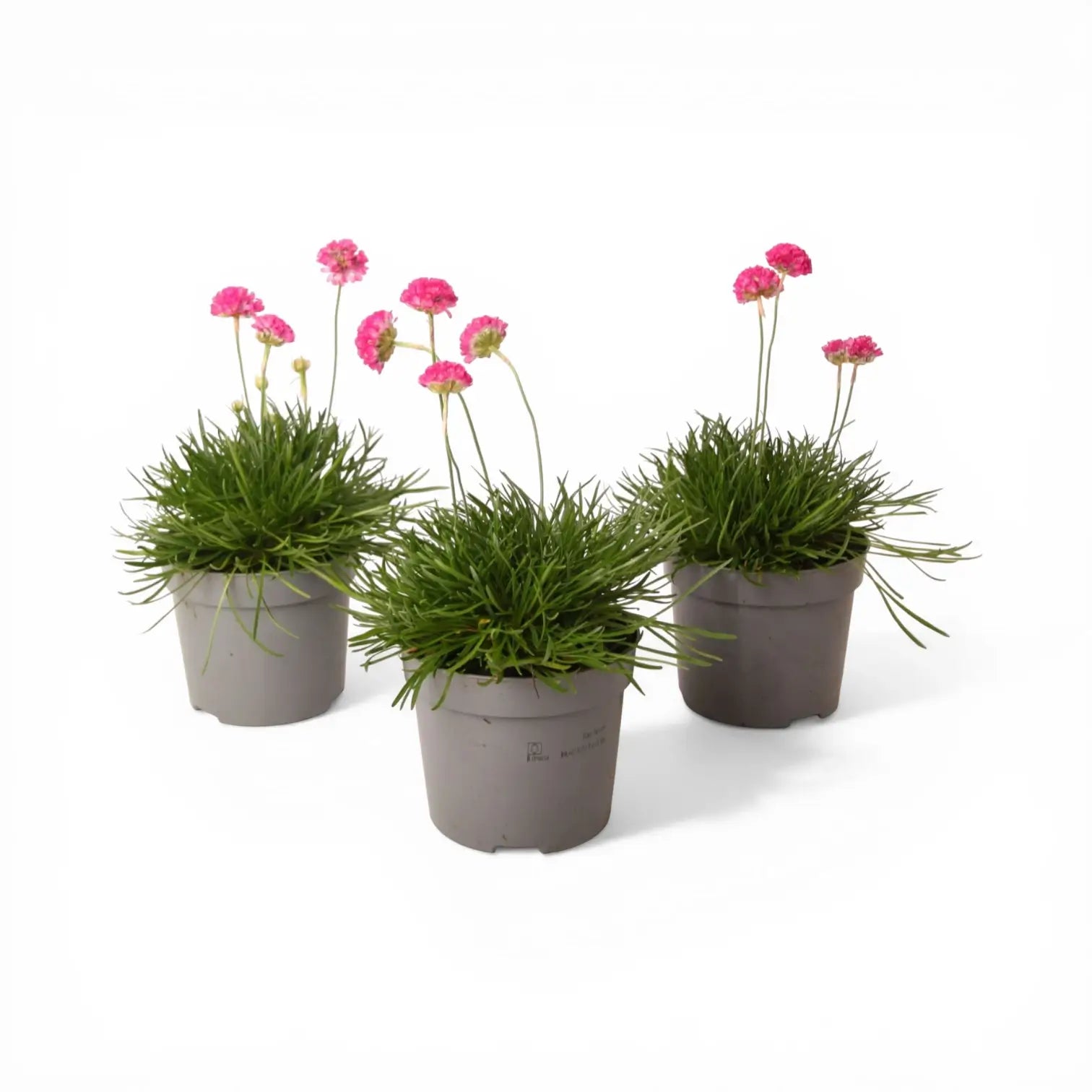
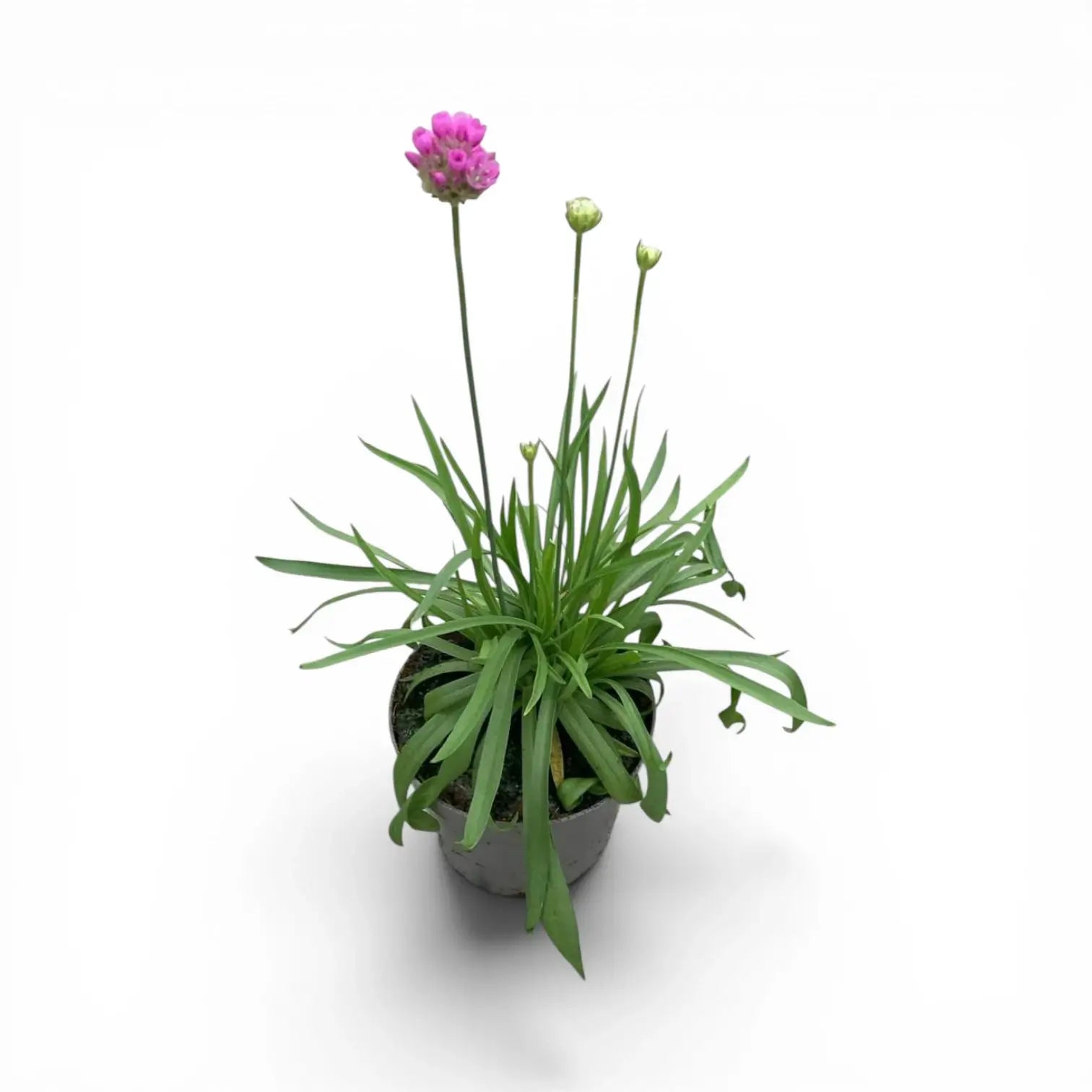
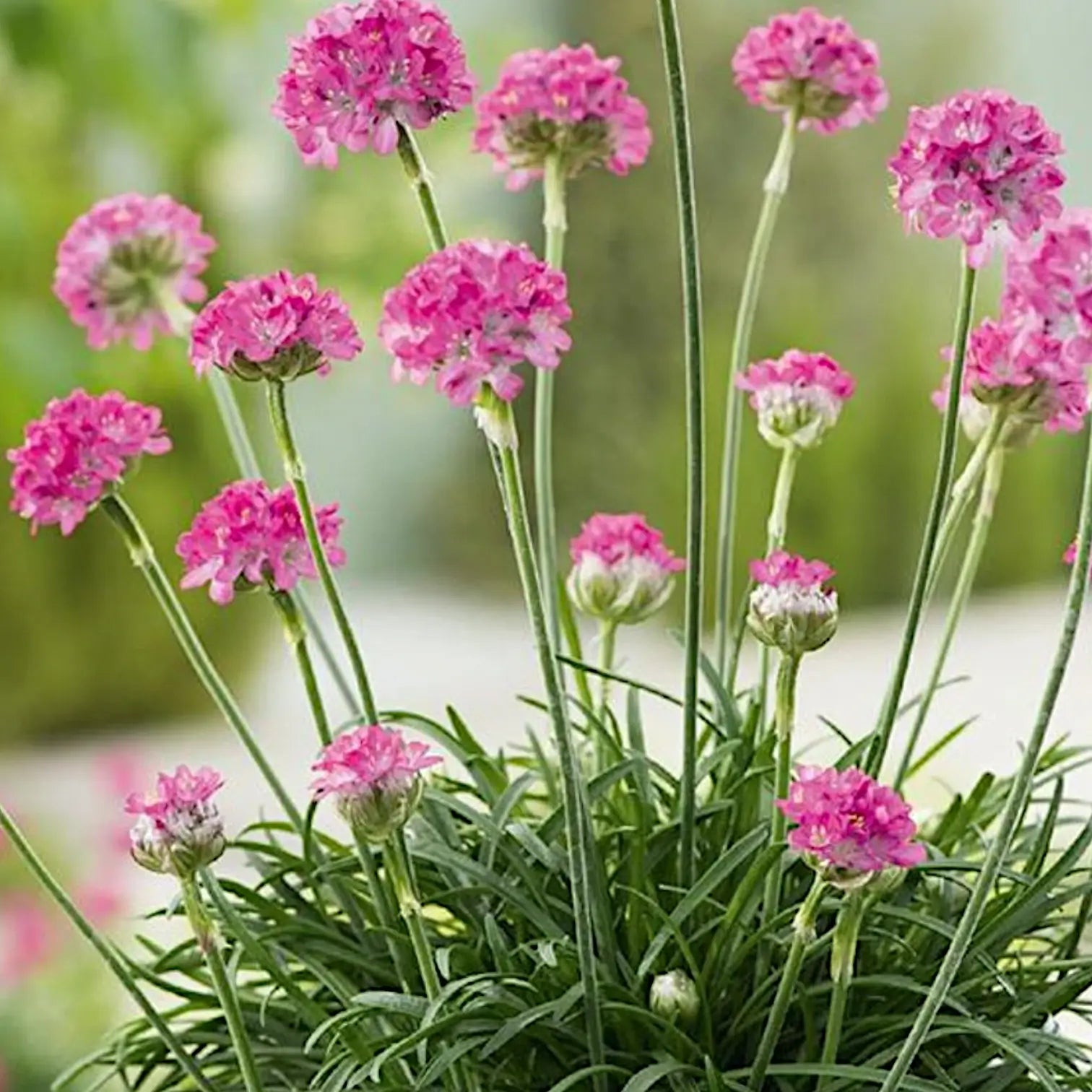
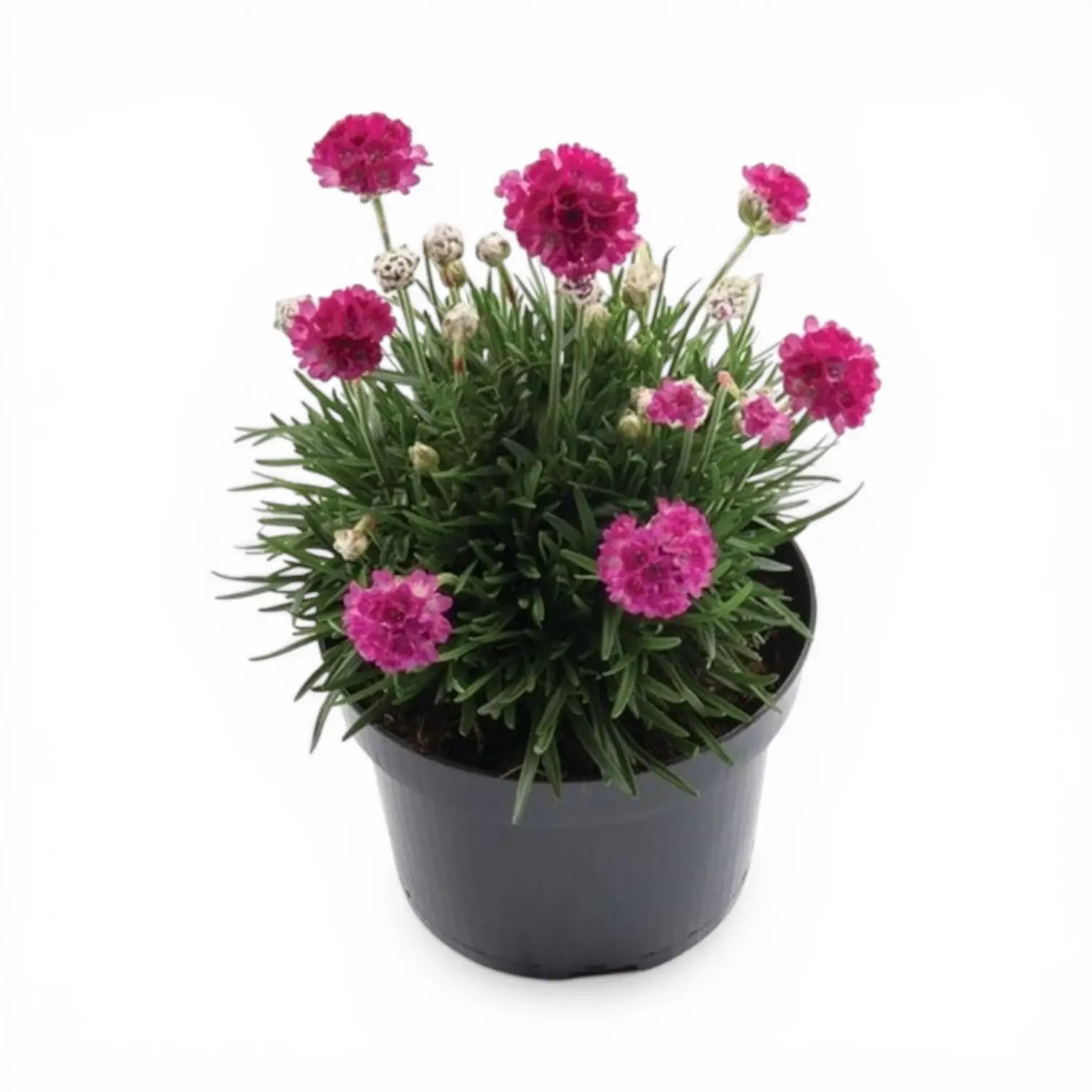
Armeria maritima 'Abbey Deep Rose' is a compact sea thrift with a tough, evergreen base and a bright spring flowering period. It forms tight tufts of narrow leaves, then sends up wiry stems topped with deep pink flower heads-small, round “pom-poms” that sit cleanly above the foliage.
This plant is at its best in sunny, open situations with lean, well-drained soil. It stays neat, holds its shape, and brings colour right where many borders need it: the front edge, gravel planting, steps, and rockery pockets.
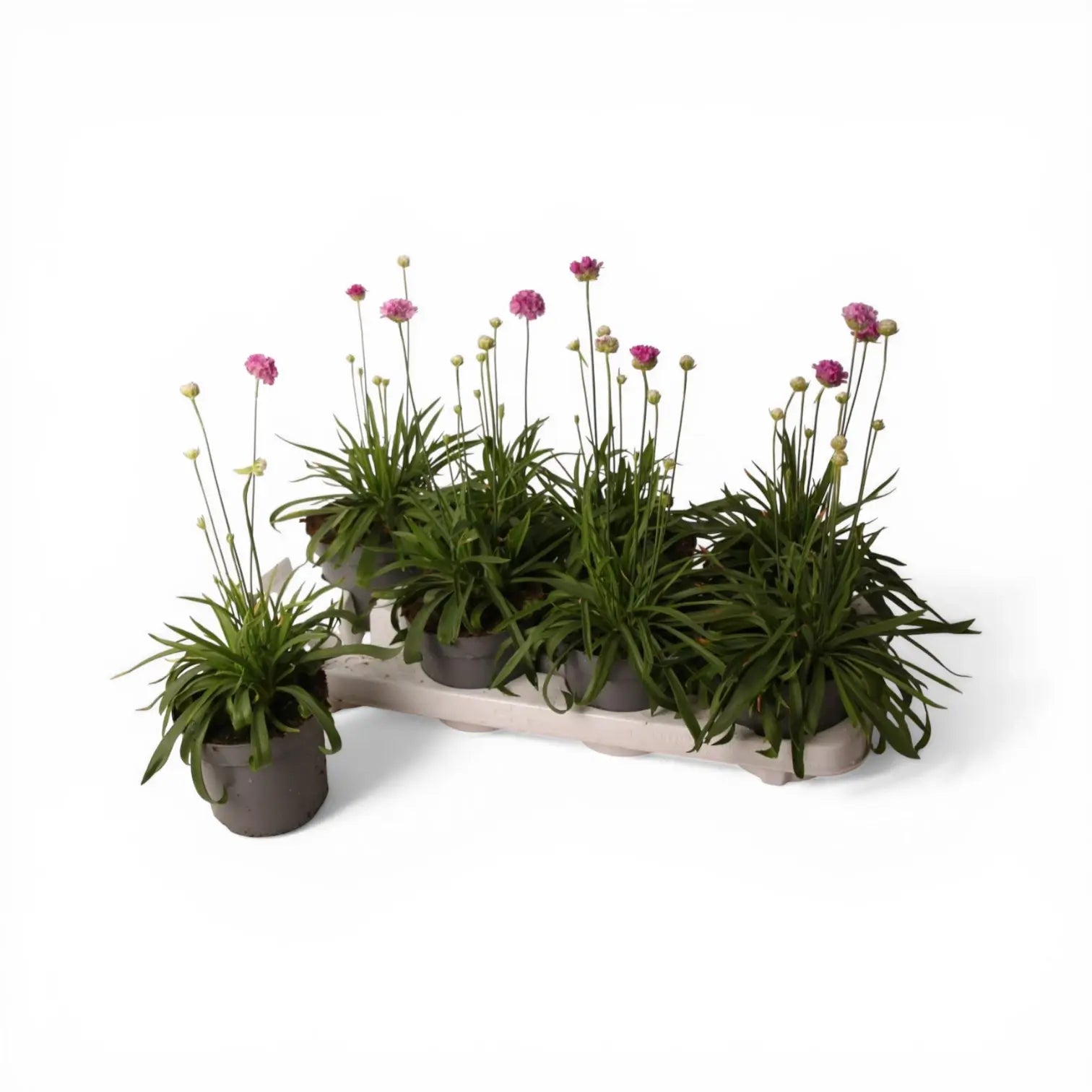
The foliage is evergreen and grass-like, forming a low mound that stays present through winter. Flowering typically runs from late spring into early summer. In open ground, flower stems reach around 15-20 cm, and the clump spreads roughly 25-30 cm over time.
Full sun is the sweet spot for strong flowering and tight growth. Armeria is comfortable in open, breezy sites, which makes it a natural choice for gravel gardens and coastal-style planting. Soil drainage matters more than richness: a gritty, well-drained profile supports a healthy crown and keeps the evergreen base compact.
Plant with the crown level to the soil surface and firm in gently. In heavier soil, mixing in grit and planting slightly proud improves air around the crown. For edging, spacing around 25-30 cm gives each tuft room to develop without merging into a single mass.
Sea thrift also performs well in pots. In containers it stays a little smaller than in open ground, and the evergreen mound stays crisp with good drainage.
Deadheading spent flower stems keeps the mound tidy and often extends the flowering period. After the main flush, a light trim of any tired foliage helps the plant hold a clean outline. Mature clumps can be lifted and divided in spring, replanting the freshest outer pieces to keep growth even.
Use 'Abbey Deep Rose' as a front-edge accent in mixed borders, as a repeating dot in gravel planting, or as a container plant alongside other sun lovers such as thyme, dwarf grasses, and compact perennials. The deep pink flower heads stand out against stone and pale gravel and bring a crisp, structured look to informal planting.
Add Armeria maritima 'Abbey Deep Rose' for evergreen structure and a bright spring-to-early-summer flower show in sunny, well-drained spots.
Sea thrift is naturally associated with coastal habitats, where wind, salt spray, and lean soils are common. In gardens, that translates into a plant that appreciates sun and drainage and stays compact when soil is not overly rich. The evergreen tuft acts like a small grass clump, giving structure even outside the flowering window.
On light soils, planting is simple: ensure the crown sits level with the surface and water in well. On heavier soils, improving structure makes a big difference. Mixing in grit and planting slightly proud supports airflow around the crown. A grit top-dressing after planting keeps the base clean and reduces the chance of damp sitting against the foliage through winter.
Over time, older tufts can become woody at the centre. Lifting and dividing in spring refreshes the plant and gives new pieces for other areas. Replant the freshest outer sections into well-drained soil, and the clump usually settles back into a tight mound quickly.
Armeria 'Abbey Deep Rose' is ideal at the front of borders, in gravel gardens, between paving stones where there is soil depth, and in rockery pockets. In containers, it pairs well with drought-tolerant companions and keeps a neat evergreen base through winter.
Deadheading is the main routine that keeps Armeria looking sharp. Snipping spent stems close to the base encourages a longer run of flowers and stops the tuft from looking messy. After flowering, a quick tidy of any browned leaf tips restores the mound’s clean outline.
In pots, sea thrift appreciates the same conditions it likes in the ground: sun and drainage. Choose a pot with several drainage holes, use a gritty mix, and keep the pot slightly raised so water can run out freely. In regions with long, wet winters, placing the pot under a roof overhang often makes the difference between a crisp evergreen tuft and a damp, tired crown.
Choose options


Sign up for Foliage Factory newsletter for early access to new arrivals and practical care tips that work in real homes.