Position
Part shade to shade

Ajuga
VAT included · plus
Your outdoor plant has just been packed, transported and unpacked, so give it a calm start before planting or placing it permanently. Remove all packaging carefully, check the pot, stems, visible roots and substrate moisture, and settle any loose growing medium back around the root ball. Water if the root ball feels dry, but do not leave the pot standing in water. For the first few days, keep the plant in a sheltered spot suited to its light needs, away from strong midday sun, heavy wind, frost and heat stress.
Do not move the plant straight into full exposure, especially if it is young, newly flushed, evergreen, recently pruned or greenhouse-grown. Gradually introduce more sun, wind and temperature variation over several days. If cold nights, storms, intense sun or hot dry weather are expected, keep the plant protected until conditions are more stable. Do not fertilize immediately after delivery; let the plant settle first and resume feeding only when it is actively growing and conditions are suitable.
Outdoor plants may arrive in different seasonal stages. Depending on the time of year, your plant may be leafy, flowering, newly sprouting, recently pruned, dormant, partly bare or leafless. Adjust care to what the plant is doing: actively growing plants need closer moisture checks, while dormant plants usually need protection from extremes and only light moisture management until growth resumes.
Plant outdoors when the soil is workable and weather conditions suit the plant type. Avoid planting during frost, heatwaves, waterlogged soil or very dry windy periods. It is better to keep the plant protected in its pot for a short time than to plant into stressful conditions. After planting, water thoroughly so the root ball and surrounding soil connect properly, then monitor moisture while the plant establishes.
Secure shipping, carefully packed orders with safe delivery across the EU, UK and Switzerland.
28-day plant guarantee, if a plant arrives damaged or fails soon after delivery, we help you make it right.
Free returns, simple, cost-free returns according to our policy.
For full details, please see:
Please head to our FAQ Page or Contact us.
Evergreen to semi-evergreen perennial
Position
Part shade to shade
Moisture
Average to moist
Drainage
Moisture-retentive, Well-drained
Hardiness
Fully hardy · -25°C
Mature size
10–15 × 60–75 cm
Winter habit
Evergreen to semi-evergreen
Bloom time
Spring, Summer
Containers
Good in pots
Pruning
Spring
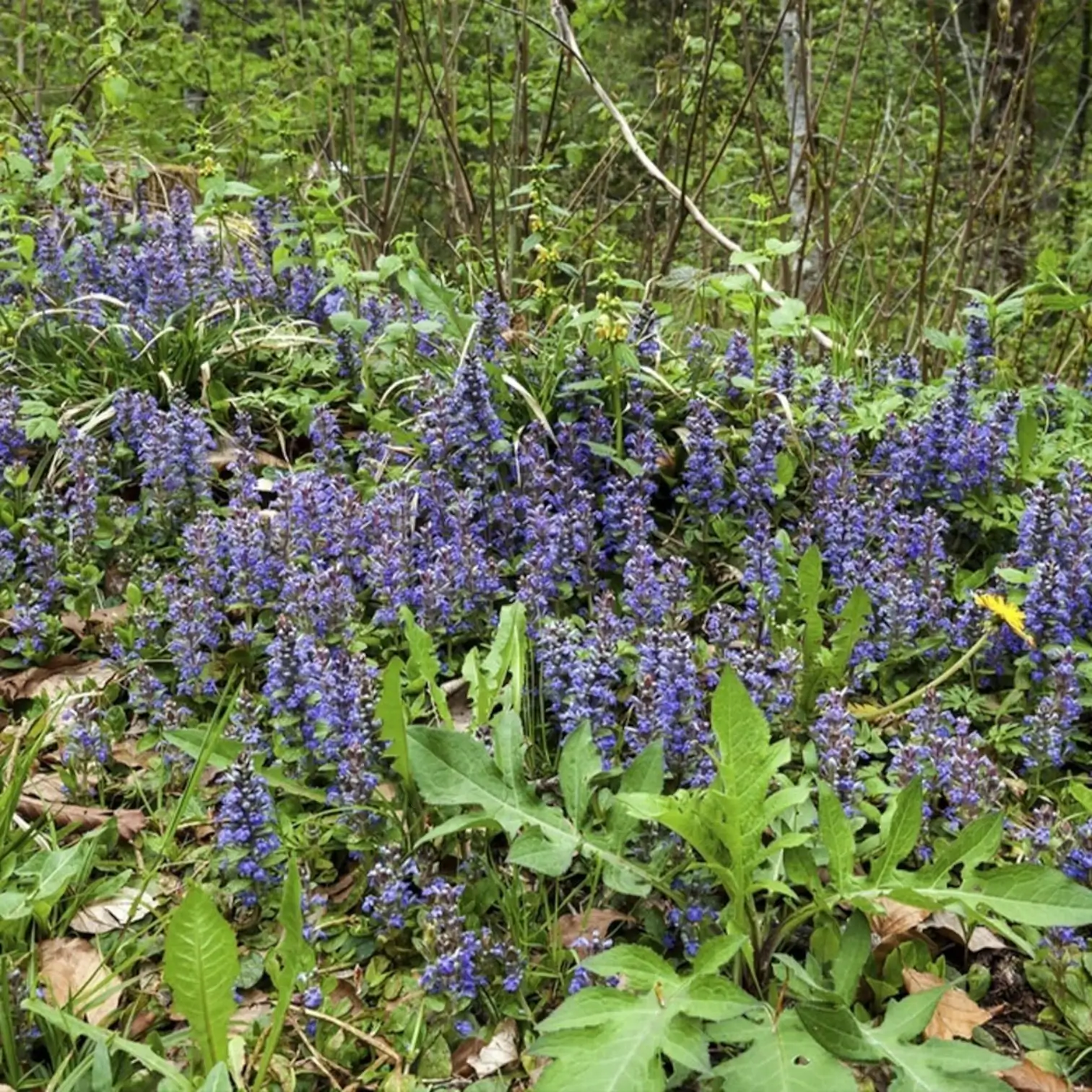
Woodland edges and moist grassland across Europe and western Asia.
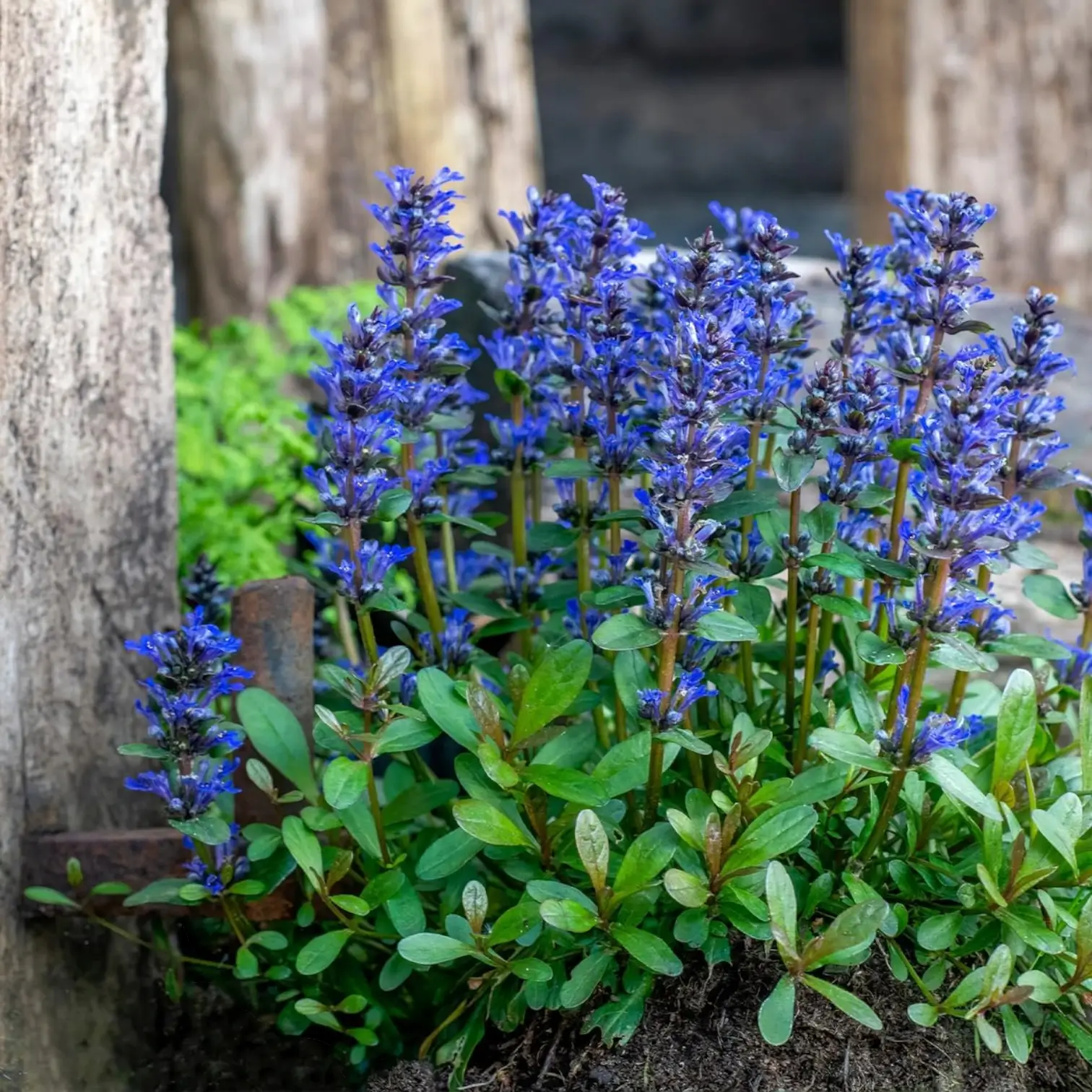
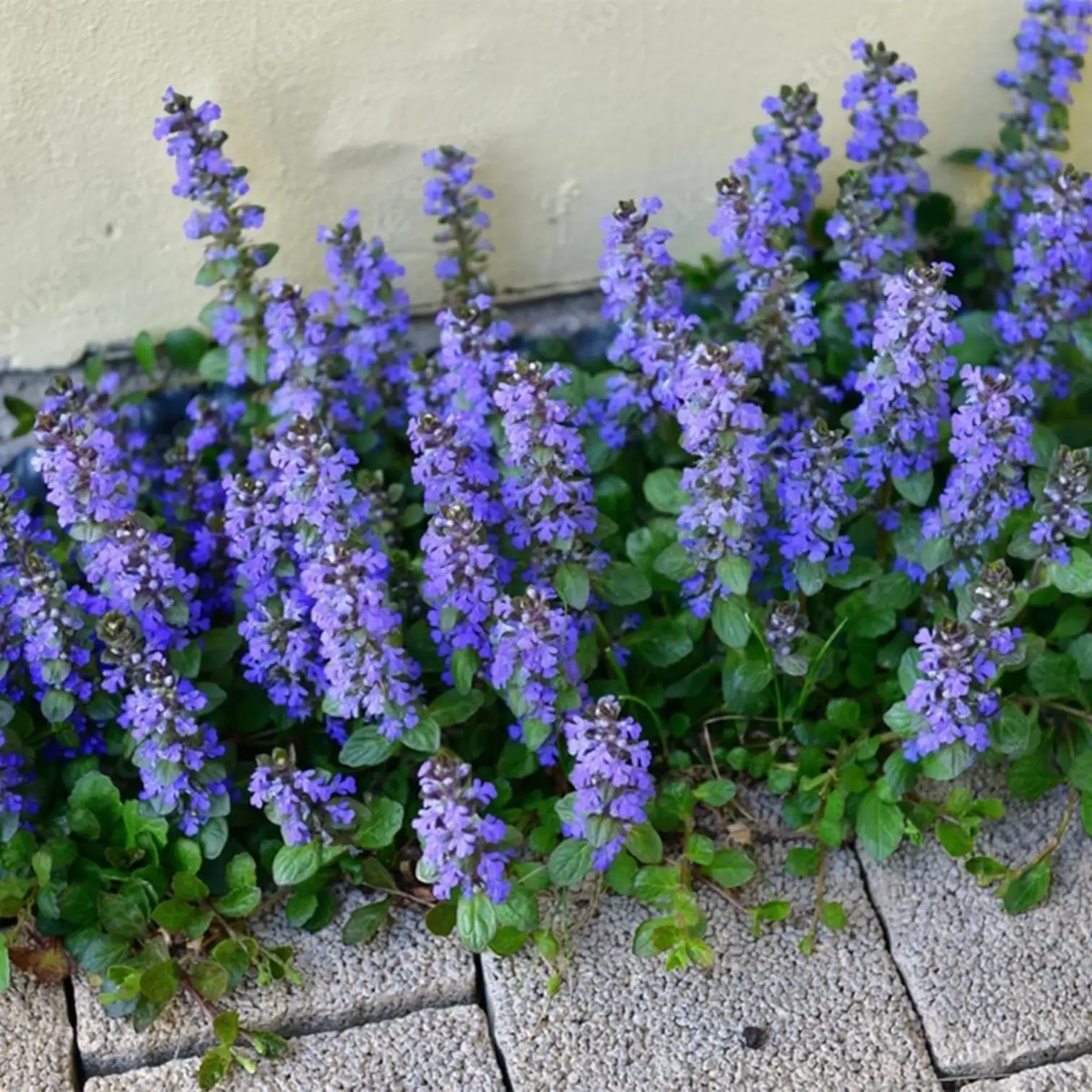
Ajuga reptans is a classic groundcover for gardens that need reliable foliage cover and a clean spring bloom. It grows as a low mat of rosettes connected by runners, so it can settle into gaps and stitch planting together without asking for much space above ground.
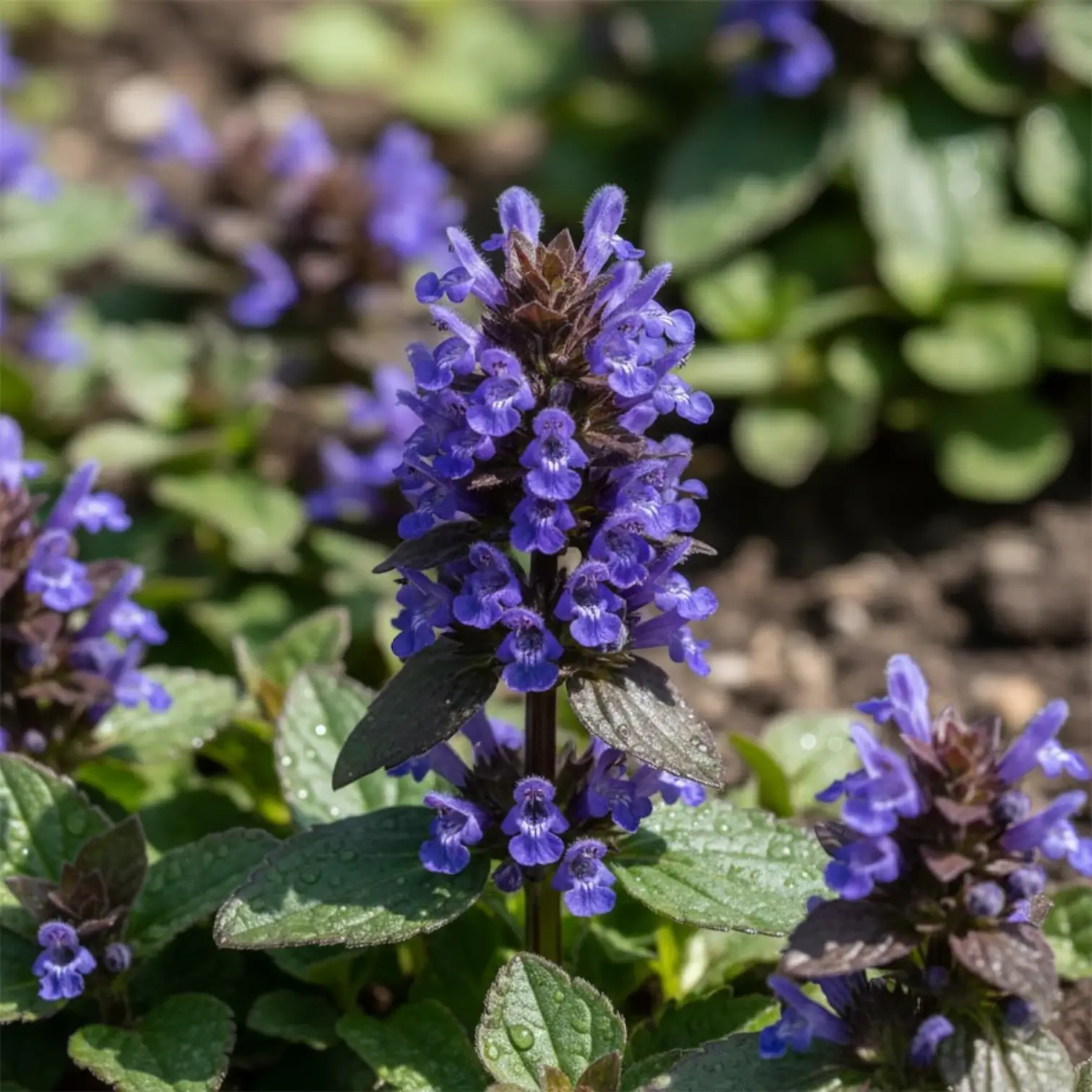
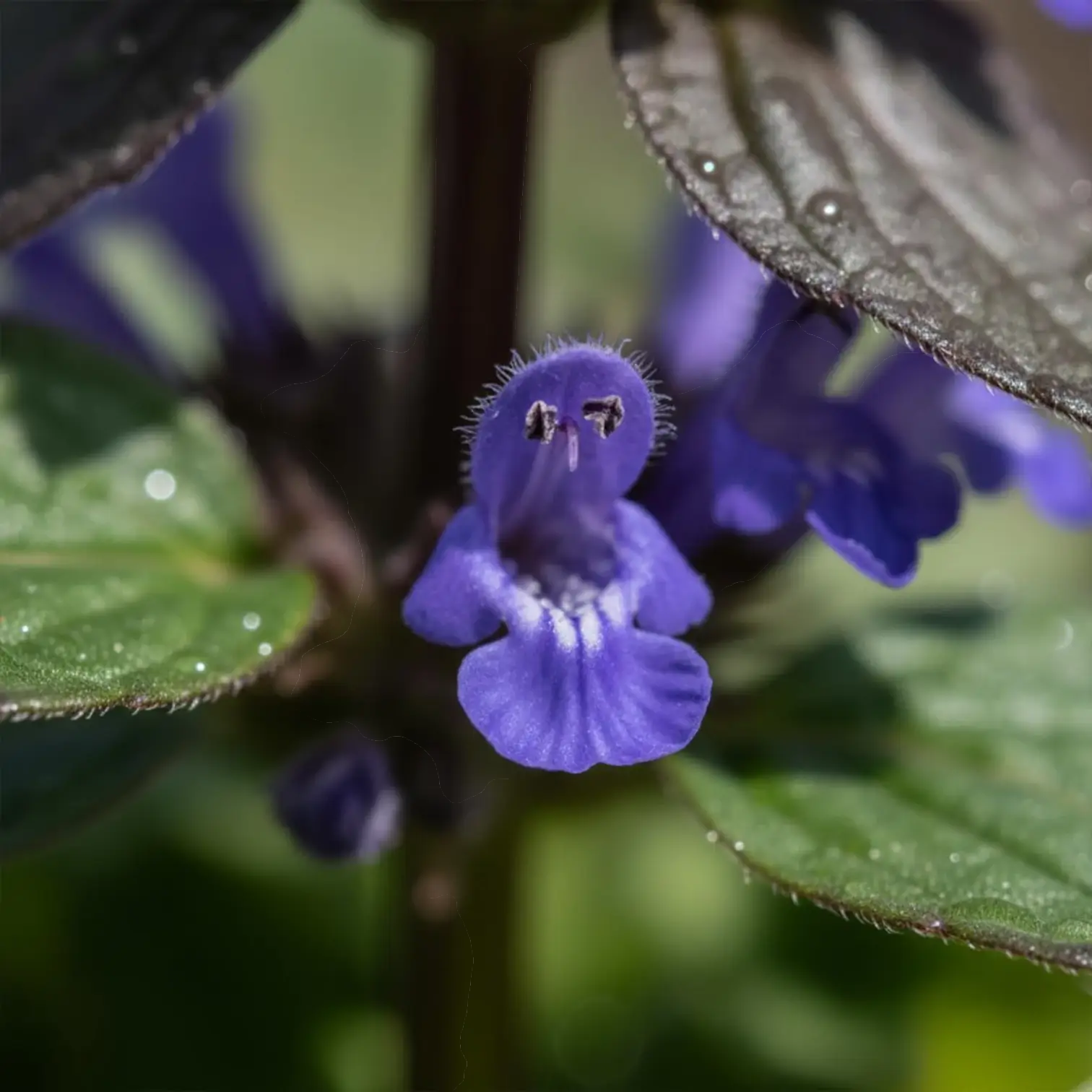
In spring and early summer, short flower spikes rise above the leaves in a rich blue. The flowers are a bonus; the real strength of Ajuga is the way it covers soil, keeps edges tidy, and gives shaded planting a finished look.
Ajuga spreads by stolons that root as they travel. In open soil a patch can expand well beyond its original plant, with an overall spread reaching around 75 cm over time. Height stays low-usually 10-15 cm, with the flower spikes slightly above that.
Because the plant expands along the surface, it’s easy to guide: trim the outer runners, lift a piece to replant elsewhere, or let it flow naturally under shrubs and along borders.
Ajuga reptans performs best in part shade to shade, where the soil stays evenly moist. Sun can also work when moisture is reliable, especially in cooler climates. In hot, dry exposure the foliage can lose its shine and the plant slows down, so afternoon shade tends to suit many gardens.
A moderately fertile, moisture-retentive but well-drained soil supports fast knitting. Before planting, loosen the top layer of soil and mix in compost or leaf mould to improve structure. Set plants with the crown level to the soil surface and water in well.
Ajuga’s routine is simple: keep the soil from swinging between extremes, and tidy as needed. After flowering, you can snip the spent spikes to keep the mat looking clean. If the centre of a patch thickens and becomes crowded, lift and divide in early spring or autumn, replanting the freshest outer pieces.
In borders and along paths, the easiest control method is edging. A quick trim of the runners with shears keeps Ajuga within a defined footprint. Where it meets lawn or gravel, an edging strip or a crisp spade-cut line makes maintenance straightforward.
Ajuga reptans also works well in containers, troughs, and underplanting for larger pots. In containers it stays smaller than in open ground, and the runners are easy to clip back. Use a potting mix that holds moisture but drains well, and water whenever the top layer starts to dry.
Ajuga reptans is useful wherever you want low cover without tall foliage: under shrubs, around spring bulbs after flowering, in woodland edges, on banks, or as a living edging at the front of borders. It pairs easily with ferns, hostas, hellebores, and early perennials that appreciate similar moisture.
Choose Ajuga reptans when you want dependable groundcover with a bright spring flower moment.
Ajuga reptans often stays evergreen through winter, keeping a low, tidy mat when many perennials disappear. In colder spells, the foliage can bronze or deepen in tone, then brighten again as temperatures rise. Where winters are very harsh or exposed, parts of the mat may thin, and spring growth fills in from the healthiest crowns.
The plant’s fastest growth comes from even moisture in the root zone. On slopes or banks, adding organic matter at planting and mulching lightly helps hold moisture while roots establish. In summer-dry gardens, positioning Ajuga where it receives shade for part of the day keeps the mat fuller, and occasional deep watering maintains leaf quality.
Because Ajuga spreads by runners, propagation is straightforward. Lift a rooted runner section with a small trowel and replant it immediately, or pot it up for later. For older patches, division in early spring refreshes the centre and gives multiple pieces for new areas. This is also the easiest way to keep a planting line consistent over time.
Ajuga works as a “green grout” between larger plants: under shrubs, along stepping stones, around spring bulbs after flowering, or as a filler at the front of a mixed bed. It also performs well in broad drifts under trees where mowing is awkward. In pots and troughs, it spills gently over edges and makes a calm base for spring bulbs and compact perennials.
Ajuga is happiest when it is not competing with thirsty roots right at the soil surface. Under shrubs and trees, work compost into the planting strip and water well during the first season so the runners root in firmly. A thin spring feed with compost or a balanced fertiliser supports leaf density, especially in containers or very sandy soils.
Choose options


Sign up for Foliage Factory newsletter for early access to new arrivals and practical care tips that work in real homes.