Position
Sun to part shade

Acer
VAT included · plus
Your outdoor plant has just been packed, transported and unpacked, so give it a calm start before planting or placing it permanently. Remove all packaging carefully, check the pot, stems, visible roots and substrate moisture, and settle any loose growing medium back around the root ball. Water if the root ball feels dry, but do not leave the pot standing in water. For the first few days, keep the plant in a sheltered spot suited to its light needs, away from strong midday sun, heavy wind, frost and heat stress.
Do not move the plant straight into full exposure, especially if it is young, newly flushed, evergreen, recently pruned or greenhouse-grown. Gradually introduce more sun, wind and temperature variation over several days. If cold nights, storms, intense sun or hot dry weather are expected, keep the plant protected until conditions are more stable. Do not fertilize immediately after delivery; let the plant settle first and resume feeding only when it is actively growing and conditions are suitable.
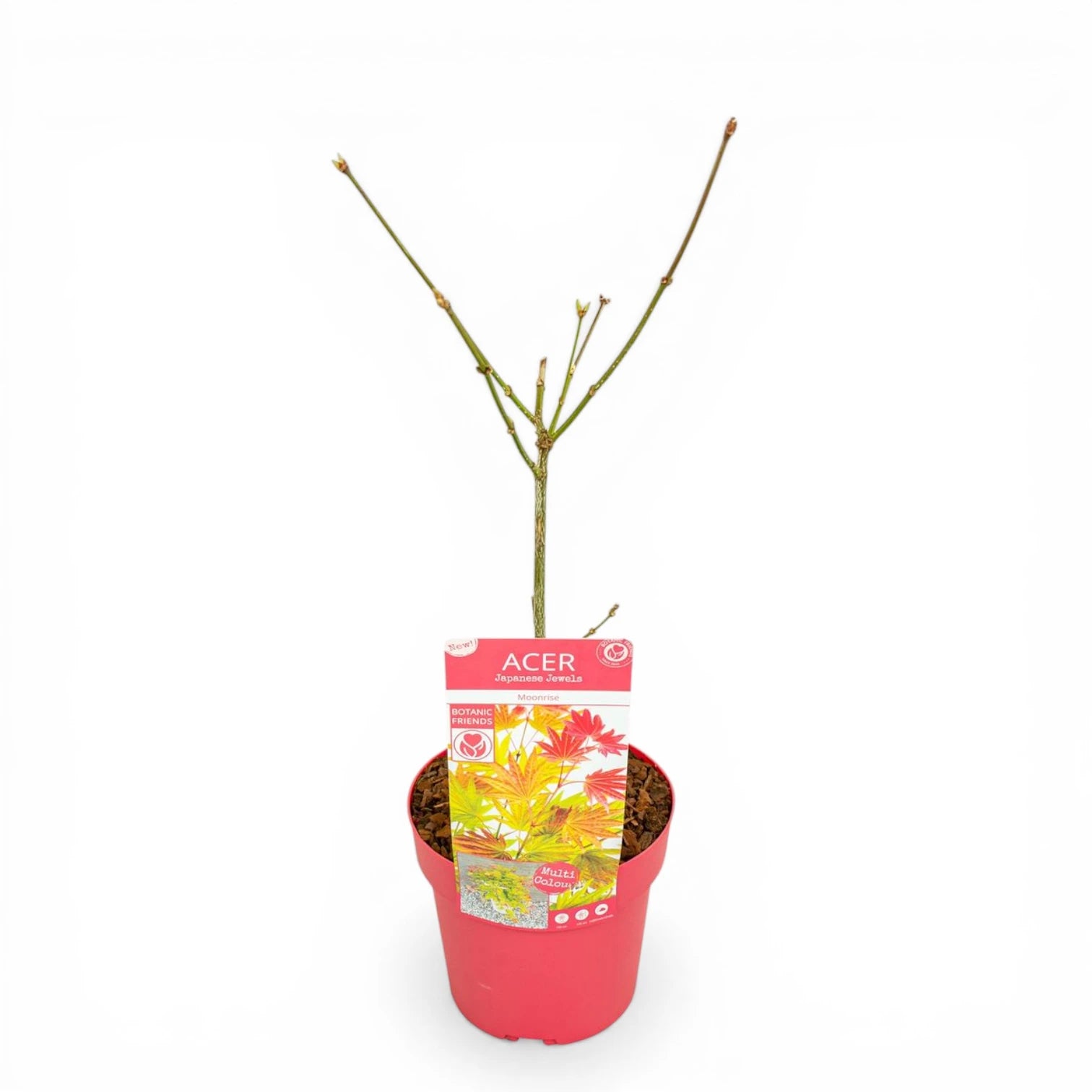
Outdoor plants may arrive in different seasonal stages. Depending on the time of year, your plant may be leafy, flowering, newly sprouting, recently pruned, dormant, partly bare or leafless. Adjust care to what the plant is doing: actively growing plants need closer moisture checks, while dormant plants usually need protection from extremes and only light moisture management until growth resumes.
Plant outdoors when the soil is workable and weather conditions suit the plant type. Avoid planting during frost, heatwaves, waterlogged soil or very dry windy periods. It is better to keep the plant protected in its pot for a short time than to plant into stressful conditions. After planting, water thoroughly so the root ball and surrounding soil connect properly, then monitor moisture while the plant establishes.
Secure shipping, carefully packed orders with safe delivery across the EU, UK and Switzerland.
28-day plant guarantee, if a plant arrives damaged or fails soon after delivery, we help you make it right.
Free returns, simple, cost-free returns according to our policy.
For full details, please see:
Please head to our FAQ Page or Contact us.
Deciduous shrub / small tree
Position
Sun to part shade
Moisture
Moist
Drainage
Moisture-retentive, Well-drained
Hardiness
Fully hardy · -20°C
Mature size
150–250 × 150–250 cm
Winter habit
Deciduous
Bloom time
Spring
Containers
Good in pots
Pruning
Mid to late summer, Winter
Temperate woodland in Japan (central and western Honshu, Shikoku).
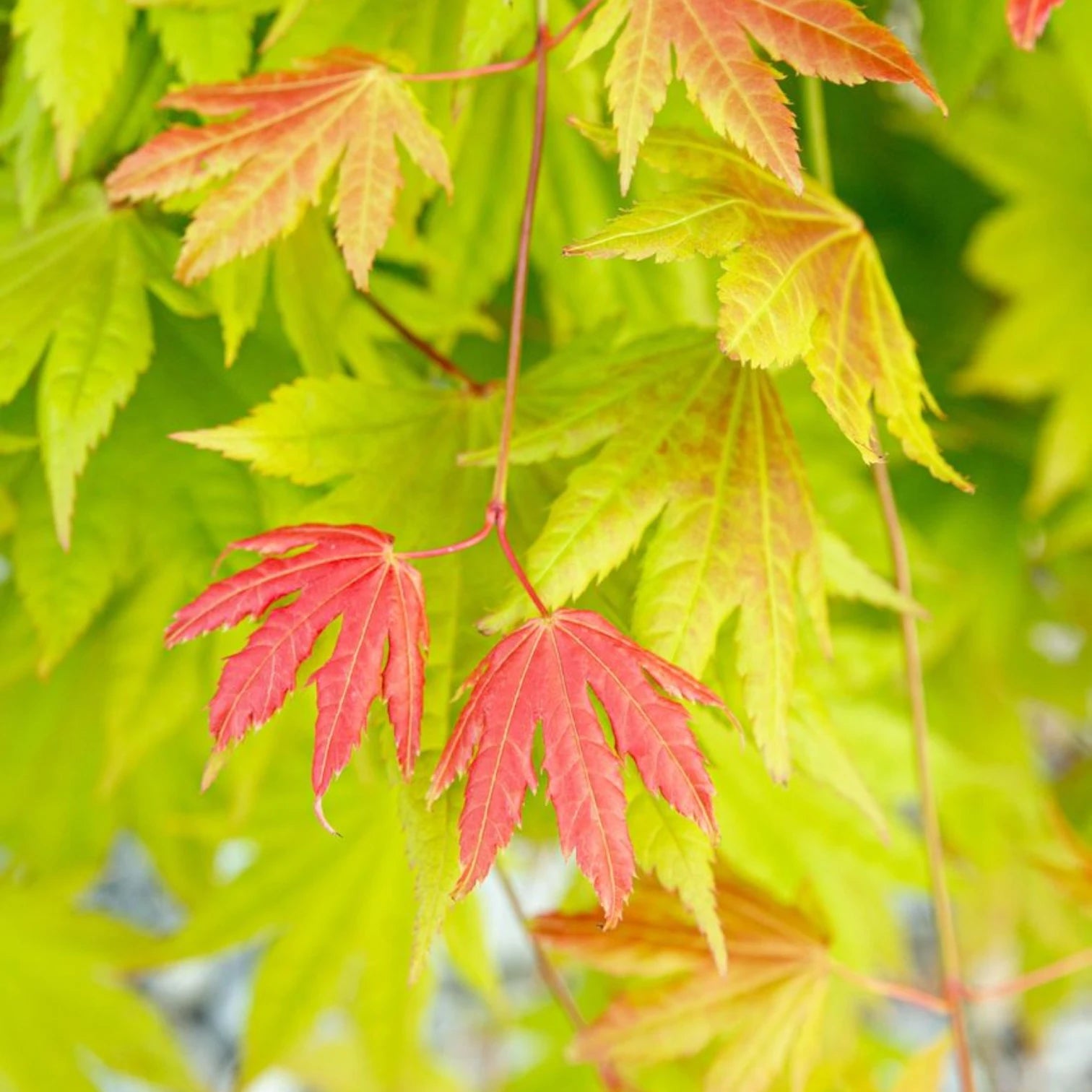
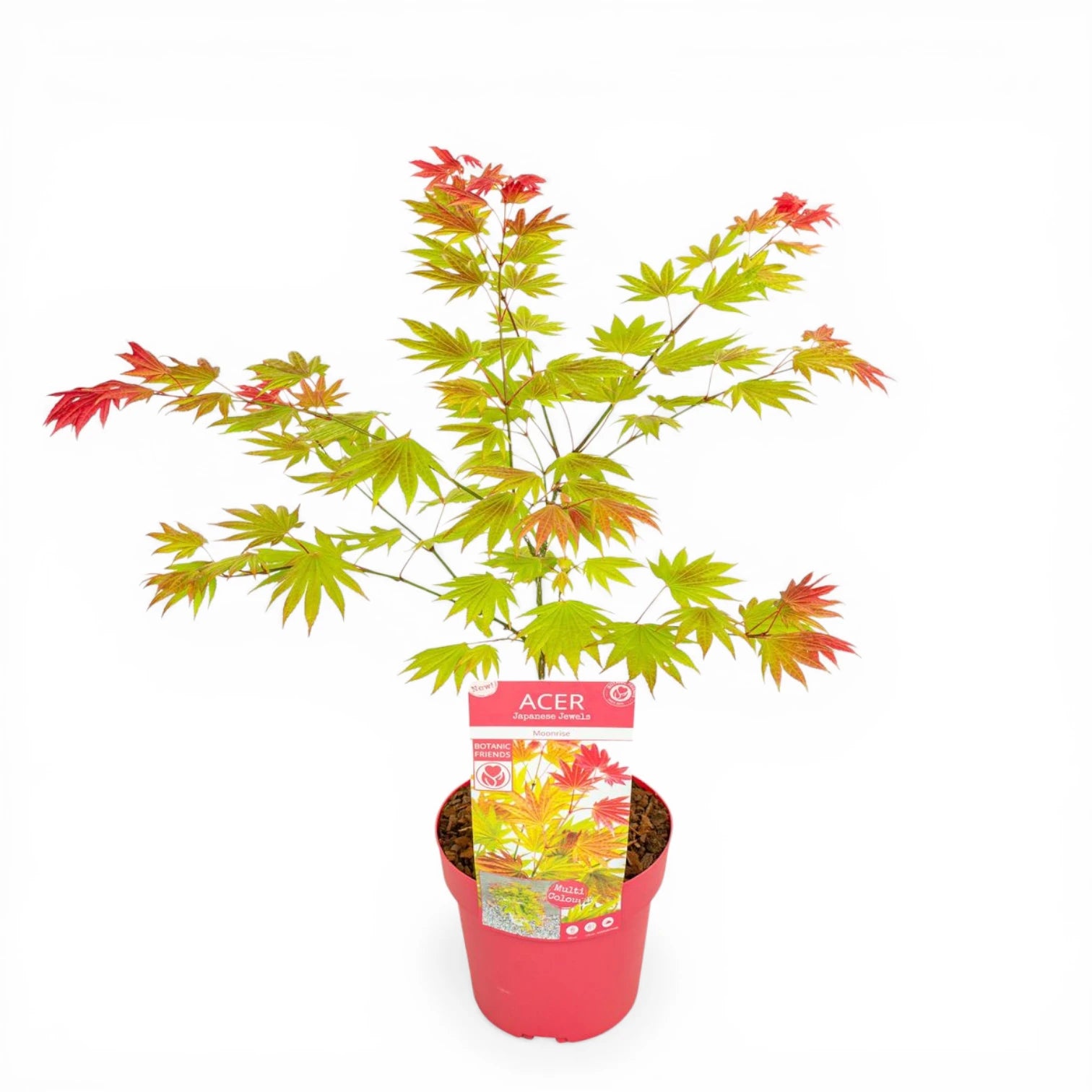
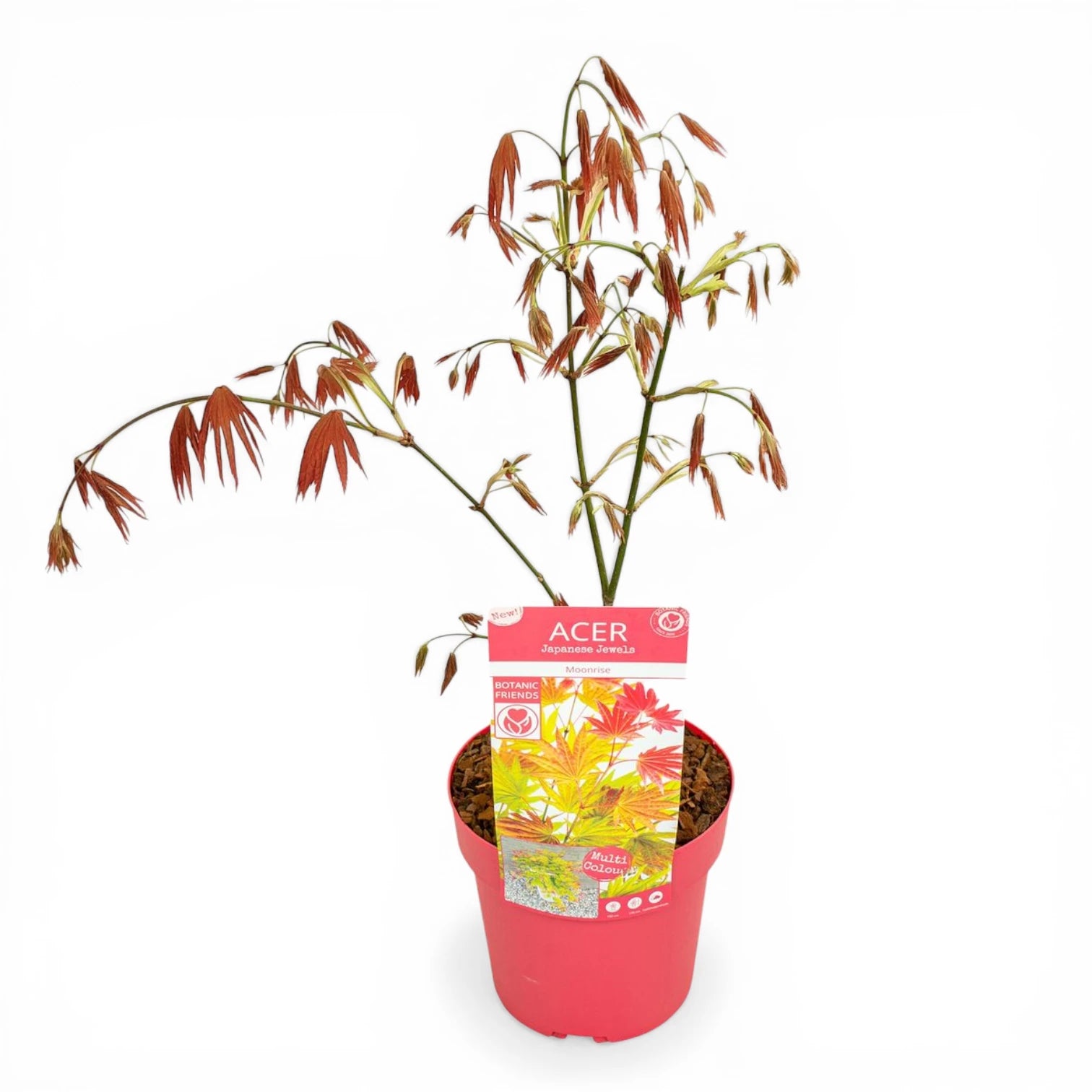
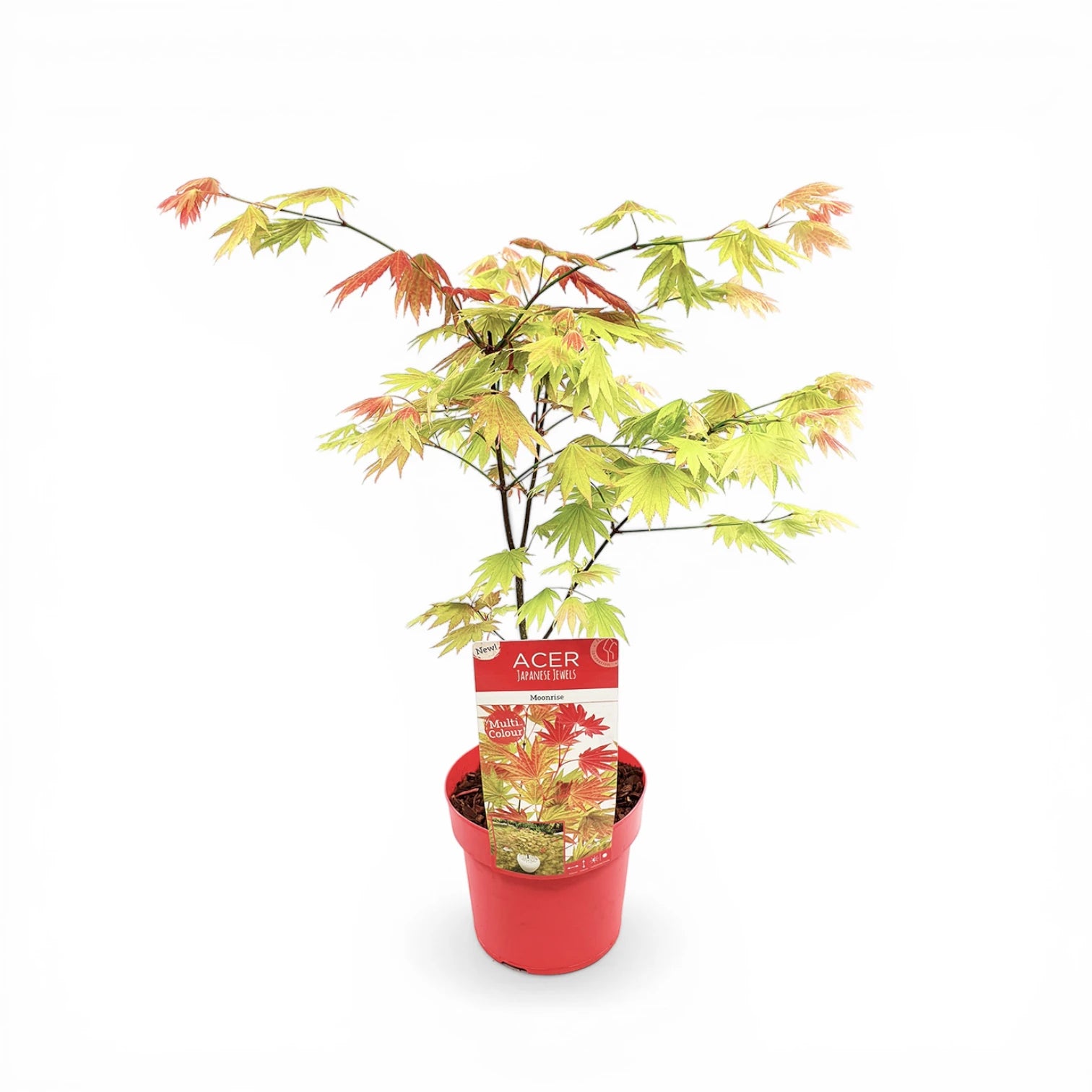
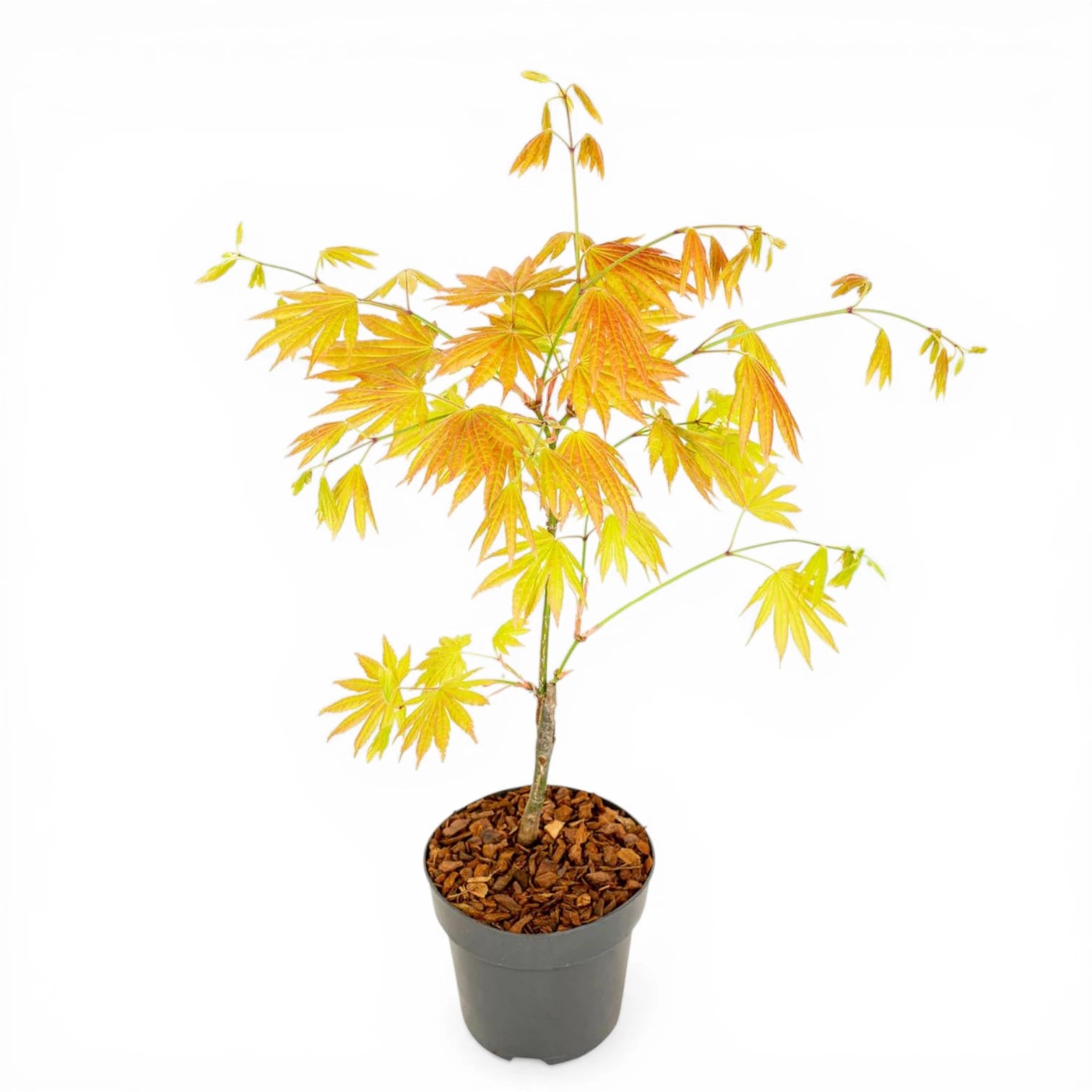
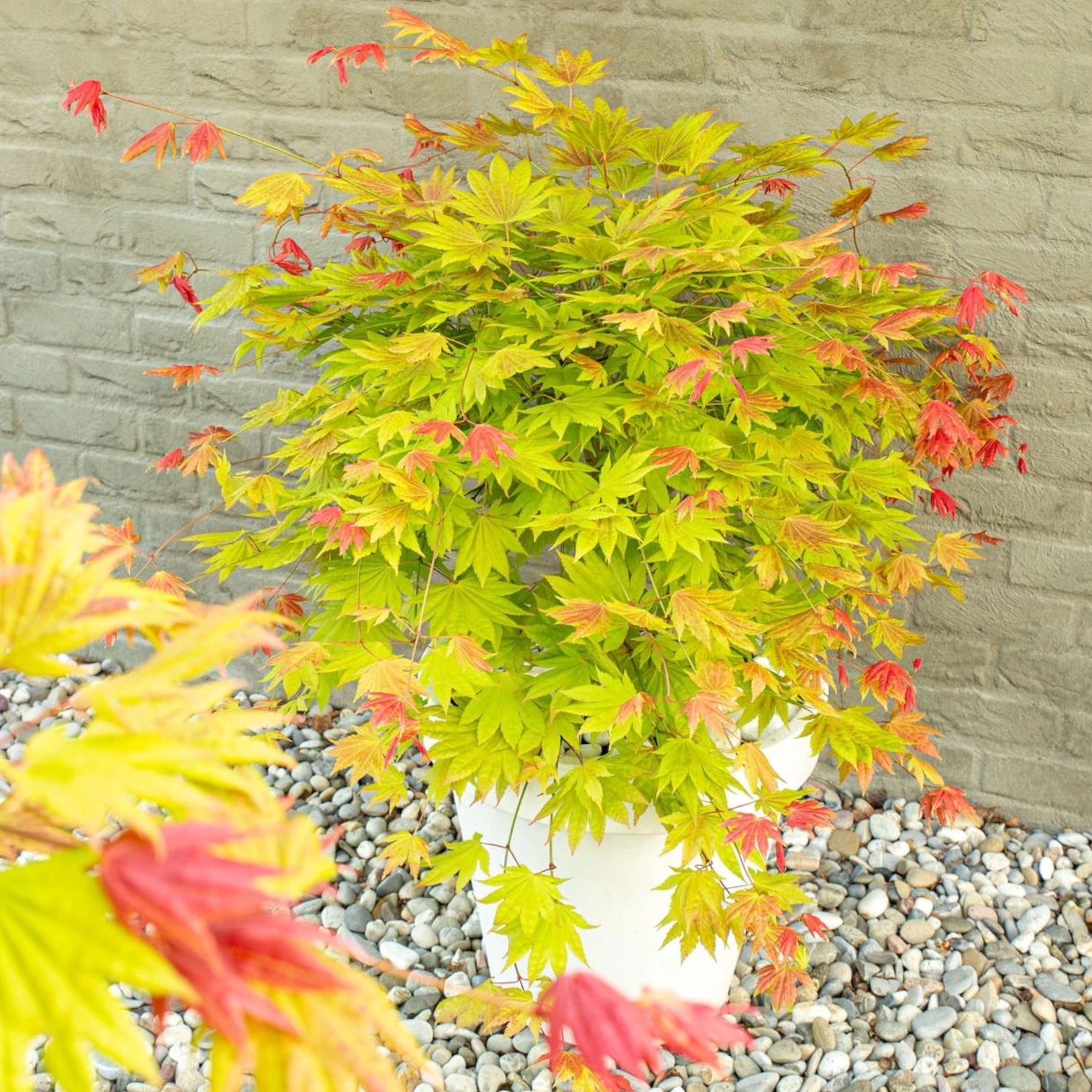
Acer shirasawanum 'Moonrise' is a compact fullmoon maple with rounded, palmately lobed leaves and a long season of shifting colour. Young foliage emerges with bright red tones, matures to yellow-green through summer, and finishes in orange and red shades in autumn. The outline is softly rounded and naturally full, making it a strong specimen for sheltered borders and large containers.
In open ground, Acer shirasawanum 'Moonrise' ultimately reaches 1.5-2.5 m in height and spread. In a container, growth runs slower and the final size stays smaller than plants grown in the ground, which makes it practical for patios and courtyards when the pot is generous and moisture is managed well.
Fullmoon maples are valued for leaf shape as much as colour. Rounded leaves create a soft, layered texture, and the seasonal colour shift keeps the plant lively from spring through leaf-fall. Branching is spreading and well layered, so the plant looks architectural even without pruning.
Sun to part shade suits Acer shirasawanum 'Moonrise'. Part shade often keeps foliage clean through summer, particularly in warm regions or exposed courtyards. Shelter from cold, drying winds supports leaf quality and reduces the chance of edge marking during heat and wind events. Where full sun is used, reliable soil moisture is important.
This cultivar grows best in fertile, moist but well-drained soil. Clay, loam, and sand can all work when soil structure supports both drainage and moisture holding. Organic matter improves structure and helps keep the surface root zone active. Soil reaction suits acid to neutral conditions.
In heavier soils, planting slightly proud of surrounding ground and using coarse organic material can improve drainage while still holding moisture. A mulch layer helps buffer temperature swings and supports consistent soil moisture through summer.
Autumn and spring are both suitable planting windows. Set the plant at the same depth it grew in the pot, water thoroughly to settle it in, and keep the root zone consistently moist through the first growing season. A wide mulch ring reduces competition and makes watering more effective.
Acer shirasawanum 'Moonrise' performs very well in a large pot. Use a stable container with generous drainage and a structured mix that holds moisture but drains freely. A loam-based compost with added bark and a mineral component (pumice or grit) helps maintain structure over time. In containers, roots experience colder winter swings and faster drying in summer, so watering checks and winter insulation become more important than in the ground.
This cultivar develops an attractive framework naturally. Pruning is mainly for structure and is best done in dormancy: remove damaged or crossing branches and refine the outline with small cuts. If canopy lifting is desired for a clearer trunk line, remove a small number of lower branches over several seasons so the plant keeps a balanced look.
Acer shirasawanum 'Moonrise' is fully hardy in temperate gardens, with the main winter challenge being root exposure in containers. Pots experience rapid freeze-thaw cycles compared with ground soil, so insulating the pot and placing it in a sheltered corner helps keep roots steadier. In the ground, a mulch layer supports shallow roots and improves moisture retention during winter dry spells.
With an ultimate spread of 1.5-2.5 m, this cultivar benefits from space so the rounded outline stays visible. In mixed borders, low underplanting keeps the canopy as the feature and supports air movement through the stems. Container growing keeps the footprint smaller and makes it easy to position the plant where spring colour is most visible.
Leaf scorch can occur in hot, windy weather or when the root zone dries quickly. Shelter, mulching, and consistent moisture usually keep foliage looking clean. Aphids may appear on spring growth; natural predators often keep them under control. In soils that remain wet for long periods in winter, root stress can develop, so soil structure and drainage play a large role in long-term health.
Acer shirasawanum comes from temperate woodland in Japan, where moisture is reliable and light is often filtered through taller trees. That background is a helpful guide in gardens: consistent soil moisture, protection from drying wind, and some shade during the hottest part of the day support the cleanest foliage and the most even growth.
Acer shirasawanum is native to Japan, and this cultivar suits temperate gardens with cool, moist soils and some shelter. Use it as a specimen among ferns, hostas, epimediums, and spring bulbs, or set it against darker evergreens and stone to highlight foliage colour through the seasons.

Choose options
Sign up for Foliage Factory newsletter for early access to new arrivals and practical care tips that work in real homes.