Position
Part shade

Acer
VAT included · plus
Your outdoor plant has just been packed, transported and unpacked, so give it a calm start before planting or placing it permanently. Remove all packaging carefully, check the pot, stems, visible roots and substrate moisture, and settle any loose growing medium back around the root ball. Water if the root ball feels dry, but do not leave the pot standing in water. For the first few days, keep the plant in a sheltered spot suited to its light needs, away from strong midday sun, heavy wind, frost and heat stress.
Do not move the plant straight into full exposure, especially if it is young, newly flushed, evergreen, recently pruned or greenhouse-grown. Gradually introduce more sun, wind and temperature variation over several days. If cold nights, storms, intense sun or hot dry weather are expected, keep the plant protected until conditions are more stable. Do not fertilize immediately after delivery; let the plant settle first and resume feeding only when it is actively growing and conditions are suitable.
Outdoor plants may arrive in different seasonal stages. Depending on the time of year, your plant may be leafy, flowering, newly sprouting, recently pruned, dormant, partly bare or leafless. Adjust care to what the plant is doing: actively growing plants need closer moisture checks, while dormant plants usually need protection from extremes and only light moisture management until growth resumes.
Plant outdoors when the soil is workable and weather conditions suit the plant type. Avoid planting during frost, heatwaves, waterlogged soil or very dry windy periods. It is better to keep the plant protected in its pot for a short time than to plant into stressful conditions. After planting, water thoroughly so the root ball and surrounding soil connect properly, then monitor moisture while the plant establishes.
Secure shipping, carefully packed orders with safe delivery across the EU, UK and Switzerland.
28-day plant guarantee, if a plant arrives damaged or fails soon after delivery, we help you make it right.
Free returns, simple, cost-free returns according to our policy.
For full details, please see:
Please head to our FAQ Page or Contact us.
Deciduous shrub / small tree
Position
Part shade
Moisture
Moist
Drainage
Moisture-retentive, Well-drained
Hardiness
Fully hardy · -20°C
Mature size
150–250 × 150–250 cm
Winter habit
Deciduous
Bloom time
Spring
Containers
Good in pots
Pruning
Mid to late summer, Winter
Temperate woodland, woodland-edge and mountain-edge habitats in Japan and Korea.
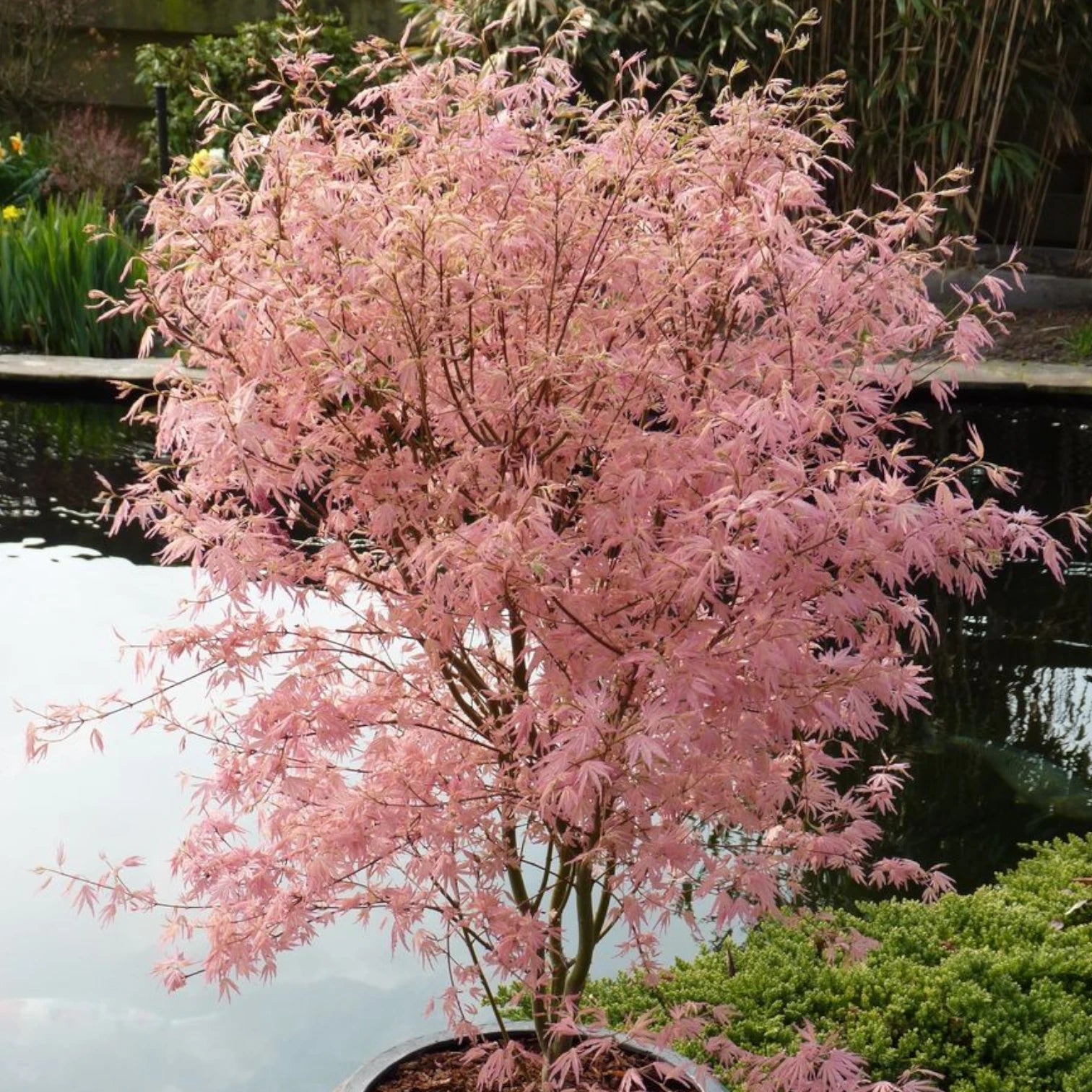
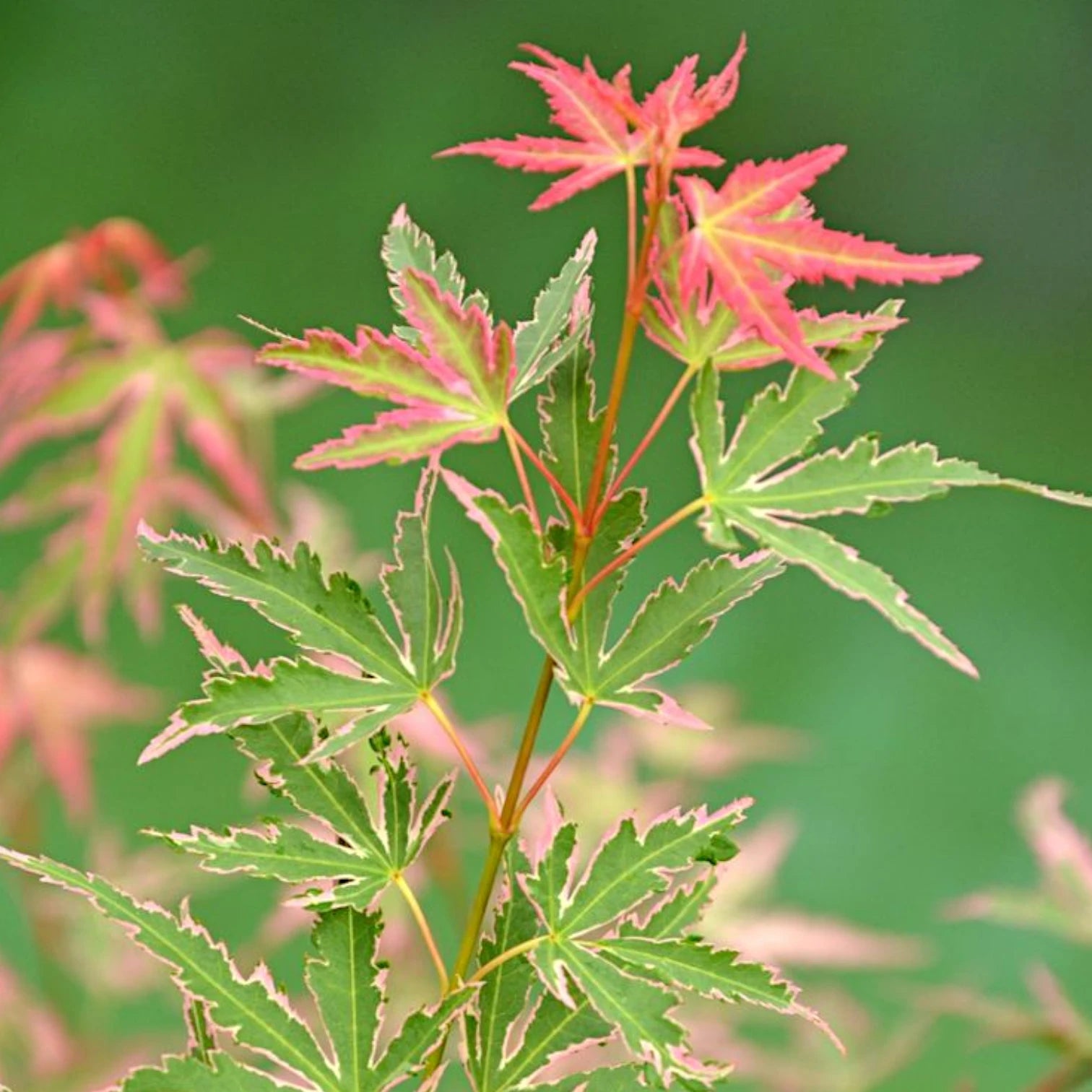
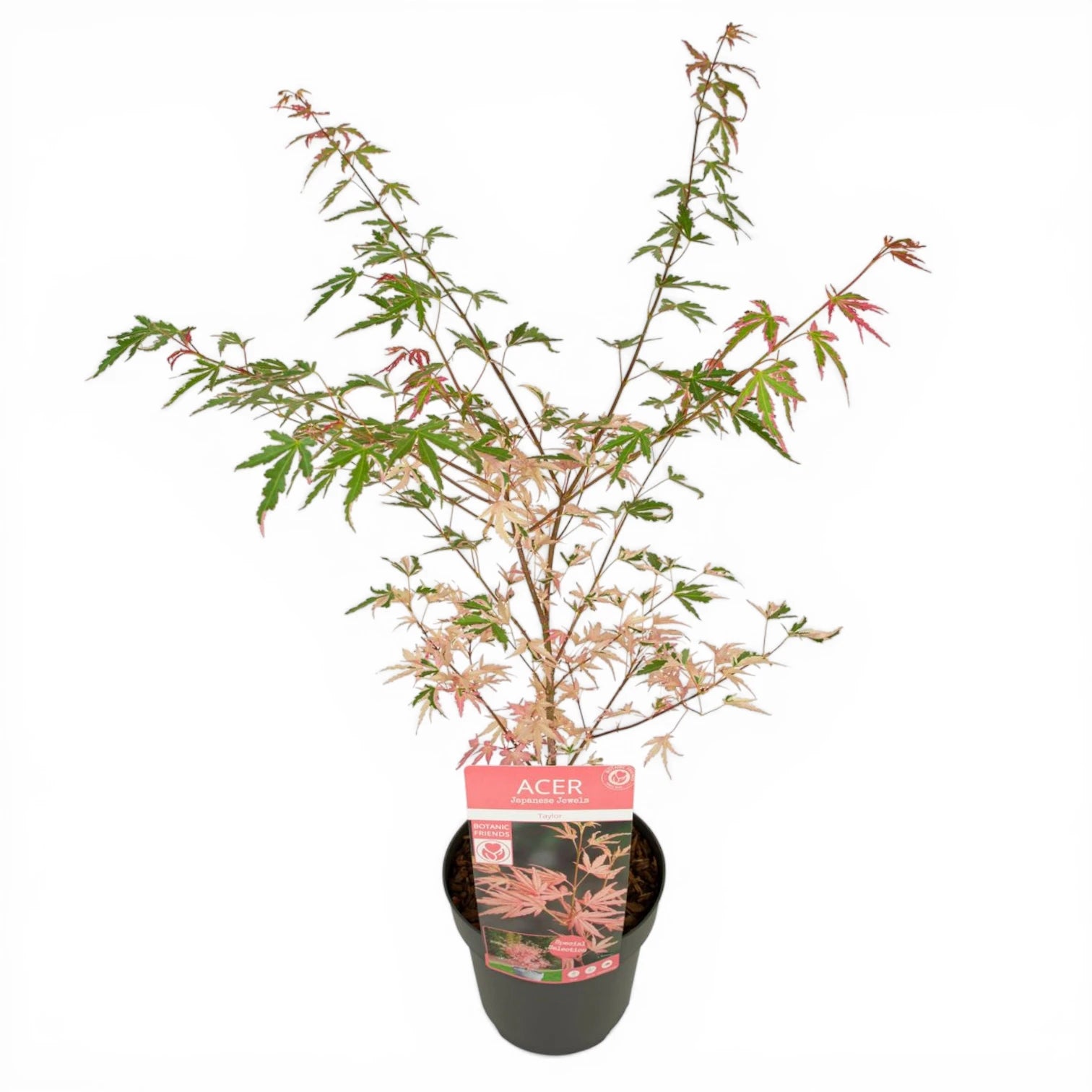
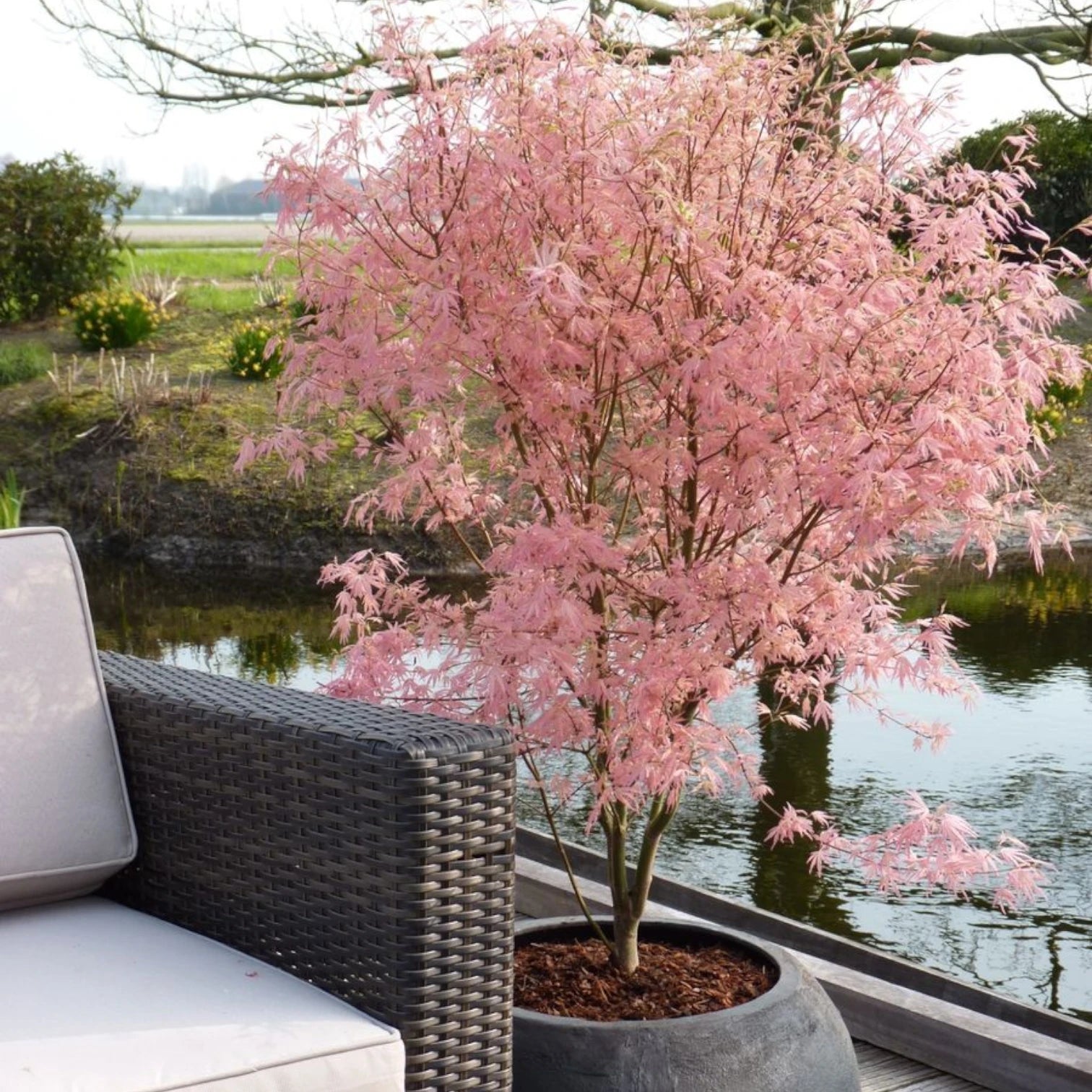
Acer palmatum 'Taylor' is a variegated Japanese maple with pale pink new growth and cream-edged leaves that bring soft colour and fine detail to sheltered planting. The habit is slow-growing and compact, making it a strong choice for containers, courtyards, and protected borders where foliage is seen up close.
In open ground, Acer palmatum 'Taylor' ultimately reaches 1.5-2.5 m in height and spread. In a container, growth remains slower and the final size stays smaller than plants grown in the ground, especially when the root system is periodically refreshed. That controlled pace also makes it workable for long-term pot culture in smaller gardens.
The appeal of this cultivar is subtle and close-range: soft pink flushing on new leaves, cream margins, and a gentle shift toward greener tones through the season. The crown stays compact, and the fine leaf shape keeps the plant looking detailed even in a smaller space. A sheltered position also helps maintain clean leaf edges through summer.
Part shade is the ideal setting for Acer palmatum 'Taylor'. Gentle light supports even growth and helps foliage stay clean through summer. Strong midday sun can mark variegated leaves more easily, especially when combined with wind and dry soil, so locations with filtered light, morning sun, or shade during the hottest part of the day tend to work best.
This cultivar grows well in moisture-retentive, well-drained soil and tolerates a wide pH range (acid, neutral, or alkaline). Clay, loam, and sand can all work when soil structure supports both drainage and moisture holding. Organic matter improves the root zone in every soil type, and a mulch layer buffers moisture and temperature swings around shallow surface roots.
Plant in autumn or spring. Set the root ball level with surrounding soil, water thoroughly to settle it in, and keep moisture consistent through the first growing season. A wide mulch ring reduces competition from grass and makes watering more efficient.
Acer palmatum 'Taylor' is well suited to large containers. Use a stable pot with generous drainage holes and a structured mix that holds moisture but drains freely. A loam-based compost with added bark and a mineral component (pumice or grit) keeps structure longer than fine mixes alone. In pots, root zones dry faster in summer and experience colder winter swings, so watering and winter insulation are central to long-term success.
A wide, stable pot helps balance the crown and reduces rocking in wind, which protects fine roots. Terracotta and heavy composite containers both work well, provided drainage is generous. Raising the pot slightly off the ground improves drainage after heavy rain, and a thin top layer of bark helps the compost surface stay more even in moisture.
This cultivar forms an attractive framework with minimal pruning. Structural work is best done in dormancy, focusing on removing damaged wood, thinning crossing branches, and refining the outline with small cuts. Over time, that approach keeps the crown open enough for good air movement while preserving the compact habit.
Variegated maples sometimes produce strongly green shoots. If solid-green shoots appear, pruning them out helps keep the overall pattern consistent across the plant.
Acer palmatum 'Taylor' ultimately reaches 1.5-2.5 m in height and spread in open ground. Give it space so the compact crown can be appreciated with neighbouring shrubs kept back from the variegated foliage. In smaller gardens, container culture and gradual refinement keep the plant compact and close to eye level.
This cultivar is fully hardy in temperate gardens, with the main winter consideration being root exposure in containers. Pots cool and warm quickly, so insulating the pot and moving it to a sheltered corner reduces root stress during freeze-thaw periods. In the ground, an annual mulch layer supports shallow feeder roots.
Leaf scorch can occur in hot, windy weather, especially in exposed sites or when the root zone dries quickly. Shelter, mulching, and consistent moisture help keep foliage looking clean. Aphids and scale insects may appear on spring growth; natural predators often keep them in check. In soils that remain wet for long periods in winter, root stress can develop, so soil structure and drainage play a large role in long-term health.
Acer palmatum 'Taylor' works best where subtle foliage shifts can be appreciated. Pair it with darker evergreens, charcoal stone, or deep green shrubs to emphasise the cream margins and spring pink tones. Underplant with low ferns, hellebores, or spring bulbs, and keep neighbouring plants low so the canopy remains the focus.
Choose options


Sign up for Foliage Factory newsletter for early access to new arrivals and practical care tips that work in real homes.