Position
Part shade

Acer
VAT included · plus
Your outdoor plant has just been packed, transported and unpacked, so give it a calm start before planting or placing it permanently. Remove all packaging carefully, check the pot, stems, visible roots and substrate moisture, and settle any loose growing medium back around the root ball. Water if the root ball feels dry, but do not leave the pot standing in water. For the first few days, keep the plant in a sheltered spot suited to its light needs, away from strong midday sun, heavy wind, frost and heat stress.
Do not move the plant straight into full exposure, especially if it is young, newly flushed, evergreen, recently pruned or greenhouse-grown. Gradually introduce more sun, wind and temperature variation over several days. If cold nights, storms, intense sun or hot dry weather are expected, keep the plant protected until conditions are more stable. Do not fertilize immediately after delivery; let the plant settle first and resume feeding only when it is actively growing and conditions are suitable.
Outdoor plants may arrive in different seasonal stages. Depending on the time of year, your plant may be leafy, flowering, newly sprouting, recently pruned, dormant, partly bare or leafless. Adjust care to what the plant is doing: actively growing plants need closer moisture checks, while dormant plants usually need protection from extremes and only light moisture management until growth resumes.
Plant outdoors when the soil is workable and weather conditions suit the plant type. Avoid planting during frost, heatwaves, waterlogged soil or very dry windy periods. It is better to keep the plant protected in its pot for a short time than to plant into stressful conditions. After planting, water thoroughly so the root ball and surrounding soil connect properly, then monitor moisture while the plant establishes.
Secure shipping, carefully packed orders with safe delivery across the EU, UK and Switzerland.
28-day plant guarantee, if a plant arrives damaged or fails soon after delivery, we help you make it right.
Free returns, simple, cost-free returns according to our policy.
For full details, please see:
Please head to our FAQ Page or Contact us.
Deciduous shrub / small tree
Position
Part shade
Moisture
Moist
Drainage
Moisture-retentive, Well-drained
Hardiness
Fully hardy · -20°C
Mature size
250–400 × 100–150 cm
Winter habit
Deciduous
Bloom time
Spring
Containers
Good in pots
Pruning
Late autumn to midwinter
Temperate woodland, woodland-edge and mountain-edge habitats in Japan and Korea.
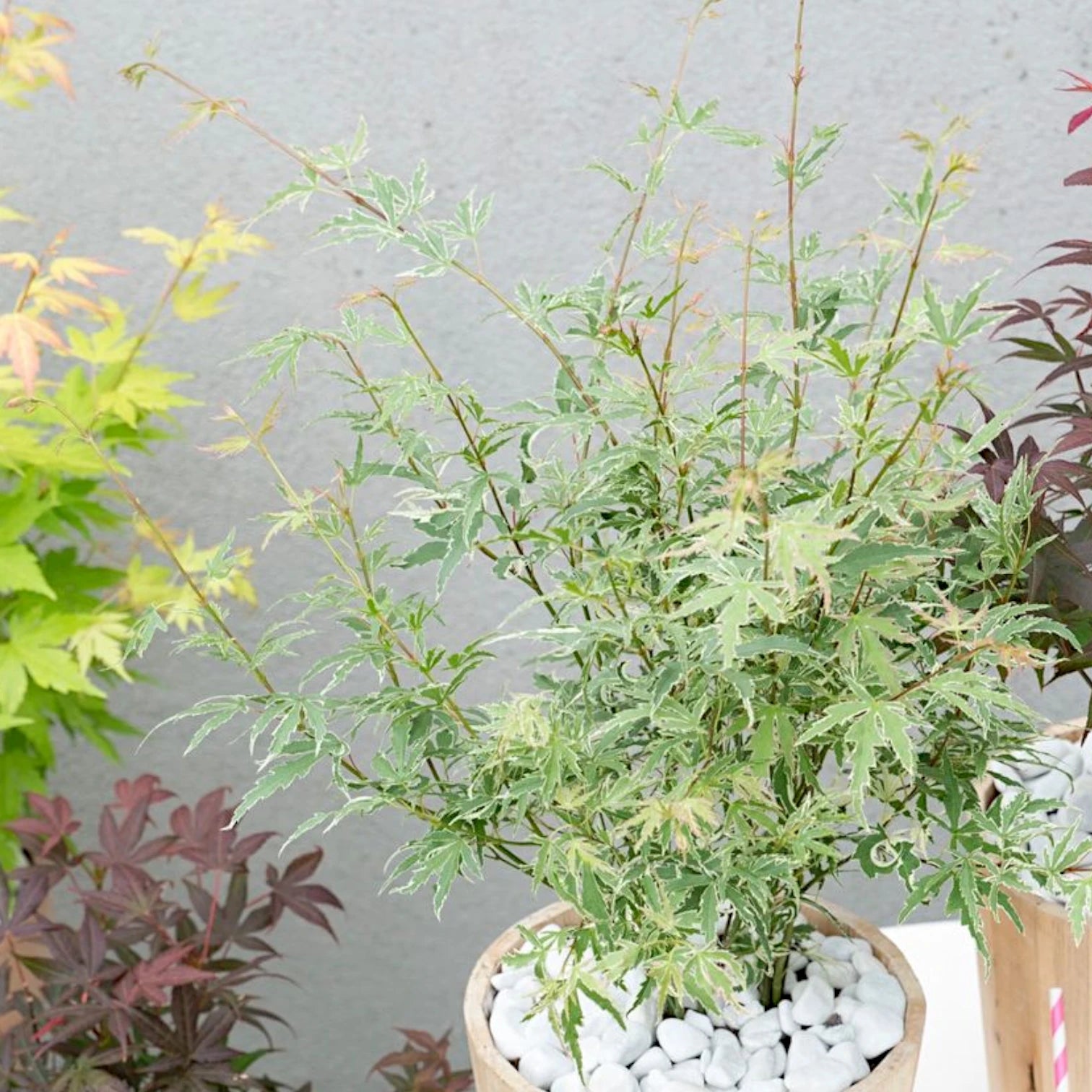
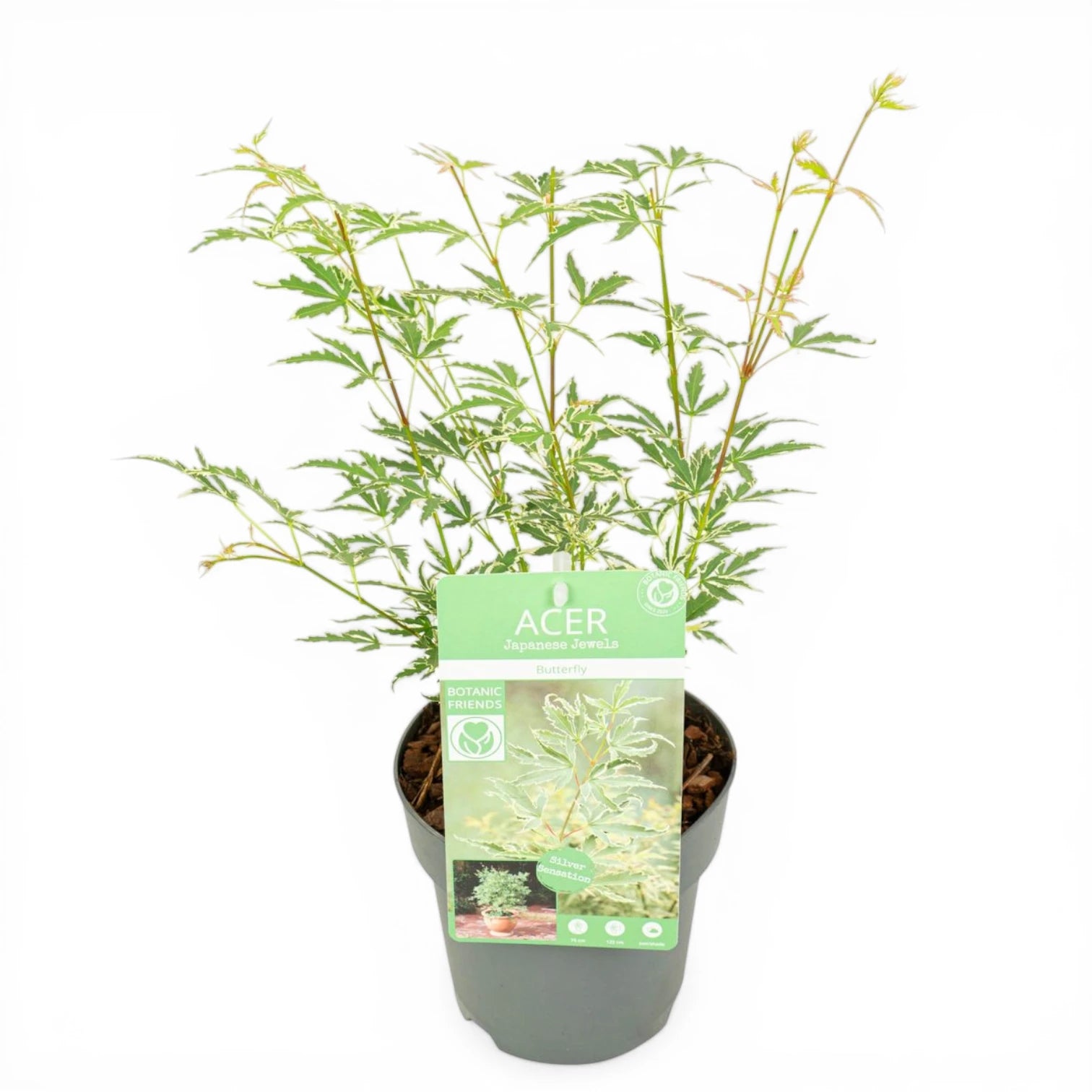
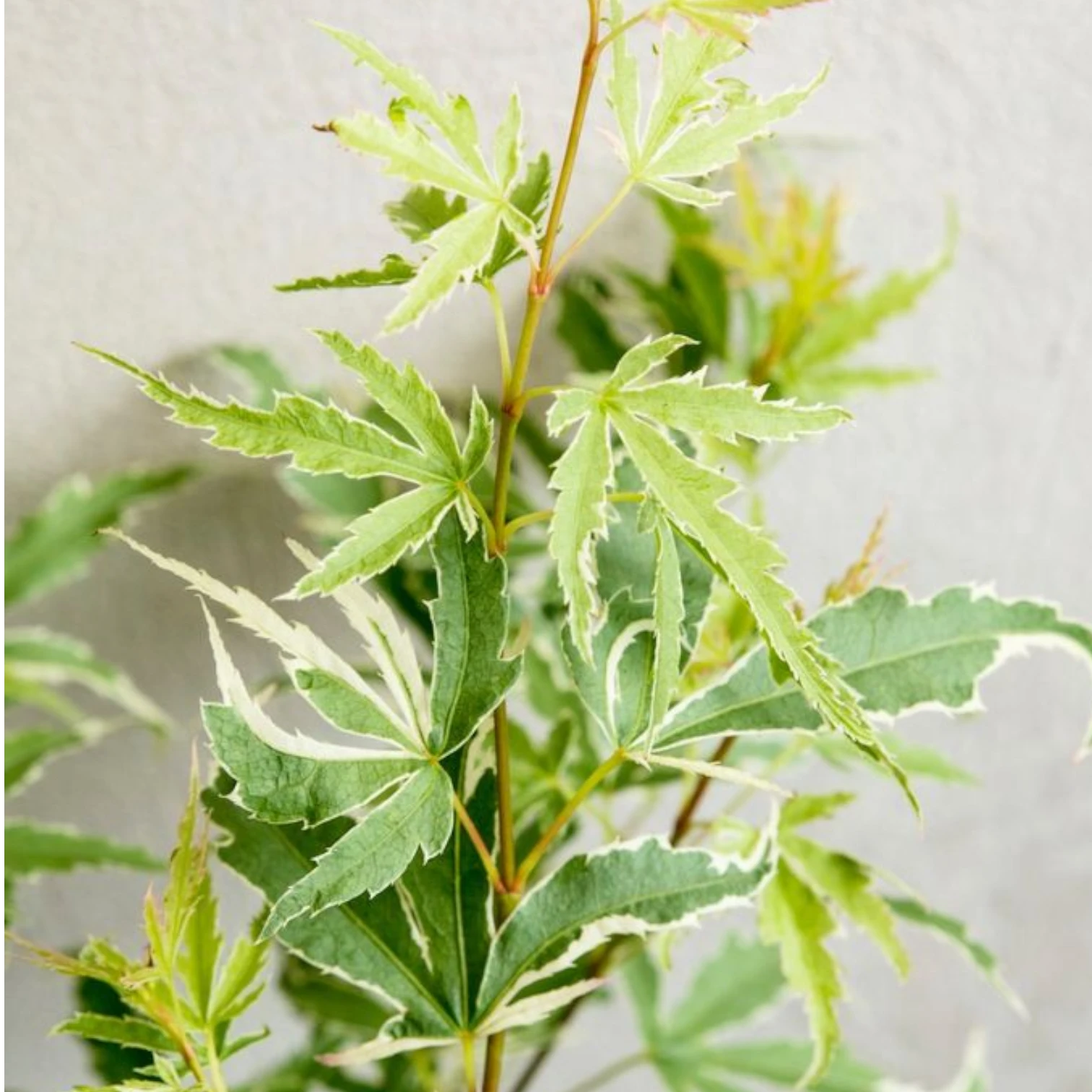
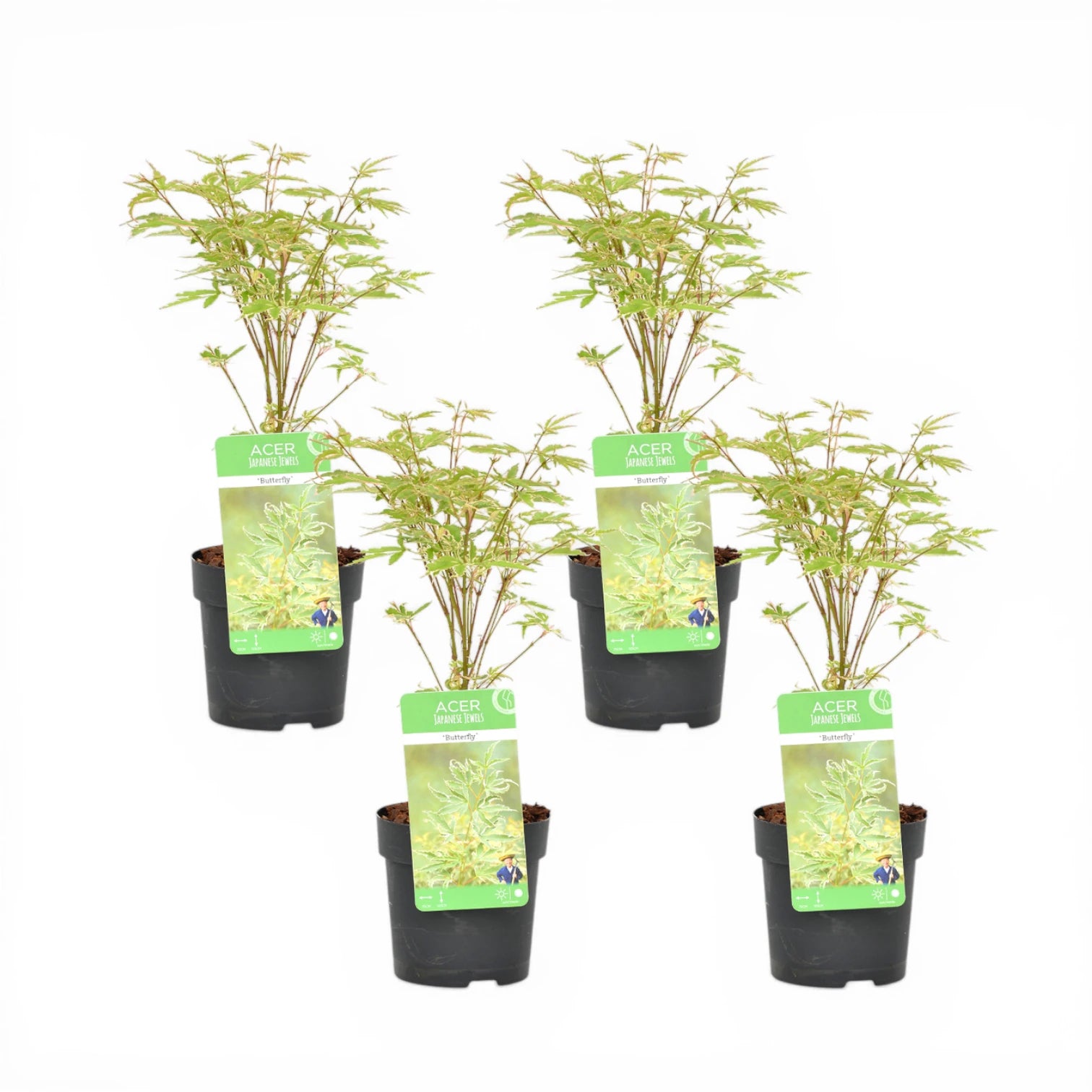
Acer palmatum 'Butterfly' is a variegated Japanese maple with fine palmate leaves edged in cream and white. Fresh spring growth can carry soft pink flushes, then the foliage shifts to a green-and-cream pattern through summer before autumn brings rose, coral and red tints. Its outline is upright, light and finely branched, giving entrances, patios and sheltered borders a bright, detailed focal point.
Acer palmatum comes from Japan and Korea, and 'Butterfly' carries that woodland character into a lighter, variegated form. In nature, Japanese maples are linked with temperate woodland and sloping terrain where roots stay cool, light is filtered and moisture remains available while excess water still drains away. Those conditions translate well into garden care: bright but softened light, a humus-rich rooting space, and steady watering during warm, dry periods. With that balance, 'Butterfly' keeps cleaner variegation and better leaf shape through the growing season.
'Butterfly' is grown for fine detail and soft seasonal contrast. Each leaf is small and neatly lobed, with irregular creamy margins that create a shimmering effect when branches move in light wind. New shoots often show pink tones along the edges, especially in spring. As the season progresses, the canopy becomes softer and more silvery green, making this maple useful around dark evergreens, textured grasses, clipped shrubs and shaded seating areas.
The variegation is a cultivar trait, so healthy growth, stable watering and suitable exposure are the main priorities. Strong midday heat can mark the pale margins more quickly, while very low light can reduce the crispness of the pattern. A bright, calm position gives the best combination of colour, leaf quality and growth.
In open ground, Acer palmatum 'Butterfly' can mature into a small, upright tree around 2.5-4 m tall, with a comparatively narrow spread of roughly 1-1.5 m. The outline stays light and well-mannered, so it suits smaller gardens where a refined vertical accent matters more than width.
In containers, growth is typically slower and more compact. With a generous pot and regular moisture, it can hold a smaller, tighter silhouette for a long time, which is one reason it works well on terraces and in courtyard planting.
Because the foliage is variegated, placement is as much about comfort as it is about colour. Leaving a little space around the crown reduces leaf edge stress and keeps the cream margins looking clean through summer.
'Butterfly' appreciates bright conditions with protection from the harshest afternoon heat. Morning sun followed by light shade is often ideal. In cooler, cloudier climates it can take more sun, provided the root area stays evenly moist. The pale leaf margins are finer than plain green tissue, so they benefit from wind-filtered positions where hot air movement is softened before it reaches the canopy.
Look for a place with gentle light and a stable microclimate. A courtyard with open sky, a border backed by shrubs, or an east-facing position near a wall can all work well. Reflected heat from paving can increase watering needs, so containers on terraces should be checked carefully in summer. Aim for bright comfort: enough light for growth and colour, with enough protection to keep leaf edges clean.
A fertile, humus-rich soil with reliable drainage supports the best long-term growth. Japanese maples have fine feeder roots that perform well in soil that stays lightly moist but never sour or compacted. Loamy garden soil is usually a strong base. Heavy soil can be improved with composted organic matter and a slightly raised planting area. Light sandy soil needs organic matter to hold moisture around the roots during dry weather.
Plant with the top of the rootball level with the surrounding soil. Firm gently, water thoroughly and mulch over the wider root area while keeping the stem base clear. Mulch is especially useful for 'Butterfly' because cool, buffered roots help the fine variegated foliage stay attractive in summer. Container plants need a similar balance: a structured potting mix that holds moisture but releases excess water quickly.
Water newly planted Acer palmatum 'Butterfly' deeply during the first growing season. Deep watering encourages roots to move outward and downward, which gives the plant better summer resilience. During hot spells, check soil moisture before leaves begin to curl or crisp. In pots, the rootball can dry faster than surrounding garden soil, so a regular check with a finger or moisture probe is helpful.
Feeding should be gentle. Use a balanced slow-release feed in spring or a mild organic feed during active growth. Rich, fast feeding can create soft shoots that are more prone to marking, especially during heat or wind. Refreshing the top layer of container compost each year and keeping mulch in good condition often does more for long-term health than heavy fertilising.
Light, selective pruning keeps 'Butterfly' elegant. Remove dead, damaged or crossing wood, then allow the natural upright framework to develop. Small cuts are easier for Japanese maples to cover and preserve the fine branching that makes this cultivar valuable. Heavy reshaping is rarely needed when the plant is given a suitable position from the start.
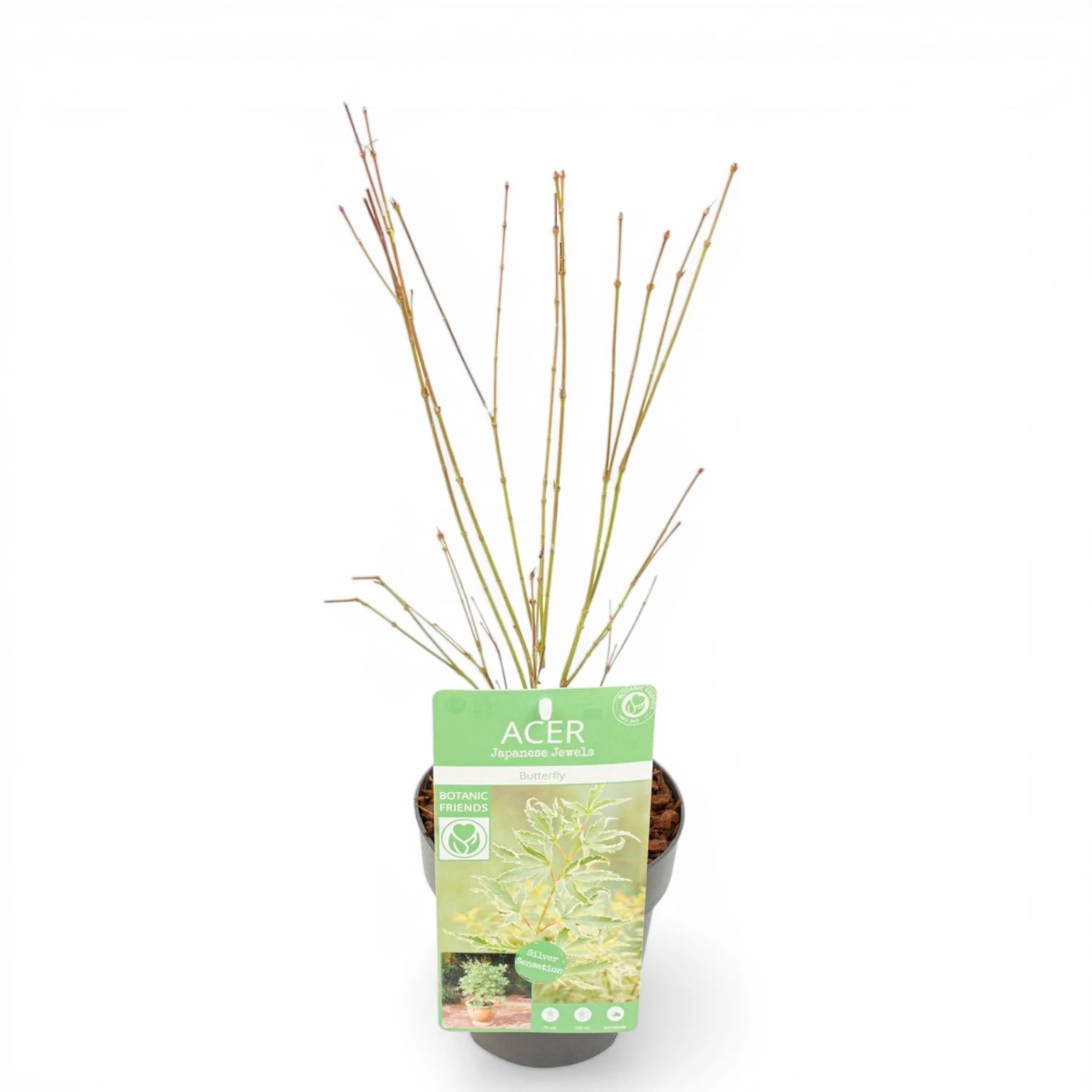
Spring growth is delicate and worth protecting from late frost where possible. Summer care focuses on moisture, especially in containers. Autumn colour arrives as temperatures cool, with pink, coral and red tones often appearing before leaf fall. In winter, the narrow branching structure remains visible, adding a quiet architectural line to pots and borders.
Fine variegation and a neat crown make Acer palmatum 'Butterfly' well suited for sheltered entrances, patio pots and small borders, with spring pink tones that mature into cream-edged green and finish in warm autumn colour.

Choose options
Sign up for Foliage Factory newsletter for early access to new arrivals and practical care tips that work in real homes.