
Philodendron joepii may be a natural hybrid linked to Philodendron pedatum, while Philodendron 'Glad Hands' shows the species’ striking variation. Get a clear comparison of leaf shape, growth habit...
Read more

Ferns aren’t just another passing houseplant trend. They are some of the oldest vascular plants still growing on Earth, older than flowering plants, older than birds, and far older than humans. For hundreds of millions of years, ferns have spread through forests, cliffs, wetlands, tree canopies, and shaded rock faces, reproducing not with flowers or seeds, but with spores.
That ancient biology is exactly why ferns feel so different indoors. Their finely divided fronds soften hard interiors, their growth forms range from tiny terrarium plants to sculptural statement pieces, and their textures bring movement into a room without looking loud or forced. But their care often goes wrong because many fern guides flatten all of that diversity into the same tired advice: “mist it,” “put it in a bathroom,” or “keep it in shade.”
That advice fails both beginners and ferns. Some species will crisp up if the root ball dries out once. Others handle average indoor humidity better than many people expect. Some grow as forest-floor plants. Others cling to trees, rocks, or decaying organic matter in the canopy. Treating all of them the same is the fastest way to turn a promising fern into a brown-edged disappointment.
What ferns need is not more random care tips. They need care that makes sense for how they grow. This guide explains why ferns behave differently from flowering houseplants, how their biology shapes their indoor needs, which species are realistic for different homes, and how to troubleshoot problems before the plant declines beyond recovery.
Whether you want to rescue a struggling maidenhair fern, choose a reliable fern for average indoor conditions, or understand why that “easy” fern keeps collapsing, this is a practical, myth-free guide built around how ferns evolved and how they actually grow indoors.
Term |
Definition |
|---|---|
Gametophyte |
The small life stage that grows from a fern spore. It can produce sperm and eggs when moisture is available. |
Sporophyte |
The mature fern plant most people recognize, with roots, rhizomes, and fronds. This stage produces spores. |
Rhizome |
A creeping or compact stem-like structure that produces roots and fronds. Many ferns spread from rhizomes. |
Epiphyte |
A plant that grows on another plant, usually a tree, without feeding from it like a parasite. Epiphytic ferns rely on debris, rain, airflow, and humidity. |
Sori |
Clusters of spore-producing structures usually found on the undersides of mature fern fronds. They are normal, not a disease. |

Successful indoor fern care starts with understanding what ferns are. Ferns are not flowering houseplants with older styling. They do not bloom, they do not form seeds, and they do not propagate from nodes like pothos, philodendrons, or monstera. They belong to an ancient group of vascular plants with a life cycle built around spores, moisture, and two separate life stages.
A mature fern, called a sporophyte, produces spores from structures usually found on the undersides of fertile fronds. When those spores land in a moist, stable place, they can grow into a completely different life stage: a small gametophyte. This tiny plant-like structure produces sperm and eggs. For fertilization to happen, water has to be present because fern sperm swim.
That single detail explains a lot about fern care. Even though a mature indoor fern is not trying to complete its full reproductive cycle on your shelf, its biology still reflects an ancient relationship with moisture. Many commonly grown ferns have fine roots, thin fronds, shallow or creeping rhizomes, and a fast response to drying. They often show stress sooner than thick-leaved houseplants because they are not built to store water in the same way.
Fern fronds also develop differently from many familiar houseplants. Their varied shapes, from feather-fine Adiantum fronds to broad, wavy Phlebodium fronds and nest-like Asplenium rosettes, come from flexible growth patterns at the tips and margins of developing fronds. That is one reason fern diversity feels so visually rich: the same broad plant group can produce lace-like texture, leathery straps, creeping rhizomes, upright crowns, and tree-like trunks.
In practical indoor terms, most ferns are best understood as plants of stable, sheltered environments. They usually want filtered light, steady access to moisture, breathable substrate, and air that does not swing from humid to desert-dry every day. Once those basics are clear, fern care becomes less mysterious.
A common mistake is assuming all ferns come from steamy rainforest floors. Many do, but fern habitats are much broader than that. Ferns grow in warm rainforests, cool cloud forests, subtropical cliffs, temperate woodlands, tree canopies, swamp margins, and shaded rock crevices. This matters because different fern species have different limits indoors.
Despite that diversity, indoor-suitable ferns usually share a few core preferences: diffused light, steady but airy moisture, moderate to high humidity, and a setup that does not suffocate rhizomes or crowns. When one of those elements is missing, ferns often react quickly and visibly.
The useful shift is simple: don’t treat fern care as one universal routine. Treat each fern as a plant shaped by its growth habit. A creeping epiphyte, a clumping forest fern, and a miniature tree fern may all be sold as “ferns,” but they do not want exactly the same pot, substrate, watering rhythm, or display position.

Most ferns don’t fail because they are impossible plants. They fail because one key condition is wrong for too long: air is too dry, light is too weak, the root ball dries out fully, substrate stays soggy, or a high-humidity species is placed in an average dry room and expected to adapt.
The goal is not to recreate a rainforest in every home. The goal is to match the fern to the setup, then keep the core conditions steady: filtered brightness, even moisture, breathable substrate, stable humidity, and gentle feeding.
Ferns evolved in sheltered light, not darkness. Most indoor ferns need bright, indirect light: enough brightness to fuel new fronds, but not harsh midday sun that scorches tender tissue.
In horticultural trials with Boston fern cultivars, strong growth was linked with moderate to bright filtered production light rather than dim conditions. That does not mean every fern needs greenhouse-level brightness indoors, but it does confirm an important point: “shade-loving” does not mean “happy in a dark corner.”
Need a clearer sense of what “bright indirect light” means indoors? This guide explains it with practical home examples.
Many indoor ferns have fine roots that dry quickly and dislike extremes. They usually want substrate that stays lightly and evenly moist, while still allowing oxygen around the roots. Bone-dry soil causes rapid frond stress. Constantly wet soil causes root decline, sour substrate, and crown or rhizome rot.
If your tap water is very hard, use filtered water, rainwater, or rested water when possible. Ferns can react to salt accumulation over time, especially in small pots and mixes that stay moist.
For watering timing, soil checks, and avoiding both drought and rot, read our in-depth watering guide.

Humidity is where many indoor fern setups fail. A fern may tolerate imperfect watering or slightly weaker light for a while, but dry air often shows quickly as brown tips, curled frond edges, stalled growth, or repeated loss of delicate new fronds.
Bird’s Nest fern is a good example of why stable humidity matters. In rainforest canopies, large Asplenium plants can trap organic debris and create buffered microhabitats with more stable moisture than exposed surrounding surfaces. Indoors, that does not mean they need wet crowns. It means they perform best when air, root moisture, and airflow stay consistent.
Misting can rinse dust and briefly wet surfaces, but it does not create stable humidity. For a deeper look at what misting can and cannot do, read our guide to misting houseplants.
Not sure how to keep humidity consistent without overcomplicating the setup? This humidity guide breaks down realistic options for indoor plants.
Ferns need a substrate that holds moisture while still letting oxygen reach fine roots and rhizomes. Dense, compacted, peat-heavy mixes often stay wet too long, especially in lower light. That creates the classic fern problem: fronds look thirsty, but roots are already stressed by too much water and too little air.
For epiphytic and rhizomatous ferns, structure matters as much as ingredients. Crowns and rhizomes should remain visible where the plant naturally grows at or above the surface. Burying them often leads to rot because it removes the airflow those plant parts are built to receive.
Want a ready-made mix for indoor ferns? Try our Fern Mix, designed for steady moisture, root aeration, and healthier fern growth indoors.
Ferns are not heavy feeders. Many absorb nutrients gradually from decomposing organic matter, trapped debris, or diluted mineral input in their natural habitats. Indoors, heavy fertilizer often causes more damage than benefit, especially when substrate stays moist and salts build up around fine roots.
Most popular indoor ferns grow best in mild temperatures that overlap with comfortable home conditions. The bigger problem is fluctuation: hot radiators, cold windows, sudden drafts, or fast drying after heating turns on.
Oceaniopteris gibba and many tropical tree-fern types dislike cool, unstable rooms. Phlebodium and many Asplenium tolerate more variation, but they still grow better when conditions stay consistent.
Ferns often dislike root disturbance. Repotting too often can slow growth, damage fine roots, and trigger frond loss. Repot when the plant needs more space, when substrate has collapsed, or when drainage has clearly declined.
Never bare-root a fern unless division is necessary. Keep as much of the root ball intact as possible, remove only loose or sour old substrate, and settle the plant into fresh mix gently.
For tools, timing, and step-by-step repotting, read our complete repotting guide.
The most important fern care decision happens before watering, fertilizing, or repotting. It happens when you choose the plant. A fern that matches your light, humidity, and care rhythm will feel much easier. A fern that needs terrarium humidity in a dry room will keep declining no matter how carefully you water.
That is why choosing the right fern matters more than chasing the most dramatic one. A resilient Phlebodium in average indoor humidity may give you years of steady growth. A delicate Adiantum in the wrong setup may collapse repeatedly, even with good intentions.
Once those answers are clear, fern care becomes less about luck. You can choose a species that fits your conditions instead of forcing a high-humidity fern into a setup that will always work against it.

A fast-growing classic with dense, arching fronds. Boston fern is dramatic when happy and quick to show stress when moisture or humidity drops. It works well in hanging pots or larger planters where the root ball can stay evenly moist without sitting wet.

An epiphytic fern with wavy, silver-blue fronds and a more forgiving temperament than many fine-fronded ferns. Blue Star fern handles average indoor humidity better than most, especially in a chunky mix with good airflow around the rhizome.

A textured epiphytic fern with patterned fronds that resemble reptile skin. It grows from a creeping rhizome and prefers a loose, airy substrate rather than dense wet soil.

A structural fern with glossy, strap-like fronds arranged in a central rosette. It looks very different from feathery ferns and often handles indoor life better, as long as water does not collect in the crown.

A creeping fern with fuzzy surface rhizomes that grow over the substrate and pot rim. It has a distinctive, almost animal-like texture and does best when the rhizomes remain exposed with good airflow.

Delicate, beautiful, and fast to react. Maidenhair fern has fine fronds that lose moisture quickly, so it needs consistently moist substrate and high humidity. It is rewarding in the right setup and frustrating in dry air.

A palm-like fern with upright fronds and a small trunk-like base over time. It has strong sculptural value, but it is not a dry-air fern. Stable warmth, moisture, and humidity are essential.

A collector’s epiphyte with swollen rhizomes and leathery fronds. In nature, related ant ferns can form close associations with ants. Indoors, the unusual rhizome structure is the main attraction, but it still needs airflow and careful moisture.
Ferns do not propagate like most familiar houseplants. A frond cutting in water will not root like pothos. A broken frond will not produce a new plant. There are no vine nodes to cut below. Fern propagation works through division, rhizome sections, offsets, or spores, depending on the species.
The reliable method depends on growth habit. Clumping ferns can often be divided. Creeping ferns can sometimes be propagated from rhizome sections. Rosette ferns may produce offsets, but not always. Spore propagation is possible, but it is slower, more technical, and very different from normal houseplant propagation.
Division is the easiest method for many indoor ferns. It works best on clumping or spreading plants with clear sections of roots and active growing points.
Divisions often look tired for a few weeks. That is normal. Keep moisture even, avoid strong fertilizer, and wait for fresh fronds before judging success.
Creeping ferns often grow from surface rhizomes. These rhizomes can sometimes be cut and rooted if each piece has active growth points and enough stored energy.
The common mistake is burying the rhizome like a normal cutting. Creeping fern rhizomes need contact with moisture, but they also need air.
Spore propagation is the most botanically accurate method, but it is not quick. It requires clean tools, patience, high humidity, and a stable growing container. It is closer to raising tiny seedlings than taking a houseplant cutting.
Spore propagation can take months. It is excellent for curious growers, conservation work, and rare species, but it is not the fastest way to fill a pot.
Division or Offset Separation |
Rhizome Cuttings or Rhizome Sections |
Spore Propagation |
|---|---|---|
Nephrolepis exaltata — Boston fern |
Davallia tyermannii — Rabbit’s-foot fern |
Adiantum raddianum — Maidenhair fern |
Pteris cretica — Cretan brake fern |
Phlebodium aureum — Blue Star fern |
Oceaniopteris gibba — Miniature tree fern |
Adiantum species — mature clumps only |
Microsorum musifolium — Crocodile fern |
Blechnum brasiliense — Red-stem fern |
Asplenium species — only when offsets are present |
Zealandia pustulata (= Lecanopteris pustulata) — Ant fern |
Dryopteris erythrosora — Autumn fern |
Cyrtomium falcatum — Japanese holly fern |
Polypodium species — creeping rhizome ferns |
Platycerium bifurcatum — Staghorn fern |
If small brown, black, orange, or rusty dots appear in organized rows or patches under mature fern fronds, they may be sori. Sori are spore-producing structures and are a normal sign of maturity. They are usually evenly arranged and fixed to the frond surface, unlike pests, which move, cluster irregularly, leave sticky residue, or cause visible feeding damage.

Ferns show stress quickly, which can feel frustrating but is actually useful. Brown tips, limp fronds, yellowing, stalled growth, or sudden shedding are signals. The goal is not to guess randomly. The goal is to connect each symptom to the most likely environmental cause.
Most indoor fern problems come down to one or more of these factors:
Most likely causes: low humidity, irregular watering, mineral buildup, or hot dry airflow.
Most likely causes: severe underwatering, dry air, transplant stress, or a root ball that has become hydrophobic.
Most likely causes: overwatering, poor drainage, low oxygen around roots, or cold wet substrate.
Most likely causes: light too low, nutrient depletion, or weak growth after stress.
Most likely causes: dry air, inconsistent moisture, root damage, or temperature swings.
Most likely causes: water sitting in the crown, buried rhizomes, dense wet substrate, or poor airflow.
Most likely causes: environmental shock, root disturbance, humidity change, or light change.
Ferns can shed older fronds after shipping, relocation, or repotting. This does not always mean the plant is dying. The key is whether fresh growth continues and whether the crown or rhizome remains firm.
Ferns are not pest-proof. Spider mites, scale, mealybugs, fungus gnats, and thrips can appear, especially on stressed plants. Fine-fronded ferns are harder to clean than broad-leaved plants, so early detection matters.
Always test any spray on a small section first. Many ferns are more sensitive to oils, soaps, and alcohol than thick-leaved houseplants.
Ferns attract bad advice because they look soft, ancient, and “forest-like.” But vague forest logic does not keep indoor ferns healthy. These are the myths worth dropping.
Reality: most indoor ferns need bright, filtered light. They tolerate shade better than sun-loving plants, but they do not thrive in darkness.
In deep shade, ferns often produce pale, stretched, weak fronds and slow down dramatically. Give them soft brightness, not direct sun and not a dark corner.
Reality: misting evaporates quickly and does not create stable humidity. It can be useful for rinsing dust or briefly refreshing a mounted root zone, but it cannot replace a humidifier, cabinet, grouped planting, or enclosed setup for sensitive species.
Reality: brown tips are often caused by dry air, mineral buildup, or inconsistent watering, not simply thirst. Adding more water to already damp soil can cause root problems while the fronds keep crisping from low humidity.
Reality: fern care depends on growth habit. Phlebodium, Asplenium, Adiantum, Davallia, and Oceaniopteris are all ferns, but their root structures, humidity tolerance, and moisture needs are not identical.
Reality: organized brown, black, or rusty structures under mature fronds are often sori. They are part of fern reproduction. Pests usually look irregular, move, leave residue, or cause visible feeding damage.
Reality: some ferns are beginner-friendly, but many are not. Phlebodium and Asplenium are usually much more forgiving than Adiantum. A fern is only “easy” when its needs match the room.
Reality: true ferns do not root from fronds like many houseplants root from stem cuttings. Use division, rhizome cuttings, offsets, or spores depending on species.
Reality: terrariums are useful for small moisture-loving ferns, but large or airflow-sensitive species can rot in stagnant enclosures. Match the fern to the container size, ventilation, and humidity level.
Ferns do not need gimmicks. They need filtered light, steady moisture, stable humidity, breathable substrate, and a species that fits the setup. Once those basics are right, fern care becomes calmer, more predictable, and much more rewarding.
Ferns may look quiet, but biologically they are some of the most unusual plants people grow indoors. Their history, reproduction, ecological roles, and growth forms make them far more interesting than “green filler.”
Fern ancestors appeared hundreds of millions of years ago, long before flowering plants dominated landscapes. Modern indoor ferns are not unchanged fossils, but they belong to plant lineages with very deep evolutionary roots.
That history matters because fern biology still reflects older plant strategies: spores instead of seeds, moisture-dependent fertilization, and a life cycle very different from flowering houseplants.
Most people only notice the mature fern, but that visible plant is just one part of the fern life cycle.
This is one reason spore propagation feels so different from taking cuttings. You are not simply rooting a piece of plant tissue. You are working through a separate life stage.
Certain ant ferns, including species historically placed in Lecanopteris, produce swollen rhizomes that can house ant colonies in nature. Ants gain shelter, while the fern can benefit from nutrients linked to ant waste and protection from herbivores.
Indoors, ants are not part of the setup, but swollen rhizomes still make these ferns remarkable collector plants.
Asplenium nidus forms a rosette that can collect falling organic matter in forest canopies. That trapped material breaks down around the plant and contributes to its nutrient supply.
Indoors, this helps explain why Bird’s Nest fern appreciates gentle nutrition and organic matter, but it does not mean the crown should be filled with water or wet debris. Keep the crown dry and feed lightly.
Not all ferns are moisture-dependent in the same way. Some xeric ferns, including certain Cheilanthes and Pellaea types, can dry down dramatically and recover when moisture returns.
These resurrection-like strategies are not typical of most common indoor ferns, but they show how broad fern adaptation can be.
Mature fronds may carry many sori, and each sorus can contain numerous spore-producing capsules. In the right conditions, a single fertile frond can release large numbers of spores.
Indoors, spores rarely develop into new ferns without controlled humidity and suitable surfaces, but sori are still a sign that the plant has reached reproductive maturity.
In 19th-century Britain, fern collecting became so popular that it gained its own name: pteridomania. Ferns appeared in home displays, glass cases, decorative patterns, ceramics, and garden collections.
Wardian cases, early glass plant cases, helped people grow ferns and other humidity-loving plants indoors. In that sense, modern terrariums and plant cabinets have older roots than many people realize.
Some ferns have very large genomes and high chromosome counts compared with many familiar flowering plants. Their genetics, life cycles, and hybrid patterns can be unusually complex, which is one reason fern classification and breeding are not always straightforward.
Ferns often appear after disturbance, but they are not just passive survivors. In many ecosystems, they can stabilize soil, influence moisture, shape early recovery, and affect which plants establish nearby.
Ferns are not just decorative houseplants. They are ancient, adaptive, structurally diverse plants with unusual life cycles and real ecological importance. Growing a fern indoors is a small connection to a plant lineage that has persisted through enormous environmental change.

Ferns bring texture, movement, and softness indoors, but display choices should support plant health. A good fern setup gives the plant enough light, stable moisture, workable humidity, and access for watering and pruning. A beautiful but unreachable shelf, a dark corner, or a sealed container with stagnant air will eventually show in the fronds.
Use fern growth habit as the starting point. Arching ferns suit hanging pots. Creeping rhizomes look best when allowed to travel over a surface. Rosette ferns need open crowns. Tiny moisture-loving species can work well in terrariums. Mounted ferns need frequent moisture and airflow.
Closed or semi-closed setups can create the stable humidity many delicate ferns need. They are especially useful for compact species that dry too quickly in open air.
Hanging pots suit ferns with arching fronds or creeping surface growth. They allow fronds and rhizomes to move naturally while keeping the plant visible from below and from the side.
Mounting works for ferns that naturally grow on bark, rock, or tree surfaces. It can look beautiful, but it also increases watering demand because mounted root zones dry faster than potted plants.
Shelves and stands can work well if the fern still receives enough light and can be watered easily. A fern placed too far from light will weaken over time, even if the display looks good at first.
Some ferns work best as individual structure plants. Elevating them improves visibility, makes care easier, and keeps fronds away from cold floors or crowded shelves.
A fern display should pass a simple care test. If you cannot reach the plant, check moisture, rotate it, trim fronds, or rinse dust, the setup is not practical enough for long-term success.
The best fern displays work with the plant’s natural habit: arching, creeping, nesting, mounting, or spreading. Style should make care easier, not harder.
Even with good care, ferns raise specific questions because they behave differently from many familiar houseplants. These answers cover the issues that come up most often indoors.
Check the top 1–2 cm of substrate. If it feels slightly dry, water deeply until excess drains. Many ferns need watering 1–3 times per week depending on light, temperature, airflow, pot size, and species. Do not let moisture-loving ferns dry fully.
Some ferns tolerate average indoor humidity better than others. Phlebodium, many Asplenium, and some Microsorum can often manage around 40–50% humidity if watering is steady. Adiantum, Davallia, Oceaniopteris, and many small terrarium ferns usually need 60–80% humidity to stay healthy.
Use a breathable mix that holds moisture without compacting. A good starting point is 40% coco coir or fine bark, 30% perlite, pumice, or fine orchid bark, 20% worm castings or fine compost, and 10% sand or grit. Adjust chunkiness for epiphytic or rhizomatous species.
Many true ferns, including Nephrolepis, Asplenium, Microsorum, and Adiantum, are generally considered non-toxic. The problem is lookalikes: asparagus “fern” and sago palm are not true ferns and can be toxic. Always check the botanical name before relying on common names.
Many indoor ferns slow down when light and warmth drop. They may produce fewer fronds and use less water. Keep moisture more cautious in lower light, avoid cold wet substrate, and skip fertilizer unless fresh growth is active.
Yes, but gently. Rinse sturdy ferns under a soft stream of lukewarm water and let them drain well. Avoid rubbing delicate fronds. For terrarium ferns or fine Adiantum fronds, use a soft brush or gentle air blower.
Light is often too low. Move the fern closer to bright filtered light, usually within 1–2 m of a suitable window, or use a grow light. Pale, stretched fronds are usually a light issue, not just a watering problem.
Repot or divide when the plant is actively growing and can recover, usually as new fronds begin to appear. Avoid repotting immediately after shipping, pest treatment, cold stress, or severe drying. Divide only clumping or rhizomatous ferns that have clear growth points and healthy roots.
Yes. Older fronds naturally age out, especially after relocation, repotting, or seasonal change. Remove fully yellow or brown fronds. If new growth is firm and healthy, some lower frond loss is normal cycling.
No. True ferns do not root from fronds or node-style stem cuttings. Use division, rhizome sections, offsets, or spores depending on the species. Water propagation from a frond does not work for true ferns.
Often, yes. Organized brown, black, orange, or rusty dots on the undersides of mature fronds are usually sori, which produce spores. They are not pests. Check for movement, sticky residue, webbing, or irregular damage before assuming infestation.
Wet soil does not fix dry air. Crispy fronds with damp substrate often point to low humidity, root stress, poor aeration, or mineral buildup. Check humidity, drainage, substrate structure, and root health before watering more.

Ferns are ancient, complex, and unlike most houseplants grown indoors. They are not generic green fillers, and they are not all easy-care plants. They are specialists shaped by moisture, shade, spores, rhizomes, crowns, and habitats where stability matters.
That is exactly what makes them rewarding. Once the setup fits the species, ferns bring texture, movement, and quiet structure that few flowering houseplants can match. They do not need constant fussing, but they do need consistency.
If a fern declines, read the symptoms before changing everything at once. Brown tips, yellow fronds, weak pale growth, stalled unfurling, and rhizome rot point to different problems. Adjust light, humidity, watering, substrate, or airflow based on what the plant is showing.
Ferns do not reward neglect, but they do reward attention. With stable conditions, they settle in, unfurl new fronds, extend rhizomes, and bring a layered, living texture into the home. They are not the right plant for every spot, and that is fine. Choose the right fern for the right conditions, and care becomes far more predictable.
➜ Ready to find the right fern for your space? Shop our fern collection — from resilient classics to rare epiphytes chosen for real indoor growing conditions.
Atallah, N. M., & Banks, J. A. (2015). Reproduction and the pheromonal regulation of sex type in fern gametophytes. Frontiers in Plant Science, 6, 100.
https://doi.org/10.3389/fpls.2015.00100
Useful for understanding fern gametophytes, spore-based reproduction, and antheridiogen-related sex regulation.
Azevedo-Schmidt, L., Currano, E. D., Dunn, R. E., Gjieli, E., Pittermann, J., Sessa, E., & Gill, J. L. (2024). Ferns as facilitators of community recovery following biotic upheaval. BioScience, 74(5), 322–332.
https://doi.org/10.1093/biosci/biae022
Explains ferns as active ecological facilitators after disturbance, not merely passive survivors.
Chen, X.-Z., Hogan, J. A., Wang, C.-P., Wang, P.-L., & Lin, T.-C. (2023). Responses of a common tropical epiphyte, Asplenium nidus, to changes in water and nutrient availability. AoB PLANTS, 15(6), plad076.
https://doi.org/10.1093/aobpla/plad076
Relevant for understanding how Bird’s Nest fern responds to changing water and nutrient conditions.
Cruz, R., Prado, J., & Melo-de-Pinna, G. F. A. (2020). Leaf development in some ferns with variable dissection patterns (Dryopteridaceae and Lomariopsidaceae). Flora, 270, 151658.
https://doi.org/10.1016/j.flora.2020.151658
Useful for understanding fern frond development and structural diversity.
Faust, J. L. (1986, November 30). Growing ferns indoors follows old traditions. The New York Times.
https://www.nytimes.com/1986/11/30/arts/growing-ferns-indoors-follows-olds-traditions.html
Historical context for fern cultivation in domestic interiors.
Hennequin, S., Hovenkamp, P., Christenhusz, M. J. M., & Schneider, H. (2010). Phylogenetics and biogeography of Nephrolepis — A tale of old settlers and young tramps. Botanical Journal of the Linnean Society, 164(2), 113–127.
https://doi.org/10.1111/j.1095-8339.2010.01076.x
Provides evolutionary and biogeographic context for Nephrolepis.
Kumar, A., Fernández, H., & Revilla, M. A. (2011). Working with ferns: Issues and applications. Springer.
https://link.springer.com/book/10.1007/978-1-4419-7162-3
Technical reference for fern propagation, physiology, and conservation applications.
Missouri Environment & Garden. (2022). Ferns make durable houseplants. D. Trinklein. University of Missouri.
https://ipm.missouri.edu/meg/2022/1/ferns-DT/
Practical care guidance for common indoor ferns, including moisture, humidity, and potting needs.
Rostaing, J. (2019, October 24). Caring for ferns as houseplants. Brooklyn Botanic Garden.
https://www.bbg.org/article/caring_for_ferns_as_houseplants
Accessible indoor fern care overview covering common care challenges.
Scheffers, B. R., Phillips, B. L., & Shoo, L. P. (2014). Asplenium bird’s nest ferns in rainforest canopies are climate-contingent refuges for frogs. Global Ecology and Conservation, 2, 37–46.
https://doi.org/10.1016/j.gecco.2014.06.004
Shows how Bird’s Nest ferns can create buffered canopy microhabitats.
Sezate, M., Sahagun, T., Henny, J., & Harder, D. (2018). Fern propagation and ex situ conservation at NTBG. American Research Plants Review, 32.
Useful for advanced fern propagation and conservation context.
Spencer, V., Nemec Venza, Z., & Harrison, C. J. (2021). What can lycophytes teach us about plant evolution and development? Evolution & Development, 23(3), 174–182.
https://doi.org/10.1111/ede.12350
Comparative evolutionary context for ancient vascular plant development.
Srivastava, R., & Uniyal, P. L. (2013). Asplenium nidus — The Bird’s Nest Fern: Developmental studies and its conservation. American Journal of Plant Sciences, 4(5A), 45–48.
https://doi.org/10.4236/ajps.2013.45A007
Supports habitat-sensitive context for Bird’s Nest fern growth and conservation.
University of Connecticut Extension. (2017). Ferns: Indoor growing. UConn Home & Garden.
https://homegarden.cahnr.uconn.edu/factsheets/ferns-indoor-growing/
Practical indoor fern care guidance for soil, moisture, humidity, and temperature.
University of Connecticut Extension. (2017). Popular houseplant fern varieties. UConn Home & Garden.
https://homegarden.cahnr.uconn.edu/factsheets/houseplant-ferns/
Useful for comparing care differences across common indoor fern types.
American Fern Society. (n.d.). About ferns.
https://www.amerfernsoc.org/about-ferns
General fern classification, spore reproduction, and diversity overview.
Philodendron joepii may be a natural hybrid linked to Philodendron pedatum, while Philodendron 'Glad Hands' shows the species’ striking variation. Get a clear comparison of leaf shape, growth habit...
Read more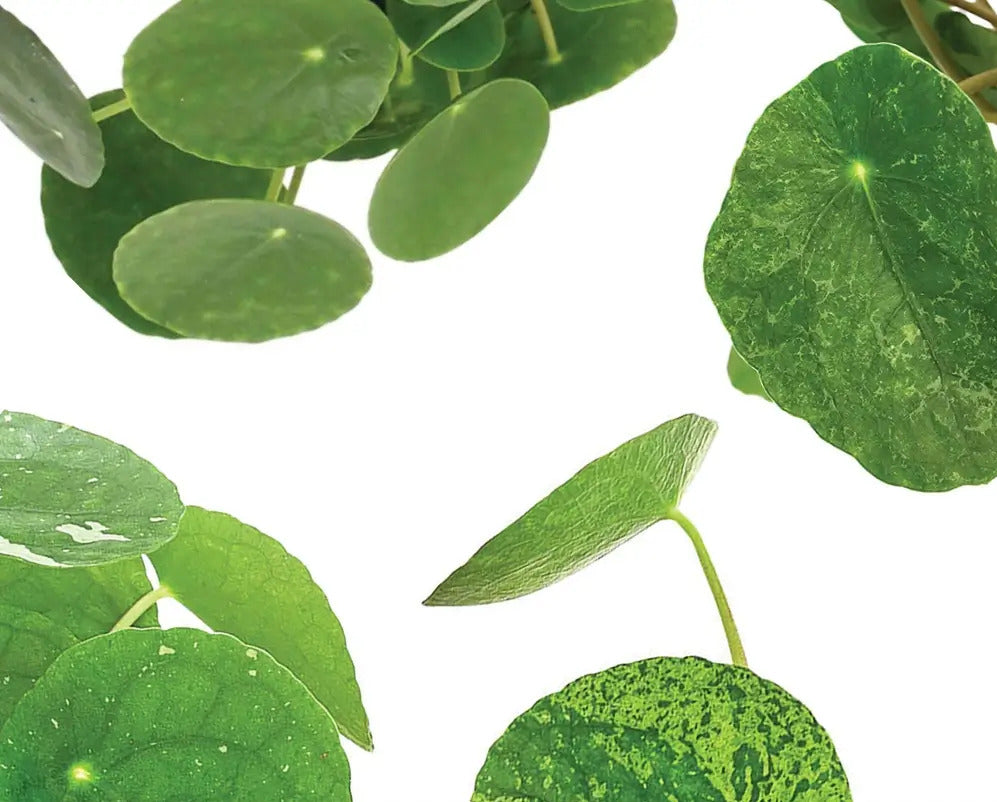
Pilea peperomioides and Its Variegated Cultivars 'Mojito', 'Sugar', and 'White Splash'
Three collector favourites, three very different looks: compare variegation patterns in Pilea peperomioides ‘Mojito’, ‘Sugar’, and ‘White Splash’, then dial in care so each one grows well indoors.
Read moreSign up for Foliage Factory newsletter for early access to new arrivals and practical care tips that work in real homes.


Leave a comment
This site is protected by hCaptcha and the hCaptcha Privacy Policy and Terms of Service apply.