Position
Full sun, Part shade

Wisteria
VAT included · plus
Your outdoor plant has just been packed, transported and unpacked, so give it a calm start before planting or placing it permanently. Remove all packaging carefully, check the pot, stems, visible roots and substrate moisture, and settle any loose growing medium back around the root ball. Water if the root ball feels dry, but do not leave the pot standing in water. For the first few days, keep the plant in a sheltered spot suited to its light needs, away from strong midday sun, heavy wind, frost and heat stress.
Do not move the plant straight into full exposure, especially if it is young, newly flushed, evergreen, recently pruned or greenhouse-grown. Gradually introduce more sun, wind and temperature variation over several days. If cold nights, storms, intense sun or hot dry weather are expected, keep the plant protected until conditions are more stable. Do not fertilize immediately after delivery; let the plant settle first and resume feeding only when it is actively growing and conditions are suitable.
Outdoor plants may arrive in different seasonal stages. Depending on the time of year, your plant may be leafy, flowering, newly sprouting, recently pruned, dormant, partly bare or leafless. Adjust care to what the plant is doing: actively growing plants need closer moisture checks, while dormant plants usually need protection from extremes and only light moisture management until growth resumes.
Plant outdoors when the soil is workable and weather conditions suit the plant type. Avoid planting during frost, heatwaves, waterlogged soil or very dry windy periods. It is better to keep the plant protected in its pot for a short time than to plant into stressful conditions. After planting, water thoroughly so the root ball and surrounding soil connect properly, then monitor moisture while the plant establishes.
Secure shipping, carefully packed orders with safe delivery across the EU, UK and Switzerland.
28-day plant guarantee, if a plant arrives damaged or fails soon after delivery, we help you make it right.
Free returns, simple, cost-free returns according to our policy.
For full details, please see:
Please head to our FAQ Page or Contact us.
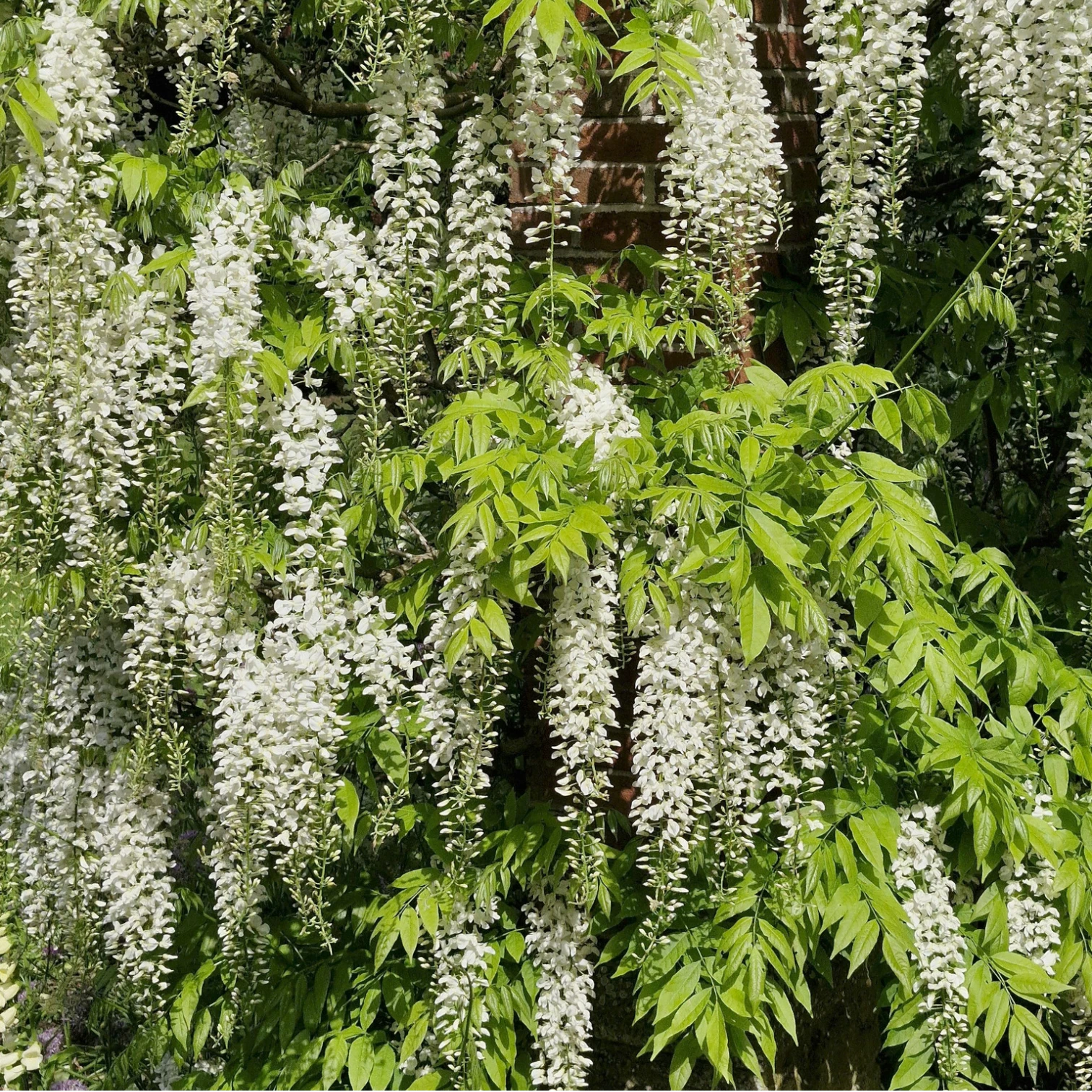
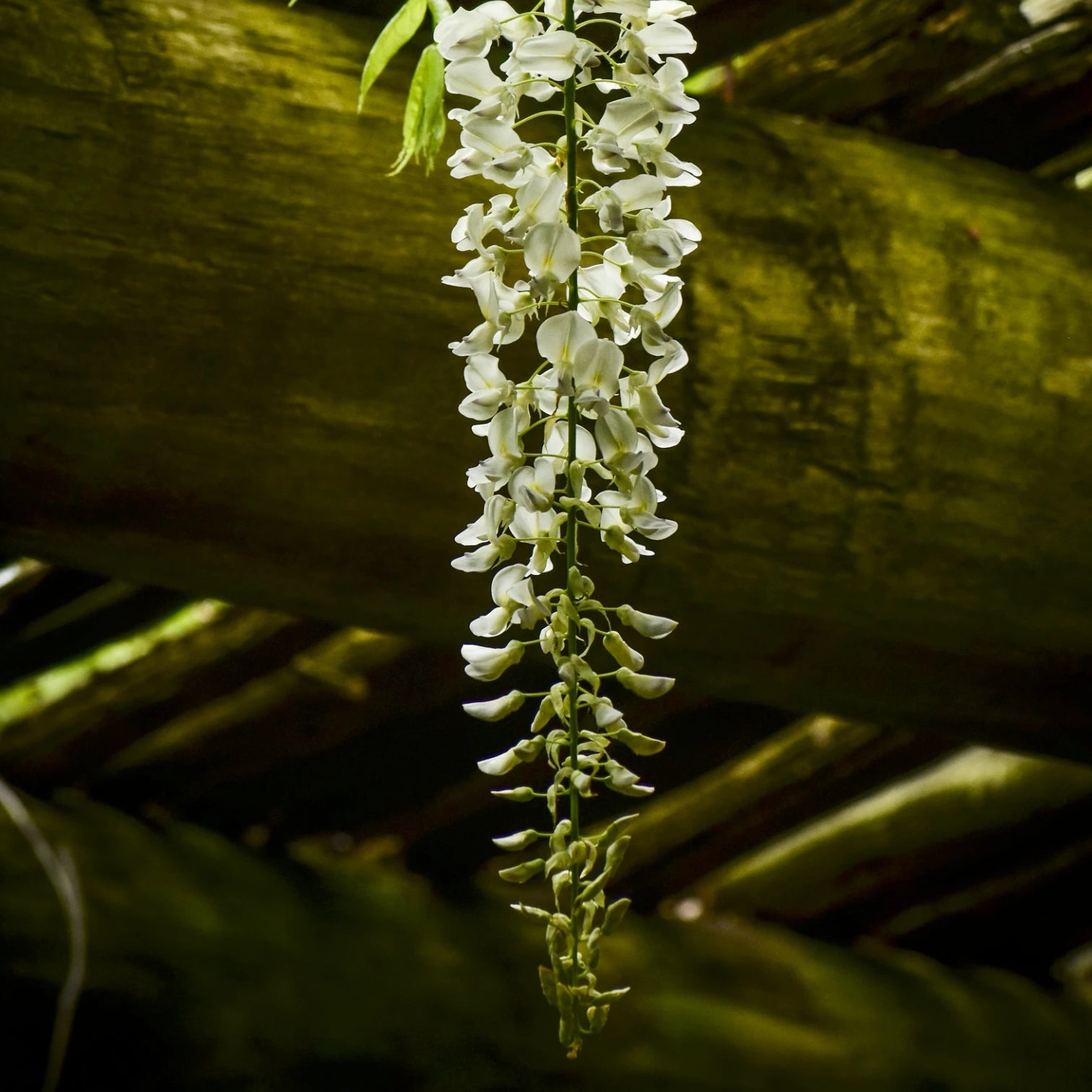
Wisteria 'Alba' is grown for fragrant white racemes and the classic trained shape of a mature wisteria. It is a long-term climber that builds a woody framework, then flowers from spurs along older stems. The best results come from planting it where the support is strong, permanent and easy to reach for pruning.
White wisteria has a softer look than purple forms, especially against brick, timber or dark evergreen backgrounds. It suits pergolas, arches, wall wires and large frames where the hanging racemes have space to show. Because the plant becomes woody and powerful with age, the support should be chosen with the mature plant in mind from the start.
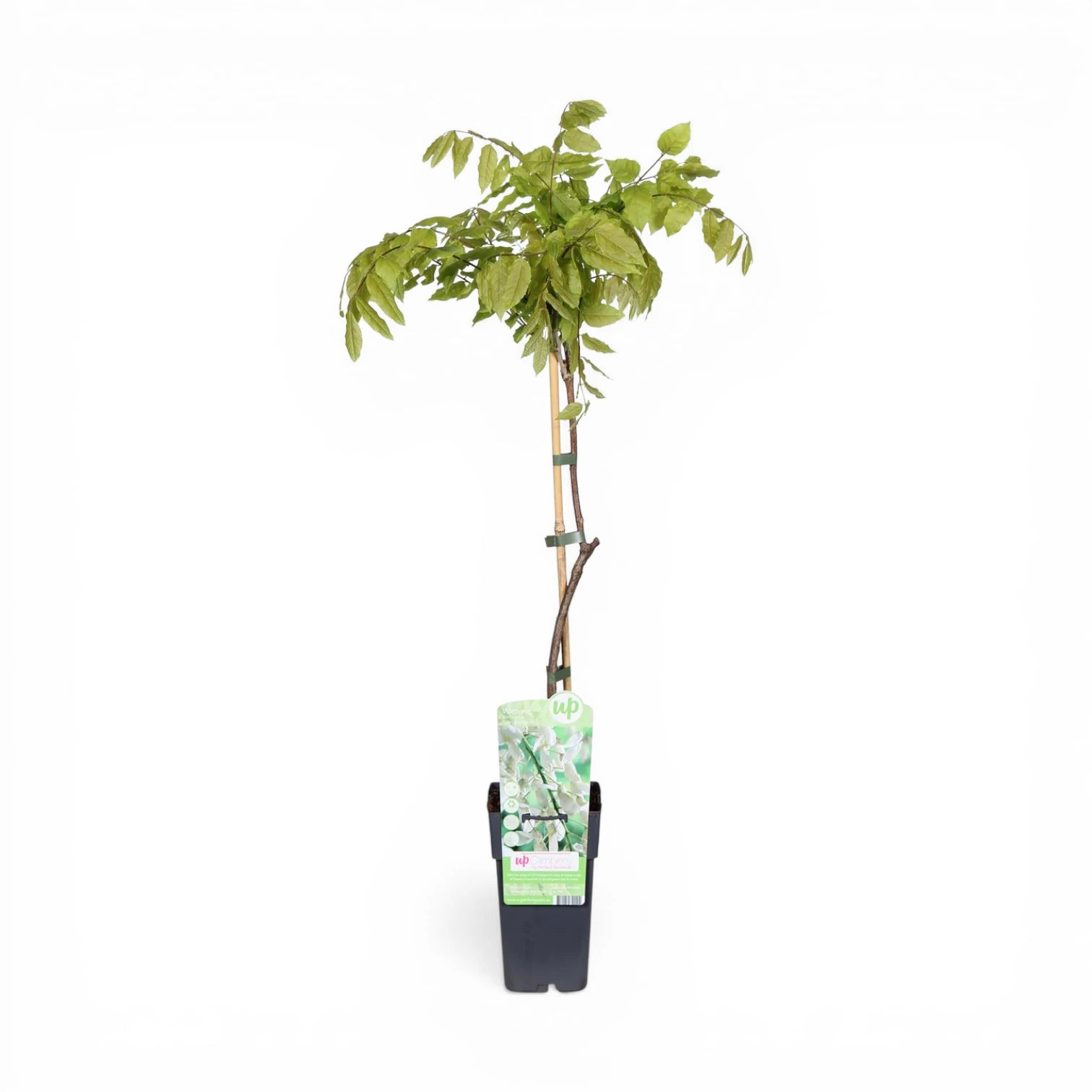
A trained Wisteria 'Alba' is commonly planned around 9 m high with a spread near 500 cm, although training and pruning decide the final shape in a garden. On a pergola, the main stems can be trained along beams. On a wall, horizontal wires help build a balanced framework. A free-standing standard is possible with careful training and regular pruning.
Pots keep size and spread more controlled than border planting. A pot-grown wisteria needs a very large container, a strong stake or frame and careful summer watering. The restricted root zone can help manage growth, but it also means the plant depends more on the gardener for moisture and feeding. Check pots by depth and water when the upper 25-35% of pot depth has dried.
Full sun gives the strongest flowering, with light partial shade tolerated in warm sites. Choose a south- or west-facing wall or an open pergola where the ripening wood receives good light. Fertile, moist but well-drained soil is ideal. Wisteria grows in chalk, clay, loam or sand when drainage and soil structure are suitable.
Plant climbers slightly away from the base of a wall or fence so the roots can receive water and settle into real soil. Water deeply through the establishment phase. A mulch over the root zone helps conserve moisture, especially near masonry where soil can dry quickly during warm weather. Keep the stem base visible for checks and training.
Wisteria needs two pruning moments each year. In summer, long whippy shoots are shortened to keep growth within the framework and allow light into the plant. In winter, those shortened shoots are cut back again to build flowering spurs. This rhythm keeps the climber manageable and supports regular flowering.
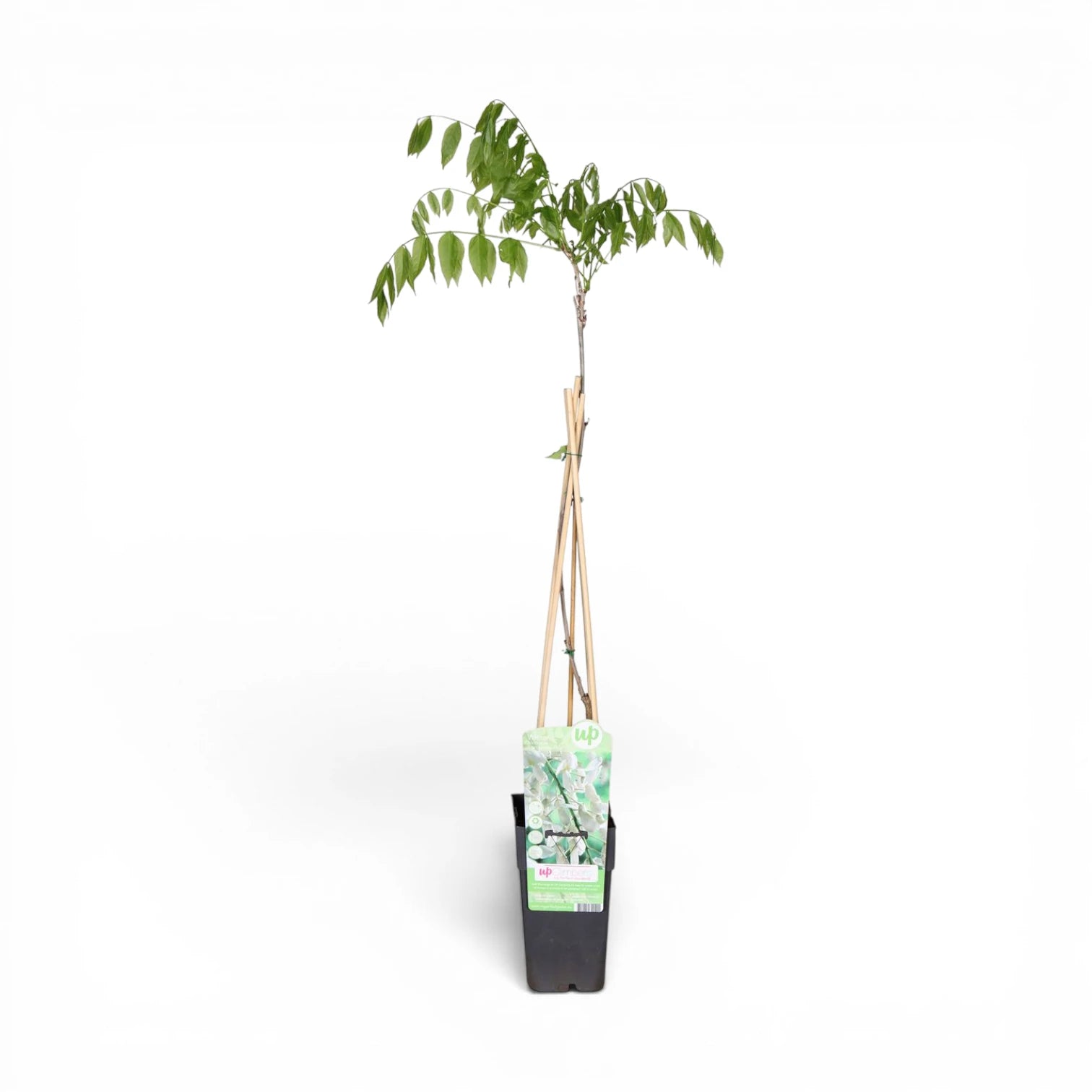
Young plants first need training. Select the main stems and tie them to the support while they are flexible. Flowering can take time while the framework develops. Once the plant has a good structure, pruning becomes a steady maintenance task and keeps the framework predictable. Keep cuts clean and work with the shape you want the mature climber to hold.
Wisteria 'Alba' works best where the racemes can hang freely. A pergola over a path, a sunny house wall, a strong arch or a trained courtyard frame can all suit it. The white flowers look clear in evening light and combine well with simple paving, clipped evergreen shapes and spring bulbs beneath.
At ground level, keep companion planting modest so the base remains accessible. The main stems need tying, inspection and occasional adjustment as they thicken. A clear planting zone also makes watering easier during the first years. Once mature, the plant creates strong seasonal impact with a relatively simple palette of leaves, woody stems and spring flowers.
Weak flowering usually points to low light, immature wood or missed pruning. Very soft leafy growth can follow rich feeding with too much nitrogen. Dry soil near walls can also slow establishment. Keep the plant watered during dry spells, especially for the first few seasons and in containers.
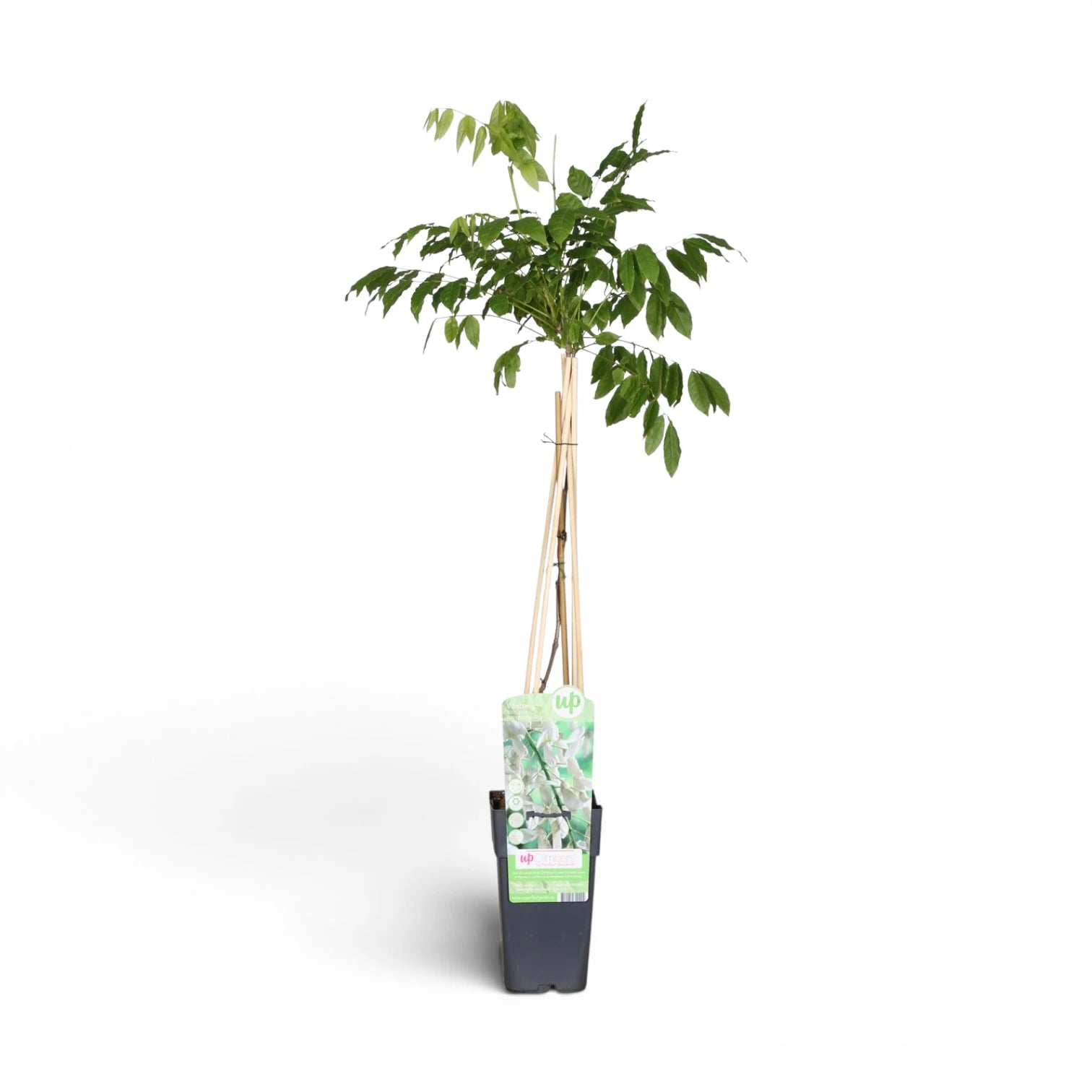
Wisteria 'Alba' needs a strong framework long before it reaches full size. On a wall, horizontal wires fixed securely to the structure help place the main stems and keep pruning accessible. On a pergola or arch, guide one or two main stems first, then train side shoots where the racemes can hang freely. This early structure determines how easy the plant will be to maintain in later years.
The regular pruning rhythm is simple: shorten long whippy shoots in summer, then cut them back again in winter to create flowering spurs close to the main framework. Keep the base watered during dry spells, especially near walls where rain can miss the root zone. In containers, use a very large pot, a permanent frame and a moisture-retentive yet well-drained mix. Check water by the upper 25-35% of pot depth, then soak thoroughly when that layer has dried. In a container, the plant often stays smaller and fills out more gradually. A container-trained standard can work well, but it still needs firm staking, pruning access and winter root protection.
All parts of wisteria should be treated as harmful if eaten, so choose placement with children and pets in mind. With a strong support, bright position and a steady pruning routine, Wisteria 'Alba' becomes a long-lived feature plant with clean white spring racemes and a permanent trained framework.
White-flowered garden selection of Chinese wisteria, a vigorous twining climber derived from woodland margins and river valleys in China.
Deciduous climber
Position
Full sun, Part shade
Moisture
Average
Drainage
Moisture-retentive, Well-drained
Hardiness
Fully hardy · -20°C
Mature size
800–900 × 400–500 cm
Winter habit
Deciduous
Bloom time
Spring, Summer
Containers
Pots with support
Support
PergolaWirewall
Pruning
Summer, Winter

Sign up for Foliage Factory newsletter for early access to new arrivals and practical care tips that work in real homes.