Position
Full sun

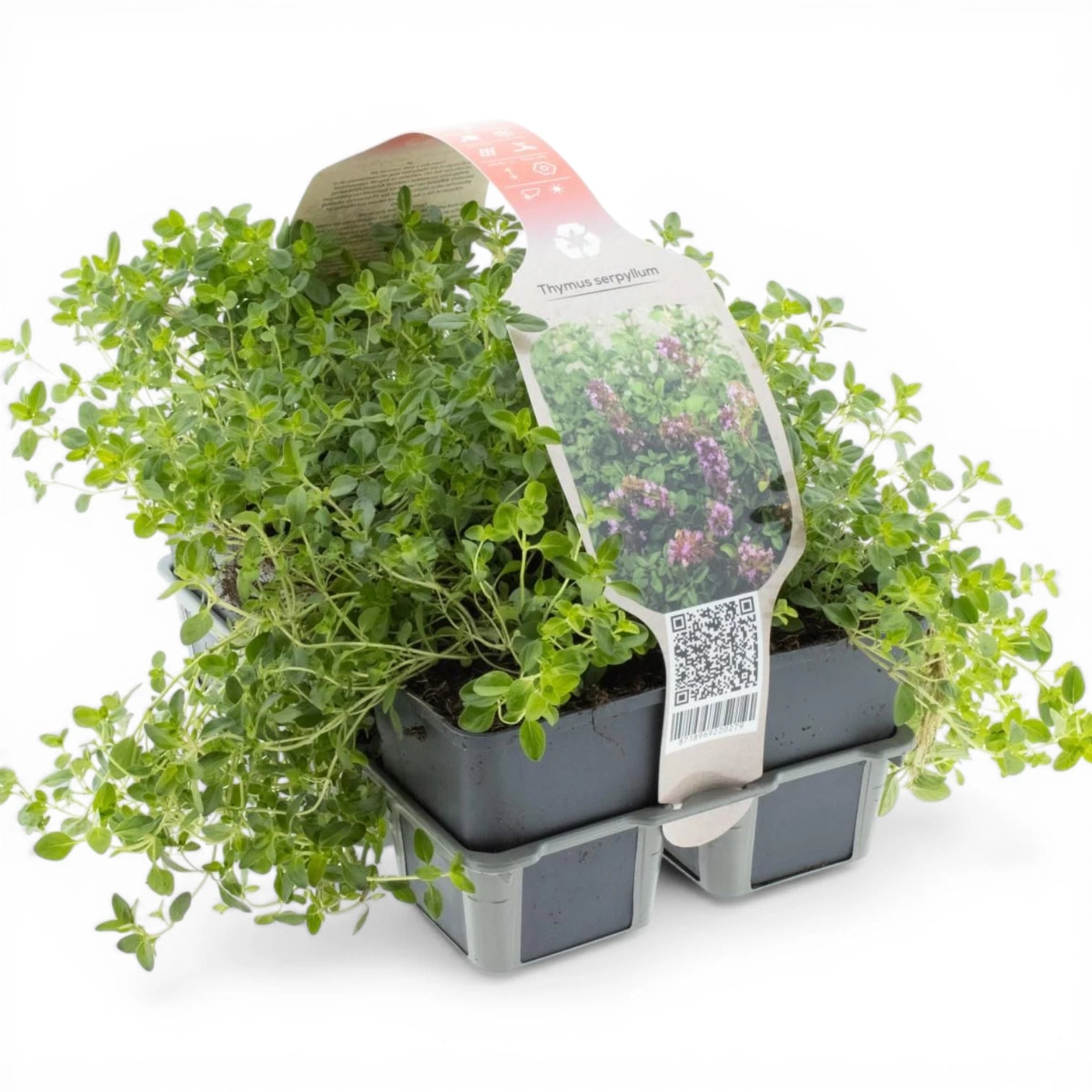
Thymus
VAT included · plus
Your outdoor plant has just been packed, transported and unpacked, so give it a calm start before planting or placing it permanently. Remove all packaging carefully, check the pot, stems, visible roots and substrate moisture, and settle any loose growing medium back around the root ball. Water if the root ball feels dry, but do not leave the pot standing in water. For the first few days, keep the plant in a sheltered spot suited to its light needs, away from strong midday sun, heavy wind, frost and heat stress.
Do not move the plant straight into full exposure, especially if it is young, newly flushed, evergreen, recently pruned or greenhouse-grown. Gradually introduce more sun, wind and temperature variation over several days. If cold nights, storms, intense sun or hot dry weather are expected, keep the plant protected until conditions are more stable. Do not fertilize immediately after delivery; let the plant settle first and resume feeding only when it is actively growing and conditions are suitable.
Outdoor plants may arrive in different seasonal stages. Depending on the time of year, your plant may be leafy, flowering, newly sprouting, recently pruned, dormant, partly bare or leafless. Adjust care to what the plant is doing: actively growing plants need closer moisture checks, while dormant plants usually need protection from extremes and only light moisture management until growth resumes.
Plant outdoors when the soil is workable and weather conditions suit the plant type. Avoid planting during frost, heatwaves, waterlogged soil or very dry windy periods. It is better to keep the plant protected in its pot for a short time than to plant into stressful conditions. After planting, water thoroughly so the root ball and surrounding soil connect properly, then monitor moisture while the plant establishes.
Secure shipping, carefully packed orders with safe delivery across the EU, UK and Switzerland.
28-day plant guarantee, if a plant arrives damaged or fails soon after delivery, we help you make it right.
Free returns, simple, cost-free returns according to our policy.
For full details, please see:
Please head to our FAQ Page or Contact us.
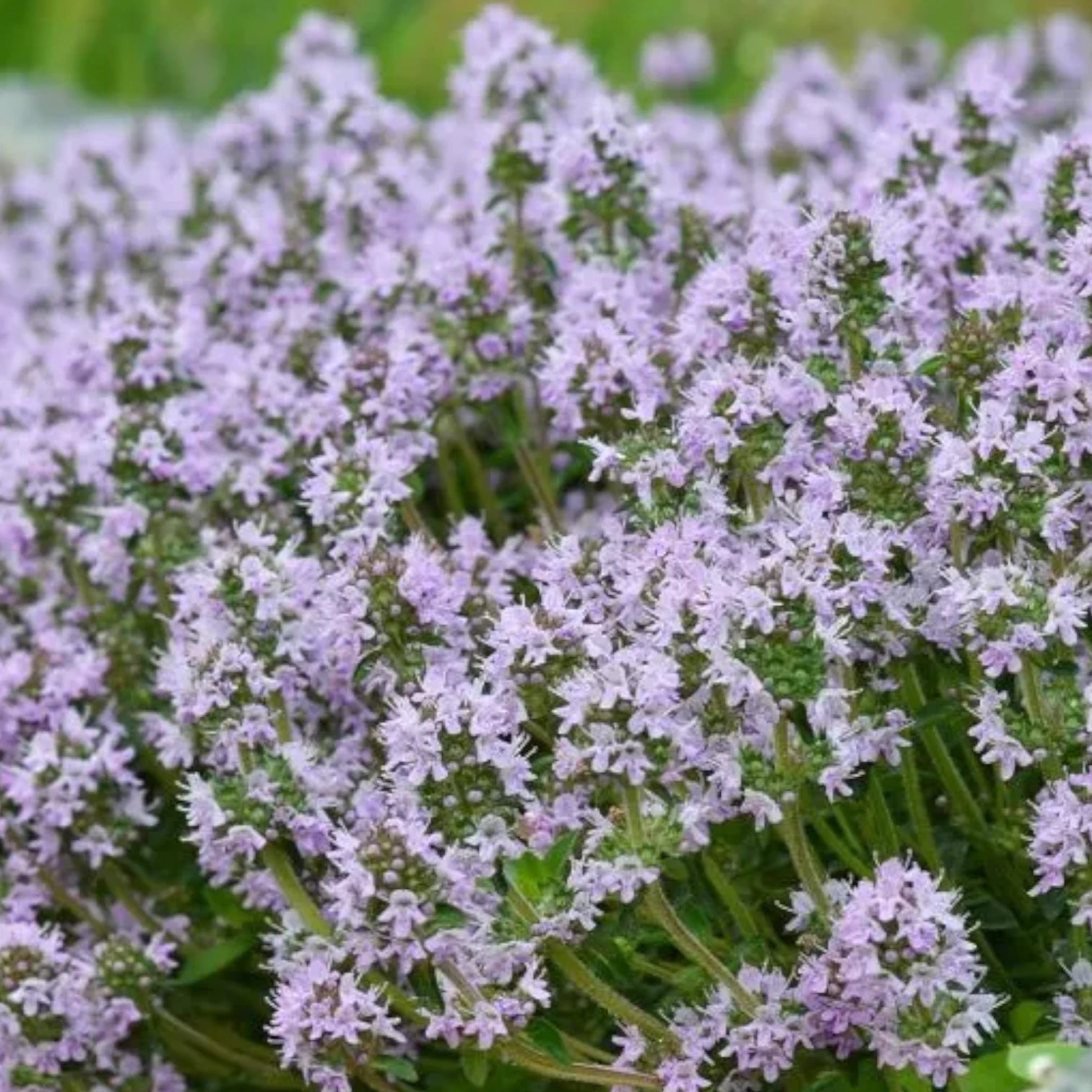
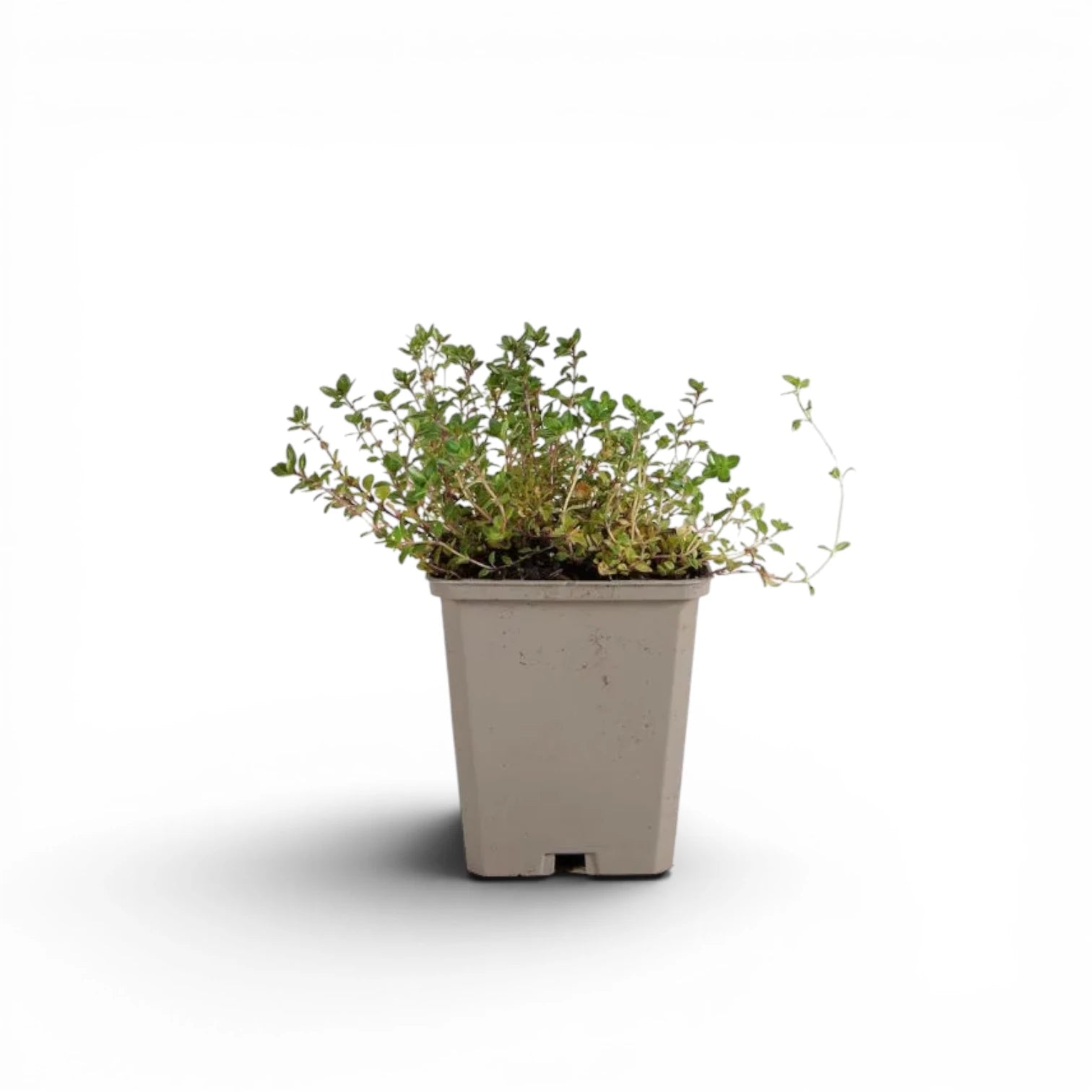
Thymus serpyllum is a low evergreen thyme for warm, open sites where drainage matters. This species forms a low creeping carpet with small dark green aromatic leaves and a relaxed wild-thyme feel. It gives small aromatic leaves all year and pink-purple flower clusters in summer. It suits naturalistic path edges, sunny troughs and dry pockets where a small wild-thyme carpet can spread slowly.
The value is in scale. Plants are low, usually around 5 to 10 cm in foliage height, with a spreading mat that may reach about 50 cm in open sun. Its creeping stems stay close to the surface and knit gently around stone, gravel and shallow pot rims. Containers keep Thymus serpyllum smaller and slower than open ground, which suits low bowls and herb troughs.
Wild thyme stays most compact where the crown receives sun and the root zone drains quickly after rain. Small aromatic evergreen leaves give a fine texture in open gravel, troughs and raised stone pockets. Open exposure keeps the carpet firmer, while lean soil helps the stems age more evenly. A mineral root zone keeps the wild-thyme mat lower and supports dense summer flowering.
Use Thymus serpyllum for dry banks, sunny path edges, wildlife-friendly gravel areas and informal low groundcover. It also fits troughs and shallow bowls where its low habit keeps the rim visible for this wild thyme. A visible mineral surface around the crown helps the plant sit cleanly after rain and keeps the planting visually crisp for this wild thyme.
Neutral to alkaline soil suits thyme, especially when the structure is open. Chalk, sandy loam, gravelly beds and gritty potting mixes are good starting points for this wild thyme. In clay gardens, raised pockets and troughs give the roots the sharper drainage they prefer for this wild thyme. Open drainage matters more than rich fertility for this wild thyme.
A slightly irregular edge suits this species and gives a natural look in gravel planting. A small amount of organic matter is fine for establishment, but the long-term root zone should stay open and low in water retention for this wild thyme. Dense compost produces lush shoots, weak scent and a crown that ages faster for this wild thyme. Top-dress with fine gravel after planting to keep stems lifted from wet soil for this wild thyme.
For containers, water only when the upper 35 to 45% of pot depth feels dry. Then water evenly and let the pot drain for this wild thyme. Newly planted thyme needs a short settling-in period with regular checks, but established plants prefer a dry rhythm between rain or watering for this wild thyme. In winter, sharp drainage is the main form of protection for this wild thyme.
In open ground, water during establishment and then rely on the site to do most of the work for this wild thyme. In wider groundcover use, water deeply during establishment so roots reach beyond the original plug. A plant that wilts in dry heat usually perks up after deep watering, while a plant with blackened inner stems often points to poor drainage around the crown for this wild thyme.
Wild thyme foliage releases a classic, resinous scent when warmed or lightly rubbed. The scent is classic wild thyme, especially noticeable where stems can be brushed by hand or foot. Flowering usually comes in late spring to summer, depending on the cultivar and local weather for this wild thyme. The flowers are small, but a wide mat can create a visible colour sheet for several weeks, especially when planted in groups for this wild thyme.
Evergreen foliage means the plant still marks the bed in winter for this wild thyme. Growth slows in cold weather, and older inner stems can look woody with age for this wild thyme. Replanting small divisions or rooted pieces every few years keeps a dense patch going where a crisp carpet is important for this wild thyme.
After the main flowering period, shear or pinch lightly to remove faded stems and keep the mat dense. Cut into leafy growth and leave the woody base intact for this wild thyme. Spring tidying can remove winter-worn tips, while summer trimming keeps paths, trough rims and edging lines neat for this wild thyme. Fresh shoots then fill the top of the plant with a cleaner texture for this wild thyme.
Sprigs can be used sparingly, though this species is often selected for groundcover and flower for groundcover and flower, with only occasional kitchen cutting. For occasional cutting, take small clean tips from active growth and allow time for recovery. Wild thyme is strongest as a flowering mat, while upright common thyme gives a simpler regular harvest.
Sparse patches usually trace back to winter wet, heavy shade or competition from taller neighbours. Yellowing, patchy dieback or a hollow centre usually comes from wet roots, heavy soil, old woody growth or too much shade for this wild thyme. Brown edges after winter often mean the plant sat wet during cold weather for this wild thyme. Lift the crown, improve drainage, trim lightly after flowering and keep nearby plants from covering the mat for this wild thyme.
Thymus serpyllum is a small plant, so placement matters. It works best at the front of a bed, in a trough, near steps, along a dry path edge or in a sunny herb planter for this wild thyme. Give it sun, air and lean drainage, and it becomes a neat scented layer as a neat low-maintenance scented layer for this wild thyme.
For a natural-looking edge, combine Thymus serpyllum with open mineral mulch and leave enough space for the stems to creep without being shaded by taller neighbours. The flower colour works well near pale gravel, and the small leaves release scent when brushed lightly. In troughs, use a wide shallow container so the plant can spread across the surface instead of stacking growth in a narrow pot.
Dry grassland, heaths and rocky ground across Europe and western Asia.
Evergreen herbaceous subshrub
Position
Full sun
Moisture
Dry to average
Drainage
Free-draining
Hardiness
Fully hardy · -15°C
Mature size
5–10 × 30–50 cm
Winter habit
Evergreen
Bloom time
Summer
Containers
Good in pots
Pruning
After flowering, Spring
Sign up for Foliage Factory newsletter for early access to new arrivals and practical care tips that work in real homes.