Position
Full sun

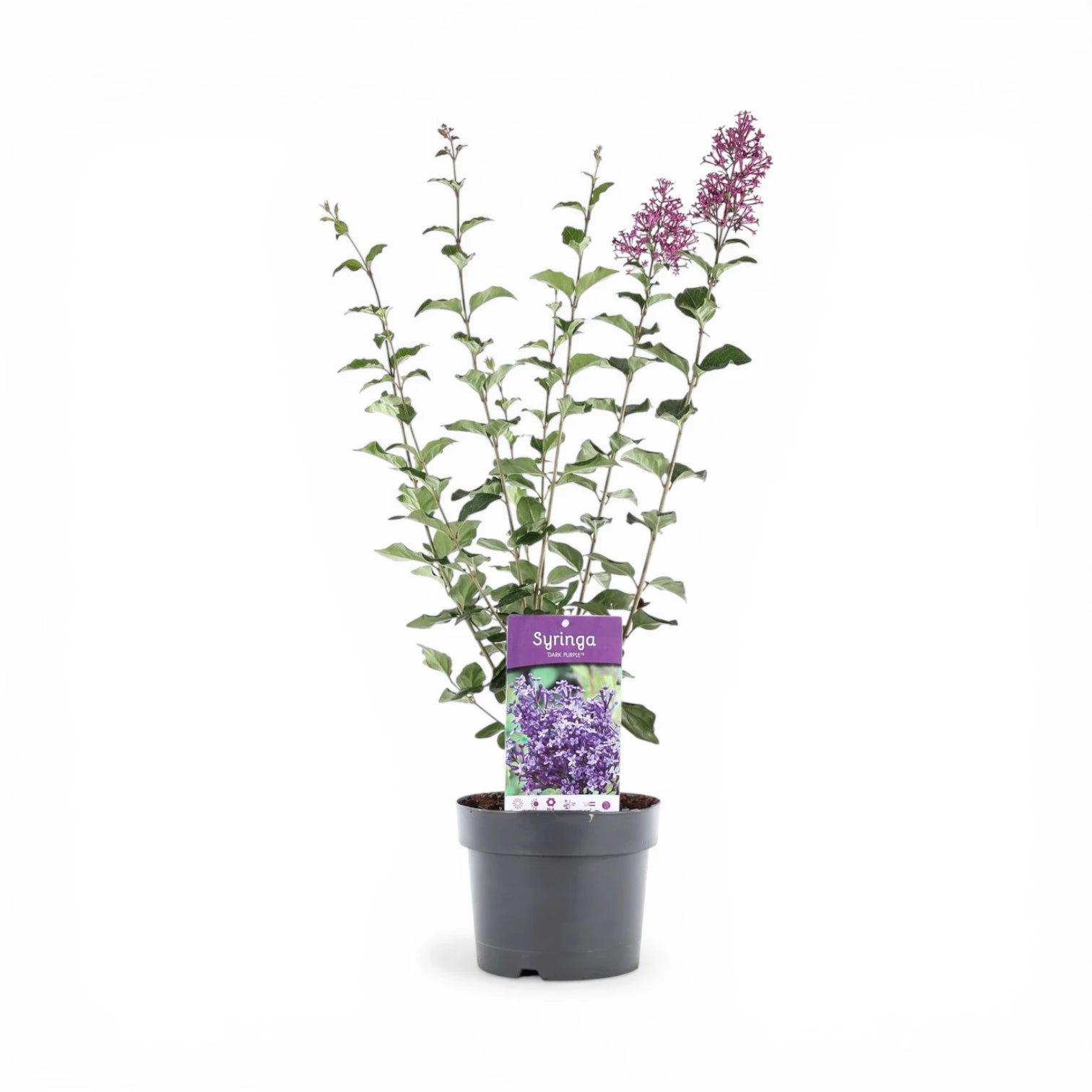
Syringa
VAT included · plus
Your outdoor plant has just been packed, transported and unpacked, so give it a calm start before planting or placing it permanently. Remove all packaging carefully, check the pot, stems, visible roots and substrate moisture, and settle any loose growing medium back around the root ball. Water if the root ball feels dry, but do not leave the pot standing in water. For the first few days, keep the plant in a sheltered spot suited to its light needs, away from strong midday sun, heavy wind, frost and heat stress.
Do not move the plant straight into full exposure, especially if it is young, newly flushed, evergreen, recently pruned or greenhouse-grown. Gradually introduce more sun, wind and temperature variation over several days. If cold nights, storms, intense sun or hot dry weather are expected, keep the plant protected until conditions are more stable. Do not fertilize immediately after delivery; let the plant settle first and resume feeding only when it is actively growing and conditions are suitable.
Outdoor plants may arrive in different seasonal stages. Depending on the time of year, your plant may be leafy, flowering, newly sprouting, recently pruned, dormant, partly bare or leafless. Adjust care to what the plant is doing: actively growing plants need closer moisture checks, while dormant plants usually need protection from extremes and only light moisture management until growth resumes.
Plant outdoors when the soil is workable and weather conditions suit the plant type. Avoid planting during frost, heatwaves, waterlogged soil or very dry windy periods. It is better to keep the plant protected in its pot for a short time than to plant into stressful conditions. After planting, water thoroughly so the root ball and surrounding soil connect properly, then monitor moisture while the plant establishes.
Secure shipping, carefully packed orders with safe delivery across the EU, UK and Switzerland.
28-day plant guarantee, if a plant arrives damaged or fails soon after delivery, we help you make it right.
Free returns, simple, cost-free returns according to our policy.
For full details, please see:
Please head to our FAQ Page or Contact us.
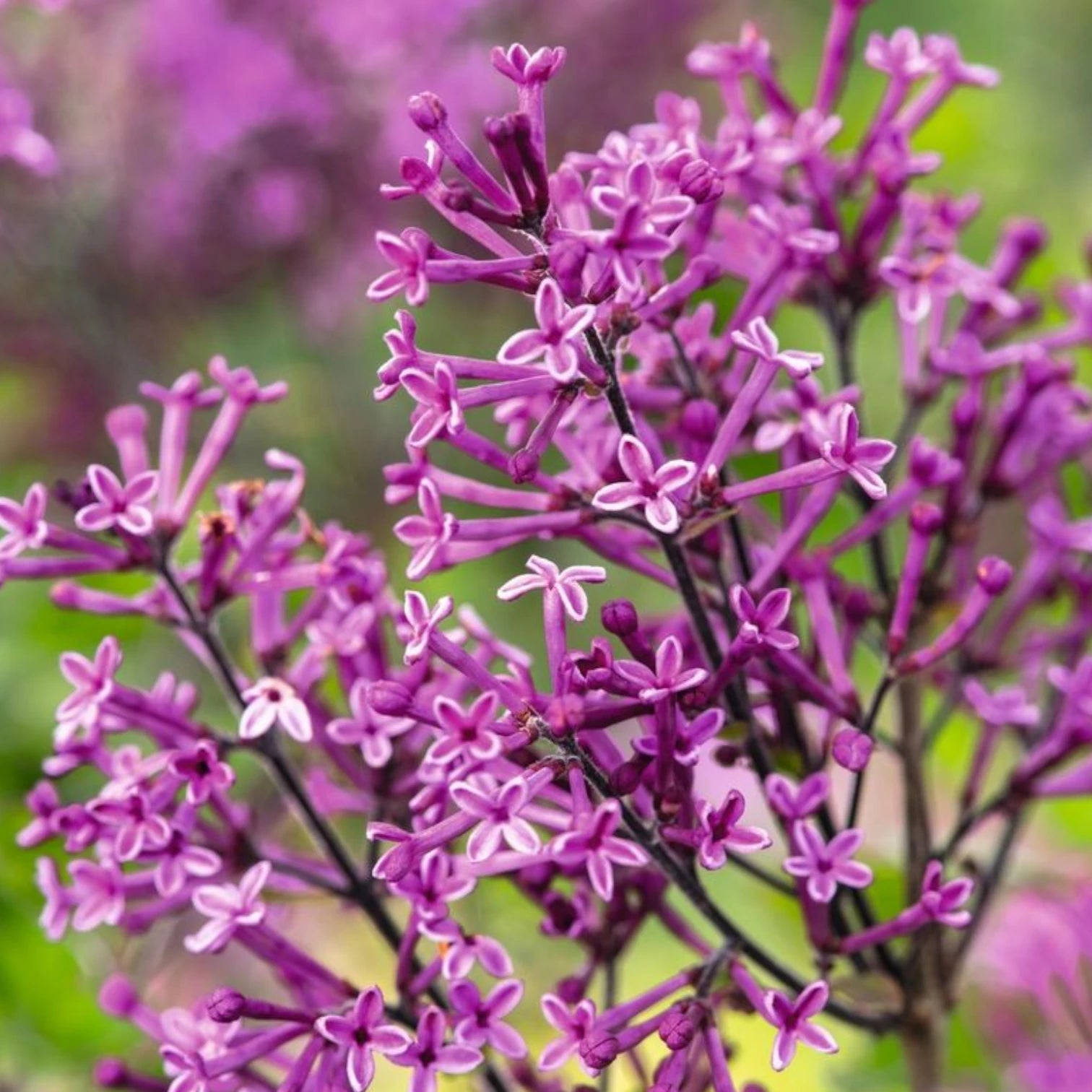
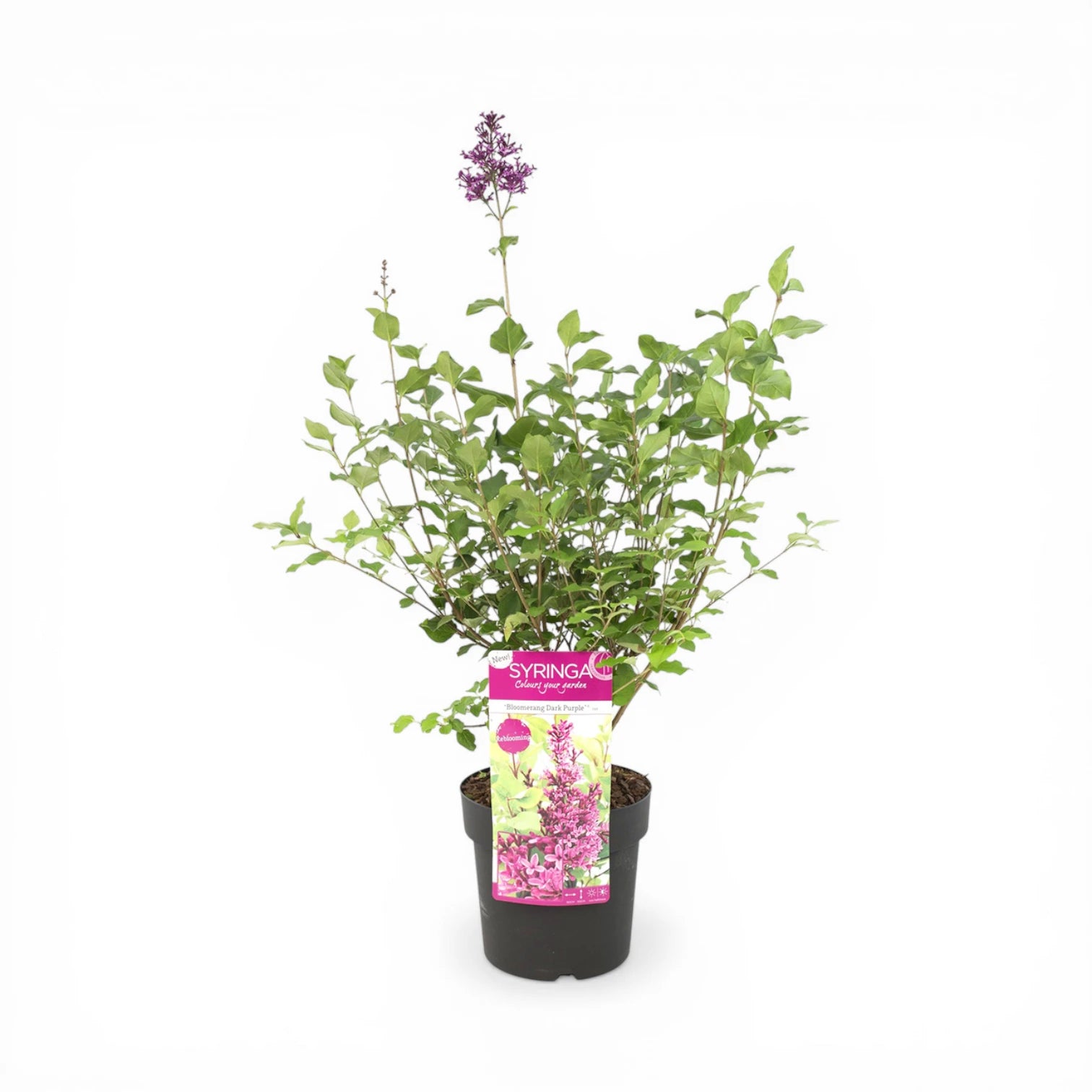
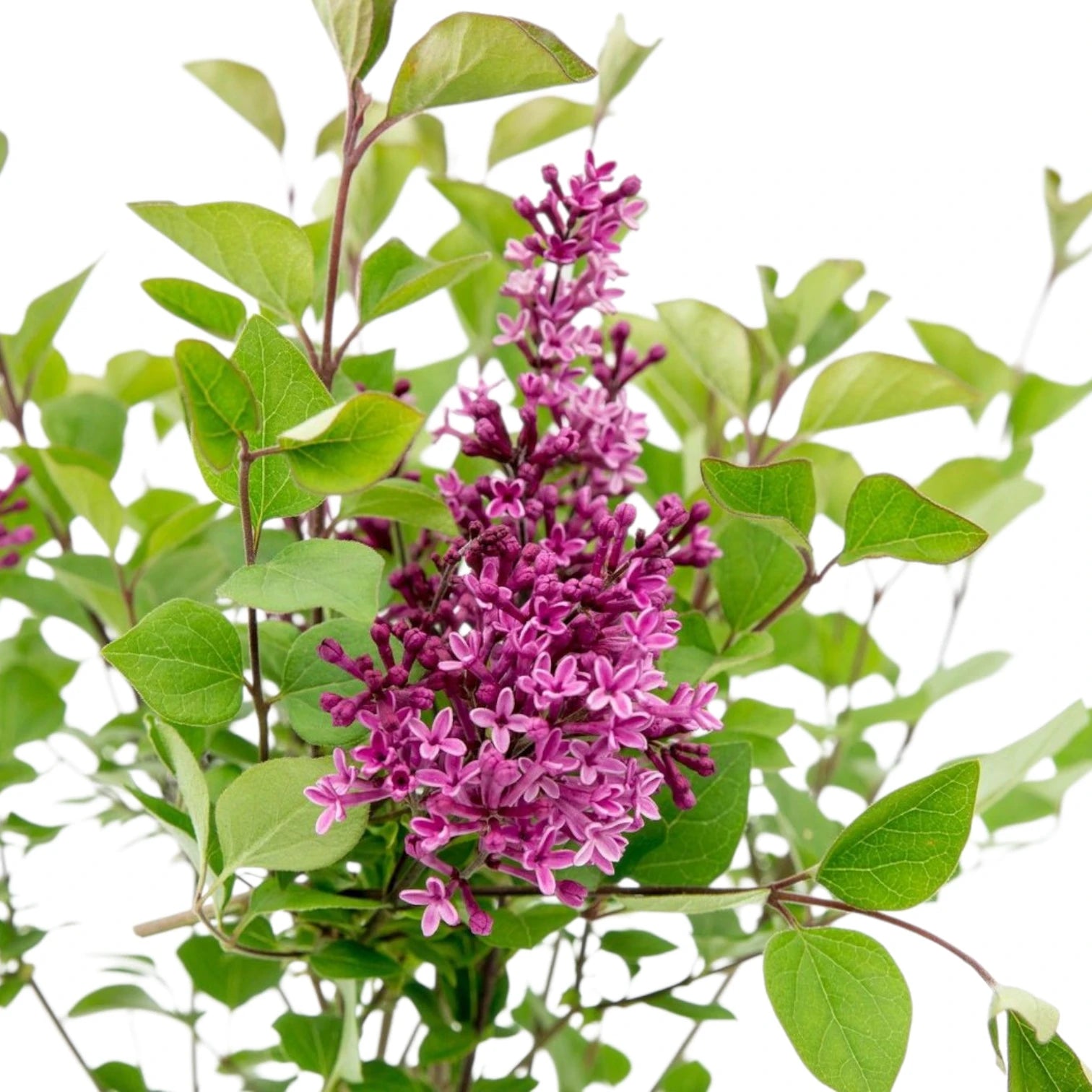
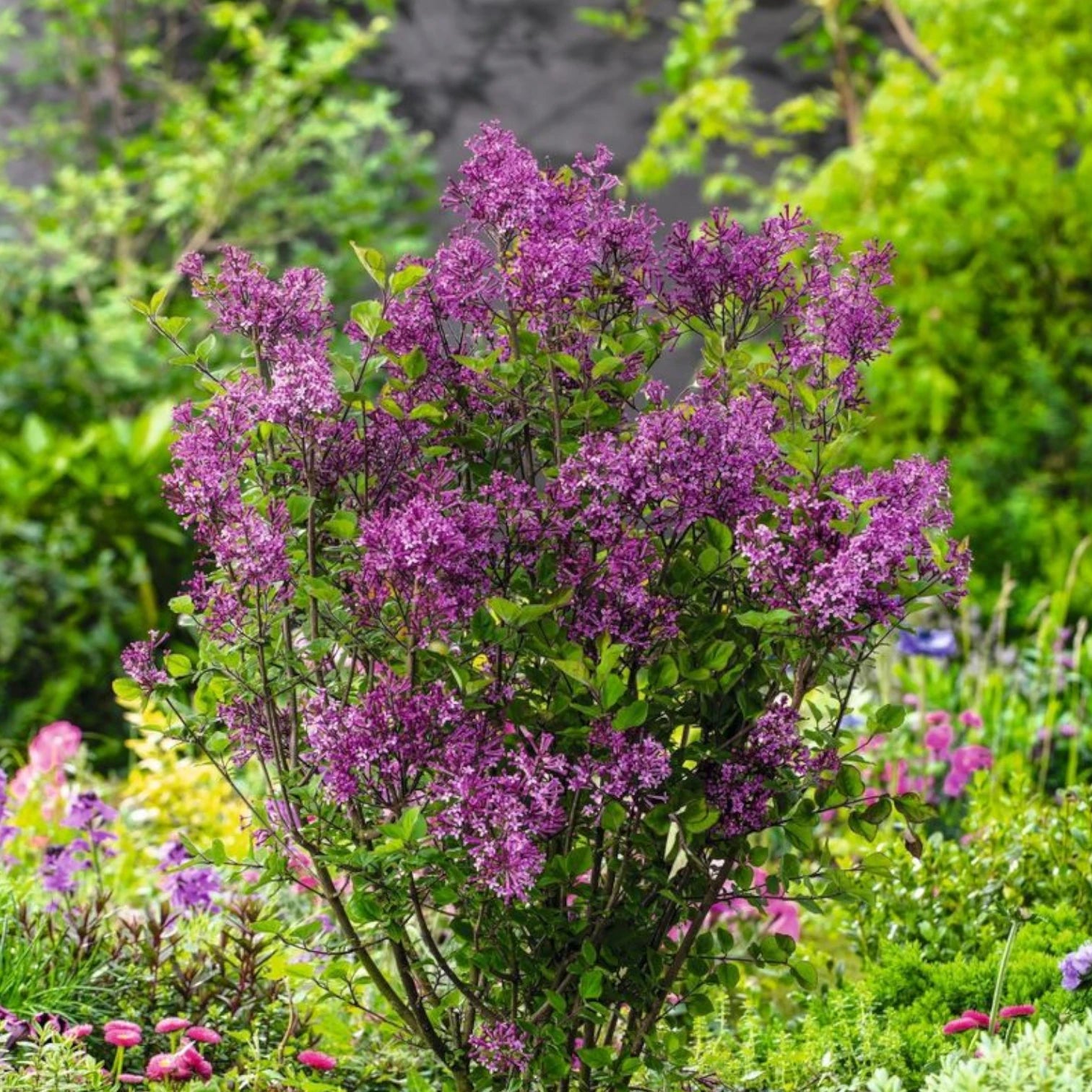
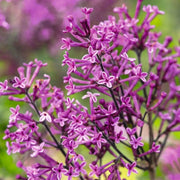
Syringa Bloomerang® Dark Purple is a compact reblooming lilac with fragrant purple flowers, a rounded deciduous frame and a compact scale for smaller gardens. It flowers strongly in spring, then can produce further blooms later in the season when light, moisture and plant energy are good. The result is a shrub with familiar lilac scent, spring colour and a compact outline for everyday garden use.
Use Syringa Bloomerang® Dark Purple as a sunny border shrub, a feature in a large patio container, or part of a fragrant entrance planting. The plant has the most value where the flowers can be enjoyed close up, since scent is a major part of its appeal. A position near a path, seating area or doorway lets the spring bloom work as more than distant colour.
Syringa Bloomerang® Dark Purple forms a bushy deciduous shrub, usually around 1.2-1.8 m tall and wide in gardens, depending on climate, pruning and root space. Flower clusters open in spring from buds formed on older wood. Later flowers can follow on new growth, usually in a lighter flush through summer into early autumn. The foliage is green through the growing season, then drops in winter.
In containers, Syringa Bloomerang® Dark Purple stays smaller and grows more slowly than plants in open ground. This helps keep the shrub manageable on patios, but it also means watering and feeding need to be steadier. Use a large container with drainage holes, a loam-based compost and a stable position in full sun.
Full sun is the safest choice for flowering. Lilacs need strong light to build buds and produce a good spring display. A sheltered, open position also helps the flower clusters last well and keeps the shrub accessible for light pruning after bloom. Good airflow around the plant is useful, especially in warm, humid periods.
Soil should be moderately fertile and well-drained, with a neutral to alkaline reaction suiting lilacs well. Loam and chalky soils can work when drainage is good and the root area is not compacted. Add compost at planting to improve structure, then mulch lightly in spring to hold moisture around the root zone while leaving the stem base clear.
Water regularly during the first season so the shrub establishes well. Once rooted into open ground, Syringa Bloomerang® Dark Purple is fairly straightforward, but flowering shrubs still appreciate deep watering during extended dry spells. Summer moisture is especially useful if a later flower flush is expected. A spring mulch of compost supports soil life and helps conserve moisture.
For pots, water when the top 25-30% of the pot depth feels dry. Soak the compost fully and let excess water drain away. Container lilacs need a steady rhythm in warm weather because flowering, leaf growth and reblooming all draw on limited root volume. A balanced spring feed can support growth in pots, followed by careful watering and modest nutrition later.
Prune lightly after the main spring flower display. Remove spent flower heads and shorten any awkward shoots while keeping the natural rounded frame. Heavy late-season pruning can reduce the following spring display because lilacs prepare many spring flower buds before winter. For older shrubs, remove a few older stems after flowering to keep the framework open and fresh.
Deadheading after spring bloom can neaten the shrub and encourage energy into new growth. Later rebloom varies with weather, light and moisture. It is strongest when the plant is healthy, sunny and watered through dry spells. In a container, reblooming depends heavily on rootball moisture and enough nutrition in the compost.
Poor flowering is usually linked to shade, heavy pruning outside the spring pruning window, drought during bud development, or excessive nitrogen feeding. Yellowing leaves can point to root stress in compacted or saturated soil. Sparse growth in pots often means the container is too small or the compost has become exhausted.
Syringa Bloomerang® Dark Purple works best where it can be treated as a permanent, woody shrub with a settled root run. Give it sun, drainage, a large root run and pruning immediately after spring bloom, and it becomes a compact lilac with real fragrance, repeat colour potential and an easy fit in smaller outdoor spaces.
The main flower show comes in spring on a compact deciduous framework. Later bloom is lighter and depends on energy reserves, light and moisture, so the shrub benefits from a sunny position and a steady root run. Remove faded spring flower clusters neatly, shaping only lightly at the same time. This keeps the shrub balanced and leaves the plant with plenty of young growth for the rest of the season.
Large containers suit this lilac when the pot is deep, stable and filled with a loam-based mix that drains freely. Water when the upper 25-35% of the pot depth feels dry, then soak the rootball evenly. Containers keep plants smaller and slower than open ground, so long-term pot plants need periodic top-dressing and careful watering during flower bud development.
Set Syringa Bloomerang® Dark Purple where its fragrance can be enjoyed at close range. A sunny path, terrace edge or entrance bed gives the flowers real value in daily use. Good airflow around the shrub also helps the leaves dry after rain and keeps the rounded shape easier to manage.
Garden lilac hybrid derived from East Asian species, selected for compact habit and repeat flowering.
Deciduous shrub
Position
Full sun
Moisture
Average
Drainage
Well-drained
Hardiness
Fully hardy · -25°C
Mature size
150–180 × 150–180 cm
Winter habit
Deciduous
Bloom time
Spring, Summer, Autumn
Containers
Good in pots
Pruning
After flowering
Sign up for Foliage Factory newsletter for early access to new arrivals and practical care tips that work in real homes.