Position
Full sun

Lavandula
VAT included · plus
Your outdoor plant has just been packed, transported and unpacked, so give it a calm start before planting or placing it permanently. Remove all packaging carefully, check the pot, stems, visible roots and substrate moisture, and settle any loose growing medium back around the root ball. Water if the root ball feels dry, but do not leave the pot standing in water. For the first few days, keep the plant in a sheltered spot suited to its light needs, away from strong midday sun, heavy wind, frost and heat stress.
Do not move the plant straight into full exposure, especially if it is young, newly flushed, evergreen, recently pruned or greenhouse-grown. Gradually introduce more sun, wind and temperature variation over several days. If cold nights, storms, intense sun or hot dry weather are expected, keep the plant protected until conditions are more stable. Do not fertilize immediately after delivery; let the plant settle first and resume feeding only when it is actively growing and conditions are suitable.
Outdoor plants may arrive in different seasonal stages. Depending on the time of year, your plant may be leafy, flowering, newly sprouting, recently pruned, dormant, partly bare or leafless. Adjust care to what the plant is doing: actively growing plants need closer moisture checks, while dormant plants usually need protection from extremes and only light moisture management until growth resumes.
Plant outdoors when the soil is workable and weather conditions suit the plant type. Avoid planting during frost, heatwaves, waterlogged soil or very dry windy periods. It is better to keep the plant protected in its pot for a short time than to plant into stressful conditions. After planting, water thoroughly so the root ball and surrounding soil connect properly, then monitor moisture while the plant establishes.
Secure shipping, carefully packed orders with safe delivery across the EU, UK and Switzerland.
28-day plant guarantee, if a plant arrives damaged or fails soon after delivery, we help you make it right.
Free returns, simple, cost-free returns according to our policy.
For full details, please see:
Please head to our FAQ Page or Contact us.
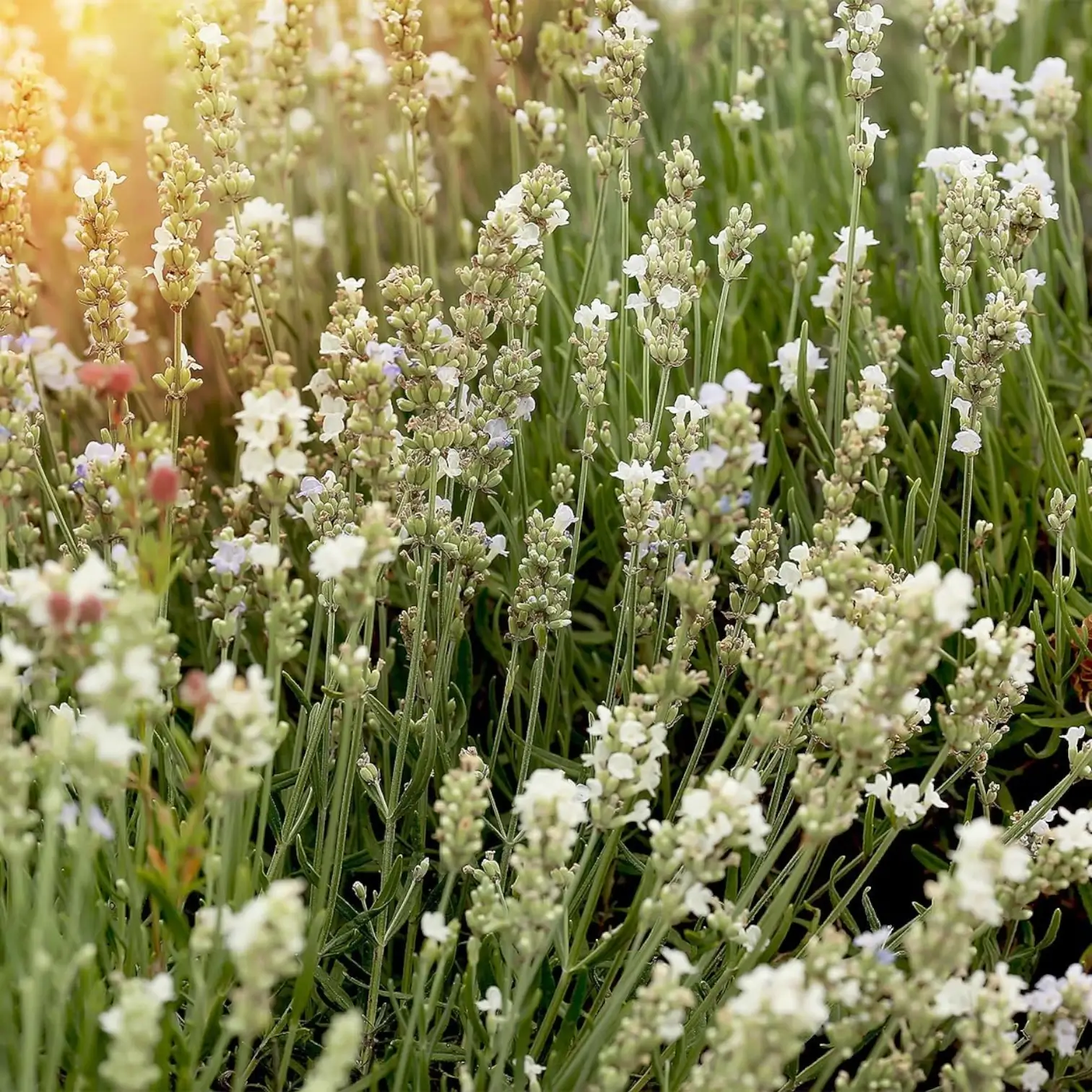
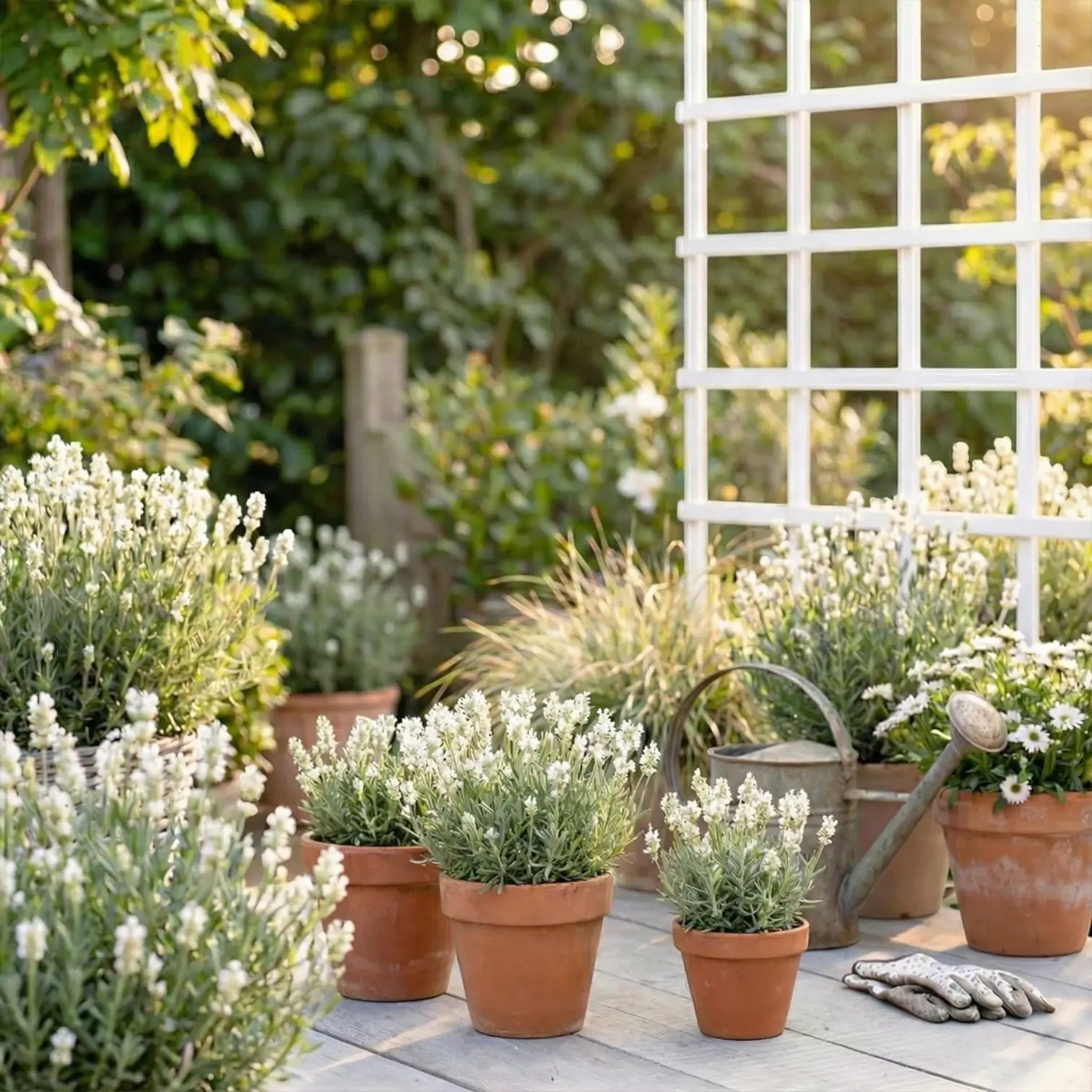
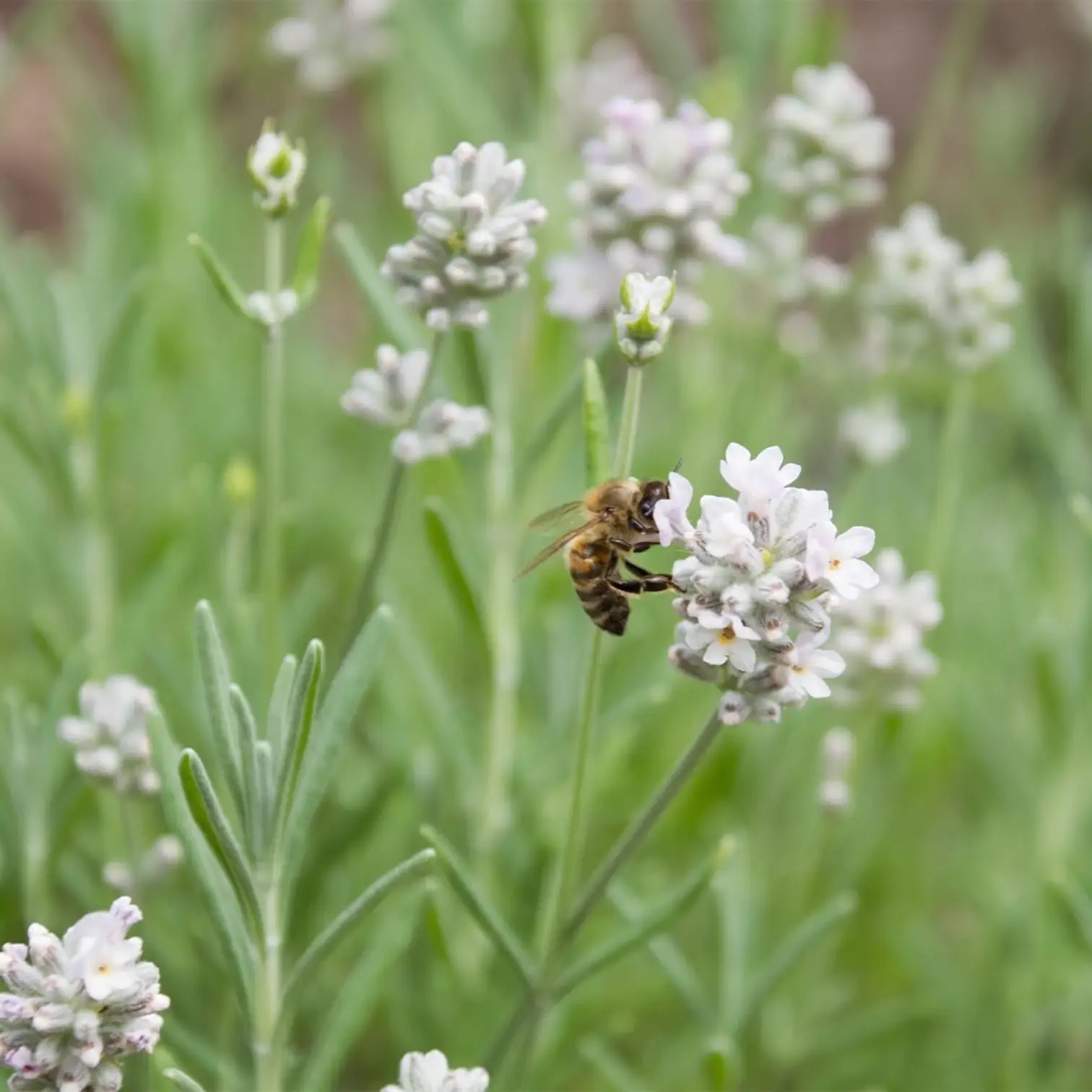
Lavandula angustifolia white form brings the familiar English lavender shape and scent in a paler, softer flowering colour. The creamy spikes read as a light highlight in sunny planting, especially when used in repetition for edging and low, rhythmic lines.
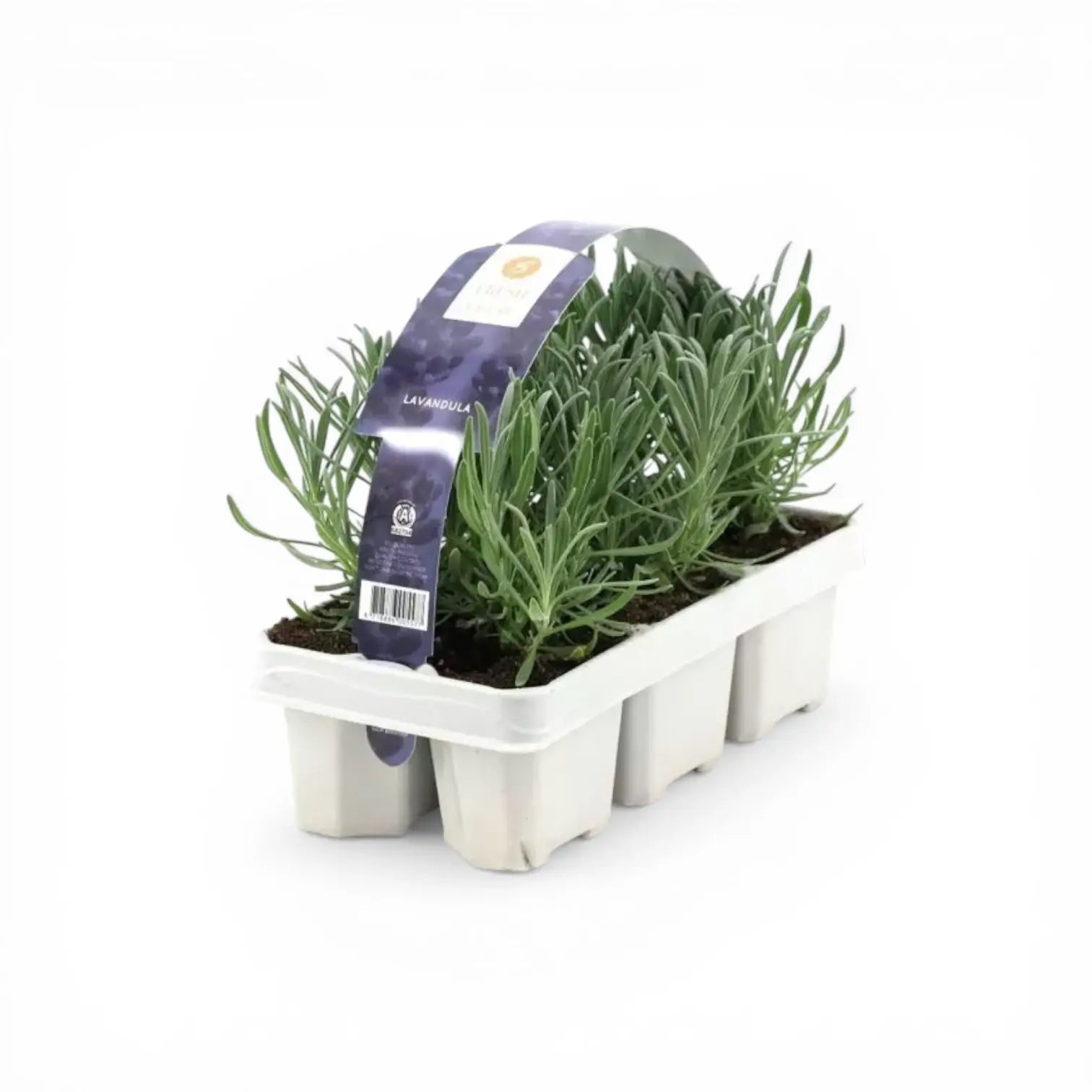
The aromatic foliage stays present after flowering, and the woody base holds structure through winter. In a 6-plant set, it is easy to build a consistent run rather than a single isolated mound.
Fresh shoots rise in spring and quickly fill out a rounded mound. Flower stems lift in summer, then the plant returns to evergreen texture once spent stems are removed.
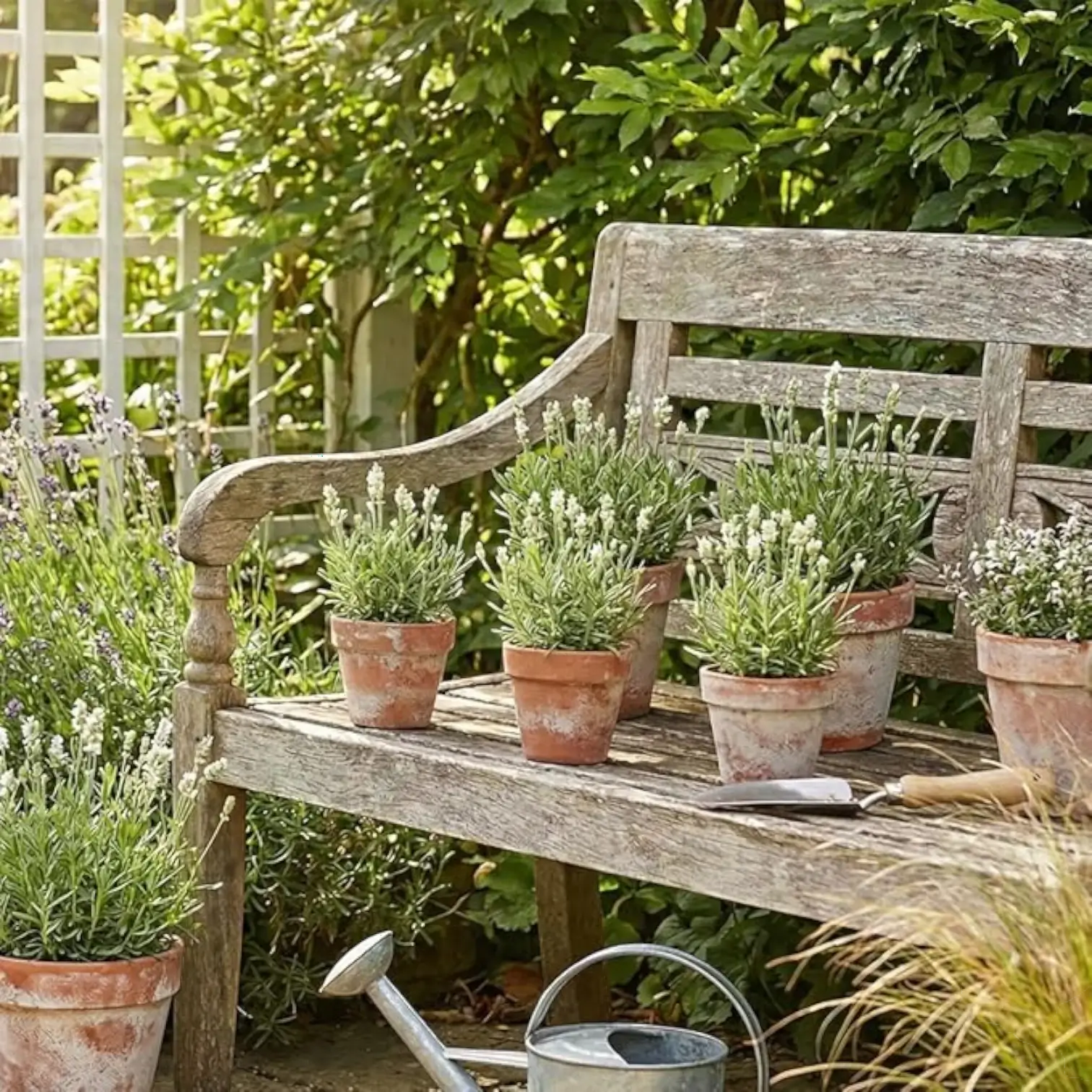
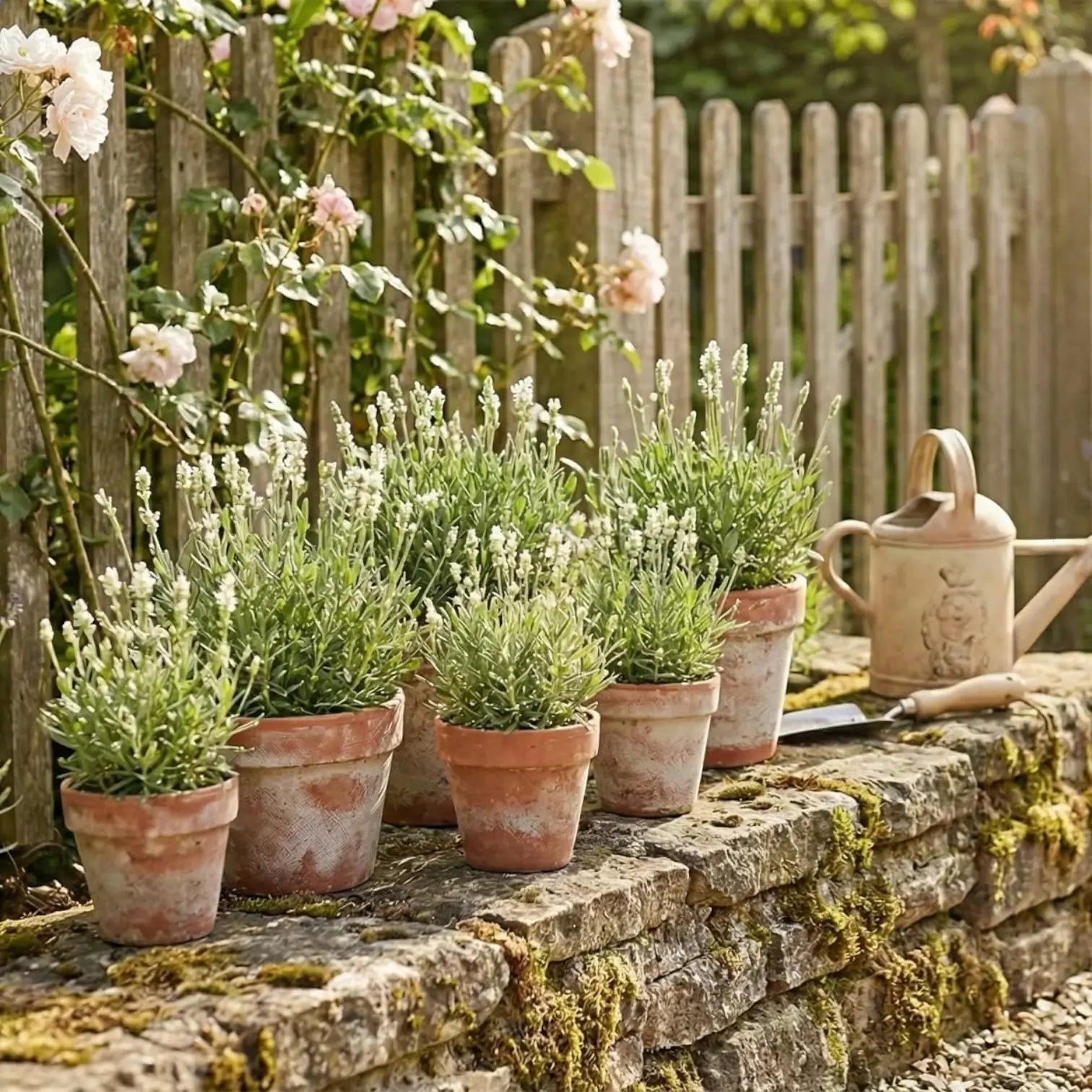
Expect around 40-50 cm in height and about 50 cm spread on a settled plant, influenced by pruning and root room. In containers, growth often stays tighter, which suits repeating pots along a terrace or balcony edge.
Open sun keeps growth firm and supports better flowering colour. Drainage is the long-term factor: lavender needs a root zone that does not stay heavy after rain, and a crown that dries quickly.
Most soil types work when structure is open. If your soil is slow to drain, build in grit and keep the crown slightly proud of the surrounding level, so water does not sit at the base.
Use free-draining pots and a gritty outdoor mix that does not stay waterlogged. Water thoroughly when needed, then allow a proper dry-back before the next soak.
Check moisture by depth: when the top third is dry and the pot feels lighter, water deeply and let excess drain away. During extended wet weather, sheltering pots can protect the crown far more than extra watering helps.
Regular, light shaping keeps the set looking uniform and prevents woody gaps. Trim in green growth where leafy buds are present, so each plant responds evenly.
Softness at the centre or sudden collapse is usually linked to a crown that stayed wet for too long. In pots, blocked drainage holes and overly water-holding mixes are frequent triggers.
Thin flowering usually comes from reduced sun or overly rich soil. A brighter, leaner position tends to improve both habit and bloom.
A 6-plant set makes it easy to build a repeating pattern: a run along a path, a low line beside paving, or a sequence of pots that reads as one design move. Lavandula angustifolia white form also works well with silver foliage, pale grasses, and soft pink perennials where the flower colour keeps the scheme calm.
Dry sunny slopes and scrub of the western Mediterranean.
Evergreen subshrub
Position
Full sun
Moisture
Dry to average
Drainage
Free-draining
Hardiness
Fully hardy · -15°C
Mature size
40–50 × 40–50 cm
Winter habit
Evergreen
Bloom time
Summer
Containers
Good in pots
Pruning
After flowering, Spring

Sign up for Foliage Factory newsletter for early access to new arrivals and practical care tips that work in real homes.