Position
Sun to part shade


Acer
VAT included · plus
Your outdoor plant has just been packed, transported and unpacked, so give it a calm start before planting or placing it permanently. Remove all packaging carefully, check the pot, stems, visible roots and substrate moisture, and settle any loose growing medium back around the root ball. Water if the root ball feels dry, but do not leave the pot standing in water. For the first few days, keep the plant in a sheltered spot suited to its light needs, away from strong midday sun, heavy wind, frost and heat stress.
Do not move the plant straight into full exposure, especially if it is young, newly flushed, evergreen, recently pruned or greenhouse-grown. Gradually introduce more sun, wind and temperature variation over several days. If cold nights, storms, intense sun or hot dry weather are expected, keep the plant protected until conditions are more stable. Do not fertilize immediately after delivery; let the plant settle first and resume feeding only when it is actively growing and conditions are suitable.
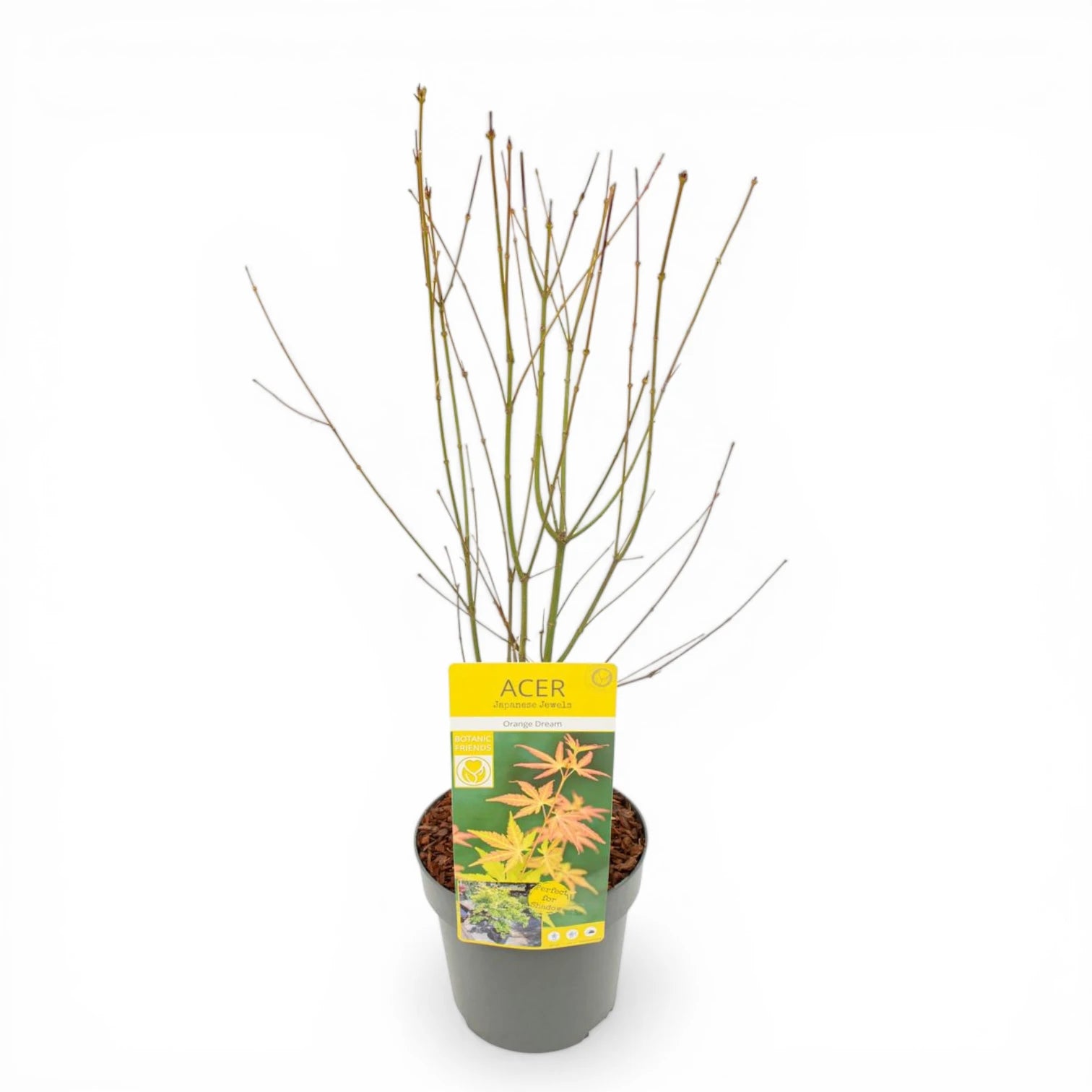
Outdoor plants may arrive in different seasonal stages. Depending on the time of year, your plant may be leafy, flowering, newly sprouting, recently pruned, dormant, partly bare or leafless. Adjust care to what the plant is doing: actively growing plants need closer moisture checks, while dormant plants usually need protection from extremes and only light moisture management until growth resumes.
Plant outdoors when the soil is workable and weather conditions suit the plant type. Avoid planting during frost, heatwaves, waterlogged soil or very dry windy periods. It is better to keep the plant protected in its pot for a short time than to plant into stressful conditions. After planting, water thoroughly so the root ball and surrounding soil connect properly, then monitor moisture while the plant establishes.
Secure shipping, carefully packed orders with safe delivery across the EU, UK and Switzerland.
28-day plant guarantee, if a plant arrives damaged or fails soon after delivery, we help you make it right.
Free returns, simple, cost-free returns according to our policy.
For full details, please see:
Please head to our FAQ Page or Contact us.
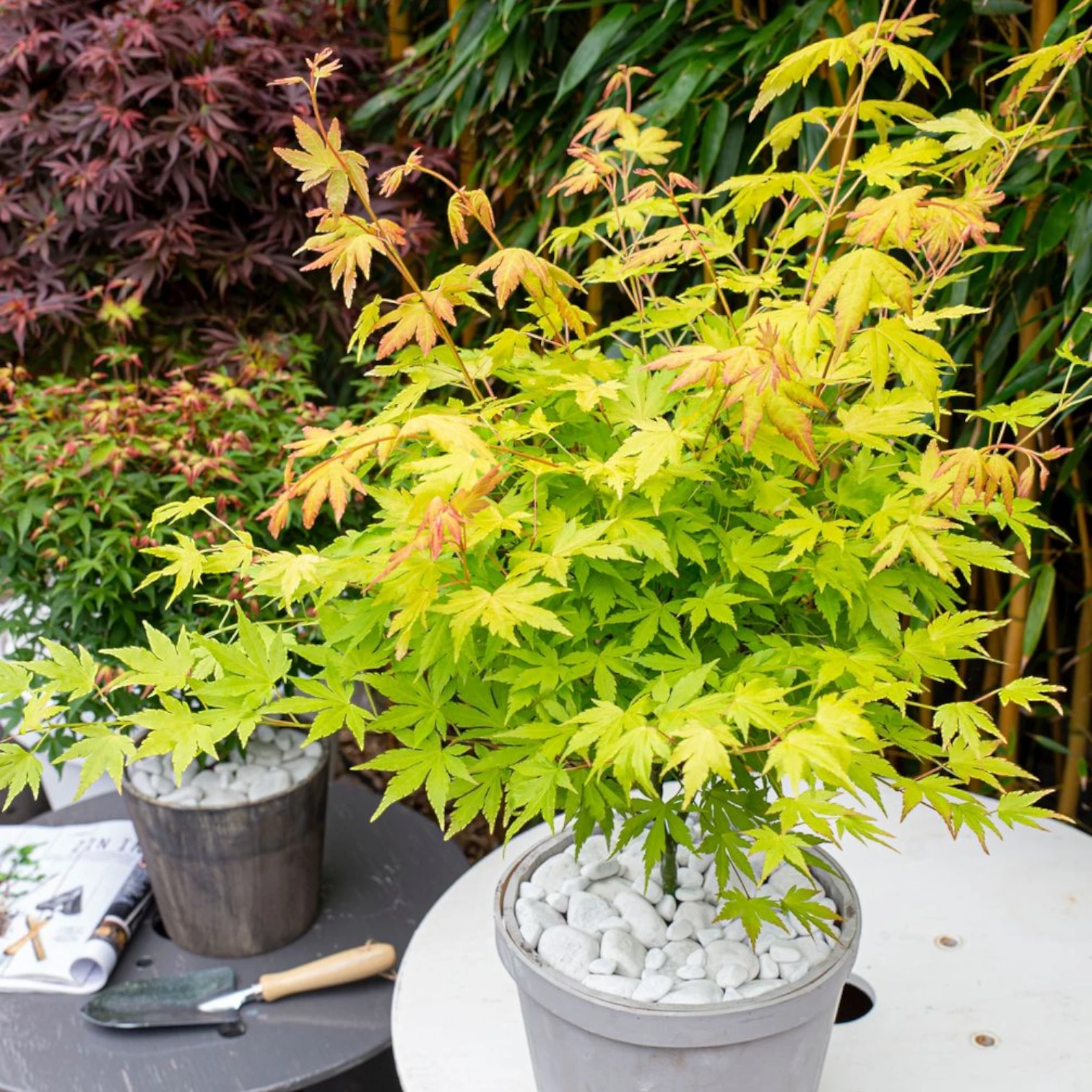
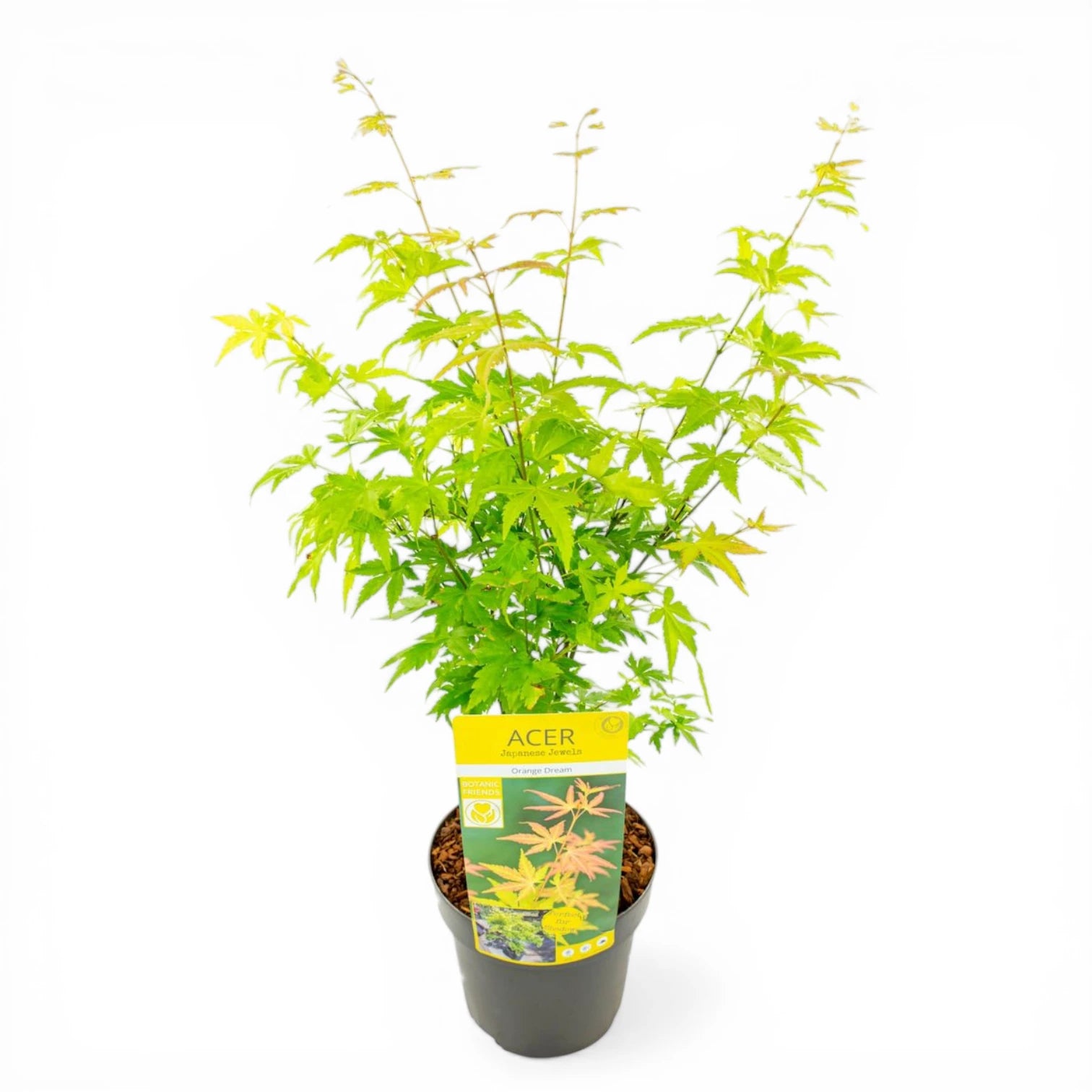
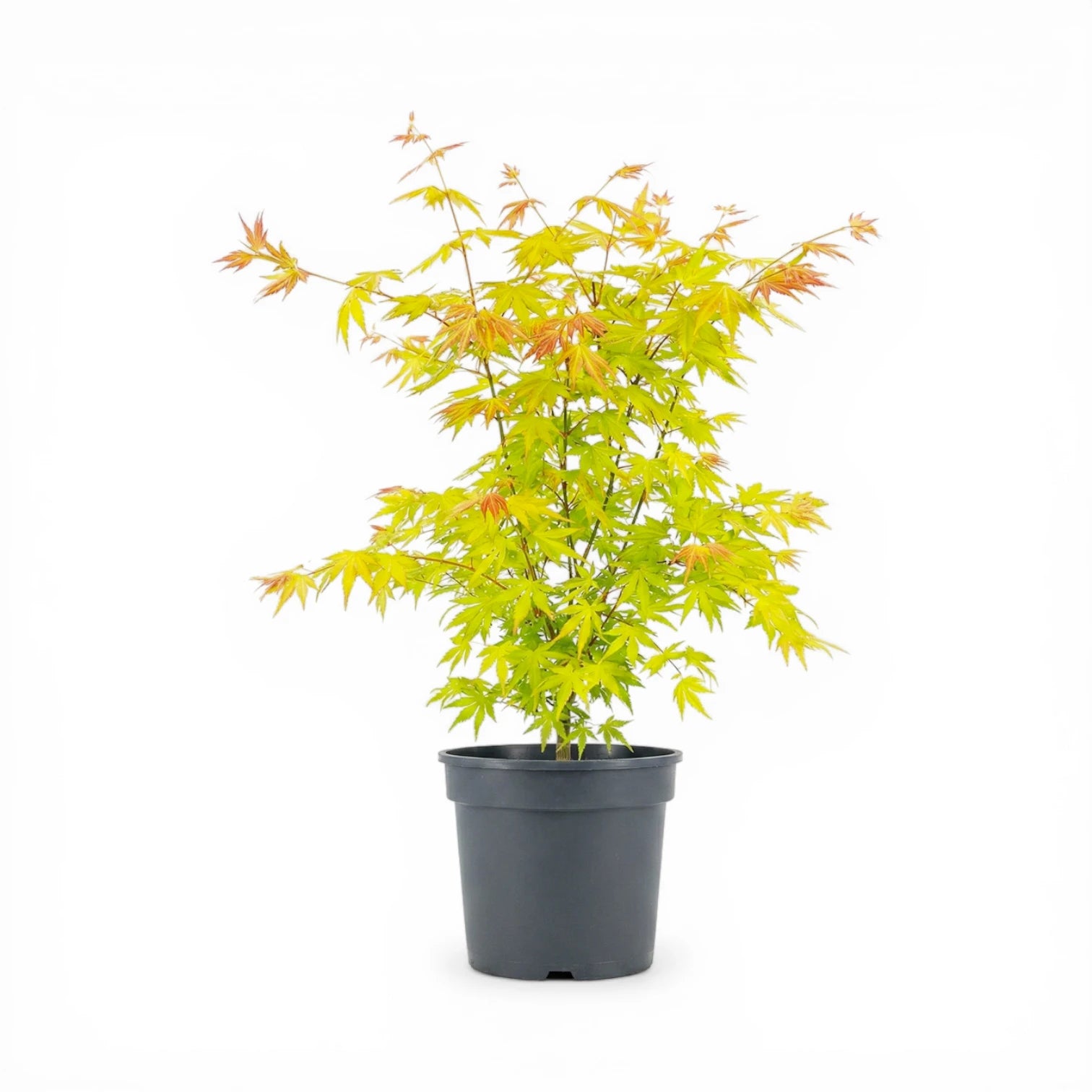
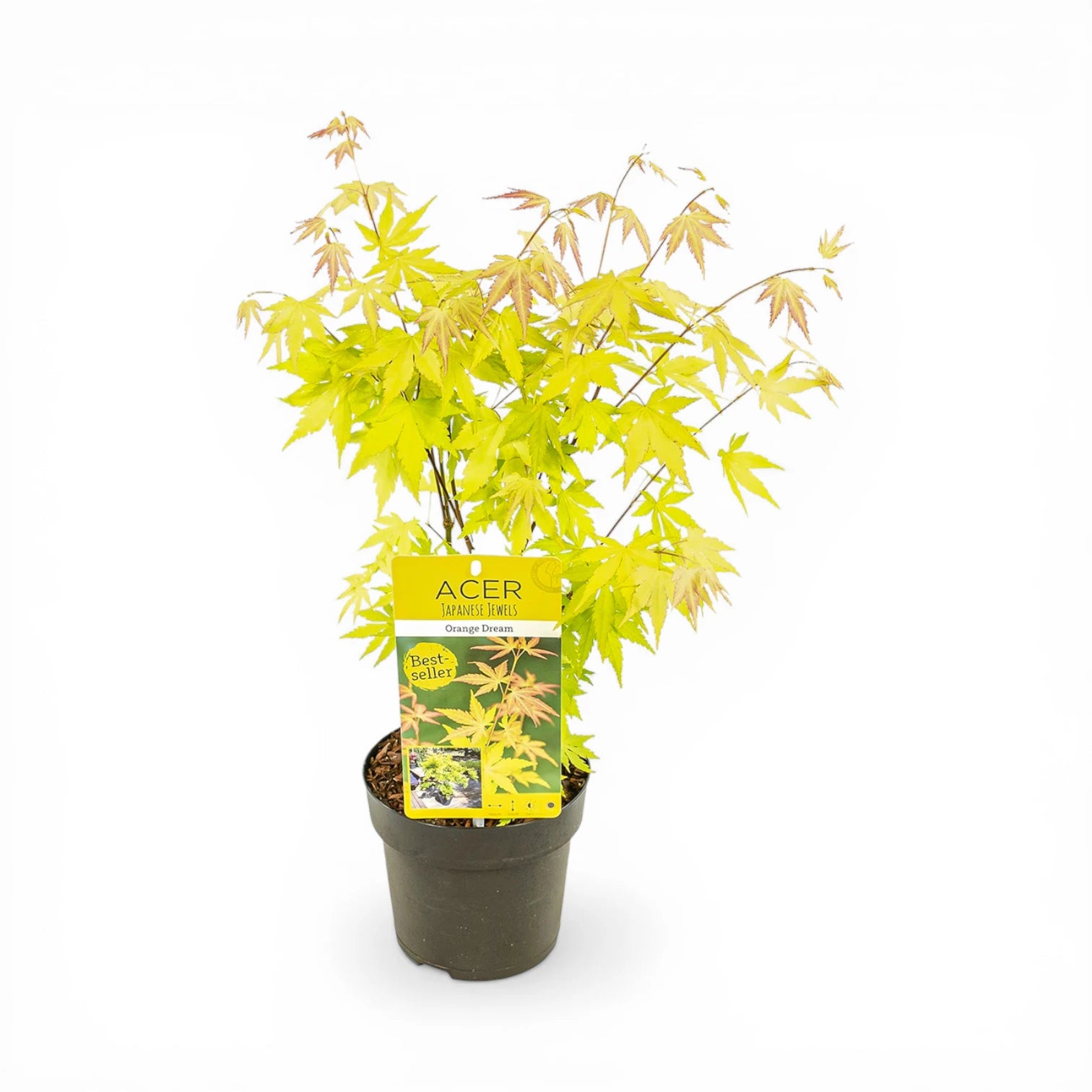
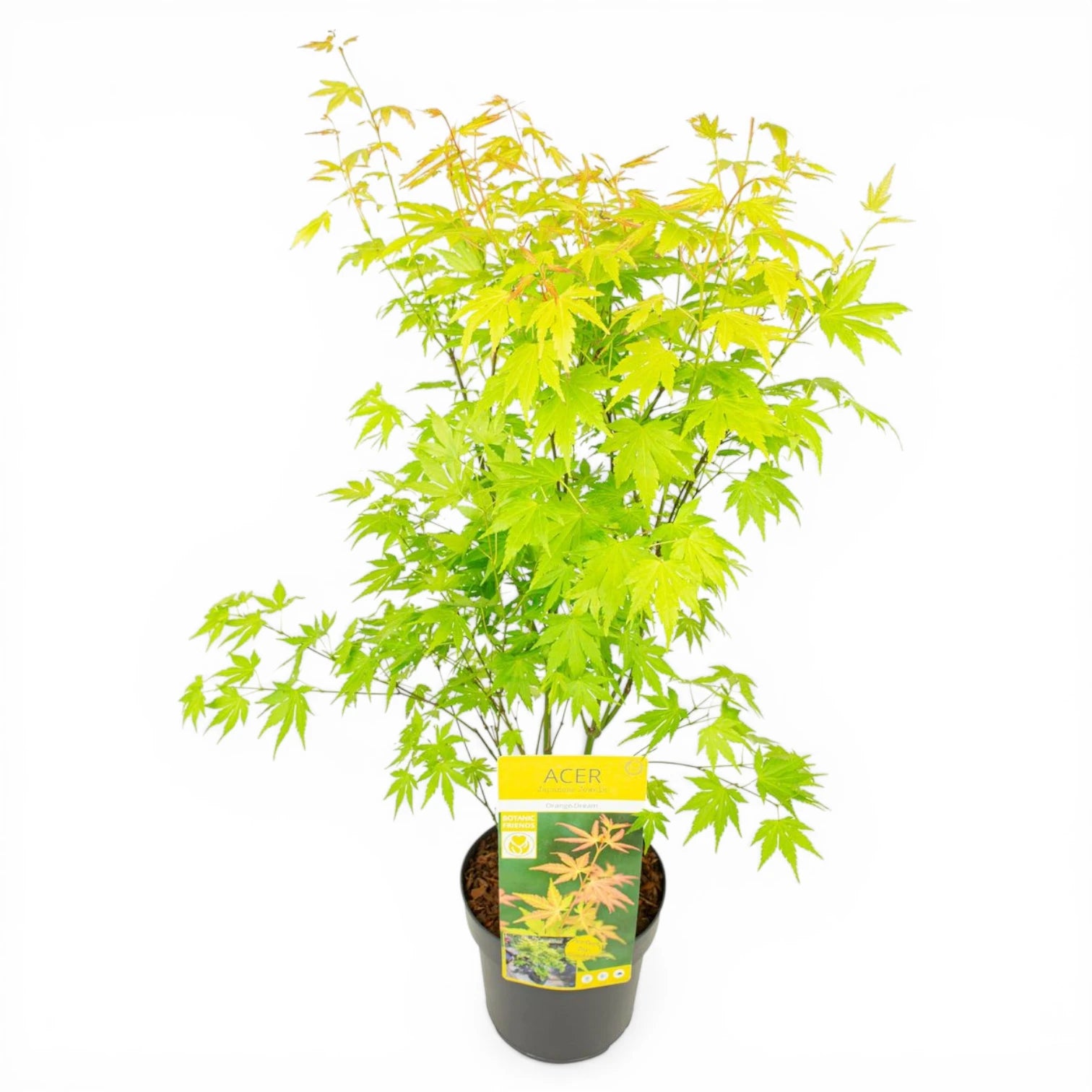
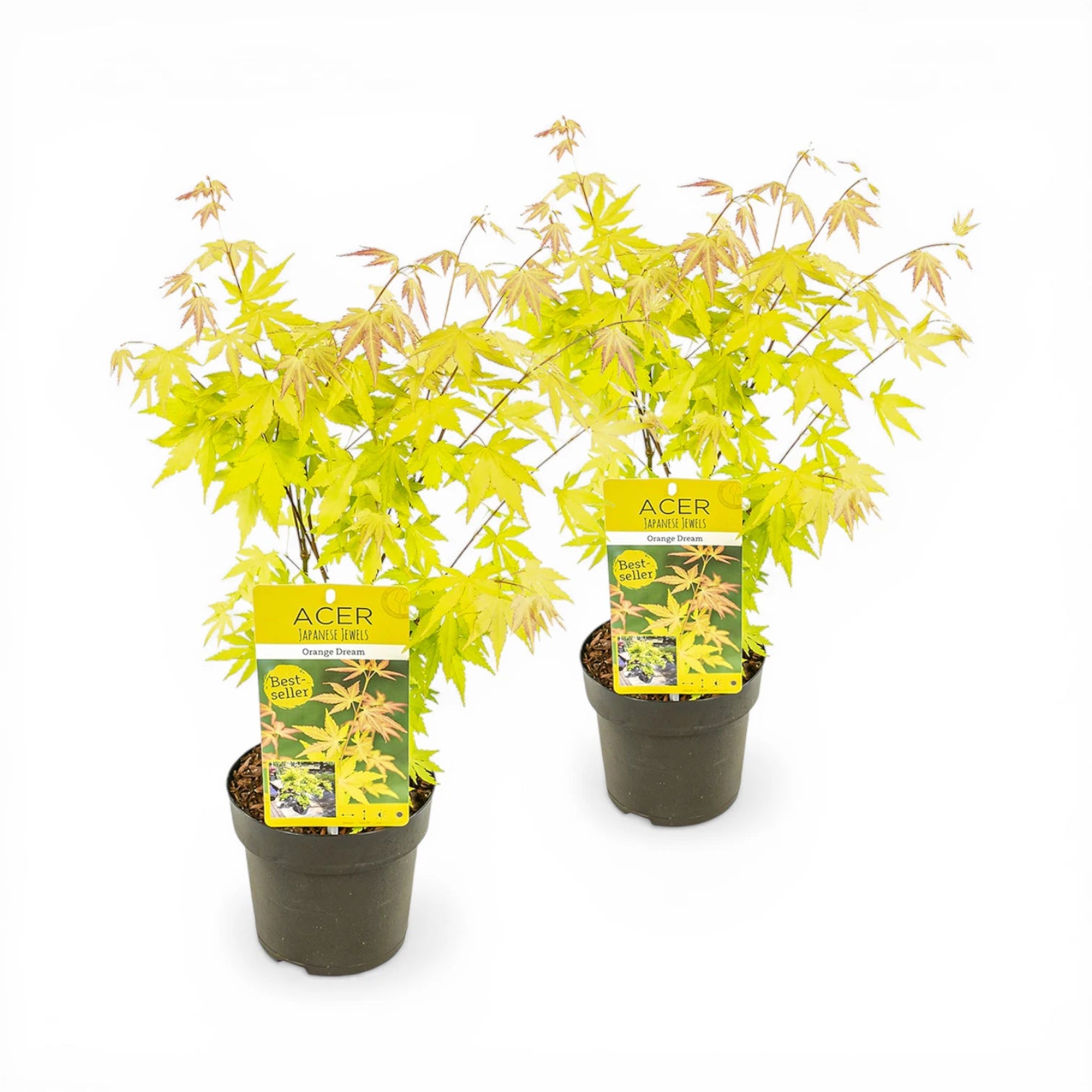
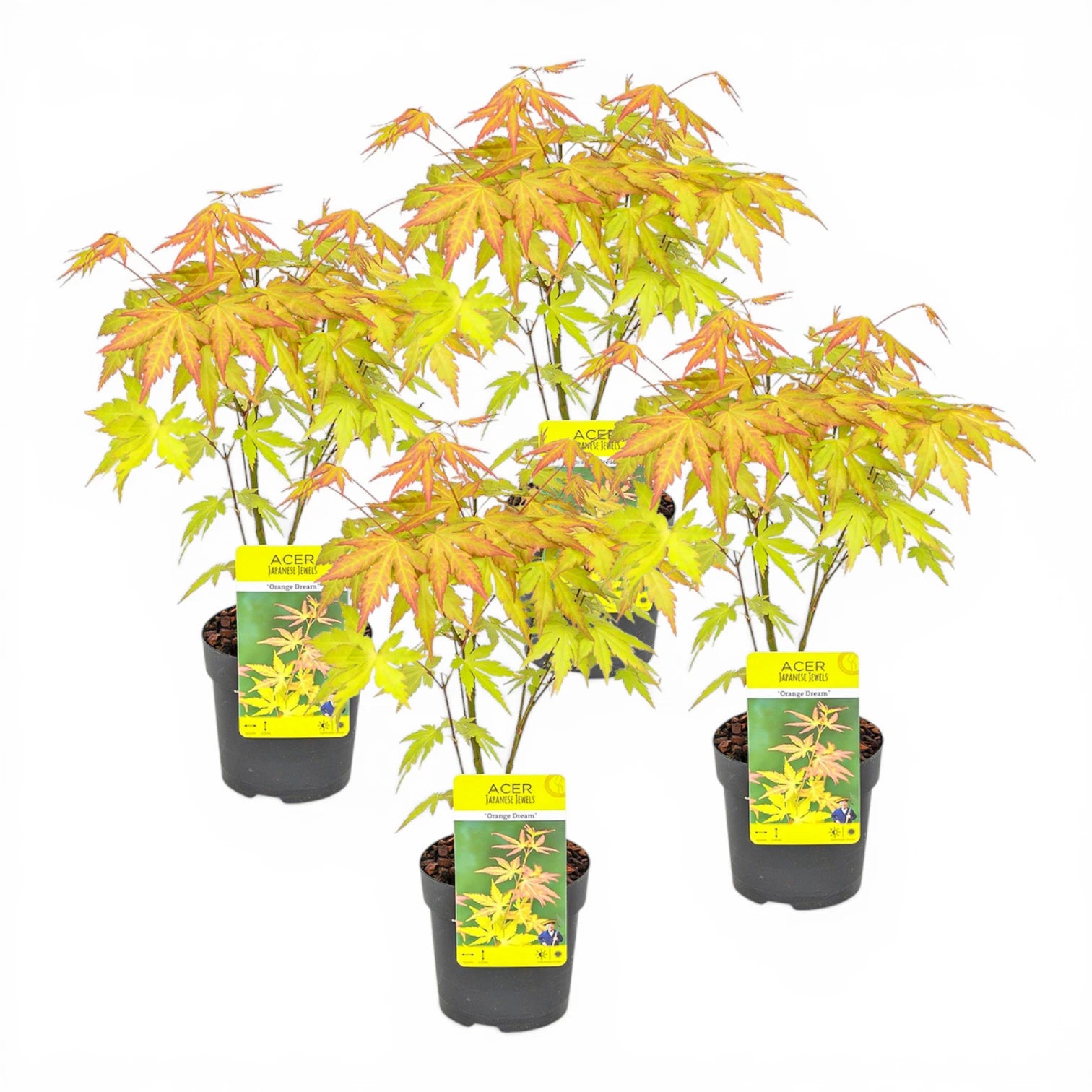
Acer palmatum 'Orange Dream' is selected for warm spring colour and a long season of changing tones. Leaves open orange-yellow, settle into fresh green through summer, then move into yellow and orange shades in autumn. Fine branching and small leaves keep the plant detailed, so it works especially well near paths, seating areas, and entrances where foliage is seen up close.
In open ground, Acer palmatum 'Orange Dream' matures as a shrub or small tree, ultimately reaching 2.5-4 m in height and spread. In a container, growth is slower and the final size stays smaller than plants grown in the ground, which makes it a strong option for courtyards and patios when the pot is large and moisture is managed well.
Colour is the main reason to choose this cultivar, but the effect is most convincing when the plant is healthy and well-sited. Warm spring tones are strongest on new growth, then the canopy settles into a bright green that keeps the plant looking fresh. In autumn, cooler nights bring the yellow-orange finish that gives the plant its name and keeps it prominent when many borders begin to fade.
Sun to part shade suits Acer palmatum 'Orange Dream'. Part shade often helps foliage stay clean through summer, especially in hot regions or in reflective courtyard sites. Full sun can work when the root zone stays reliably moist and the plant has some protection from drying wind. A sheltered position also reduces the risk of leaf edge marking during heat and wind events.
This cultivar grows best in moist but well-drained soil. It tolerates chalk, clay, loam, and sand as long as the soil structure supports both drainage and moisture holding. Organic matter is particularly useful: it improves water retention in sandy soils and helps open heavy ground so roots have air as well as moisture.
Soil reaction is best in acid to neutral conditions. In more alkaline ground, regular mulching and organic matter additions help keep nutrients available and support active feeder roots near the surface.
Plant in autumn or spring, when soil is workable and moisture is naturally available. Place the root ball level with surrounding soil, water thoroughly to settle it in, and keep the root zone consistently moist through the first growing season. A wide mulch ring reduces competition and buffers temperature swings in the surface root zone.
Acer palmatum 'Orange Dream' naturally develops a graceful framework. Pruning is mainly for structure: remove damaged wood, thin crossing branches, and refine the outline. Work in dormancy (late autumn through winter). Gradual shaping over several seasons produces a natural silhouette and keeps the canopy open enough for good air movement.
Large containers suit this cultivar very well, especially where the spring colour is enjoyed at close range. Use a stable mix that holds moisture but drains freely, and choose a pot with generous drainage holes. In pots, roots experience colder winter swings and faster drying in summer, so watering and winter insulation are key parts of success.
Acer palmatum 'Orange Dream' is fully hardy in temperate gardens, with the main winter challenge being root exposure in containers. Pots cool down faster and warm up faster than ground soil, so placing containers in a sheltered corner and insulating the pot sides helps keep roots steadier through freeze-thaw cycles. In the ground, a mulch layer supports roots and helps keep soil temperature more even.
With an ultimate spread of 2.5-4 m, this cultivar benefits from space where the outline can be appreciated. If a tighter footprint is needed, container culture and gradual crown refinement keep the plant smaller and more compact. In borders, leaving open space around the canopy helps light reach the inner framework and supports better air movement.
Leaf scorch can appear during hot, dry weather, especially when wind and strong sun combine with a dry root zone. Shelter, mulching, and consistent moisture help keep foliage in good condition. In soils that remain wet for extended periods in winter, root stress can develop; improved drainage and planting on a slight mound can support healthier roots.
Aphids and scale insects may appear on soft spring growth. Natural predators are often effective. Occasional leaf-spot diseases can occur in humid summers; good air movement through the canopy helps keep it minor.
Acer palmatum 'Orange Dream' works as a focal plant where seasonal colour is appreciated up close. Pair it with evergreen structure (yew, box substitutes, or low conifers) to set off spring and autumn colour, and use shade-tolerant perennials and grasses to fill the base. In mixed borders, it blends well with hydrangeas, ferns, and woodland perennials that share similar soil moisture preferences.
Temperate woodland, woodland-edge and mountain-edge habitats in Japan and Korea.
Deciduous shrub / small tree
Position
Sun to part shade
Moisture
Moist
Drainage
Moisture-retentive, Well-drained
Hardiness
Fully hardy · -20°C
Mature size
250–400 × 250–400 cm
Winter habit
Deciduous
Bloom time
Spring
Containers
Good in pots
Pruning
Mid to late summer, Winter

Sign up for Foliage Factory newsletter for early access to new arrivals and practical care tips that work in real homes.