Position
Sun to part shade

Acer
VAT included · plus
Your outdoor plant has just been packed, transported and unpacked, so give it a calm start before planting or placing it permanently. Remove all packaging carefully, check the pot, stems, visible roots and substrate moisture, and settle any loose growing medium back around the root ball. Water if the root ball feels dry, but do not leave the pot standing in water. For the first few days, keep the plant in a sheltered spot suited to its light needs, away from strong midday sun, heavy wind, frost and heat stress.
Do not move the plant straight into full exposure, especially if it is young, newly flushed, evergreen, recently pruned or greenhouse-grown. Gradually introduce more sun, wind and temperature variation over several days. If cold nights, storms, intense sun or hot dry weather are expected, keep the plant protected until conditions are more stable. Do not fertilize immediately after delivery; let the plant settle first and resume feeding only when it is actively growing and conditions are suitable.
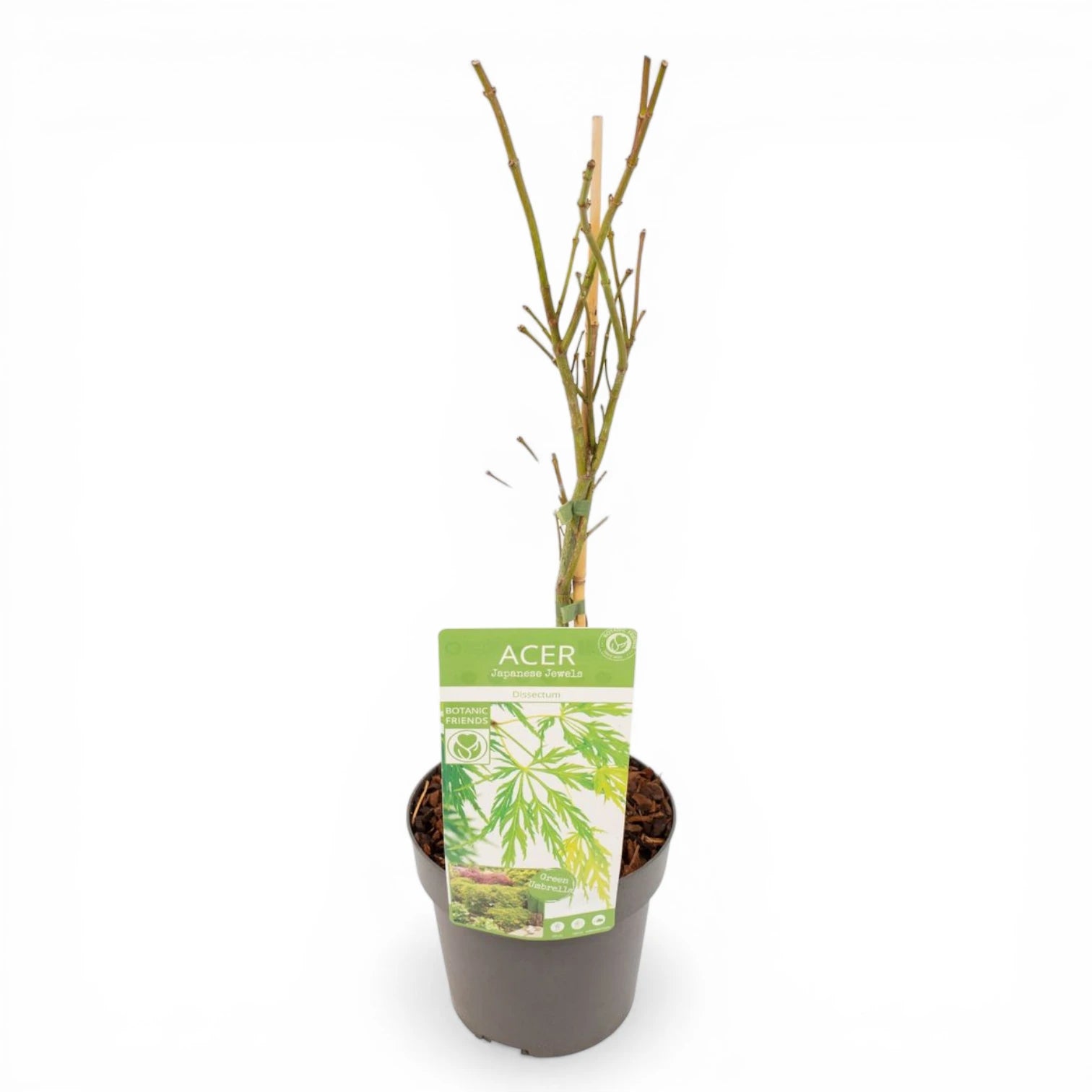
Outdoor plants may arrive in different seasonal stages. Depending on the time of year, your plant may be leafy, flowering, newly sprouting, recently pruned, dormant, partly bare or leafless. Adjust care to what the plant is doing: actively growing plants need closer moisture checks, while dormant plants usually need protection from extremes and only light moisture management until growth resumes.
Plant outdoors when the soil is workable and weather conditions suit the plant type. Avoid planting during frost, heatwaves, waterlogged soil or very dry windy periods. It is better to keep the plant protected in its pot for a short time than to plant into stressful conditions. After planting, water thoroughly so the root ball and surrounding soil connect properly, then monitor moisture while the plant establishes.
Secure shipping, carefully packed orders with safe delivery across the EU, UK and Switzerland.
28-day plant guarantee, if a plant arrives damaged or fails soon after delivery, we help you make it right.
Free returns, simple, cost-free returns according to our policy.
For full details, please see:
Please head to our FAQ Page or Contact us.
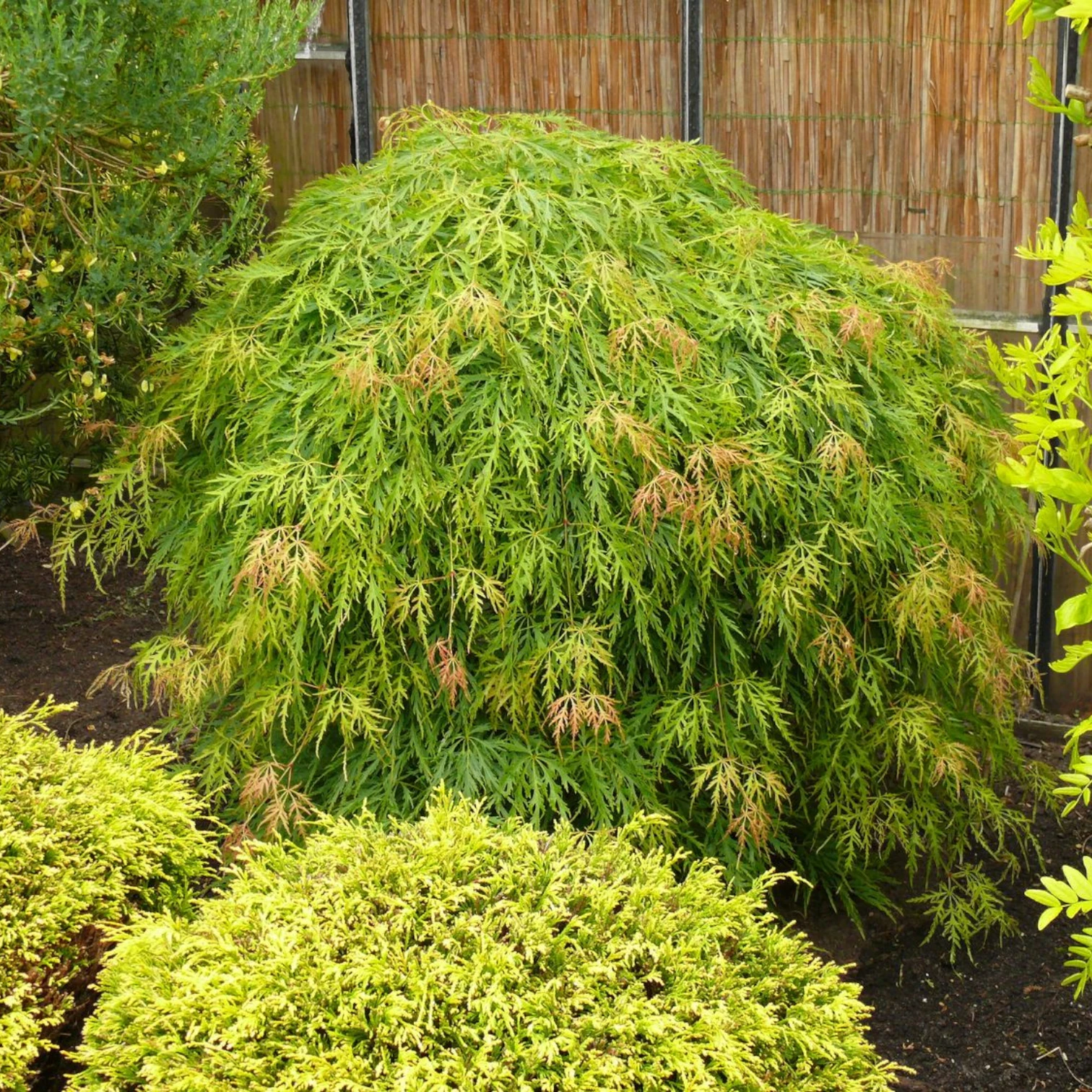
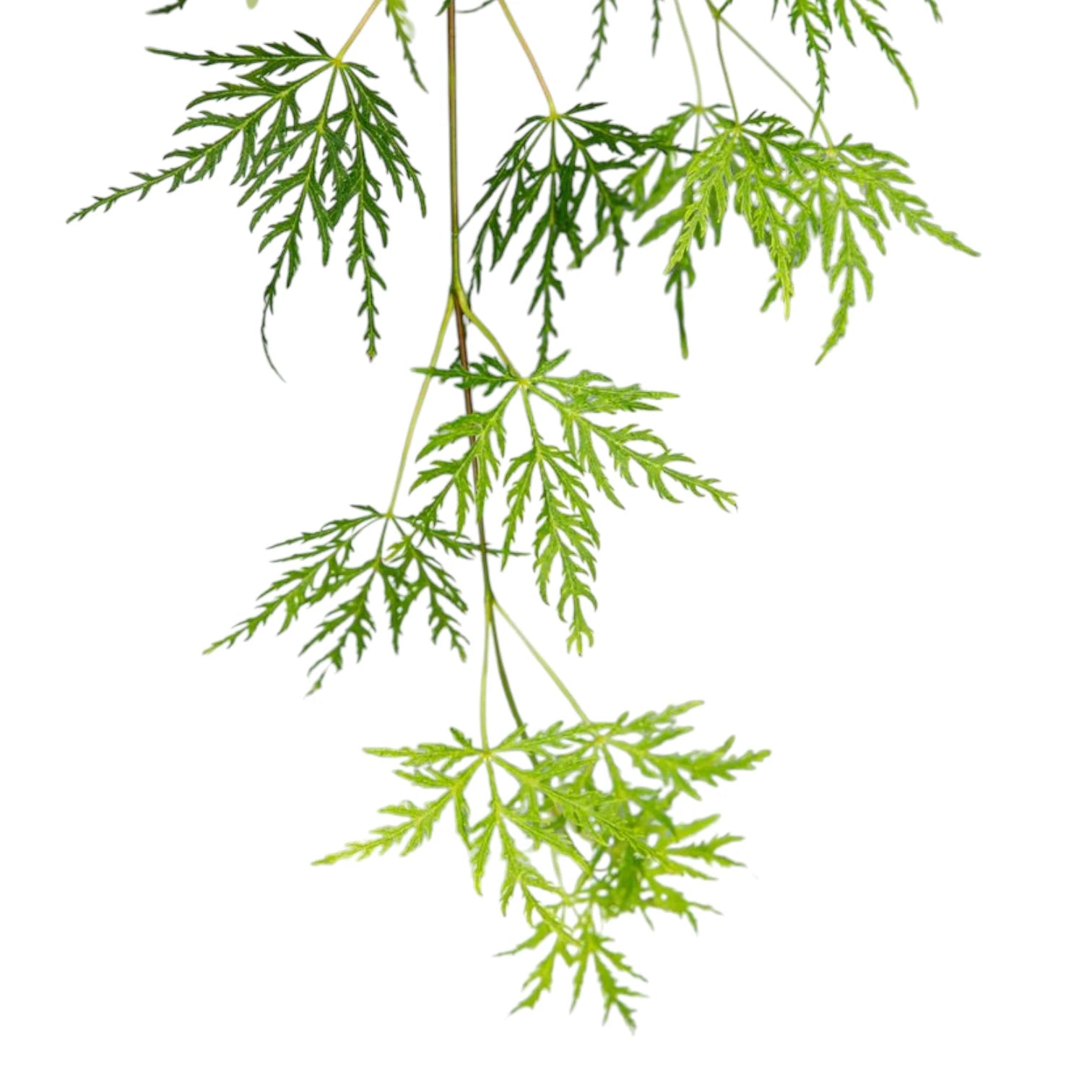
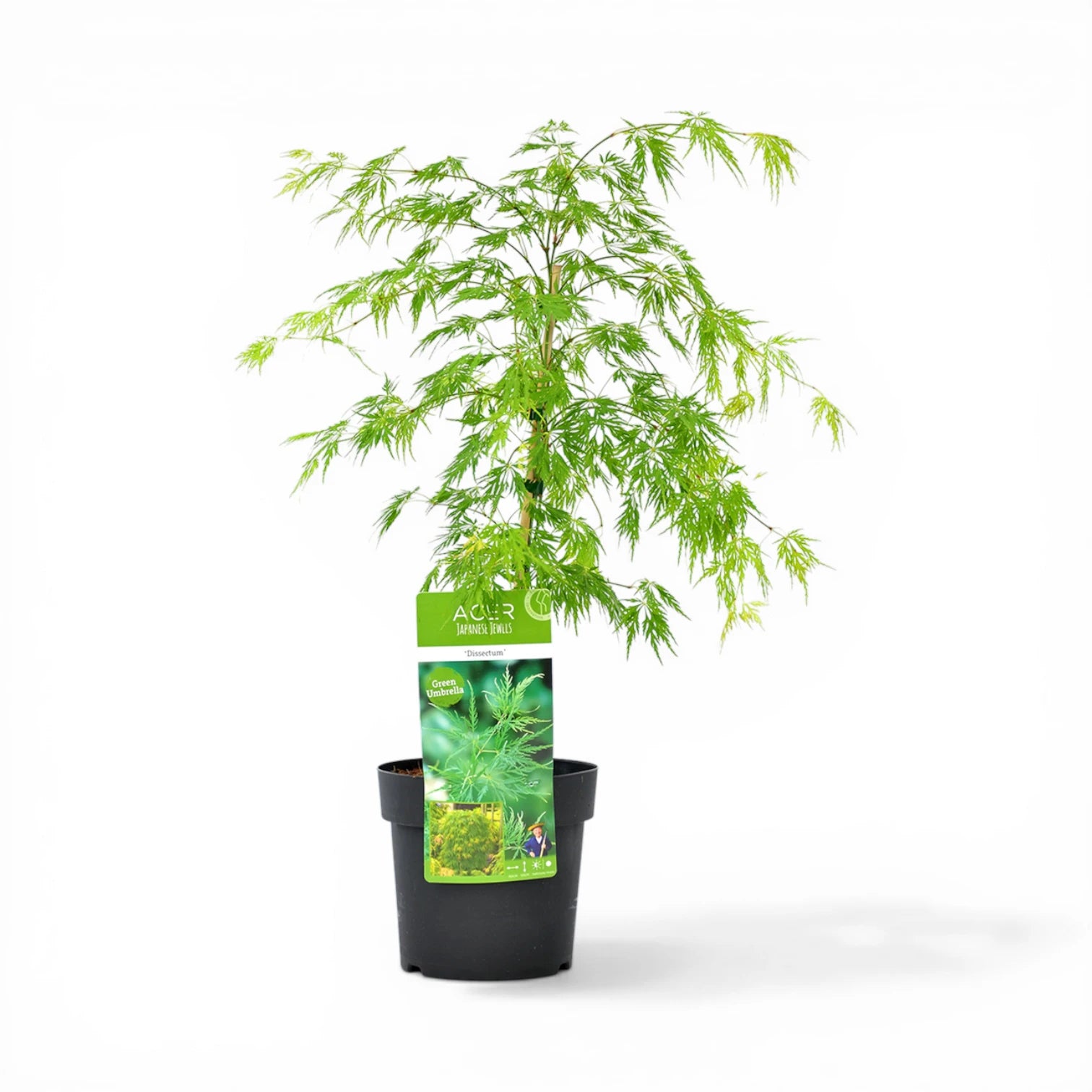
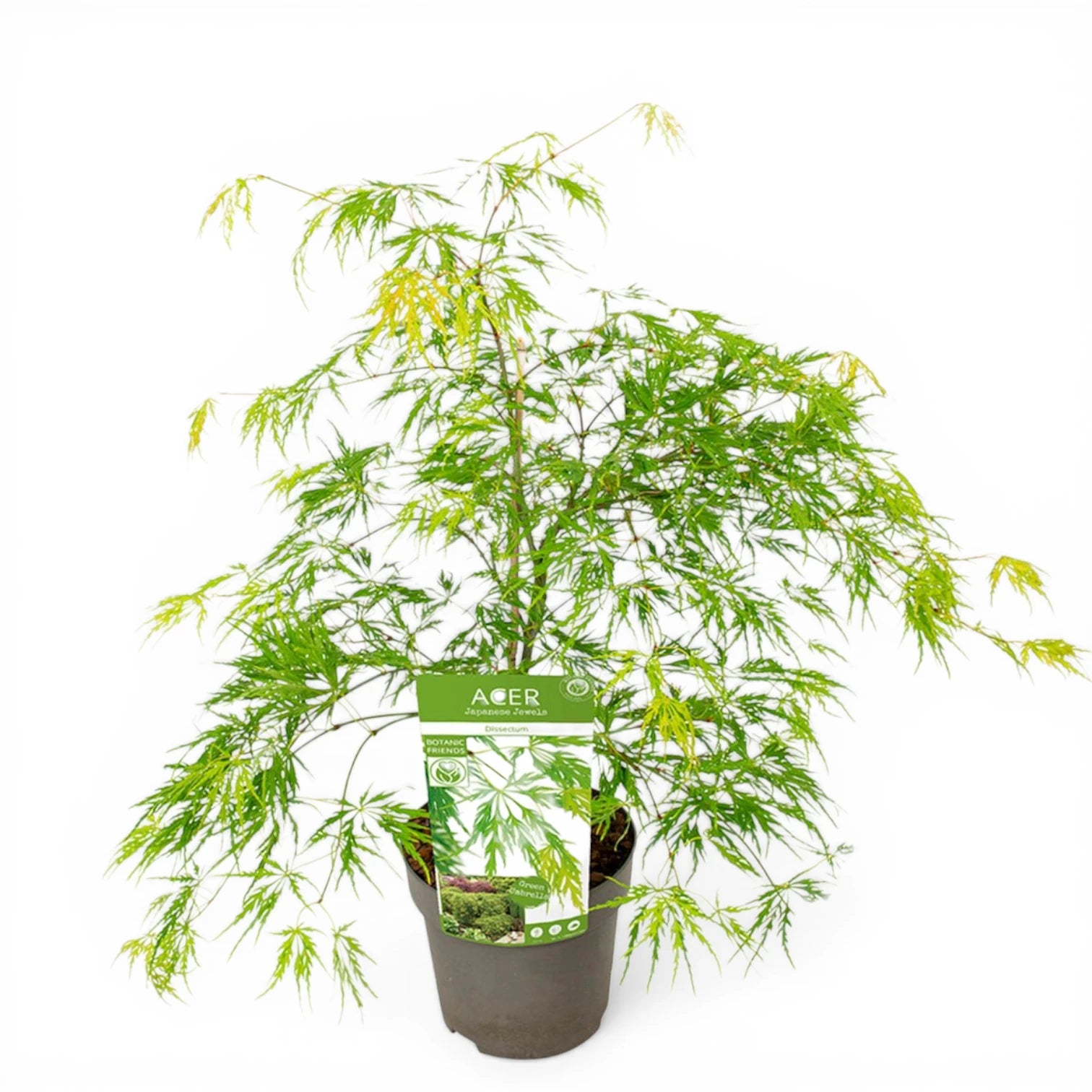
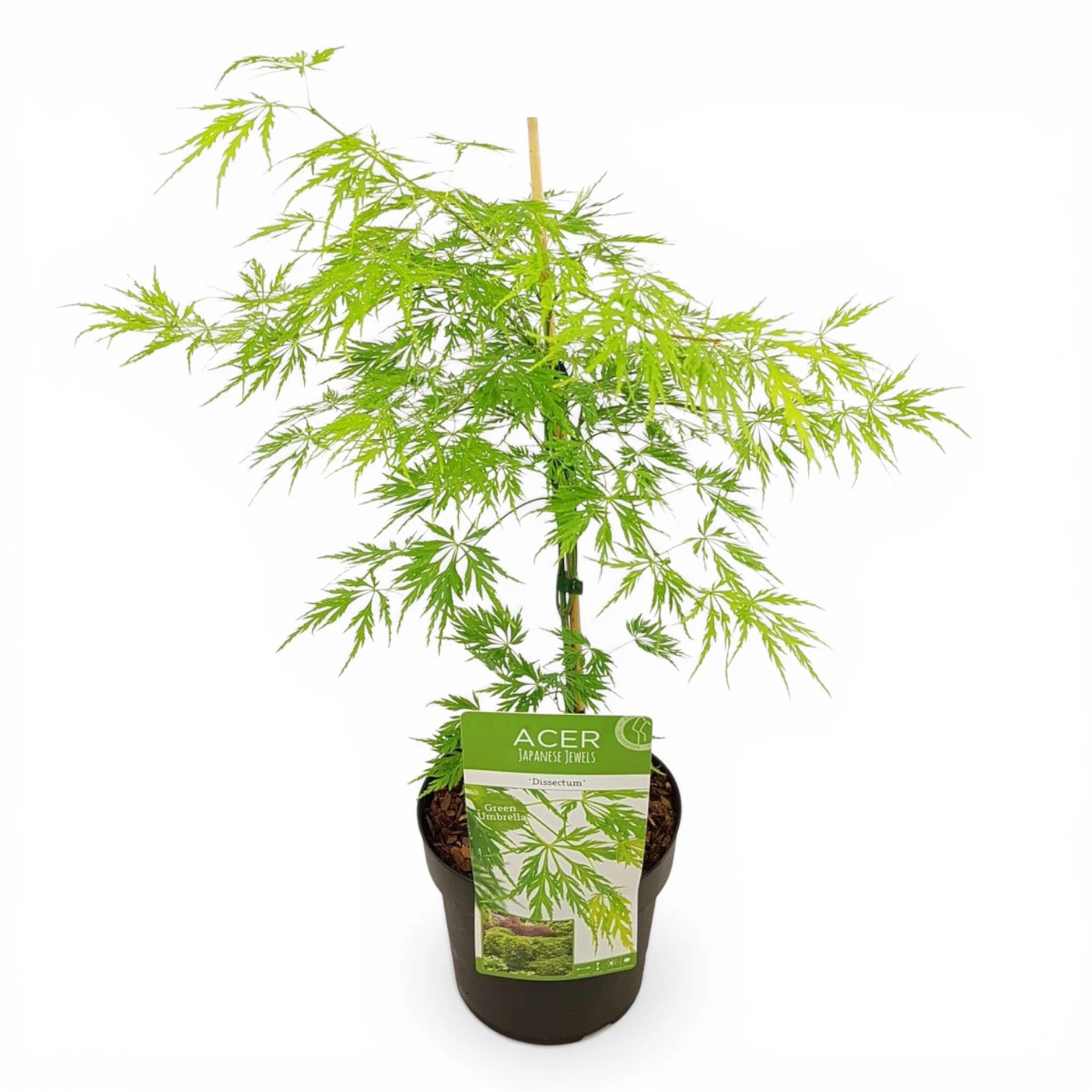
Acer palmatum 'Dissectum' is a green laceleaf Japanese maple with deeply divided leaves and a broad, layered habit. The foliage opens fresh green in spring, forms a soft textured canopy through summer and turns yellow, orange or red in autumn depending on weather and site. Its low, spreading structure makes it especially useful as a feature near paths, ponds, patios, gravel gardens and sheltered front borders.
Acer palmatum is native to Japan and Korea, where cool woodland conditions and sloping ground shape the species' preference for filtered light, steady moisture and well-drained soil. 'Dissectum' carries that woodland character clearly. It looks delicate, but it is fully hardy in suitable ground and can live for many years with calm exposure, a cool root area and light pruning. The fine leaf segments simply ask for more thoughtful placement than broad-leaved shrubs.
The main feature of 'Dissectum' is its finely cut foliage. Each leaf is divided into narrow segments that give the canopy a fern-like texture. As branches extend, they arch gently outward and downward, creating layered tiers. This shape works especially well where the plant can be viewed from above or from the side, such as beside steps, raised beds, terraces or water features.
The green foliage has a calm effect during spring and summer, pairing easily with stone, mossy surfaces, ferns, grasses, hostas, low evergreens and pale flowers. Autumn brings the strongest colour shift, often moving through golden yellow, burnt orange and red before the canopy clears. After leaf fall, the branching pattern remains attractive and shows the slow-built form of the plant.
This laceleaf maple matures as a low, spreading mound with softly arching branches. In open ground it can eventually reach around 1.5-2.5 m in height and a similar width, forming a broad dome that presents as structure first and foliage second.
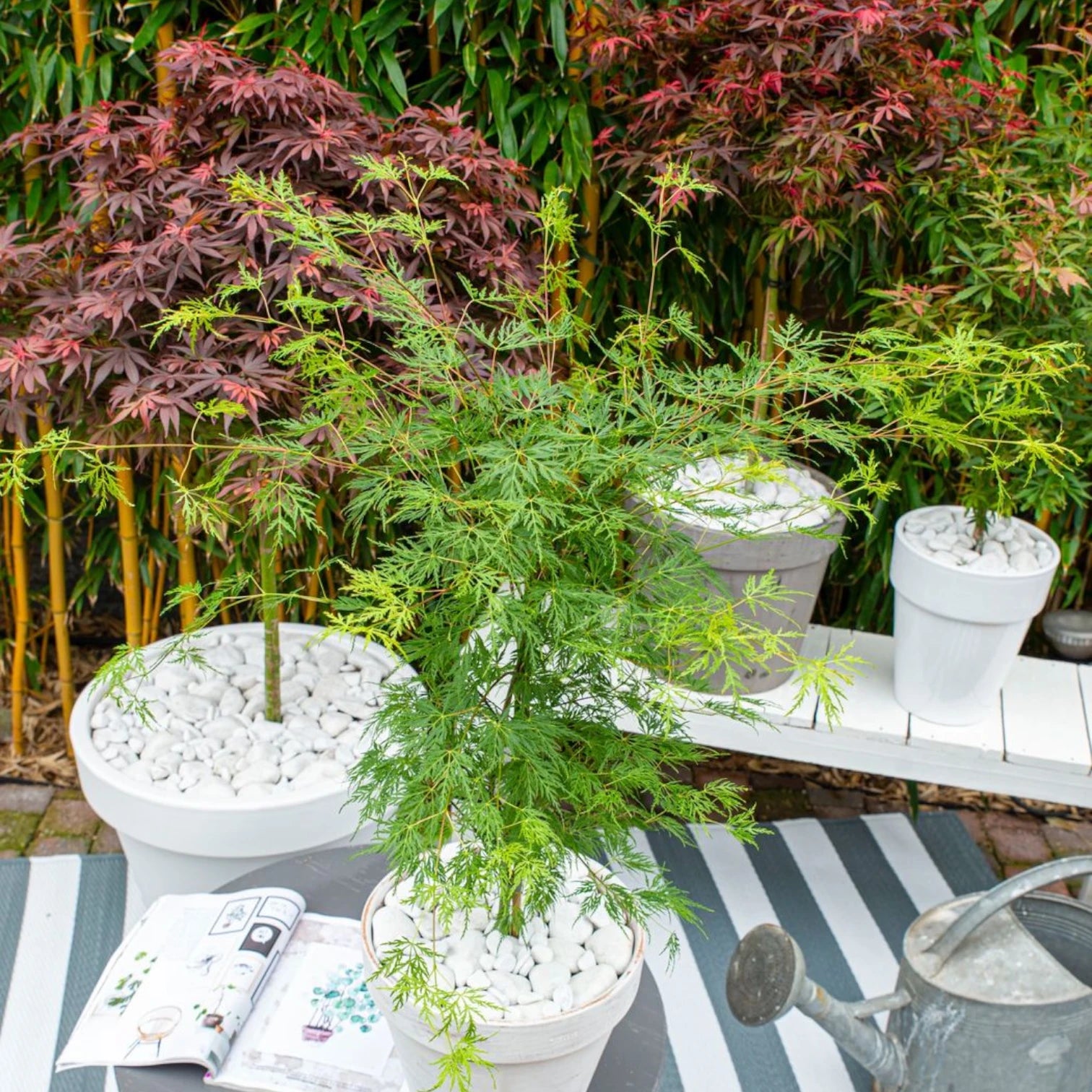
In containers, the same shape develops at a smaller scale and at a slower pace. A wide pot supports the natural spread, while the reduced root run keeps the plant more compact for many years, making it a strong choice for patios and sheltered steps.
Give it room to drape. When the outer branches are allowed to extend, the canopy looks more layered, the leaf texture is clearer, and the plant keeps its calm, waterfall outline.
Fine laceleaf foliage performs best in bright but softened light. Morning sun with light afternoon shade is often ideal. Open shade also suits many gardens, especially where surrounding surfaces reflect light. Strong afternoon heat, dry wind and reflected warmth from paving can crisp the narrow leaf segments, so a calm microclimate gives the most reliable display.
Useful positions include an east-facing bed, a courtyard protected by walls, a pondside planting with cool soil, or a sheltered border backed by shrubs. The site should feel bright, open and gently protected. If light is too low, growth can become thin and autumn colour may be weaker. If exposure is too harsh, the leaf tips can dry before the season has fully developed.
A loamy, humus-rich soil with dependable drainage is the best foundation. The soil should hold moisture around fine roots, then release excess water after heavy rain. On heavier ground, plant slightly proud of the surrounding level and improve the wider area with composted organic matter. On lighter ground, organic matter helps moisture remain available during dry weather.
Plant at the same depth as the pot and water thoroughly after planting. A broad mulch layer helps keep the root area cool and evenly moist. Keep mulch away from direct contact with the stem base so the crown stays clean. During the first year, water slowly during dry spells so moisture reaches the lower rootball and the surrounding soil.
'Dissectum' is a strong candidate for a large container because its low, sculptural shape works well on patios and terraces. Use a pot with drainage holes, enough volume to buffer moisture and a stable base that stays secure as the canopy widens. A structured, loam-based mix with bark or mineral aeration supports both moisture retention and oxygen around the roots.
Water deeply whenever the upper mix begins to dry during active growth. In summer, container plants may need more frequent checks than plants in the ground. Feeding should be moderate, usually with a balanced slow-release fertiliser in spring or a gentle organic feed. Aim for steady, firm growth that holds leaf quality through the season.
The natural shape is one of the strongest reasons to grow this cultivar, so pruning should be selective. Remove dead, damaged or crossing shoots and shorten only what interrupts the layered outline. Late summer or dormant-season pruning is usually easiest. Small, clean cuts preserve the fine framework and keep the plant balanced.
Spring growth is tender while it expands, so late frost and cold drying wind can mark new leaves. Summer care is mostly about moisture and exposure. Autumn colour improves with healthy growth and cool nights. In winter, the plant rests leafless, and the branching tiers become part of the garden structure.
For a low, cascading laceleaf canopy and calm summer texture, Acer palmatum 'Dissectum' makes a strong feature plant that ages into a broad, layered structure and finishes the season with glowing autumn colour.
Temperate woodland, woodland-edge and mountain-edge habitats in Japan and Korea.
Deciduous shrub / small tree
Position
Sun to part shade
Moisture
Moist
Drainage
Moisture-retentive, Well-drained
Hardiness
Fully hardy · -20°C
Mature size
150–250 × 150–250 cm
Winter habit
Deciduous
Bloom time
Spring
Containers
Good in pots
Pruning
Late autumn to midwinter

Sign up for Foliage Factory newsletter for early access to new arrivals and practical care tips that work in real homes.