White variegated houseplants need a different kind of care from fully green plants. Large white sectors often contain little or no working chlorophyll, so they contribute less energy while still needing water, minerals, and support from the rest of the plant. That trade-off is why Monstera deliciosa ‘Albo Variegata’, Philodendron ‘White Knight’, Syngonium podophyllum ‘Albo Variegatum’, Goeppertia ‘White Fusion’, and other white-patterned favorites can be slower, less forgiving, and more prone to browning indoors.
Fully white sections in chlorophyll-deficient variegation contribute little or no photosynthesis, so leaves with almost no green tissue rarely last well.
Good white variegated plant care is not about forcing more white. It is about keeping enough green tissue, healthy roots, and stable growth so the plant can carry its variegated parts without slowly weakening. Light matters, but not because brighter light magically creates better variegation. Light supports the green tissue that feeds the plant. Too little light causes slow growth and weak shoots; harsh direct sun can scorch white areas quickly.
This guide focuses mainly on white variegated houseplants grown indoors, especially albo-type aroids such as Monstera, Philodendron, Syngonium, and Epipremnum. It also separates those from plants with different white-pattern mechanisms, such as Goeppertia ‘White Fusion’, Caladium cultivars, Ficus elastica ‘Shivereana Moonshine’, and white Hypoestes cultivars. They may all look “white variegated”, but they do not all behave the same way.
Syngonium chiapense variegata shows how white variegation can appear alongside pale green and darker green sectors on one leaf.
What white variegation actually means
White variegation describes leaves with visible white, cream, or very pale sectors. In many albo-type houseplants, those pale areas have reduced chlorophyll or no functional chlorophyll at all. Chlorophyll is the green pigment that allows plants to capture light energy and use it for photosynthesis. When a leaf area lacks it, that area cannot contribute much energy to the plant.
This is the practical reason white variegated plants grow more slowly. A green leaf of the same size has more working photosynthetic tissue. A heavily white variegated leaf has less. Green sectors must produce enough sugar to support themselves, white sectors, new roots, new stems, and future leaves. When green tissue is limited, growth slows and white sections are easier to damage.
That does not mean every white-looking leaf area is biologically identical. Some white or silver markings come from leaf structure, air spaces, reflective surfaces, or pigment patterns rather than a complete absence of chlorophyll. That difference matters, because care advice for Monstera albo should not be copied directly onto every white-patterned houseplant.
Care note: For most albo-type aroids, more white means less margin for error. Plants with a balanced mix of green and white usually grow better long term than plants that push mostly white leaves.
Not all white variegation works the same way
Houseplant labels often use “variegated” as one broad word, but white patterns can come from different mechanisms. A useful care guide has to separate them.
Chlorophyll-deficient white sectors
This is the type most relevant to Monstera deliciosa ‘Albo Variegata’, many variegated Philodendron cultivars, Syngonium podophyllum ‘Albo Variegatum’, and many strongly white aroid cuttings. White sectors are pale because chloroplast development or chlorophyll production is reduced or disrupted. These sectors are visually striking but weak from a growth perspective.
Care priority: give enough diffuse light for green tissue, keep roots oxygenated, avoid large wet pots, and do not chase all-white growth.
Structural white or silver patterning
Some leaves look white or silvery because of internal air spaces, surface anatomy, or light reflection. These areas may still sit above green tissue and may not behave like completely chlorophyll-free sectors. This is why broad statements such as “all white variegation cannot photosynthesise” are too blunt.
Care priority: identify the plant first. Silver-patterned plants and albo-type chimeras can need very different light and watering routines.
Pigment and pattern-based cultivars
Plants such as white Hypoestes phyllostachya cultivars, some Ficus elastica cultivars, and many Caladium selections can show white, cream, pink, or pale speckling from cultivar-specific patterning. These plants may still be slower or more light-sensitive than plain green forms, but they should not automatically be treated like Monstera albo.
Care priority: follow genus-specific care first, then adjust for paler tissue, slower growth, and higher browning risk.
Monstera deliciosa ‘Albo Variegata’ needs enough green tissue to support white sectors, new roots and future leaves.
Chimeras, nodes and reversion
Many white variegated aroids are chimeral plants. A chimera contains genetically different cell lines in one plant. In practical terms, this means a stem, node, or growth point can carry both green and variegated tissue, and new leaves reflect which tissue is active at the shoot tip.
Chimeras are often described as periclinal, mericlinal, or sectorial, depending on how mutated tissue is arranged in the meristem. Periclinal chimeras are generally more stable because one cell layer is consistently different. Mericlinal and sectorial chimeras are usually less predictable because variegated tissue occupies only part of a layer or a wedge of tissue. For houseplant care, the important point is simpler: variegation comes from the growth point, not from individual leaves.
That is why a cutting needs the right node. A beautiful white leaf without a suitable node will not produce a new aroid plant. A node that carries only green tissue may root and grow, but it is likely to continue as green. A node with both green and variegated tissue gives the best chance of producing variegated growth while still having enough green tissue to survive.
Reversion happens when new growth loses the cultivar trait and produces solid green leaves or shoots. In white variegated plants, green shoots often grow faster because they have more working chlorophyll. If they are left in place, they can dominate a vine or clump over time.
Care note: Light can support healthier growth, but it does not “paint” white variegation onto a green node. Pruning decisions should be based on stem and node pattern, not on the hope that stronger light will force a reverted shoot to turn white again.
Light for white variegated houseplants
White variegated houseplants need a careful middle ground: enough light for green tissue to work properly, but not so much direct sun that white sectors scorch. “Bright indirect light” is useful as a phrase, but it is not precise enough by itself. A north window in winter, an east window in summer, and a shelf under a grow light can all be called bright by eye while giving very different plant results.
For many albo-type aroids such as Monstera, Philodendron, Syngonium, and Epipremnum, a useful indoor target is roughly 2,500–10,000 lux at leaf level. The lower end can maintain slower plants; the brighter end supports stronger growth when light is diffuse and the plant has been acclimated. Avoid sudden moves from a dim room into strong sun, especially behind hot glass.
Thin-leaved or more humidity-sensitive plants need a softer approach. Goeppertia ‘White Fusion’, often sold as Calathea ‘White Fusion’, usually prefers gentle filtered light rather than bright exposure close to hot windows. Caladium also dislikes harsh indoor sun on tender leaves, especially when grown warm and actively producing fresh growth.
Practical light setup
Measure at leaf level: phone apps are imperfect but useful for comparing spots; a small lux meter is better.
Use diffuse brightness: east-facing windows, filtered south or west windows, shelves near bright glass, or grow lights all work when heat is controlled.
Acclimate slowly: move plants closer to light over 1–2 weeks instead of changing position overnight.
Watch white sectors: tan, papery or translucent patches after a move usually mean light or heat stress.
Use grow lights carefully: 10–12 hours daily is enough for many indoor setups; keep LEDs far enough away to avoid heat and bleaching.
Important: Better light supports the green parts of a variegated plant. It does not guarantee more white. It also cannot rescue a cutting that lacks a viable variegated growth point.
Most care failures with white variegated plants start below the soil line. A plant with reduced photosynthetic capacity often grows more slowly, and slow growth means water use is lower. Heavy substrate, oversized pots and repeated watering before roots have enough oxygen are more dangerous than one imperfect light reading.
Substrate: airy, even and root-safe
Use a loose mix that holds some moisture but drains fast. For climbing aroids, bark, coco chips, perlite, pumice, coarse coco coir and a small amount of composted organic material can create the right balance. Roots should not sit in dense, airless substrate after watering. For more detail, use our aroid substrate guide.
For Goeppertia ‘White Fusion’ and Caladium, use a finer but still open mix that stays lightly and evenly moist without turning compacted. These plants do not want a dry, chunky aroid mix, but they also decline quickly in stagnant wet soil.
Watering: match water to roots, not to a calendar
Water when the upper 20–30% of the potting mix has dried for many aroids. In cooler rooms, dim light, dense substrate, or oversized pots, wait longer. In very airy mixes under strong light, watering may be needed sooner. The pot should feel lighter, but roots should not be left bone-dry for extended periods.
For humidity-sensitive plants such as Goeppertia ‘White Fusion’, keep moisture more even. Letting the mix swing from wet to dry increases curling and brown edges.
Fertilizer: light, regular and low-salt
Feed lightly when the plant is actively producing new roots or leaves. A balanced houseplant fertilizer at reduced strength every 4–6 weeks is usually safer than strong feeding. Heavy fertilizer does not create better variegation and can brown white tissue faster if salts build up around roots.
Flush the substrate occasionally with plain water if fertilizer residue collects, especially in mineral-heavy tap water areas. Do not feed a plant with root rot, cold wet soil, or no active growth.
Humidity and temperature: steady conditions beat extremes
Many white variegated tropical plants grow best around 50–70% relative humidity, depending on genus. Monstera and Philodendron are usually more forgiving than Goeppertia ‘White Fusion’, which often needs the higher end of that range to avoid crisping. Use a humidifier, plant cabinet, vitrine, or grouping if room air stays dry. Our humidity guide for houseplants gives a more detailed setup comparison.
Keep most tropical white variegated houseplants between 18–27 °C. Avoid cold windowsills, hot radiators, strong draughts and sudden temperature swings. Pale sectors show stress quickly because they have less physiological backup than green tissue.
Support for climbing aroids
Monstera, Philodendron, Syngonium and Epipremnum often grow stronger when given a pole, plank or stable support. Support does not increase variegation, but it helps climbing stems mature, root, and hold larger leaves. If using a moss or coco pole, keep it lightly moist only when airflow is good. A constantly wet pole beside a slow-growing plant can encourage fungal issues.
Almost fully white Syngonium leaves are attractive but short-lived when green tissue cannot support them.
Pruning and propagation without losing balance
Pruning white variegated plants is not about removing every imperfect leaf. It is about managing growth points. Before cutting, look at the stem, not just the newest leaf. Vining aroids often show striping, marbling, or pale sectors along the stem. That stem pattern gives better clues about future growth than one leaf does.
When to prune solid-green growth
Prune a solid-green shoot when it keeps producing green leaves and the stem shows no visible variegated sector. Cut back to a node where variegation is still visible, or remove the green shoot if it is clearly separate. Do this early, because green growth can outpace variegated growth.
Do not remove all green leaves from the whole plant. Green tissue feeds white tissue. A plant that is pushed into mostly white growth may look dramatic for a short time and then weaken.
When to prune fully white growth
A fully white leaf on an otherwise healthy plant is not an emergency, but repeated fully white leaves are a problem. If a shoot keeps producing leaves with almost no green, cut back to a node with a better green-white balance. This gives the plant a chance to restart from a more sustainable growth point.
Propagation basics for albo-type aroids
Leaf-only cuttings do not work: aroid propagation needs a node, not just a leaf blade.
Green tissue matters: a cutting with no usable green tissue may root but rarely grows into a durable plant.
Choose balanced nodes: the best cuttings have visible green and variegated tissue around the node or stem.
Use small containers: oversized propagation pots stay wet too long around small root systems.
Keep light bright but soft: fresh cuttings need energy, not harsh sun.
Variegated Epipremnum pinnatum benefits from bright diffuse light, a climbing support and an airy root zone.
Common problems and practical fixes
White variegated plants show stress quickly. Brown patches, transparent tissue, green reversions and slow growth can all come from different causes, so avoid fixing every issue with more water or more light. Start with the symptom, then check roots, light, watering, humidity and the active growth point.
Problem
Likely cause
What to do
White sectors turn tan or papery
Direct sun, hot glass, sudden light increase, or dry air
Move to brighter diffuse light, acclimate slowly, and keep humidity steadier
White areas turn translucent
Cell collapse from sun scorch, cold damage, oedema, or physical injury
Check recent position changes, window temperature, watering frequency and airflow
Brown patches on white Monstera sectors usually point to light, water, humidity, salt or root stress rather than one single cause.
Popular white variegated houseplants
These plants are often grouped together because they share white or cream patterning, but their care needs are not identical. Start with genus-specific care, then adjust for the added sensitivity that pale tissue brings.
Monstera deliciosa ‘Albo Variegata’ needs strong diffuse light, enough green tissue and a stable climbing setup.
Monstera deliciosa ‘Albo Variegata’ is one of the best-known white variegated houseplants. It is often sold under older trade labels connected with “borsigiana”, but current botanical treatment places that name under Monstera deliciosa. Visible leaf pattern can range from marbling to half-moon sectors.
Care focus: provide bright diffuse light, a chunky aroid mix, a support pole or plank, and careful pruning of fully green or repeatedly all-white shoots. Let the upper 20–30% of the mix dry before watering again.
Philodendron ‘White Knight’ combines white leaf sectors with coloured stems and a climbing growth habit.
Philodendron ‘White Knight’
Philodendron ‘White Knight’ is a climbing cultivar with dark green leaves, white sectors and pale to reddish stem tones. New growth can vary strongly from leaf to leaf, so the stem and node pattern matter more than one dramatic leaf.
Care focus: give a stable support, bright filtered light, an airy root zone and moderate feeding. Prune true green reversions early, but keep enough green leaves to power the plant.
Syngonium podophyllum ‘Albo Variegatum’ can shift between marbled, sectorial and very pale leaves depending on the active growth point.
Syngonium podophyllum ‘Albo Variegatum’
Syngonium podophyllum ‘Albo Variegatum’ is faster and more forgiving than many rare variegated aroids, but very white shoots still weaken over time. Young plants can be kept compact, while mature stems climb or trail.
Care focus: use bright diffuse light, steady but not soggy moisture, and regular pruning to keep growth balanced. Cut back all-green or nearly all-white runs when they continue across several leaves.
Caladium ‘White Christmas’ is a warm-growing tuberous aroid with thin white leaves and green venation.
Caladium ‘White Christmas’
Caladium ‘White Christmas’ grows from a tuber and produces thin, bright leaves with green veins. It is usually grown as a seasonal warm-room or patio plant rather than a permanent low-light houseplant. Leaves naturally decline when the tuber enters dormancy.
Care focus: keep warm, use soft filtered light, maintain even moisture while leaves are actively growing, and reduce watering once leaves begin to collapse naturally.
Ficus elastica ‘Shivereana Moonshine’ has cream-speckled leaves and firmer growth than many thin-leaved white variegates.
Ficus elastica ‘Shivereana Moonshine’
Ficus elastica ‘Shivereana Moonshine’ has pale cream and green speckling on thick rubber plant leaves. It is not cared for like Monstera albo. It usually prefers a brighter position, careful acclimation, and a drier interval between waterings.
Care focus: place in bright filtered light, water only after the upper part of the mix has dried, and avoid cold draughts. Direct hot sun can still scorch pale areas.
Goeppertia ‘White Fusion’, often sold as Calathea ‘White Fusion’, needs softer light and steadier humidity than most albo aroids.
Goeppertia lietzei ‘White Fusion’
Goeppertia lietzei ‘White Fusion’, still widely sold as Calathea ‘White Fusion’, has thin leaves with green, white and pale patterned sectors, often with purple tones underneath. It is beautiful but unforgiving in dry indoor air.
Care focus: provide warm, gentle filtered light, high humidity, evenly moist substrate and early pest checks. Dry air, cold draughts and irregular watering quickly lead to curling, mites and crisp edges.
White Hypoestes cultivars stay compact with pruning and need different care from chimeral albo aroids.
White Hypoestes phyllostachya cultivars
White polka dot plants have small green leaves marked with white spotting. They are usually grown as compact, short-lived decorative plants and can become leggy quickly indoors.
Care focus: keep in bright filtered light, pinch regularly, water before severe wilting, and refresh plants from cuttings when stems become sparse.
Frequently asked questions
Can a fully white variegated leaf survive?
A fully white leaf can sometimes remain attached for a while if the rest of the plant has enough green tissue. It usually cannot support itself long term because it contributes little or no photosynthesis in chlorophyll-deficient variegation. Repeated fully white leaves are a warning sign that the active growth point is not balanced.
Can I propagate a fully white Monstera albo cutting?
A leaf without a node will not grow into a new Monstera plant, regardless of colour. A node with no usable green tissue may root for a while, but long-term survival is poor because the cutting has almost no way to produce energy. Choose a cutting with a viable node and visible green tissue on the stem or leaf.
Why do white variegated leaves turn brown?
White sectors brown more easily because they are delicate and often less physiologically active than green sectors. Common causes include direct sun, heat through glass, low humidity, irregular watering, fertilizer salts, root stress and older mechanical damage. Check conditions before cutting; browning is usually a symptom, not the root cause.
Does more light create more white variegation?
No. More light does not create white variegation on a green growth point. Variegation depends on genetics, tissue arrangement and the active node or meristem. Good light supports stronger growth and helps green tissue feed the plant, but harsh light can damage white areas.
Should I remove solid-green leaves?
Remove solid-green shoots when they continue from a green-only growth point. One green leaf on an otherwise variegated stem is not always a problem. Follow the stem pattern, then cut back to a node that still shows variegation. Never remove so much green tissue that the plant cannot feed itself.
Should I remove fully white leaves?
One fully white leaf can stay if the plant is otherwise strong. If a shoot keeps producing almost fully white leaves, cut back to a node with more green. A heavily white run drains resources and often ends in browning or stalled growth.
Are white variegated plants harder than green plants?
Usually, yes. They often grow more slowly, use water less predictably, brown more easily and need better light balance. Some are still manageable indoors, especially Monstera, Syngonium and Philodendron with enough green tissue. Thin-leaved types such as Goeppertia ‘White Fusion’ are more demanding.
What is the best light for Monstera albo?
Monstera deliciosa ‘Albo Variegata’ usually grows best in bright diffuse light, roughly 2,500–10,000 lux at leaf level depending on acclimation and season. Avoid harsh direct midday sun through glass. A grow light can help in dim homes, especially when natural light drops.
Can white variegated plants grow in low light?
They may survive for a while, but growth becomes slower and weaker. Low light gives green growth an advantage and leaves white sectors with less support. If a room is dim for most of the day, use a grow light or choose a greener, more shade-tolerant plant.
Final care takeaways
White variegated houseplants are rewarding because every new leaf can look different, but they need realistic care. Their pale sectors are often weaker, slower and more damage-prone than green tissue. Strong roots, bright diffuse light, moderate feeding, steady humidity and careful pruning matter more than chasing the whitest possible leaf.
For albo-type aroids, the safest long-term goal is balance: enough white to keep the pattern, enough green to keep the plant growing. Choose cuttings with viable nodes and green tissue, avoid oversized wet pots, prune solid-green reversions early, and do not keep forcing growth from shoots that produce only white leaves.
Ready for a white variegated aroid with serious presence? Start with Monstera deliciosa ‘Albo Variegata’ if you can provide bright diffuse light, an airy substrate and steady indoor conditions.
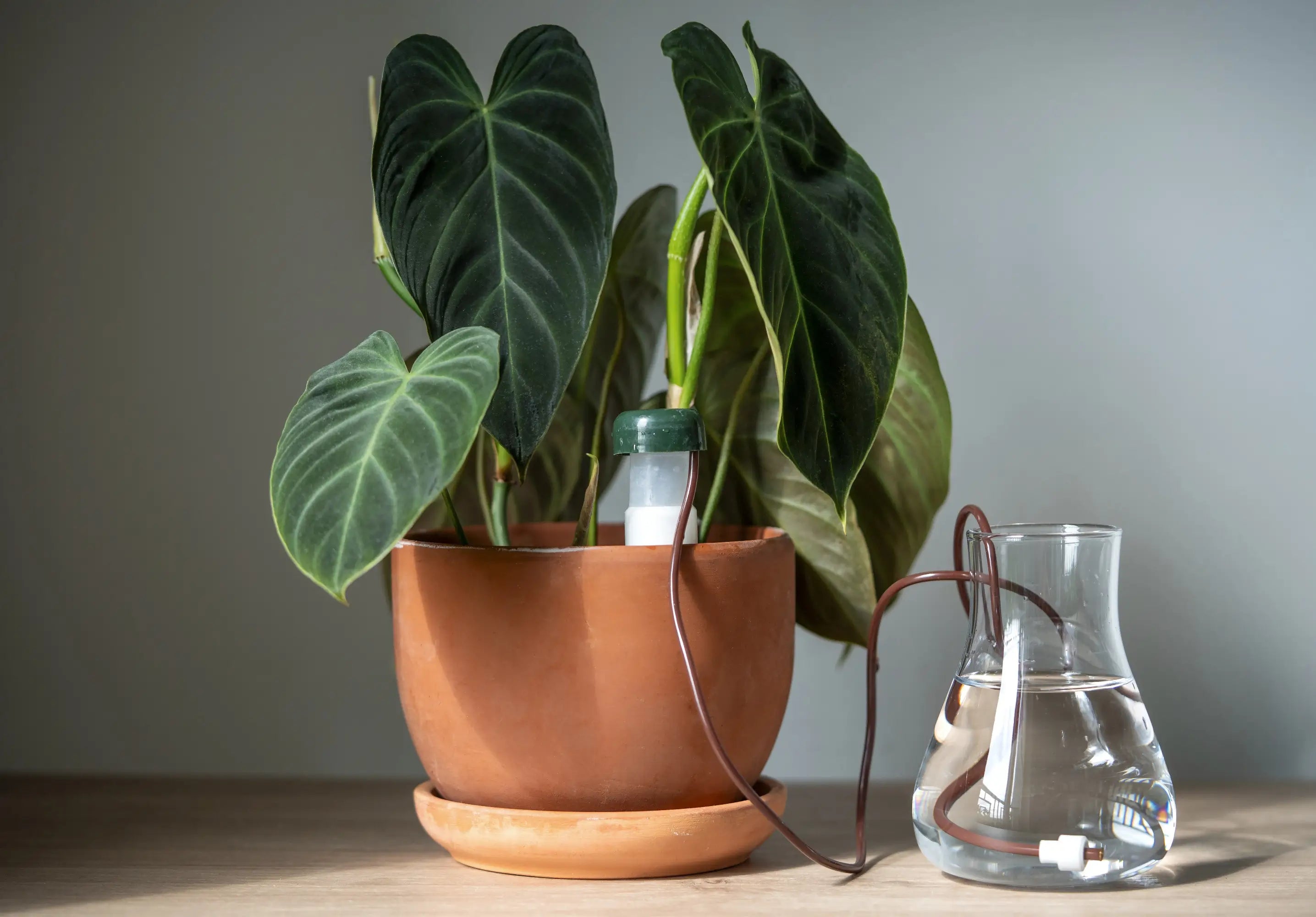
A practical guide to keeping houseplants healthy while you’re away. Learn pre-trip prep, passive watering systems, plant-type and substrate tips, plus the common mistakes that lead to rot or crispy...
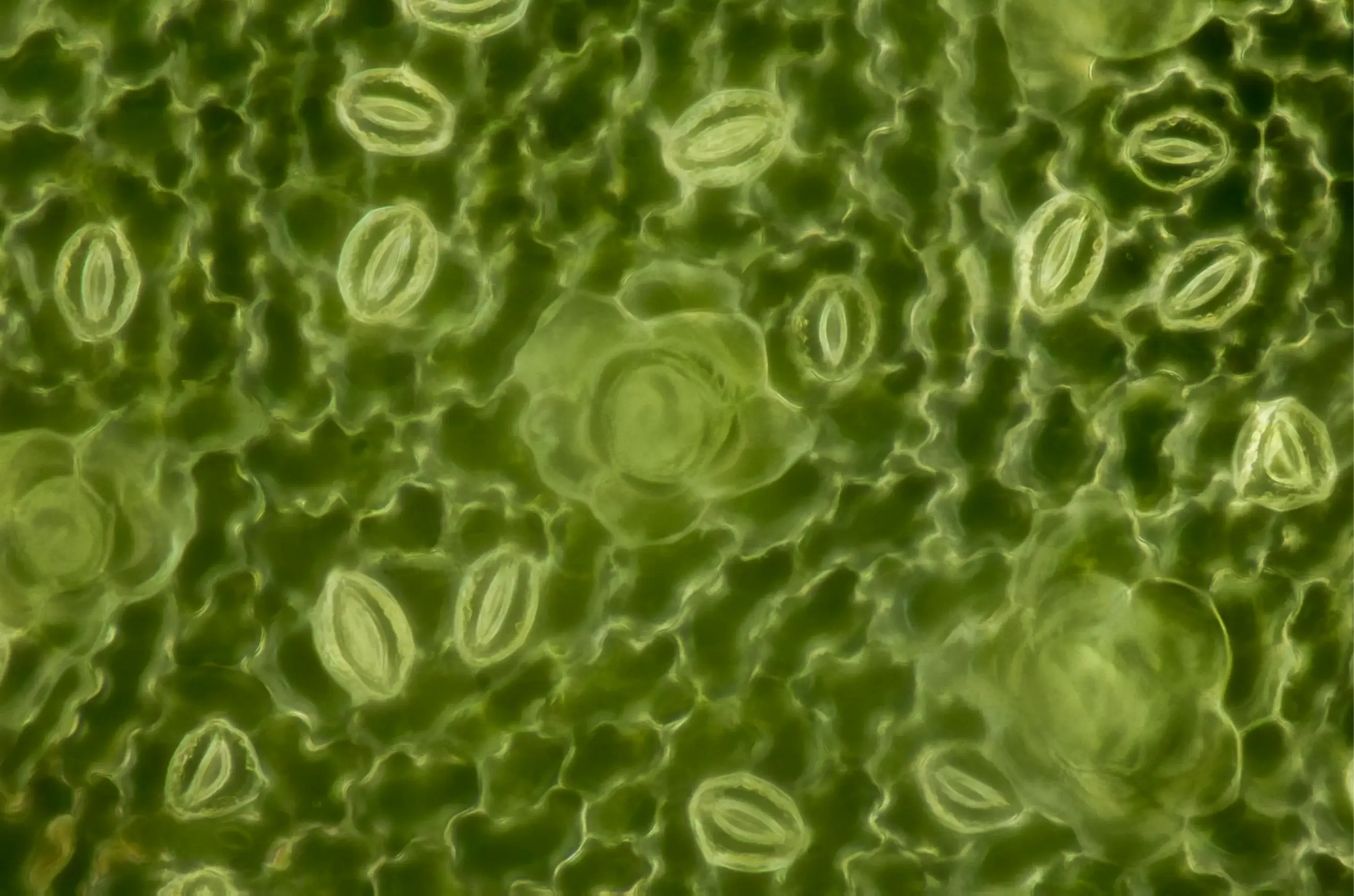
Wilting, curling, crispy tips — often the issue isn’t “more water,” it’s stomata. Learn what triggers these pores and how to tweak light, humidity, watering, and airflow so plants can hydrate, cool...
Die Pflanzen waren prima verpackt und ein heatpack war im Paket enthalten. Die Lieferzeit hat 2 bis 3 Tagen gedauert, was aus meiner Sicht wirklich gut ist. Alle drei Pflanzen haben die Lieferung gut überstanden. Ich habe mich auf Hoyas spezialisiert und habe schon die nächsten Pflanzen meiner Wunschliste auf der Website gefunden. Daher wird die nächste Bestellung nicht lange auf sich warten lassen.
Marion
★★★★★
I received perfectly heathy and absolutely beautiful plants, even bigger than expected. The delivery within Europe was really fast. I think Foliage Factory has one of the best plant web shops in the internet. It‘s just great to get so much informations about the plants. I will definitely order again :)
Walkerova
★★★★★
Envoie très rapide (2 jours), plantes parfaitement emballées et super offres ! Je suis une habituelle j'ai passé 6 ou 7 commandes et je n'en peut être plus satisfaite du service client et de la qualité et variété des plantes offertes
Iris
★★★★☆
Die Sendung kam leider in keinem guten Zustand bei mir an, kann passieren. Habe mich darauf hin sofort an Foliage Factory gewandt und habe selten einen so guten, schnellen, freundlichen und kulanten Kundendienst erlebt.
Frauke
★★★★★
The plants have arrived in perfect condition, the roots and the foliage so so healthy! I had problem with 1 plant out of 16 and they have responded to my email almost instantly and the issue was resolved straight away. I'm really impressed and satisfied, definitely getting more plants from them again!
Patricija
★★★★☆
Very healthy and well packed plant. Unfortunately there was one plant that ordered couldn’t be delivered as it was out of stock hence 1 star less.
Sam
★★★★★
Everything arrived in good condition and very well packed - it wasn't easy with a fragile plant and a heavy bag of substrate. I recommend it!
Lia
★★★★★
Bester online-Pflanzenhandel den ich kenne (habe davor 4 andere ausprobiert). Eine teure Pflanze wurde beim Transport beschädigt und mir ersetzt. Der Kontakt dabei war auch sehr nett (danke Jan) und hat mir gut geholfen. Die anderen Pflanzen sind in einem sehr guten Zustand, keine Schädlinge, super Bewurzelung. Nur zu empfehlen! :)
C L
★★★★★
Super Service, Gute Auswahl, Preise sind fair. Eine Pflanze kam kaputt an, hab sofort Ersatz bekommen. Danke an den unkomplizierten (und blitzschnellen) Kundenservice!!
Sarah
★★★★★
The plants are carefully packaged and arrive in great conditions (I’m based in Spain) and they’re always there to help in any way they can with your purchase.I have and will always recommend Foliage Factory to every friend I can. I’m not only satisfied with their plants and prices, but their customer service is exceptional.
José
Get 10% off your next plant order
Sign up for Foliage Factory newsletter for early access to new arrivals and practical care tips that work in real homes.





Leave a comment
This site is protected by hCaptcha and the hCaptcha Privacy Policy and Terms of Service apply.