Different variegation expressions in Philodendron Burle Marx Variegata — a clear example of chimeric pattern variability.
Why Variegated Plants Are So Loved — and So Frustrating
White edges, pink splashes, metallic sheens, creamy marbling: variegated plants are easy to fall for. They also come with real trade-offs. Many grow more slowly than their all-green relatives, some produce unpredictable patterns, and the most dramatic leaves are often the first to brown, fade, or revert.
That is not bad luck. Variegation is tied to chlorophyll, pigments, tissue structure, and genetic stability. A Monstera that suddenly produces green leaves, a Philodendron ‘Pink Princess’ that loses its pink, or a half-moon leaf that browns at the white edge are all showing how the plant balances beauty, energy, and survival.
This guide is built as a detailed FAQ for growers, collectors, and anyone trying to understand what is really happening. It covers the main types of variegation, why some patterns stay stable, why others shift, how light and pigments interact, how to prune reverted growth, how propagation affects stability, and which common advice is simply wrong.
Use the contents below to jump straight to the issue you are dealing with, or read through from the beginning for a full, science-based guide to variegated houseplants.
Ficus elastica ‘Tineke’ shows a relatively stable cream-and-green pattern, making it a useful starting point for understanding how leaf colour patterns can repeat across growth.
1. Understanding What Variegation Really Is
Before you can fix browning, fading, or reversion, you need to know what kind of variegation you are looking at. A white Monstera sector, a silver Scindapsus patch, and a pink Philodendron leaf are not the same thing biologically, even if all are sold as “variegated”.
What is variegation in plants?
Variegation means that a plant produces leaves or stems with more than one visible colour. In houseplants, this often means green combined with white, cream, yellow, pink, red, or silver. The cause depends on the plant.
Most variegation falls into one of these broad groups:
Genetic or inherited patterning: the colour pattern is built into the cultivar and usually repeats reliably.
Chimeric variegation: different tissue layers carry different genetic information, so some cells are green and others are pale, white, yellow, or otherwise altered.
Structural variegation: the leaf reflects light differently because of air spaces, epidermal structure, or surface anatomy.
Pigment-based colour: pigments such as anthocyanins or carotenoids create pink, red, bronze, orange, or yellow tones.
True variegation usually follows a visible pattern across more than one leaf: margins, marbling, speckles, streaks, sectors, or repeated colour zones. It is not the same as damage, sunburn, nutrient deficiency, or pest marks, although those can also change leaf colour.
Practical check: look for repeated patterns. In vining or climbing plants like Monstera, Syngonium, Epipremnum, and Philodendron, the stem often gives useful clues. Streaks, striping, or marbling on the stem or node can show that the variegated tissue is still present.
In plants with reduced or hidden stems, such as many Alocasia, Aglaonema, or Calathea, the visible leaf pattern matters more. One unusual patch on a single leaf is not enough to prove stable variegation. Several leaves with a repeating pattern are a stronger sign.
Are all multicoloured leaves caused by variegation?
No. Not every colour change is variegation. Leaves can also change colour because of stress, ageing, water imbalance, nutrient deficiency, sunburn, cold damage, pests, disease, or mechanical injury.
Stress-related discolouration is often irregular, sudden, and linked to a recent change: moving the plant, repotting, root damage, a cold window, too much direct sun, or pest feeding. True variegation is more likely to repeat in a recognisable way across new growth.
Quick clue: if a plant suddenly changes colour after a care change, treat it as a plant health signal first. If the pattern repeats across several new leaves and appears on stems or petioles where relevant, it is more likely to be true variegation.
What are the different types of variegation?
Several types of variegation show up in houseplants, and they do not behave the same way.
Chimeric variegation: caused by genetically different cell layers in the same plant. This includes sectoral patterns, marginal patterns, mottling, splashy markings, and half-moon leaves. It is often unstable because new growth depends on which tissue layer feeds the next bud.
Genetic variegation: inherited through the plant line and usually more consistent. Many patterned Aglaonema, some Peperomia, and some stable ornamental cultivars fall closer to this category.
Structural variegation: caused by leaf anatomy, not missing pigment. Scindapsus pictus and Philodendron brandtianum are classic houseplant examples where silvery areas come from the way the leaf reflects light.
Pigment-based colour: caused by pigments such as anthocyanins, carotenoids, or other colour compounds. Pink, red, bronze, orange, and yellow tones can be affected by maturity, light, temperature, and stress.
Virus- or pathogen-related mottling: caused by infection. This is not a desirable form of healthy variegation and should not be treated as a collector trait.
Some plants show more than one mechanism at once. For example, a pink Syngonium may have a cultivar-specific pattern, pigment expression, and structural differences all contributing to the final appearance.
Is pink variegation the same as white variegation?
No. White and pink areas are different in both appearance and function.
White variegation usually means that certain cells contain little or no chlorophyll. Those areas cannot contribute much to photosynthesis, so they are more delicate and often brown faster under stress.
Pink tones usually involve anthocyanin pigments, but the way they appear depends on the cultivar, tissue pattern, leaf maturity, light, temperature, and overall plant condition. Some pink leaves fade naturally as they mature. Others lose colour when light, nutrition, or growth conditions change.
Unlike white tissue, pink tissue is not simply “chlorophyll-free”. It may still contain green tissue beneath or around the pigment, depending on the plant. That is why pink variegation can be beautiful, confusing, and inconsistent at the same time.
Even within the same plant, Epipremnum aureum can display very different patterns, from fine speckling to broad yellow sectors.
2. Causes, Growth, and Reversion of Variegation
Variegation is not just a surface decoration. It affects how the plant grows, which shoots become dominant, and how much energy each leaf can produce. That is why some variegated plants hold their pattern for years, while others suddenly push out green growth.
Why do some variegated plants revert to green?
Reversion happens when a plant that previously produced variegated growth starts producing fully green leaves or shoots. It is especially common in chimeric variegation, where the colour pattern depends on how different tissue layers are arranged inside the growing point.
Green tissue contains more chlorophyll, so it is usually better at photosynthesis. If a green shoot grows strongly, it can outcompete slower variegated growth. In climbing plants, one all-green vine can quickly become the strongest part of the plant if it is left unpruned.
Reversion is not a disease. It is the plant shifting toward more efficient growth. The problem is that efficient growth is not always the growth you bought the plant for.
Do all variegated plants revert eventually?
No. Reversion risk depends on the type of variegation.
Chimeric variegation: often unstable. Monstera ‘Albo Variegata’, many variegated Syngonium, and some variegated Philodendron can revert or shift pattern strongly.
Genetic variegation: usually more stable. The pattern tends to repeat because it is inherited through the plant line.
Structural variegation: usually stable because the effect comes from leaf anatomy rather than a random split of green and non-green tissue.
Pink pigment expression: often changes with leaf age and environment. Fading is not always true reversion.
As a practical rule, randomly marbled or sectoral patterns need closer monitoring than evenly patterned cultivars.
How can I reduce the risk of reversion?
You cannot fully control reversion, but you can reduce the chance that green growth takes over.
Prune fully green shoots early if the stem shows no remaining variegation.
Keep conditions steady so the plant does not rely only on its strongest green growth to recover.
Avoid excessive nitrogen, which can push fast leafy growth and favour vigorous green shoots.
Propagate from visibly variegated nodes when working with vining or climbing plants.
Keep enough green tissue on the plant. Extremely white plants are weaker and less stable long term.
If a stem has fully reverted and no variegation is visible on the stem, node, petiole, or new growth, the pattern usually will not return from that growth point.
Pink variegation is often pigment-related and can shift with leaf maturity, light, temperature, and overall plant condition.
3. Light, Pigments, and Environmental Impact
Light matters, but not in the way many plant myths suggest. It cannot create a variegated mutation in a green plant. It can, however, affect growth strength, contrast, pigment visibility, and how well a variegated plant copes with having less chlorophyll.
Does more light increase variegation?
Not exactly. Light does not create new genetic or chimeric variegation. A green plant will not become genuinely variegated just because it receives brighter light.
What light can do is support the plant’s existing pattern. Better light can improve overall growth, make contrast easier to see, and make pigment-based colours such as pink, red, or bronze more visible in some cultivars. In unstable plants, weak light can also make green growth more competitive because green tissue is more efficient at producing energy.
That is different from saying “more light makes more variegation”. Too much direct sun can scorch pale sectors, especially white or cream tissue. The goal is strong, filtered light, not harsh exposure.
What kind of light is best for variegated plants?
Most variegated houseplants grow best in bright, indirect light. Plants with large white or pale sectors usually need more usable light than fully green versions because less of each leaf is productive green tissue.
Morning sun or filtered light near a bright window often works well.
Grow lights can help keep conditions steady through darker months.
Strong midday sun can burn pale areas quickly.
Silver structural variegation, such as in many Scindapsus, may tolerate slightly less light than high-white or pink variegation.
Pink tones often fade because pigments change as leaves mature or because the conditions no longer support strong pigment expression.
Common reasons include:
Leaf age: some pink tones are strongest on young leaves and soften as the leaf hardens.
Lower light: pigment visibility can drop when the plant receives less usable light.
Stress recovery: after repotting, shipping, pest damage, or root issues, new growth may be greener.
Overfeeding: strong nitrogen-heavy feeding can encourage fast green growth rather than balanced colour.
Cultivar behaviour: some pink cultivars are simply unpredictable.
If pink tissue remains on stems, petioles, or new leaves, better consistency and strategic pruning may help the plant produce more balanced colour again. If the pink was temporary or chemically induced, it will fade regardless of care.
Can I make a green plant variegated?
No. True variegation comes from mutation, inherited patterning, tissue structure, or selected propagation material. You cannot create stable variegation with light, fertiliser, pruning, stress, or “boosters”.
Bleaching, chemical stress, or artificial colouring only damages the plant or creates temporary visual effects. It does not produce a stable variegated cultivar.
When buying a variegated plant, check more than one leaf. In vining plants, look for colour in the stem and nodes. A single unusual leaf on an otherwise green plant is not enough.
This Scindapsus leaf shows structural variegation. The silvery effect comes from light-reflective leaf structure, not simply pigment loss.
4. Care Tips for Variegated Plants
Variegated plants do not need mystical care, but they often need more consistency than fully green plants. Less green tissue usually means less energy production, slower recovery, and less tolerance for avoidable stress.
Do variegated plants need different care than fully green ones?
Often, yes. The care principles are the same, but the margin for error is smaller.
Light: keep it bright and filtered so the green parts can support the whole plant.
Watering: avoid both drought stress and constantly wet roots. Slower-growing variegated plants often recover more slowly from root damage.
Nutrition: fertilise steadily, but avoid pushing excessive soft green growth with high nitrogen.
Pruning: remove reverted all-green shoots early if they start dominating the plant.
Stability: avoid frequent drastic changes in light, temperature, substrate, or humidity.
Think of variegated plants as less forgiving, not impossible. The more white, cream, or pink tissue they carry, the more the green parts and roots need to be supported.
What is the best fertiliser for variegated plants?
Use a complete, balanced fertiliser at moderate strength. Many variegated houseplants do well with a steady diluted feed rather than strong occasional doses.
Avoid high-nitrogen formulas as a default. Too much nitrogen can encourage fast, soft, green growth, which may outcompete variegated sections in unstable plants.
If your plant is in semi-hydro or mineral substrate, feeding matters even more because the substrate itself contributes little or no nutrition. For that setup, see our semi-hydro fertilising guide.
How often should I water variegated plants?
Water according to the plant, pot size, substrate, temperature, and growth rate. As a general starting point, many aroids and tropical foliage plants can be watered when the upper 30–40% of the substrate has dried, but this is not a rule for every genus.
Overwatering can damage roots, especially in slower-growing variegated plants.
Repeated underwatering can stress pale tissue and cause browning edges.
Dense, water-retentive soil is a common problem for variegated aroids and Hoya.
Breathable mixes with bark, coco chunks, perlite, pumice, or mineral components are usually safer than compact soil.
Can I grow variegated plants in semi-hydro or mineral substrate?
Yes. Many variegated plants can grow well in semi-hydro or mineral substrate if the system is set up properly.
Mineral or inert media can offer:
more control over nutrients
even moisture without compact, soggy soil
cleaner root observation in transparent pots
better oxygen around roots when the substrate is structured well
The key is a complete nutrient solution, a suitable reservoir height, and enough airflow around the roots. High-white or pink plants may also benefit from warm, stable root conditions because weak roots limit the whole plant quickly.
Curious about switching your variegated plants to semi-hydro? Our full guide, From Soil to Semi-Hydro, walks through the transition step by step.
Should I prune variegated plants differently?
Use the same basic pruning principles, but pay more attention to nodes and pattern.
For vining or climbing plants, cut above a node that still shows variegation. That gives the next growth point a better chance of carrying the pattern forward. If a shoot has gone fully green and is growing fast, remove it before it becomes dominant.
For rosette, rhizome, or corm-based plants such as many Alocasia, pruning leaves will not change the mutation inside the plant. In those cases, remove only damaged leaves and wait through several growth cycles before assuming the pattern is gone.
Aglaonema cultivars show a wide range of leaf patterns, including genetic and pigment-based colour expression.
5. Reversion, Fading, and Loss of Variegation
Reversion and fading are often mixed up, but they are not the same. Reversion usually involves a growth point producing greener tissue. Fading often means an existing colour becomes less visible because of age, light, stress, or pigment behaviour.
What is reversion in variegated plants?
Reversion is when a variegated plant starts producing fully green growth. In chimeric plants, this can happen when the green tissue layer dominates the growing point or when a new shoot develops from a greener node.
It is common in unstable variegates such as Monstera ‘Albo Variegata’, variegated Syngonium, and some variegated Philodendron. It is less common in genetically stable patterned plants.
Reversion is not a disease. It is the plant producing more efficient, chlorophyll-rich tissue. From a plant survival perspective, green growth is useful. From a collector perspective, it can be a problem.
Why does reversion happen?
There are several possible triggers:
Natural growth variation: unstable chimeras can revert even under good care.
Green shoot dominance: a fully green vine or branch can grow faster than variegated growth.
Low usable light: growth may become weaker, slower, or more dominated by green shoots in already unstable plants.
Excess nitrogen: strong leafy growth can favour vigorous green tissue.
Stress or damage: root loss, pests, repotting stress, or poor conditions can shift the plant toward more efficient growth.
Once a fully green stem becomes dominant, it often needs pruning if you want to preserve the variegated sections.
Can reverted plants regain their variegation?
Sometimes, but only if variegated tissue is still present in the growth point.
If the stem or node still shows marbling, striping, or pale tissue, new growth may show variegation again.
If only one or two leaves have gone green, pruning back to a variegated node may help.
If the entire stem and new growth are fully green, variegation usually will not return from that stem.
In vining plants like Monstera, Epipremnum, Syngonium, and Philodendron, the stem and node are the most useful places to check. In Alocasia, where growth comes from a corm rather than a long visible stem, a green leaf does not always mean the plant has permanently lost the trait. Wait through a few leaves before making a hard judgement.
Are faded colours the same as reversion?
No. Fading is usually environmental, developmental, or pigment-related. Reversion is about the plant producing greener growth from a growth point.
Examples of fading include:
pink leaves becoming greener as they mature
red or bronze tones becoming duller in weak light
white or cream areas looking greyish after stress or cold
silver sheen looking less clear when a plant is dehydrated or dusty
Fading may improve with better conditions if the underlying tissue can still express the colour. True reverted growth usually needs pruning.
Why is my plant suddenly producing all-green leaves?
Check the newest growth point first. Ask:
Is the new stem or petiole fully green?
Has the plant recently grown much faster?
Has it been in lower light than usual?
Did you change fertiliser, substrate, or pot size?
Is the new growth coming from a different node or branch?
If the stem is still variegated, wait for more growth before pruning hard. If the new stem is fully green and vigorous, prune it early if your goal is to keep the variegated form dominant.
6. Troubleshooting Variegation Issues
Variegated tissue often shows problems first. Pale sectors brown faster, pink areas fade faster, and high-contrast leaves make minor damage more visible. The trick is to separate normal ageing from preventable stress.
Why are the white parts of my plant turning brown?
White or cream areas contain little or no chlorophyll, so they contribute less energy and often have less resilience under heat, drought, intense light, or root stress. They are beautiful, but fragile.
Common causes include:
Too much white tissue: the plant may not have enough green area to support the leaf long term.
Direct sun: pale tissue burns faster than green tissue.
Low humidity or dry air: thin pale areas can crisp at the edges.
Inconsistent watering: repeated drought and rewetting can damage delicate sectors.
Salt buildup: overfertilising or hard water can stress roots and show first on pale tissue.
Leaf age: older white sectors often brown naturally before green tissue does.
In extreme variegates, such as half-moon or nearly all-white leaves, some browning is often unavoidable over time. The best strategy is to support the whole plant: strong filtered light, healthy roots, moderate feeding, and stable moisture.
My plant has variegation, but the pattern looks messy or uneven. Is something wrong?
Not necessarily. Many chimeric plants produce irregular patterns by nature. One leaf may be heavily variegated, the next greener, the next split or mottled.
Check the stem, petiole, and newest growth where possible:
If they still show variegation, the plant is likely still carrying the pattern.
If the entire stem or branch is green, reversion may be starting.
If the pattern is becoming too green, prune back to a node with visible variegation. If the pattern is extremely white, keep enough green leaves on the plant so it can still grow strongly.
Why do pink leaves turn green or brown over time?
Pink colour is often linked to anthocyanin pigments and leaf maturity. In many plants, pink is strongest in young tissue and softens as the leaf matures. In others, it depends strongly on light, temperature, and cultivar behaviour.
Pink areas may fade because of:
lower usable light
normal leaf maturation
stress after repotting, shipping, drought, or root damage
overfeeding with nitrogen-heavy fertiliser
temporary or unstable colouring in the plant line
Browning in pink areas is usually linked to dryness, root stress, or too much direct light. Keep conditions steady rather than chasing stronger colour with extreme light or fertiliser changes.
Can pests affect variegated leaves differently?
Yes. Pest damage can be more obvious on variegated plants because pale, pink, or thin tissue shows scarring quickly. White and pink sectors may dry, mark, or brown faster after feeding damage.
Check pale areas, leaf undersides, petioles, and new growth carefully. Thrips, spider mites, mealybugs, and scale can all leave marks that look confusing on patterned leaves.
If damage spreads quickly, isolate the plant and inspect it with a light. Do not assume every pale mark is variegation. Pest feeding usually creates rough, scarred, silvery, stippled, or distorted patches rather than clean repeated patterns.
7. Propagation, Stability, and Growth Tips
Propagation is where variegation becomes especially unpredictable. A cutting is not just a piece of leaf colour. It is a piece of tissue, and the node or growth point determines what the next plant can produce.
Will variegation carry over when I propagate a plant?
It depends on the type of variegation.
Genetic variegation: usually carries over well through vegetative propagation.
Chimeric variegation: may or may not carry over, depending on which tissue layers are present in the cutting.
Structural variegation: usually carries over when the plant is propagated from the same cultivar material.
Pigment-based colour: may shift with leaf age, environment, and cultivar behaviour.
For vining plants, the node matters more than the prettiest leaf. Choose a cutting with visible variegation on the node or stem whenever possible. A beautiful white leaf attached to a fully green node may not produce variegated new growth.
What is the best way to propagate a variegated plant?
For vining plants such as Monstera, Philodendron, Epipremnum, and Syngonium, take cuttings from nodes that show visible variegation. Root them in water, moss, perlite, or a suitable semi-hydro medium, depending on the species and your conditions.
For rosette, rhizome, or corm-based plants such as Alocasia, Calathea, and Aglaonema, wait for offsets, divisions, or corms. The first few leaves may not show the final pattern, so label divisions carefully and give them time.
Bright filtered light, steady warmth, and careful moisture matter from the start. Early weak growth can make variegated propagations slower to establish.
Sometimes. Pruning is most useful in vining or branching plants where individual growth points can be selected.
If one stem produces mostly green leaves, cut it back to a node that still shows variegation. If one stem produces mostly white leaves, prune carefully and preserve greener growth so the plant can still feed itself.
For Alocasia and similar corm-based plants, pruning leaves does not change the internal mutation. Remove only damaged leaves and wait through several growth cycles before judging stability.
Can I grow a stable variegated plant from seed?
For named variegated houseplant cultivars, usually no.
Some variegation can be inherited in certain plant lines, but most named variegated houseplants are propagated vegetatively because seed-grown offspring do not reliably match the parent plant. Even if a seedling shows pale or unusual markings, it may not be stable, attractive, or true to cultivar.
Be very cautious with “variegated seeds” sold for rare aroids or collector plants. In most cases, the claim is unreliable at best and fraudulent at worst.
Half-moon variegation in Monstera deliciosa ‘Albo Variegata’ is striking, but the pale side contributes little energy and often ages faster.
8. Rare Variegates, Albinos, and Collector Tips
The most dramatic variegation is not always the healthiest. Full-white leaves, albino cuttings, and extreme half-moon patterns can be beautiful, but they often have limited long-term strength because they lack enough green tissue.
What is a fully albino plant, and can it survive?
A fully albino plant has no functional chlorophyll in its visible growth. Without chlorophyll, it cannot produce enough energy through photosynthesis to survive independently.
True albino growth:
cannot grow strongly on its own
does not “green up” through better care
usually declines unless attached to enough green tissue
often appears as an unstable offshoot from a variegated parent
Some collectors keep albino cuttings temporarily in water, moss, or high-humidity containers, but these are short-term displays, not sustainable independent plants.
Are half-moon or full-white leaves bad for the plant?
They are not automatically bad, but they are risky.
Half-moon leaves can still photosynthesise through the green half, but they produce less energy than mostly green leaves.
Fully white leaves cannot support themselves and often brown or die early.
Several full-white leaves in a row can weaken the plant because the green parts must carry the energy cost.
In highly variegated cultivars, aim for balance: enough pattern to keep the plant beautiful, enough green to keep it growing. If a plant produces several full-white leaves in a row, prune selectively to encourage a more sustainable growth point.
Why do some rare variegated plants grow so slowly?
Because they are working with less productive green tissue. Less chlorophyll usually means less energy production, slower root growth, and slower recovery after stress.
With high-variegation plants, steady humidity, controlled light, moderate feeding, and healthy roots matter more because the plant has less green tissue supporting growth. Some rare cultivars also grow slowly because the tissue pattern itself is unstable or weak.
That is one reason small variegated plants can be expensive. They often take longer to produce, longer to stabilise, and longer to recover from propagation.
Are tissue culture variegated plants more stable?
It depends on the variegation type and the tissue used.
Tissue culture can multiply selected plant material, but it does not magically make unstable variegation stable. Some variegated cultivars stay consistent through tissue culture. Others produce off-types, greener clones, weaker plants, or uneven colour expression.
Genetic variegation: can often be preserved well through controlled propagation.
Chimeric variegation: may be difficult to keep stable because different tissue layers are involved.
Temporary or chemically induced colour: will not become stable just because the plant is propagated.
Buy from growers who understand the plant line, not just from listings that promise “rare variegation”. Stable variegation comes from selected material and careful propagation, not from marketing wording.
9. Variegation Myths and Red Flags
Variegated plants attract a lot of wishful advice: more light will create colour, stress will trigger patterns, seeds will grow rare variegates, and special products will unlock hidden genes. Most of that does not hold up.
Can variegation be caused by stress?
Stress can cause discolouration, but not the stable variegation collectors are looking for.
Stress-related colour changes can include:
yellowing from root or nutrient problems
pale patches from sunburn or cold damage
mottling from pests or disease
distorted or patchy new growth after severe stress
These are plant health signals, not desirable variegation. If only one leaf looks unusual and the stem or following leaves show no pattern, treat it as stress first.
Is there any way to trigger variegation?
No reliable home-care method can create true, stable variegation in a green plant.
Real variegation comes from genetic change, selected breeding, tissue structure, chimerism, or stable cultivar traits. Light, pruning, fertiliser, and substrate can help an existing pattern grow well, but they cannot create a new stable variegated cultivar.
Any product or method promising to “create variegation” should be treated with caution. Good care supports existing variegation; it does not invent it.
Can I grow variegated plants in low light?
Not reliably long term.
Variegated plants usually need more usable light than their fully green versions because they have less chlorophyll. In low light, they often:
grow slowly
lose contrast
produce weaker or leggier growth
become more prone to green-dominant growth in unstable cultivars
recover more slowly from root or pest issues
Bright filtered light is usually the safest target. If natural light is weak, a grow light can help maintain steadier conditions.
What is the difference between stable and unstable variegation?
Stable variegation means the pattern is repeated reliably across growth and propagation. It is usually tied to inherited genetics or consistent structural traits.
Unstable variegation usually means chimeric tissue is involved. The plant may produce heavily variegated leaves, green leaves, white leaves, or shifting patterns depending on how the growing point develops.
If stability matters more than surprise, choose plants with inherited or consistently repeated patterns. If you love high-drama chimeras, accept that pruning, patience, and occasional disappointment are part of growing them.
Alocasia ‘Dragon Scale Mint’ shows how unpredictable variegation can be: each new leaf can carry a different balance of green, pale, and mint-toned tissue.
Final Thoughts: Growing Variegated Plants with Confidence
Caring for variegated plants is not about chasing perfect colour on every leaf. It is about understanding what kind of variegation your plant has, how stable that pattern is, and what the plant needs to keep growing without exhausting itself.
Some plants will revert. Some pale sectors will brown. Some pink leaves will fade as they mature. That does not mean you failed. It means the plant is working within the limits of its tissue, pigments, and energy balance.
The strongest approach is simple: learn the variegation type, keep enough green tissue, support the roots, avoid extreme care swings, and prune reverted growth early when it makes sense. Variegated plants reward observation more than rigid rules.
Know whether the pattern is genetic, chimeric, structural, or pigment-based.
Give the plant bright filtered light, not harsh sun.
Feed steadily, without pushing excessive green growth.
Check stems and nodes before pruning or propagating.
Keep expectations realistic with high-white, half-moon, and pink cultivars.
When in doubt, slow down and read the growth point. Variegation is rarely perfectly controllable, but it becomes much easier to manage once you understand what the plant can and cannot change.
Helpful Reads
Want deeper guidance on specific variegation topics? These related Foliage Factory guides expand on the main points in this FAQ.
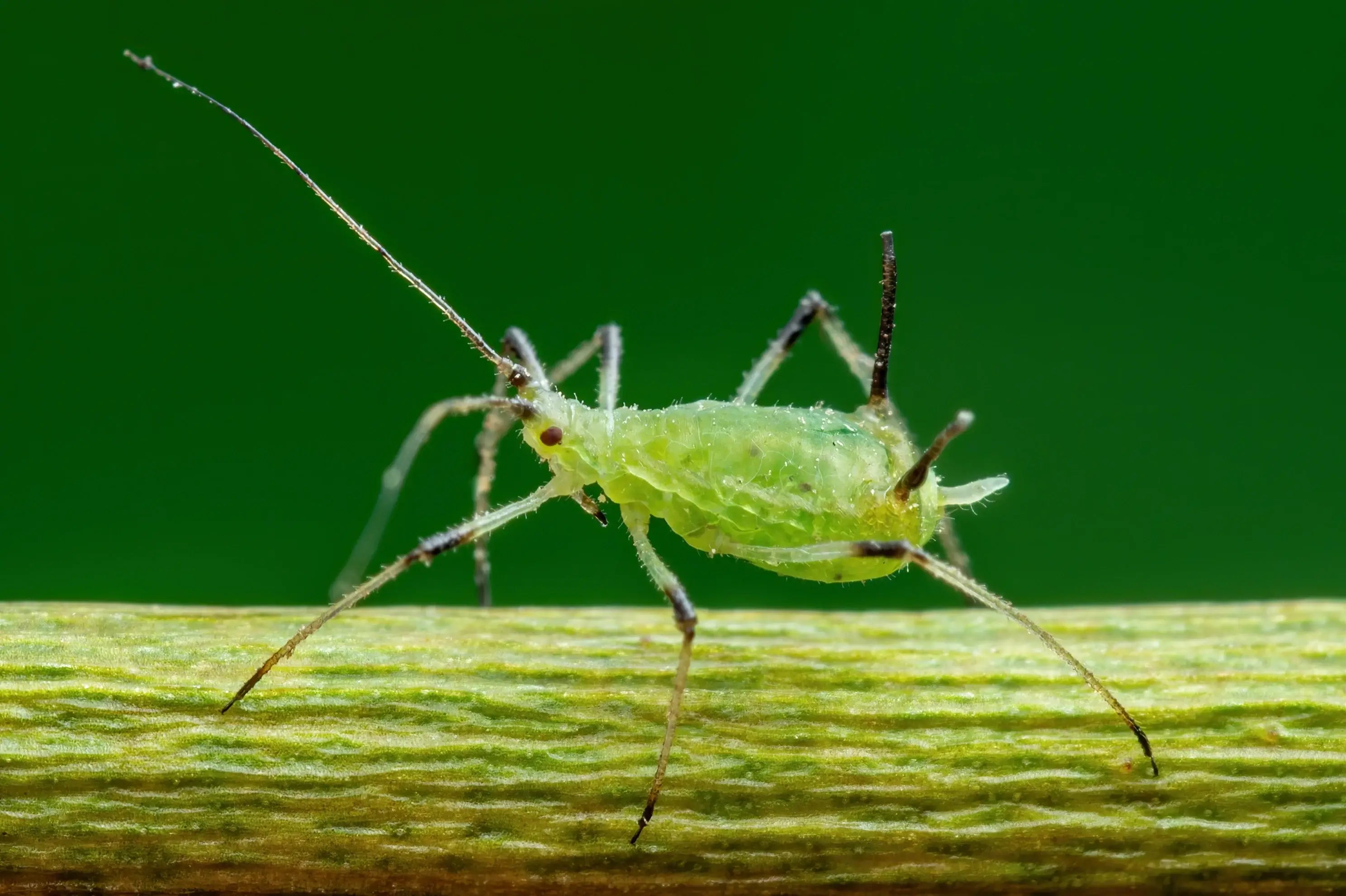
Aphids multiply fast and can weaken houseplants in days. Learn how to spot early signs like honeydew, curled leaves, ants, and colonies on new growth—then choose the right response, from water spra...
Aphids multiply fast and can weaken houseplants in days. Learn how to spot early signs like honeydew, curled leaves, ants, and colonies on new growth—then choose the right response, from water spra...
Die Pflanzen waren prima verpackt und ein heatpack war im Paket enthalten. Die Lieferzeit hat 2 bis 3 Tagen gedauert, was aus meiner Sicht wirklich gut ist. Alle drei Pflanzen haben die Lieferung gut überstanden. Ich habe mich auf Hoyas spezialisiert und habe schon die nächsten Pflanzen meiner Wunschliste auf der Website gefunden. Daher wird die nächste Bestellung nicht lange auf sich warten lassen.
Marion
★★★★★
The plants are carefully packaged and arrive in great conditions (I’m based in Spain) and they’re always there to help in any way they can with your purchase.I have and will always recommend Foliage Factory to every friend I can. I’m not only satisfied with their plants and prices, but their customer service is exceptional.
José
★★★★☆
Very healthy and well packed plant. Unfortunately there was one plant that ordered couldn’t be delivered as it was out of stock hence 1 star less.
Sam
★★★★☆
Die Sendung kam leider in keinem guten Zustand bei mir an, kann passieren. Habe mich darauf hin sofort an Foliage Factory gewandt und habe selten einen so guten, schnellen, freundlichen und kulanten Kundendienst erlebt.
Frauke
★★★★★
Everything arrived in good condition and very well packed - it wasn't easy with a fragile plant and a heavy bag of substrate. I recommend it!
Lia
★★★★★
Bester online-Pflanzenhandel den ich kenne (habe davor 4 andere ausprobiert). Eine teure Pflanze wurde beim Transport beschädigt und mir ersetzt. Der Kontakt dabei war auch sehr nett (danke Jan) und hat mir gut geholfen. Die anderen Pflanzen sind in einem sehr guten Zustand, keine Schädlinge, super Bewurzelung. Nur zu empfehlen! :)
C L
★★★★★
Super Service, Gute Auswahl, Preise sind fair. Eine Pflanze kam kaputt an, hab sofort Ersatz bekommen. Danke an den unkomplizierten (und blitzschnellen) Kundenservice!!
Sarah
★★★★★
Envoie très rapide (2 jours), plantes parfaitement emballées et super offres ! Je suis une habituelle j'ai passé 6 ou 7 commandes et je n'en peut être plus satisfaite du service client et de la qualité et variété des plantes offertes
Iris
★★★★★
The plants have arrived in perfect condition, the roots and the foliage so so healthy! I had problem with 1 plant out of 16 and they have responded to my email almost instantly and the issue was resolved straight away. I'm really impressed and satisfied, definitely getting more plants from them again!
Patricija
★★★★★
I received perfectly heathy and absolutely beautiful plants, even bigger than expected. The delivery within Europe was really fast. I think Foliage Factory has one of the best plant web shops in the internet. It‘s just great to get so much informations about the plants. I will definitely order again :)





Leave a comment
This site is protected by hCaptcha and the hCaptcha Privacy Policy and Terms of Service apply.