Pretty in Pink: Stunning Pink Foliage Plants and Everything about Pink Variegation
Pink Foliage Houseplants: Why Leaves Turn Pink, How to Care for Them, and Which Varieties to Choose
Pink foliage houseplants bring colour into a plant collection without relying on flowers. Some show soft blush tones along leaf veins, some carry dramatic pink patches, and others develop stronger red-pink colour when light, temperature, or growth stage changes. But not every pink leaf works in the same way. That difference matters.
Some pink colour comes from anthocyanin pigments. Some comes from chimeric variegation, where different cell layers create unpredictable patches. Some is linked to new growth, stress colour, structural effects, or even temporary chemical treatment. Once you know which kind of pink you are looking at, plant care becomes much clearer: you know what light can support, what pruning can influence, and what no amount of care can bring back.
This guide explains how pink foliage forms, how true variegation differs from ordinary colour change, why pink tones sometimes fade, and how to choose pink houseplants with realistic expectations. It also includes a curated line-up of pink foliage plants, from easy compact options to rarer collector plants.
Pink colour in houseplants usually comes from one or more of these mechanisms:
Anthocyanin pigments: red, pink, purple, and burgundy pigments that can help protect leaf tissue from excess light, cool temperatures, drought stress, and other environmental pressures.
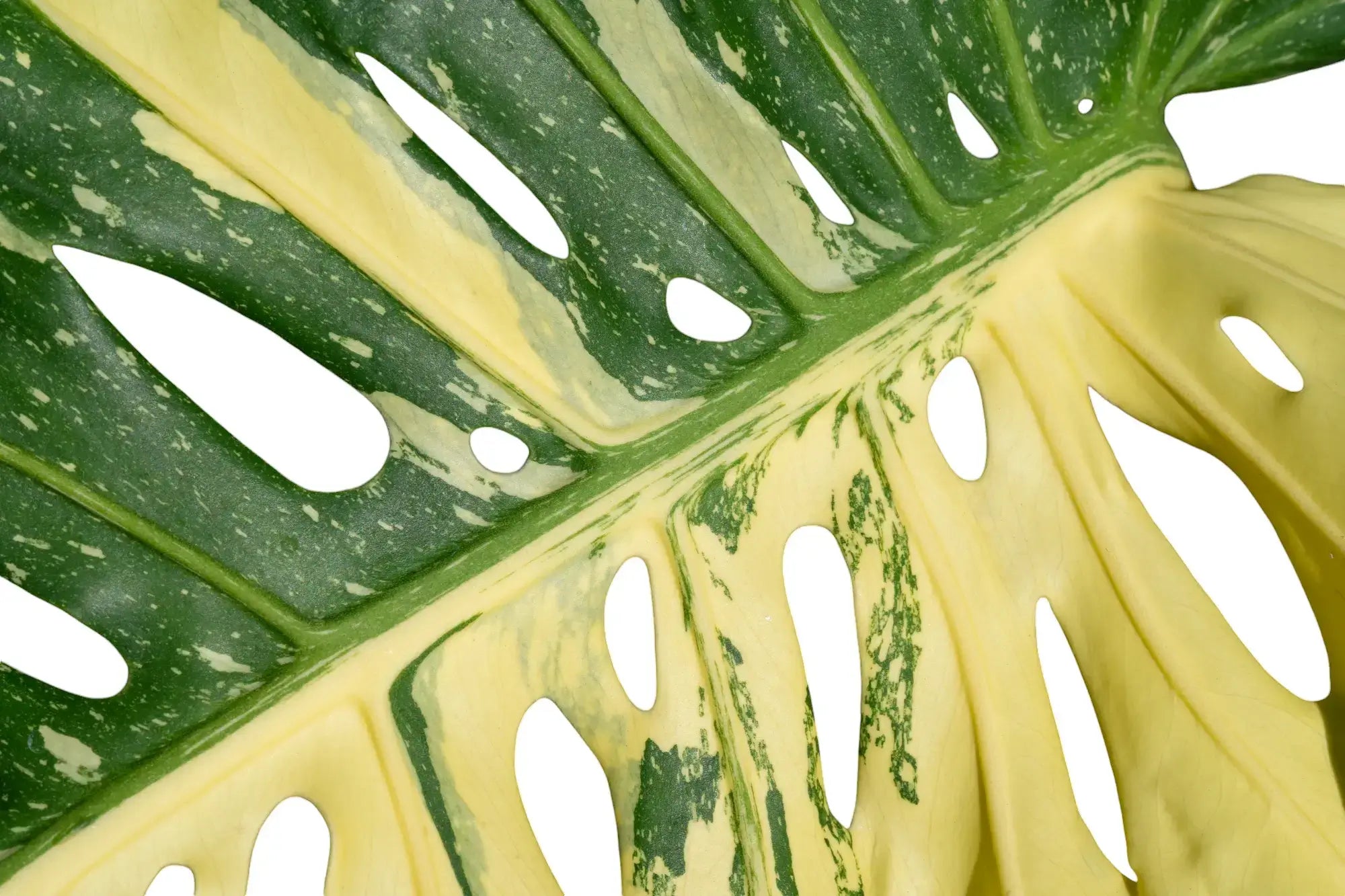
Chimeric variegation: different genetic cell layers in one plant create irregular green, white, cream, or pink patches. Philodendron ‘Pink Princess’ is a classic example.
Stable cultivar colour: some plants are bred or selected for naturally pink-toned leaves, veins, margins, or markings, such as Syngonium podophyllum ‘Neon’ and many Caladium cultivars.
New-growth colour: some leaves emerge pink, copper, red, or burgundy, then mature to deeper green, bronze, or silvered tones.
Stress colour: succulents and some bromeliads may develop stronger pink or red tones under brighter light, cooler nights, or slightly drier conditions, as long as those conditions stay within the plant’s tolerance.
Temporary treatment: some plants are artificially pushed into unusual colours and later return to normal green growth.
This is why “pink plant care” cannot be reduced to one trick. Bright light can support strong colour in many plants, but it cannot create missing chimeric tissue. Fertiliser can support healthy growth, but it cannot force a genetically green plant to become pink. Pruning can help manage reversion in some variegated plants, but it will not change a plant’s basic pigment system.
2. How Plants Get Their Colours
Leaf colour is not just decoration. It reflects pigments, cell structure, genetics, development, and growing conditions. Green is usually dominant because chlorophyll is central to photosynthesis, but many houseplants carry additional pigments or structural features that alter how leaves look.
Chlorophyll: the green foundation
Chlorophyll allows plants to capture light energy for photosynthesis. Leaf areas rich in chlorophyll appear green. Areas with less chlorophyll may appear pale green, yellow, cream, or white, depending on other pigments and cell structure. In strongly variegated plants, white or very pale tissue contains little to no chlorophyll, which is why heavily variegated plants often grow more slowly than greener relatives.
Anthocyanins: pink, red, purple, and burgundy pigments
Anthocyanins are water-soluble pigments found in many leaves, stems, flowers, and fruits. In foliage plants, they can create pink, red, purple, burgundy, or bronze tones. They do not replace chlorophyll’s role in photosynthesis, but they can help protect sensitive tissue by screening excess light, reducing oxidative stress, and supporting plant responses to environmental pressure.
Anthocyanin expression depends on genetics first. A plant must have the ability to produce those pigments. Environment can influence how strongly those colours show, but only within the plant’s built-in range.
Structural colour: when leaf anatomy changes how light looks
Some leaves appear silver, metallic, satin-like, or iridescent because of how light interacts with leaf anatomy. Air spaces, surface texture, and specialised cells can scatter or reflect light. This is why plants such as Scindapsus pictus and Anthurium clarinervium can look silvery without being variegated in the same way as a chimeric Monstera or Philodendron.
Developmental colour: why new leaves can look different
Many houseplants produce new leaves that look different from older leaves. Young tissue may emerge pink, copper, red, burgundy, or almost translucent before hardening and darkening. This is normal for many aroids, begonias, caladiums, alocasias, and tropical foliage plants. If older leaves slowly shift colour while new growth still looks healthy, that is often natural leaf development rather than a care problem.
3. Pink Foliage vs. Pink Variegation
These two terms are often used as if they mean the same thing, but they do not.
Pink foliage is the broad category. It includes any plant with pink leaves, pink markings, pink veins, pink undersides, pink new growth, or pink stress colour.
Pink variegation is more specific. It describes leaves where pink colour appears as part of a variegated pattern, often mixed with green, cream, white, or darker tissue. In plants such as Philodendron ‘Pink Princess’, pink variegation is linked to chimeric tissue. That means the pattern can be unstable, and future leaves may become more green, more pink, or unevenly marked.
A practical way to read pink leaves
What you see
Likely mechanism
Care meaning
Random pink patches on green leaves
Often chimeric variegation
Prune green-dominant growth if needed; light supports growth but does not create missing pink tissue.
Whole leaves are evenly pink or blush-toned
Stable cultivar pigmentation or new-growth colour
Give suitable light and steady care; expect some colour change as leaves mature.
Pink, red, or purple colour deepens in bright light
Anthocyanin stress response
Increase light gradually only if plant type tolerates it; avoid scorch.
Pink veins, undersides, or markings stay fairly consistent
Genetic cultivar patterning
Focus on stable moisture, humidity, and suitable light rather than chasing more colour.
All new growth turns green after purchase
Possible reversion, maturity change, low-light weakening, or temporary treatment
Check plant type, newest growth, stem colour, and seller information before assuming a care mistake.
4. Types of Variegation and Pink Patterning
Understanding variegation types helps prevent frustration. A plant with stable patterned foliage behaves differently from a sectoral chimera. A plant with stress colour behaves differently from a pink-veined prayer plant. A yellowing leaf from poor root health is not variegation at all.
Structural variegation and reflective markings
Structural variegation comes from leaf anatomy rather than pigment alone. Air spaces, specialised cells, or surface texture affect how light reflects from the leaf.
Common look: silver patches, satin sheen, iridescence, pale reflective markings.
Stability: usually stable when it is a normal species or cultivar trait.
Care note: brighter suitable light can improve overall growth, but the reflective pattern itself is not the same as unstable chimeric variegation.
Genetic patterning
Some plants carry stable leaf patterns in their genetics. These markings appear consistently because they are part of the plant’s normal growth pattern.
Common look: regular stripes, veins, rings, speckles, or contrasting leaf zones.
Stability: generally stable, though colour strength can vary with care, leaf age, and growing conditions.
Care note: focus on healthy growth. Do not treat normal maturing or seasonal colour shifts as failure.
Chimeric variegation
Chimeric plants contain genetically different cell layers. Some tissue can produce chlorophyll normally, while other tissue may produce little chlorophyll or express different colour. This creates the irregular patches seen in many prized collector plants.
Marginal chimeras
Common look: pale or coloured edges around greener leaf centres.
Stability: variable. New leaves can become greener, more variegated, or uneven.
Care note: strong, healthy growth helps the plant perform well, but it cannot guarantee perfect colour distribution.
Anthocyanin-based pink colour
Pink, red, burgundy, and purple tones often come from anthocyanins. These pigments are common in new growth, leaf undersides, stems, succulents, bromeliads, caladiums, and many tropical foliage plants.
Common look: blush-pink leaves, red-pink margins, burgundy undersides, pink veins, or stronger colour under bright conditions.
Stability: depends on genetics and plant type. Some colour stays consistent; some changes with age or conditions.
Care note: suitable light can support colour expression in many anthocyanin-rich plants, but excess light can scorch shade-adapted plants.
Stress colour
Some plants intensify pink, red, or purple pigments when exposed to brighter light, cooler nights, or slightly drier conditions. This is especially common in succulents and some bromeliads.
Common look: pink leaf tips, red margins, stronger purple tones, or more saturated rosette colour.
Examples: Echeveria, Graptoveria, some Cryptanthus, some carnivorous plants.
Stability: colour can soften when light is reduced or growth becomes faster and greener.
Care note: mild stress can deepen colour; harsh stress causes damage. Increase light gradually and respect plant type.
Lookalikes that are not true variegation
Not every pale, pinkish, yellow, or patchy leaf is a desirable plant trait. Some colour changes are symptoms.
Chlorosis: yellowing caused by nutrient imbalance, root damage, poor substrate conditions, pests, or disease.
Sun scorch: bleached, crispy, tan, or pale patches caused by sudden excessive light.
Cold damage: translucent, darkened, or collapsed tissue after exposure to low temperatures.
Viral or pathogen-related patterning: mottling or streaking caused by infection. This should be treated as a plant-health concern, not as a feature to spread.
5. Why This Matters for Care and Propagation
Knowing what causes pink colour helps you make better decisions and avoid chasing impossible results.
For chimeric plants: pruning can help manage green-dominant growth, but it cannot guarantee future pink leaves.
For pigmented plants: suitable light, steady watering, and moderate feeding support colour, but genetics set the limit.
For succulents: brighter light can deepen pink and red tones, but sudden direct sun can burn leaves.
For prayer plants and caladiums: colour is often tied to cultivar pattern, leaf age, and growing rhythm rather than “more light equals more pink.”
For propagation: cuttings from chimeric plants must include the right tissue. Seeds usually do not reproduce unstable variegation reliably.
For buying plants: uniform, unnaturally pink growth that quickly turns green can signal temporary treatment or unstable stock.
This is also why care advice should be specific. Philodendron ‘Pink Princess’, Syngonium podophyllum ‘Neon’, Echeveria agavoides ‘Mars Galaxy’, and Goeppertia roseopicta ‘Surprise Star’ may all look pink, but they do not need the same conditions.
6. Care Principles for Pink Foliage Houseplants
Pink foliage usually looks best when the plant is growing steadily. Colour is easier to maintain on a healthy plant than on one dealing with root stress, low energy, pest pressure, or sudden environmental changes.
Light: support colour without forcing it
Most pink foliage houseplants need bright, filtered light to grow well indoors. That does not mean harsh midday sun. For many tropical foliage plants, strong direct sun through glass can scorch leaves, especially if the plant was grown under softer greenhouse light.
Chimeric pink plants: give bright, indirect light to support strong growth. Light does not create missing pink sectors, but weak light can make the plant slower, leggier, and less resilient.
Pink-toned tropical plants: bright, indirect light usually gives the best balance of colour and leaf quality.
Pink succulents: several hours of gentle direct sun or very bright light can intensify pink-red stress colour, but acclimation is essential.
Prayer plants and thin-leaved tropical plants: avoid harsh direct sun. Colour and pattern are best supported by stable moisture, humidity, and filtered light.
Watering: avoid both drought collapse and soggy roots
Watering needs depend on plant type, but one rule stays consistent: roots need oxygen. Pink foliage plants do not keep better colour in permanently wet substrate. They also do not benefit from severe drought unless they are drought-adapted plants such as succulents.
Aroids: water when the upper part of the substrate has started to dry, while keeping the root zone lightly airy rather than compacted.
Prayer plants and caladiums: keep moisture more even, but avoid stagnant wetness.
Succulents: let substrate dry thoroughly between waterings, then water deeply.
Bromeliads: keep substrate lightly moist to moderately dry depending on species and growing setup; avoid cold, soggy roots.
Humidity: useful for thin-leaved tropical plants
Many pink tropical foliage plants grow better with moderate to high humidity, especially thin-leaved plants such as Goeppertia, Caladium, and some Piper species. Around 50–60% humidity is a good target for many indoor collections, while very delicate plants may prefer higher humidity in a cabinet, vitrine, or grouped setup.
Humidity does not replace watering and does not fix root problems, but it can reduce crispy edges, support smoother leaf expansion, and help new leaves unfurl more cleanly.
Fertiliser: feed for steady growth, not forced colour
Balanced nutrition supports strong leaves, roots, and new growth. It is better to feed moderately and consistently than to push fertiliser in the hope of creating stronger pink colour. Excess fertiliser can damage roots, create soft growth, or build up salts in the substrate.
Use a balanced houseplant fertiliser at moderate strength during active growth.
Avoid heavy overfeeding, especially with nitrogen-rich fertilisers.
Do not use fertiliser as a colour-correction tool for chimeric variegation.
Flush or refresh substrate if salt build-up becomes visible or growth declines after repeated feeding.
Pruning: useful for some variegated plants, irrelevant for others
Pruning matters most for chimeric plants that produce green-dominant growth. If a plant such as Philodendron ‘Pink Princess’ starts producing several fully green leaves in a row, cutting back to a node with visible pink or balanced variegation may improve the chance of better patterned growth. It is not a guarantee, but it can stop a green section from taking over the plant.
Pruning does not make a stable pink cultivar “more variegated,” and it does not turn a chemically treated plant into a stable pink plant.
7. Pink Foliage Houseplants Worth Knowing
These pink foliage houseplants show different kinds of colour: stable pink patterning, chimeric variegation, stress-enhanced pigment, metallic burgundy tones, pink new growth, or seasonal colour. The best choice depends on the kind of plant care you enjoy, not just the shade of pink you like.
Cryptanthus bivittatus ‘Super Pink’ keeps its colour in a compact rosette, making it one of the easier pink bromeliads for small plant displays.
Cryptanthus bivittatus ‘Super Pink’
Colour type: stable pink striping and anthocyanin-rich foliage.
Growth habit: compact bromeliad rosettes with a star-shaped outline.
Care focus: bright filtered light, warm conditions, and a lightly moist but airy substrate.
Good to know: stronger colour is often linked to brighter suitable light, but harsh direct sun can bleach or damage leaves.
Goeppertia roseopicta cultivars are grown for painted leaf markings rather than random chimeric patches.
Goeppertia roseopicta ‘Surprise Star’
Colour type: cultivar patterning with pink midrib and rim detail.
Also sold as: commonly still sold under Calathea roseopicta trade names, including ‘Princess Jessie’ in some shops.
Care focus: evenly moist substrate, warm temperatures, filtered light, and moderate to high humidity.
Good to know: crispy edges usually point to dry air, uneven watering, salt build-up, or root stress rather than loss of variegation.
Hypoestes phyllostachya ‘Pink’ is a good example of pink patterning that needs steady growth more than complicated colour tricks.
Hypoestes phyllostachya ‘Pink’
Colour type: stable speckled patterning with pink pigment across green leaf tissue.
Growth habit: soft, bushy growth that responds well to regular tip pruning.
Care focus: bright filtered light, even moisture, and regular trimming to keep growth compact.
Good to know: low light often leads to stretched growth and weaker colour expression, while harsh sun can mark the leaves.
Pink forms sold around Philodendron ‘Birkin’ should be assessed carefully, because colour stability can vary between plants and batches.
Philodendron ‘Birkin’ pink form
Colour type: pink striping or blush-toned new growth, often sold under pink trade names such as ‘Pink Bikini’.
Growth habit: upright, self-heading Philodendron with compact rosette-like growth when young.
Care focus: bright indirect light, chunky airy substrate, and moderate watering.
Good to know: colour stability can vary. Check whether new growth continues to show pink rather than judging only older sale leaves.
Alocasia cuprea ‘Red Secret’ is better understood as metallic burgundy-pink foliage, not as a typical pink-variegated plant.
Alocasia cuprea ‘Red Secret’
Colour type: metallic copper, burgundy, and pinkish-red pigmentation rather than classic patch variegation.
Growth habit: sculptural, shield-like leaves with a reflective surface.
Care focus: bright filtered light, warm temperatures, airy substrate, and careful watering.
Good to know: colour shifts with leaf age. New leaves can look warmer or brighter before maturing into deeper metallic tones.
Variegated Alocasia cuprea forms combine metallic texture with irregular cream, green, and pinkish tones.
Alocasia cuprea variegated form
Colour type: variegated metallic foliage with cream, green, burgundy, and pinkish sections.
Growth habit: compact Alocasia with thick, sculptural leaves.
Care focus: stable warmth, airy substrate, bright filtered light, and careful watering between flushes of growth.
Good to know: variegated Alocasia can grow more slowly than non-variegated forms and may be less forgiving of root stress.
Echeveria agavoides ‘Mars Galaxy’ shows pink-red colour as a light-influenced succulent response, not as chimeric variegation.
Echeveria agavoides ‘Mars Galaxy’
Colour type: pink-red stress colour concentrated around leaf tips and margins.
Growth habit: compact succulent rosette with thick, water-storing leaves.
Care focus: very bright light, strong drainage, and full drying between waterings.
Good to know: stronger pink-red contrast usually comes from high light, but sudden exposure can scorch leaves. Acclimate gradually.
Philodendron ‘Pink Princess’ is famous for unpredictable chimeric pink variegation, which makes each plant different.
Philodendron ‘Pink Princess’
Colour type: chimeric pink variegation on dark green to burgundy-toned foliage.
Growth habit: climbing Philodendron that benefits from support as it matures.
Care focus: bright indirect light, airy aroid substrate, moderate watering, and pruning if growth becomes fully green.
Good to know: no care routine can guarantee perfect pink leaves. The best plants show balanced colour in both leaves and stem tissue.
Syngonium podophyllum ‘Neon’ is a good pink foliage choice when you want colour without the same reversion anxiety as chimeric aroids.
Syngonium podophyllum ‘Neon’
Colour type: stable pink-toned cultivar colour rather than random sectoral variegation.
Growth habit: juvenile leaves form a compact plant, while older growth may climb or trail.
Care focus: bright indirect light, moderate watering, and a support pole if you want larger mature leaves.
Good to know: leaf colour can shift from soft blush to stronger pink depending on age and conditions, but it is not managed like Philodendron ‘Pink Princess’.
Musa ‘Nono’ is grown for dramatic pink stems and vein colour, with a much larger growth habit than most small foliage plants.
Musa ‘Nono’
Colour type: pink stem and vein colour, often sold under hot-pink banana trade names.
Growth habit: fast-growing banana plant with large tropical leaves.
Care focus: very bright light, warmth, generous watering during active growth, and enough space for large leaves.
Good to know: this is a statement plant rather than a compact shelf plant. Strong growth depends on warmth, light, and consistent root moisture.
Saxifraga stolonifera variegata adds softer pinkish tones through marbling, undersides, and runner growth rather than neon leaf colour.
Saxifraga stolonifera variegata
Colour type: pale variegation, pinkish tones, and red undersides depending on cultivar and growth conditions.
Common name: Strawberry Begonia, though it is neither a strawberry nor a Begonia.
Growth habit: trailing runners with small plantlets, creating a cascading shape over time.
Care focus: bright filtered light, cool to moderate indoor temperatures, and lightly moist substrate without waterlogging.
Tradescantia mundula ‘Lisa’ produces soft pink new growth with green and white variegation on trailing stems.
Tradescantia mundula ‘Lisa’
Colour type: pink new growth and green-white variegation on fast-growing trailing stems.
Growth habit: trailing plant that roots easily from nodes and benefits from regular trimming.
Care focus: bright indirect light, drying slightly between waterings, and frequent pruning for fuller growth.
Good to know: older leaves may lose some pink softness as stems mature. Fresh cuttings often show the cleanest colour.
Piper argyrites pink forms are best treated as warm, humidity-loving climbers rather than low-maintenance colour plants.
Piper argyrites pink form
Colour type: pink markings over deep green, heart-shaped foliage.
Growth habit: climbing Piper that performs best with warmth, humidity, and support.
Care focus: bright filtered light, airy moisture-retentive substrate, and high humidity for clean leaf expansion.
Good to know: this is a more specialist plant. Dry air, cold roots, or irregular watering can quickly affect leaf quality.
Caladium bicolor ‘Purple Light’ brings pinkish-purple colour through thin, patterned leaves and seasonal tuber growth.
Caladium bicolor ‘Purple Light’
Colour type: cultivar patterning with pinkish-purple leaf tissue and visible veins.
Growth habit: tuberous plant with seasonal leaf growth and a natural rest period.
Care focus: warmth, bright filtered light, consistent moisture during active growth, and careful handling as leaves are thin.
Good to know: leaf loss can be part of dormancy. It is not always a care failure if growth slows after the active season.
Seen together, these plants show why “pink foliage” is such a broad category. Cryptanthus bivittatus ‘Super Pink’ behaves differently from Philodendron ‘Pink Princess’. Echeveria agavoides ‘Mars Galaxy’ needs a different light strategy from Goeppertia roseopicta ‘Surprise Star’. The best long-term results come from matching the plant’s colour mechanism with the right care style.
8. Why Pink Colour Fades and What You Can Do
Pink leaves can fade for several reasons. The cause matters because some problems can be corrected, while others are part of the plant’s genetics or natural development.
Chimeric reversion
Plants such as Philodendron ‘Pink Princess’ carry chimeric variegation. Pink-producing tissue and green tissue exist together, but not always evenly. If a growth point starts producing fully green leaves, that green tissue can dominate because it photosynthesises efficiently and supports faster growth.
What helps
Prune green-dominant growth before it becomes the main growth line.
Cut back to a node that shows balanced variegation or pink colour in the stem.
Keep the plant in bright indirect light to support strong, compact growth.
Accept that pruning improves odds but cannot guarantee pink variegation.
Leaf maturity
Some plants naturally change colour as leaves mature. Alocasia cuprea ‘Red Secret’ can shift from warmer new-growth tones to deeper metallic burgundy. Tradescantia mundula ‘Lisa’ may show the strongest pink on fresh growth. Caladium leaves can change as they age and as the plant moves through its growth cycle.
What helps
Judge the plant by several new leaves, not by one older leaf.
Check whether new growth is healthy, correctly shaped, and consistent with the plant type.
Avoid overcorrecting normal ageing with extra fertiliser or sudden light changes.
Insufficient light for plant type
Low light can weaken growth, stretch stems, reduce compactness, and soften colour expression in many pink foliage plants. This is especially noticeable in plants that rely on strong pigment expression or dense new growth, such as Hypoestes phyllostachya ‘Pink’, Tradescantia mundula ‘Lisa’, and many succulents.
What helps
Move the plant gradually into brighter filtered light.
Use a full-spectrum grow light if natural light is weak.
Acclimate slowly, especially if leaves are thin or the plant was grown in softer greenhouse conditions.
Do not expect light to recreate lost chimeric tissue on a reverted growth point.
Too much harsh light
More light is not always better. Thin-leaved tropical plants can scorch in strong direct sun, while succulents can burn if moved suddenly from indoor shade to intense sunlight. Scorch does not look like healthy pink colour. It often appears as bleached, tan, crispy, or collapsed tissue.
What helps
Increase light gradually over one to two weeks.
Protect thin leaves from harsh midday sun through glass.
Use filtered light for tropical plants and stronger light only for plants that tolerate it.
Root stress and inconsistent watering
Plants under root stress often lose colour quality because growth slows or leaves develop poorly. Overwatering, compacted substrate, underwatering, cold wet roots, and salt build-up can all weaken colour indirectly by weakening the plant.
What helps
Use a substrate suited to the plant’s roots and watering rhythm.
Let aroids and succulents dry appropriately between waterings.
Keep prayer plants and caladiums more evenly moist, but never stagnant.
Check roots if colour loss comes with yellowing, wilting, soft stems, or stalled growth.
Overfeeding or nutrient imbalance
Fertiliser supports growth, but it is not a pink-colour switch. Heavy feeding can create soft green growth, stress roots, or increase salt levels in the pot. Underfeeding can also weaken growth over time. The goal is steady nutrition, not forced pigmentation.
What helps
Use a balanced fertiliser at moderate strength during active growth.
Avoid repeated heavy feeding in the hope of stronger colour.
Refresh or flush substrate if mineral build-up becomes visible.
9. Fake or Chemically Induced Pink Plants
Pink Congo Philodendron is the best-known cautionary example. Plants were sold with solid pink leaves, but the colour was temporary. The pink effect was chemically induced, likely by interfering with chlorophyll production. Once treatment wore off, new growth returned to green.
This matters because fake pink foliage is not a care challenge you can solve. If the plant was treated rather than genetically stable, better light, fertiliser, humidity, or pruning will not preserve the original colour.
Warning signs when buying pink plants
Perfectly uniform pink leaves: natural pink variegation is often irregular, especially in chimeric plants.
No pink in new growth: if only older sale leaves are pink and every new leaf emerges green, colour may not be stable.
No clear cultivar information: vague labels such as “rare pink Philodendron” deserve extra caution.
Colour appears too sudden or too even: naturally variegated plants usually show variation between leaves, nodes, and stems.
Seller avoids stability questions: reputable sellers should be able to explain whether colour is chimeric, cultivar-based, stress-related, or temporary.
For collector plants, look beyond one attractive leaf. Check the stem, growth point, newest leaf, and overall pattern. A plant with balanced colour across several leaves is usually a safer choice than a plant with one spectacular leaf and no sign of colour in the next growth point.
10. Final Thoughts
Pink foliage houseplants are most rewarding when expectations match biology. Philodendron ‘Pink Princess’ is exciting because every leaf is uncertain. Syngonium podophyllum ‘Neon’ is appealing because its colour is much more even. Echeveria agavoides ‘Mars Galaxy’ develops stronger pink-red tones through bright-light succulent growth. Goeppertia roseopicta ‘Surprise Star’ offers painted patterning, but it needs steadier moisture and humidity than a succulent or a self-heading Philodendron.
The care principle is simple: support the plant first, then enjoy the colour it is genetically able to produce. Give enough suitable light, protect leaves from harsh extremes, keep roots healthy, feed moderately, and prune only when pruning actually helps the type of plant you are growing.
For a pink plant collection that lasts, choose plants for both colour and care fit. Soft blush leaves, bold magenta patches, metallic burgundy surfaces, pink veins, and pastel new growth can all be beautiful. The best pink foliage houseplants are not just the brightest ones on arrival. They are the ones that keep growing well in your actual conditions.
Ready to add pink foliage to your collection? Choose a plant that fits your light, watering rhythm, and care style, then give it steady conditions from the start. Healthy roots and realistic care will do more for long-term colour than any quick fix.
Sources and Further Reading
Klanrit, P., Kitwetcharoen, H., Thanonkeo, P., & Thanonkeo, S. (2023). In Vitro Propagation of Philodendron erubescens ‘Pink Princess’ and Ex Vitro Acclimatization of the Plantlets. Horticulturae, 9(6), 688.
Wang, Y., Zhou, B., Sun, M., Li, Y., & Kawabata, S. (2012). UV-A light induces anthocyanin biosynthesis in a manner distinct from synergistic blue + UV-B light and UV-A/blue light responses in different parts of the hypocotyls in turnip seedlings.Plant and Cell Physiology, 53(8), 1470–1480.
Landi, M., Tattini, M., & Gould, K. S. (2015). Multiple functional roles of anthocyanins in plant–environment interactions.Environmental and Experimental Botany, 119, 4–17.
Zhao, S., Blum, J. A., Ma, F., Wang, Y., Borejsza-Wysocka, E., Ma, F., Cheng, L., & Li, P. (2022). Anthocyanin accumulation provides protection against high light stress while reducing photosynthesis in apple leaves.International Journal of Molecular Sciences, 23(20), 12616.
Cirillo, V., D’Amelia, V., Esposito, M., Amitrano, C., Carillo, P., Carputo, D., & Maggio, A. (2021). Anthocyanins are key regulators of drought stress tolerance in tobacco.Biology, 10(2), 139.
Meet four collector icons from Philodendron × Florida: 'Florida Green', 'Florida Beauty', 'Florida Ghost', and 'Florida Bronze'. Learn what sets each apart and how to keep them thriving indoors.
Monstera ‘Thai Constellation’ pairs stable, creamy marbling with classic Monstera fenestrations. Learn the origin story, then get a practical care breakdown for light, humidity, watering, soil, and...
Die Pflanzen waren prima verpackt und ein heatpack war im Paket enthalten. Die Lieferzeit hat 2 bis 3 Tagen gedauert, was aus meiner Sicht wirklich gut ist. Alle drei Pflanzen haben die Lieferung gut überstanden. Ich habe mich auf Hoyas spezialisiert und habe schon die nächsten Pflanzen meiner Wunschliste auf der Website gefunden. Daher wird die nächste Bestellung nicht lange auf sich warten lassen.
Marion
★★★★★
I received perfectly heathy and absolutely beautiful plants, even bigger than expected. The delivery within Europe was really fast. I think Foliage Factory has one of the best plant web shops in the internet. It‘s just great to get so much informations about the plants. I will definitely order again :)
Walkerova
★★★★★
Envoie très rapide (2 jours), plantes parfaitement emballées et super offres ! Je suis une habituelle j'ai passé 6 ou 7 commandes et je n'en peut être plus satisfaite du service client et de la qualité et variété des plantes offertes
Iris
★★★★☆
Die Sendung kam leider in keinem guten Zustand bei mir an, kann passieren. Habe mich darauf hin sofort an Foliage Factory gewandt und habe selten einen so guten, schnellen, freundlichen und kulanten Kundendienst erlebt.
Frauke
★★★★★
The plants have arrived in perfect condition, the roots and the foliage so so healthy! I had problem with 1 plant out of 16 and they have responded to my email almost instantly and the issue was resolved straight away. I'm really impressed and satisfied, definitely getting more plants from them again!
Patricija
★★★★☆
Very healthy and well packed plant. Unfortunately there was one plant that ordered couldn’t be delivered as it was out of stock hence 1 star less.
Sam
★★★★★
Everything arrived in good condition and very well packed - it wasn't easy with a fragile plant and a heavy bag of substrate. I recommend it!
Lia
★★★★★
Bester online-Pflanzenhandel den ich kenne (habe davor 4 andere ausprobiert). Eine teure Pflanze wurde beim Transport beschädigt und mir ersetzt. Der Kontakt dabei war auch sehr nett (danke Jan) und hat mir gut geholfen. Die anderen Pflanzen sind in einem sehr guten Zustand, keine Schädlinge, super Bewurzelung. Nur zu empfehlen! :)
C L
★★★★★
Super Service, Gute Auswahl, Preise sind fair. Eine Pflanze kam kaputt an, hab sofort Ersatz bekommen. Danke an den unkomplizierten (und blitzschnellen) Kundenservice!!
Sarah
★★★★★
The plants are carefully packaged and arrive in great conditions (I’m based in Spain) and they’re always there to help in any way they can with your purchase.I have and will always recommend Foliage Factory to every friend I can. I’m not only satisfied with their plants and prices, but their customer service is exceptional.
José
Get 10% off your next plant order
Sign up for Foliage Factory newsletter for early access to new arrivals and practical care tips that work in real homes.





Leave a comment
This site is protected by hCaptcha and the hCaptcha Privacy Policy and Terms of Service apply.