Position
Full sun

Verbena
VAT included · plus
Your outdoor plant has just been packed, transported and unpacked, so give it a calm start before planting or placing it permanently. Remove all packaging carefully, check the pot, stems, visible roots and substrate moisture, and settle any loose growing medium back around the root ball. Water if the root ball feels dry, but do not leave the pot standing in water. For the first few days, keep the plant in a sheltered spot suited to its light needs, away from strong midday sun, heavy wind, frost and heat stress.
Do not move the plant straight into full exposure, especially if it is young, newly flushed, evergreen, recently pruned or greenhouse-grown. Gradually introduce more sun, wind and temperature variation over several days. If cold nights, storms, intense sun or hot dry weather are expected, keep the plant protected until conditions are more stable. Do not fertilize immediately after delivery; let the plant settle first and resume feeding only when it is actively growing and conditions are suitable.
Outdoor plants may arrive in different seasonal stages. Depending on the time of year, your plant may be leafy, flowering, newly sprouting, recently pruned, dormant, partly bare or leafless. Adjust care to what the plant is doing: actively growing plants need closer moisture checks, while dormant plants usually need protection from extremes and only light moisture management until growth resumes.
Plant outdoors when the soil is workable and weather conditions suit the plant type. Avoid planting during frost, heatwaves, waterlogged soil or very dry windy periods. It is better to keep the plant protected in its pot for a short time than to plant into stressful conditions. After planting, water thoroughly so the root ball and surrounding soil connect properly, then monitor moisture while the plant establishes.
Secure shipping, carefully packed orders with safe delivery across the EU, UK and Switzerland.
28-day plant guarantee, if a plant arrives damaged or fails soon after delivery, we help you make it right.
Free returns, simple, cost-free returns according to our policy.
For full details, please see:
Please head to our FAQ Page or Contact us.
Short-lived perennial
Position
Full sun
Moisture
Average to dry
Drainage
Well-drained
Hardiness
Moderately hardy · -8°C
Mature size
150–200 × 45 cm
Winter habit
Herbaceous die-back
Bloom time
Summer, Autumn
Containers
Good in pots
Pruning
Spring
Open grassland and disturbed ground in South America.
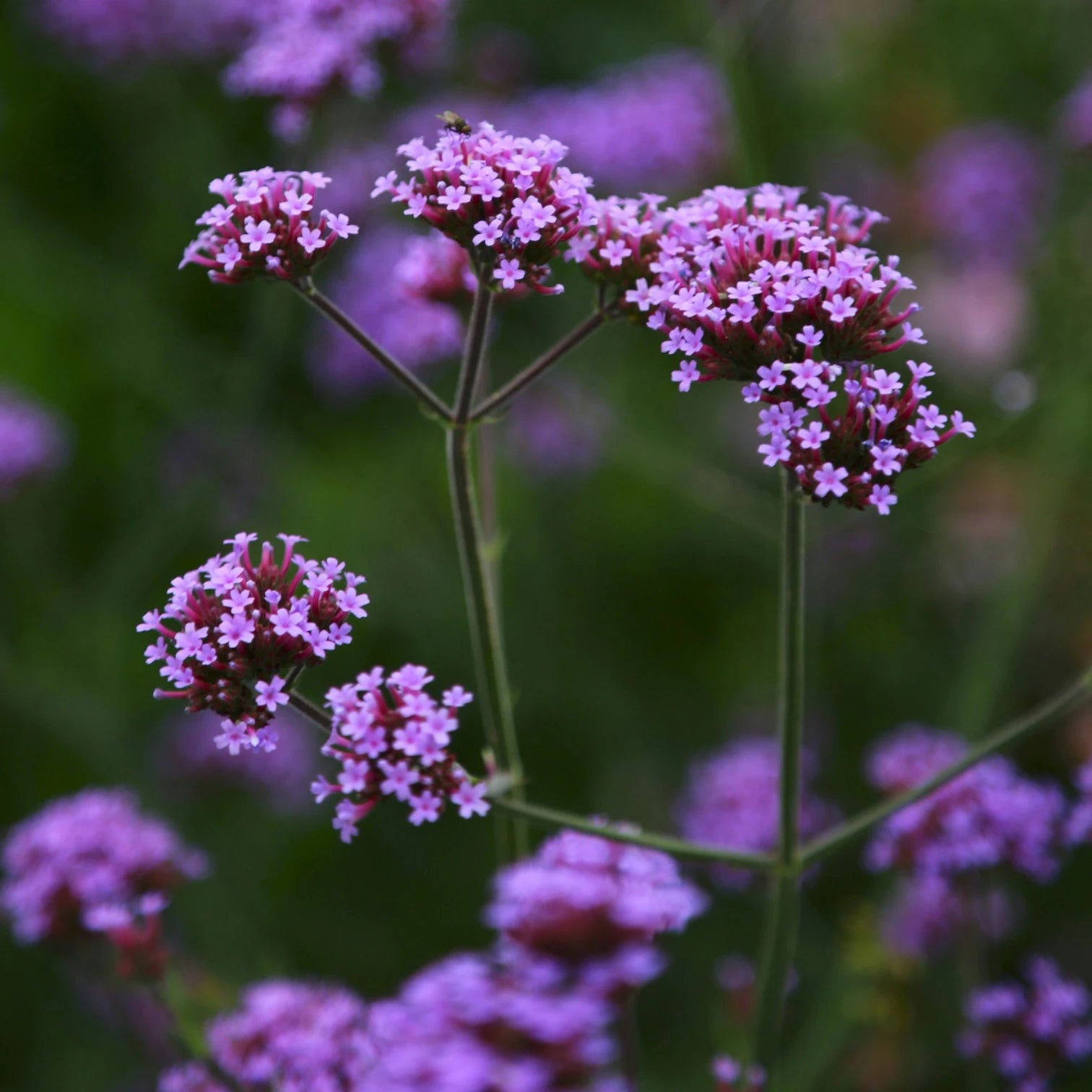
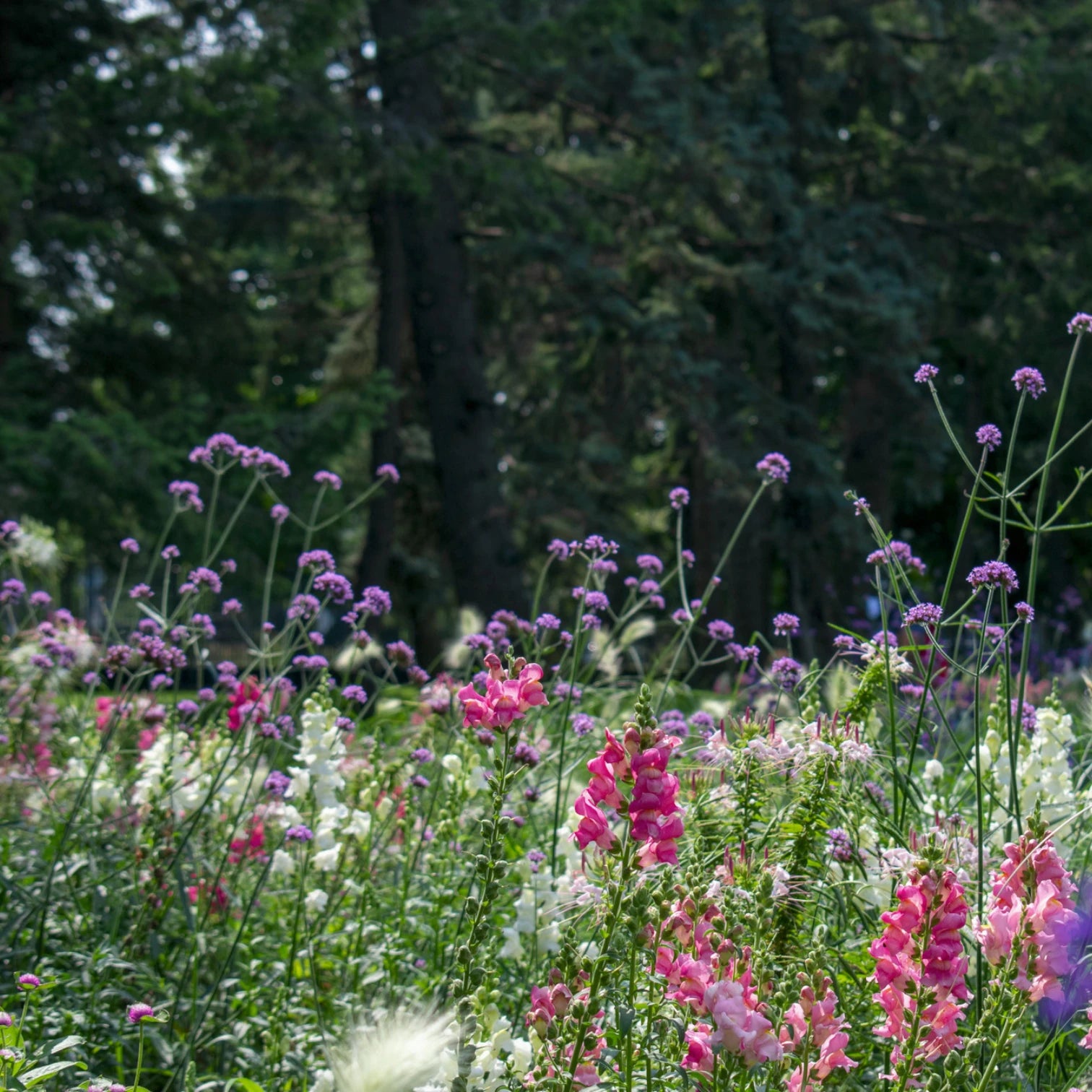
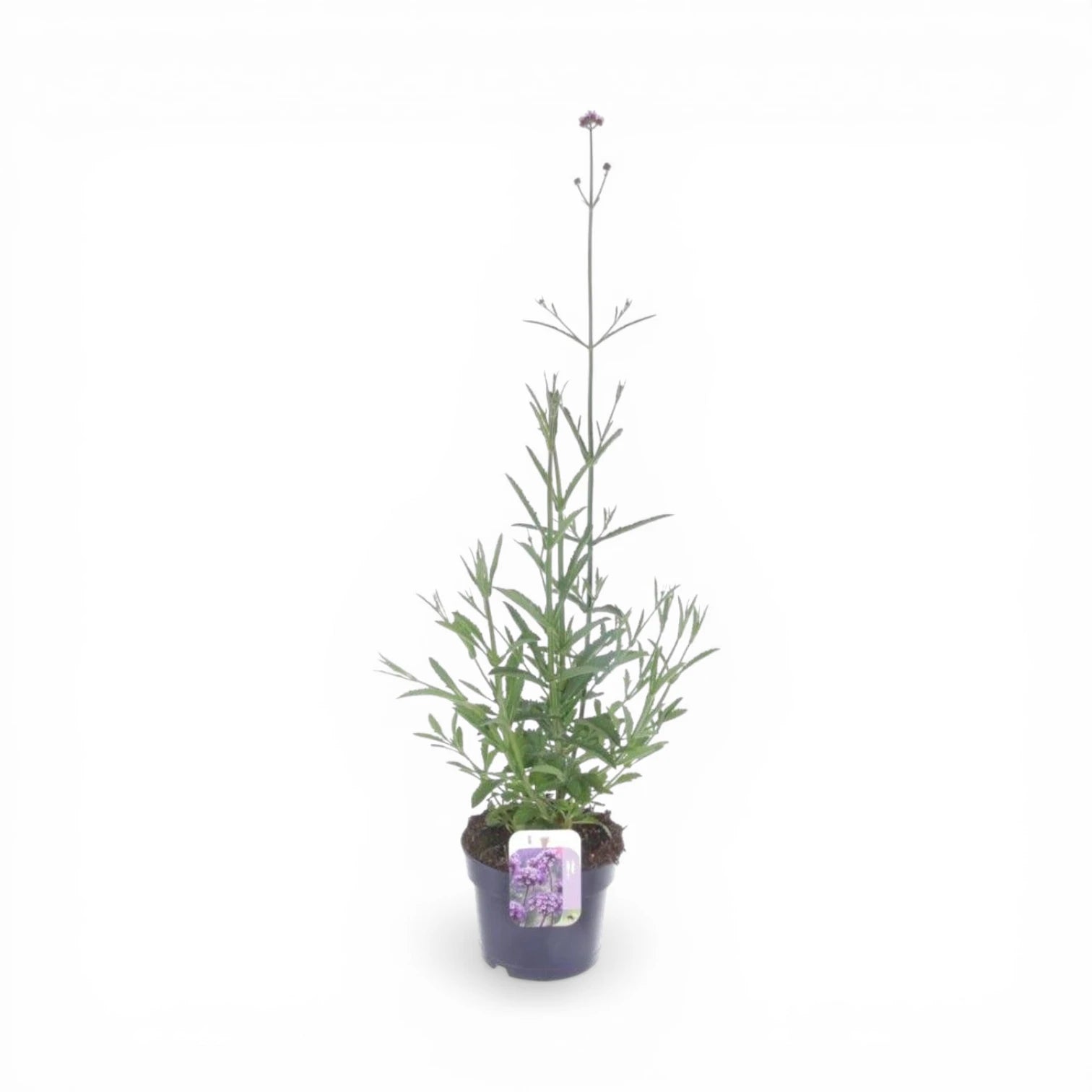
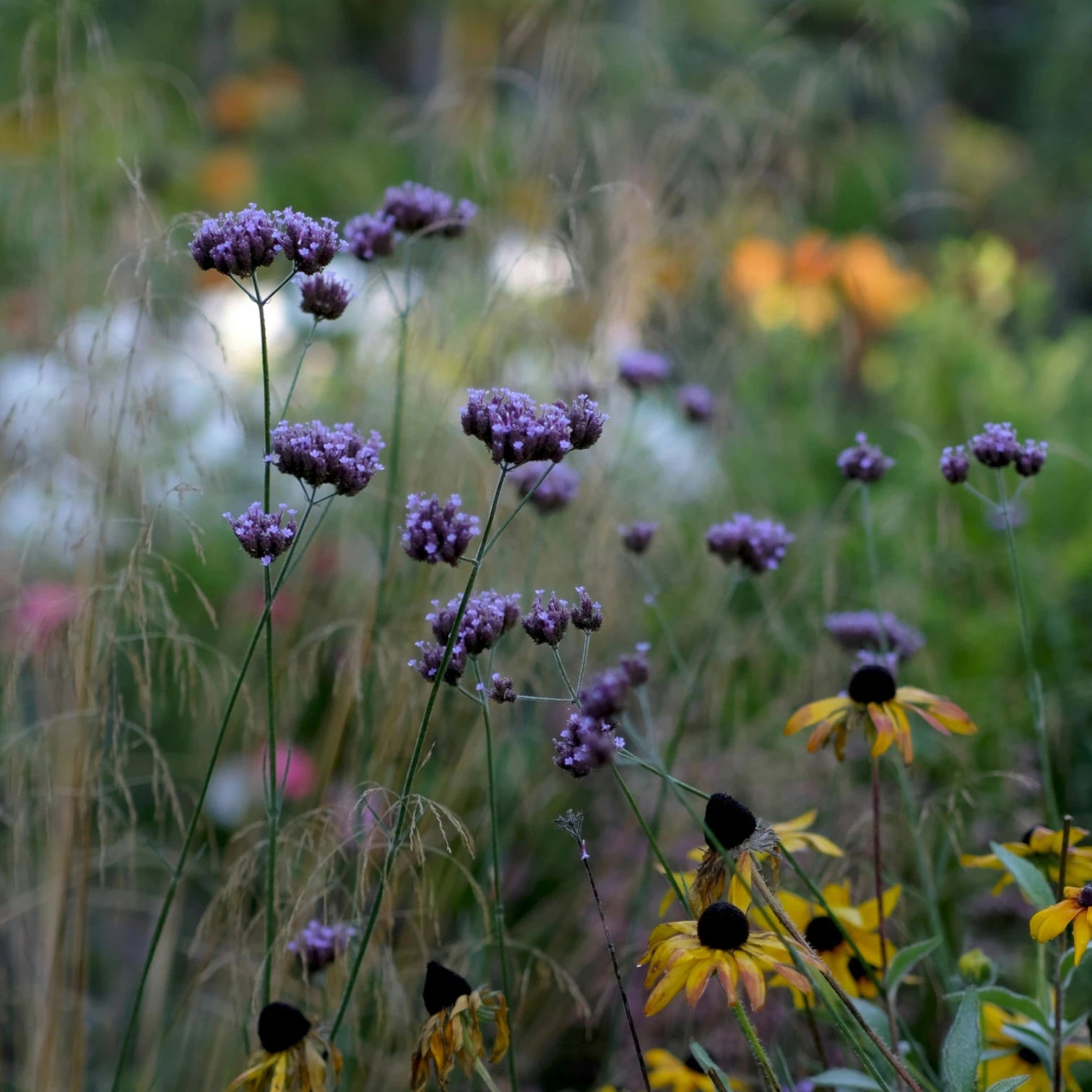
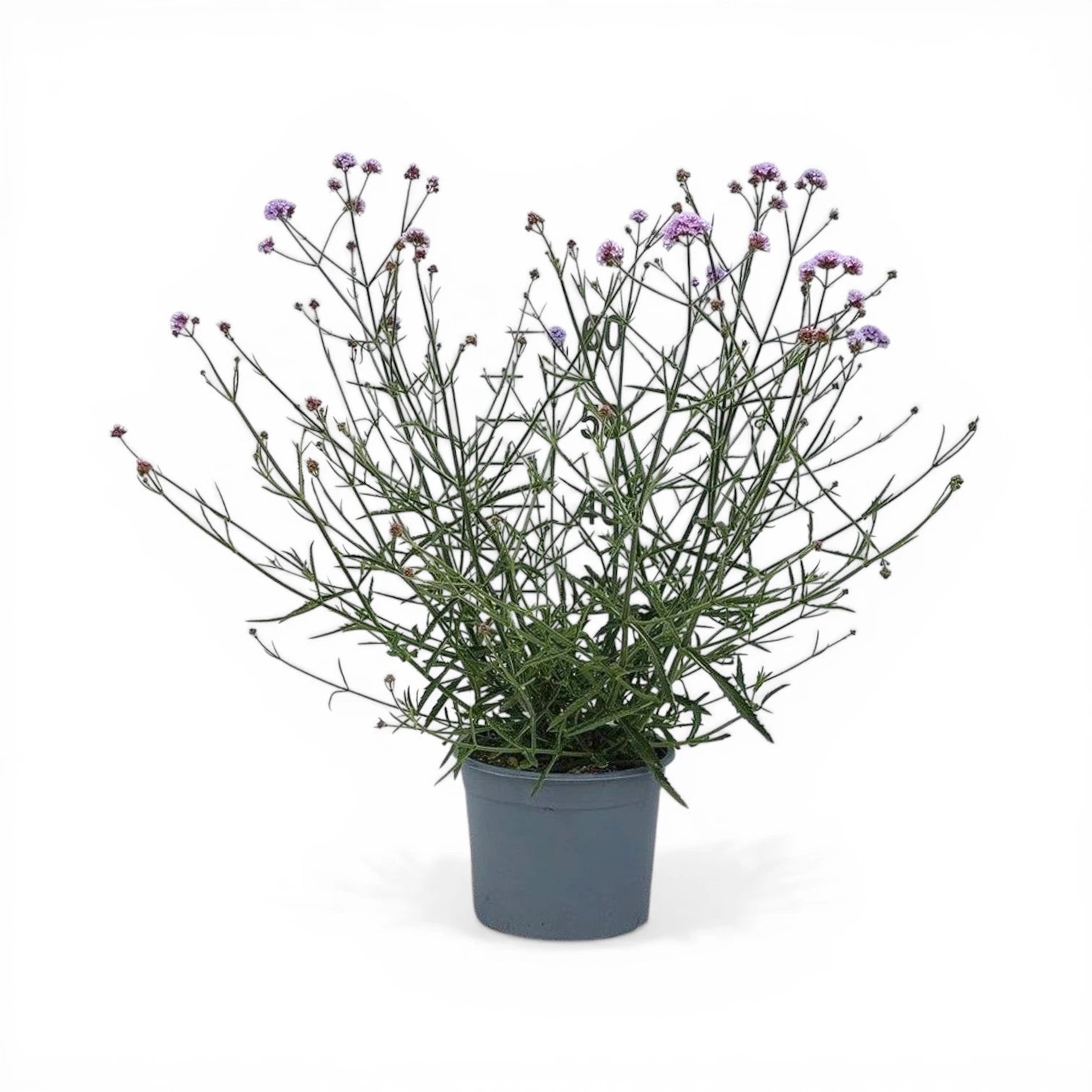
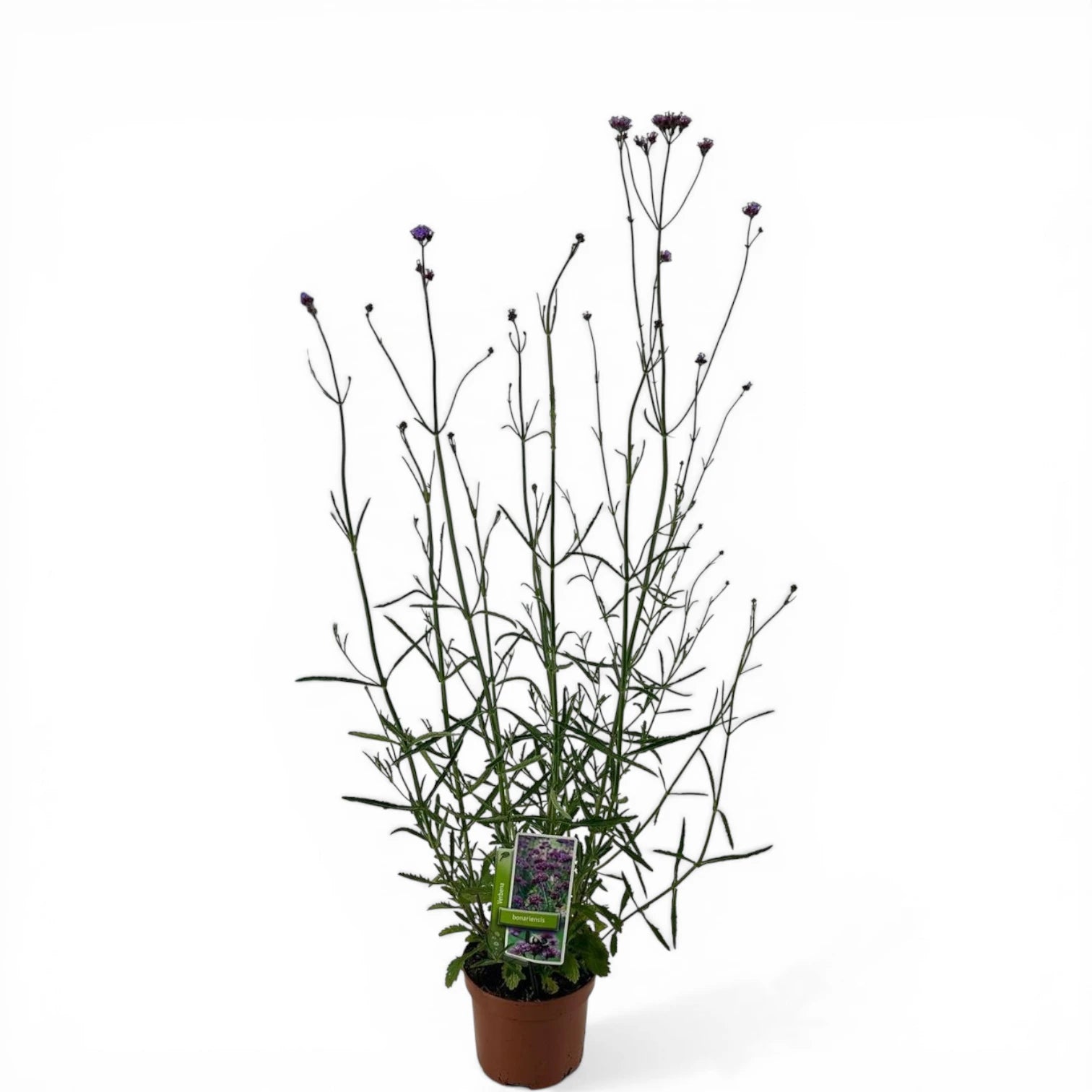
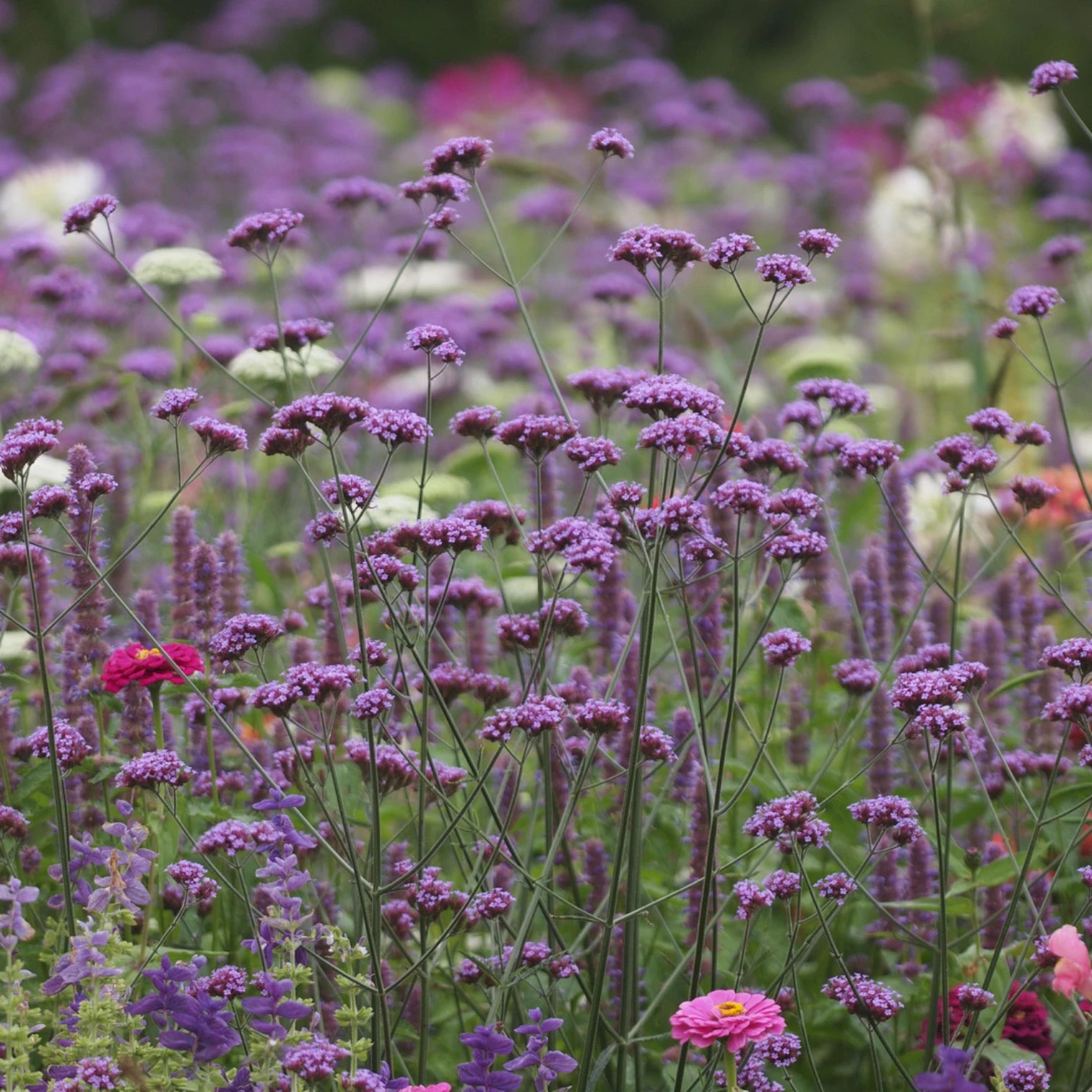
Verbena bonariensis is a tall, open perennial grown for slender stems topped with small purple flower clusters from summer into autumn. It brings height while keeping a light outline, so surrounding plants remain visible through the stems. This makes it especially useful in naturalistic borders, gravel planting, prairie-style schemes and large patio containers where vertical flower points are needed.
The plant has a distinctive habit. Narrow stems rise from a basal clump, branch near the top and hold flowers above neighbouring perennials and grasses. The flower heads are small but numerous, creating a floating effect across a sunny border. Verbena bonariensis is also valued for its long flowering period and its appeal to bees, butterflies and other visiting insects during warm weather.
Verbena bonariensis usually reaches around 1.5-2 m tall in good conditions, with a spread around 45 cm. The stems are wiry and open, so the plant takes visual space without forming a dense screen. It can be planted in small groups through a border, repeated among grasses, or grown in a large container where the height can rise above lower seasonal planting.
In containers, Verbena bonariensis stays smaller and grows more slowly than plants in open ground. Pot-grown plants can still flower well, but they need a deep container, good drainage and regular watering during heat. The airy habit works well in a large pot near lower plants, where the stems can rise above the rim and catch light.
Full sun is important for strong flowering. Verbena bonariensis likes warmth and well-drained soil, with moderately fertile ground giving steady growth. It copes with average to dry conditions once established, but new plants need water while roots move into the soil. In very windy gardens, a sheltered site helps keep tall stems upright and reduces snapping.
Drainage is especially important in winter. The plant is often short-lived in colder, wetter gardens, yet it can persist well where the crown stays open and the soil dries between wet periods. Gravel gardens, raised beds and sunny borders with free-draining soil are strong fits. In fertile, damp soil, growth can become taller and looser.
Water regularly after planting until new roots establish. Once rooted, Verbena bonariensis has good dry-spell tolerance when the soil is open and the plant has had time to settle. Water deeply during long hot periods if flowering slows or leaves flag in the afternoon.
For pots, water when the top 30-40% of the pot depth feels dry. Use a container with enough depth for the root system and enough weight to balance tall stems. A free-draining peat-free compost with added mineral structure helps roots stay active. During hot weather, container plants may need watering more often because height and leaf area increase water demand.
Verbena bonariensis is often grown as a short-lived perennial. In mild, free-draining sites it may return from the crown, and it can also self-seed where seed heads are left to mature. Seedlings are usually easy to identify and move when small. Leaving some stems through winter gives texture and can help seed fall naturally.
Cut old stems back in late winter or early spring once the worst cold has passed and new basal growth is visible. In colder gardens, take cuttings in late summer or allow seedlings to develop, giving continuity if mature plants decline after winter. Deadheading can reduce self-seeding, while leaving seed heads gives a more natural, loose planting style.
Verbena bonariensis works well among grasses, salvias, echinacea, gaura, achillea and other sun-loving perennials. It can sit through a planting without casting heavy shade. In containers, use it as the tall element in a simple sunny arrangement with lower drought-tolerant plants around the base.
Weak stems are usually linked to shade, overly rich soil, or exposure to strong wind. Poor overwintering often follows cold wet soil around the crown. Sparse flowering can mean the plant is too shaded or repeatedly drying out before it has established. Give Verbena bonariensis sun, drainage and enough root space, and it becomes one of the easiest ways to add height, movement and late colour to a sunny garden.
Verbena bonariensis is strongest when repeated through sunny planting in small, loose groups. Three to five plants can make a light vertical rhythm among grasses, low perennials and gravel plants. The stems rise high, but the base remains relatively narrow, so it can be threaded through existing planting where the soil drains well and the position receives full sun.
In containers, choose a deep pot with weight at the base, because tall stems catch wind. Water when the upper 30-40% of the pot depth feels dry, then water thoroughly so the full rootball is reached. Containers keep plants smaller and slower than open ground, which can be useful where the height is wanted but the plant needs to stay controlled on a terrace.
Old stems can stand into autumn if they still add texture. Cut them down in spring once the worst cold has passed and new basal growth is visible. Seedlings may appear in open soil after mild winters, especially in gravelly beds. Keep the strongest young plants where more airy height is useful and lift extras while small.
Choose options


Sign up for Foliage Factory newsletter for early access to new arrivals and practical care tips that work in real homes.