Position
Full sun, Part shade

Salvia
VAT included · plus
Your outdoor plant has just been packed, transported and unpacked, so give it a calm start before planting or placing it permanently. Remove all packaging carefully, check the pot, stems, visible roots and substrate moisture, and settle any loose growing medium back around the root ball. Water if the root ball feels dry, but do not leave the pot standing in water. For the first few days, keep the plant in a sheltered spot suited to its light needs, away from strong midday sun, heavy wind, frost and heat stress.
Do not move the plant straight into full exposure, especially if it is young, newly flushed, evergreen, recently pruned or greenhouse-grown. Gradually introduce more sun, wind and temperature variation over several days. If cold nights, storms, intense sun or hot dry weather are expected, keep the plant protected until conditions are more stable. Do not fertilize immediately after delivery; let the plant settle first and resume feeding only when it is actively growing and conditions are suitable.
Outdoor plants may arrive in different seasonal stages. Depending on the time of year, your plant may be leafy, flowering, newly sprouting, recently pruned, dormant, partly bare or leafless. Adjust care to what the plant is doing: actively growing plants need closer moisture checks, while dormant plants usually need protection from extremes and only light moisture management until growth resumes.
Plant outdoors when the soil is workable and weather conditions suit the plant type. Avoid planting during frost, heatwaves, waterlogged soil or very dry windy periods. It is better to keep the plant protected in its pot for a short time than to plant into stressful conditions. After planting, water thoroughly so the root ball and surrounding soil connect properly, then monitor moisture while the plant establishes.
Secure shipping, carefully packed orders with safe delivery across the EU, UK and Switzerland.
28-day plant guarantee, if a plant arrives damaged or fails soon after delivery, we help you make it right.
Free returns, simple, cost-free returns according to our policy.
For full details, please see:
Please head to our FAQ Page or Contact us.
Herbaceous perennial
Position
Full sun, Part shade
Moisture
Dry to average
Drainage
Moisture-retentive, Well-drained
Hardiness
Fully hardy · -15°C
Mature size
45–60 × 35–45 cm
Winter habit
Herbaceous die-back
Bloom time
Spring, Summer, Autumn
Containers
Good in pots
Pruning
After flowering, Late winter
Open grassland and steppe from Europe to western Siberia and Afghanistan.
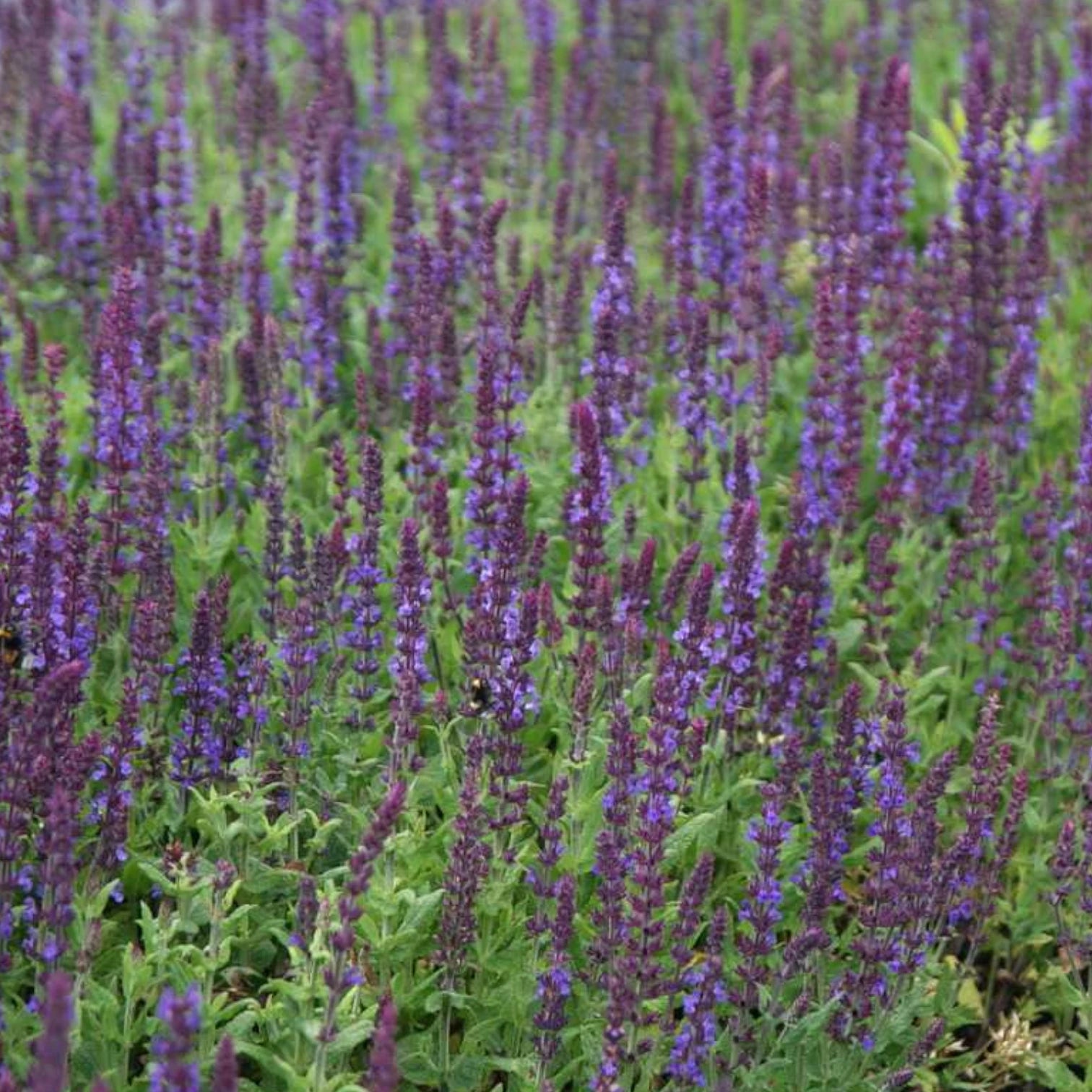
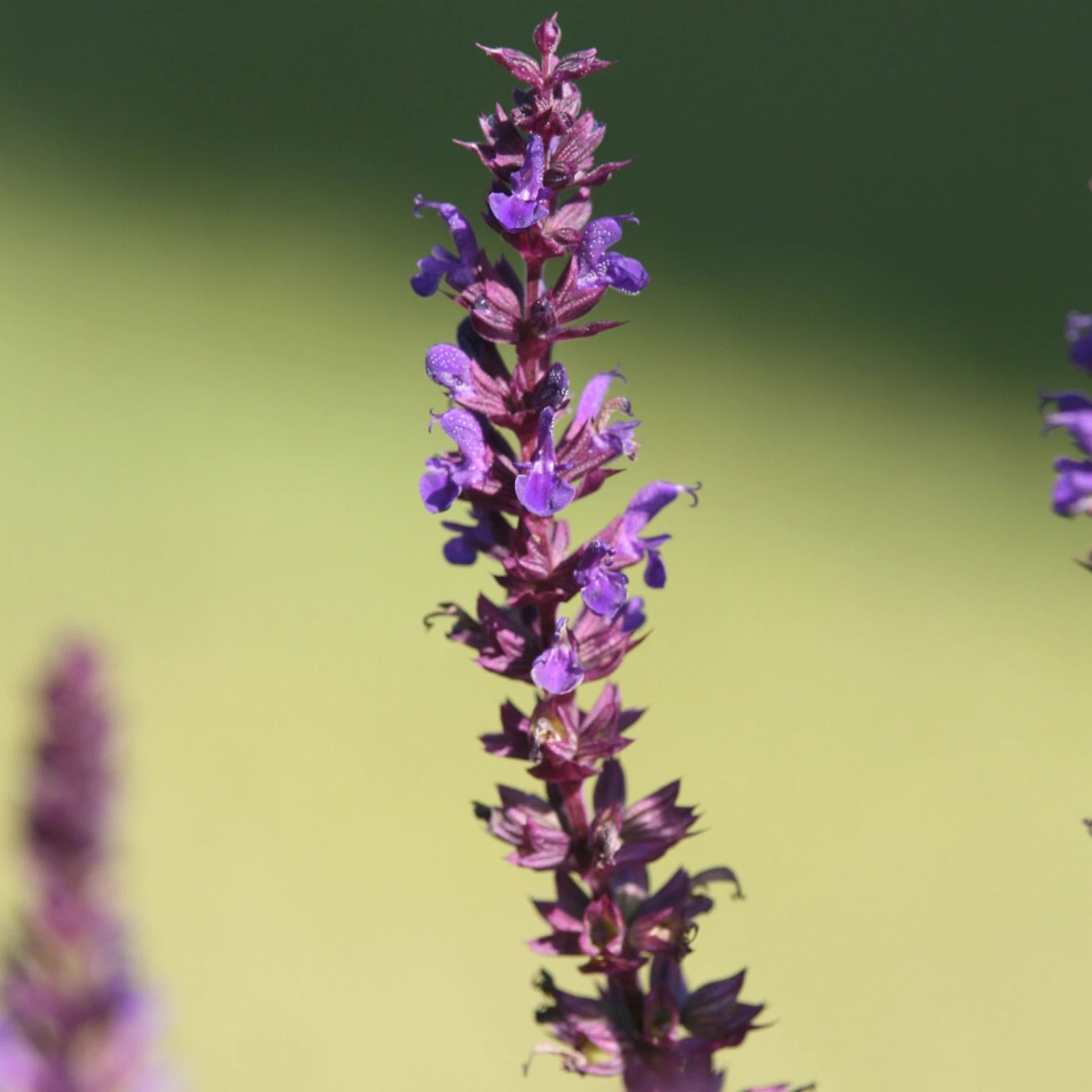
Salvia nemorosa 'Blaukönigin' is a hardy meadow sage grown for blue-violet flower spikes and aromatic green foliage. It has a naturally upright line, with flowering stems rising from a compact clump. That makes it useful in plantings that need rhythm: path edges, front-to-middle border drifts, gravel gardens and sunny perennial beds. The flowers are also valuable for visiting pollinators, especially bees, when planted in groups with enough bloom to notice.
The name means Blue Queen, and the plant earns that role through saturated cool colour on a modest clump. Salvia nemorosa 'Blaukönigin' brings repeatable vertical detail, a long early-summer display and tidy regrowth after trimming. The aromatic leaves also bring texture before the main flower stems rise. It works well with ornamental grasses, Nepeta, lavender, Achillea and compact summer perennials that share a sunny, freely drained root zone.
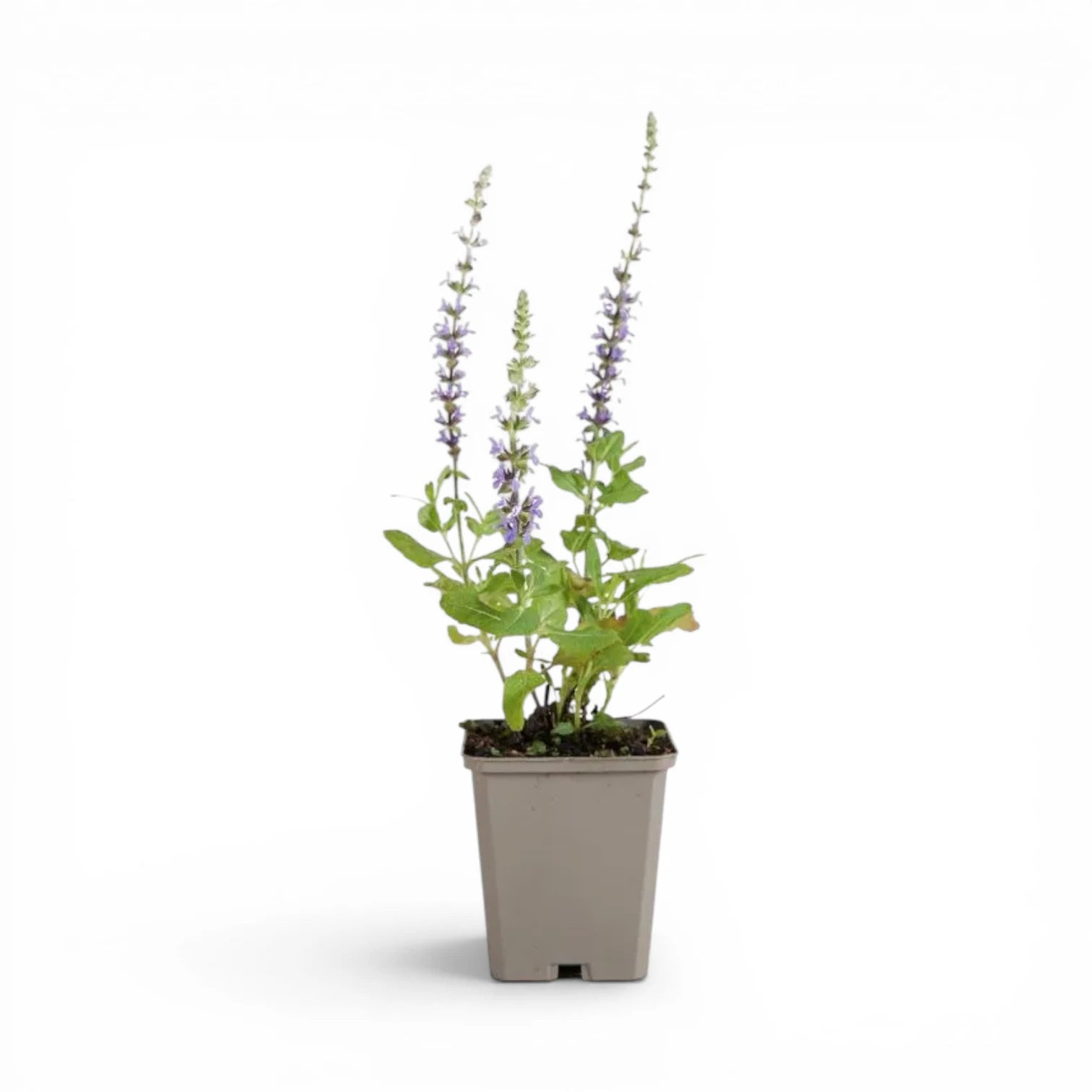
Salvia nemorosa 'Blaukönigin' usually grows about 40 to 60 cm high with a spread around 40 to 45 cm. The clump stays manageable and can be repeated through a border without overwhelming neighbours. In heavier soils, the plant may stay tighter; in fertile, evenly moist ground it can flower more generously. The spacing should allow each clump to receive light around the crown, because shaded, crowded plants flower less freely and dry more slowly after rain.
Containers keep Salvia nemorosa 'Blaukönigin' smaller and slower than open ground, especially in shallow troughs. A pot can still produce a good display if the compost drains freely and the plant has enough root volume to stay evenly moist. Use it in sunny container groups with grasses or silver-leaved perennials, keeping the crown open and the pot raised clear of standing winter wet.
This salvia is best in full sun. Light partial shade can be tolerated in warm gardens, but the strongest stem habit and flowering come from bright exposure. Soil should be moderately fertile, humus-rich, moist but well drained. That combination matters: the plant appreciates moisture during active growth, while the crown and roots need air through winter. Chalk, loam and sandy soils can all work if the drainage is reliable.
For pot-grown Salvia nemorosa 'Blaukönigin', water when the upper 25 to 35% of the pot depth has dried. During a hot flowering spell, containers may dry quickly, especially on paved patios. In open ground, water new plants until roots have reached surrounding soil, then focus on long dry periods. A light mulch can help, but keep the crown clear so new shoots emerge cleanly in spring.
Salvia nemorosa 'Blaukönigin' flowers mainly in early to midsummer. After the first flush, cut the faded spikes back to strong side shoots or basal foliage. This refreshes the plant and can encourage later flowers. Deadheading is most useful when done before the whole plant becomes exhausted. If the clump looks tired after flowering, a firmer trim can produce a cleaner mound of foliage for the rest of the season.
In late winter or early spring, remove old stems and any weather-damaged growth before new shoots extend. This keeps the crown open and makes space for fresh growth. Division can be done in spring if an older clump becomes woody or sparse in the centre. New divisions should be replanted into drained soil and watered in thoroughly.
Salvia nemorosa 'Blaukönigin' is deciduous, so winter appearance is modest. Its value returns quickly when spring growth forms a neat base and flower spikes start to rise. In overly rich or shaded conditions, stems can lean and flowering can be softer. In dry, poor soil, the clump may remain compact and flower for a shorter window. The best garden performance comes from sun, drainage and enough moisture to keep active growth steady.
This plant fits sunny perennial borders where repeated colour is wanted across the season. Use several plants to create rhythm through a bed, or place one in a mixed patio container where the blue-violet flowers can sit above lower foliage. With simple trimming after flowering and a spring cleanup, Salvia nemorosa 'Blaukönigin' stays clear, useful and easy to combine.
Salvia nemorosa 'Blaukönigin' is strongest when planted in small groups, because the flower spikes then create a clear blue-violet pulse through the border. It can be spaced between ornamental grasses for a naturalistic look, repeated along a path for order, or mixed with pale yellow, white and silver plants for contrast. The upright flowers also help loosen flat plantings that contain many mound-shaped perennials.
In containers, use it where the flower stems can rise above lower companions. A single plant can work in a medium pot, but a larger container with two or three sun-loving partners gives a fuller seasonal display. Keep the salvia near the front of the arrangement so old spikes can be trimmed easily. That access matters, because after-flowering trimming is what keeps the plant neat and ready for later growth.
Salvia nemorosa 'Blaukönigin' balances strong flower colour, modest size, aromatic foliage, and a straightforward care rhythm. It suits gardeners building repeatable sunny planting with a longer perennial rhythm.
For an even planting line, repeat the clumps at the same distance and trim them on the same day after bloom.
Repeat the clumps in measured drifts when a stronger border rhythm is wanted. The cool blue-violet spikes work especially well near pale yellows, soft silver foliage and fine grasses, while the aromatic leaves keep the plant useful before and after the main flowering weeks.

Choose options


Sign up for Foliage Factory newsletter for early access to new arrivals and practical care tips that work in real homes.