Position
Full sun, Part shade, Shade

Geranium
VAT included · plus
Your outdoor plant has just been packed, transported and unpacked, so give it a calm start before planting or placing it permanently. Remove all packaging carefully, check the pot, stems, visible roots and substrate moisture, and settle any loose growing medium back around the root ball. Water if the root ball feels dry, but do not leave the pot standing in water. For the first few days, keep the plant in a sheltered spot suited to its light needs, away from strong midday sun, heavy wind, frost and heat stress.
Do not move the plant straight into full exposure, especially if it is young, newly flushed, evergreen, recently pruned or greenhouse-grown. Gradually introduce more sun, wind and temperature variation over several days. If cold nights, storms, intense sun or hot dry weather are expected, keep the plant protected until conditions are more stable. Do not fertilize immediately after delivery; let the plant settle first and resume feeding only when it is actively growing and conditions are suitable.
Outdoor plants may arrive in different seasonal stages. Depending on the time of year, your plant may be leafy, flowering, newly sprouting, recently pruned, dormant, partly bare or leafless. Adjust care to what the plant is doing: actively growing plants need closer moisture checks, while dormant plants usually need protection from extremes and only light moisture management until growth resumes.
Plant outdoors when the soil is workable and weather conditions suit the plant type. Avoid planting during frost, heatwaves, waterlogged soil or very dry windy periods. It is better to keep the plant protected in its pot for a short time than to plant into stressful conditions. After planting, water thoroughly so the root ball and surrounding soil connect properly, then monitor moisture while the plant establishes.
Secure shipping, carefully packed orders with safe delivery across the EU, UK and Switzerland.
28-day plant guarantee, if a plant arrives damaged or fails soon after delivery, we help you make it right.
Free returns, simple, cost-free returns according to our policy.
For full details, please see:
Please head to our FAQ Page or Contact us.
Evergreen to semi-evergreen perennial
Position
Full sun, Part shade, Shade
Moisture
Average
Drainage
Moisture-retentive, Well-drained
Hardiness
Fully hardy · -20°C
Mature size
10–50 × 50–100 cm
Winter habit
Semi-evergreen to evergreen
Bloom time
Spring, Summer
Containers
Good in pots
Pruning
After flowering, Spring
Woodland, rocky slopes and scrub in southeastern Europe.
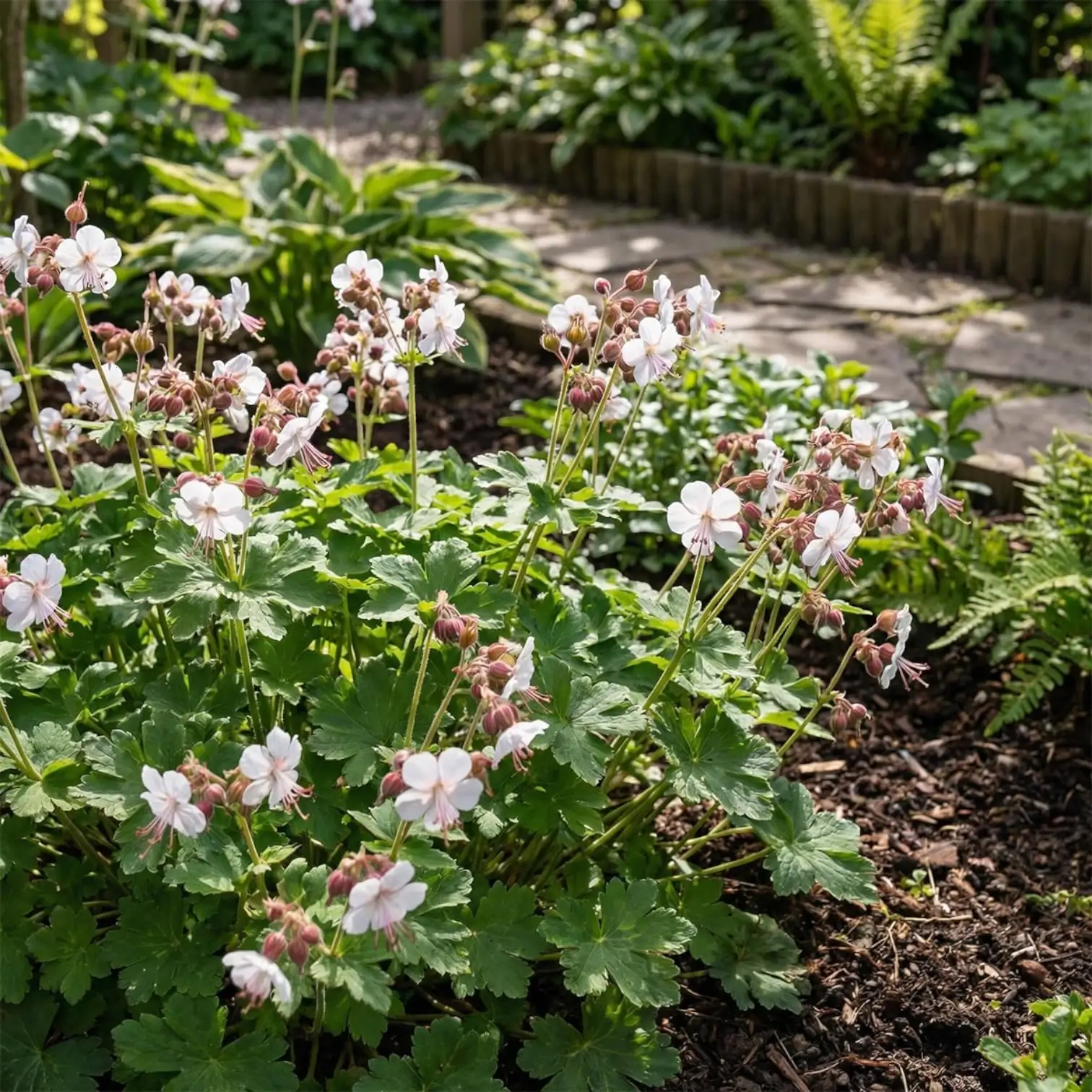
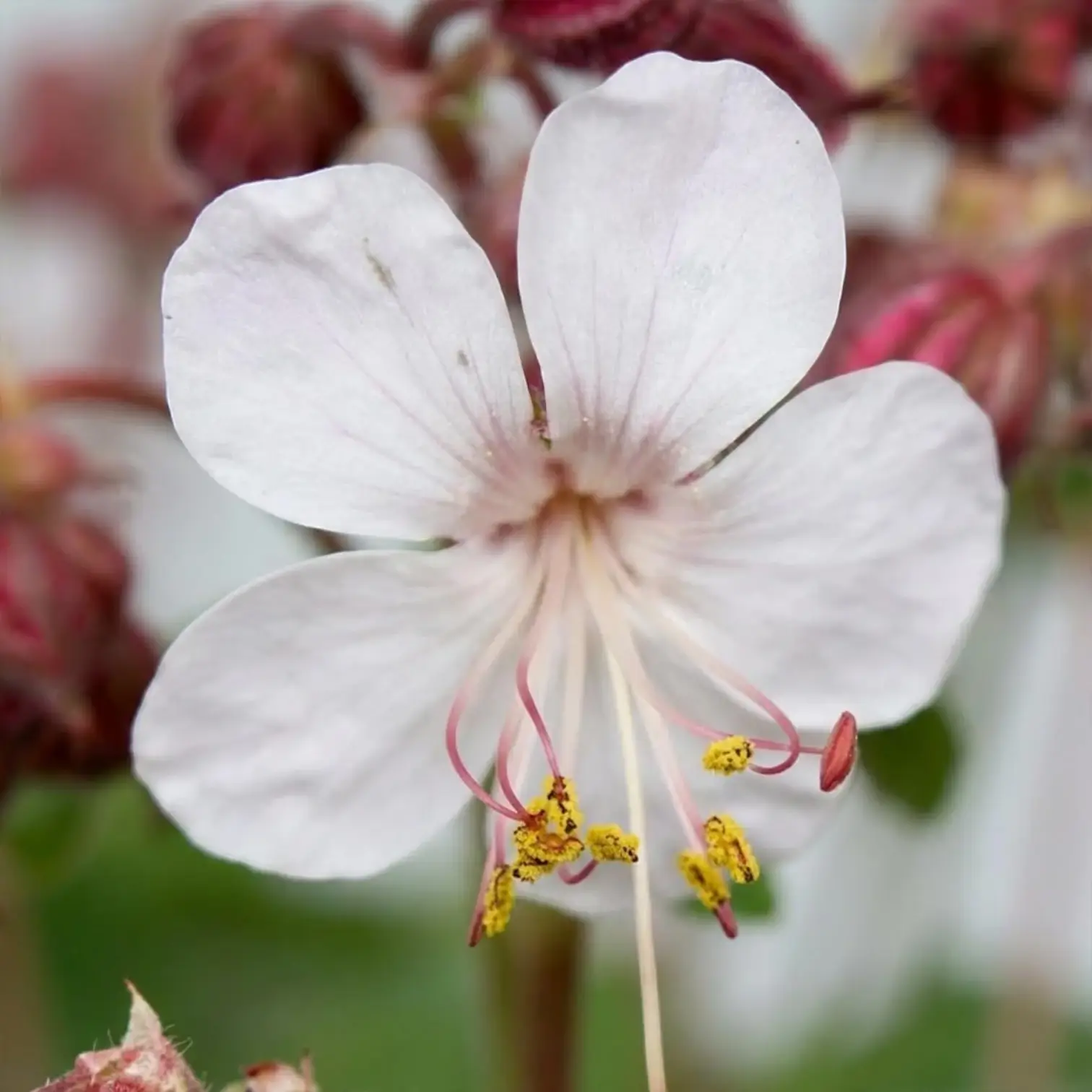
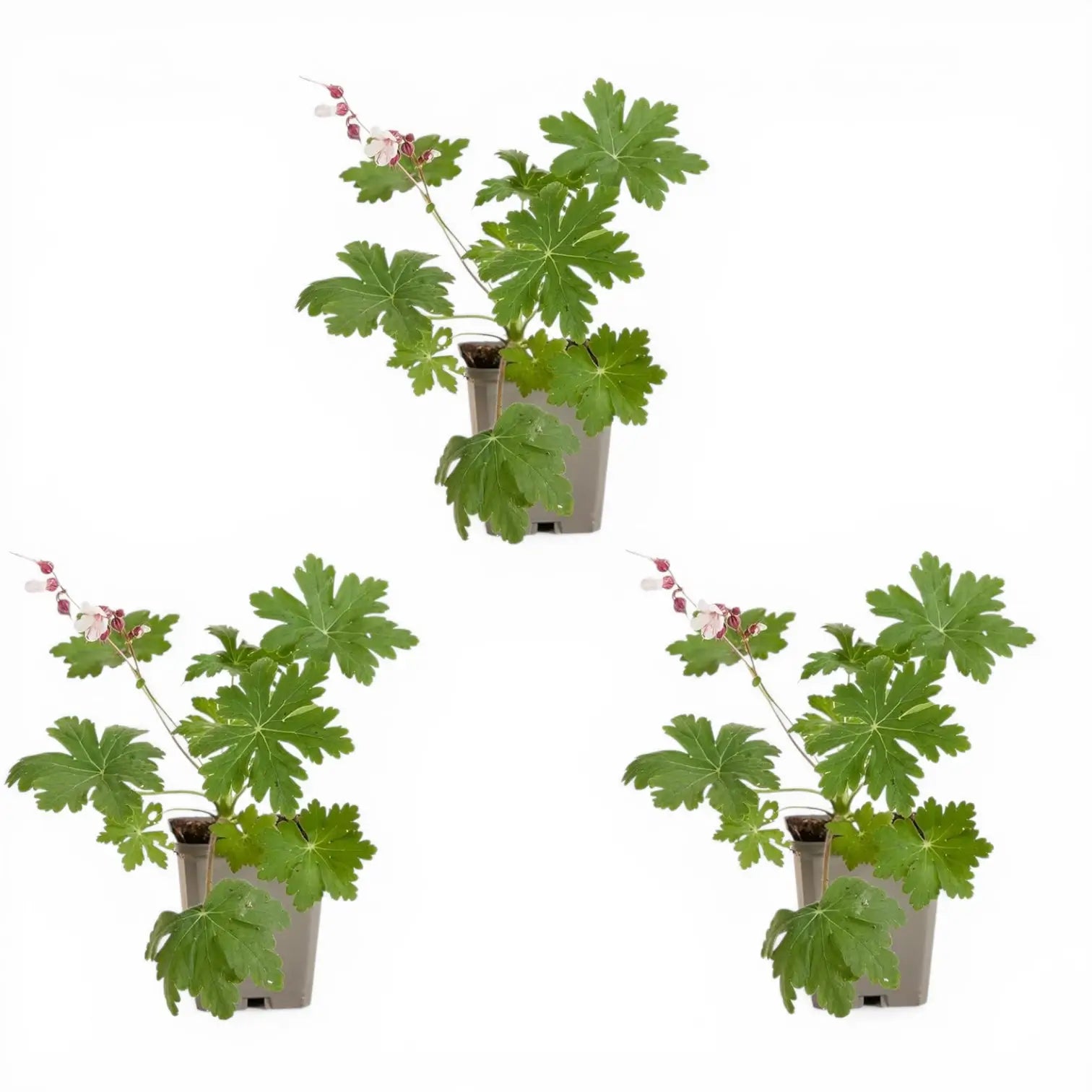
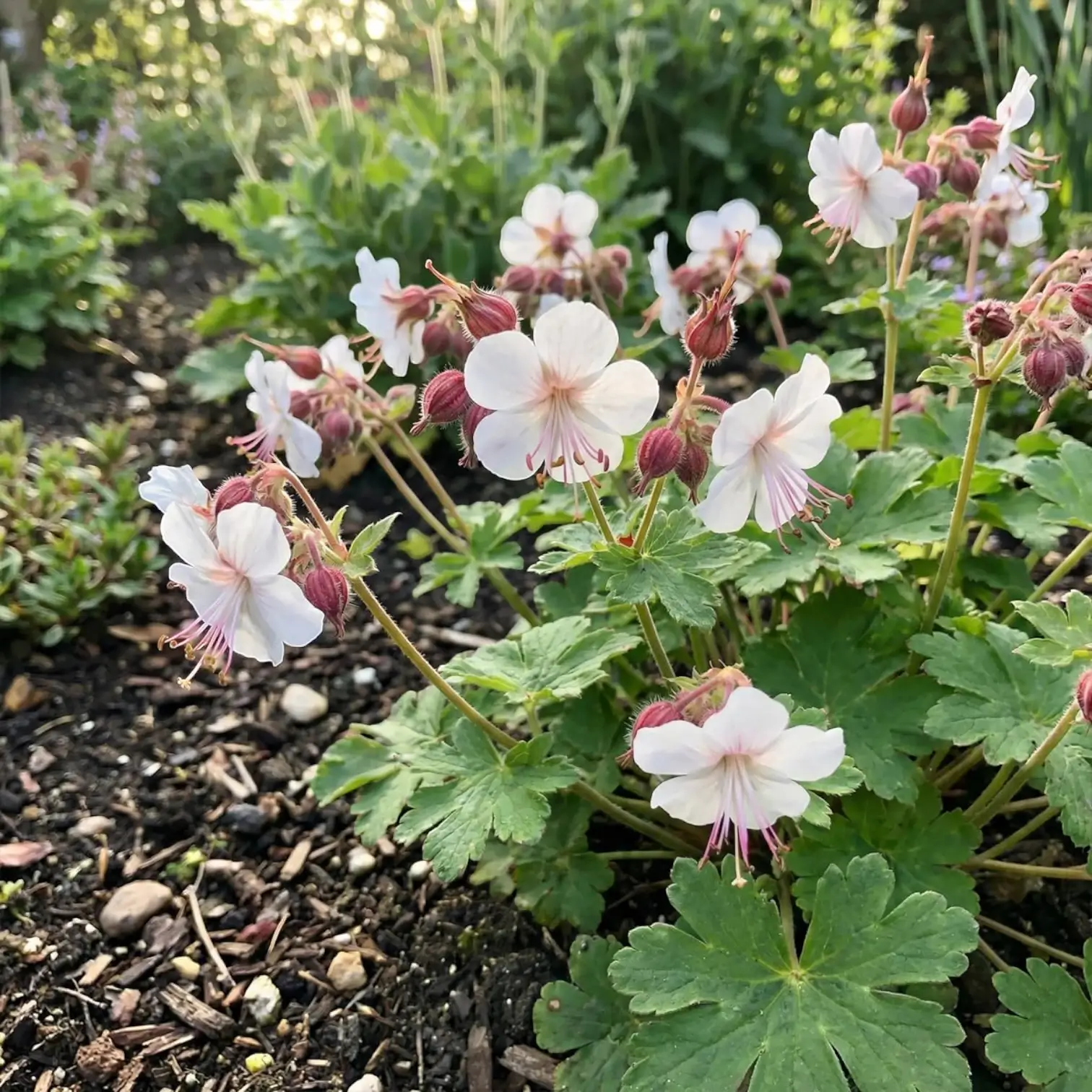
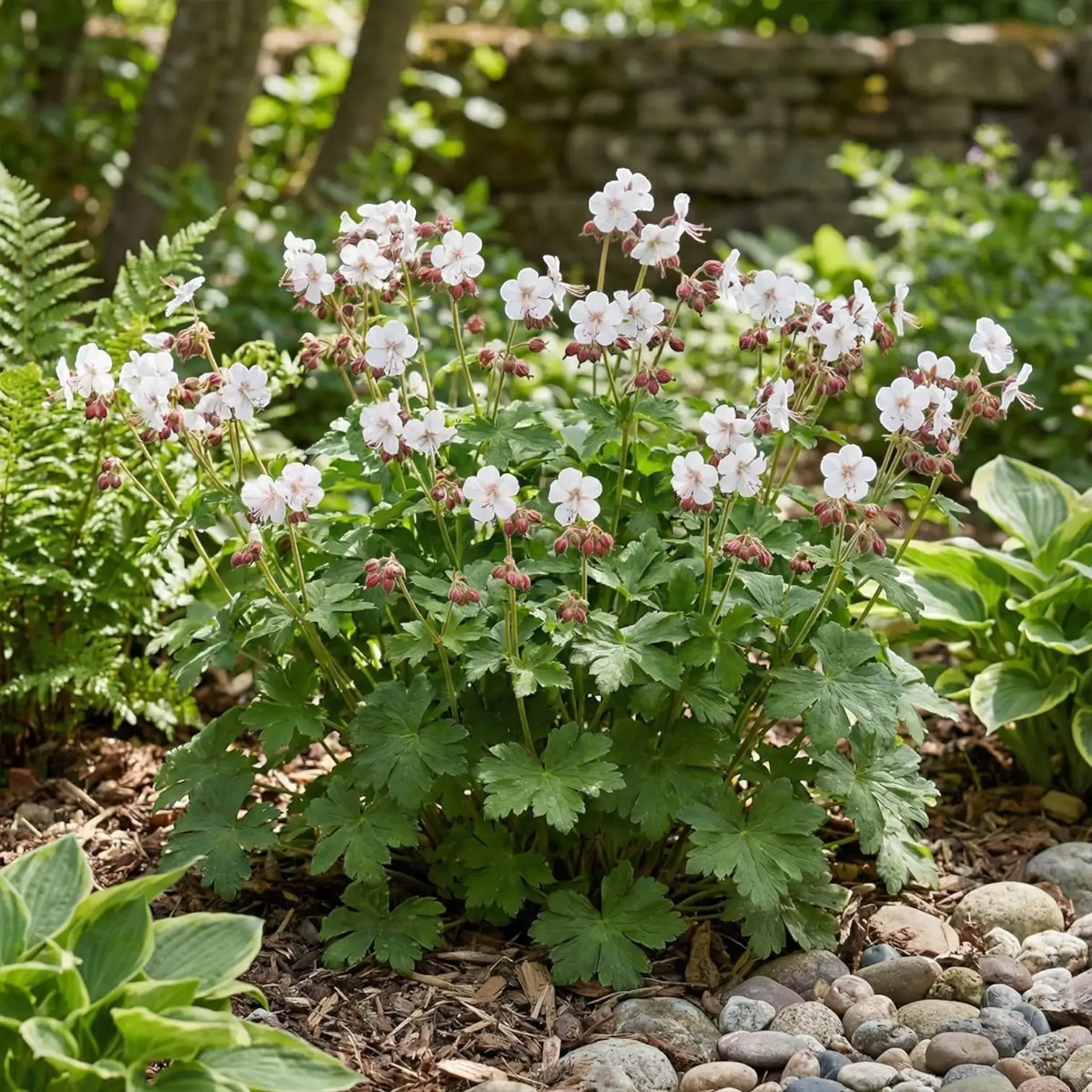
Geranium macrorrhizum 'Spessart' is a big-root cranesbill with aromatic foliage, pale flowers and a durable spreading habit. It forms a low, broad mound of lobed green leaves, often semi-evergreen, with white to soft pink flowers held above the foliage from late spring into midsummer. Mature plants can reach around 10-50 cm high and 50-100 cm wide in open ground. The leaves are scented when brushed, and the plant can develop red tones as the season cools, giving it value beyond the flowering period.
This is one of the most useful hardy geraniums for awkward garden edges because it copes with sun, partial shade and shade, including drier shade once established. It suits open ground beneath shrubs, the base of informal hedges, path margins, gravel gardens and mixed borders where a low, aromatic mat can cover soil. Geranium macrorrhizum 'Spessart' has a rhizomatous base that helps it settle into a broad patch over time. The flower colour is gentle, so it works well with silver foliage, grasses, blue-flowered perennials and woodland-edge planting.
Geranium macrorrhizum 'Spessart' is adaptable across many ordinary garden soils, provided the site is not waterlogged. Chalk, clay, loam and sand can all suit it when drainage and structure are sound. Moist but well-drained soil supports the strongest early growth, but established plants are well suited to dry shade once established. Under trees or shrubs, watering during the first season is still important because woody roots can remove moisture before young cranesbill roots have spread.
Full sun gives strong flowering where moisture is available. Partial shade is often the easiest position for balanced growth. Shade is suitable too, especially beneath high-canopied shrubs or trees, though flowering may be lighter. In exposed positions, foliage can look tired after harsh wind or long dry periods, but the crown is generally resilient. In compacted clay, plant slightly high and improve the surrounding soil structure. In sandy ground, add compost to improve moisture holding without creating a wet pocket.
Use 100 cm as the mature spacing figure where Geranium macrorrhizum 'Spessart' has room to develop a full groundcover patch. Closer spacing can be used for faster cover, especially along a boundary or under shrubs, but the plants will meet and overlap sooner. Around prized woody plants, keep the crown clear at planting and direct spread into the open soil between larger roots. This plant is useful where a tidy, low carpet is wanted beneath taller perennials.
Containers keep Geranium macrorrhizum 'Spessart' smaller and slower than open ground, especially when root space is limited. A large trough, broad bowl or deep patio planter gives roots room to widen. Drainage holes are essential, and the compost should hold some moisture while allowing air around the crown. In pots, the aromatic foliage can soften edges and cover the soil surface around taller outdoor plants.
Water well after planting and keep the root zone evenly moist while the plant establishes. In open ground, established plants usually need help only during extended drought, especially under shrubs or trees. In containers, water when the top 35-45% of the pot depth feels dry, then water thoroughly and let the pot drain. This rhythm supports the root ball while keeping the crown from sitting in stale wet compost.
Feeding should be moderate. A light mulch of mature compost in spring is suitable for most borders. Rich feeding is rarely needed and can make the plant softer. After flowering, remove flowered stems and old leaves to encourage fresh foliage. This tidy-up can also release the aromatic scent from the leaves and improves airflow through dense patches. If a clump becomes too broad for its space, sections can be lifted and divided in spring.
In dry shade planting, Geranium macrorrhizum 'Spessart' is useful as a first layer beneath shrubs with open branching. It can run between woody stems, soften bare soil and create a scented green base before summer shade becomes denser. Pale flowers keep the look calm, while autumn leaf colour can add warmth when many nearby perennials are already declining. For larger plantings, stagger plants slightly in loose triangles so the future mat looks natural and closes evenly. This also keeps airflow open while the plants establish.
Geranium macrorrhizum 'Spessart' is generally robust, but poor drainage and cramped containers can still cause problems. Wet winter soil can weaken crowns. Dry, root-crowded pots can lead to dull foliage and fewer flowers. Dense overhead shade can reduce flowering, though the plant may still provide groundcover. Powdery mildew can appear during dry air and root stress, while vine weevil larvae are a risk for potted plants. Sudden collapse in a container should be checked at root level.
For long-term planting, refresh old or congested clumps by division. Replant young outer sections into improved soil and water them in deeply. In borders, this plant works best when allowed to form a stable patch with minimal disturbance. With a well-drained position, steady establishment moisture and a trim after flowering, Geranium macrorrhizum 'Spessart' becomes a dependable low layer for spaces where many softer perennials struggle to stay full.

Choose options


Sign up for Foliage Factory newsletter for early access to new arrivals and practical care tips that work in real homes.