Position
Sun to part shade

Geranium
VAT included · plus
Your outdoor plant has just been packed, transported and unpacked, so give it a calm start before planting or placing it permanently. Remove all packaging carefully, check the pot, stems, visible roots and substrate moisture, and settle any loose growing medium back around the root ball. Water if the root ball feels dry, but do not leave the pot standing in water. For the first few days, keep the plant in a sheltered spot suited to its light needs, away from strong midday sun, heavy wind, frost and heat stress.
Do not move the plant straight into full exposure, especially if it is young, newly flushed, evergreen, recently pruned or greenhouse-grown. Gradually introduce more sun, wind and temperature variation over several days. If cold nights, storms, intense sun or hot dry weather are expected, keep the plant protected until conditions are more stable. Do not fertilize immediately after delivery; let the plant settle first and resume feeding only when it is actively growing and conditions are suitable.
Outdoor plants may arrive in different seasonal stages. Depending on the time of year, your plant may be leafy, flowering, newly sprouting, recently pruned, dormant, partly bare or leafless. Adjust care to what the plant is doing: actively growing plants need closer moisture checks, while dormant plants usually need protection from extremes and only light moisture management until growth resumes.
Plant outdoors when the soil is workable and weather conditions suit the plant type. Avoid planting during frost, heatwaves, waterlogged soil or very dry windy periods. It is better to keep the plant protected in its pot for a short time than to plant into stressful conditions. After planting, water thoroughly so the root ball and surrounding soil connect properly, then monitor moisture while the plant establishes.
Secure shipping, carefully packed orders with safe delivery across the EU, UK and Switzerland.
28-day plant guarantee, if a plant arrives damaged or fails soon after delivery, we help you make it right.
Free returns, simple, cost-free returns according to our policy.
For full details, please see:
Please head to our FAQ Page or Contact us.
Semi-evergreen perennial
Position
Sun to part shade
Moisture
Average
Drainage
Moisture-retentive, Well-drained
Hardiness
Fully hardy · -20°C
Mature size
10–50 × 50–100 cm
Winter habit
Semi-evergreen
Bloom time
Spring, Summer
Containers
Good in pots
Pruning
After flowering, Spring
Garden hybrid between Geranium dalmaticum and G. macrorrhizum, selected for aromatic foliage and groundcover use.
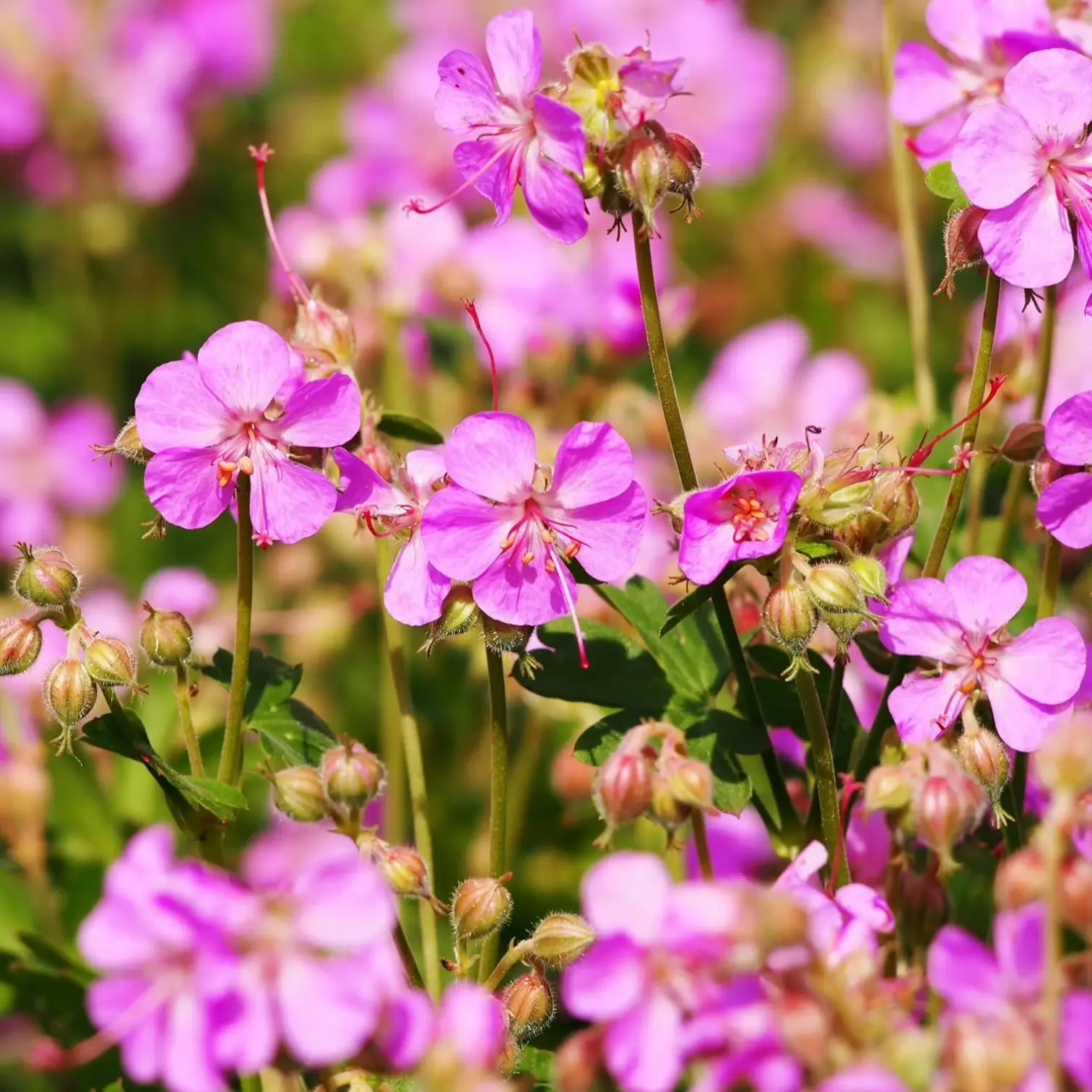
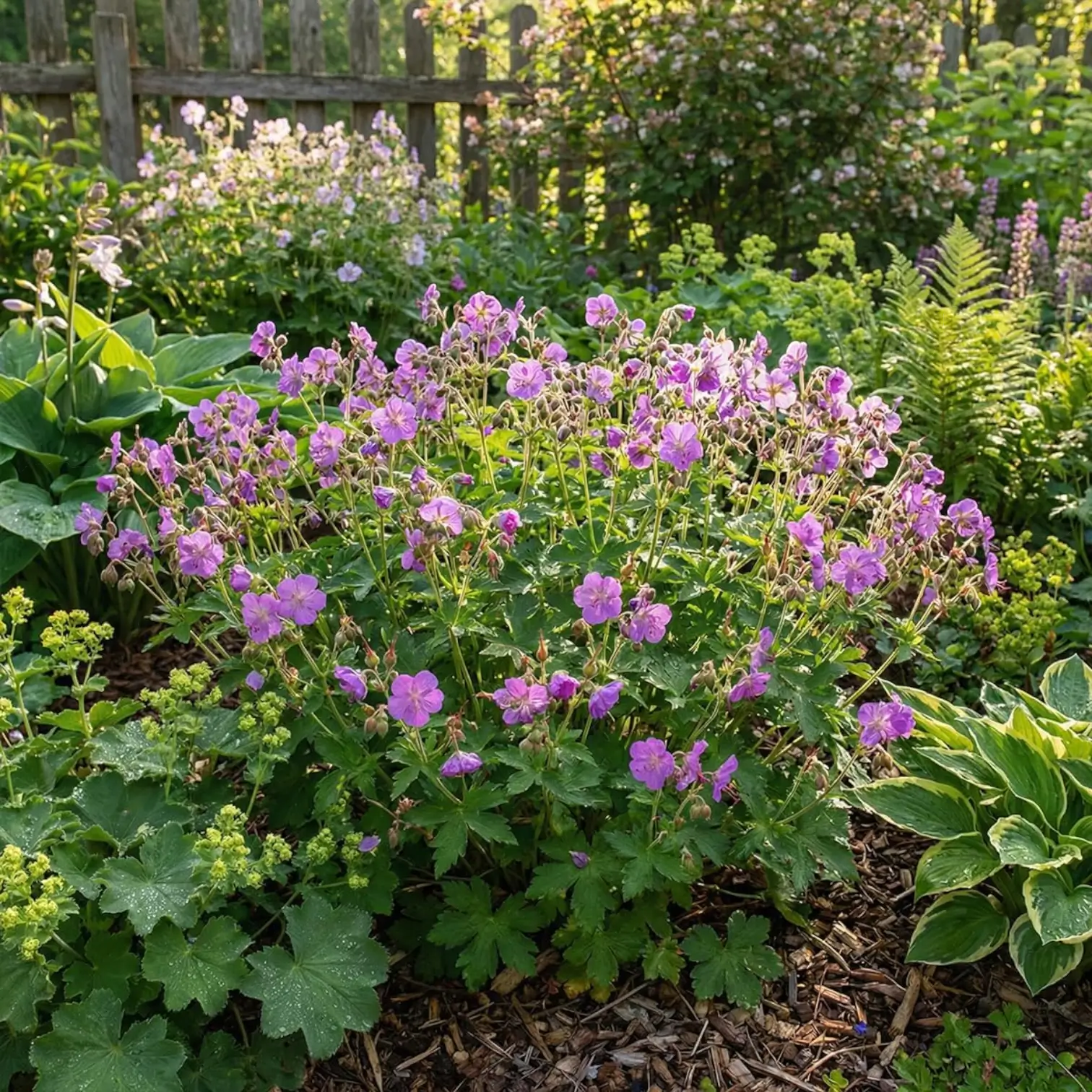
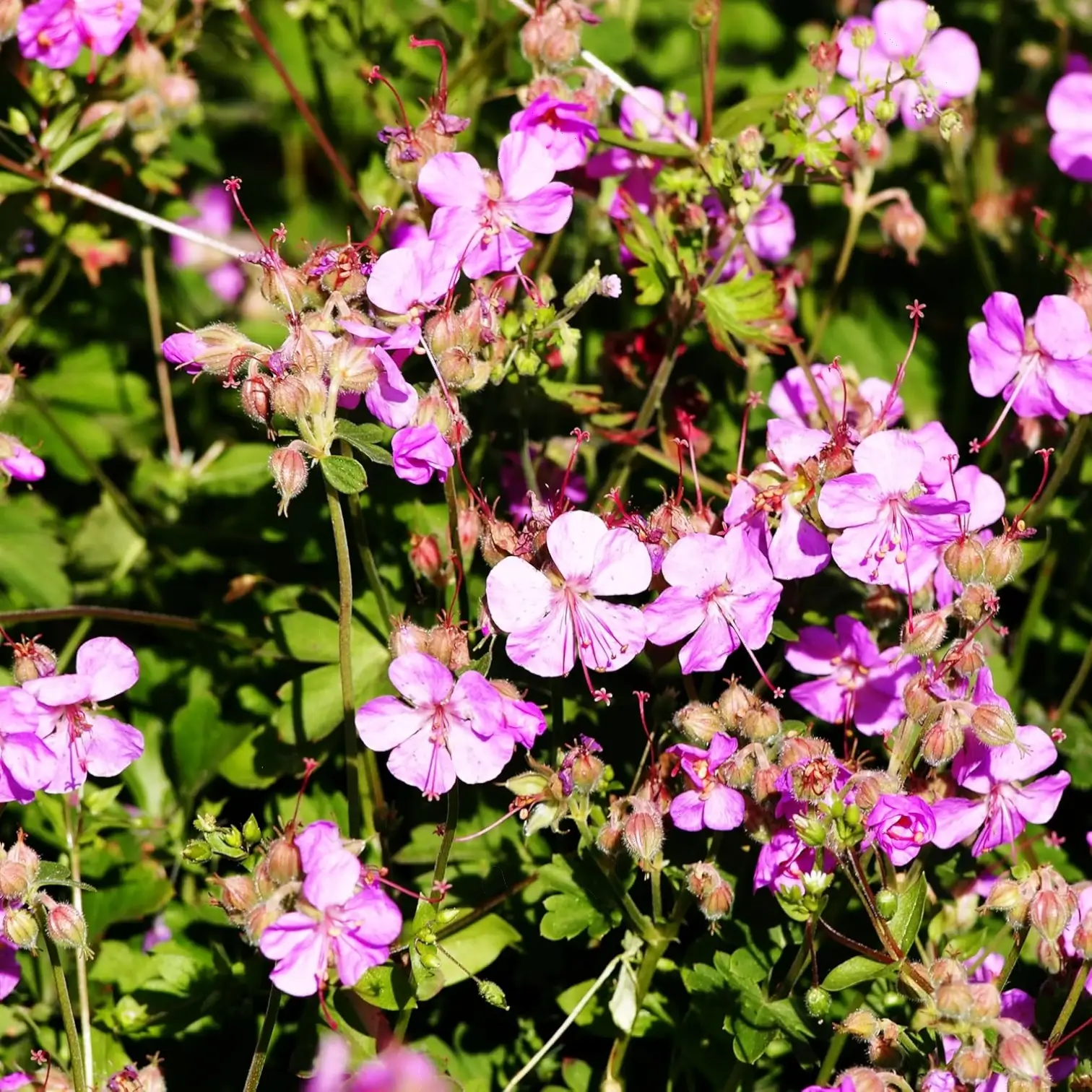
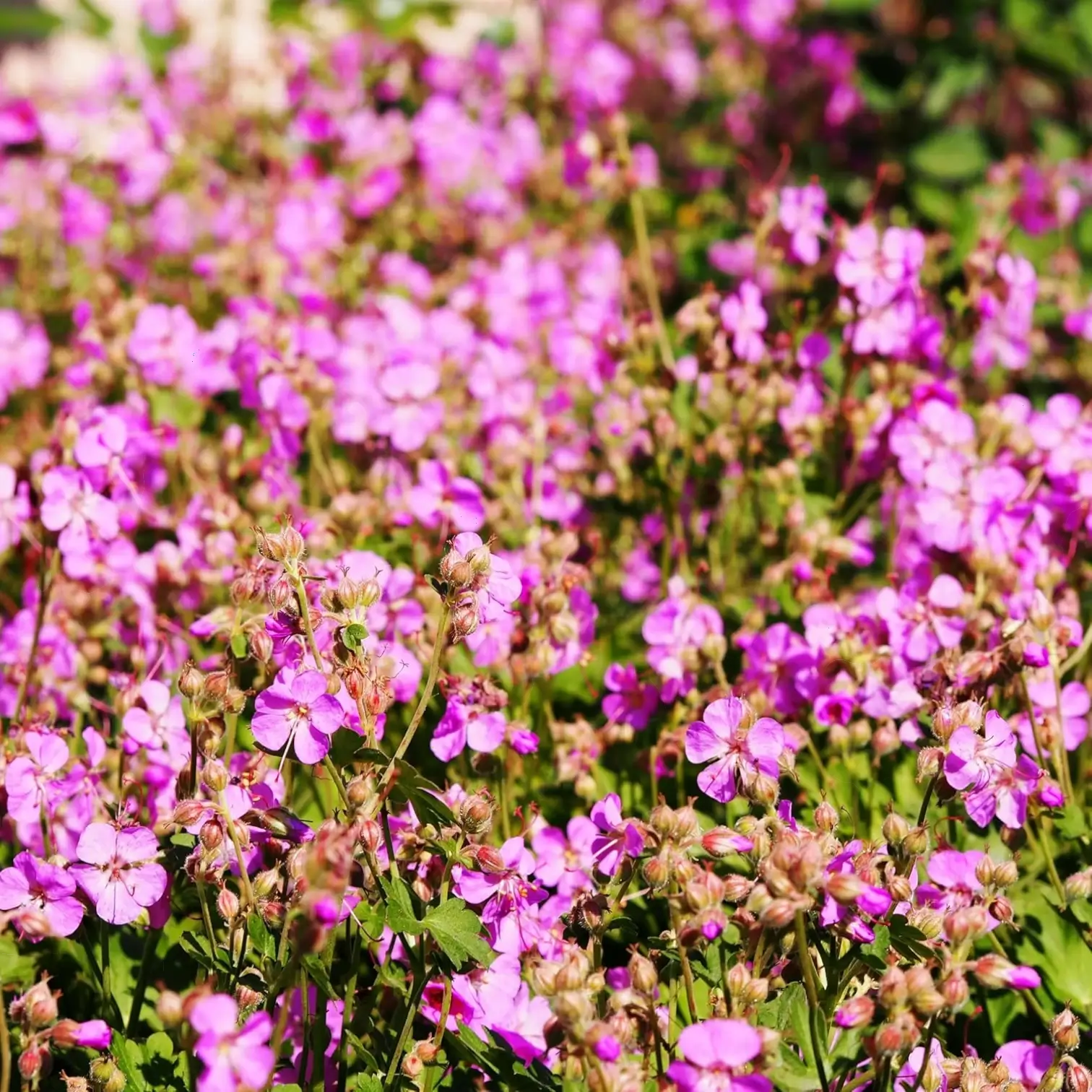
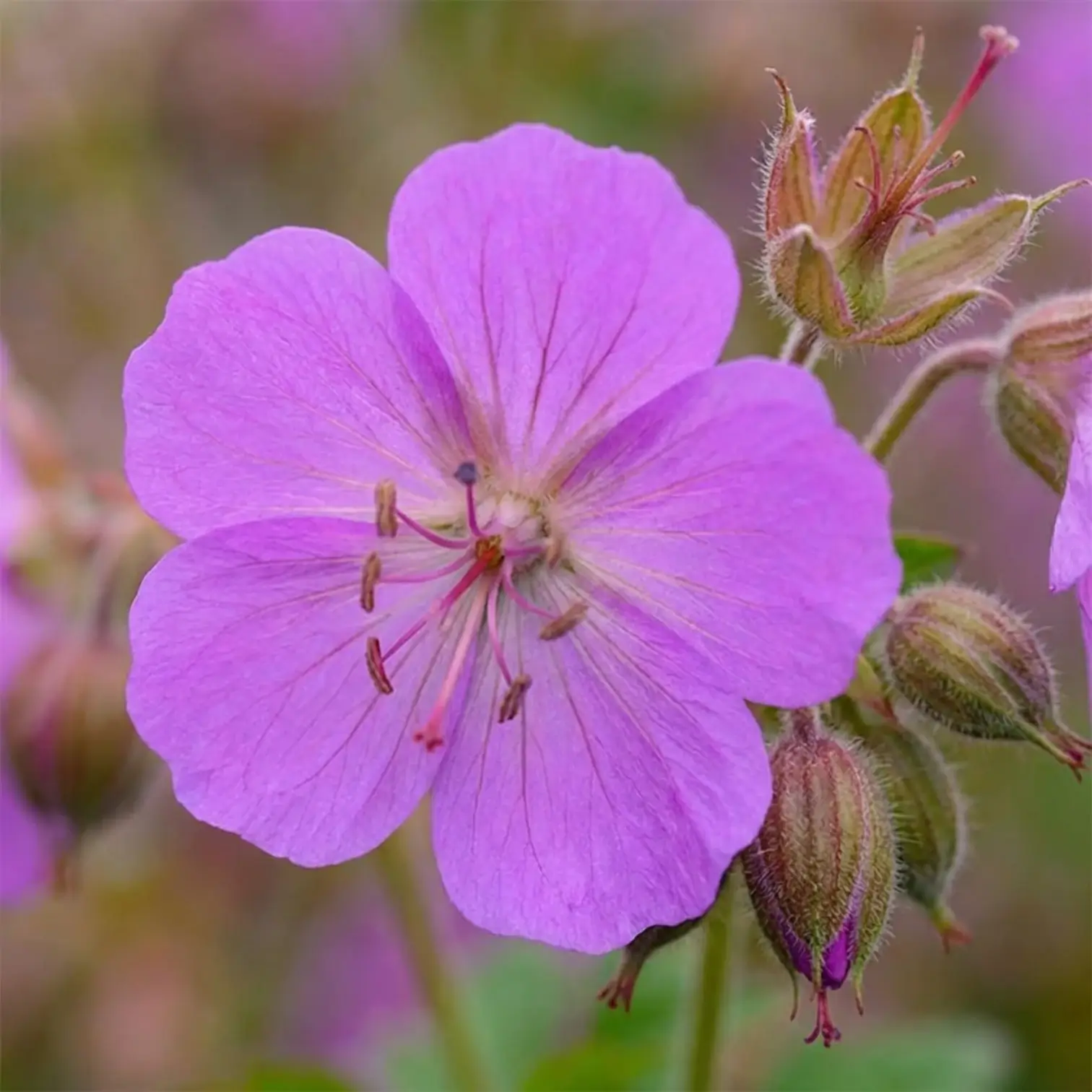
Geranium × cantabrigiense 'Cambridge' is a hardy, spreading cranesbill with a low habit, aromatic leaves and purple-pink flowers held above the foliage. It forms a mat that can fill the front of a border, soften gravel paths, cover open soil beneath shrubs and bring flower detail close to the ground. Mature plants can reach around 10-50 cm high and 50-100 cm wide in open ground, although many garden plants sit near the lower end for height while spreading steadily outward. Flowers appear mainly in spring to early summer, followed by a useful leafy layer for the rest of the season.
The hybrid background of Geranium × cantabrigiense connects Geranium macrorrhizum with Geranium dalmaticum, which explains the compact spread, scented foliage and good garden toughness. 'Cambridge' gives visible purple-pink colour in groups. It fits well in naturalistic perennial planting, cottage-style borders, rock-garden margins and underplanting schemes where taller plants need a living base at soil level. In mild areas, some foliage can remain through winter, while fresh growth develops strongly in spring.
Choose full sun or partial shade. Full sun usually gives stronger flowering where soil is neither baked dry nor waterlogged. Partial shade keeps foliage fresh around shrubs, walls or mixed borders with overhead leaf cover. Geranium × cantabrigiense 'Cambridge' accepts exposed or sheltered positions, but young plants establish fastest when the soil stays evenly moist for the first season. Good drainage matters, especially in winter, because the crown sits close to the soil surface.
Moderately fertile, moist but well-drained soil is ideal. Chalk, clay, loam and sand can all work when structure is suitable. Clay soils need loosened planting pockets and better airflow around the crown. Sandy soil may need extra organic matter to hold enough moisture while the plant settles. Once established, 'Cambridge' is resilient and can cope with normal dry periods, but stronger flowering comes from a root zone that can draw steady moisture during active growth.
Use a mature spread of around 100 cm as the spacing figure for open ground. This suits a full plant allowed to broaden naturally. For a continuous low edge, plants can be placed closer, with a planned overlap as growth develops. Around shrubs, place the crown away from thick woody bases and let stems spread into open soil. Geranium × cantabrigiense 'Cambridge' is especially useful where a border edge needs low coverage, because the plant keeps most of its growth low and wide.
Containers keep Geranium × cantabrigiense 'Cambridge' smaller and slower than open ground, especially when the pot volume is limited. A broad trough, bowl or low planter suits its spreading habit. Use drainage holes and a stable outdoor mix with enough mineral structure to keep the crown from sitting wet. In a container, the plant can be used as a soft rim around taller seasonal perennials or as a single low mat in a wide bowl.
After planting, water thoroughly so the root ball and surrounding soil connect well. Keep new plants consistently moist during the first growing season, especially during warm weather. In open ground after establishment, extra watering is usually only needed during longer dry spells or where the plant grows in very free-draining soil. In pots, water when the top 35-45% of the pot depth feels dry, then water deeply so the whole root ball is refreshed.
Geranium × cantabrigiense 'Cambridge' needs only moderate feeding. A spring mulch of mature compost is usually enough in garden soil. In containers, a light slow-release feed can support the flowering period, but very rich feeding can create soft growth that loses its neat mat shape. Keep mulch around, not over, the crown. This keeps the base airy and helps new shoots emerge cleanly in spring.
For design use, Geranium × cantabrigiense 'Cambridge' gives the strongest effect when planted in a loose drift. The purple-pink flowers sit low, so placing it near paths, steps or terrace edges lets the detail read at close range. It also works as a seasonal bridge between spring bulbs and later summer perennials, keeping the border floor filled as taller plants develop. Because the flowers sit close to the foliage, it is especially useful in places seen from paths, terraces and seating areas.
After the main flower flush, remove flowered stems and older leaves. This tidies the plant and encourages new foliage, which keeps the groundcover useful beyond early summer. A light trim is enough where growth remains compact; a firmer cut can be used if heavy rain or heat has flattened the mat. Old clumps can be divided in spring when growth resumes, or in early autumn while soil is still warm enough for re-rooting.
Stress signs are usually linked to water balance or airflow. Yellowing and soft growth can point to heavy, wet soil. Crisping leaf edges can come from dry pots, reflected heat or drought during establishment. Sparse flowering can happen in dense shade or when a container has become root-filled. Vine weevil larvae can damage potted cranesbills, so sudden loosening of the crown in a pot deserves a root check. With a well-drained position, moderate moisture and a quick trim after flowering, Geranium × cantabrigiense 'Cambridge' gives long-term low cover with a bright early-season flower layer.

Choose options
Sign up for Foliage Factory newsletter for early access to new arrivals and practical care tips that work in real homes.