Position
Full sun, Part shade, Shade

Alchemilla
VAT included · plus
Your outdoor plant has just been packed, transported and unpacked, so give it a calm start before planting or placing it permanently. Remove all packaging carefully, check the pot, stems, visible roots and substrate moisture, and settle any loose growing medium back around the root ball. Water if the root ball feels dry, but do not leave the pot standing in water. For the first few days, keep the plant in a sheltered spot suited to its light needs, away from strong midday sun, heavy wind, frost and heat stress.
Do not move the plant straight into full exposure, especially if it is young, newly flushed, evergreen, recently pruned or greenhouse-grown. Gradually introduce more sun, wind and temperature variation over several days. If cold nights, storms, intense sun or hot dry weather are expected, keep the plant protected until conditions are more stable. Do not fertilize immediately after delivery; let the plant settle first and resume feeding only when it is actively growing and conditions are suitable.
Outdoor plants may arrive in different seasonal stages. Depending on the time of year, your plant may be leafy, flowering, newly sprouting, recently pruned, dormant, partly bare or leafless. Adjust care to what the plant is doing: actively growing plants need closer moisture checks, while dormant plants usually need protection from extremes and only light moisture management until growth resumes.
Plant outdoors when the soil is workable and weather conditions suit the plant type. Avoid planting during frost, heatwaves, waterlogged soil or very dry windy periods. It is better to keep the plant protected in its pot for a short time than to plant into stressful conditions. After planting, water thoroughly so the root ball and surrounding soil connect properly, then monitor moisture while the plant establishes.
Secure shipping, carefully packed orders with safe delivery across the EU, UK and Switzerland.
28-day plant guarantee, if a plant arrives damaged or fails soon after delivery, we help you make it right.
Free returns, simple, cost-free returns according to our policy.
For full details, please see:
Please head to our FAQ Page or Contact us.
Herbaceous perennial
Position
Full sun, Part shade, Shade
Moisture
Average to moist
Drainage
Moisture-retentive, Well-drained
Hardiness
Fully hardy · -25°C
Mature size
30–50 × 40–50 cm
Winter habit
Herbaceous die-back
Bloom time
Summer
Containers
Good in pots
Pruning
After flowering, Spring
Moist meadows and montane grassland of southeastern Europe and western Asia.
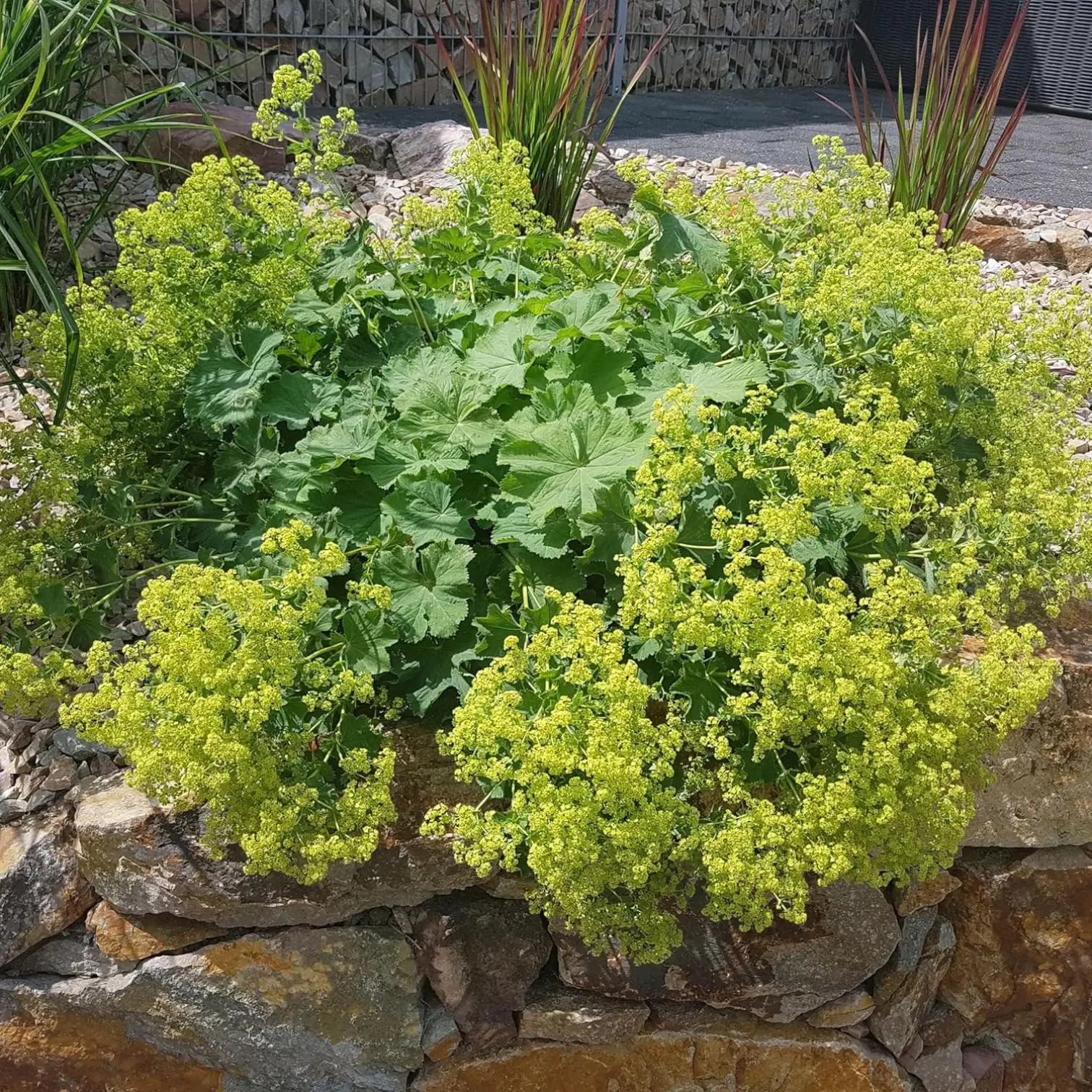
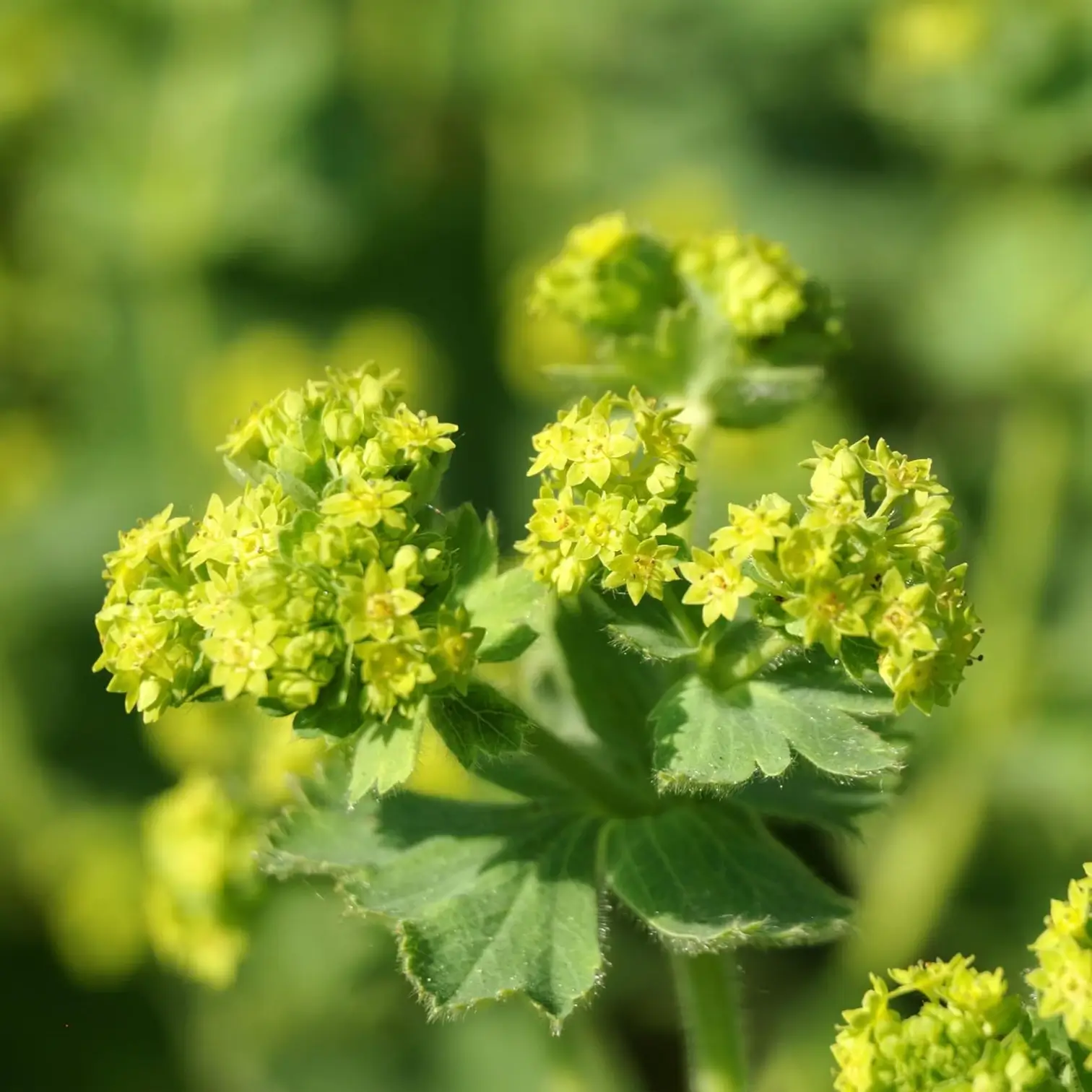
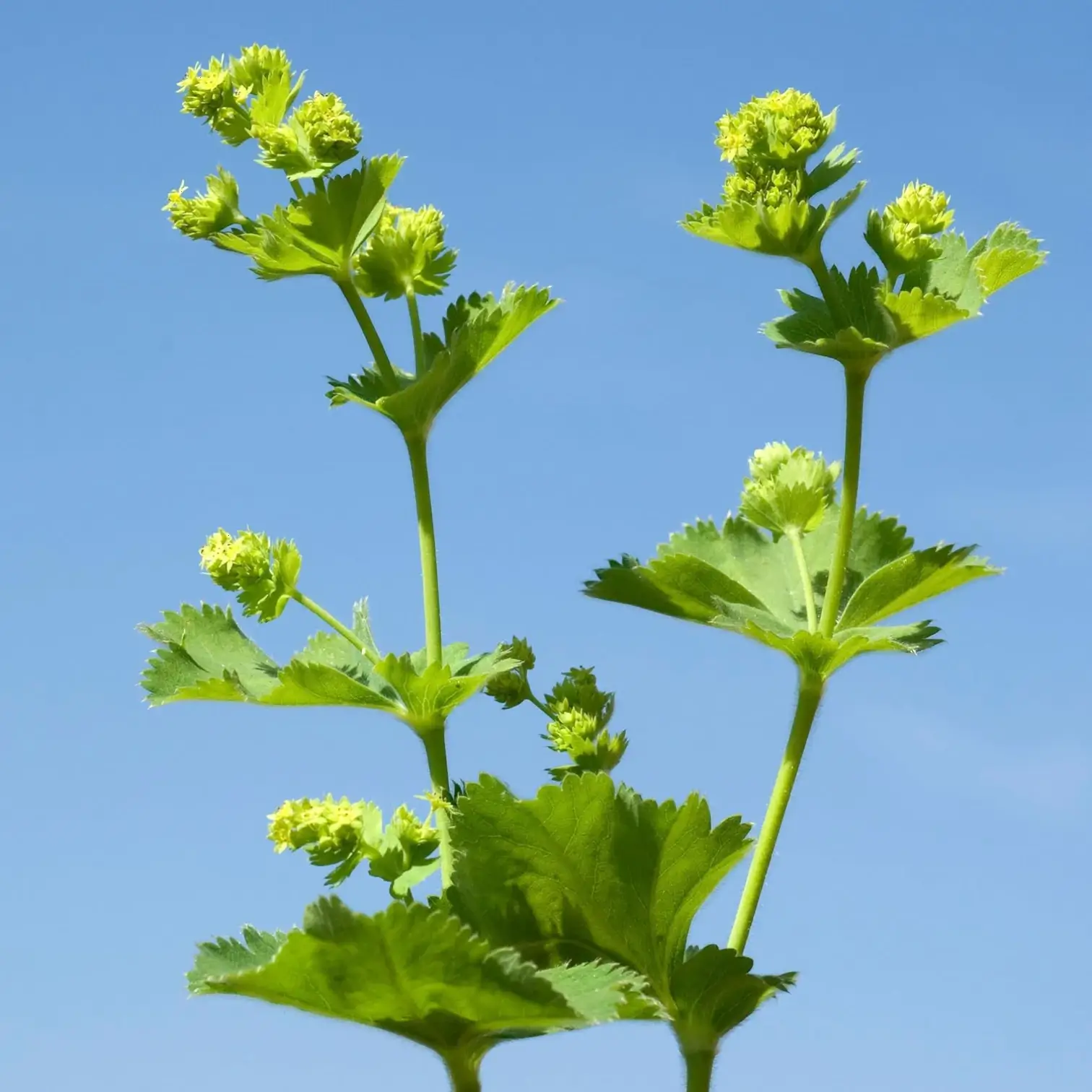
Alchemilla mollis is one of the most useful perennials for making planting look cohesive. It forms rounded mounds of softly scalloped foliage and lifts a mist of chartreuse flowers in summer. The effect is gentle and modern at the same time: fresh green at ground level, then a light veil of bloom threading through neighbouring plants.
It suits large borders, small beds, and even container planting, because it carries texture without stealing attention from feature flowers.
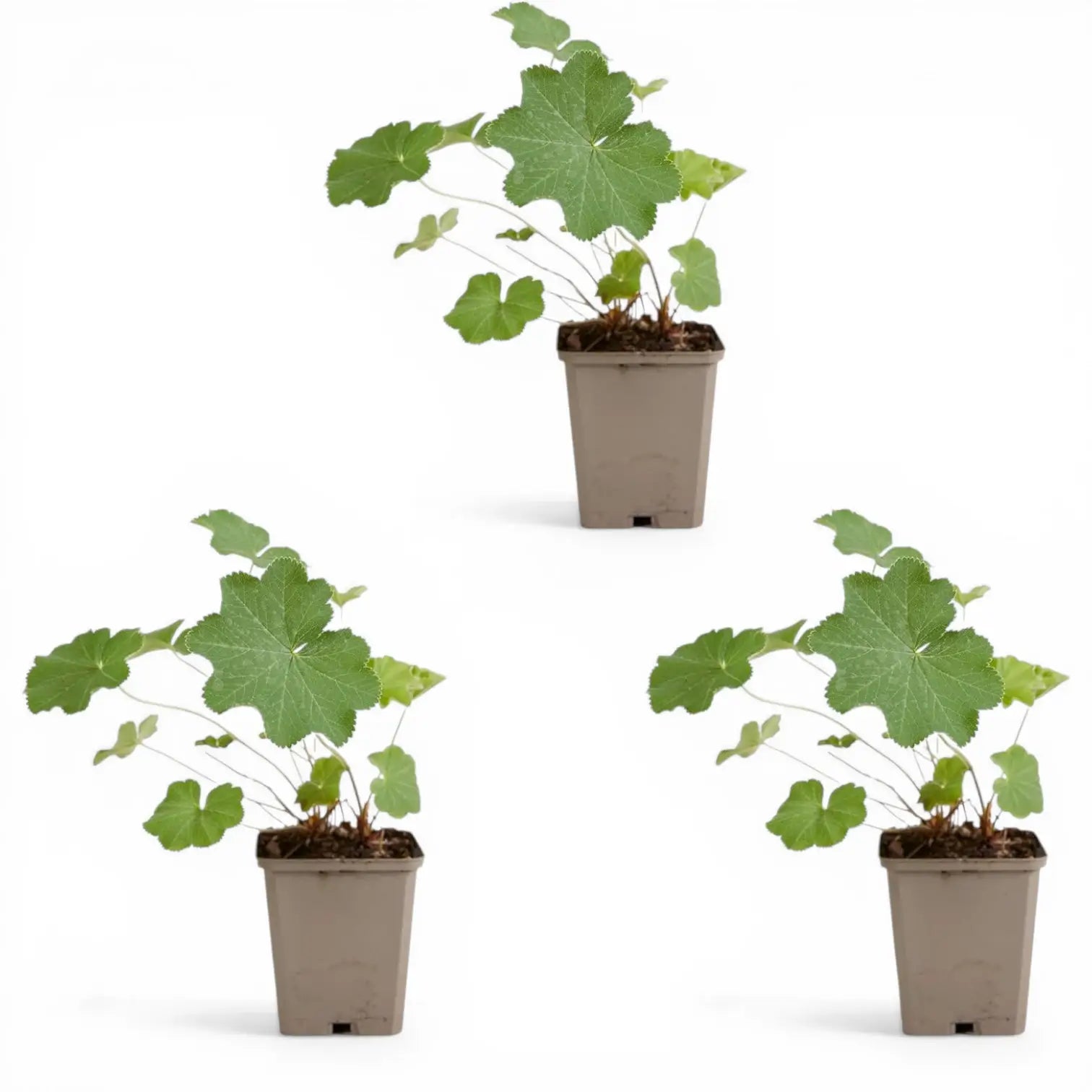
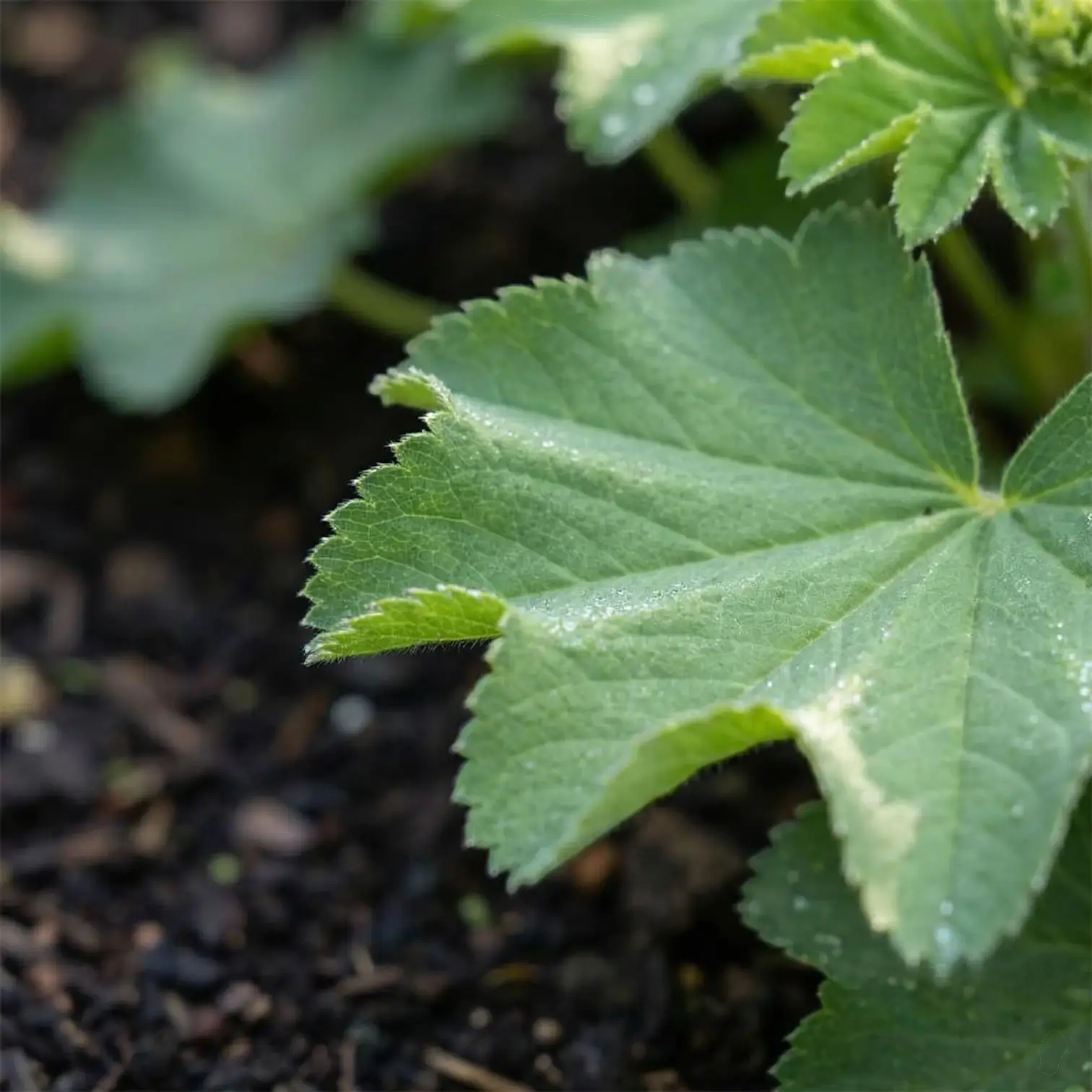
The leaves are palmately lobed and slightly textured, and they often hold droplets on the surface after rain or morning dew. In early summer, branching stems carry many tiny yellow-green flowers that create a soft cloud of colour above the leaves.
In open ground the plant typically reaches around 30-50 cm in height and forms clumps roughly 40-50 cm across. It dies back in winter and returns with fresh growth in spring.
Alchemilla mollis is adaptable, growing in sun or light shade. The best foliage comes from soil that stays slightly moist but still drains well. In very hot sun, a bit of afternoon shade helps keep the leaves looking fresh; in shade, the plant remains useful as foliage, with flowering still reliable in many gardens.
It tolerates a wide range of soil types (including loam and clay) when structure is good. Adding compost at planting improves both drainage and moisture-holding capacity, which supports steady growth.
After the main flush of flowers, a simple shear (flower stems and a portion of the foliage) refreshes the mound and often encourages clean new leaves. In many gardens this also reduces the number of self-sown seedlings around the parent plant. The regrowth keeps the plant looking crisp through late summer and early autumn.
Alchemilla mollis grows well in containers as a soft edging plant for larger pots or as a feature in its own right. In containers it stays smaller than in open soil, and the mound is easy to maintain with an occasional trim. Choose a pot with good drainage and a mix that holds some moisture without becoming dense. Regular watering keeps the foliage supple and the flowers coming.
Alchemilla can seed around itself, especially in open soil. If you enjoy a naturalistic look, letting a few seedlings mature creates a relaxed drift. If you prefer clean lines, trimming after flowering reduces seed set and keeps the planting more contained. Mature clumps also respond well to division every few years, which resets vigour and provides new plants for other parts of the garden.
Alchemilla mollis pairs beautifully with roses, salvias, hardy geraniums, nepeta, and tall early-summer perennials that benefit from a soft base layer. It also sits well with ornamental grasses, creating a clean transition from upright stems to ground-level cover.
Add Alchemilla mollis when you want a fresh green base, a soft summer flower haze, and planting that looks tied together.
Alchemilla mollis comes up early, quickly forming a mound that looks finished long before many perennials reach their stride. Flowering usually begins in early summer and can continue for weeks. After a mid-summer shear, the plant often rebuilds a fresh leaf mound that stays attractive well into autumn. In winter, the foliage dies back and the plant returns from the crown when soil warms again.
On average garden soil, Alchemilla is satisfied with a yearly compost mulch. In very light, sandy soil, adding compost at planting and topping up each spring supports stronger stems and steadier flowering. In heavier soils, compost improves structure and keeps the root zone aerated during wet periods.
The flower sprays are useful as a soft filler in bouquets, especially alongside roses and other early-summer blooms. Cut stems when the flowers are newly open for the freshest colour. The overall effect is a light cloud of colour sitting above the leaf mounds, and it combines easily with sturdier stems.
Use Alchemilla mollis as edging, in repeated clumps along paths, or as a base layer beneath taller perennials. It also fits into naturalistic planting with grasses, where the chartreuse flowers lighten the palette in early summer. In containers, it pairs well with spring bulbs and compact shrubs, creating a soft collar around the main feature plant.
Once established, Alchemilla copes with short dry periods, but the foliage stays at its best with steady moisture. In long dry spells, a deep watering keeps the leaf edges from crisping and supports a fuller second flush after cutting back. A light mulch does much of the work by reducing moisture swings at the root zone.

Choose options


Sign up for Foliage Factory newsletter for early access to new arrivals and practical care tips that work in real homes.