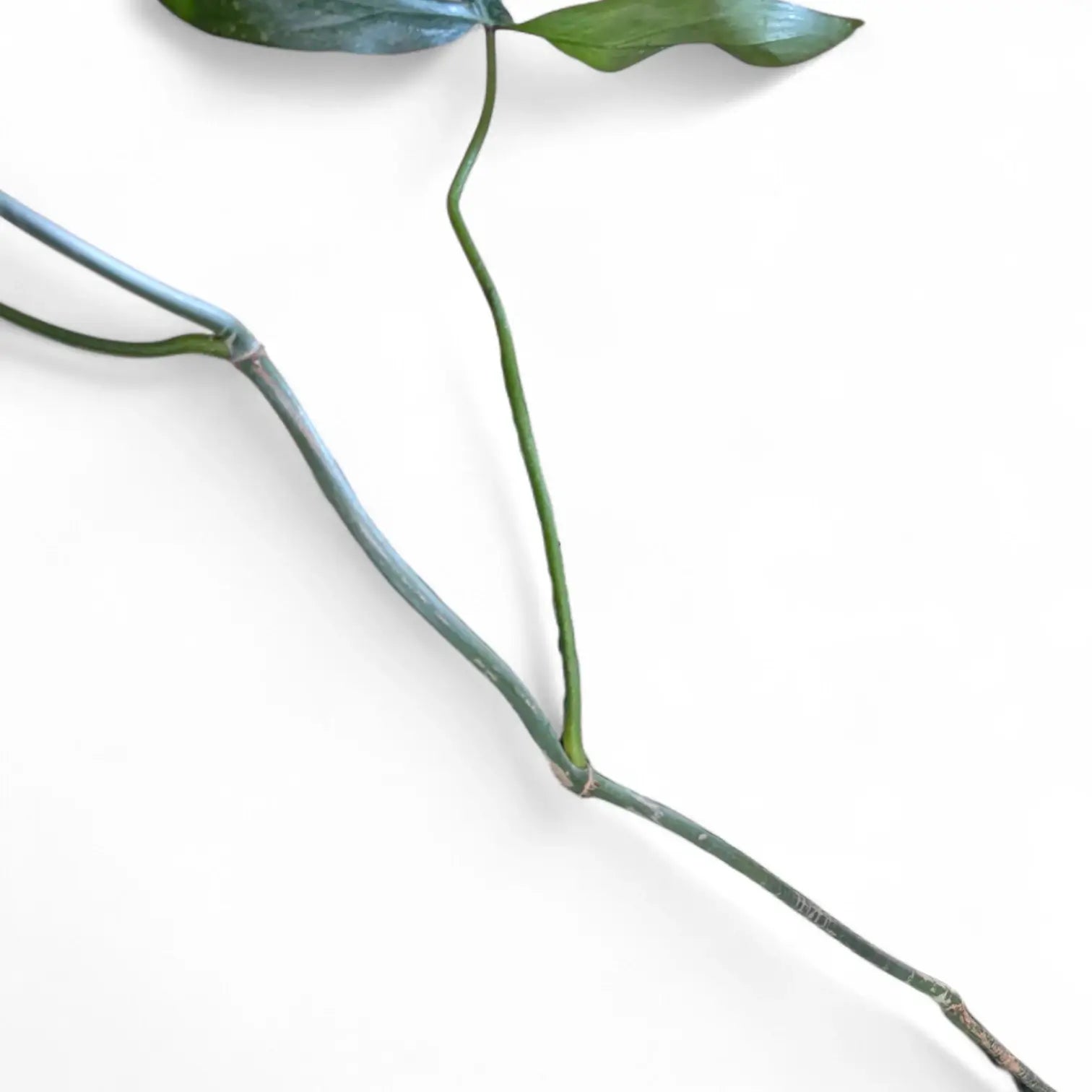
Etiolation — Or Why Is My Plant So Leggy?
Leggy, stretched stems are your plant’s early warning sign. This guide explains why it happens and how to fix it with better light, smarter feeding, targeted pruning, and propagation.
Read more
Semi-hydro can make indoor plant care cleaner, more predictable and easier to monitor, but it is not a shortcut that works for every plant. The system replaces organic potting mix with a stable mineral substrate and a controlled water or nutrient reservoir. Roots get access to moisture through capillary movement, while the substrate keeps air spaces open around the root zone.
A safe conversion depends on plant condition, root type, substrate choice, water quality, temperature and reservoir depth. Healthy roots can adapt. Stressed roots, cold roots or roots buried in a wet, airless setup can fail quickly.
A root-first conversion keeps the first setup simple, protects firm roots, avoids deep early reservoirs, and lets new root growth decide when the plant is ready for feeding.

Yes, if the plant is healthy, actively rooting and suited to consistent moisture. No, if the plant is dormant, already rotting, newly imported, badly stressed or naturally adapted to long dry cycles.

Passive semi-hydroponics uses an inert or mostly mineral substrate instead of organic potting mix. Water or diluted nutrient solution sits below the root zone, then moves upward through the substrate or wick. The root system gets regular moisture without sitting in dense, decomposing soil.
For many tropical houseplants, that can be a real advantage. For plants that need sharp drying, specialist acidic media or a seasonal rest, it can be the wrong system.
Monstera, Philodendron, Epipremnum, many Anthurium, Syngonium and other tropical foliage plants with active roots and steady indoor conditions.
Hoya, Peperomia, Maranta, Calathea, Ctenanthe and small ferns. These often need softer water, lower feed strength, better wicking and a gentler transition.
Lithops, many desert cacti, many caudex plants in rest, carnivorous plants with specialist media needs, and plants that rely on strong dry intervals.
The safest conversions start with healthy, actively growing plants. If a plant has just arrived, has lost roots, or has been sitting in poor conditions, stabilise it first.
A simple setup is better than a complicated one for a first conversion. The goal is to keep moisture available without drowning unadapted roots.
For a first semi-hydro conversion, use a clear nursery pot or slotted inner pot inside a cachepot, with a shallow reservoir below the roots. Clear pots make root checks easier, and shallow water gives roots time to adapt before they reach wetter zones.

Not every plant should be stripped, rinsed and moved into mineral substrate in one session. Root type and plant condition decide the safest route.
Best for: healthy aroids, strong root systems, plants with visible active growth.
How it works: remove most soil, trim only bad roots, pot into rinsed mineral substrate and start with a shallow reservoir.
Main risk: too much root disturbance or too deep a reservoir before new roots adapt.
Best for: cuttings, weak divisions, plants with limited roots, recovery projects.
How it works: root in clean water first, then move into mineral substrate once new roots are visible.
Main risk: slow progress, fragile new roots and possible shock if moved too late or too roughly.
Best for: fine-rooted plants, prayer plants, dense root balls and sensitive species.
How it works: remove part of the old mix, improve aeration and moisture control gradually, then complete the move once the plant is stable.
Main risk: leaving too much organic matter in a wet reservoir. Keep water shallow and watch smell closely.
Strong-rooted tropical plants can often handle direct conversion. Fine-rooted, stressed or shallow-rooted plants usually do better with a slower method.
In passive semi-hydro, water moves through small gaps between particles or along a wick. Fine and medium particles usually move water more evenly than large round particles. A pot filled only with large LECA balls can stay dry in the upper root zone if the reservoir sits too low or the medium was never soaked properly.
During the first weeks after conversion, top-water occasionally until the lower substrate is evenly moist and roots have started growing toward the moisture zone.
Roots grown in soil are adapted to a different pattern of air and moisture. When moved into mineral substrate, some fine roots may brown, shed or stop functioning. That does not automatically mean root rot. Firm roots, pale roots, beige roots and older brown but solid roots can stay. Soft, hollow, collapsing or foul-smelling roots should be removed.
Do not start with a deep reservoir around unadapted soil roots. Keep water low, let the substrate wick, and increase reservoir depth only once new roots grow down into that zone.

Mineral substrate has to support the plant, hold enough moisture for uptake, keep oxygen around the roots, and allow salts to be flushed away. No single material does all of that perfectly for every plant.
Airy, reusable and useful for thick-rooted plants. It works best when rinsed, soaked and paired with a wick or finer component in setups where the upper root zone dries too quickly.
Usually based on pumice, lava and zeolite. Mixed particle sizes can give steadier moisture than one coarse material alone. Check whether the product is fertilizer-free or pre-fertilized.
Useful for fine roots, cuttings and transition mixes. It can hold moisture well, so it should be used carefully in cold or low-light conditions.
Porous, stable and oxygen-friendly. It gives structure and moderate water retention, depending on grain size. Very coarse grades may need finer media for better wicking.
Light, airy and useful in small amounts. It can absorb and move water, but it floats, crushes and migrates, so it is better as a blend component than a main semi-hydro medium.
Useful for nutrient and moisture buffering. It can also hold salts, so regular flushing matters, especially with hard water or stronger fertilizer.
Stable, porous and useful for weight, air space and structure. Larger pieces can leave dry gaps, so lava rock is usually better as part of a blend than as a solo medium.
“Pon” is often used casually for mineral mixes based on pumice, lava rock and zeolite. Not all pon-style mixes are the same. Some are fertilizer-free. Commercial LECHUZA-PON contains a slow-release fertilizer charge that can supply nutrients for several months.
That matters during conversion. If you use a pre-fertilized mineral substrate, do not add liquid fertilizer straight away. Treat it as already fed, monitor new roots, and flush if leaf tips burn or white deposits build up.
For a first attempt, avoid extreme mixes. A balanced mineral blend with medium particle sizes is easier than pure coarse LECA, pure perlite or a very fine, moisture-heavy mix.
For more detail on individual mineral ingredients, see our guide to non-organic substrates for houseplants. For broader potting mix structure, see our houseplant substrate guide.
These recipes are starting points, not fixed formulas. Adjust by pot size, light, root length, water quality and how quickly the reservoir empties. Use clean, rinsed materials and measure ratios by volume.
For: Monstera, Philodendron, Epipremnum, Syngonium and many Anthurium.
Root style: thick, fast-growing or aerial-rooting.
Best setup: nursery pot or mesh insert inside a shallow reservoir.
For: Calathea, Maranta, Ctenanthe, Stromanthe and similar fine-rooted tropicals.
Root style: thin, sensitive roots that dislike drying and salt spikes.
Best setup: shallow pot with wick or very controlled reservoir.
For: Hoya, Peperomia, Dischidia and small trailing tropicals.
Root style: compact, shallow or slower-growing.
Best setup: small pot, wick insert or shallow reservoir.
For: cuttings, small rooted divisions and plants recovering after root loss.
Root style: new, fragile or incomplete root systems.
Best setup: clear cup or nursery pot with wick and easy visual monitoring.
For: trailing plants and wall planters where pot weight matters.
Root style: compact to medium.
Best setup: pot with wick or removable inner insert.
This is not classic reservoir semi-hydro. It is a mineral, fast-draining mix for plants that need stronger drying and more oxygen around the roots. Use it for selected Euphorbia, some succulents and other dry-adapted plants only when their growth pattern supports it.
Care note: use top-watering and full drainage. Do not keep a standing reservoir under plants that need strong dry intervals.

A soil-to-semi-hydro move changes the root environment. Keep the first setup simple: clean mineral substrate, shallow water, stable warmth, moderate humidity and no fertilizer until the plant is clearly using water again.
A few small soil particles are less damaging than torn root systems. Do not dig aggressively into every root junction. If the plant has a very dense root ball, staged conversion can be safer than forcing a perfectly clean root system in one session.
Oversized pots hold more wet substrate than new roots can use. That slows oxygen movement and makes early problems harder to read.
New semi-hydro roots are fragile. A loose, stable pot is better than a tightly packed one.
If the substrate dries too quickly near the crown, top-water lightly again or add a wick. If the pot stays wet and cold, lower the reservoir and improve warmth around the root zone.

The first 2–5 weeks are for root adjustment. Do not unpot the plant every few days to check progress. Repeated checking breaks new root tips and resets recovery.
Light droop, slower water use and minor leaf adjustment can happen. Keep conditions stable and avoid fertilizer.
Old fine roots may shed or brown. Keep the reservoir shallow and top-water only if the upper substrate dries too far.
New pale root tips may appear. Watch water uptake and root activity more than leaf growth.
Stronger root growth and steadier reservoir use usually mean the plant is ready for light feeding.
Wait until at least one of these is clear:
Start with a weak mineral fertilizer solution. If using pre-fertilized Pon, delay additional feeding and monitor for salt buildup before adding more nutrients.

In soil, organic matter and the potting mix can buffer some nutrient mistakes. In semi-hydro, nutrition comes mostly from water and fertilizer. That gives more control, but it also means salt buildup, unsuitable fertilizer and hard water show up quickly.
Do not feed immediately after a soil-to-semi-hydro conversion unless the plant is already rooted into the system and actively using water. Start feeding when new roots or new growth confirm recovery.
Start at ¼ strength. Increase only if growth is strong, roots are clean and water use is steady.
Start low, usually around ¼ strength or less. Flush regularly and watch leaf tips closely.
Use light feeding. These plants often prefer weaker, less frequent nutrient solution than fast-growing aroids.
Use very weak feed, soft water where possible, and more frequent flushing. Salt stress often shows as edge burn.
Do not fertilize until roots form. Once rooted, start very weak and increase slowly.
If the label says 5 ml per litre and you want ¼ strength, use about 1.25 ml per litre. Mix fertilizer into water first. Do not pour concentrate directly onto substrate or roots.
Choose a complete mineral fertilizer suitable for hydroponic or semi-hydro use. It should include nitrogen, phosphorus, potassium and trace elements such as magnesium, calcium, iron, manganese, boron and zinc.
Avoid thick organic fertilizers, compost teas, fish emulsions and soil-focused feeds in passive reservoirs. These products are made for biologically active soil systems, not standing water. In a passive reservoir, organic residues can increase biofilm, smell, oxygen demand and microbial imbalance around roots.
If using commercial pre-fertilized Pon, do not treat it like an unfed inert substrate. It already contains fertilizer. Add liquid feed only when growth and water use show that the initial nutrient charge is no longer enough, or when the manufacturer’s feeding window has passed.
You do not need laboratory precision for a few plants, but pH and EC are useful when plants are sensitive, the collection is large, or tap water is hard.
If EC climbs after several top-ups, flush. If new growth is pale while roots look clean, water pH, underfeeding or nutrient imbalance may be involved.
Hard water can leave white crust on substrate, pot rims and leaf surfaces. These deposits often come from dissolved minerals such as calcium carbonate, iron and other salts. In semi-hydro, they can build up quickly because water evaporates while minerals remain behind.
Can raise mineral deposits and increase crusting. Flush more often and consider filtered, rain, distilled or reverse-osmosis water blended with nutrients when sensitive plants show repeated edge burn.
Avoid regular use of water from sodium-based household softeners. It may reduce limescale, but sodium can build up in containers. Use unsoftened tap water, rainwater, filtered water, or RO water with suitable nutrients instead.
Useful for control, but not complete by itself. Long-term use needs a suitable mineral nutrient formula so roots still receive calcium, magnesium and trace elements.

Most established semi-hydro plants benefit from flushing every 2–4 weeks. Fine substrates, pre-fertilized mineral mixes, hard tap water and frequent feeding usually need shorter intervals.

Semi-hydro care should follow conditions, not the calendar. If light, temperature and humidity stay stable, many tropical houseplants continue growing through winter under indoor conditions. If light drops, roots cool down or air dries sharply, water use and nutrient demand can slow.
Check 1–2 times per week. Look for stable uptake, sudden drying or water sitting unused.
Check weekly if the pot allows it. Pale, firm growth is a good sign.
Watch for crust, algae, compaction or dry pockets.
Check at each refill. Clean or mineral smell is fine; sour smell needs action.
Every 2–4 weeks suits many setups. Flush more often with hard water, fine media or frequent feeding.
A plant using water quickly, pushing roots and producing leaves can usually handle regular weak feeding. A plant with cold roots, no uptake or stalled growth should not receive stronger fertilizer just because leaves look pale. Check root activity first.

Semi-hydro makes many root-zone problems easier to see, but symptoms still need context. Drooping can come from root adjustment, cold roots, dry upper substrate, low oxygen or true rot. Yellowing can come from old leaves, salt buildup, nutrient shortage, pH drift or root loss.
Clean semi-hydro should not smell swampy. A sour or fermenting smell usually points to decomposing organic residue, old fertilizer solution, poor sanitation, low oxygen or root rot.
For container choice and wick behaviour, see our guide to self-watering pots for houseplants.
Stable semi-hydro plants do not need constant disturbance. Most maintenance is simple: flush, clean the reservoir, refresh the surface when needed, and repot only when root space or substrate condition demands it.
Use when: water use is normal, roots look clean and substrate smells fine.
Why: there is no reason to disturb healthy roots.
Use when: the top layer crusts, dries too fast or compacts.
Why: it restores surface moisture movement without a full repot.
Use when: roots fill the pot and water use becomes difficult to manage.
Why: root mass needs more space and even hydration.
Use when: there is sour smell, slime, mushy roots or cloudy water returning quickly.
Why: the root zone is failing and needs cleaning.


Remove dead or rotting tissue, not healthy tissue by habit.
Do not remove healthy leaves automatically “to reduce stress”. Leaves support water movement and energy production while new roots develop.

No. Many tropical foliage plants adapt well, but plants that need strong dry cycles, acidic specialist media or deep dormancy are usually poor candidates. Match the system to root behaviour, not just plant popularity.
No. Remove most organic mix, especially dense clumps around the crown and inner root ball, but do not scrub so hard that roots are shredded. A few small particles are less damaging than major root breakage.
Yes, for some plants and setups, but pure LECA is not the easiest option for every houseplant. Large clay balls can leave dry gaps in shallow or fine root systems. A wick or finer mineral component often gives more reliable moisture movement.
No. Some pon-style mineral mixes are fertilizer-free, while commercial LECHUZA-PON contains slow-release fertilizer. Check the product before adding liquid feed.
Wait until the plant is producing new roots, using water steadily, or showing active growth. Start weak. If the substrate is already pre-fertilized, delay additional feeding.
Every 2–4 weeks works for many established semi-hydro plants. Flush more often with hard tap water, fine mineral mixes, pre-fertilized substrates, frequent feeding or visible white crust.
Common causes include cold roots, stalled transition, poor wick contact, a reservoir that sits too low, salt buildup, low light or damaged roots. Do not increase fertilizer until root activity is clear.
Problem reservoirs often smell sour, swampy or fermented. Healthy mineral substrate may smell wet or mineral-like, but it should not smell rotten.
It is not a good fit for passive reservoirs. Organic residues can feed biofilm, increase odor, reduce oxygen and create unstable root-zone conditions. Use a complete mineral hydroponic fertilizer instead.
Not always. Established tropical plants may keep a small reservoir, but newly converted plants and compact-rooted plants often do better with a shallow reservoir or brief empty intervals. Root health and water uptake should guide the refill rhythm.
Do not use sodium-softened water as the regular water source. It can add sodium that builds up in containers. Use unsoftened tap water, rainwater, filtered water, or RO water with a complete nutrient formula instead.
Semi-hydro is not easier because plants need less care. It is easier because the root zone becomes more visible and repeatable. Once substrate, water quality, reservoir depth and feeding are matched to the plant, the system can stay clean, stable and efficient for years.
Ready to set up your first conversion? Start with a balanced mineral substrate, a simple wick or reservoir pot, and a plant with active root growth.
Oklahoma State University Extension: Soilless Growing Mediums
Useful for comparing common hydroponic media, including expanded clay, perlite, pumice, lava rock and other substrate properties.
University of Florida IFAS: Common Media Used in Hydroponics
Overview of hydroponic media and the physical properties that affect air, water and root support.
Oklahoma State University Extension: Electrical Conductivity and pH Guide for Hydroponics
Explains how pH and EC affect nutrient availability in soilless and hydroponic systems.
University of Maryland Extension: Mineral and Fertilizer Salt Deposits on Indoor Plants
Helpful reference for diagnosing white crust, hard-water residue and fertilizer salt deposits.
Ask Extension: Sodium in softened water and plant irrigation
Explains why regular use of sodium-softened water can become a problem for potted plants.
LECHUZA-PON product information
Manufacturer reference for commercial LECHUZA-PON composition and its included slow-release fertilizer charge.
Etiolation — Or Why Is My Plant So Leggy?
Leggy, stretched stems are your plant’s early warning sign. This guide explains why it happens and how to fix it with better light, smarter feeding, targeted pruning, and propagation.
Read more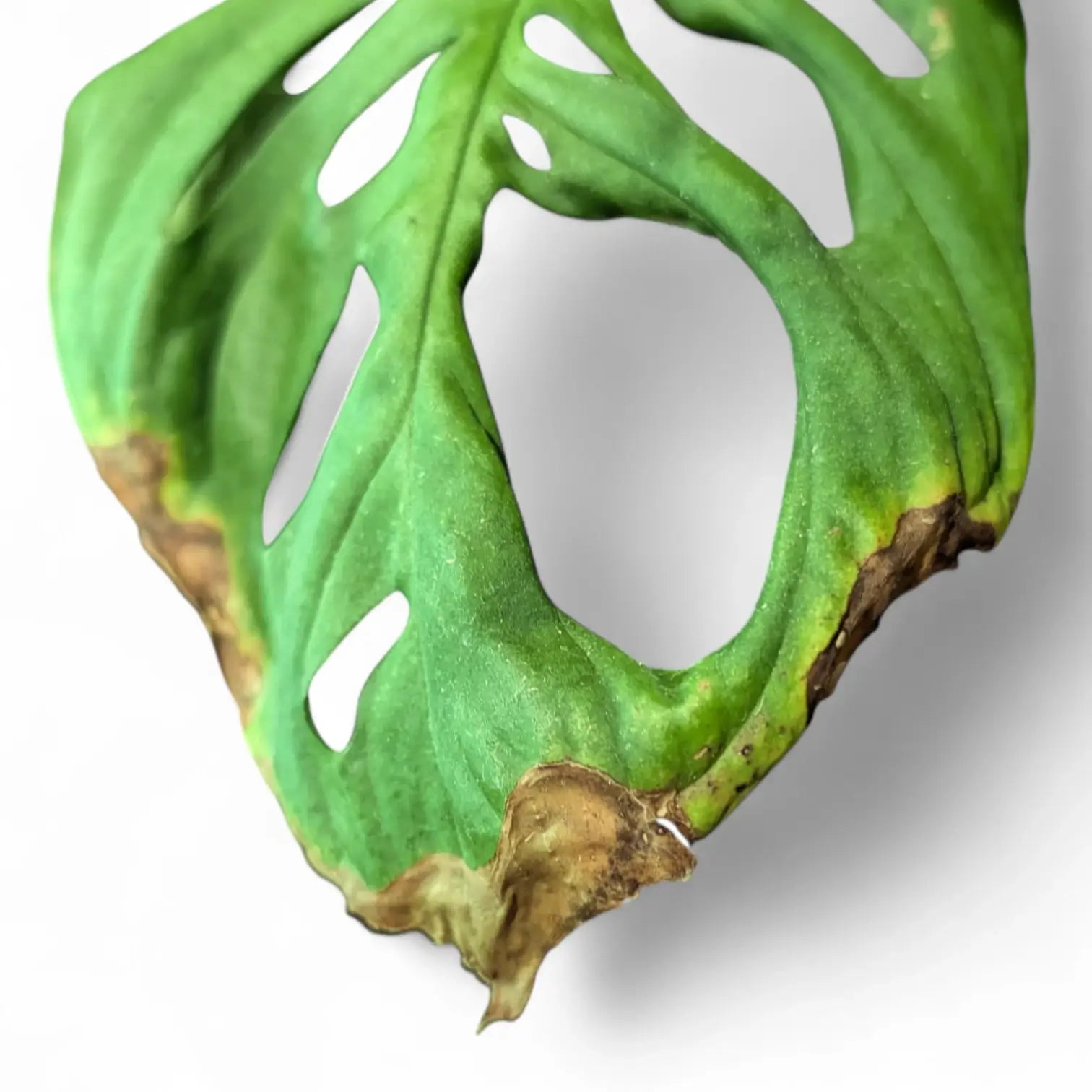
Brown Leaf Tips on Houseplants: All Real Causes and Fixes Explained
Brown, crispy tips don't automatically mean dry air. This guide shows what tip burn really is, why it happens, and how to diagnose watering, water quality, salts, roots, nutrients, and environment ...
Read moreSign up for Foliage Factory newsletter for early access to new arrivals and practical care tips that work in real homes.


Leave a comment
This site is protected by hCaptcha and the hCaptcha Privacy Policy and Terms of Service apply.