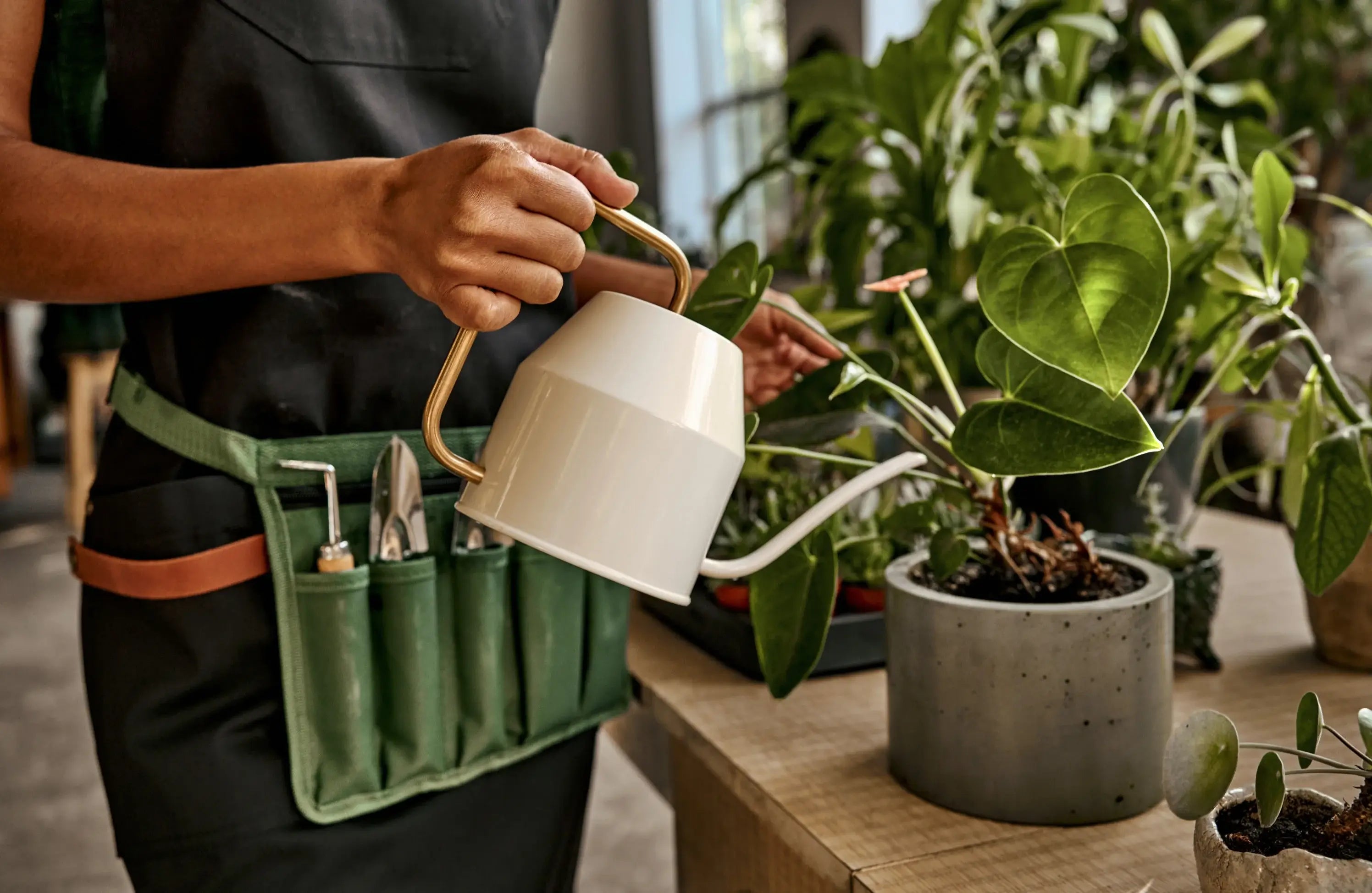
Go deep into watering: frequency, volume, diagnostics, and tools for avoiding both drought stress and drowned roots.
Read more
Living Christmas trees bring something different to the festive season. They are not cut decorations that are used once and thrown away. They are real plants with roots, seasonal needs, and a life after Christmas. That is exactly what makes them special, and also why they need a little more thought than a traditional cut tree.
Compact evergreens such as Picea glauca 'Super Green', Pinus pinea 'Silver Crest', and Araucaria heterophylla (Norfolk Island Pine) can all work beautifully as living Christmas trees, but they do not all want the same life after December. Some are outdoor conifers for cold gardens and balconies. Some prefer mild Mediterranean conditions. One is best treated as a bright indoor plant in most European homes.
The secret is choosing a tree that fits your space, your climate, and your after-Christmas plan. A living Christmas tree can be reused, planted out, grown on a balcony, or kept indoors long-term, but only when species, temperature, light, and watering are matched properly. This guide walks you through the full process: choosing, transporting, acclimating, decorating, watering, overwintering, planting, and keeping your tree healthy after the holidays.

Before choosing a living Christmas tree, decide what should happen after the holidays. This matters more than looks alone. A tree that is perfect for a cold balcony may be completely wrong for a warm living room in January, while a beautiful indoor Norfolk Island Pine should not be planted outside in a frosty European garden.
If you want a classic outdoor living Christmas tree for a cold region, Picea glauca 'Super Green' is usually the safest match. If you have a sunny, mild terrace or coastal climate, Pinus pinea 'Silver Crest' brings a more Mediterranean look. If you want a softer, architectural tree for indoor Christmas styling and year-round houseplant care, Araucaria heterophylla is the more realistic option.
A living Christmas tree is not automatically the most sustainable option just because it comes in a pot. It becomes a better choice when it survives the festive season, is reused for future Christmases, grown on outdoors, or planted in a suitable garden. That is why the care before, during, and after Christmas matters.
A cut Christmas tree has one short decorative moment. A living Christmas tree can continue growing after the holidays if it is kept cool, watered correctly, and moved back to suitable conditions quickly. Reusing a potted tree over several seasons can reduce seasonal waste and gives the tree a longer purpose than a few weeks indoors.
Living Christmas trees can become part of a balcony, terrace, patio, garden, or indoor plant collection. A compact Picea glauca 'Super Green' can spend most of its life outside in a cool climate. Pinus pinea 'Silver Crest' can suit sunny, milder outdoor spaces. Araucaria heterophylla can stay indoors after Christmas as a sculptural, soft-needled houseplant.
A successfully planted conifer can add structure, shelter, and evergreen texture to a garden. Mature trees may provide cover for birds and small wildlife, especially in mixed planting. This only works when the tree is suitable for the climate and has enough space to grow. A living Christmas tree should never be planted just because it is available; it should be planted where it has a realistic long-term future.
Choosing well at the beginning prevents most problems later. Think about three things before buying: where the tree will stand during Christmas, where it will live afterwards, and how cold or mild your outdoor conditions are.
Picea glauca 'Super Green' has the most traditional Christmas tree character of the three. It has dense green needles, a compact outline, and a classic conifer look that works well in small outdoor spaces. It is best treated as an outdoor tree that only comes inside briefly for the holidays.

Pinus pinea 'Silver Crest' has a softer, more Mediterranean look than a classic spruce. Its silvery-green needles and upright young shape make it especially attractive in modern interiors during Christmas, but its long-term care points toward a sunny outdoor life in a mild, protected position.

Araucaria heterophylla, often sold as Norfolk Island Pine, is not a true pine. It has a softer, tiered structure, symmetrical branches, and a calm architectural shape that makes it one of the best living Christmas trees for indoor use. For most European customers, it should be kept as a houseplant after Christmas, not planted outdoors.

Once you know which tree fits your space, look closely at plant condition. A living Christmas tree has a much better chance after the holidays when it starts with healthy roots, hydrated substrate, and firm growth.
Choose a tree with fresh, even colouring, firm branches, and no strong signs of stress. A few older inner needles can naturally age, especially on conifers, but widespread yellowing, browning tips, brittle branches, or heavy needle drop are warning signs. Avoid trees with visible pests, fine webbing, sticky residue, mouldy substrate, or a sour smell from the pot.
A living Christmas tree should fit both festive display and long-term care. A tree that barely fits under your ceiling will be harder to move, water, decorate safely, and place after Christmas. Smaller trees are usually easier to acclimate, easier to reuse, and more practical for balconies or compact homes.
If you plan to keep your tree in a pot, leave enough room around the branches for air movement and watering access. If you plan to plant it outside, check mature size first. Compact young trees can still become large garden trees over time.
Root condition matters more than decoration. A stable tree should sit firmly in its pot. If the trunk wobbles badly, the tree may have been recently potted with limited root contact. If roots are circling densely around the pot edge, the tree may be root-bound and will need repotting after the holidays.
For the best chance of long-term success, choose a tree that is genuinely container-grown or well-rooted in its current pot. Recently dug root-balled trees can work, but they are more sensitive because part of their root system may already have been lost before sale.
Practical tip: If you plan to keep a living Christmas tree in a container, repot only when needed and choose a pot roughly 20% larger than the current one. Too much extra wet substrate around a small root ball can stay cold and soggy for too long.
Transport is often overlooked, but it can stress a living tree before it even reaches your home. Cold wind, warm car interiors, crushed branches, and a loose pot can all cause avoidable damage.
Outdoor conifers should not be moved straight from cold outdoor conditions into a warm room beside a radiator. A slower transition reduces stress and helps the tree cope with the short indoor period.
Araucaria heterophylla is different. If it has already been grown indoors or in a protected greenhouse environment, avoid exposing it to cold acclimation areas. Keep it frost-free and move it only between mild, bright indoor positions.

Once your living Christmas tree is indoors, keep the festive setup simple and plant-friendly. Most holiday problems come from three things: too much heat, too little water, and keeping outdoor trees inside for too long.
Picea glauca 'Super Green' and Pinus pinea 'Silver Crest' usually prefer the coolest bright room available. Araucaria heterophylla is more comfortable indoors, but it still dislikes hot, dry air and sudden environmental swings.
A potted tree dries differently indoors than outdoors. Warm rooms, decorative cover pots, lights, and dry air can all change how quickly the substrate loses moisture. Check the tree regularly rather than watering by a fixed schedule.
Living branches are not wooden hooks. Heavy ornaments, hot lights, sprays, and tight wires can damage needles and soft branch tips. Keep decoration light, balanced, and easy to remove.
For outdoor conifers, keep indoor display time short. Around 7-10 days is a good target. Slightly longer may be possible in a cool, bright room, but warm indoor conditions quickly increase stress. The goal is simple: bring the tree in late, enjoy it during the main festive days, then move it back to suitable conditions before it fully wakes from winter rest or dries out.
Araucaria heterophylla does not need to leave the house after 7-10 days if it is being grown as an indoor plant. Instead, remove decorations after Christmas and return it to normal bright indoor care.

After Christmas, do not simply carry an outdoor tree from a warm room into frost. The move back should be gradual, especially if the tree has spent several days in heated indoor air.
Planting is only the right choice when the tree is suitable for your local climate and has enough space to mature. Picea glauca 'Super Green' may be a good garden candidate in cold regions. Pinus pinea 'Silver Crest' needs a mild, sunny, well-drained site. Araucaria heterophylla should not be planted outdoors in frost-prone European gardens.
Plant only when soil is workable, not frozen, saturated, or extremely dry. If the ground is frozen after Christmas, keep the tree in its pot in a sheltered outdoor place and wait for better planting conditions. A cool, protected holding period is safer than forcing a tree into frozen soil.
If garden planting is not possible, container growing can work well, especially for smaller trees. Use a pot with drainage holes, choose an airy outdoor-suitable substrate, and protect the pot from drying wind and severe freeze-thaw stress. Potted trees have less root insulation than trees planted in the ground, so containers need closer attention in both winter and summer.
Long-term care depends on which living Christmas tree you choose. Outdoor conifers need outdoor light, seasonal changes, good drainage, and enough root space. Araucaria heterophylla needs bright indoor conditions, steady moisture, and protection from cold.
Most living Christmas trees need very little pruning. Their natural shape is part of their appeal, and hard pruning can leave gaps that do not fill in quickly.
Most problems show up after the tree has been indoors too warm, too dry, too long, or in a pot without drainage. Early correction usually helps more than aggressive treatment.
Some older inner needle loss can be normal, but heavy shedding after indoor display usually points to heat stress, drought, sudden temperature change, or poor root condition.
Drooping can happen when the root ball is dry, roots are damaged, decorations are too heavy, or indoor heat is pulling moisture from the tree faster than roots can replace it.
Warm indoor air can make pest issues more noticeable. Fine webbing, sticky residue, pale speckling, distorted young growth, or small insects around branch tips should be checked quickly.
Root rot is usually linked to poor drainage, waterlogged substrate, or a decorative pot that holds hidden standing water. Symptoms include yellowing, wilting despite wet soil, sour-smelling substrate, and general decline.
Brown tips on Araucaria heterophylla often come from dry indoor air, inconsistent watering, low light, cold drafts, or heat exposure. This tree likes steady conditions more than dramatic changes.
Fungal issues are more likely when a tree is crowded, wet, poorly ventilated, or kept in stagnant indoor air. Mould on substrate can also appear when decorative cover pots trap moisture.
A living Christmas tree can become one of the loveliest parts of the festive season because it does not end when the decorations come down. With the right choice and the right care, it can return to a balcony, settle into a garden, or continue indoors as a year-round plant.
The important part is matching the tree to the life it will actually have. Picea glauca 'Super Green' is best for cold outdoor growing with only a short indoor Christmas stay. Pinus pinea 'Silver Crest' suits bright, mild, well-drained outdoor conditions. Araucaria heterophylla is the better choice when you want a living Christmas tree that can stay indoors after the holidays.
Ready to choose a living Christmas tree for your home? Pick the tree that fits your space, keep indoor display time short where needed, and your festive plant has a much better chance of growing on long after Christmas.
Outdoor conifers such as Picea glauca 'Super Green' and Pinus pinea 'Silver Crest' are best kept indoors for around 7-10 days. Warm rooms and dry air can stress them quickly. Araucaria heterophylla can stay indoors long-term because it is usually grown as a frost-free houseplant in Europe.
No. Picea glauca 'Super Green' is an outdoor conifer and needs outdoor light, seasonal temperature changes, and cool conditions. It can come indoors briefly for Christmas, but it should return outside afterwards.
Only in frost-free, mild conditions. In most European regions, Araucaria heterophylla should stay indoors over winter. It can spend time outdoors in summer if nights are mild and the plant is slowly acclimated to outdoor light and wind.
Yes, but only if the species suits your climate and the soil is workable. Picea glauca can suit colder gardens. Pinus pinea needs a mild, sunny, well-drained position. Araucaria heterophylla should not be planted outdoors in frost-prone areas.
Do not plant into frozen soil. Keep the tree in its pot in a sheltered, cool outdoor place and water lightly when needed. Plant later when the soil is workable and weather conditions are less extreme.
Check moisture daily while the tree is indoors. Water when the upper 2-3 cm of substrate starts to feel dry, then let excess water drain fully. Never leave the pot standing in water inside a decorative cover pot.
Needle drop can come from heat stress, underwatering, overwatering, sudden temperature changes, or root damage. Move outdoor conifers away from heat, check the root ball, water correctly, and transition the tree back to cooler conditions gradually.
Use LED lights instead of older incandescent lights. LED lights produce less heat and are safer for living branches. Avoid real candles, artificial snow sprays, and heavy ornaments that bend or damage branch tips.
Usually, no. Repotting shortly before indoor display adds extra stress. If the tree is stable and watering works well, wait until after the holidays. Repot later if roots are crowded, drainage is poor, or the tree will stay in a container long-term.
They can be, but only when they survive and are reused, grown on, or planted in a suitable place. A living Christmas tree needs correct care, a realistic indoor display period, and the right after-Christmas plan to become a lower-waste choice.
Araucaria heterophylla is often the best option for a bright apartment because it can continue as an indoor plant after Christmas. If you have a cold balcony and want an outdoor tree, Picea glauca 'Super Green' may be better, but it should not stay indoors permanently.
Yes, if the tree stays healthy and remains manageable in size. Keep outdoor species outside for most of the year, water container-grown trees carefully, repot when needed, and bring the tree indoors only briefly during the next festive season.
Go deep into watering: frequency, volume, diagnostics, and tools for avoiding both drought stress and drowned roots.
Read more
Colored Variegated Houseplants Explained: Pigments, Genetics, and Care
Why pink, red, purple, and yellow variegation happens — and how to keep it vivid. Covers pigments, genetics, environment, care, plant spotlights, and troubleshooting.
Read moreSign up for Foliage Factory newsletter for early access to new arrivals and practical care tips that work in real homes.


Leave a comment
This site is protected by hCaptcha and the hCaptcha Privacy Policy and Terms of Service apply.