Houseplants Outdoors for Summer: What Works, What Fails, and Why
Some houseplants grow noticeably stronger outdoors in summer. Others look worse within days: sun-scorched, wind-scuffed, rain-soaked, or permanently thirsty. The difference is not a vague “tropical plant” label. It is the match between your outdoor spot and the way each plant grows.
A covered balcony, shaded courtyard, windy upper-floor terrace, and hot south-facing wall are completely different growing sites. Monstera deliciosa, heartleaf philodendron, pothos, anthuriums, alocasias, prayer plants, ferns, hoyas, indoor palms, and citrus do not all want the same summer setup.
Monstera deliciosa in a sheltered courtyard. Bright shade plus wall protection is the kind of setup that makes outdoor summering work.
Quick reality check: if your only outdoor spot is open, windy, and fully exposed to summer rain, most rainforest foliage plants stay in better shape indoors. Outdoor summering works best in covered bright shade, sheltered courtyards, shaded patios, or calm garden shade where wind and repeated pot soaking are not daily problems.
✓ Strong yes for bright, sunny shelter
Lemon tree (Citrus × limon). Best for bright outdoor positions where the pot drains freely, wind is not extreme, and long wet spells can be managed.
✓ Strong yes for covered bright shade
Wax plant (Hoya carnosa), Monstera deliciosa, heartleaf philodendron (Philodendron hederaceum), and pothos (Epipremnum aureum). Reliable outdoors when wind and heavy rain are buffered.
Prayer plant (Maranta leuconeura) and pinstripe calathea types, often sold as “Calathea/Goeppertia ornata”. Outdoors only makes sense in warm, still, deeply protected shade.
Balconies can be bright and sheltered at the same time. Walls, overhangs, and wind exposure decide how the site really behaves.
Start with the outdoor space you actually have
Outdoor success comes down to three site factors: rain reaching the pot, wind hitting the leaves, and sun plus reflected heat. Temperature matters, but a sheltered spot with steady conditions usually beats a warm spot that behaves like a wind tunnel or rain funnel.
Use the site descriptions below before choosing plants. Once the site is clear, the right plant choices become much easier.
Fast site match:
Covered bright shade: best all-round setup for Monstera deliciosa, heartleaf philodendron, pothos, Hoya carnosa, and many sheltered foliage plants.
Open windy balcony: poor fit for most rainforest foliage. Consider citrus or tougher hoyas only if wind can be buffered.
Sheltered courtyard shade: best chance for anthuriums, alocasias, ferns, and other plants that need stable shade.
Garden shade: useful when wind is low and rain does not keep pots wet for days.
Exposed sunny terrace: mainly for lemon tree and other sun-tolerant container plants, not delicate shade foliage.
Covered balcony or covered terrace
This is the safest starting point for most houseplants outdoors. A roof or deep overhang removes the two biggest quality killers: pots staying soaked after rain and leaves getting battered by wind-driven weather.
An open balcony is the hardest site for many houseplants. Wind increases water loss, roughens leaf surfaces, tears large leaves, and makes even bright shade feel harsher than expected. A plant can tolerate the light level and still decline because the air movement is too strong.
Usually not worth it here:
Monstera deliciosa, heartleaf philodendron, and pothos if wind is constant
Anthuriums and most velvet-leaved aroids
Prayer plant (Maranta leuconeura) and pinstripe calathea types
Bird’s nest fern and many delicate ferns
Large-leaved alocasias, unless wind is strongly blocked
What can work with handling:
Lemon tree (Citrus × limon), if it gets real sun and the pot drains freely
Wax plant (Hoya carnosa), if wind is buffered and sun is introduced slowly
Some palms in bright shade, although frond quality drops quickly in constant wind
If the balcony is windy most days, the best upgrade is shelter: place plants behind a solid barrier, keep them off the edge, use heavier pots, and move sensitive plants under cover before storms.
Storm rule: gusts, hail, and sideways rain are damage events. Moving plants under cover for one or two days can prevent a whole season of torn leaves and battered fronds.
Sheltered corners with grouped planting keep air calmer and light softer. That suits sensitive foliage much better than exposed balcony edges.
Sheltered courtyard or shaded patio
A sheltered courtyard or shaded patio is often the gentlest outdoor setup for humidity-leaning foliage. Walls, nearby planting, and shade can create calmer air, steadier temperatures, and less reflected heat than an exposed balcony.
Good fits in deep to bright shade:
Anthuriums in steady shade, protected from storms
Alocasias in warm shade, with rain kept off the pot during wet spells
Bird’s nest fern in deep protection
Boston fern (Nephrolepis exaltata), if sun and wind are limited
Monstera deliciosa, heartleaf philodendron, and pothos, especially with support
What makes or breaks this site: shade must stay shade throughout the day. A spot that is shaded at noon but hit by hard late-afternoon sun can still scorch soft foliage.
Garden shade can be excellent when it is true canopy-filtered light: softer sun, lower reflected heat, and some natural buffering from wind. It is less useful when “shade” means a bright, windy gap between buildings or a storm-exposed corner.
Good fits if wind is low and rain is manageable:
Monstera deliciosa, heartleaf philodendron, and pothos in bright shade
Anthuriums in calm, protected shade
Boston fern in stable shade
Alocasia macrorrhizos in warm, sheltered shade
Garden watch-outs: slugs, snails, sudden sun patches, hail, and long wet spells in pots. After heavy rain, check the root zone before watering again. If the mix stays wet deep down for several days, move the plant to stronger rain shelter.
Open terraces suit sun-tolerant plants like cacti and succulents. Shade foliage usually needs cover, calmer air, and softer light.
Exposed sunny terrace or south-facing wall
This is a sun, heat, glare, and evaporation site. Reflected heat from paving, stone, metal, or glass can make conditions harsher than the same sun exposure in a garden. Late-afternoon sun against hard surfaces is especially rough on many foliage plants.
Best fit: lemon tree (Citrus × limon), in a stable container with excellent drainage and some protection from extreme wind.
Possible with protection and a slow transition: wax plant (Hoya carnosa) and some tougher palms, if harsh midday sun, storm soaking, and constant wind are avoided.
Poor match: anthuriums, prayer plants, bird’s nest fern, most forest-floor aroids, and other soft rainforest foliage. In this setup, leaf quality usually drops fast.
Outdoor suitability is shown on each houseplant page. Open the plant you’re considering, scroll just below the Quick Care Guide, then expand “More outdoor growing details” to see whether it can spend time outdoors in Europe.
What you’ll see there:
Outdoor suitability: whether it can go outside, often “summer outdoors only”
Move outside: once nights stay above the listed °C threshold
Bring under cover: below the listed °C threshold
Best outdoor setup: bright shade or sun, shelter needs, and container notes
Tip: On houseplant collection pages, use Care Needs and Minimum Temperature to compare options that match your typical night lows.
“Tropical” covers many different habitats. Outdoor care has to match growth style, not a broad label.
Quick check before moving anything outside
If one simple rule is needed, make it this: shelter first, then temperature. A covered, wind-buffered spot prevents more problems than chasing maximum summer light.
60-second check before anything goes outside:
Rain: can the pot avoid repeated soaking during storms or wet weeks?
Wind: will leaves stay mostly still, or will they flap and rub most days?
Sun plus heat: is the light soft and filtered, or harsh with reflected heat from walls, paving, or glass?
Nights: have night temperatures stayed stable for at least a week?
Drainage: does water run through freely, with no standing water in a cachepot or saucer?
Stability: can the pot, pole, trellis, or hanging basket resist gusts?
✓ Strong candidates
Lemon tree (Citrus × limon): the clearest yes for outdoor summering. Move out once nights are consistently mild, roughly 10 to 12 °C+, with stronger growth once nights are closer to 13 to 15 °C+. Give it the brightest suitable spot, keep the pot stable, and protect the root zone from long wet spells.
Wax plant (Hoya carnosa): strong outdoors in covered bright shade. It can handle brighter conditions and more airflow than many thin-leaved foliage plants, but still needs gradual acclimation and protection from harsh midday sun and soaking rain. Aim for nights around 15 °C+.
Monstera deliciosa, heartleaf philodendron (Philodendron hederaceum), and pothos (Epipremnum aureum): good outdoor candidates in protected bright shade. Covered balconies, sheltered courtyards, and calm garden shade can give them more usable light than indoors without exposing them to wind and storm stress. Aim for nights around 15 °C+ before they live outside full time.
❗ Conditional candidates
These can look fantastic outdoors, but only when the site stays calm and rain can be controlled:
Flamingo flower (Anthurium andraeanum) and crystal anthurium (Anthurium crystallinum): calm shade, no wind lane, no harsh glare. Nights around 18 °C+ are the safer starting point.
Giant taro / elephant ear (Alocasia macrorrhizos): warm, sheltered shade. Protect from cool rain and wind that tears large leaves. Nights around 18 °C+ keep growth steadier.
Bird’s nest fern (Asplenium nidus): deep protection and steady shade. Wind and exposure ruin the look quickly.
Boston fern (Nephrolepis exaltata): useful in stable shade with shelter. Sun plus wind quickly turns it scruffy.
Staghorn fern (Platycerium bifurcatum): tolerates brighter protected positions better than bird’s nest fern, but the mounting or root zone must dry reliably.
Parlor palm (Chamaedorea elegans) and golden cane palm (Chrysalidocarpus lutescens): can summer outside in sheltered bright shade. Constant wind roughens fronds, and repeated rain can keep root zones too wet for too long.
✗ Usually better indoors
Prayer plant (Maranta leuconeura) and pinstripe calathea types, often sold as “Calathea/Goeppertia ornata”, are fast to lose quality outdoors. They need warm, still shade and rain kept off the pot. Without that combination, indoor stability usually keeps leaves cleaner and growth steadier.
Outdoor shade can still be much brighter than indoor window light, especially when plants are grouped and protected from harsh exposure.
Which plant groups suit outdoor summering?
Houseplants that look similar indoors can behave very differently outside. Leaf thickness, rooting style, wind tolerance, and rain response matter more than the word “tropical”.
Wet tropical climbers
Monstera deliciosa, heartleaf philodendron (Philodendron hederaceum), and pothos (Epipremnum aureum) are rainforest climbers. Outdoors, they are best treated as shade climbers, not sun plants. Brighter shade can support stronger growth, especially when a pole, plank, trellis, or rough stake gives the plant something to climb.
Best outdoor fit: covered bright shade, sheltered courtyard, or calm garden shade
Strong setup detail: give climbing stems support before summer growth speeds up
Main risk: open wind, hot glare, and storm soaking all at once
Placement rule: if a breezy day dries laundry fast, that spot will also dry foliage and pots fast
Anthuriums and velvet-leaved aroids
Anthuriums are not generic “aroids” outdoors. Flamingo flower (Anthurium andraeanum) and crystal anthurium (Anthurium crystallinum) are usually grown in airy, epiphyte-style setups in cultivation. That makes steady shade, gentle airflow, and oxygen around the roots more important than extra exposure.
Best outdoor fit: calm shade in a sheltered courtyard, covered terrace, or buffered garden shade
Main risk: wind plus heat plus a wet pot
Rain note: repeated saturation is a common failure point, even when temperatures feel warm enough
Large terrestrial aroids: Alocasia
Giant taro (Alocasia macrorrhizos) is a large wet-tropical terrestrial aroid with huge wind-catching leaves. Outdoors in containers, it needs warmth, stable shade, and an oxygenated root zone. “Summer weather” alone is not enough.
Best outdoor fit: warm, sheltered shade where the pot can be protected during long wet spells
Main risk: cool rain keeping substrate saturated for too long
Leaf reality: large leaves tear easily, so even moderate wind can ruin the look
Prayer plants and pinstripe calathea types
Prayer plant (Maranta leuconeura) and plants sold as pinstripe calathea sit at the sensitive end outdoors. They have thin, responsive foliage and dislike rapid shifts in airflow, moisture, and light.
Pinstripe calathea naming is messy in trade. Plants sold as Calathea/Goeppertia ornata are not always the botanical species behind that name, so outdoor advice should stay practical: treat them as delicate Marantaceae foliage that needs warm, still, protected shade.
Best outdoor fit: deep, warm shade with very calm air and full rain protection
Main risk: wind, cool wet spells, and sudden exposure swings
Placement rule: a steady breeze on skin usually means too much exposure for best leaf quality
Ferns with different outdoor patterns
Ferns share a lush indoor look, but they do not share one outdoor tolerance. Rooting style and frond structure decide how much shelter each fern needs.
Bird’s nest fern (Asplenium nidus): protected epiphyte/lithophyte type. Best in calm shade with rain controlled.
Boston fern (Nephrolepis exaltata): more flexible in stable shade, but quickly looks rough in sun and wind.
Staghorn fern (Platycerium bifurcatum): epiphytic fern that can suit brighter protected positions if its root or mounting zone dries reliably.
Hoya that handle brighter conditions
Wax plant (Hoya carnosa) is a useful contrast to thin-leaved shade foliage. Its thicker leaves and epiphytic/lithophytic growth habit make it a better candidate for covered bright shade, gentle sun, and good airflow.
Best outdoor fit: covered bright shade, airy shelter, gentle sun introduced slowly
Main risk: harsh midday sun, exposed wind, and pots staying wet after storms
Good sign: leaves stay firm, clean, and cool to the touch through the afternoon
Indoor palms with different tolerance
Indoor palm is not one outdoor category. Parlor palm (Chamaedorea elegans) and golden cane palm (Chrysalidocarpus lutescens) both prefer sheltered bright shade, but they differ in how forgiving they are when pots dry or stay damp.
Parlor palm (Chamaedorea elegans): often handles occasional dryness in bright shade, but wind roughens leaflets.
Golden cane palm (Chrysalidocarpus lutescens): prefers steadier moisture and calmer shelter; exposure swings show fast in frond quality.
Best shared setup: protected bright shade, no wind lane, no long wet pot after storms.
Subtropical citrus
Lemon tree (Citrus × limon) sits outside the rainforest foliage pattern. It is a woody subtropical tree that benefits from far brighter light and more open air than most shade foliage. In summer, it is the clearest yes for a sunny outdoor position, as long as the container drains well and long rainy spells do not leave roots saturated.
Busy balconies add real constraints: stability, tipping risk, airflow, and rain protection matter before any plant goes out.
What changes once a houseplant lives outside?
Outdoor summering helps when it gives a plant more usable light and cleaner airflow without adding constant wind stress or waterlogged pots. The same move goes wrong when exposure jumps too fast, rain keeps roots short on oxygen, or weather changes faster than the plant can adjust.
Better light, airflow, and room to grow
Outdoor shade is often brighter than the brightest indoor window zone. That can mean sturdier growth, larger leaves on supported climbers, and better overall structure. Airflow can also reduce stagnant, damp pockets around crowded plants, provided the plant can tolerate the extra evaporation.
What changes immediately outdoors:
Water use becomes less predictable: a warm breezy day can dry a pot fast, then one storm can saturate the entire root zone.
Leaf surfaces take more impact: wind, dust, hard rain, hail, and rubbing against walls or railings can leave visible marks.
Root oxygen becomes decisive: if rain keeps the mix saturated, growth slows even when temperatures look ideal.
Portability matters: plants that can be moved under cover before storms are easier to keep in good condition.
Use the pot, not the calendar. After rain or watering, wait until the upper 30 to 50% of the pot depth has dried before watering again. If that never happens outside, the spot is too wet, too shaded, or too exposed to rain. For a deeper breakdown of watering cues and timing, Watering houseplants, the ultimate guide goes into detail.
Too much exposure too fast
Outdoor light is brighter, more directional, and often more reflective than indoor light. A plant can look fine beside a bright window, then show damage after one sunny afternoon outdoors, especially when heat and wind are involved.
Early warning signs:
Leaves feel hot to the touch in the afternoon
Leaf colour looks pale, washed out, or dull within 24 to 72 hours
Crisp patches appear on edges or between veins
New growth slows while older leaves start looking tired
Keep the pot out of heavy rain while the plant settles
Do not water again until the root zone has dried down properly
Rain is not free watering
Rain changes the whole container environment. One storm can fully saturate the pot, and a wet week can keep it that way. When roots sit in saturated substrate, oxygen drops. Growth slows, leaves soften, and the plant becomes easier to stress with sun and wind. For the mechanics behind this, drainage vs aeration in houseplant mixes breaks down what actually keeps roots oxygenated in containers.
Higher-risk combinations outdoors:
Compacting mixes plus frequent rain
Cachepots or saucers that hold storm water
Cool, rainy spells where evaporation stays low
Top dressing layers that slow surface drying
Large decorative pots that stay wet deep down long after the surface looks dry
Simple rain rules:
After heavy rain, empty saucers and outer pots immediately.
Move sensitive plants fully under cover during multi-day wet spells.
If the mix still feels wet deep down 3 to 4 days after rain, increase shelter and gentle airflow.
Long rainy spells can flush nutrients; once growth is active again, light steady feeding is safer than a heavy dose.
Wind turns nice weather into stress
Wind increases water loss, scuffs leaf surfaces, rocks tall plants, and can tear large leaves or shred fine fronds. It also makes watering harder to judge because foliage may look thirsty while the pot is still wet after rain.
Move plants into stronger shelter if you see:
Leaves flapping or rubbing against nearby surfaces
Large leaves splitting after breezy days
Fern fronds becoming dry, frayed, or uneven
Plants looking limp every afternoon although the pot is not dry
Tall poles or supports rocking in gusts
Forest climbers: Monstera, pothos, and heartleaf philodendron
Monstera deliciosa, heartleaf philodendron (Philodendron hederaceum), and pothos (Epipremnum aureum) are among the easiest rainforest foliage plants to summer outside when treated as shade climbers.
What these plants have in common
They are built to climb. Outdoors, that matters: a plant that can grow upward in bright shade often produces stronger, better-structured growth than one sprawling in a dim indoor corner.
They like bright shade: outdoor shade can be plenty bright for strong growth.
They dislike exposure swings: wind, hot glare, and storm soaking are the damaging combination.
They reward support: a moss pole, plank, trellis, or rough stake gives climbing stems direction.
Where they fit outdoors
Best placements:
Covered balcony or covered terrace in bright shade
Sheltered courtyard or shaded patio with calm air
Garden shade with canopy buffering
Avoid:
Open balconies with steady wind
Hot reflective corners against stone, metal, or glass
Storm-exposed spots where the pot stays wet for days
A simple outdoor setup that works
Place them behind shelter: not on a balcony edge.
Give them something to climb: even a basic stake improves structure.
Keep rain controllable: move fully under cover during wet spells.
Water by pot depth: avoid watering into an already wet root zone.
Keep drainage clean: no standing water in outer pots or saucers.
Stabilise tall plants: poles turn plants into sails outdoors.
When to step back
Move them deeper into shade and stronger shelter if leaves look washed out, crisp patches appear, wind scuffs new growth, or the pot stays wet deep down after rain. If the only outdoor option is exposed and windy, these plants usually stay in better condition indoors.
Anthurium: a different aroid case
Anthuriums need a calmer outdoor setup than Monstera deliciosa, heartleaf philodendron, or pothos. Most commonly grown types are at their best in calm air, bright shade, and steady moisture without repeated pot soaking.
Why Anthurium needs stability
Flamingo flower (Anthurium andraeanum) and crystal anthurium (Anthurium crystallinum) are typically grown in airy, epiphyte-style substrates. Outdoors, that translates into one priority: steady conditions around both foliage and roots.
Air movement: gentle is fine; constant wind is the issue.
Light: bright shade is the sweet spot; harsh glare dulls and damages leaves.
Root zone: oxygen around roots matters; long wet spells in a pot can shut that down.
Where Anthurium fits outdoors
Best placements:
Sheltered courtyard shade where air stays calm
Covered terrace or covered balcony in bright shade
Buffered garden shade under canopy, with storm protection
Temperature timing: outdoor living is usually smoother once nights are around 18 °C+. If nights keep dipping toward 15 °C, many anthuriums stall and become less forgiving of wet substrate.
Outdoor care priorities
Keep rain controllable: repeated saturation is the common failure mode.
Water only after dry-back: after heavy rain, drying can take longer than expected.
Use predictable shade: a bright corner behind a wall or screen beats an exposed shady edge.
Watch pot temperature: containers heat quickly near stone, paving, or glass.
Protect leaves from storms: bruising and tearing can linger all season.
Where it tends to fail
Open balconies with steady wind
Exposed terraces with reflected heat and midday glare
Storm-prone spots where pots get drenched repeatedly
If anthurium leaves start looking dull, washed out, or floppy in the afternoon, step back quickly: deeper shade, stronger shelter, and no more water until the pot has dried down.
Big elephant-ear leaves look dramatic outside, but wind and repeated pot soaking can roughen them fast.
Alocasia: large leaves, warm roots, strong shelter
Alocasias are not tree-trunk climbers. Giant taro (Alocasia macrorrhizos) is a large wet-tropical terrestrial aroid. In containers, its outdoor success depends on warm shade, root-zone oxygen, and enough protection to keep large leaves from tearing.
What matters outdoors
Alocasia usually declines outside for one of two reasons: wind ruins foliage, or cool rain keeps the pot wet for too long.
Wind: large leaves catch gusts and split easily.
Root oxygen: saturated substrate after storms leads to stalled growth and declining leaf quality.
Warmth: cooler spells slow growth and reduce tolerance for wet substrate.
Where Alocasia can work
Best placements:
Sheltered courtyard shade with calm air
Covered terrace or covered balcony in bright shade
Buffered garden shade with rain protection during wet spells
Temperature timing: outdoor living is usually smoother once nights are around 18 °C+. If nights regularly dip near 15 °C and rain is frequent, keep outdoor time occasional rather than full time.
Outdoor care priorities
Keep rain controllable: if the mix stays wet deep down for 3 to 4 days after rain, the spot is too exposed.
Keep shade consistent: bright shade is fine; harsh glare and reflected heat scorch quickly.
Avoid wind lanes: behind a wall, screen, or deep corner beats a balcony edge.
Check for slugs and snails: chewing damage can be mistaken for weather stress.
Use a stable pot: big leaves catch gusts, and rocking disturbs roots.
Where Alocasia does not work well
Open balconies with steady wind
Exposed sunny terraces or south-facing walls with strong reflected heat
Storm-prone spots where pots stay wet for long stretches
Cool, wet weather patterns with slow evaporation
If Alocasia starts looking tired outdoors, with soft leaves, dull colour, torn edges, or a pot that stays wet too long, move it into calmer shade and stronger rain protection immediately.
Prayer plants: warm, still, and highly protected
Prayer plant (Maranta leuconeura) and pinstripe calathea types are the group most likely to look worse outdoors. The problem is not outdoor air by itself. The problem is the combination of wind, exposure swings, cool wet spells, and rain cycles.
What their habitat suggests
These are wet-tropical understory plants. Outdoors, their best conditions are not simply “summer”. They need stable shade with very calm air. Even light wind can curl or roughen leaves, and repeated pot saturation adds root stress.
Because pinstripe calathea naming is inconsistent in horticulture, treat all plants sold under that name conservatively outdoors: warm, still shade only.
Where they can work
Best placements, rare but possible:
Deeply sheltered courtyard shade where air stays still
Covered shaded patio where rain never saturates the pot
A warm, protected corner that does not become breezy
Temperature timing: these are most reliable outdoors only when nights are consistently around 18 °C+. If nights dip toward 15 °C, growth often slows and wet substrate becomes a much bigger risk.
How to keep them from falling apart
Keep wind close to zero: steady airflow usually means too much exposure.
Keep rain off the pot: avoid multi-day saturation.
Keep sun gentle: bright shade is fine; direct sun plus reflected heat damages quickly.
Protect from storms: thin foliage does not recover cosmetically from hail or gust damage.
Where it is not worth the risk
Open balconies, even shady ones, if wind is regular
Any setup where storms repeatedly drench the pot
Exposed terraces with glare and reflected heat
Unstable weather stretches with cool nights, wind, or frequent rain
Outdoor time only makes sense for this group when calm shade, steady warmth, and rain control are already built into the site.
Ferns: one indoor look, several outdoor patterns
Ferns get grouped together indoors because they all read as lush. Outdoors, they split by rooting style, frond structure, and exposure tolerance. The right fern can look excellent outside; the wrong placement turns fronds tired quickly.
Bird’s nest fern
Bird’s nest fern (Asplenium nidus) behaves like a protected forest fern outdoors. Treat it as a shelter-first plant: calm air, steady shade, and rain controlled during wet spells.
Best placements: sheltered courtyard shade, covered terrace in deep to bright shade, buffered garden shade with storm protection
Biggest risks: wind-tattered fronds, glare bleaching, and repeated pot saturation
Practical rule: if fronds move often in a breeze, exposure is already high for best quality
Boston fern
Boston fern (Nephrolepis exaltata) is usually more flexible than bird’s nest fern outdoors, but it still needs a calm, shaded setup to look good. Sun and wind do not just slow it down; they shred the look.
Best placements: shaded patio or courtyard, covered bright shade, garden shade with canopy buffering
Biggest risks: wind drying, frond breakage, sun-scorched tips, and pots staying wet too long in cool rain
Watering reality: warm calm shade may increase water use, but cool wet spells can still cause saturated-pot stress
Staghorn fern
Staghorn fern (Platycerium bifurcatum) brings a different pattern. It is an epiphyte that can suit brighter protected positions when its mounting or root zone dries reliably between wettings.
Best placements: bright protected positions, covered terraces, sheltered walls, or calm courtyards
Biggest risks: prolonged soaking, wind desiccation, and harsh midday glare
Outdoor advantage: gentle airflow in shelter often suits it well; storm saturation does not
Fern quick rules
Shade is essential: soft morning sun can work in a buffered spot; harsh midday exposure usually does not.
Wind creates cosmetic damage: survival is one thing, clean fronds are another.
Rain needs control: if pots stay wet deep down for days, move under cover.
Hail means move to safety: fern fronds do not repair visually after storm damage.
Hoya carnosa and similar thick-leaved hoyas
Wax plant (Hoya carnosa) is one of the strongest candidates for outdoor summering. It often tolerates brighter light and higher airflow than thin-leaved understory foliage, as long as harsh sun and soaking rain are controlled.
Why hoyas often suit a brighter setup
Hoya carnosa is a climbing epiphyte/lithophyte with tougher leaves than many soft foliage houseplants. Outdoors, that often translates into stronger growth in bright conditions without the fast leaf decline seen in more delicate plants.
What it likes outdoors: bright light, gentle airflow, and a pot that dries reliably between waterings
What it dislikes outdoors: hard midday sun without transition and pots staying soaked after storms
Where hoyas can work
Best placements:
Covered terrace in bright shade
Bright protected balcony behind a wall or screen
Sheltered corners with good airflow but no storm soaking
Temperature timing: outdoor living is usually easy once nights are around 15 °C+. If nights still drop lower, keep outdoor time shorter and more controlled.
Outdoor care priorities
Start in shade: first 7 to 10 days in bright shade under cover.
Increase light slowly: only move brighter if leaves stay firm, clean, and cool.
Keep pots out of soaking rain: long wet spells are the main container risk.
Stabilise hanging pots: swinging baskets dry unevenly and damage stems in wind.
Do not chase more sun as a rule: the goal is stronger light, not heat stress.
Where hoyas do not work well
Hard midday exposure in a fully open spot
Open balconies with constant wind
Positions where storms repeatedly drench the pot
If leaves look washed out, feel hot in the afternoon, or show crisp patches, move back into deeper shade and stronger shelter.
Potted palms can handle outdoor air, but fronds stay cleaner in sheltered bright shade than in wind and storm exposure.
Palms: not all indoor palms belong in one outdoor category
Indoor palms often get treated as one group. Outdoors, leaf quality depends heavily on wind, sun heat, and how long the pot stays wet after rain. Even when a palm tolerates a site, it may not look good there for long.
Parlor palm
Parlor palm (Chamaedorea elegans) usually summers outside best in bright shade with shelter. It can handle occasional drier spells better than many rainforest foliage plants, but constant wind roughens leaflets and makes fronds look tired.
Best placements: covered balcony or terrace in bright shade, sheltered courtyard shade, buffered garden shade
Temperature timing: smoother outdoors once nights are around 15 °C+
Rain handling: move under cover during stormy or cool wet spells
Avoid: open balconies with steady wind, harsh glare off stone or glass
Golden cane palm
Golden cane palm (Chrysalidocarpus lutescens, often sold as Dypsis lutescens) tends to prefer steadier, more sheltered conditions outdoors. It can look excellent in calm bright shade, but wind and exposure swings show quickly in frond quality.
Best placements: sheltered courtyard, covered terrace in bright shade, protected garden shade with low wind
Temperature timing: aim for nights around 15 °C+ before it lives outside full time
Root-zone priority: avoid long saturation after rain
Avoid: open wind lanes, hot reflective walls, and storm-exposed corners
If palms start looking dull, frayed at the tips, or constantly thirsty in wind, shift them into calmer shade and stronger shelter.
Why one plant is easier outside than another
Two plants can sit next to each other indoors and respond completely differently outdoors. The easier plants usually tolerate brighter light and airflow without collapsing after rain cycles. The harder plants need calm, stable shade and a pot that never stays waterlogged for long.
Wax plant vs prayer plant
Wax plant (Hoya carnosa) often copes with covered bright shade and gentle airflow. Prayer plant (Maranta leuconeura) usually needs much more protection.
Outdoor win for Hoya: tougher leaves hold up better in airflow.
Outdoor risk for Maranta: wind, exposure swings, and rain-soaked pots roughen leaf quality quickly.
Site takeaway: Hoya can be a covered bright shade regular; Maranta needs deep shelter and very calm air.
Monstera vs Anthurium
Monstera deliciosa is a shade climber that often benefits from brighter outdoor shade. Anthurium, especially velvet-leaved types, usually needs calmer and more protected conditions.
Outdoor win for Monstera: bright shade plus support can improve structure and vigour.
Outdoor risk for Anthurium: wind and rain cycles show up as dullness, tired texture, and slow recovery.
Site takeaway: Monstera handles slightly more openness; Anthurium belongs in calm sheltered shade.
Bird’s nest fern vs Boston fern vs staghorn fern
Fern is not one outdoor behaviour.
Bird’s nest fern (Asplenium nidus): needs the most protection.
Boston fern (Nephrolepis exaltata): handles more situations in stable shade, but not wind and sun.
Staghorn fern (Platycerium bifurcatum): suits brighter protected positions if its root or mounting zone dries reliably.
Parlor palm vs golden cane palm
Both can summer outside in shelter. Both look worse in constant wind.
Parlor palm (Chamaedorea elegans): often tolerates a bit more dryness.
Golden cane palm (Chrysalidocarpus lutescens): usually wants steadier shelter and moisture.
Site takeaway: sheltered bright shade beats open-but-shady for both.
Lemon tree vs rainforest foliage
Lemon tree (Citrus × limon) is built for sun and airflow. Most rainforest foliage plants are built for protected light and calmer air.
Outdoor win for citrus: real sun is a benefit when the pot drains well.
Outdoor risk for rainforest foliage: wind and heavy rain are frequent quality killers.
Site takeaway: citrus can use sunny outdoor space; most rainforest foliage belongs in covered bright shade or sheltered courtyard/garden shade.
Covered patios and sheltered courtyards make timing and acclimation easier: calmer air, controllable rain, and softer light.
When to move houseplants outdoors
Use stable conditions, not a calendar date
Timing is mostly about night temperatures and weather stability. A warm afternoon does not help if the pot stays cold and wet overnight, or if a windy spell turns shade into a drying machine.
Use these night temperature bands as practical gates:
10 to 12 °C+ for at least a week: lemon tree can usually begin outdoor life, with gradual acclimation if it lived indoors.
15 °C+ for at least a week: wax plant, Monstera deliciosa, heartleaf philodendron, pothos, and many indoor palms can live outside in covered bright shade if rain is manageable.
18 °C+ for at least a week: anthuriums, alocasias, prayer plants, and bird’s nest fern become safer outdoors, still only in calm shade with rain control.
If the forecast shows a cool wet dip or several days of storms, wait. Cooler nights plus saturated pots are where container plants quietly slide into root stress.
Match the move to your local site
Summer is not one pattern. The same plant can thrive in a sheltered courtyard and struggle on a windy upper-floor balcony.
Hot, dry summers: start everything in shade and shelter. Reflected heat off walls and paving can scorch foliage and overheat pots.
Windy, rain-prone weather: a roof or overhang is essential for most foliage plants.
Hot days plus cool nights: wait for stable nights before plants live outside full time.
Cooler areas: keep sensitive groups indoors unless warm sheltered shade and rain control are genuinely available.
Go slower in cooler, windier, or rain-heavy setups
If the outdoor space is windy or stormy, treat outdoor time as something you can dial up and down. Keep plants portable, start under cover, and pull them fully into shelter during wet spells.
Covered spots can start earlier because rain and wind are easier to control.
Exposed balconies should start later, or not at all for sensitive rainforest foliage.
After heavy rain: wait for proper dry-back before watering again.
Leaf scorch is a common sign of too much exposure too fast. Staged acclimation reduces this risk.
How to acclimate houseplants outdoors without pushing too fast
Acclimation prevents the classic outdoor-summer problem: a plant that looked fine indoors suddenly looks worse after a few days outside. Outdoors changes light, airflow, temperature swings, and watering rhythm all at once, so the safest approach is a staged move. For the full sequence, houseplant acclimatization guide goes deeper.
Start in shelter and shade
Begin every group in a calm, protected position, even strong candidates. Stage one should feel almost boring: bright shade, low wind, and rain kept off the pot if storms are likely.
Stage 1, 7 to 10 days: covered bright shade, no harsh glare, no balcony-edge wind
What you want to see: leaves stay firm and clean, posture stays steady, no new damage appears
Increase exposure in steps
Once the plant looks settled, shift only one factor at a time: slightly brighter light, slightly more open airflow, or a longer outdoor period. Do not increase light, wind, and rain exposure all at once.
Stage 2, 7 to 14 days: slightly brighter position or a little more airflow, still rain-managed
Stage 3, only for suitable plants: more sun for citrus, brighter protected conditions for Hoya, continued bright shade for climbing aroids
Keep the response readable: if light increases, hold watering steady briefly and watch how fast the pot dries. Then adjust.
Watering shifts outdoors
Outdoors, pots can dry quickly on warm breezy days and stay wet far longer after rain. Use pot depth as the control point:
Before watering: let the upper 30 to 50% of pot depth dry.
After heavy rain: do not top up. Let the pot drain and dry down first.
If the pot stays wet too long: increase shelter and gentle airflow before changing the plant’s care routine.
In storms: move to safety early. Preventing leaf damage is easier than waiting for replacement growth.
Pause when the plant is not settling well
Outdoor summering should look like improvement or steady stability. Pause and step back when quality drops.
Signals to move back into deeper shelter:
New crispy patches, pale washout, or scorched edges
Leaves feeling limp most afternoons even when the pot is not dry
Wind scuffing, tearing, or frond shredding
Pot staying wet deep down for multiple days after rain
What to do: move back to covered bright shade for 7 to 10 days, keep rain off the pot in wet spells, and let the root zone dry properly before watering again.
Rain deserves its own decision
Rain is not just watering you do not have to do. In containers, rain controls how much oxygen roots get. One storm can saturate the entire pot, and a wet week can keep it that way. Plants respond differently because their root behaviour and growth style differ.
Different plants, different rain risk
Wax plant (Hoya carnosa): usually prefers reliable drying between waterings; long saturation is a common problem.
Bird’s nest fern (Asplenium nidus): suffers in wind and in repeated soaking that keeps the pot wet.
Anthuriums: typically grown in airy mixes; repeated rain saturation removes the root-zone oxygen they need.
Pothos, Monstera deliciosa, and Philodendron hederaceum: handle rain better if the mix drains fast and the weather stays warm.
Giant taro (Alocasia macrorrhizos): wants warmth, but cool rain plus a saturated pot can quickly stall growth.
Lemon tree (Citrus × limon): loves sun and air, but still dislikes a container that stays saturated through rainy spells.
Covered positions change the whole experiment
A roof or overhang is the single best upgrade for outdoor summering. It turns rain from a constant input into something you control.
With cover, it becomes easier to:
Keep sensitive plants outside longer without gambling on storms
Let pots dry properly between waterings
Prevent slow root stress that later looks like mystery decline
Reduce nutrient washout from repeated full-pot saturation
Practical rain rules
After heavy rain: empty saucers and outer pots. If the pot was drenched, wait before watering again.
During multi-day rain: pull anthuriums, alocasias, bird’s nest fern, prayer plants, and many hoyas fully under cover.
Climbers in bright shade: Monstera deliciosa, Philodendron hederaceum, and Epipremnum aureum can stay out if the mix drains fast and temperatures are warm.
Citrus in rain: sun-loving does not mean rain-proof. Protect the pot from repeated saturation in long wet spells.
One simple test: if the pot still feels wet deep down 3 to 4 days after rain, increase shelter first.
Feeding note: long rainy periods can leach nutrients; once growth is steady again, gentle regular feeding often restores momentum better than heavy doses.
Rain can be useful when the root zone stays airy and dries reliably. It becomes a problem when it removes oxygen from the pot for too long, especially during cool nights and slow evaporation.
When the answer is no
Sometimes outdoor summering is simply the wrong match between plant and site. The goal is not to prove that a houseplant can survive outside. The goal is to keep it looking good and growing well.
The site is too exposed
If the only outdoor option is open, windy, and fully rain-exposed, most rainforest foliage will lose quality quickly. This is especially true for anthuriums, prayer plants, bird’s nest fern, and many alocasias.
Wind tells the truth: if leaves flap or fronds sway most days, exposure is high for display quality.
Reflected heat is real: stone, glass, and metal can turn a shady spot into a glare zone by afternoon.
Storms matter: repeatedly drenched pots and wet substrate are poor conditions for sensitive plants.
Hail is decisive: thin leaves and fern fronds do not recover cosmetically.
The weather is still unstable
Outdoor time works best as a steady phase, not a sequence of resets. If conditions keep swinging, wait.
If nights still dip below about 15 °C regularly: keep Monstera deliciosa, Philodendron hederaceum, Epipremnum aureum, Hoya carnosa, and most indoor palms indoors unless the site is very sheltered and dry.
If nights still dip below about 18 °C regularly: keep anthuriums, alocasias, prayer plants, and bird’s nest fern indoors as the default.
If long wet spells are forecast: delay the move unless cover keeps pots from being soaked repeatedly.
The plant group is a poor match for the site
Some plants only make sense outside when calm shade, steady warmth, and rain control already exist.
Most often better indoors: prayer plant (Maranta leuconeura), pinstripe calathea types, bird’s nest fern
Often fine outside only with real shelter: anthuriums, alocasias, many ferns, golden cane palm
Most forgiving in covered bright shade: Hoya carnosa, Monstera deliciosa, Philodendron hederaceum, Epipremnum aureum
Best for sunny outdoor sites: Citrus × limon
The return indoors cannot be managed cleanly
Outdoor summering is temporary. If plants cannot come back in a controlled way, outdoor time can create more problems than it solves.
No space to separate plants briefly: pests can spread faster indoors.
No way to clean and inspect properly: debris and hitchhikers come in with the plant.
Indoor crowding plus low light: plants adapted to brighter outdoor shade can struggle after return.
If any of these match the situation, keeping plants indoors is not missing out. It is choosing the conditions that preserve quality.
Bringing plants back indoors
Bring them in before conditions turn cool and wet
The easiest returns are early ones. Once nights get cooler and rain becomes persistent, pots stay wet longer, growth slows, and plants bring more stress back indoors than they gained outside.
Rainforest foliage: bring Monstera deliciosa, heartleaf philodendron, pothos, many palms, and most ferns in when nights start sitting below 15 °C or a cold wet spell is forecast.
Warmth-leaning groups: bring anthuriums, alocasias, prayer plants, and bird’s nest fern in earlier, once nights begin slipping below 18 °C regularly.
Citrus: bring lemon tree in before nights fall consistently below 10 to 12 °C, especially if rain is frequent.
Check, clean, and separate if needed
Outdoor time adds debris and increases the chance of hitchhiking pests. A quick return routine prevents surprises spreading through an indoor collection.
Inspect: undersides of leaves, petiole joints, nodes, new growth points, pot rims, and drainage holes.
Rinse: a lukewarm shower or gentle spray removes dust, pollen, and many loose pests.
Wipe: larger leaves benefit from a damp cloth wipe so surfaces can be checked closely.
Separate: 7 to 14 days away from the main collection helps reveal thrips, mites, scale, aphids, or mealybugs.
Treat early: if pests show up, rinsing and cleanup are often easier before the plant returns to its usual indoor spot.
Thrips are a common hitchhiker on plants that spend time outdoors. Thrips on houseplants, how to spot and treat covers the telltale signs and the first moves that actually help.
Expect an adjustment period indoors
Indoor conditions are calmer but dimmer, with lower airflow. Many plants pause briefly, and watering needs usually drop.
Watering reset: let the upper 30 to 50% of pot depth dry before watering again; indoors, that usually takes longer.
Light reset: place plants in the brightest stable indoor position they can tolerate.
Feeding reset: wait for clear active growth before fertilising again, especially after a cool wet return period.
Watch the first 2 to 3 weeks: hidden pests and overwatering problems usually show during this window.
Final takeaway
Outdoor summering is not a universal upgrade. It is a match between outdoor site and what the plant can handle in a container: wind on leaves, rain on the pot, and sun plus reflected heat.
Lemon tree (Citrus × limon) is the clearest yes for bright, sunny outdoor positions with free drainage. Wax plant (Hoya carnosa) and tough climbing aroids like Monstera deliciosa, heartleaf philodendron, and pothos often thrive in covered bright shade. Anthuriums, alocasias, many ferns, and indoor palms can look excellent outside, but only when the site stays calm and rain is managed. Prayer plant and pinstripe calathea types usually belong indoors unless unusually sheltered, warm, stable shade is available.
If one thing matters most: choose shelter first. A covered, wind-buffered spot turns outdoor summering into a controlled advantage instead of a seasonal gamble.
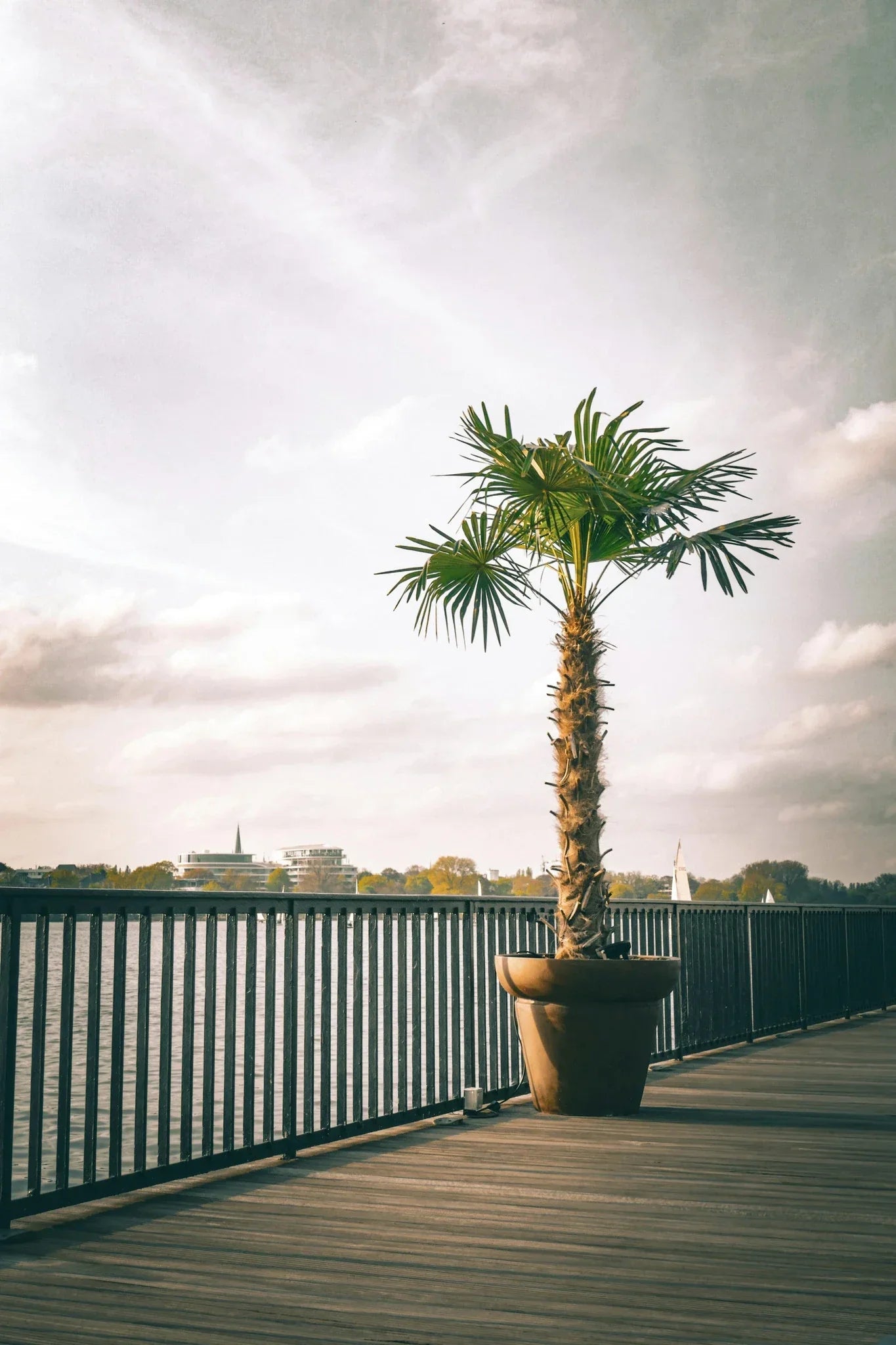
Windmill palm can take cold, but it won’t forgive a wet crown or an airless root zone. Learn how Trachycarpus fortunei grows, what it needs, and how to fix the usual problems.
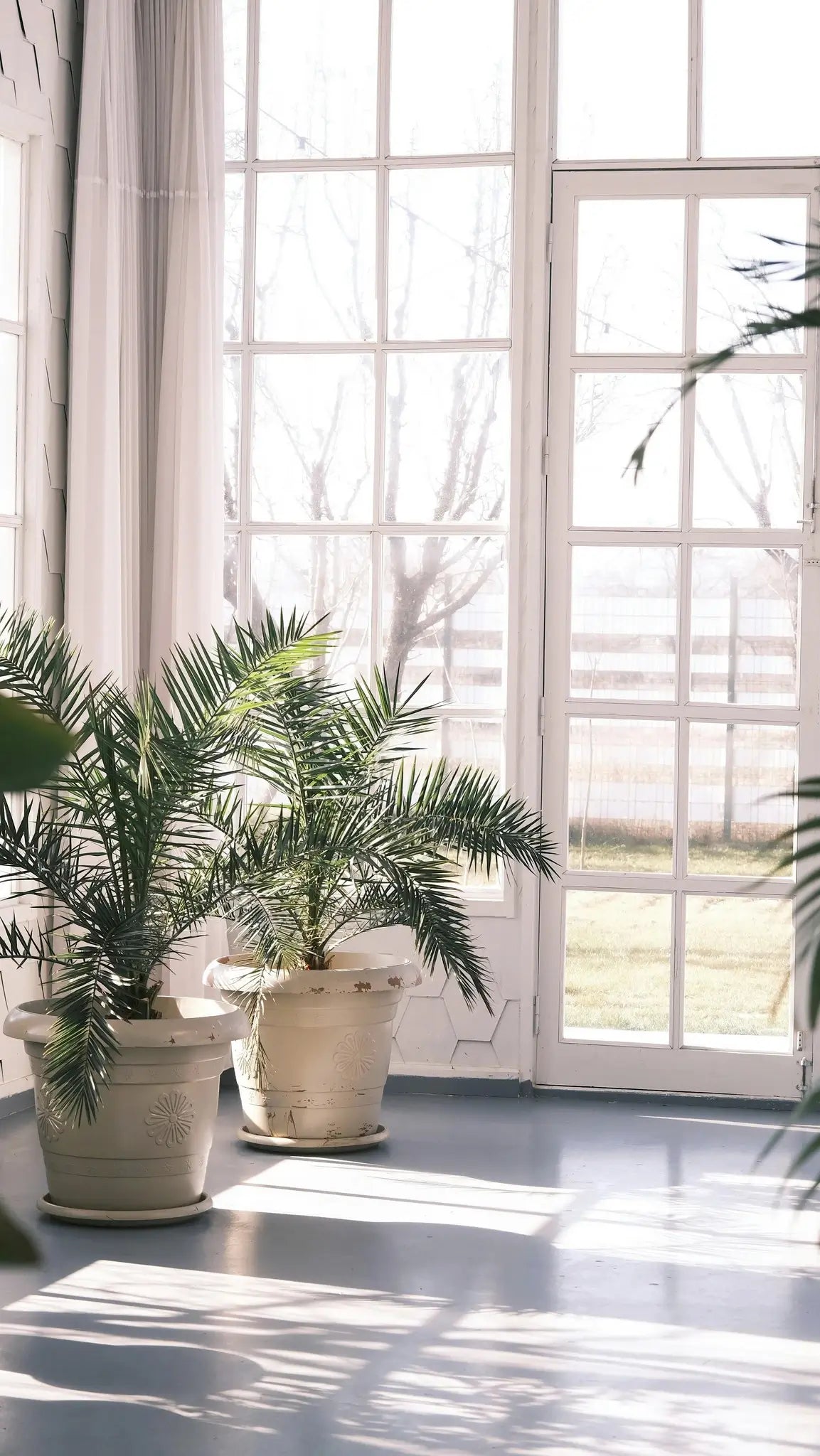
Not every palm sold as a houseplant belongs in the same room. This guide compares the best indoor palms, outdoor-leaning container palms, and tricky palm lookalikes, with practical care advice for ...
I received perfectly heathy and absolutely beautiful plants, even bigger than expected. The delivery within Europe was really fast. I think Foliage Factory has one of the best plant web shops in the internet. It‘s just great to get so much informations about the plants. I will definitely order again :)
Walkerova
★★★★★
Die Pflanzen waren prima verpackt und ein heatpack war im Paket enthalten. Die Lieferzeit hat 2 bis 3 Tagen gedauert, was aus meiner Sicht wirklich gut ist. Alle drei Pflanzen haben die Lieferung gut überstanden. Ich habe mich auf Hoyas spezialisiert und habe schon die nächsten Pflanzen meiner Wunschliste auf der Website gefunden. Daher wird die nächste Bestellung nicht lange auf sich warten lassen.
Marion
★★★★★
Envoie très rapide (2 jours), plantes parfaitement emballées et super offres ! Je suis une habituelle j'ai passé 6 ou 7 commandes et je n'en peut être plus satisfaite du service client et de la qualité et variété des plantes offertes
Iris
★★★★☆
Die Sendung kam leider in keinem guten Zustand bei mir an, kann passieren. Habe mich darauf hin sofort an Foliage Factory gewandt und habe selten einen so guten, schnellen, freundlichen und kulanten Kundendienst erlebt.
Frauke
★★★★★
The plants have arrived in perfect condition, the roots and the foliage so so healthy! I had problem with 1 plant out of 16 and they have responded to my email almost instantly and the issue was resolved straight away. I'm really impressed and satisfied, definitely getting more plants from them again!
Patricija
★★★★☆
Very healthy and well packed plant. Unfortunately there was one plant that ordered couldn’t be delivered as it was out of stock hence 1 star less.
Sam
★★★★★
Everything arrived in good condition and very well packed - it wasn't easy with a fragile plant and a heavy bag of substrate. I recommend it!
Lia
★★★★★
Bester online-Pflanzenhandel den ich kenne (habe davor 4 andere ausprobiert). Eine teure Pflanze wurde beim Transport beschädigt und mir ersetzt. Der Kontakt dabei war auch sehr nett (danke Jan) und hat mir gut geholfen. Die anderen Pflanzen sind in einem sehr guten Zustand, keine Schädlinge, super Bewurzelung. Nur zu empfehlen! :)
C L
★★★★★
Super Service, Gute Auswahl, Preise sind fair. Eine Pflanze kam kaputt an, hab sofort Ersatz bekommen. Danke an den unkomplizierten (und blitzschnellen) Kundenservice!!
Sarah
★★★★★
The plants are carefully packaged and arrive in great conditions (I’m based in Spain) and they’re always there to help in any way they can with your purchase.I have and will always recommend Foliage Factory to every friend I can. I’m not only satisfied with their plants and prices, but their customer service is exceptional.





Leave a comment
This site is protected by hCaptcha and the hCaptcha Privacy Policy and Terms of Service apply.