Houseplant Acclimation: What It Is, What to Expect, and How to Support It
New Houseplant Yellow Leaves? Start Here
A new houseplant can look worse during its first few weeks at home. A few older yellow leaves, slower growth, mild drooping, or slight leaf curl can be part of normal houseplant acclimation.
Acclimatization, often shortened to acclimation, is how a plant adjusts after moving into different light, humidity, temperature, airflow, and watering conditions. This adjustment is common after a move from greenhouse, shop, or shipping box into a home.
That does not mean every yellow leaf is harmless. Fast collapse, soft stems, black patches, pests, sour-smelling potting mix, or wet soil plus wilting need attention. But if symptoms are mild and mostly affect older leaves, the safest first move is usually stability: steady light, careful watering, no fertilizer, and no unnecessary repotting.
Quick answer
A few older yellow leaves, mild drooping, or slower growth can be normal after bringing home a new plant. Do not repot, fertilize, or water automatically. Check soil moisture, give stable bright indirect light, keep your plant away from drafts and heat, and watch whether symptoms slow down.
Even healthy Alocasia 'Dragon Scale' may shed an older yellow leaf while adjusting to a new indoor spot.
Normal Acclimation Signs vs Warning Signs
A few changes after bringing home a new houseplant are expected. The key is whether symptoms are mild, limited, and slowing down — or severe, spreading, and linked to rot, pests, or unsuitable conditions.
Often normal during acclimation
Check immediately
One to three older lower leaves turn yellow
New growth dies back or emerges damaged
Mild drooping after shipping or transport
Soft, black, translucent, or mushy stems
Growth slows for several weeks
Wet soil plus wilting or sour-smelling potting mix
Leaf edges curl slightly in dry air
Rapid leaf drop across most of plant
Watering interval becomes less predictable
Visible pests, webbing, sticky residue, or crawling insects
New leaves look different from older greenhouse-grown leaves
Brown or black patches spreading quickly through leaves or stems
If symptoms stay mostly on older leaves and slow down within a few weeks, your plant is probably adjusting. If new growth is failing, tissue is soft, potting mix stays wet for too long, or pests are visible, treat it as a real problem rather than normal acclimation.
Freshly shipped houseplants may arrive with a tired leaf, slight curl, or mild droop. Inspect roots, stems, and leaf undersides before assuming it is only shipping stress.
First 48 Hours With a New Houseplant
The first two days are about observation, not intervention. A tired-looking plant does not need every care task at once. Too much handling, repotting, pruning, or watering can add stress when your plant is already adjusting.
Unpack gently and remove packaging from leaves and pot.
Check leaf undersides, petioles, stems, soil surface, and drainage holes for pests or damage.
Check potting mix before watering. Water only if mix is dry enough for that plant type.
Place your plant in stable bright indirect light, away from radiators, cold windows, vents, and harsh direct sun.
Keep your plant separate from your main collection while you observe it.
Do not repot, fertilize, prune heavily, or move it around repeatedly unless there is a clear problem.
Should You Water Right After Delivery?
Do not water automatically after unpacking. If potting mix is still evenly moist, wait. If mix is dry and plant type prefers moisture, water thoroughly and let excess drain.
If your plant is wilted but soil is wet, do not add more water. Wet soil plus wilting can mean roots are short on oxygen, potting mix is too dense, temperature stress occurred during transit, or roots are already damaged.
Shipping Stress Is Not Always Acclimation
A plant can arrive tired from darkness, movement, temperature changes, or delayed watering during transit. Mild drooping, one damaged leaf, or slight curl can improve after rest.
Cold damage, mushy stems, black patches, collapsed new growth, severe leaf loss, or a sour smell from potting mix should be checked immediately. These are not signs to ignore while waiting for acclimation.
What Houseplant Acclimatization Means
Houseplant acclimatization is the adjustment period after a plant moves from one growing environment to another. For indoor plants, the biggest changes are usually light intensity, humidity, temperature, airflow, root moisture, and watering rhythm.
A plant grown in a nursery or greenhouse often had more controlled conditions than it gets in a living room. Light may have been brighter or more even. Watering may have been timed. Humidity, nutrition, and temperature may have been managed for steady growth.
At home, conditions change. Light comes from one side. Humidity rises and falls. Heating, ventilation, cold windows, curtains, room layout, and human watering habits all affect how much water your plant loses and how much energy it can make.
Acclimation can be visible, or it can happen quietly. Some plants pause for a few weeks and then continue growing. Others shed older leaves, curl at edges, or look less full before stable new growth appears.
Why New Plants React After Moving Indoors
Your home is not one single growing environment. Plants respond to exact conditions around their leaves and roots: distance from window, potting mix, room humidity, air movement, heat sources, and how often potting mix dries.
That is why two people can buy the same species and get different results. A bright bathroom with regular showers, no radiator, and a clear window is not the same as a dark bathroom with an extractor fan and cold tiles. Same room label, different microclimate.
Production Conditions vs Home Conditions
Commercial growing spaces are designed to produce healthy, saleable plants. Homes are designed for people. That difference is one reason new houseplants sometimes shed leaves or pause growth.
Condition
Nursery or greenhouse
Typical home
Light
Often brighter, more even, or supplemented
Directional, seasonal, blocked by walls, curtains, trees, or buildings
Humidity
Often managed and higher than dry indoor rooms
Can fall quickly with heating, ventilation, or air conditioning
Watering
Timed, measured, and matched to production substrate
Manual, variable, and often based on habit rather than soil moisture
Temperature
Usually steadier
Changed by windows, radiators, drafts, vents, cooking, and nighttime drops
Airflow
Managed with ventilation or fans
Still, drafty, dry, or uneven depending on room layout
Root zone
Grown in a mix chosen for production and shipping
May dry slowly in lower light or become compacted over time
Indoor light is especially easy to overestimate. A room can feel bright to human eyes while still giving your plant far less usable light than it had before. Distance matters too: moving a pot farther from window can reduce light sharply, especially in winter or behind curtains.
For a practical light check, use a light meter or phone app as a rough guide, then match plant placement to real readings rather than room labels. Learn how much bright indirect light houseplants need before changing location every few days.
Growing conditions before sale are usually more controlled than conditions on a shelf, windowsill, or plant stand at home.
What Changes Inside Your Plant During Acclimatization
Visible symptoms are only part of acclimatization. Inside your plant, light capture, water movement, root activity, and growth priorities are shifting at the same time.
1. Photosynthesis and Growth Slow Down
When light drops, your plant makes less energy. Growth may pause while it balances photosynthesis, respiration, and maintenance. Older leaves that were useful in brighter conditions may become less efficient indoors and eventually yellow or drop.
New leaves can look different because they form under different light. In suitable lower light, new growth may be better adapted for shade. If light is simply too weak, new leaves may be smaller, paler, stretched, or weak. That difference matters: “different” can be normal, but weak new growth usually means your plant needs better light.
If placement is unclear, compare window direction, distance from glass, curtains, nearby buildings, and season. Use window orientation as a starting point, not as a guarantee.
2. Dry Air Changes Water Balance
Dry indoor air increases water loss from leaves. If roots cannot replace that water quickly enough, leaves may curl, crisp, or droop even when potting mix still feels moist. Stomata help regulate water loss and gas exchange, but humidity is only one part of the response.
Occasional misting gives a short surface wetting, not stable humidity. A hygrometer gives better information. For humidity-sensitive plants such as Goeppertia, Calathea, Ctenanthe, many ferns, and thin-leaved Anthurium, stable humidity often matters more than daily misting.
Roots do not only absorb water. They also need oxygen. During acclimation, lower light and slower growth often mean your plant uses water more slowly. If potting mix stays wet for too long, roots can become stressed even when leaves look thirsty.
This is why watering by calendar causes problems. A plant that needed water every five days in a bright shop may need far less in a cooler, darker room. Check potting mix first, then water.
If potting mix is dense, compacted, or staying wet for many days, substrate may become part of the problem. Do not rush into repotting on day one unless roots are rotting, pot is damaged, substrate is severely compacted, or pests are present. Once your plant is stable, choose a houseplant substrate that balances moisture and airflow.
4. Older Leaves May Be Shed
Plants can move resources out of older leaves before dropping them. That is why one or two older yellow leaves are not automatically a crisis. Remove leaves only when fully yellow, dry, or clearly damaged.
Do not strip half-yellow leaves too early unless they are diseased or rotting. If leaf is still partly green, your plant may still be recovering useful resources from it.
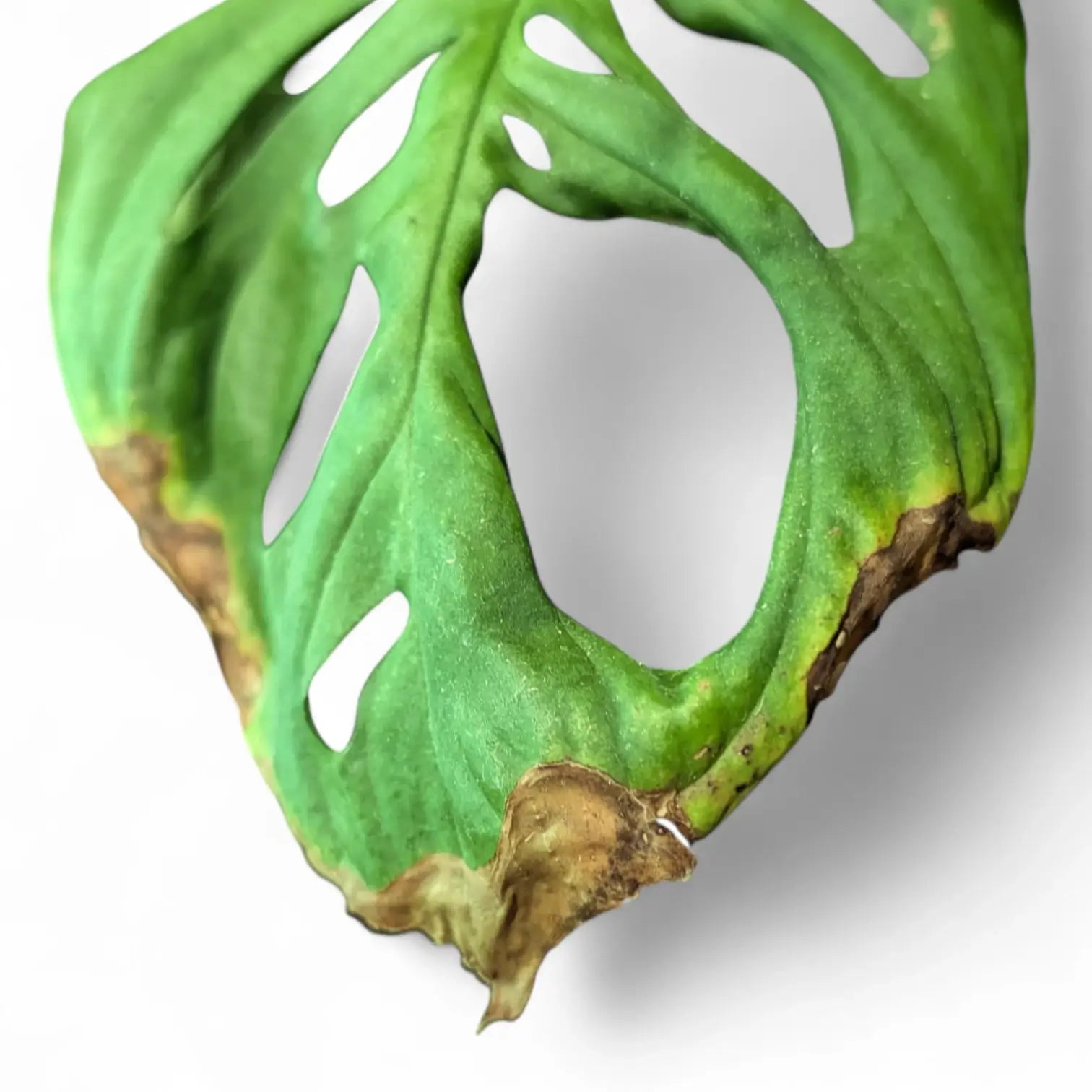
Ctenanthe and other humidity-sensitive houseplants often show dry edges, curled leaves, or tip burn when air is too dry or conditions shift suddenly.
How Long Houseplant Acclimation Takes
Most houseplants need a few weeks to settle after a major move. Tougher plants may stabilize quickly. Sensitive plants, large plants, winter deliveries, or plants exposed to shipping stress may need much longer.
Goeppertia, Calathea, Ctenanthe, Ficus lyrata, thin-leaved Anthurium, many ferns
About 6–8+ weeks
These timelines are not guarantees. Plant condition on arrival, pot size, substrate, season, shipping duration, humidity, and light all affect recovery. A small Epipremnum in spring may adjust quickly. A large Ficus lyrata delivered during cold weather may take longer and drop more leaves.
Signs Acclimation Is Moving in the Right Direction
Leaf drop slows or stops
New leaves emerge and remain healthy
Watering interval becomes easier to predict
Your plant holds its shape without constant wilting
New growth looks suited to your light level, not stretched or weak
How to Help a New Plant Settle In
When a new plant looks tired, it is tempting to fix everything at once. That usually makes things worse. During first few weeks, best care is steady light, careful watering, and fewer changes.
1. Inspect Before You Place It
Check leaf undersides, petioles, stems, soil surface, and drainage holes. Look for webbing, sticky residue, cottony clusters, raised bumps, crawling insects, mushy tissue, or sour smell from potting mix.
2. Quarantine New Arrivals
Keep new plants away from your main collection for at least three weeks. This gives hidden pests time to show and protects plants you already own.
3. Choose Stable Bright Indirect Light
Start in bright indirect light unless your plant is clearly a low-light tolerant species or a sun-loving succulent. Avoid harsh direct sun right after shipping, especially for plants with thin leaves.
4. Keep It Away From Extremes
Avoid radiators, heaters, air-conditioning vents, cold windows, frequently opened doors, and strong drafts. Sudden heat, cold, and dry airflow can trigger more leaf drop than a slightly imperfect window position.
5. Water by Soil Moisture, Not by Schedule
Check potting mix before watering. For many tropical foliage plants, top 2–3 cm can dry before next watering. Moisture-loving plants may prefer more even moisture. Succulents, ZZ Plant, and Snake Plant should dry more deeply.
6. Do Not Repot Immediately Unless There Is a Real Reason
Wait 3–4 weeks before repotting if your plant is stable. Repot sooner only if pot is broken, roots are rotting, substrate is severely compacted, your plant is dangerously rootbound, or pest pressure makes it necessary.
A plant that is not actively growing does not need extra feeding. Fertilizer too early can stress roots, especially in lower light or wet soil. Wait until new growth appears and your plant is using water predictably.
8. Measure Humidity Instead of Guessing
Use a hygrometer. If humidity often sits below 40%, thin-leaved tropicals may curl, crisp, or struggle to unfurl new leaves. Grouping plants, using a humidifier, and avoiding heat sources are more useful than occasional misting.
9. Remove Only Fully Dead or Diseased Leaves
Trim crispy, fully yellow, or diseased tissue with clean scissors. Leave partly green leaves unless they are rotting, pest-infested, or physically damaged beyond recovery.
10. Watch Trends, Not Single Leaves
A yellow leaf right after delivery feels worrying, but one leaf is only one clue. Five new yellow leaves in a week is a pattern. Track whether symptoms are slowing, spreading, or changing location on your plant.
Measuring your conditions removes guesswork. Stable humidity, steady light, and careful watering help new plants acclimate with less stress.
Common Acclimation Myths
“I bought it locally, so it should already be used to my home.”
Not necessarily. Store location does not tell you how your plant was grown. Many houseplants sold locally were still produced under controlled nursery or greenhouse conditions.
“Pre-acclimated means it will not react.”
Pre-acclimated plants may be better prepared for lower light, but they still need to adjust to your exact room, humidity, temperature, and watering rhythm.
“Indoor plant means it should be happy anywhere indoors.”
“Indoor plant” usually means plant can tolerate indoor conditions better than many outdoor plants. It does not mean it can thrive in a dark hallway, above a radiator, or beside a cold draft.
“Leaf drop always means plant is dying.”
A few older dropped leaves can be normal. Rapid leaf loss, failing new growth, soft stems, pests, or wet soil with wilting are not normal acclimation signs.
“Misting fixes dry air.”
Misting raises humidity only briefly and can leave moisture sitting on leaves. For plants that need higher humidity, use a hygrometer, humidifier, better grouping, and a stable spot away from heat sources.
“Drooping means it needs water immediately.”
Always check soil first. Drooping can come from dry soil, wet soil, root stress, cold damage, heat, or low humidity. Watering a wet, drooping plant can make root problems worse.
How to Tell Your Plant Has Settled In
A settled plant does not have to look perfect. It should look stable. That means symptoms slow down, new growth holds, and water use becomes easier to read.
Phase
What you may notice
Best response
Days 1–7
Mild droop, one damaged leaf, slower water use
Inspect, quarantine, place in stable light, water only if needed
Weeks 2–4
Older leaf yellowing, paused growth, less predictable drying time
Avoid repotting and fertilizer unless there is a clear issue
Weeks 4–8
Leaf drop slows, new growth begins, watering rhythm becomes clearer
Adjust care gradually and keep conditions consistent
After 8+ weeks
Your plant is stable, or problems continue despite consistent care
If stable, resume normal care. If declining, check roots, pests, light, humidity, and substrate
Once your plant produces healthy new growth and uses water predictably, you can think about repotting, fertilizing, pruning, or propagation. Until then, give it fewer changes, not more.
When It Is More Than Acclimation
Look deeper if your plant keeps dropping healthy-looking leaves, has no stable new growth after several weeks, remains wilted in wet soil, develops soft stems, or shows pests. At that point, check root health, substrate, light level, humidity, temperature, and leaf undersides.
Acclimation should move toward stability. If symptoms keep spreading, something else is wrong.
When to Ask for Help
For Foliage Factory orders, take clear photos on arrival if your plant has collapsed stems, black or mushy tissue, severe cold damage, visible pests, or major root problems. Include photos of whole plant, affected leaves, potting mix, and packaging. Clear photos make it easier to separate normal transit stress from a problem that needs support.
Houseplant Acclimation FAQ
Is it normal for a new plant to lose leaves?
Yes, losing a few older leaves can be normal after a move. Rapid leaf drop across most of plant, failing new growth, soft stems, or wet soil plus wilting are warning signs.
Why is my new plant turning yellow?
A few older yellow leaves can happen when a plant adjusts to lower indoor light, different humidity, or a new watering rhythm. If yellowing spreads quickly, check soil moisture, drainage, root health, pests, and light level.
Should I repot a new houseplant straight away?
Usually no. Wait until your plant is stable unless pot is broken, roots are rotting, substrate is severely compacted, pests are present, or your plant is dangerously rootbound.
How long should I quarantine a new houseplant?
Keep new plants separate for at least three weeks and inspect them regularly for pests, webbing, sticky residue, cottony clusters, raised bumps, and damaged new growth.
Why is my new plant wilting when soil is wet?
Wet soil plus wilting can mean roots are short on oxygen or already damaged. Do not add more water until you check root health, pot drainage, temperature, and substrate condition.
Should I fertilize during acclimation?
No. Wait until your plant shows stable new growth and uses water predictably. Fertilizer does not fix acclimation stress and can make root stress worse in wet or low-light conditions.
How do I know acclimation is working?
Leaf drop slows, new growth stays healthy, your plant holds its shape, and watering rhythm becomes easier to predict. Stable does not always mean lush right away. Stability is first sign of progress.
Sources and Further Reading
Trinklein, D. (2016). Houseplant Acclimatization. University of Missouri Extension. Read source
Pennisi, B. V. University of Georgia Extension. Growing Indoor Plants with Success. Bulletin 1318. Read source
Colorado State University Extension. Managing Houseplant Pests. Read source
Conover, C. A., & Poole, R. T. (2011). Acclimatization of indoor foliage plants. In Horticultural Reviews (Vol. 6, pp. 119–154). https://doi.org/10.1002/9781118060797.ch4
Gjindali, A., & Johnson, G. N. (2023). Photosynthetic acclimation to changing environments. Biochemical Society Transactions, 51(2), 473–486. https://doi.org/10.1042/BST20211245
Kleine, T., Nägele, T., Neuhaus, H. E., Schmitz-Linneweber, C., Fernie, A. R., Geigenberger, P., Grimm, B., et al. (2021). Acclimation in plants – The Green Hub consortium. The Plant Journal, 106(1), 23–40. https://doi.org/10.1111/tpj.15144
Matsubara, S. (2018). Growing plants in fluctuating environments: Why bother? Journal of Experimental Botany, 69(20), 4651–4654. https://doi.org/10.1093/jxb/ery312
Sugano, S., Ishii, M., & Tanabe, S. (2024). Adaptation of indoor ornamental plants to various lighting levels in growth chambers simulating workplace environments. Scientific Reports, 14, 17424. https://doi.org/10.1038/s41598-024-67877-y
Brown, crispy tips don't automatically mean dry air. This guide shows what tip burn really is, why it happens, and how to diagnose watering, water quality, salts, roots, nutrients, and environment ...
A practical semi-hydroponics feeding routine for LECA, pon, and pumice. Learn fertilizer types that actually work, safe EC and pH targets, dilution and flush timing, nutrient balance (NPK + micros)...
Die Pflanzen waren prima verpackt und ein heatpack war im Paket enthalten. Die Lieferzeit hat 2 bis 3 Tagen gedauert, was aus meiner Sicht wirklich gut ist. Alle drei Pflanzen haben die Lieferung gut überstanden. Ich habe mich auf Hoyas spezialisiert und habe schon die nächsten Pflanzen meiner Wunschliste auf der Website gefunden. Daher wird die nächste Bestellung nicht lange auf sich warten lassen.
Marion
★★★★★
I received perfectly heathy and absolutely beautiful plants, even bigger than expected. The delivery within Europe was really fast. I think Foliage Factory has one of the best plant web shops in the internet. It‘s just great to get so much informations about the plants. I will definitely order again :)
Walkerova
★★★★★
Envoie très rapide (2 jours), plantes parfaitement emballées et super offres ! Je suis une habituelle j'ai passé 6 ou 7 commandes et je n'en peut être plus satisfaite du service client et de la qualité et variété des plantes offertes
Iris
★★★★☆
Die Sendung kam leider in keinem guten Zustand bei mir an, kann passieren. Habe mich darauf hin sofort an Foliage Factory gewandt und habe selten einen so guten, schnellen, freundlichen und kulanten Kundendienst erlebt.
Frauke
★★★★★
The plants have arrived in perfect condition, the roots and the foliage so so healthy! I had problem with 1 plant out of 16 and they have responded to my email almost instantly and the issue was resolved straight away. I'm really impressed and satisfied, definitely getting more plants from them again!
Patricija
★★★★☆
Very healthy and well packed plant. Unfortunately there was one plant that ordered couldn’t be delivered as it was out of stock hence 1 star less.
Sam
★★★★★
Everything arrived in good condition and very well packed - it wasn't easy with a fragile plant and a heavy bag of substrate. I recommend it!
Lia
★★★★★
Bester online-Pflanzenhandel den ich kenne (habe davor 4 andere ausprobiert). Eine teure Pflanze wurde beim Transport beschädigt und mir ersetzt. Der Kontakt dabei war auch sehr nett (danke Jan) und hat mir gut geholfen. Die anderen Pflanzen sind in einem sehr guten Zustand, keine Schädlinge, super Bewurzelung. Nur zu empfehlen! :)
C L
★★★★★
Super Service, Gute Auswahl, Preise sind fair. Eine Pflanze kam kaputt an, hab sofort Ersatz bekommen. Danke an den unkomplizierten (und blitzschnellen) Kundenservice!!
Sarah
★★★★★
The plants are carefully packaged and arrive in great conditions (I’m based in Spain) and they’re always there to help in any way they can with your purchase.I have and will always recommend Foliage Factory to every friend I can. I’m not only satisfied with their plants and prices, but their customer service is exceptional.
José
Get 10% off your next plant order
Sign up for Foliage Factory newsletter for early access to new arrivals and practical care tips that work in real homes.





Leave a comment
This site is protected by hCaptcha and the hCaptcha Privacy Policy and Terms of Service apply.