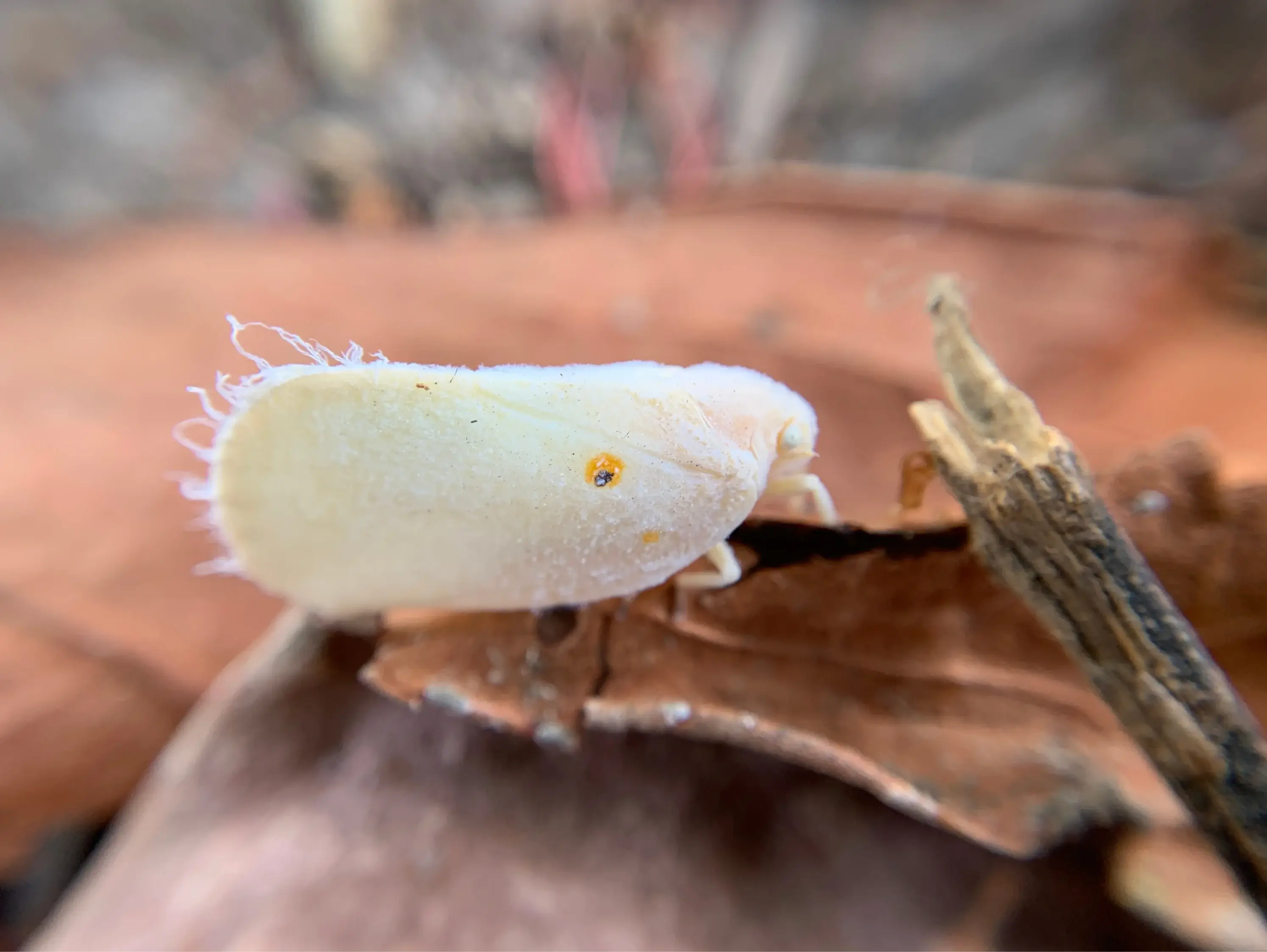
Whiteflies Under Control: A Comprehensive Guide to Protecting Your Indoor Garden
Whiteflies can weaken houseplants fast. Learn the key signs, lifecycle stages, and proven control options — plus prevention steps that stop repeat outbreaks.
Read more
Article: Beginner’s Guide to Fertilizing Houseplants
Fertilizing houseplants isn’t a collector-only habit. It’s simply how potted plants get fresh minerals once the initial supply in potting mix is used up.
Most houseplants run best on one of these three approaches: repotting into fresh mix, slow-release nutrition in the pot, or regular low-dose feeding. Pick the one that matches how you water, how fast your plants grow, and what your substrate actually does.
One important reality: fertilizer is not a “growth switch.” It can’t compensate for low light, cold roots, pests, or oxygen-poor, soggy mix. It’s building material — useful only when the plant can use it.

In nature, plants sit inside a huge recycling system: weathering minerals, decaying organic matter, and continuous microbial turnover. Pots don’t work like that. A container is a limited reservoir, and every watering slowly moves soluble nutrients out of the root zone.
Many potting mixes include a starter charge (compost, fertilizer prills, or blended nutrients). How long it lasts depends on the product and conditions. In bright, warm, fast-growth setups it can fade quickly; in slower conditions it can last much longer.
Practical takeaway: treat “pre-fertilized” as a head start — not a long-term plan.
When a plant is producing roots, stems, leaves, flowers, or fruit, it needs mineral nutrients in addition to light, water, and carbon dioxide. Without them, growth commonly becomes pale, small, and slow, and flowering/fruiting tends to stall.
Reality check: if growth is stalled from low light, pests, cold roots, or root damage, adding fertilizer often makes things worse by increasing salt stress. Fix conditions first, then feed.

Plants make sugars via photosynthesis, but they still need mineral nutrients to build real tissue. Standard plant nutrition references describe 17 essential elements; carbon, hydrogen, and oxygen come mainly from air and water, and the rest come from the root zone.
Every fertilizer label shows three numbers. These are the percent by weight of:
A “balanced” general fertilizer often uses ratios like 1–1–1 or slightly nitrogen-forward ratios like 3–1–2.
These are often included in “complete” fertilizers or contributed by lime/dolomite in potting mixes — but not always in amounts that match every setup (especially when using RO/distilled water long-term).
Micronutrient problems are less common than simple underfeeding/overfeeding, and symptoms overlap with pests, root issues, and pH problems. A “complete” fertilizer that includes trace elements prevents most avoidable deficiencies.
Element |
Typical role |
Possible deficiency pattern |
|---|---|---|
Iron (Fe) |
chlorophyll function |
interveinal yellowing on newer leaves (often linked to high pH) |
Manganese (Mn) |
enzyme activation |
interveinal chlorosis; can resemble iron issues |
Zinc (Zn) |
growth regulation |
small leaves, shortened internodes |
Boron (B) |
new growth development |
brittle or distorted new growth (rare indoors) |
Copper (Cu) |
enzyme systems |
weak new growth, tip dieback (rare indoors) |
Molybdenum (Mo) |
nitrogen metabolism |
rare; can mimic nitrogen-related yellowing |
Simple rule: don’t buy micronutrients separately. Choose a complete fertilizer and focus on correct dilution and root health.
Fertilizer doesn’t behave the same in every substrate. Some mixes hold nutrients and buffer changes; others let nutrients run through fast. This is why two people can use the same fertilizer and get completely different results.
Indoor mixes are usually lightweight blends, not garden soil. Common components include:
Practical takeaway: the airier and faster-draining the mix, the more “little-and-often” feeding tends to outperform occasional strong doses.
Substrate |
Holds nutrients? |
What this means in real life |
|---|---|---|
Peat-heavy mix |
High |
more forgiving; lower risk of “flush-out” under normal watering |
Coco-heavy mix |
Moderate |
steady Ca/Mg availability can matter more when water is very soft or RO |
Bark-heavy aroid mix |
Low–moderate |
nutrients wash through faster; “weakly, regularly” is usually safer |
Mineral/semi-hydro (LECA, pumice) |
Very low |
nutrition must be supplied consistently; salts can creep up if water isn’t refreshed |
Roots absorb nutrients best within a workable pH range. When pH drifts too low or too high, nutrient availability changes — especially iron and manganese. Potting mixes usually start in a suitable range, then drift based on water chemistry, fertilizer type, and age of the mix.
Practical takeaway: if feeding is consistent but new growth stays pale or chlorotic, water chemistry and mix age often matter more than buying a “stronger” fertilizer.
Small pots dry faster and get watered more frequently, which can leach nutrients faster. Old mixes can become hydrophobic, compacted, or salt-loaded — fertilizer won’t fix a substrate that has stopped behaving like a root-friendly root zone.

Format matters mainly for control and risk. Most houseplants respond well to complete nutrition delivered at a safe concentration.
Mix with water and apply as you water.
Best fit: anyone who wants predictable results and doesn’t mind mixing.
Water note: letting tap water sit can reduce chlorine in some places, but it does not remove hardness minerals and does not remove chloramine. If water is very hard or softened, feeding and salt management usually need extra care.
Nutrition releases gradually with moisture and temperature. Longevity ratings assume a specific temperature; warmth speeds release.
Best fit: larger pots, moderate-growth plants, and anyone who wants fewer steps.
Compost, worm castings, fish emulsion, seaweed, and similar products can work indoors — but release depends on biology and moisture. Containers do have microbes; they’re just not as consistent as outdoor soil systems.
Important: “organic” still contains salts and can still create imbalance if applied heavily.
Highly predictable nutrients in measured ratios.
Best fit: larger collections, airy mixes, semi-hydro, and anyone who wants control.
If you want a deeper comparison of formats, substrate compatibility, and salt-safe routines: view the advanced fertilizer guide.

The most reliable “schedule” is simple: feed when the plant can use it. That depends on growth, light, temperature, root health, and substrate — not the calendar.
Routine |
Who it suits |
What it looks like |
|---|---|---|
Low-dose, frequent |
airy mixes, fast growers, many aroids |
¼ strength every 1–2 weeks, or every other watering |
Moderate |
mixed collections, average growth |
½ strength every 2–3 weeks |
Minimal |
slow growers, low-demand plants |
¼ strength every 4–6 weeks |
Safe default: start lower than the label suggests and increase only if growth is strong and roots stay healthy.
Feed more when you see steady new growth (new leaves, elongation, new roots). Feed less when growth slows.
Skip feeding when any of these are true:
After repotting or dividing, wait until you see signs the plant has restarted (new roots or fresh growth). In many setups that’s a couple of weeks, but the cue is the plant’s recovery, not the date.
Never fertilize bone-dry mix. Either pre-wet first, or use the diluted fertilizer solution as the watering for that session.
These systems can concentrate salts because water leaves but minerals stay. Keep feeding gentle:
Different groups evolved with different root zones. Matching feeding style to root biology prevents most beginner problems.
Examples: Monstera, Philodendron, Anthurium, Syngonium
Common mistake: strong feeding in low light. That’s a direct path to salt stress and weak roots.
Examples: Hoya, orchids (Phalaenopsis, Dendrobium), Tillandsia
Orchid note: for orchids grown in bark-heavy or inorganic media, many growers prefer urea-free fertilizer so nitrogen is available without relying on conversion in the pot.
Examples: Ficus elastica, Polyscias, Schefflera
Examples: Aloe, Haworthia, Echeveria, Gasteria, many succulent Euphorbia
Examples: Rhipsalis, Epiphyllum, Schlumbergera, Hatiora
Bottom line: “wrong fertilizer” is rarely the problem. Wrong strength, wrong substrate, and poor drainage or low light cause most feeding failures.
Most fertilizer problems in pots come down to one thing: salts accumulating faster than the plant can use or flush them.
Salt buildup is more likely when pots drain poorly, saucers stay full, water is very hard, or doses are too strong.
Leaching means running enough clean water through the pot that salts move out with drainage.
Note: don’t leach very drought-adapted succulents frequently. Use symptoms as the trigger, not a strict calendar.
Water can contain dissolved minerals that change pH and add to total salt load.
Water type |
What it’s good for |
What to watch |
|---|---|---|
Rainwater / distilled |
gentle; predictable |
pick a complete fertilizer; if your product doesn’t include Ca/Mg, long-term use may need attention |
RO (reverse osmosis) |
great control |
similar to distilled; the nutrient solution must supply what the water doesn’t |
Hard tap water |
often fine short-term |
can drive pH upward and increase salt load over time |
Softened water |
avoid for plants |
sodium accumulation is rough on roots and amplifies salt stress |
If you only change one thing: keep fertilizer doses modest and make sure pots get occasional real drainage. That alone prevents most salt disasters.

Feeding mistakes are common, and symptoms overlap. Use patterns, not single leaves, to judge.
What you see |
Likely causes |
First move |
|---|---|---|
New leaves come in pale |
underfeeding, pH-related iron lockout, root stress |
check roots and watering; then use a complete fertilizer at low dose |
Older leaves yellow first |
nitrogen shortfall, natural leaf aging, low light |
confirm growth is active; then light, consistent feeding |
Brown crispy tips that repeat |
salt buildup, too-strong doses, very hard/softened water |
leach 2–3× pot volume; reduce dose |
White crust on soil or rim |
mineral accumulation (fertilizer + water) |
remove crust, leach, improve drainage habits |
Soft yellowing + mushy roots |
root rot / oxygen-poor mix (not a fertilizer problem) |
fix substrate and watering first; don’t feed into rot |
Best rule: when unsure, reduce strength and observe new growth over the next few weeks instead of adding more product.
Fertilizer is concentrated. Treat it like a household chemical even if the label says “natural.”
Type |
Typical stability |
Notes |
|---|---|---|
Water-soluble mineral (dry) |
long |
main risk is moisture clumping |
Liquid mineral |
moderate |
separation can happen; shake and follow label |
Organic liquids |
shorter |
can spoil once opened; odors can change over time |
Controlled-release prills |
long (sealed) |
store dry; avoid crushing/rough handling |
Whiteflies Under Control: A Comprehensive Guide to Protecting Your Indoor Garden
Whiteflies can weaken houseplants fast. Learn the key signs, lifecycle stages, and proven control options — plus prevention steps that stop repeat outbreaks.
Read moreSign up for Foliage Factory newsletter for early access to new arrivals and practical care tips that work in real homes.


Leave a comment
This site is protected by hCaptcha and the hCaptcha Privacy Policy and Terms of Service apply.