Arid vs. Jungle Succulents: Care, Traits & Key Differences
Side by side but worlds apart: Rhipsalis and Echeveria both store water, but their habitats, roots, light needs, and watering rhythms are completely different.
Why “Succulent” Doesn’t Mean What You Think It Does
If you’ve ever admired the chunky rosettes of an Echeveria, the cascading stems of a Rhipsalis, or the upright ribs of a Euphorbia, you already know that succulents do not all look alike.
That visual variety points to a much bigger truth: “succulent” is not a care category.
It is not a plant family, genus, or formal botanical group. It describes a functional trait: the ability to store water in living tissue. That tissue may be in leaves, stems, roots, rhizomes, tubers, bulbs, or other swollen organs. The plant uses that stored water to buffer short or long dry periods, depending on where it evolved.
That distinction matters indoors. A desert-adapted Echeveria can rot if watered like a tropical houseplant. A rainforest cactus such as Rhipsalis can shrivel if treated like a cactus from open desert. A dry-forest plant like Zamioculcas zamiifolia can tolerate low light for a while, but that does not mean it wants heavy, wet soil.
Succulence evolved independently many times across the plant kingdom. Similar water-storage traits appeared in unrelated plants because different habitats created similar pressure: brief rain, dry air, exposed rock, shallow rooting pockets, salty soils, seasonal drought, or life on tree branches where moisture arrives quickly and disappears just as fast.
What You’ll Learn in This Guide
This guide moves beyond vague succulent care and looks at how habitat, roots, tissue structure, and photosynthesis shape real indoor care. You’ll learn:
The goal is simple: when you understand why a succulent stores water, you can stop guessing and start matching care to the plant in front of you.
1. Succulence Is a Strategy, Not a Plant Group
“Succulent” is one of the most useful plant words and one of the easiest to misuse. It does not describe a family, genus, order, or single evolutionary lineage. It describes a survival strategy: storing water in living tissues so the plant can keep functioning when external moisture becomes limited.
That stored water may help a plant survive months of drought in rocky desert soil. It may also help an epiphyte survive a few dry days between rainforest showers. Both are succulent strategies, but they do not produce the same care needs.
What Makes a Plant Succulent?
A succulent plant stores water in at least one living structure:
Leaves: thick, fleshy, gel-filled, or compact leaves, as seen in Echeveria, Aloe, Haworthia, Kalanchoe, and some Peperomia.
Stems: swollen, ribbed, columnar, trailing, or flattened stems, as seen in many cacti, Euphorbia, Rhipsalis, and Stapelia.
Roots and underground organs: tubers, bulbs, caudices, rhizomes, or corm-like structures, as seen in Zamioculcas zamiifolia, Ledebouria, Othonna, and many geophytes.
These internal reservoirs act as buffers. They can protect the plant from temporary water shortage, but they do not make the plant independent from water forever. Succulence delays dehydration. It does not cancel the need for correct watering.
Succulent tissue is more than simple thickness. Many succulent organs combine water-storage cells, elastic walls, controlled collapse during drying, and protective surface traits. That combination allows tissues to expand during hydration and shrink during drought without immediately failing.
Succulence Evolved Again and Again
Succulence is a classic example of convergent evolution. Unrelated plants repeatedly arrived at similar water-storage solutions because they faced similar environmental problems:
Unpredictable rainfall, where moisture arrives in short pulses.
Seasonal drought, where plants must survive long dry phases.
High evaporation, driven by sun, wind, heat, or exposed rock.
Fast-draining substrates, such as sand, lava, bark, limestone, or cliff crevices.
Epiphytic habitats, where roots cling to bark and water drains away within minutes.
Saline or coastal environments, where water may be present but physiologically difficult to use.
This is why a Haworthia, a Hoya, a cactus, a Peperomia, and Zamioculcas zamiifolia can all be described as succulent even though they are not closely related.
Why This Matters in Plant Care
Because succulence is a trait, two succulents may differ in almost every practical care detail:
Photosynthesis: some rely strongly on CAM, some are mostly C3, and many sit somewhere along a flexible C3-CAM spectrum.
Watering rhythm: some expect full dry-outs; others tolerate only short drying periods.
Substrate: some need mineral grit; others need bark, air, and gentle moisture retention.
Root behaviour: some have deep taproots or shallow rain-catching roots; others produce fine, aerial, or gripping roots.
Dormancy: some shut down seasonally; others only slow when indoor light drops.
The useful question is not “Is this plant succulent?”
The useful question is “What kind of succulent strategy does this plant use?”
Succulents share a water-storage strategy, but their evolutionary paths diverged across deserts, dry forests, cliffs, fog zones, and tree canopies.
2. Why Desert, Jungle, and Transitional Succulents Behave Differently
Succulence did not evolve in one place. It appeared in deserts, dry forests, rocky slopes, coastal fog zones, tropical canopies, and seasonally wet habitats. That is why there is no single “typical” succulent.
A plant’s habitat determines what its water storage is for. In open desert, storage may support survival through long drought and intense light. In rainforest canopy, storage may bridge brief dry spells between showers. In dry woodland or shaded rock crevices, storage may support a plant through seasonal drought while still allowing shade tolerance.
🌵 Arid Succulents: Built for Long Dry Periods
Arid succulents come from deserts, semi-deserts, dry scrublands, rocky slopes, and open habitats where water is scarce or unpredictable. Their bodies are shaped by water conservation.
Common traits
Thick leaves or swollen stems with high water-storage capacity.
Waxy cuticles, hairs, spines, ribs, or compact shapes that reduce water loss and sun exposure.
Roots that either spread quickly near the surface or grow deeper into cooler layers.
Strong tolerance of full drying, especially during rest phases.
Often strong CAM photosynthesis or CAM-like drought responses.
Examples
Aloe vera
Echeveria agavoides
Euphorbia obesa
Opuntia ficus-indica
Lithops
These plants are usually safest in bright light, mineral substrates, and watering routines that allow full drying before the next soak.
🌿 Jungle Succulents: Built for Air, Drainage, and Brief Dry Spells
Jungle succulents evolved in humid forests, cloud forests, or epiphytic habitats. Water may be frequent, but roots often grow in bark, moss, debris pockets, tree crotches, or rock surfaces rather than deep soil.
Their challenge is not months without water. Their challenge is fast drainage, limited root volume, filtered light, and constant competition for space.
Common traits
Trailing, climbing, pendent, or compact epiphytic growth.
Fleshy leaves or stems with lower water-storage volume than many desert succulents.
Fine, fibrous, aerial, or gripping roots that need oxygen around them.
Better tolerance of humid air than of dense, stagnant, wet soil.
Photosynthesis that varies by lineage: some are C3, some CAM, some weak CAM, and some flexible.
Examples
Hoya carnosa
Rhipsalis baccifera
Dischidia ovata
Disocactus ackermannii
Many succulent Peperomia species
These plants usually need bright indirect light, airy potting mixes, moderate moisture, and good ventilation around roots. They may store water, but many are not built for long, hard drought in a pot.
🌗 Transitional Succulents: Dry Forest, Shade, Rock, and Seasonal Habitats
Some succulents sit between the usual desert-versus-jungle categories. They may come from dry forests, savannas, shaded rock crevices, seasonal slopes, coastal thickets, or forest margins. These plants often tolerate both drought and filtered light, but that flexibility should not be confused with having no needs.
Bright light with airflow, fast drainage, occasional moisture pulses, careful heat management.
Dudleya, Copiapoa, some Crassula
This habitat lens is the thread that connects the rest of the article. Once origin is clear, light, watering, substrate, and dormancy become far easier to interpret.
Aloe combines thick storage tissue, strong light tolerance, and water-saving physiology: a useful contrast with forest succulents that store less and dry out faster.
3. Photosynthesis in Succulents: CAM, C3, and the Grey Areas Between
Succulents do not just store water differently. They also vary in how they exchange gases and manage water loss during photosynthesis.
Many succulent-care mistakes come from turning photosynthesis into a simple split: desert succulents use CAM, jungle succulents use C3. That is a helpful starting point, but it is too neat. In real plants, photosynthesis sits on a spectrum. Some species use strong CAM all the time. Some are C3. Some show weak CAM. Some shift under drought. Some use CAM-cycling or CAM-idling during stress.
C3 Photosynthesis: The Standard Pathway
C3 photosynthesis is the most common photosynthetic pathway in plants. Stomata usually open during the day, allowing CO₂ to enter while photosynthesis is active. Water is lost during that exchange.
This works well in humid, shaded, or moisture-stable environments where water loss is not the main threat. Many soft-leaved tropical plants use C3 photosynthesis, and many mildly succulent houseplants behave more like C3 plants in normal indoor care.
Care implications
C3-leaning succulent plants usually dislike prolonged drought.
They often need steadier moisture than desert succulents.
They can stall quickly when low light and dry roots happen together.
CAM Photosynthesis: Water Saving by Night
CAM, or Crassulacean Acid Metabolism, is a water-saving photosynthetic pathway. CAM plants open stomata mainly at night, when air is cooler and humidity is usually higher. They take in CO₂ at night, store it as organic acids, then use it during the day while stomata remain mostly closed.
This reduces water loss dramatically and helps many succulents survive dry, exposed habitats.
Common CAM-heavy groups
Aloe
Agave
Many cacti
Many Kalanchoe
Many arid Euphorbia
Many Crassulaceae, including Crassula, Sedum, and Echeveria
Care implications
CAM-heavy succulents usually tolerate full drying better.
Strong light supports compact growth and efficient energy use.
Watering should match active growth, not just calendar habit.
CAM-Cycling, CAM-Idling, and Facultative CAM
The middle ground is where succulent care gets interesting.
CAM-cycling allows a plant to recycle internally produced CO₂ at night while stomata remain mostly closed. CAM-idling is a drought-survival state where stomata stay closed day and night while the plant recycles respiratory CO₂ just enough to keep tissues alive. Facultative CAM describes plants that can shift toward CAM under drought, salinity, or other stress, then return toward C3 behaviour when conditions improve.
This matters because a plant can be tropical, epiphytic, or shade-tolerant and still show CAM-related behaviour. Hoya carnosa, for example, is a leaf-succulent epiphyte known for CAM-idling under prolonged drought. Zamioculcas zamiifolia is not a classic cactus-like succulent, yet it can show weak CAM that becomes stronger under water stress. Portulacaria afra is especially flexible and can shift its photosynthetic behaviour depending on moisture conditions.
Important Correction: Jungle Habitat Does Not Automatically Mean C3
Epiphytic cacti such as Rhipsalis are tropical, but they are still cacti. Many use CAM or CAM-like drought-saving physiology. Their care differs from desert cacti because their roots, light exposure, and moisture rhythm are different — not because they are simply C3 plants.
The better rule is this:
Photosynthesis tells you how a plant limits water loss, but habitat tells you how that plant should be grown.
Photosynthetic pattern
What it means
Care clue
Mostly C3
Stomata open mainly by day; less drought-efficient.
Avoid long dry-outs; keep moisture light and consistent.
Strong CAM
Night-time gas exchange; high water-use efficiency.
Bright light, careful watering, full dry intervals for many arid species.
Weak or facultative CAM
Plant shifts depending on stress and water availability.
Flexible, but not invincible; avoid both soggy roots and extreme neglect.
CAM-idling
Emergency survival mode during severe drought.
Not a target condition; rehydrate gently and resume care only when growth returns.
Photosynthesis is a useful care clue, but it should not be used alone. A CAM epiphyte and a CAM desert cactus can both conserve water at night, yet one may need an airy bark mix and filtered light while another needs mineral grit and direct sun.
Rhipsalis grows in humid tropical canopies, but as an epiphytic cactus it still carries cactus-like water-saving traits. Care must balance both facts.
4. Succulent Morphology: Reading Leaves, Stems, Surfaces, and Growth Habits
A succulent’s body tells a story. Leaf thickness, stem shape, surface texture, colour response, and growth habit all reveal how the plant handles water, light, heat, and airflow.
You do not need a perfect species ID to start making better care decisions. Close observation can already tell you whether a plant is likely built for long drought, brief drying, filtered light, or exposed sun.
Where the Plant Stores Water
The storage organ is the first clue.
Storage type
Typical meaning
Examples
Thick leaves
Often adapted to drought buffering; needs good light and careful drying, though exact needs vary.
Echeveria, Aloe, Haworthia, Kalanchoe
Swollen stems
Water is stored in stems; leaves may be reduced, temporary, or absent.
Euphorbia trigona, Cereus, Stapelia, Rhipsalis
Rhizomes, bulbs, or tubers
Water is stored below the soil surface; roots are often rot-sensitive in heavy wet mixes.
Thick tissue does not always mean desert care. A fleshy Peperomia and a compact Echeveria may both store water, but Peperomia often has fine roots and lower drought tolerance in a pot.
Surface Traits: Protection or Exchange
Surface texture gives another clue.
Heavy wax, powdery bloom, hairs, spines, or ribs usually point toward sun, drought, or exposed habitats.
Smooth, glossy, softer surfaces often point toward humid habitats where shedding water, exchanging gases, and avoiding stagnant moisture matter more than sealing every surface.
Thin or flexible succulent stems usually store less water than rigid, swollen desert stems.
Do not wash off powdery bloom on succulents such as Echeveria or Dudleya. That waxy layer helps protect tissue from intense light and water loss.
Colour Shifts: Pigments as Protection
Red, purple, bronze, or orange tones in succulents are usually stress-linked pigment responses. Anthocyanins and carotenoids can protect tissues from excess light, cold, drought, or rapid environmental change.
Colour is not automatically bad. It is also not automatically harmless. A compact Echeveria with red edges under bright light may be fine. A pale, bleached Rhipsalis near hot glass is not.
Healthy stress colour: plant stays firm, compact, and actively rooted.
Damage risk: tissue turns bleached, crispy, sunken, translucent, or papery.
Growth form shows how a succulent accesses light and survives its native substrate.
Growth habit
Likely habitat clue
Care implication
Rosette-forming
Often exposed, rocky, seasonal, or arid habitats.
Needs strong light and careful watering into the substrate, not into the crown.
Columnar or ribbed
Stem storage, sun exposure, drought adaptation.
Usually prefers high light, mineral drainage, and dry intervals.
Trailing or pendent
Often cliff, branch, hanging, or epiphytic habitats.
Needs airflow, careful root oxygen, and placement that supports trailing growth.
Climbing or rooting along stems
Epiphytic or semi-epiphytic growth.
Benefits from barky mixes, support, and stable humidity without wet foliage.
Rhizomatous or bulbous
Seasonal survival below ground.
Dry carefully between waterings; avoid compact substrate around storage organs.
A succulent’s form is one of the best quick diagnostic tools you have. It will not replace species-specific research, but it gives you a far better start than the shop label “succulent mix, water rarely.”
In arid habitats, succulents such as Opuntia often use shallow, wide root systems to capture brief rainfall before it disappears.
5. Root System Adaptations: How Succulents Anchor, Absorb, and Rot
Roots explain many succulent failures. The visible plant may store water, but the roots determine how fast water is absorbed, how much air is needed, and how quickly rot starts in the wrong substrate.
Succulent roots are not all built the same. Some are designed to catch short desert rain. Some reach deeper layers. Some cling to bark. Some grow in debris pockets that never behave like potting soil. Some fine roots die back during drought and regrow after moisture returns.
🌵 Arid Roots: Fast, Wide, Deep, or Seasonal
Arid-zone succulents deal with moisture that arrives rarely and disappears quickly. Their roots often respond fast.
Common arid-root strategies
Shallow spreading roots: catch light rain or dew near the surface.
Deep taproots: reach cooler, more stable soil layers below the surface.
Fine feeder-root flushes: appear after rain and may die back when drought returns.
Contractile or anchoring roots: help some plants settle into crevices or stable positions.
Care implications
Use gritty, mineral-rich substrates that drain fast and re-oxygenate quickly.
Water thoroughly when the plant is active, then allow full drying.
Match pot shape to root type when known: deep for taprooted plants, wider for shallow spreaders.
Avoid frequent small sips in cool, dim conditions. They keep the root zone damp without supporting growth.
🌿 Jungle and Epiphytic Roots: Air First, Moisture Second
Jungle succulents often grow on bark, rock, moss, leaf litter, or loose organic debris. Their roots may experience frequent moisture, but they also experience constant air. That combination is hard to recreate in dense potting soil.
Common jungle-root strategies
Fine fibrous roots: absorb water quickly from loose organic material.
Aerial or stem roots: anchor climbing and trailing plants to bark, moss, or support structures.
Root-hugging growth: roots spread along surfaces rather than drilling into deep soil.
Fast response to moisture pulses: roots absorb quickly when rain, mist, or condensation arrives.
Care implications
Use airy, bark-based or chunky substrates with excellent oxygen flow.
Keep moisture light and regular for species that dislike full drought.
Avoid compact peat-heavy mixes that stay wet at the bottom of the pot.
Use pots with strong drainage and avoid oversized containers.
A Careful Note on Velamen and Epiphytic Roots
Velamen is a specialized, spongy, multi-layered root covering best known from orchids and also reported in several other plant families. It helps some aerial roots absorb and hold water quickly. Because velamen is not universal across all epiphytes, it is better not to assume every epiphytic succulent has true velamen.
For care, the practical point is still clear: many epiphytic succulents have roots adapted to air plus brief moisture, not dense wet soil. Whether the root has true velamen, a spongy outer layer, or simply fine surface roots, the potting setup should keep oxygen moving through the root zone.
Obligate vs. Facultative Epiphytes
Not every epiphytic succulent depends on trees or rocks in the same way.
Type
Description
Examples
Indoor care clue
Obligate or strongly epiphytic
Naturally grows on trees, rocks, or above-ground organic pockets; poorly suited to dense soil.
Rhipsalis, Lepismium, Epiphyllum, many Disocactus
Use barky, airy mixes and avoid soggy root zones.
Facultative epiphytic or flexible
Can grow epiphytically or terrestrially depending on habitat and debris accumulation.
Hoya carnosa, Peperomia obtusifolia, some Dischidia
Still benefits from air around roots; standard dense soil is rarely ideal.
Root Trait Summary
Root clue
Likely meaning
What to do indoors
Thick taproot or caudex
Water storage and drought survival.
Deep drainage, dry intervals, no prolonged wetness around the storage organ.
Fine shallow root mat
Fast absorption after brief moisture.
Water thoroughly when active, but avoid constant dampness.
Aerial roots along stems
Climbing, gripping, or epiphytic behaviour.
Use airy substrate, support structures, and stable humidity with airflow.
Rhizomes or bulb-like storage
Below-ground water storage; rot risk in wet soil.
Let substrate dry well between waterings and keep pot size conservative.
If the roots are in the wrong substrate, careful watering can only do so much. Start with root type, then choose pot size, drainage, watering rhythm, and humidity support around that.
6. Habitat Comparisons: What Origin Reveals About Care
Succulents are shaped by the exact kind of water limitation they experience. A plant from a hot desert and a plant from a rainforest canopy can both experience drought, but the drought feels different.
In desert, drought may mean months without rain. In canopy, drought may mean a few dry days while roots remain exposed to moving air. On coastal cliffs, moisture may arrive as fog rather than rain. In dry forest, a plant may grow during wet months and retreat into stored tissue during dry months.
🌵 Open Arid Habitats
Deserts and semi-arid regions are defined by strong light, low humidity, fast drainage, and rainfall that may be seasonal or unpredictable. Soil is often mineral, rocky, sandy, volcanic, or extremely lean.
Typical plant responses
Water storage in leaves, stems, or roots.
Thick cuticles, wax, spines, ribs, or compact shapes.
Growth after rain, followed by slow growth or rest.
High tolerance of dry air and strong light.
Strong sensitivity to cold, wet substrate in pots.
Indoor translation
Give the brightest suitable position you can provide.
Use mineral-heavy substrate with fast drainage.
Water deeply only when the substrate is dry and the plant is active.
Keep cool-season watering especially cautious in low indoor light.
🌿 Humid Forest and Cloud-Forest Habitats
Tropical and subtropical forest habitats offer warmth and moisture, but light is filtered and roots often grow in thin organic layers rather than deep soil. Water may be frequent, yet the root zone is rarely stagnant.
Typical plant responses
Climbing, trailing, pendent, or epiphytic growth.
Roots that grip bark, absorb brief moisture, and need oxygen.
Moderate water storage rather than heavy desert-style reserves.
Greater sensitivity to harsh direct sun.
Dependence on steady warmth and balanced humidity.
Indoor translation
Provide bright indirect light rather than harsh midday sun.
Use airy, chunky substrates with some moisture retention.
Water before the plant is kept bone dry for long periods.
Maintain airflow so humidity does not become stagnant.
🌫️ Fog, Cliff, and Rock-Creviced Habitats
Some succulents live where rainfall is limited, but fog, dew, condensation, or runoff provides moisture. These habitats can be bright and dry, yet not identical to inland desert.
Typical plant responses
Powdery or waxy surfaces that protect from sun and drying.
Roots that exploit cracks, pockets, and shallow mineral material.
Seasonal growth linked to fog, cooler weather, or brief moisture windows.
Sensitivity to hot, stagnant, wet conditions in cultivation.
Indoor translation
Provide strong light with airflow.
Use sharply draining mineral substrates.
Avoid humid, hot, enclosed conditions around rosettes.
Water according to active growth, not just visible dryness.
🌗 Dry Forest, Savanna, and Seasonal Shade Habitats
Dry-forest succulents often combine shade tolerance with drought storage. That makes them popular indoors, but also easy to overwater because they look less “desert-like.”
Typical plant responses
Water storage in rhizomes, roots, bulbs, or thick upright leaves.
Ability to tolerate lower light without immediate collapse.
Slow growth under dim conditions.
High rot risk if watered frequently in heavy soil.
Indoor translation
Use bright indirect light for stronger, faster growth.
Let the substrate dry well between waterings.
Choose small-to-moderate pots rather than oversized containers.
Do not equate shade tolerance with wet-soil tolerance.
Habitat-to-Care Summary
Origin clue
Light
Water
Substrate
Desert / semi-arid
Very bright to direct sun, with acclimation.
Deep soak, then dry fully.
Mineral, gritty, low organic content.
Forest canopy / epiphytic
Bright indirect, filtered, dappled.
Light, regular moisture; avoid soggy roots.
Chunky, barky, airy, lightly moisture-retentive.
Foggy cliff / rock crevice
Strong light with airflow.
Moisture pulses, then quick drying.
Sharp mineral drainage.
Dry forest / seasonal shade
Bright indirect to filtered light.
Dry intervals; no constant wetness.
Fast-draining mix with moderate structure.
Habitat does not give every answer, but it prevents the biggest mistake: treating all water-storing plants as if they came from one place.
Euphorbia, Haworthia, Sedum, and Echeveria can all be sold as succulents, but their best care still depends on species, origin, roots, and growth rhythm.
7. Dormancy and Growth Cycles: When Succulents Pause, Slow Down, or Stall
Succulents do not all grow steadily year-round. Some have clear seasonal growth rhythms. Some slow down when indoor light drops. Some stop because conditions are poor, not because true dormancy has started.
This distinction matters because watering a resting plant like an actively growing plant is one of the fastest ways to cause rot.
🌵 True Dormancy in Arid and Seasonal Succulents
Many arid or seasonal succulents grow when conditions are favourable and rest when drought, cold, heat, or light levels make growth risky. During true dormancy, water uptake can slow sharply and new growth may stop.
Signs of true dormancy or deep rest
No new leaves, roots, stems, or flower growth.
Older leaves may wrinkle, dry, or be reabsorbed.
Substrate dries slowly because roots are taking up less water.
The plant stays firm enough to survive but does not actively expand.
Care during dormancy
Stop fertilizing.
Reduce watering strongly.
Keep the plant in the best available light unless its species requires summer shade.
Resume normal care only when new growth is visible.
Dormancy is species-specific. Broad genus lists are only starting points, because even related species can differ. Before changing care drastically, check the plant’s species, natural range, and known growth season.
🌿 Seasonal Slowdown in Jungle Succulents
Many tropical succulents do not enter the same hard dormancy as desert or seasonal species. Indoors, however, they may slow down when days shorten, light weakens, temperatures drop, or heating dries the air.
Signs of slowdown
Fewer new leaves or smaller growth.
Slower root activity after watering.
Reduced flowering or paused peduncle development.
Mild wrinkling if the plant is kept too dry for its root type.
Care during slowdown
Water less often, but do not force long drought on moisture-sensitive epiphytes.
Keep substrate airy and avoid soggy conditions.
Pause fertilizer until growth resumes.
Improve light if possible, especially in winter.
The difference is important: a resting Echeveria may need very little water, while a slow Rhipsalis may still need gentle moisture before stems wrinkle.
Pseudodormancy: When Indoor Conditions Stall Growth
Pseudodormancy is a non-seasonal growth halt caused by unfavourable conditions. It can affect arid, jungle, and transitional succulents.
Common causes
Very low light for several weeks.
Cold windowsills or sudden temperature swings.
Overpotting, compact substrate, or low oxygen around roots.
Dry roots combined with low light and low humidity.
Repotting stress or root loss.
How to respond
Do not force growth with fertilizer.
Check roots and substrate before adding more water.
Move the plant to better light if available.
Water cautiously until new roots or shoots appear.
Repot only if substrate is clearly wrong, compacted, sour, or staying wet too long.
Dormancy and Slowdown Summary
Pattern
What is happening
Watering response
Fertilizer response
True dormancy
Natural seasonal rest; growth stops or nearly stops.
Minimal, species-specific, only when needed.
Stop.
Tropical slowdown
Growth slows because indoor light or warmth drops.
Reduce, but avoid hard drought for moisture-sensitive plants.
Pause until active growth returns.
Pseudodormancy
Plant stalls because conditions are poor or roots are stressed.
Correct conditions first; water carefully.
Do not feed until recovery starts.
Growth rhythm should guide care more than habit. A succulent that is not actively growing cannot use the same amount of water or fertilizer as one pushing roots, leaves, stems, or flowers.
Small succulents still need species-specific substrate and placement. Size does not erase habitat, root type, or dormancy rhythm.
8. How to Read an Unknown Succulent Before You Water It
Not every plant arrives with a useful label. Many are sold simply as “succulent,” “cactus mix,” “mini succulent,” or “easy-care plant.” Before you water, repot, or move it into stronger light, read the plant’s structure.
Step 1: Look at the Storage Organ
Thick rosette leaves: likely needs strong light and careful drying. Check for crown rot risk.
Ribbed or columnar stems: likely stem-succulent and drought-adapted. Check for mineral substrate needs.
Trailing segmented stems: may be epiphytic cactus or forest succulent. Check for airy mix and indirect light.
Glossy leaves with swollen rhizomes: likely dry-forest storage. Dry well between waterings.
Soft fleshy leaves with fine roots: likely short-term moisture buffering, not hard drought survival.
Step 2: Check the Surface
Powdery, waxy, hairy, spiny, or ribbed: usually adapted to light, drought, or exposed air.
Smooth and glossy: may be adapted to humid air and rain shedding.
Thin and easily scorched: avoid sudden direct sun.
Red or purple edges: check whether tissue is firm and healthy or showing stress damage.
Step 3: Read the Growth Habit
Compact and symmetrical: usually light-hungry; stretching means light is too low.
Trailing or pendent: often needs airflow and may not enjoy heavy soil.
Climbing or rooting along stems: may benefit from support and a chunky, bark-based mix.
Low, rhizomatous, or bulbous: often stores water underground and rots if kept wet.
Step 4: Check the Pot and Substrate
The substrate often explains the problem before the plant does.
Peat-heavy mix around desert succulents: rot risk, especially in winter.
Fine cactus mix around epiphytes: may dry too fast and offer too little root oxygen structure.
Oversized pot: wet lower layers stay wet long after the top looks dry.
No drainage hole: high risk for nearly every succulent type.
Step 5: Decide Before You Water
Plant clue
Safer first move
Firm rosette in dry mineral mix
Wait until fully dry, then water deeply if actively growing.
Trailing epiphyte with wrinkled stems
Check roots, then provide light moisture in an airy mix.
Soft leaves yellowing in wet soil
Check for root rot before adding more water.
Compact plant stretching upward
Increase light gradually before changing watering heavily.
Rhizomatous plant in large wet pot
Downsize or repot into faster drainage if roots are stressed.
This quick reading method will not identify every species, but it prevents the biggest mistake: watering based on a label instead of plant structure.
9. Cultivation Guide: Light, Water, Substrate, Temperature, and Feeding
Succulent care becomes much easier when the five main care pillars are matched to habitat and root type: light, water, substrate, temperature/humidity, and fertilizer.
Light Requirements
🌵 Arid Succulents
Usually need very bright light and often direct sun indoors.
Many do best at unobstructed south- or west-facing windows in European homes.
Plants grown in shade must be acclimated to stronger light over 1–2 weeks or longer.
Insufficient light causes stretching, weak colour, loose rosettes, and slower drying after watering.
Examples:Echeveria, Aloe, Lithops, Opuntia, many arid Euphorbia.
Morning sun or filtered late-day light can work for many species.
Hot midday sun behind glass can bleach or scorch thinner tissues.
Low light combined with wet substrate causes weak growth and root problems.
Examples:Rhipsalis, Hoya, Dischidia, Disocactus, many succulent Peperomia.
Watering Strategies
🌵 Arid Succulents
Water deeply so the whole root zone is moistened.
Let the substrate dry completely before watering again.
Water far less during dormancy, cold weather, or low light.
Do not use tiny frequent sips; they keep the upper mix damp and discourage deep root activity.
🌿 Jungle Succulents
Keep moisture lighter and more consistent.
Allow the mix to approach dryness, but avoid prolonged bone-dry conditions for sensitive epiphytes.
Water according to root activity and substrate feel, not just a fixed schedule.
Never confuse humidity with wet soil. Humid air does not justify soggy roots.
Bottom line: desert types usually want deep watering followed by real drying. Forest types usually want air plus gentle moisture, not drought plus compact soil.
Substrate: What Roots Expect
Substrate is where many succulent-care routines fail. The plant may be drought-adapted, but the roots still need the correct balance of water and oxygen.
🌵 Arid Succulent Mix
Use a mineral-heavy, fast-draining substrate with low organic content.
Useful components:
Pumice
Lava rock
Coarse sand or grit
Perlite
Fine gravel
Small amounts of compost only for species that tolerate it
Avoid: dense peat, wet compost-heavy mixes, vermiculite-heavy blends, and decorative pots without drainage.
🌿 Jungle Succulent Mix
Use an airy, chunky substrate that holds some moisture without collapsing into sludge.
Useful components:
Orchid bark
Coco husk chips or coarse coir
Pumice or perlite
A small amount of compost or worm castings
Sphagnum only in controlled amounts where species and setup suit it
Avoid: dense soil that stays wet at the bottom, fine compacted mixes, and oversized pots.
Quick substrate test: if a desert succulent mix stays wet for more than two days indoors, it is probably too water-retentive. If a jungle epiphyte dries to dust within hours, it may lack enough gentle moisture retention.
Rhipsalis prefers an airy, moisture-balanced mix. Gritty desert cactus soil alone is usually too dry and structurally wrong for its fine epiphytic roots.
Temperature and Humidity
🌵 Arid Succulents
Usually tolerate dry indoor air well.
Often appreciate warm days and cooler nights.
Many suffer when cold, wet substrate surrounds inactive roots.
High humidity is not automatically harmful, but high humidity plus poor airflow and wet substrate is risky.
Typical indoor target: 18–30 °C during active growth, cooler nights tolerated by many species if roots are dry and species is cold-tolerant.
🌿 Jungle Succulents
Usually prefer stable warmth.
Often benefit from moderate to high humidity, especially when roots are healthy and airflow is good.
Dry heated air can cause wrinkling, leaf drop, or stalled growth in sensitive species.
Cold windows and drafts can damage roots and soft tissues.
Typical indoor target: 18–28 °C, with 50–80% humidity useful for many epiphytic species where airflow and light are adequate.
Humidity note: skip routine misting as a humidity solution. It wets surfaces briefly but does not create stable air humidity. For humidity-sensitive plants, use a humidifier, grouping, or a well-ventilated plant cabinet/vitrine if light and airflow are suitable.
Fertilizer: Feed Active Roots, Not Labels
Succulents generally need less fertilizer than fast-growing leafy houseplants, but they still benefit from correct feeding during active growth.
🌵 Arid Succulents
Feed lightly during active growth only.
Use a low-dose cactus or balanced fertilizer depending on species and substrate.
Dilute to ¼–½ strength.
Feed every 4–6 weeks at most during active growth.
Do not feed dormant, stressed, newly repotted, or root-damaged plants.
🌿 Jungle Succulents
Feed lightly when new growth is visible.
Use a diluted balanced liquid fertilizer.
Dilute to about ¼ strength for regular gentle feeding.
Feed every 3–4 weeks during active growth if the plant is rooted, lit well, and growing.
Pause if growth stalls, light drops, or roots are recovering.
Care Comparison at a Glance
Care factor
Arid succulents
Jungle succulents
Light
Very bright to direct sun, with acclimation.
Bright indirect, dappled, or filtered light.
Water
Deep soak, then full drying.
Light, regular moisture with air around roots.
Substrate
Gritty, mineral, fast-draining.
Chunky, airy, moisture-balanced.
Humidity
Low humidity tolerated; airflow still important.
Moderate to high humidity useful, with ventilation.
Fertilizer
Light, infrequent, active growth only.
Diluted, gentle, active growth only.
Succulent care starts with habitat, but it succeeds through roots. Match light, substrate, and water to the way the plant actually grows, and the “succulent” label becomes a starting point instead of a trap.
10. Common Pitfalls and Succulent Care Myths
Why Succulents Fail Indoors Despite “Proper” Care
Succulents are often sold as foolproof, but most failures come from mismatched care. The same routine cannot suit Lithops, Rhipsalis, Hoya, Gasteria, Zamioculcas, and Echeveria.
The following problems usually trace back to one issue: the care routine matches the word “succulent,” not the plant’s habitat, roots, and growth rhythm.
Top Mistakes That Damage Succulents
1. Overwatering Arid Succulents
Aloe, Echeveria, Gasteria, Lithops, and many arid Euphorbia store water for dry periods. Frequent watering in low light, cool temperatures, or organic soil quickly becomes a rot risk.
What goes wrong: roots suffocate and decay before the plant visibly collapses.
Better approach: water deeply only after full drying and only when the plant is able to use the water.
2. Underwatering Jungle Succulents
Rhipsalis, Dischidia, many Hoya, and succulent Peperomia can store water, but many are not built for months of dry substrate in a pot.
What goes wrong: stems wrinkle, leaves drop, roots die back, and recovery becomes slow.
Better approach: provide airy substrate and light, regular moisture without keeping the mix soggy.
3. Trusting Bagged “Succulent Soil” Without Checking Ingredients
Many commercial succulent mixes contain too much peat or fine organic material for desert plants, yet may be too fine or poorly structured for epiphytes.
What goes wrong: the mix stays wet too long, repels water when dry, or collapses around roots.
Better approach: build the mix around root type: mineral for arid roots, chunky and airy for epiphytes.
4. Giving Jungle Succulents Harsh Direct Sun
Many tropical succulents evolved under filtered light. Their tissues may scorch behind hot glass, especially after shipping, repotting, or low-light acclimation.
What goes wrong: bleaching, crispy patches, yellowing, or sudden leaf drop.
Better approach: use bright indirect light, morning sun, or filtered exposure, then acclimate slowly if stronger light is needed.
5. Treating Shade Tolerance as Low-Light Preference
Zamioculcas zamiifolia and Dracaena trifasciata tolerate lower light better than many succulents, but they grow stronger with bright indirect light.
What goes wrong: growth stalls, substrate stays wet longer, and rot risk rises.
Better approach: use bright indirect light where possible and water less in dim positions.
6. Fertilizing Plants That Are Not Growing
Fertilizer supports growth; it does not restart inactive roots.
What goes wrong: salt stress, root burn, distorted growth, or worsening decline.
Better approach: feed only when new leaves, stems, roots, or flowers show active growth.
Etiolation signals insufficient light. Desert succulents grown too far from bright windows often stretch long before they look severely unhealthy.
Myth Check: What Succulents Do Not All Have in Common
Myth
Reality
“Succulents don’t need water.”
All plants need water. Succulents store it, but storage capacity and drought tolerance vary widely.
“All succulents love full sun.”
Many arid succulents need strong light; many forest succulents scorch in harsh direct sun.
“Succulents hate humidity.”
Desert species often tolerate dry air; epiphytic tropical succulents may benefit from humidity with airflow.
“Cactus soil works for every succulent.”
Substrate must match root type. Epiphytes often need barky structure, not only grit.
“Low maintenance means no attention.”
Succulents can be forgiving when conditions match their origin. Wrong light and wrong substrate remove that margin.
“Dormant succulents need encouragement.”
Resting plants need patience, light, and careful watering. Fertilizer rarely helps until growth resumes.
Good succulent care is not about watering less. It is about watering appropriately for the plant’s tissue, roots, substrate, and current growth state.
Sansevieria, now placed in Dracaena, combines drought tolerance with shade tolerance. That makes it flexible, not immune to overwatering.
11. Transitional Succulents: Dry Forest, Shade, Rock, and Seasonal Habitats
Some of the best indoor succulents do not fit neatly into desert or jungle categories. They come from dry forests, savannas, shaded rocks, forest margins, seasonal slopes, or habitats where moisture and light change across the year.
These plants are often more adaptable indoors, but they still need care that respects their storage organs and root systems.
Case 1: Dracaena trifasciata, formerly Sansevieria trifasciata
Habitat pattern: dry forests, rocky areas, savanna-like habitats, and shaded seasonal environments across parts of Africa.
Dracaena trifasciata is widely treated as a low-light plant, but it is better understood as a drought-adapted plant that tolerates shade. In brighter indirect light, it grows sturdier and uses water more reliably.
Useful traits
Thick upright leaves store water.
CAM photosynthesis helps reduce water loss.
Rhizomatous growth allows survival through dry periods.
Shade tolerance is high, but growth is much slower in dim light.
Care direction
Let substrate dry fully before watering. Use a fast-draining mix. Avoid oversized pots and low-light wet soil. Bright indirect light gives better structure than dark corners.
Case 2: Zamioculcas zamiifolia
Habitat pattern: seasonally dry forest and forest-edge habitats in eastern Africa.
Zamioculcas zamiifolia stores water in thick rhizomes and fleshy petiole bases. It is not a classic cactus-like succulent, but it can show weak CAM activity that increases under drought stress. That helps explain its durability in dry indoor conditions.
Useful traits
Water-storing rhizomes act as underground reserves.
Glossy leaflets tolerate lower light but grow better in bright indirect light.
Roots and rhizomes rot easily in heavy, wet soil.
Growth is slow, especially in cool or dim positions.
Care direction
Let the mix dry well between waterings. Use a free-draining substrate and a pot only slightly larger than the root system. Avoid harsh direct sun and avoid frequent watering in dim light.
Case 3: Gasteria
Habitat pattern: shaded rock crevices and seasonally dry habitats in southern Africa.
Gasteria species are true succulents, but many are adapted to partial shade rather than full open-desert exposure. They tolerate dry periods while preferring protection from intense midday sun.
Useful traits
Compact rosettes or fan-shaped leaf arrangements.
Fleshy leaves with slower growth than many common succulents.
Good tolerance of dry intervals.
Better suited to bright shade or gentle sun than hot glass exposure.
Care direction
Use bright indirect light or gentle morning sun. Water deeply after drying. Avoid intense unfiltered sun unless plants are gradually acclimated.
Case 4: Portulacaria afra
Habitat pattern: dry thickets and semi-arid regions in southern Africa.
Portulacaria afra is especially interesting because it can shift photosynthetic behaviour under water stress. This flexibility makes it adaptable, but it still fails in wet, low-light conditions.
Useful traits
Small succulent leaves store water.
Woody stems allow shrubby growth.
Facultative CAM supports drought response.
Strong light supports compact, dense growth.
Care direction
Give bright light and fast drainage. Water when the plant is dry and actively growing. Avoid keeping it wet in low light.
Additional Transitional Examples
Plant
Why it sits between categories
Care direction
Ledebouria socialis
Bulbous succulent from dry forests and rocky grasslands; stores water in bulbs.
Bright indirect light, fast drainage, moderate moisture during growth, drier rest when growth slows.
Chlorophytum comosum
Semi-succulent roots store water, but the plant prefers steadier moisture than desert succulents.
Bright indirect light, regular watering after partial drying, no prolonged wet soil.
Senecio rowleyanus
Arid origin with trailing growth and fine roots that rot quickly in dense mixes.
Very bright light, shallow fast-draining mix, careful watering once pearls begin to soften slightly.
Crassula perfoliata var. falcata
Strong-light succulent that can grow among rocky outcrops with some shelter.
Bright light, mineral drainage, dry intervals, gradual acclimation to direct sun.
Bulbine frutescens
Semi-arid plant with succulent leaves and roots, but stronger growth with some moisture.
Bright light, free drainage, water during active growth, avoid soggy winter conditions.
Why Transitional Succulents Matter
Transitional succulents are often successful indoors because they tolerate imperfection: some shade, missed watering, dry air, or seasonal change. Their flexibility still has limits.
Too much water in low light causes rot.
Too much direct sun without acclimation causes scorch.
Dense soil around storage organs causes long-term root decline.
Long drought in a tiny pot can kill fine roots even on drought-tolerant plants.
These plants reward balanced care: bright filtered light, fast drainage, dry intervals, and patient watering based on growth.
Red or purple edges can be protective pigment responses. Firm tissue and compact growth matter more than colour alone.
12. Frequently Asked Questions About Succulents
Are all succulents desert plants?
No. Succulence is an adaptive trait, not a desert-only identity. Many succulents come from forests, cloud forests, dry woodlands, rock faces, coastal fog zones, and epiphytic habitats. Hoya, Rhipsalis, Dischidia, and some Peperomia are good examples of non-desert succulents or semi-succulent plants.
Do all succulents use CAM photosynthesis?
No. Many arid succulents use CAM, but not all succulents are strong CAM plants. Some are mostly C3, some use weak CAM, and some shift along a C3-CAM spectrum depending on drought or stress. Hoya carnosa, Portulacaria afra, and Zamioculcas zamiifolia are useful reminders that photosynthesis is more flexible than simple care labels suggest.
Can I water all succulents the same way?
No. Echeveria often needs full drying between deep waterings. Rhipsalis usually needs lighter, more regular moisture in an airy mix. Zamioculcas zamiifolia needs dry intervals because its rhizomes rot in wet soil. Watering should match root type, substrate, light, and current growth.
Why is my succulent turning red, purple, or orange?
Red, purple, bronze, or orange tones are usually pigment responses linked to light, cold, drought, or stress. This can be protective, especially in sun-adapted succulents, but it still tells you conditions have changed.
Firm plant, compact growth, dry roots at the right time: often acceptable stress colour.
Bleached, crispy, sunken, or translucent tissue: likely damage.
Some do, especially arid or seasonal species. Others mainly slow down indoors when light drops or temperatures change. Dormancy is species-specific, so it is safer to check the plant rather than assume the whole genus follows one schedule.
Are succulents low-light plants?
Rarely. Some, such as Zamioculcas zamiifolia and Dracaena trifasciata, tolerate lower light, but tolerance is not preference. Most succulents grow stronger, dry more safely, and hold better shape with bright light suited to their habitat.
Is misting good for succulents?
Routine misting is usually not helpful. It wets leaves or stems briefly but does not create stable humidity. On many succulents it increases the risk of spotting, fungal problems, or rot. For humidity-sensitive epiphytic succulents, focus on stable air humidity, airflow, and correct substrate instead.
No. Many bagged cactus mixes are too organic for desert succulents and too fine for epiphytic succulents. Desert species often need mineral grit. Jungle succulents usually need a chunky, airy mix with some moisture retention. Match substrate to roots, not packaging.
Why won’t my Hoya bloom?
Common causes include insufficient light, immature growth, inconsistent watering, root stress, or missing seasonal cues. Many Hoya need bright indirect light, stable roots, and patience before flowering well.
Only if the full set of conditions fits the plant. Humidity alone is not enough. A succulent still needs suitable light, airflow, temperature, substrate, and watering rhythm. Desert-adapted species can struggle in humid, low-airflow spaces, while epiphytic jungle succulents still rot if their roots stay wet in dense soil.
Stretching, pale growth, wide leaf spacing, and weak stems usually point to insufficient light. This is called etiolation. It is especially common in rosette succulents and desert species grown too far from bright windows.
Why did my succulent rot even though I watered rarely?
Rare watering does not guarantee safety if the substrate stays wet for too long, the pot is oversized, light is too low, or roots are inactive. Rot is about oxygen, timing, temperature, and root health as much as frequency.
Should I repot succulents after buying them?
Check the substrate first. If a desert succulent is in dense peat, or an epiphyte is in compact wet soil, repotting into a better mix can prevent problems. If the plant is stressed, newly shipped, flowering, or dormant, keep the change gentle and avoid unnecessary root damage.
13. Conclusion: Origin Determines Outcome
“Succulent” Is a Trait, Not a Care Guide
Calling a plant succulent tells you one useful thing: it stores water somewhere in its living tissue. It does not tell you how much sun it wants, how often it should be watered, what substrate its roots need, or whether it has a true dormancy cycle.
That missing context is where care problems begin.
Some succulents evolved in blazing deserts with mineral soils and rare rain. Some evolved in tropical canopies with filtered light, humid air, and fast drainage. Some evolved in dry forests, rocky shade, fog zones, or seasonal habitats that sit between those extremes.
The Better Question
Instead of asking only:
“Is this a succulent?”
Ask:
“Where did this plant evolve, where does it store water, and how do its roots expect moisture?”
That one shift changes the entire care routine:
Watering becomes based on root function, not habit.
Substrate matches air and moisture needs.
Light is adjusted to habitat and tissue type.
Dormancy and slow growth become easier to interpret.
Stretching, shriveling, rot, and colour shifts become diagnosable signals.
A More Useful Succulent Mindset
When you bring home a new succulent, start with four checks:
Origin: desert, forest, dry woodland, cliff, fog zone, or epiphytic habitat?
Storage: leaves, stems, roots, rhizomes, bulbs, or petioles?
Roots: deep, shallow, fibrous, aerial, rhizomatous, or epiphytic?
Current growth: active, resting, slowed, stressed, or recently repotted?
Once those questions are answered, care becomes less about rules and more about matching the plant’s biology.
Ready to put this into practice?
➜ Shop our succulent collection for arid, transitional, and epiphytic plants with care guidance matched to real growing needs.
Looking for trailing, flowering, epiphytic succulents?
➜ Shop Hoya plants and choose species that suit your light, substrate, and watering routine.
Succulents come in endless forms. Indoor success depends less on the label and more on matching care to origin, roots, tissue, and growth rhythm.
Glossary: Succulent Physiology and Habitat Terms
Key terms used in this guide
Term
Definition
Succulence
Water storage in living plant tissue, allowing a plant to buffer dry periods.
Leaf succulence
Water storage in leaves, seen in plants such as Echeveria, Aloe, and some Peperomia.
Stem succulence
Water storage in stems, common in many cacti and cactiform Euphorbia.
Root or rhizome succulence
Water storage below the substrate, seen in plants such as Zamioculcas zamiifolia and Ledebouria.
CAM photosynthesis
A water-saving pathway where stomata open mainly at night and CO₂ is stored for daytime sugar production.
C3 photosynthesis
The standard photosynthetic pathway in which stomata usually open during the day.
Facultative CAM
The ability to shift toward CAM under stress, then return toward C3 behaviour when conditions improve.
CAM-cycling
A partial CAM-like state where internally released CO₂ is refixed, helping conserve water.
CAM-idling
A severe drought-survival state where stomata stay closed while the plant recycles internal CO₂.
Stomata
Tiny pores on leaves or stems that regulate gas exchange and water loss.
Transpiration
Water vapour loss from plant surfaces, mainly through stomata.
Velamen
A spongy, multi-layered root covering best known from orchids and reported in several other plant families; useful for rapid water uptake in aerial roots.
Epiphyte
A plant that grows on another plant or surface without parasitizing it.
Lithophyte
A plant that grows on rock or in rock crevices.
Obligate epiphyte
A plant strongly adapted to growing above ground on bark, branches, or rock surfaces rather than in soil.
Facultative epiphyte
A plant that can grow epiphytically or terrestrially depending on habitat and conditions.
Xeromorphy
Structural traits that reduce water loss, such as thick cuticles, compact form, hairs, spines, or reduced leaves.
Etiolation
Weak, stretched growth caused by insufficient light.
Photoinhibition
Stress that happens when light exceeds a plant’s ability to use it safely.
Pseudodormancy
A growth halt caused by poor indoor conditions, not by a natural seasonal rest cycle.
Hydraulic buffering
Using stored internal water to maintain tissue function during dry periods.
Substrate-root matching
Pairing potting mix structure with root type, such as mineral mixes for many arid roots and barky mixes for epiphytic roots.
Myrmecophily
Association with ants, seen in some plants such as certain Dischidia, where plant structures can shelter ants and gain nutrients from debris.
Sources and Further Reading
Selected references on succulent physiology, CAM, roots, and habitat adaptation
Abdelhakim, T., Ettaqy, A., & Mderssa, M. (2023). Comprehensive review of morphological adaptations and conservation strategies of cactiform succulents. Biosystems Diversity, 31(3). https://doi.org/10.15421/012342
Arakaki, M., Christin, P. A., Nyffeler, R., Lendel, A., Eggli, U., Ogburn, R. M., et al. (2011). Contemporaneous and recent radiations of the world’s major succulent plant lineages. Proceedings of the National Academy of Sciences, 108(20), 8379–8384. https://doi.org/10.1073/pnas.1100628108
Evans, M. E. K., Smith, S. A., Flynn, R. S., & Donoghue, M. J. (2014). Insights on the evolution of plant succulence from a remarkable radiation in Madagascar (Euphorbia). Systematic Biology, 63(5), 697–711. https://doi.org/10.1093/sysbio/syu035
Fradera-Soler, M., Flexas, J., & Carriquí, M. (2022). Elastic and collapsible: Current understanding of cell walls in succulent plants. Journal of Experimental Botany, 73(8), 2290–2307. https://doi.org/10.1093/jxb/erac054
Holtum, J. A. M., Winter, K., Weeks, M. A., & Sexton, T. R. (2007). Crassulacean acid metabolism in the ZZ plant, Zamioculcas zamiifolia. American Journal of Botany, 94(10), 1670–1676. https://doi.org/10.3732/ajb.94.10.1670
North, G. B., & Nobel, P. S. (1998). Water uptake and structural plasticity along roots of a desert succulent during prolonged drought. Plant, Cell & Environment, 21(7), 705–713. https://doi.org/10.1046/j.1365-3040.1998.00317.x
Ogburn, R. M., & Edwards, E. J. (2013). Repeated origin of three-dimensional leaf venation releases constraints on the evolution of succulence in plants. Current Biology, 23(8), 722–726. https://doi.org/10.1016/j.cub.2013.03.029
Pérez-López, A. V., Lim, S. D., & Cushman, J. C. (2023). Tissue succulence in plants: Carrying water for climate resilience. Journal of Plant Physiology, 291, 154081. https://doi.org/10.1016/j.jplph.2023.154081
Rayder, L., & Ting, I. P. (1983). CAM-idling in Hoya carnosa (Asclepiadaceae). Photosynthesis Research, 4, 203–211. https://doi.org/10.1007/BF00041816
Winter, K. (2019). Ecophysiology of constitutive and facultative CAM photosynthesis. Journal of Experimental Botany, 70(22), 6495–6508. https://doi.org/10.1093/jxb/erz002
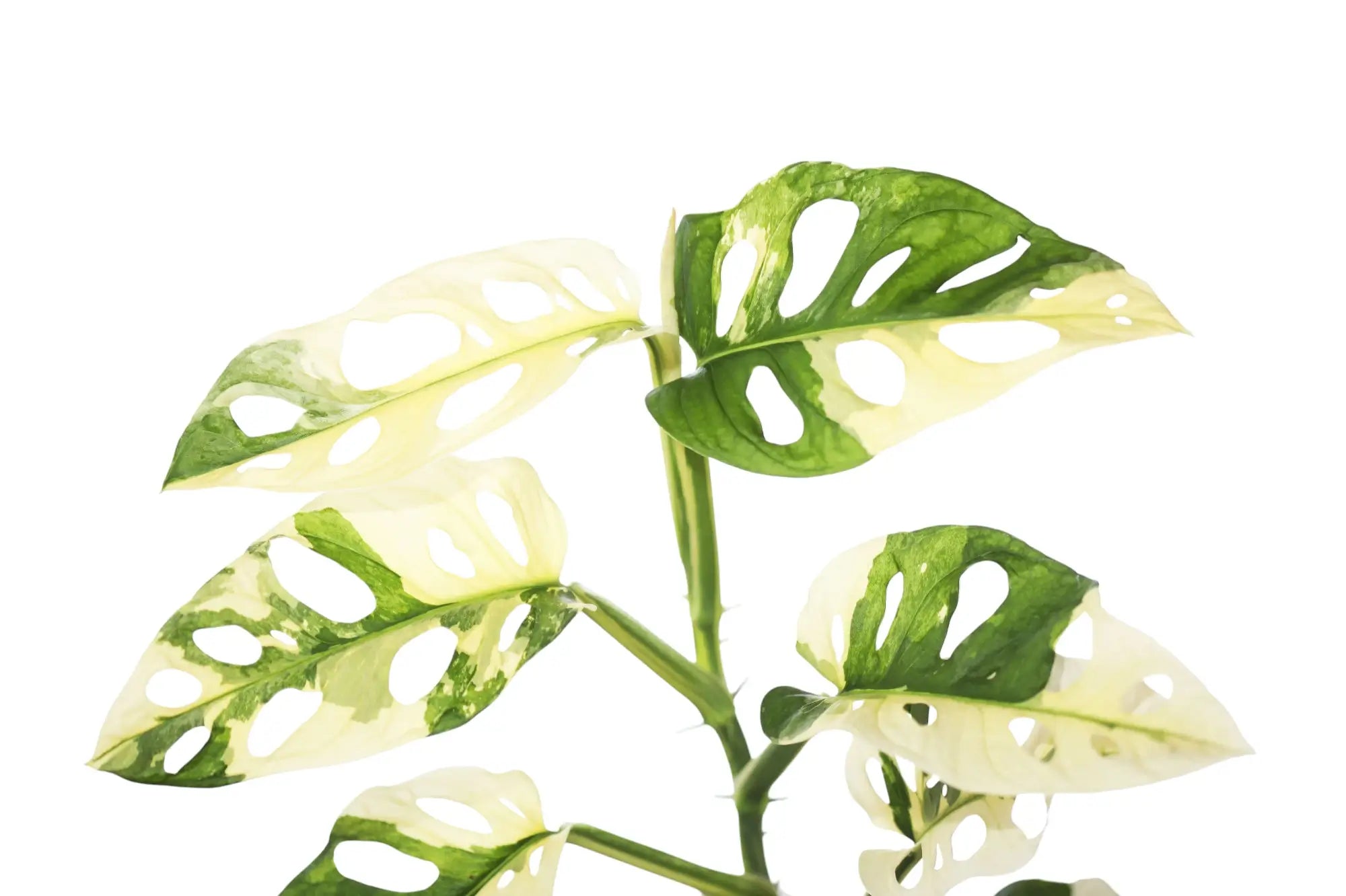
Variegated Monstera adansonii isn’t just pretty — each pattern is a genetic puzzle. This guide breaks down chimeral variegation, pigments behind white, mint and gold, and compares Albo-Variegata, M...
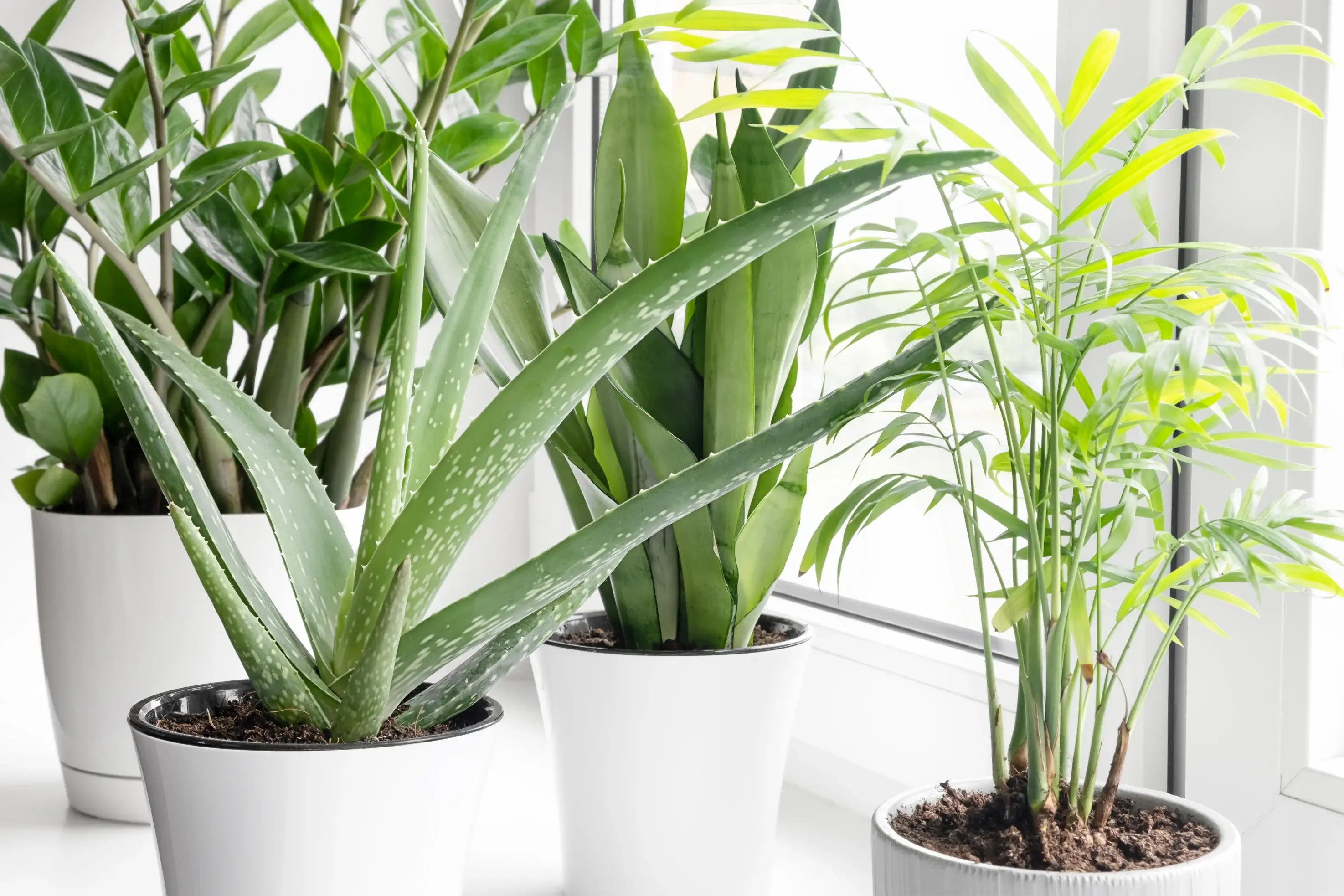
Got a sunny south- or west-facing window? Learn how to assess light, acclimate plants to prevent scorch, and choose full-sun houseplants that thrive indoors — Aloe vera, Crassula ovata, Echeveria s...
Die Pflanzen waren prima verpackt und ein heatpack war im Paket enthalten. Die Lieferzeit hat 2 bis 3 Tagen gedauert, was aus meiner Sicht wirklich gut ist. Alle drei Pflanzen haben die Lieferung gut überstanden. Ich habe mich auf Hoyas spezialisiert und habe schon die nächsten Pflanzen meiner Wunschliste auf der Website gefunden. Daher wird die nächste Bestellung nicht lange auf sich warten lassen.
Marion
★★★★★
I received perfectly heathy and absolutely beautiful plants, even bigger than expected. The delivery within Europe was really fast. I think Foliage Factory has one of the best plant web shops in the internet. It‘s just great to get so much informations about the plants. I will definitely order again :)
Walkerova
★★★★★
Envoie très rapide (2 jours), plantes parfaitement emballées et super offres ! Je suis une habituelle j'ai passé 6 ou 7 commandes et je n'en peut être plus satisfaite du service client et de la qualité et variété des plantes offertes
Iris
★★★★☆
Die Sendung kam leider in keinem guten Zustand bei mir an, kann passieren. Habe mich darauf hin sofort an Foliage Factory gewandt und habe selten einen so guten, schnellen, freundlichen und kulanten Kundendienst erlebt.
Frauke
★★★★★
The plants have arrived in perfect condition, the roots and the foliage so so healthy! I had problem with 1 plant out of 16 and they have responded to my email almost instantly and the issue was resolved straight away. I'm really impressed and satisfied, definitely getting more plants from them again!
Patricija
★★★★☆
Very healthy and well packed plant. Unfortunately there was one plant that ordered couldn’t be delivered as it was out of stock hence 1 star less.
Sam
★★★★★
Everything arrived in good condition and very well packed - it wasn't easy with a fragile plant and a heavy bag of substrate. I recommend it!
Lia
★★★★★
Bester online-Pflanzenhandel den ich kenne (habe davor 4 andere ausprobiert). Eine teure Pflanze wurde beim Transport beschädigt und mir ersetzt. Der Kontakt dabei war auch sehr nett (danke Jan) und hat mir gut geholfen. Die anderen Pflanzen sind in einem sehr guten Zustand, keine Schädlinge, super Bewurzelung. Nur zu empfehlen! :)
C L
★★★★★
Super Service, Gute Auswahl, Preise sind fair. Eine Pflanze kam kaputt an, hab sofort Ersatz bekommen. Danke an den unkomplizierten (und blitzschnellen) Kundenservice!!
Sarah
★★★★★
The plants are carefully packaged and arrive in great conditions (I’m based in Spain) and they’re always there to help in any way they can with your purchase.I have and will always recommend Foliage Factory to every friend I can. I’m not only satisfied with their plants and prices, but their customer service is exceptional.
José
Get 10% off your next plant order
Sign up for Foliage Factory newsletter for early access to new arrivals and practical care tips that work in real homes.





Leave a comment
This site is protected by hCaptcha and the hCaptcha Privacy Policy and Terms of Service apply.