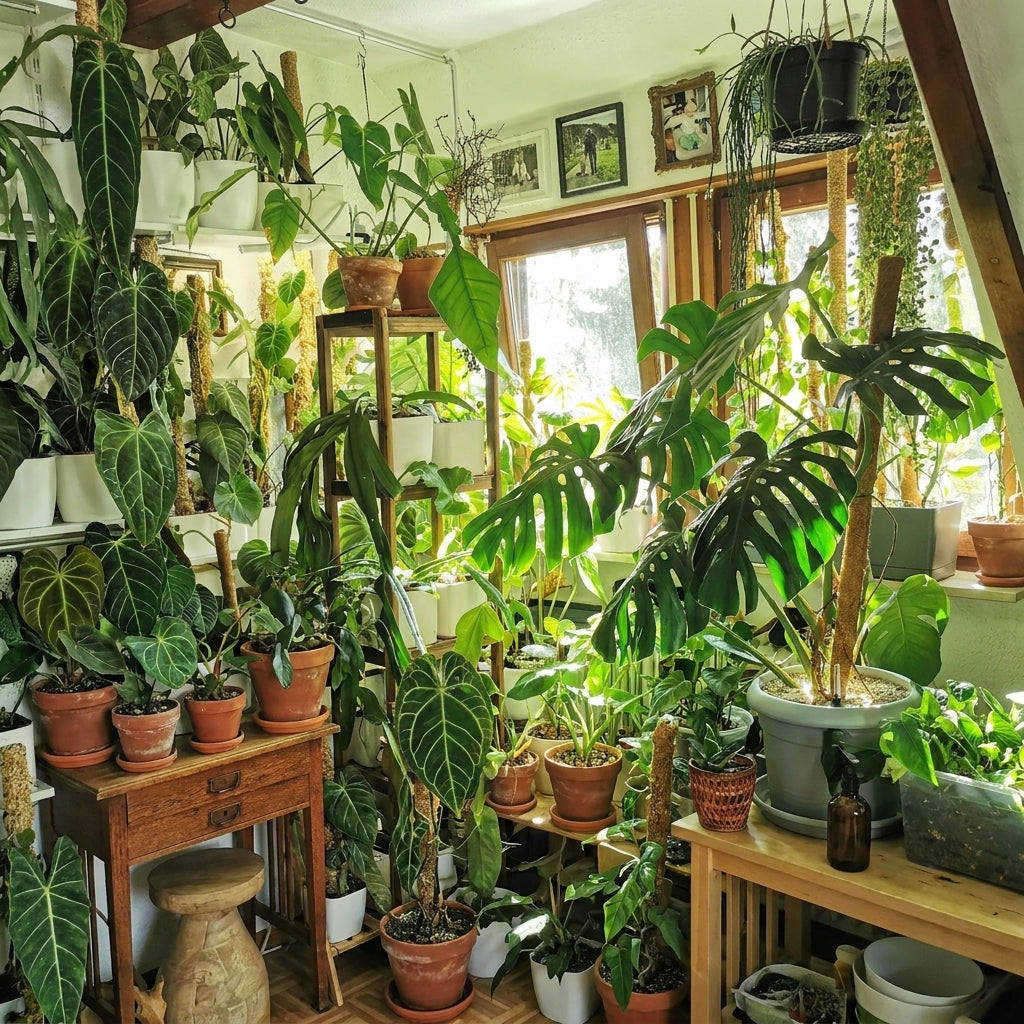
The Best Houseplants: Must-Have Classics for Your Home
Must-have classics for real homes: 8 houseplants, from snake plant and peace lily to Monstera and ZZ plant, plus quick care tips, pairing ideas, and pest-prevention basics.
Read more
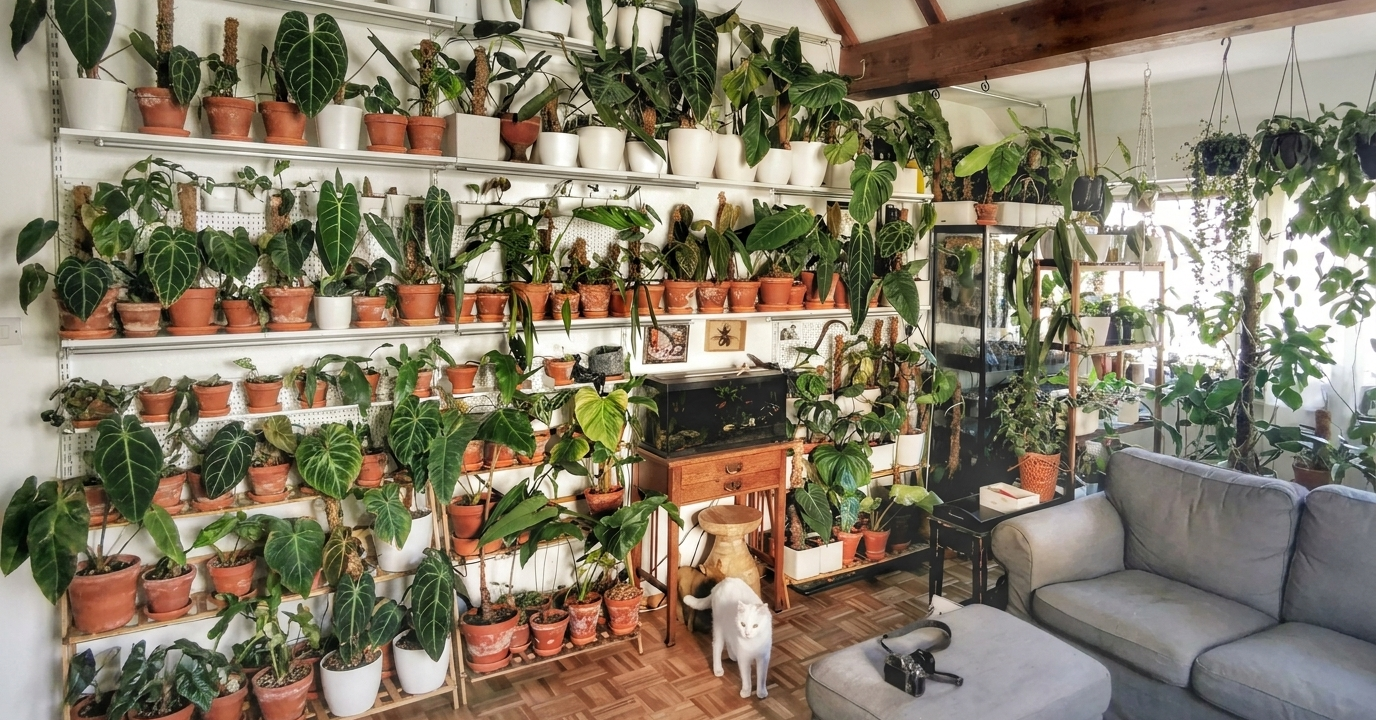
Alocasia longiloba (accepted name: Alocasia longiloba Miq.) sits in one of the messiest corners of Alocasia naming. Leaf shape, vein contrast, and underside colour can look “signature” in one clone and completely different in another — and a long list of historic names still shows up on labels as if they were separate, stable plants.
Botanical publication goes back to 1856, but much of what growers recognise today comes from cultivated “types” that circulated later through nurseries and Victorian-era horticulture. One of those, “Watsoniana”, was discussed and illustrated in The Gardeners’ Chronicle in 1893 — exactly the kind of moment that helped a trade name stick for more than a century.

Accepted botanical name: Alocasia longiloba Miq. (published 1856). In cultivation, older names and “variety” labels often persist, even when modern backbones treat many of them inside a broader longiloba concept.
Native range: Reports place native distribution from southern China (including Guangdong, Hainan, and southern Yunnan) through mainland Southeast Asia into West and Central Malesia (Peninsular Malaysia, Sumatra, Borneo, Java, Sulawesi). That wide span is part of the reason longiloba shows so many local looks and “types” in the trade.
Habitat snapshot: Longiloba is not limited to one neat “dark jungle understory” scenario. Field and compilation notes describe plants on rainforest and swamp-forest floors, in regrowth/secondary forest, and on rocks or boulders — including exposed cliffs and ravines — across low to medium elevations.
One key reality: “Alocasia longiloba” functions as a highly variable complex in botany and in cultivation. Local populations can look distinctive, and nursery lines can amplify one look until it becomes a “type” on labels. Treat leaf pattern as a clue, not a guarantee.
Across sources, longiloba is described as a small to robust terrestrial (ground-growing) to occasionally lithophytic (rock-growing) herb, typically around 40–150 cm tall. Stems are rhizomatous (a thickened, stem-like base) and can be elongate, upright to leaning/creeping, sometimes partly exposed above the substrate, and can reach roughly 8–60 cm in length.
Leaves are where longiloba earns its reputation — and where misidentifications start. Petioles can be long (often 30–120 cm) and frequently show mottling or oblique markings. Blades are usually arrow- to spear-shaped (sagittate to hastate) and often hang or “pend” rather than sitting upright. Size ranges commonly cited in descriptive treatments run about 27–65(–85) cm long and 14–40 cm wide, but outline shifts a lot: from narrower, more triangular forms to broader, shield-like looks.
Colour and venation can be dramatic but are not fixed across every longiloba type. Upper surfaces may read mid green to very dark green. Undersides can be greenish to rich purple. Major venation is often pale grey-green to white, and some clones show a paler “halo” along primary veins.
Inflorescences are typical Araceae structure: a spathe (the enclosing bract) around a spadix (the flower spike). Descriptive accounts note spathes in the roughly 7–17 cm range with a clear constriction; the spadix is shorter than to about equal to the spathe, with distinct female and male zones and a terminal appendix (the tip section) that can show pale orange to bright yellow tones. Indoors, flowering is possible but not a given — and growth can be rhythmic, with pauses that are easy to misread as a “problem”.

Practical ID takeaways (indoors):
Historic names inside the longiloba complex still show up on labels because they describe real, repeatable looks in cultivated lines. Modern taxonomy often treats many of these names as synonyms (or as entities inside a broader longiloba concept), but trade usage tends to keep them alive as shorthand for a particular leaf shape, venation style, or texture.
Common longiloba “types” seen in cultivation include names like ‘Lowii’, ‘Watsoniana’, and ‘Denudata’, plus many older published names now listed as synonyms in major datasets. These are best treated as trade shorthand, not as formally fixed cultivars with guaranteed identity.
In descriptive treatments, ‘Denudata’ is often singled out for differences in blade attachment compared to many other longiloba forms — the kind of trait growers notice even if they never use the technical vocabulary.
How to use these labels without getting trapped by them:
Longiloba also matters horticulturally because it has been used in hybridisation for well over a century, and it sits behind multiple “famous” foliage hybrids sold worldwide. That hybrid legacy is one reason longiloba gets confused with plants that are not longiloba at all.

Hybrid history is where longiloba gets most of its everyday recognition — even from people who have never owned longiloba itself.
Alocasia ‘Amazonica’ is one of the most commercially significant longiloba-linked hybrids. Parentage is commonly given as Alocasia sanderiana × Alocasia longiloba ‘Watsoniana’. Despite the nickname “African Mask”, nothing about ‘Amazonica’ is African, and the “Amazon” name points to nursery history rather than geography.
Alocasia ‘Polly’ is not simply a “small Amazonica.” It is described as a polyploid mutant discovered in tissue-culture liners of ‘Amazonica’ — one reason it can hold a compact look in mass production while still being tied to the same longiloba × sanderiana background.
Alocasia ‘Sedenii’ and Alocasia ‘Orchid Jungle’ are classic longiloba-related crosses with parentage cited as Alocasia cuprea × Alocasia longiloba ‘Lowii’. ‘Sedenii’ has deep roots in 19th-century horticulture; ‘Orchid Jungle’ is attributed to later work and is often discussed in relation to recreating an older “Sedenii-like” plant.
Alocasia ‘Mark Campbell’ is another longiloba-linked hybrid, described with parentage as Alocasia longiloba ‘Lowii Grandis’ × Alocasia sanderiana. It sits in the same broader family of hybrids that repeatedly recombine longiloba-type traits with sanderiana-type contrast.
Why this matters for ID: bold white veins and dark blades are not “proof” of longiloba. They can just as easily point to longiloba-influenced hybrids that behave differently in a pot (especially around watering tolerance).
Longiloba care gets easy to predict when one principle stays in front: roots need oxygen. Warmth and brighter light help the plant use water; dense mixes and cool rooms make wet soil dangerous.
Repotting is most useful when it solves a specific problem: compacted mix that stays wet, roots that have filled the pot, or recovery after root loss. Moving into a bigger pot “for future growth” can backfire if the substrate stays damp for too long.
When to repot:
Root rescue basics (after rot):
Propagation in longiloba is usually vegetative: division of the rhizome, separating offsets, or growing on small corms that form around the base. Success is mostly about keeping the setup warm, bright, and lightly moist without stagnant wetness — especially while roots are still sparse.
Like many Araceae, longiloba contains calcium oxalate crystals and is not edible. Keep away from pets and children, avoid contact with eyes and mouth, and wash hands after handling sap or damaged tissue.
The Best Houseplants: Must-Have Classics for Your Home
Must-have classics for real homes: 8 houseplants, from snake plant and peace lily to Monstera and ZZ plant, plus quick care tips, pairing ideas, and pest-prevention basics.
Read more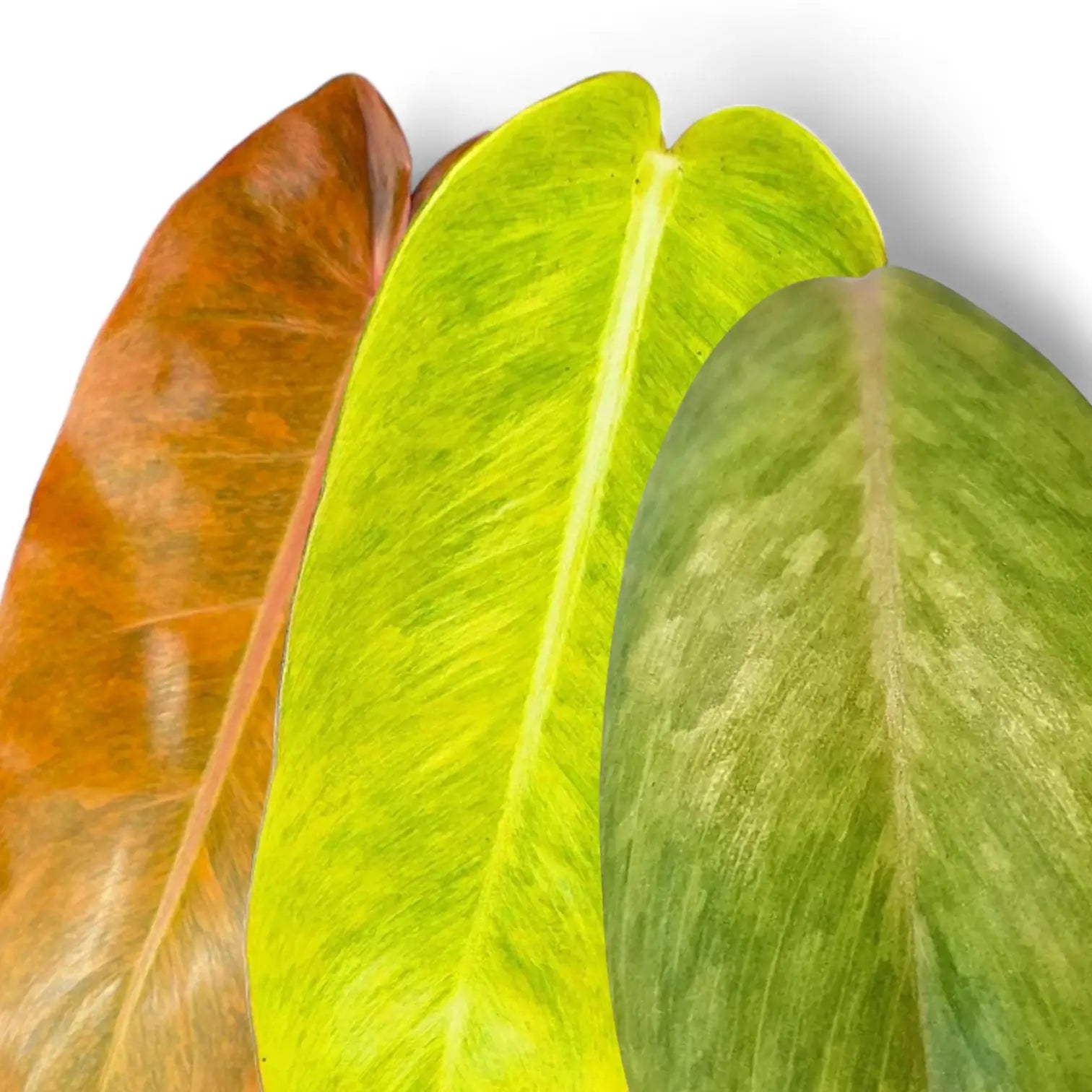
Comparing Philodendron 'Orange Marmalade', 'Calkin's Gold', and 'Painted Lady'
Not sure whether you’ve got Philodendron ‘Orange Marmalade’, ‘Calkins Gold’, or ‘Painted Lady’? This guide compares foliage colour, leaf shape, petiole traits, growth habit, and care so you can ID ...
Read moreSign up for Foliage Factory newsletter for early access to new arrivals and practical care tips that work in real homes.

%20sits%20in%20one%20of%20the%20messiest%20corners%20of%20Alocasia%20naming.%20Leaf%20shape,%20vein%20contrast,%20and%20underside%20colour%20can%20look%20%E2%80%9Csignature%E2%80%9D%20in%20one%20clone...)
Leave a comment
This site is protected by hCaptcha and the hCaptcha Privacy Policy and Terms of Service apply.