Light
Bright indirect • approx. 10,000–20,000 lux


Buy 4 plants, get 1 free
VAT included · plus
Your new plant has just travelled a long way and needs a calm start in its new home. For step-by-step unboxing and first-week care, check our after-delivery care guide. For deeper tips on how your plant settles in over the next weeks, read our houseplant acclimatization guide.
Secure shipping, carefully packed orders with safe delivery across the EU, UK and Switzerland.
28-day plant guarantee, if a plant arrives damaged or fails soon after delivery, we help you make it right.
Free returns, simple, cost-free returns according to our policy.
For full details, please see:
Please head to our FAQ Page or Contact us.
Quick Care Guide
Light
Bright indirect • approx. 10,000–20,000 lux

Watering
Water when upper 20–30% dry
Substrate
Moisture-retentive but airy • Fine bark/coir + perlite or pumice • Good drainage
Temperature
Ideal: 18–24 °C • Avoid below: 15 °C
Humidity
Humid 60–80 % +
Growth habit
Upright clumping rhizomatous herbaceous perennial.
Support
not needed
Growth speed
Average
Max size indoors
Max. height: 100 cm • Max. spread: 70 cm
Toxicity & safety
Non-toxic
Origin & habitat
Native to Brazil (Bahia)
Outdoor growing
Outside from 15 °C · sheltered spot
These care values are quick reference points for indoor growing. Use them as a guide, then adjust for pot size, substrate, temperature and how quickly the substrate dries.
For more detail, read the full product description or visit our Plant Care Guides.
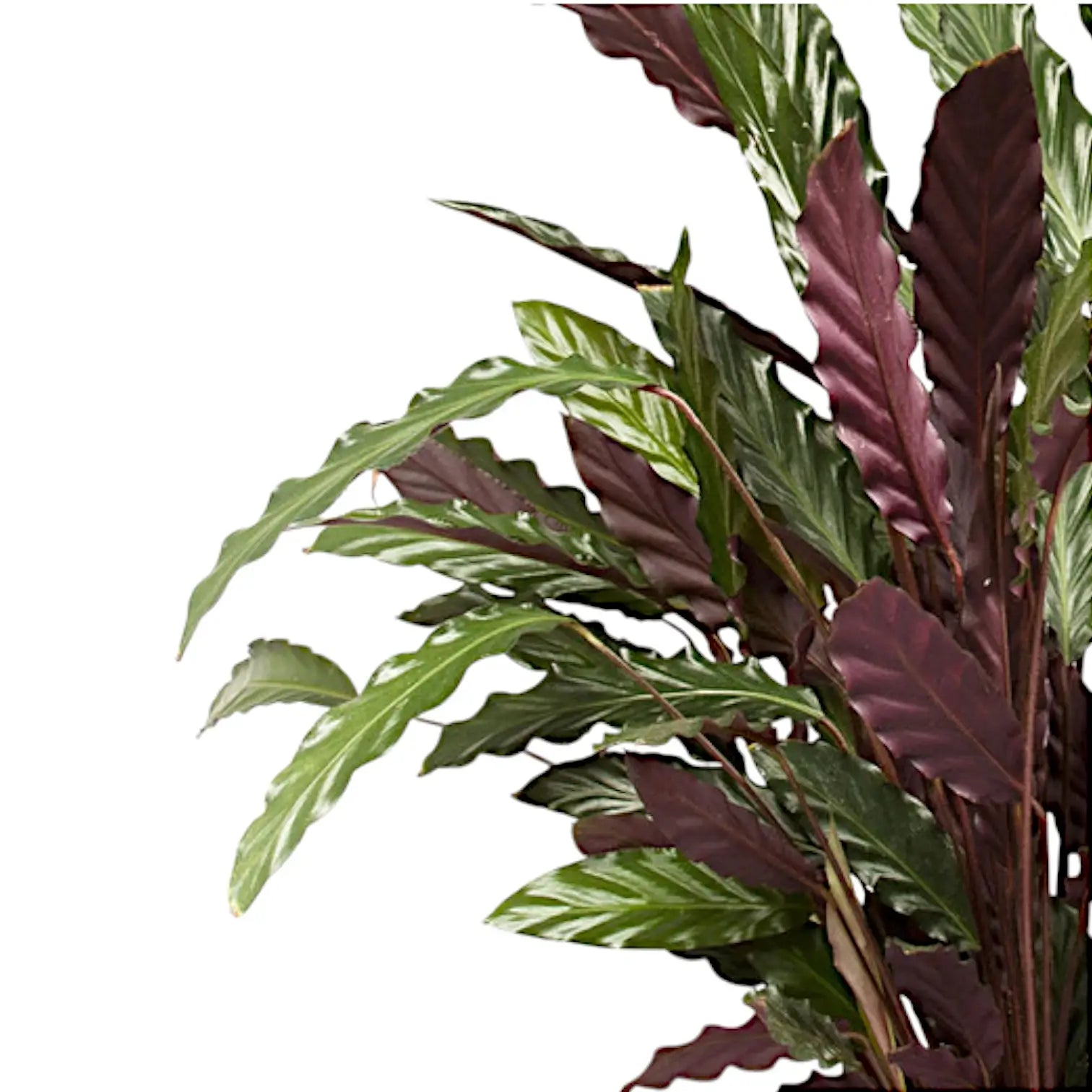
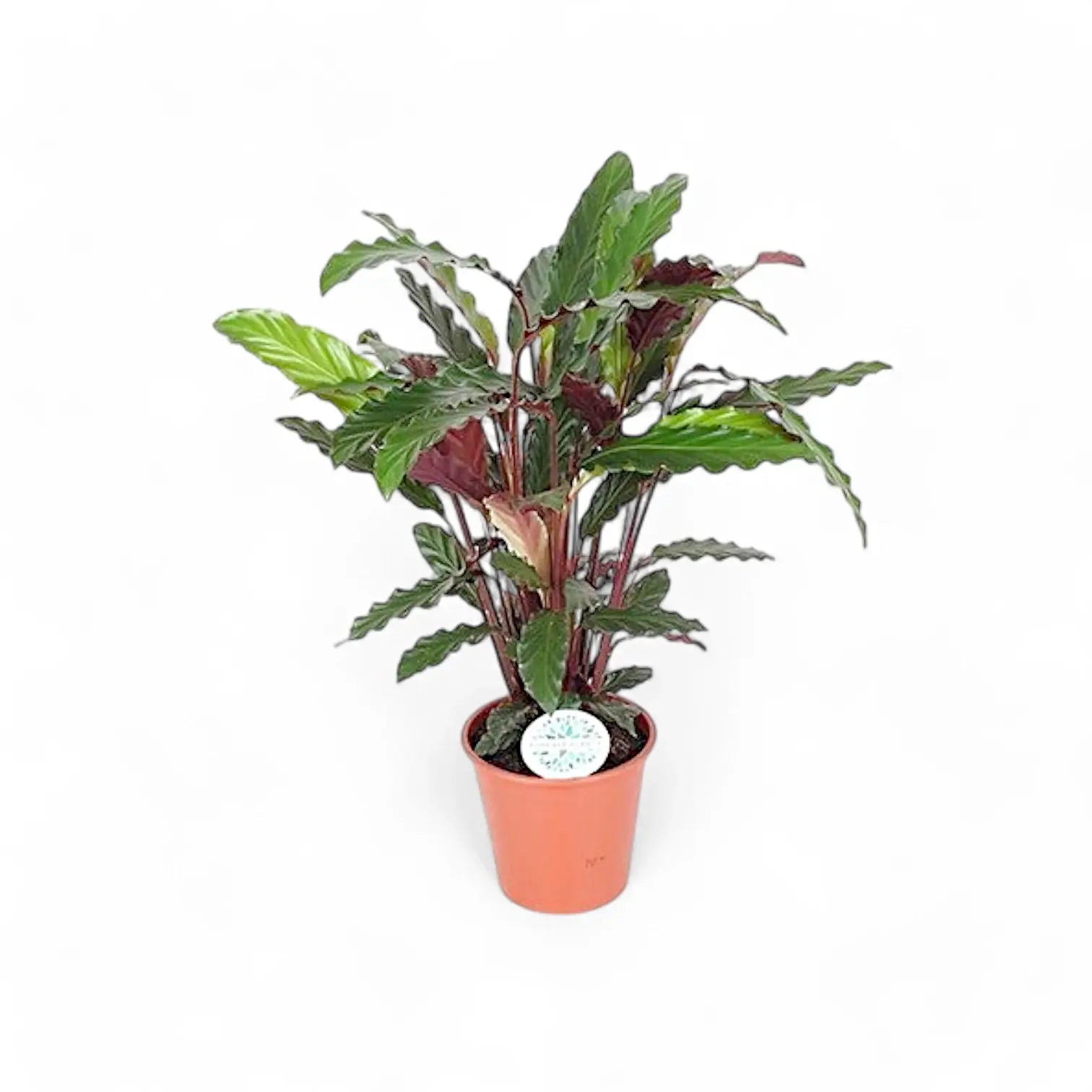
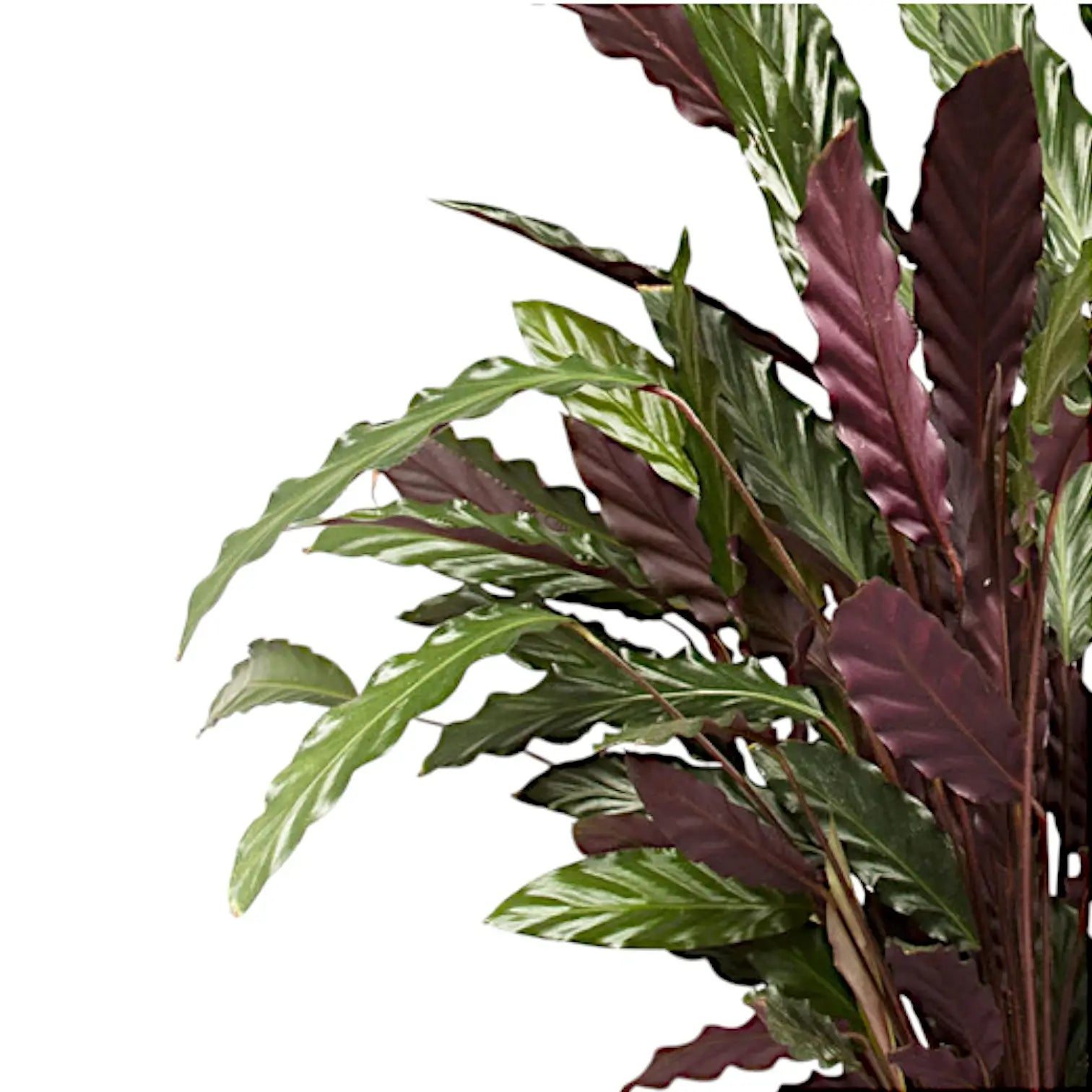
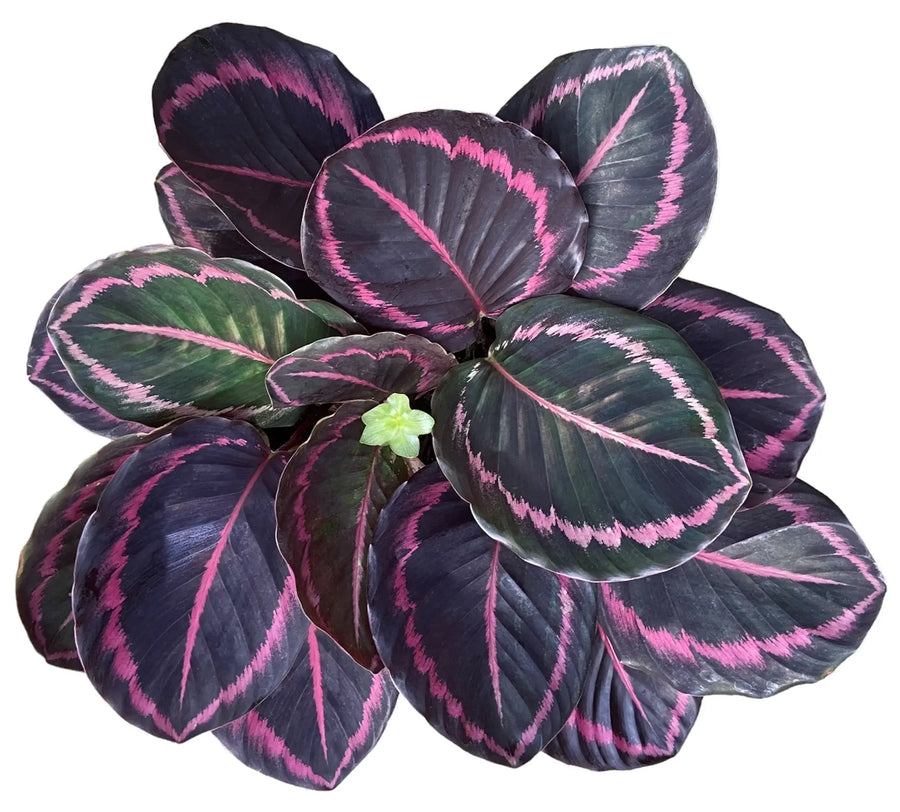
Goeppertia (Calathea) rufibarba is a warm-growing prayer plant species with long, narrow green leaves, softly waved margins and a reddish-purple underside covered in fine hairs. The tactile detail comes from the fine hairs on the petioles and lower leaf surfaces, which create a soft texture when mature leaves arch from the base.
This Marantaceae species grows as a rhizomatous herbaceous perennial. New leaves rise from an underground rhizome and appear close together, so the plant builds a full clump over time. Mature indoor plants can reach roughly 60–90 cm tall and around 30–60 cm wide in good conditions, with individual leaves reported up to about 25 cm long on petioles around 20 cm.
Goeppertia rufibarba is adapted to warm, humid and partially shaded forest conditions. In habitat, canopy cover filters the light before it reaches the plant, while the soil stays moisture-retentive yet biologically active and aerated. Strong sun, cold wet substrate and stale potting mix can disturb that balance quickly.
The rhizome is the centre of the plant’s growth. It stores energy and produces fresh shoots, with fine roots growing from the base to absorb moisture. When the root zone stays lightly moist and airy, new leaves open cleanly and the clump becomes denser. If the substrate turns compact or remains saturated, the first signs often appear as yellowing lower leaves, soft petiole bases or stalled growth.
The reddish hairs on the petioles, midribs and leaf undersides are part of the species’ natural morphology. They give Goeppertia rufibarba its common names “furry feather calathea” and “velvet calathea”, and they also connect directly to the species epithet. This texture is most noticeable on mature leaves and on plants grown in stable warmth with good humidity.
Goeppertia rufibarba develops a denser clump when it has time to build from the rhizome. Refreshing the substrate often improves growth more gently than splitting the plant into small pieces. If division is needed, keep the new sections warm and evenly moist while fresh roots establish.
Dust can collect on the long leaves and reduce the clean look of the green upper surface. Wipe the leaves gently with a damp cloth and support each blade from below while cleaning. Leaf shine products can leave residue on sensitive tissue and should be avoided.
Calathea species are listed as non-toxic to cats and dogs. Chewing can still tear the leaves and may cause mild stomach upset simply from eating plant material, so Goeppertia (Calathea) rufibarba is best placed where pets cannot repeatedly damage the soft blades.
Goeppertia belongs to Marantaceae, the prayer plant family, and the genus name honours Johann Heinrich Robert Göppert, a German botanist and palaeobotanist. The species epithet rufibarba comes from Latin roots meaning “red” and “beard”, referring to the reddish hairs on the petioles, midribs and leaf undersides. Calathea rufibarba is the older synonym still found with this species, and the plant was later transferred to Goeppertia.
Goeppertia rufibarba grows into a full clump of narrow green leaves with soft reddish undersides and furry petioles.
Plant names, growth habits, natural habitats and indoor care guidance are checked against trusted botanical, habitat and horticultural references before publication.View our plant care resources and references.