Light
Bright indirect • approx. 10,000–20,000 lux


Buy 4 plants, get 1 free
VAT included · plus
Your new plant has just travelled a long way and needs a calm start in its new home. For step-by-step unboxing and first-week care, check our after-delivery care guide. For deeper tips on how your plant settles in over the next weeks, read our houseplant acclimatization guide.
Secure shipping, carefully packed orders with safe delivery across the EU, UK and Switzerland.
28-day plant guarantee, if a plant arrives damaged or fails soon after delivery, we help you make it right.
Free returns, simple, cost-free returns according to our policy.
For full details, please see:
Please head to our FAQ Page or Contact us.
Quick Care Guide
Light
Bright indirect • approx. 10,000–20,000 lux

Watering
Water when ~60–80% dry
Substrate
Airy + fast-draining • Light moisture buffer • Bark-based • Medium-chunky
Temperature
Ideal: 16–24 °C • Avoid below: 10 °C
Humidity
Humid 60–80 % +
Growth habit
Climbing or trailing epiphytic perennial vine.
Support
recommended
Growth speed
Average
Max size indoors
Max. trail length: 150 cm • Max. spread: 60 cm
Toxicity & safety
Non-toxic
Origin & habitat
Native to Borneo (Kalimantan)
Outdoor growing
Outside from 15 °C · sheltered from wind and rain
These care values are quick reference points for indoor growing. Use them as a guide, then adjust for pot size, substrate, temperature and how quickly the substrate dries.
For more detail, read the full product description or visit our Plant Care Guides.
Hoya buntokensis is one of the more recent discoveries in the genus, officially described in 2021 by Siti Rahayu and Michele Rodda in Blumea 66(3): 237. Native to Central Kalimantan, Indonesia, this rare species pairs finely textured foliage with compact umbels of pale pink flowers. It is a collector’s Hoya that speaks more through subtlety than extravagance – elegant, botanical, and rooted in the rainforests of Borneo.
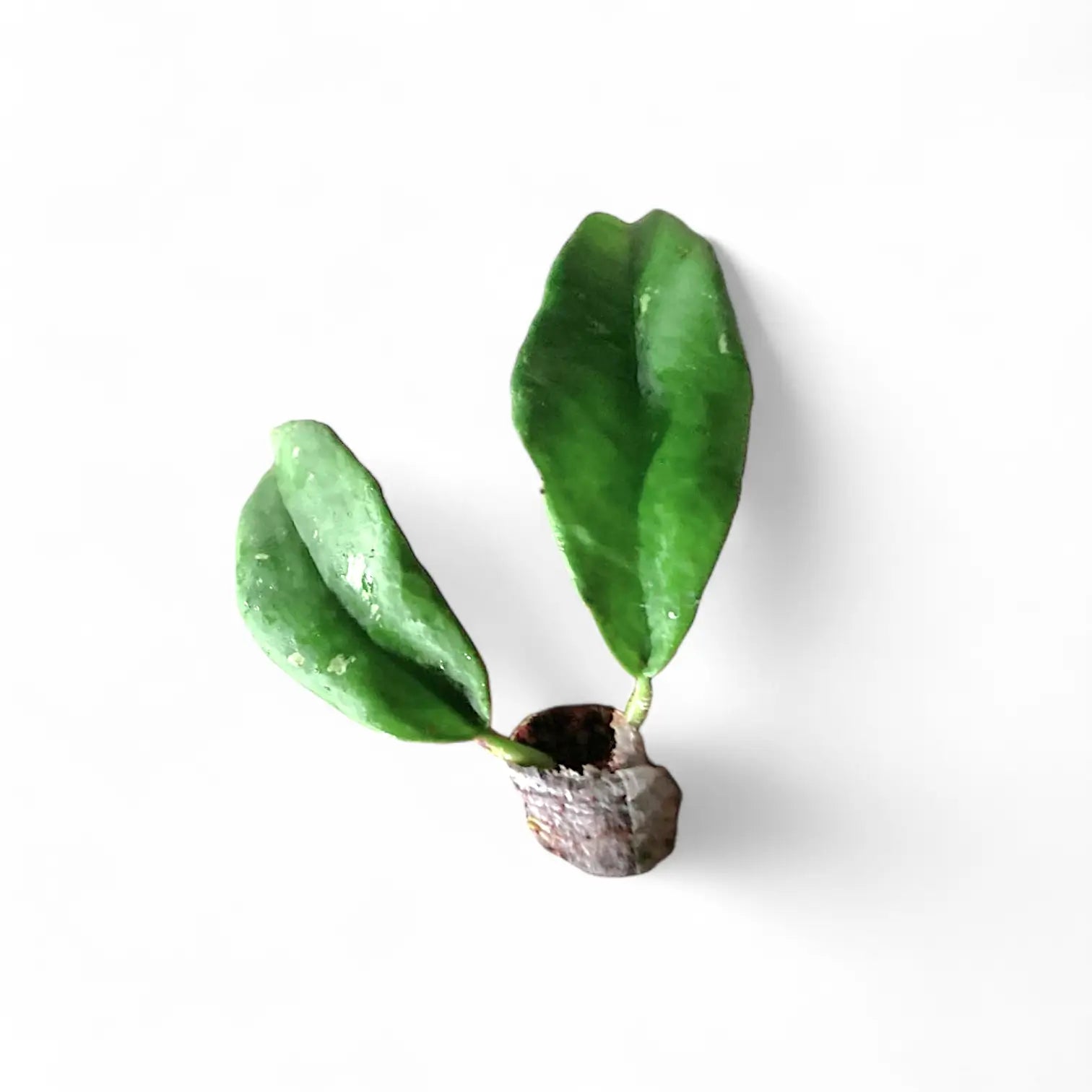
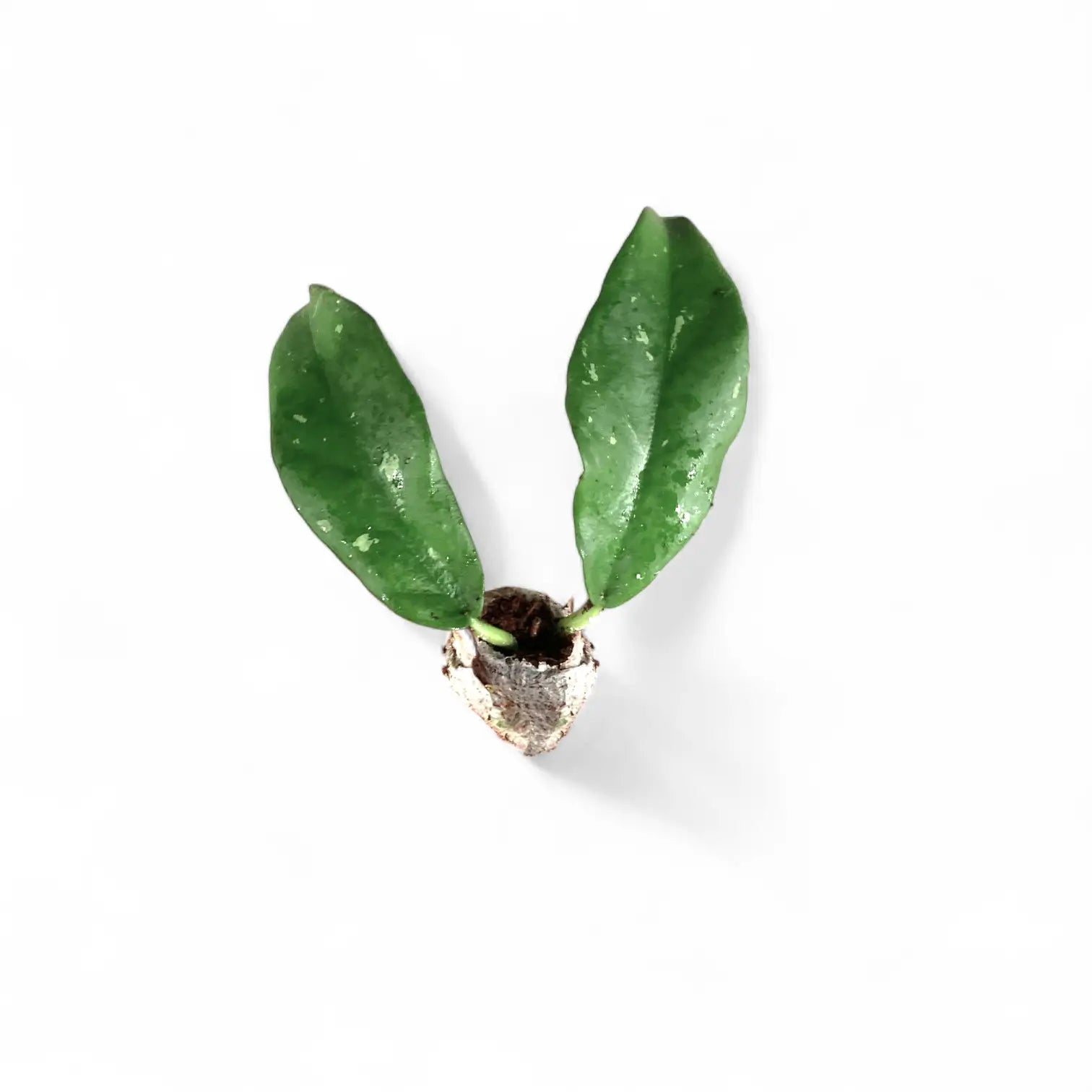
Hoya buntokensis grows as a slender, twining epiphyte with a calm, steady pace. Leaves are leathery, elliptic to narrowly ovate, usually 6–10 cm long and 2–3 cm wide, with faint but structured venation and a light gloss on the upper surface. Once mature and properly supported, vines can reach 1.5–2 m.
In suitable conditions, it produces neat, dome-shaped umbels with 15–25 small flowers, each around 5–6 mm in diameter. Corollas are creamy white to soft pink, with a yellowish-pink corona that deepens slightly toward the centre. Flowers are revolute (curved backward), characteristic of section Acanthostemma, and release a gentle sweet fragrance most noticeable in the evening.
In the wild, Hoya buntokensis grows epiphytically on trees or occasionally as a lithophyte on mossy rocks in the lowland rainforests of Central Kalimantan. The type locality near Buntok lies at roughly 100–300 m elevation. Conditions there are consistently warm, humid, and shaded – a microclimate this species still prefers in cultivation.
These natural cues explain why it responds well to stable humidity, filtered light, and good air movement rather than intense sun or prolonged dryness. This makes Hoya buntokensis particularly suited to terrariums, grow cabinets, and bright indoor setups with warm temperatures.
Prefers bright, indirect light. Avoid harsh midday sun, which can damage leaves and stress fine roots.
Water when the upper layer of substrate feels dry. Roots are fine and sensitive to excess moisture, so avoid waterlogged conditions and heavy, compact mixes.
Performs best at 60–80 %. Gentle air circulation helps prevent fungal spots and keeps foliage clean.
Ideal range is 20–28 °C. Avoid temperatures below 15 °C, as growth slows sharply and stress increases.
Use a coarse, airy mix such as bark, perlite, and sphagnum, or a mineral semi-hydro substrate that holds even moisture without stagnation.
Apply diluted fertiliser every few weeks during active growth. Light, regular feeding is safer than strong doses.
Roots readily from one- or two-node cuttings placed in warm, humid conditions in moss, perlite, or semi-hydro media.
Moderate. Once established, vines extend steadily through the year under stable warmth and light.
Generally considered non-toxic to humans and pets, though latex sap can irritate sensitive skin and mouths.
Hoya buntokensis was described by S. Rahayu and M. Rodda in 2021 (Blumea 66(3): 237). The species name buntokensis refers to the town of Buntok in Central Kalimantan, where the type specimen was collected.
It belongs to Hoya section Acanthostemma, a group defined by small, recurved corollas and compact umbels.
Formal citation:Hoya buntokensis S.Rahayu & Rodda, Blumea 66(3): 237 (2021)
Hoya buntokensis remains scarce in cultivation, especially outside Southeast Asia. Delicate floral architecture, gentle fragrance, and documented wild origin make it a rewarding species for advanced Hoya growers and collectors of true botanical taxa.
It thrives in warm, stable indoor conditions and transitions well to semi-hydro substrates once roots are established. The contrast between narrow leaves, fine venation, and compact umbels gives it a distinct identity even among other Acanthostemma species.
Bring a genuine piece of Borneo’s flora into your collection with Hoya buntokensis – a rare, scientifically described species prized for refined leaves and soft, fragrant blooms.
Ideal for collectors seeking an authentic wild-origin Hoya that grows beautifully indoors under stable, bright conditions and rewards patience with quietly striking character.
Plant names, growth habits, natural habitats and indoor care guidance are checked against trusted botanical, habitat and horticultural references before publication.View our plant care resources and references.