Skip to content

Cart

Your cart is empty.

Crassulaceae

Echeveria 'Purple Pearl' aka 'Perle von Nürnberg'

Pet Friendly

Echeveria 'Purple Pearl' aka 'Perle von Nürnberg'

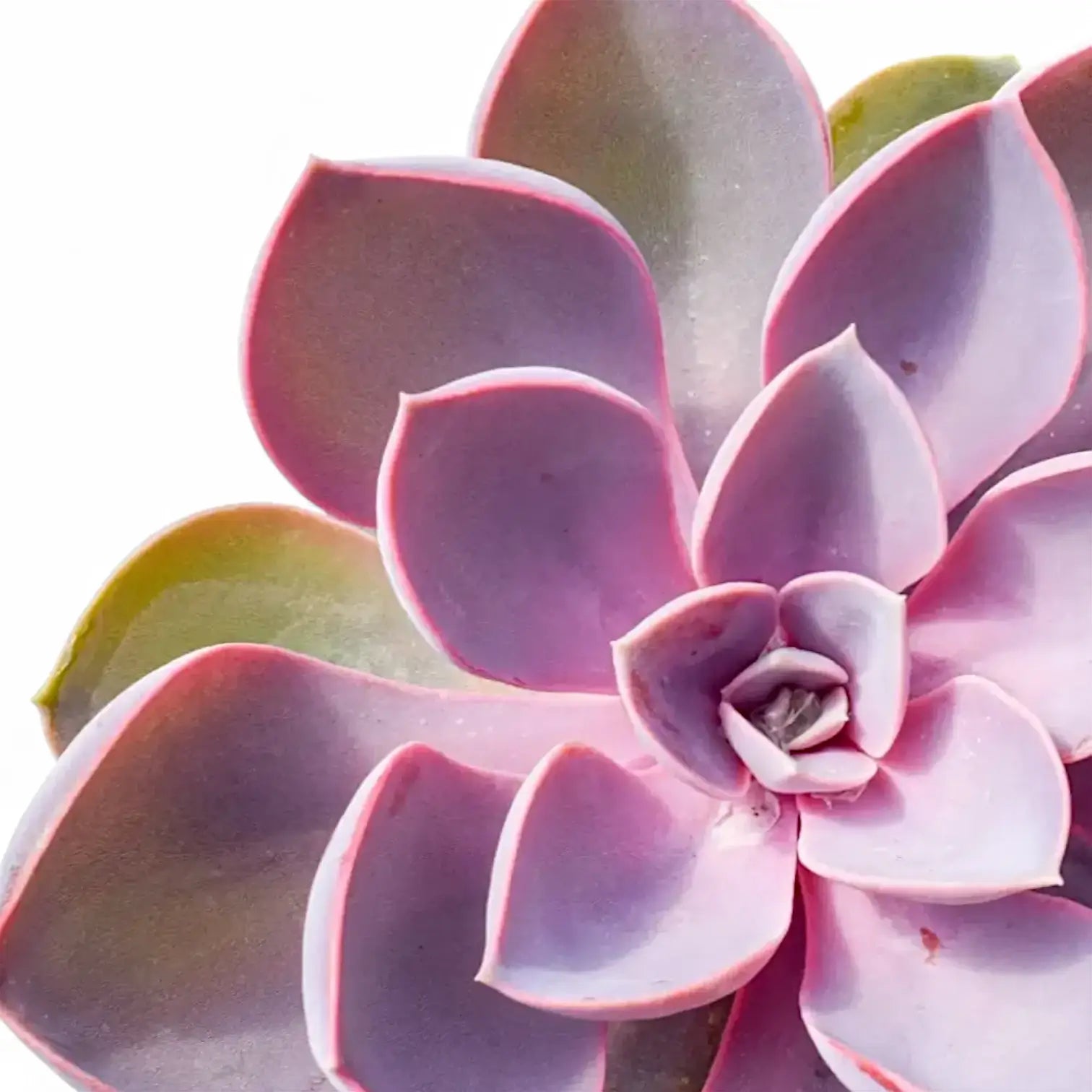
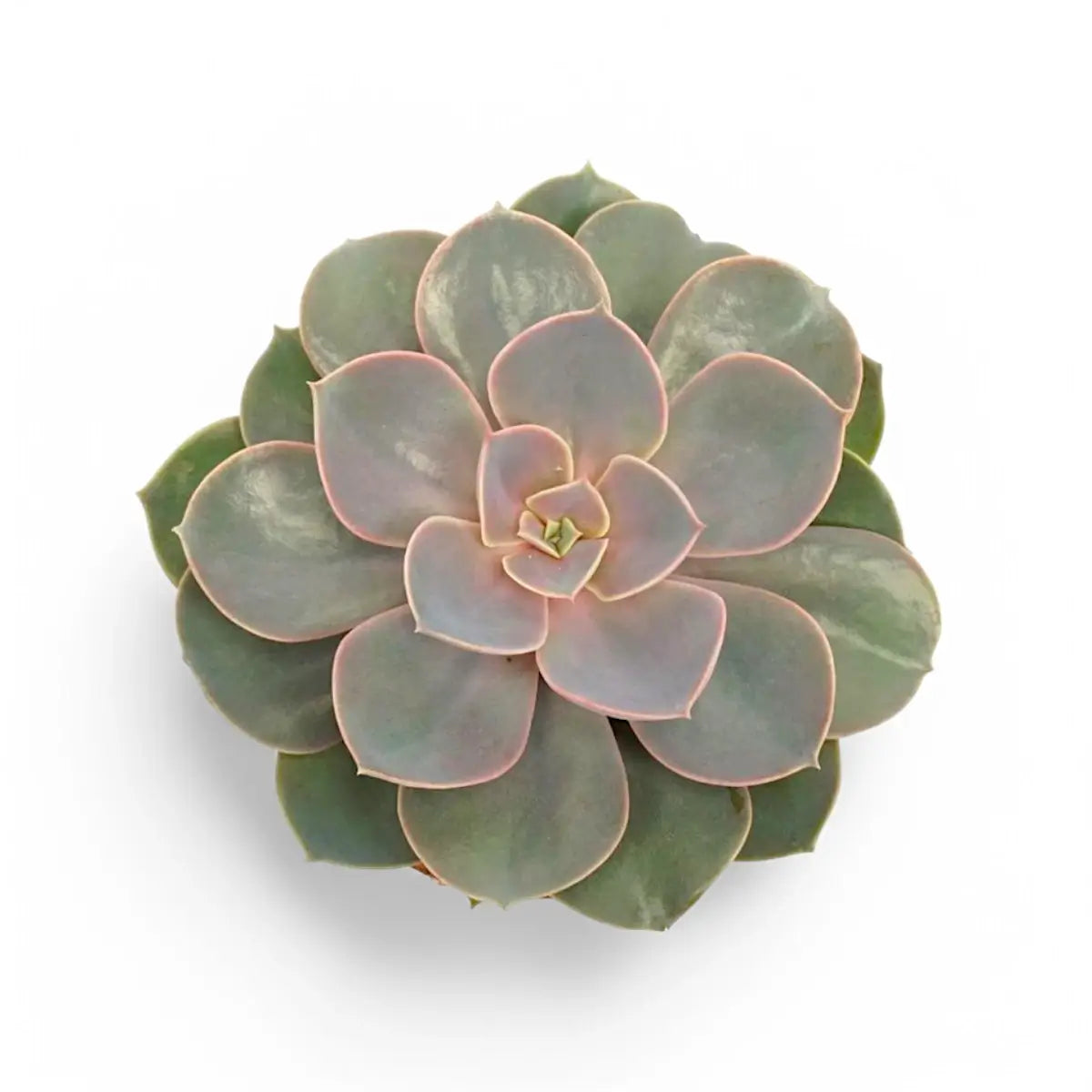
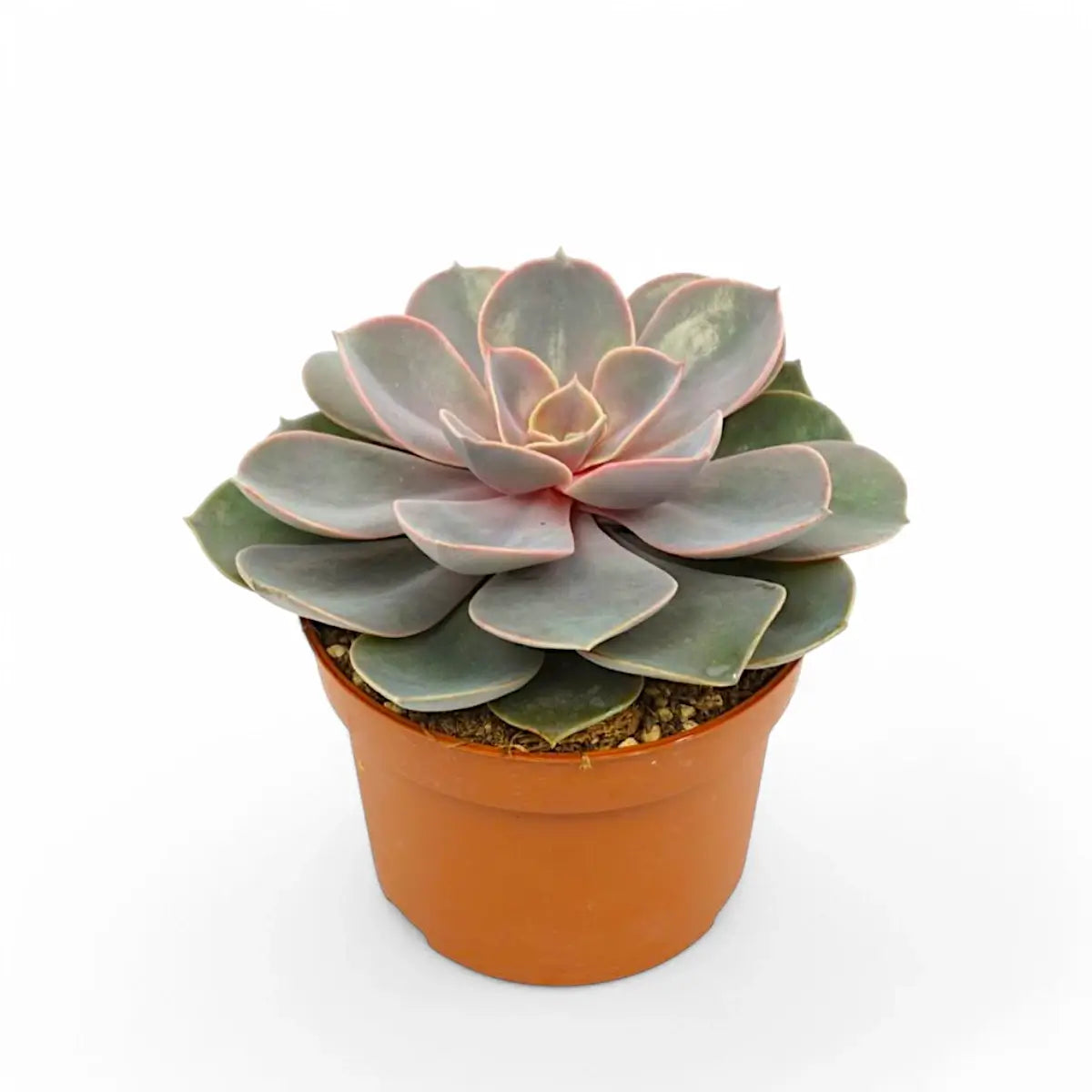
Echeveria 'Purple Pearl', better known in cultivation as Echeveria 'Perle von Nürnberg', is a classic hybrid rosette succulent with broad, fleshy leaves in soft lilac, pink-grey and silvery purple tones. Its colour sits in the surface bloom and leaf tissue, so the plant looks cleanest when handled by the pot and kept away from constant brushing.

The rosette stays close to the substrate at first, then may show a short stem as older lower leaves dry and are removed. Mature plants can produce flower stalks above the rosette, usually carrying warm pink to coral-toned flowers typical of many cultivated Echeveria hybrids.

Quick-scan traits of Echeveria 'Perle von Nürnberg'

  • Growth habit: Single rosette at first, with a short stem becoming visible as older leaves age.
  • Leaf shape: Broad, spoon-shaped succulent leaves arranged in a layered spiral.
  • Colour: Lilac-grey to pink-purple leaves with a pale powdery bloom.
  • Hybrid background: Documented as a hybrid involving Echeveria gibbiflora 'Metallica' and Echeveria elegans 'Potosina'.
  • Container behaviour: Suits a shallow pot where the rosette sits above a fast-draining mineral mix.

How this purple Echeveria rosette develops

Echeveria 'Perle von Nürnberg' was raised by Alfred Gräser in Germany and became one of the best-known cultivated Echeveria hybrids. Its rounded, layered rosette reflects the softer leaf shape of Echeveria elegans influence, while the stronger pink-purple colouring is linked with the Echeveria gibbiflora side of its background.

In cultivation, the plant gradually replaces its lowest leaves as the central rosette expands. This ageing pattern is normal for Echeveria: remove fully dry lower leaves to keep the stem area open and reduce hiding places for pests, but leave firm leaves attached because they still store water for the plant.

Keeping Echeveria 'Purple Pearl' firm and evenly coloured

  • Light: Give very bright light with several hours of gentle direct sun or a strong grow light to keep the rosette dense and evenly coloured.
  • Watering: Water thoroughly, then let the substrate dry through the full pot before watering again; the leaves hold reserves and suffer quickly in cold, wet conditions.
  • Substrate: Use a gritty mineral mix with pumice, lava, coarse sand or similar particles so the fine roots receive air after watering.
  • Pot choice: Choose a pot with a drainage hole and keep the rosette base above the mix, as trapped moisture around the stem can start crown rot.
  • Temperature: Keep indoors above 8 °C in winter; cool dry nights are tolerated better than cold wet substrate.
  • Humidity: Average dry indoor air is suitable when airflow is good; closed terrariums hold too much moisture around the rosette.
  • Feeding: Feed lightly in spring and summer with a diluted cactus or succulent fertiliser, then pause during slower winter growth.
  • Handling: Touch the pot rather than the leaves, because fingerprints and rubbing can permanently mark the powdery surface.

What to check when Echeveria 'Perle von Nürnberg' declines

  • Stretched rosette: Longer gaps between leaves usually point to weak light; move the plant gradually into a brighter position.
  • Soft lower leaves: Yellowing, translucent leaves often mean the mix stayed wet too long; check the roots and let the pot dry fully.
  • Blackened centre: A dark, soft crown signals water sitting inside the rosette; improve airflow and water the substrate directly.
  • Mealybugs: White cottony clusters hide between lower leaves and around dried leaf bases; remove debris and treat early.
  • Marked leaf bloom: Scuffed patches on the farina remain visible, so place the plant where it can be admired with minimal handling.

Refreshing older Echeveria 'Purple Pearl' plants

Older plants can be refreshed by removing the rosette head and rooting it again after the cut stem has callused. Offsets, when present, can be separated only after they have enough stem and root tissue to establish independently.

Safety for pets and handling

Echeveria is generally treated as pet-safe. The leaves are still living plant material, so keep loose leaves and cuttings away from pets and children that chew plants.

Botanical name background

Echeveria belongs to the Crassulaceae family and is named after Atanasio Echeverría y Godoy, a botanical illustrator associated with Flora Mexicana. The German name 'Perle von Nürnberg' means “Pearl of Nuremberg”, while “Purple Pearl” is an English name used for the same well-known hybrid.

Echeveria 'Purple Pearl' aka 'Perle von Nürnberg' suits buyers looking for a documented classic hybrid with a long-standing place in succulent cultivation.

Sale price€14,75

VAT included · plus

Shipping Destinations & Charges

FAQs about Echeveria 'Purple Pearl'

Recently viewed: