Light
Bright indirect • approx. 10,000–20,000 lux


VAT included · plus
Your new plant has just travelled a long way and needs a calm start in its new home. For step-by-step unboxing and first-week care, check our after-delivery care guide. For deeper tips on how your plant settles in over the next weeks, read our houseplant acclimatization guide.
Secure shipping, carefully packed orders with safe delivery across the EU, UK and Switzerland.
28-day plant guarantee, if a plant arrives damaged or fails soon after delivery, we help you make it right.
Free returns, simple, cost-free returns according to our policy.
For full details, please see:
Please head to our FAQ Page or Contact us.
Quick Care Guide
Light
Bright indirect • approx. 10,000–20,000 lux

Watering
Water when ~20–35% dry
Substrate
Aerated • moisture-buffered • balanced organic + mineral • medium
Temperature
Ideal: 22–28 °C • Avoid below: 18 °C
Humidity
Humid 60–80 % +
Growth habit
Upright clumping herbaceous perennial.
Support
not needed
Growth speed
Slow
Max size indoors
Max. height: 80 cm • Max. spread: 80 cm
Toxicity & safety
Toxic
Origin & habitat
Variegated form of Alocasia cuprea; species native to Borneo (Sabah)
Outdoor growing
Outside from 15 °C · sheltered spot
These care values are quick reference points for indoor growing. Use them as a guide, then adjust for pot size, substrate, temperature and how quickly the substrate dries.
For more detail, read the full product description or visit our Plant Care Guides.
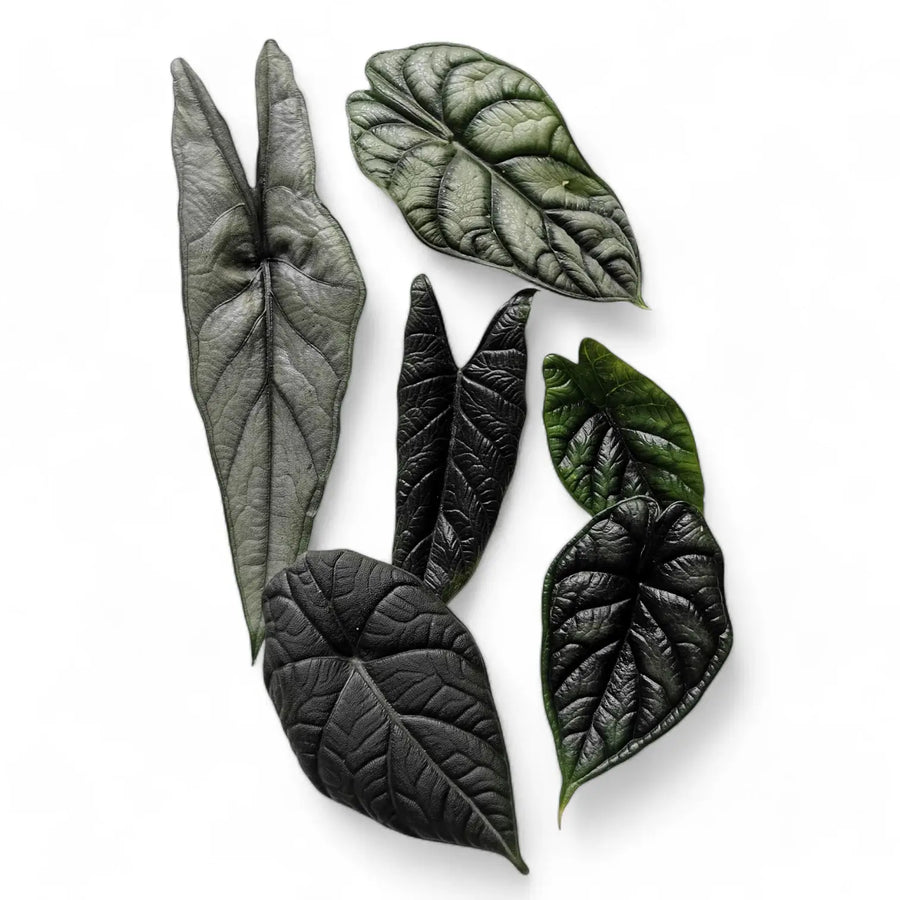
Alocasia cuprea 'Red Secret' Variegata layers cream, pale pink and green patterning over the thick metallic leaves of Alocasia cuprea. The plant keeps the dense cuprea leaf build of Red Secret, with glossy peltate blades, raised venation and deep purple leaf backs. Each leaf can show a different balance of metallic colour and pale tissue, giving the base a detailed, changing appearance as new blades mature.
Alocasia cuprea is a Bornean Alocasia with leathery, bullate leaves and a compact erect rhizome. North Kalimantan material records plants around 49.5 cm tall, with petioles to around 46 cm and glossy silver-green blades that are darker near the main veins and deep purple underneath. In this variegated form, the pale pattern adds extra colour while the cuprea leaf structure supplies the weight, shine and sculpted surface.
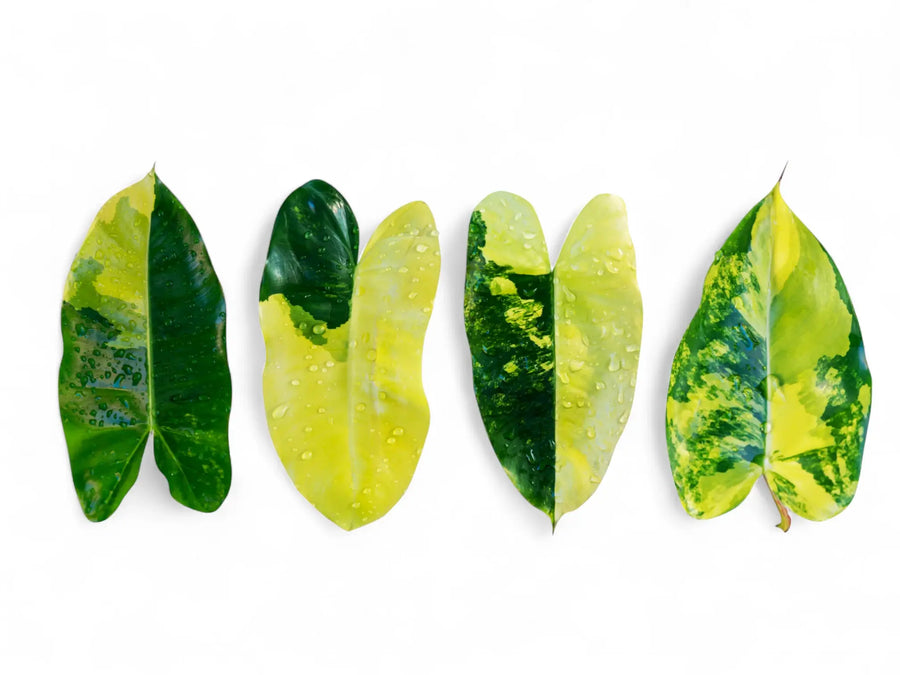
Pale tissue is most detailed where it crosses the raised panels of the blade. Cream, pale pink and soft green areas can appear as marbling, scattered patches, streaks or broader sectors. Because the surface is bullate and glossy, the pattern changes with leaf angle. A pale area can look warm cream from one side and soft pink from another, while darker metallic portions frame the pattern.
New leaves need time to settle. Fresh blades can open softer and lighter, with the variegation looking blurred before the tissue firms. As the leaf hardens, the surface becomes glossier, the purple underside deepens and the pattern becomes easier to read. Green areas remain important because they support the base and help the plant produce future leaves.
Alocasia cuprea is recorded from Borneo, including Sabah, Sarawak and North Kalimantan. It grows as a terrestrial plant in wet tropical forest settings, with documented North Kalimantan plants found from riverbank to cliff in montane forest, in sandy to humus-rich soil and open to moderate shade. Indoors, give filtered brightness, warmth, regular moisture and an airy substrate.
Alocasia cuprea 'Red Secret' Variegata usually grows more slowly than greener cuprea plants because pale tissue contributes less energy than green tissue. The base stays steadier when leaves carry both colour and enough green surface. A greener leaf after transport, repotting or winter slowing can help rebuild the plant; a paler leaf carries more pale tissue and needs gentle conditions while the blade hardens.
The metallic finish and pale tissue both show stress quickly. Water marks, mineral residue, direct sun, rubbing and low humidity can leave visible marks on the glossy surface. Mature leaves can be wiped with a soft damp cloth while the blade is supported from below. Fresh leaves should finish expanding before heavy cleaning or repositioning.
Pot size affects root stability. A container close to the root mass gives a more even drying pattern and helps the base avoid wet pockets around the rhizome. A small step up while the plant is actively growing is usually enough. Keep dead sheaths and spent leaves from sitting damp at the base, especially in cabinets or humid displays.
Alocasia cuprea 'Red Secret' Variegata can pause through the low-light season or after transport while roots adjust. During this slower period, keep the plant warm, extend watering intervals according to pot drying and keep feeding light. The next leaf may be greener, paler or more mixed; assess the base over several leaves before changing the setup.
Propagation is by division, offsets or firm corms as the plant produces new leaves. Young divisions need warmth, modest pot volume and an open substrate. Mature Alocasia cuprea can produce paired inflorescences with a spathe and spadix; indoors, the variegated metallic leaves remain the focus.
Alocasia cuprea 'Red Secret' Variegata contains irritating calcium oxalate crystals. Keep the variegated leaves beyond reach of pets and young children. Use gloves during pruning or division if your skin reacts to sap.
Alocasia cuprea (K.Koch & C.D.Bouché) K.Koch, published under Alocasia in 1861 in the Araceae family. The epithet cuprea comes from Latin cupreus, meaning coppery or of copper.
Plant names, growth habits, natural habitats and indoor care guidance are checked against trusted botanical, habitat and horticultural references before publication.View our plant care resources and references.