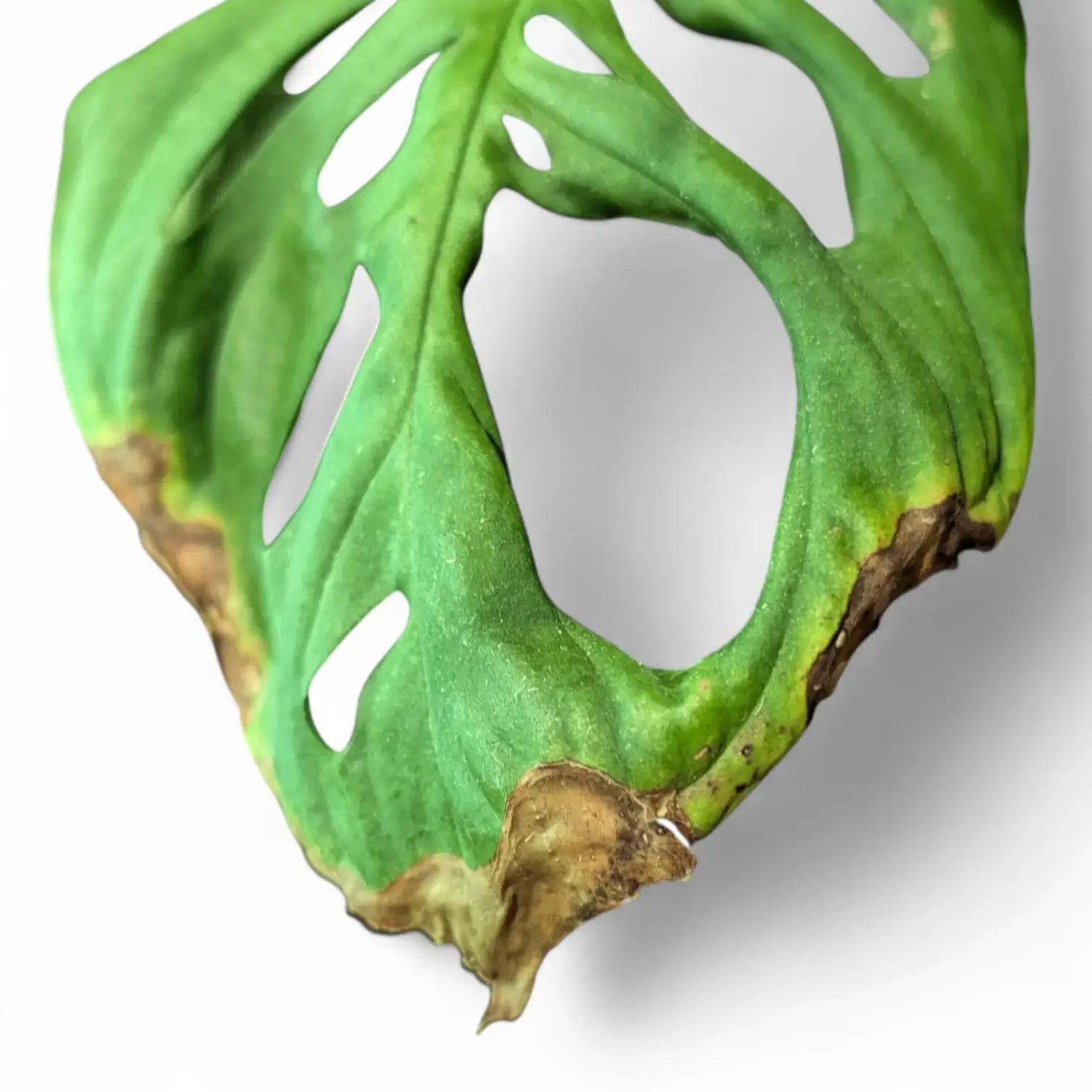

Houseplant Acclimatization: What It Is, What to Expect, and How to Support It
Why Your New Plant Looks Unhappy
You just brought home a stunning new plant. You placed it in just the right spot, gave it a careful drink, maybe even picked a name. Then the yellowing starts. Leaves curl. A few drop. Suddenly, that once-lush plant looks like it’s struggling.
Don’t panic. This is totally normal.
What you’re seeing is acclimation — the biological adjustment every houseplant goes through when it enters a new environment. And most plant owners aren’t told how real, necessary, and predictable this phase is.
Here’s the thing: it doesn’t matter whether your plant came from a tropical greenhouse, a boutique shop down the road, or an online store — it’s now in a completely different climate. Your home has new light levels, lower humidity, unfamiliar air flow, a different watering rhythm, and an unpredictable temperature pattern.
Some plants adjust quickly. Others take a month or more. But the bottom line is this: acclimation isn’t a sign of failure. It’s how your plant survives the transition — and how it eventually thrives.
What This Guide Covers
- What acclimation actually means (in simple terms)
- Why every houseplant, even the “easy” ones, goes through it
- What changes in your home trigger stress
- How to tell normal adjustment signs from real problems
- What you can do to support your plant through the process
If you’ve ever watched a healthy-looking plant decline after bringing it home, this is the missing piece.

Contents:
- What Acclimation Really Means for Houseplants
- What Happens Right After You Bring a Plant Home
- How Long Does Acclimation Take?
- Why Your Home Feels Like a Foreign Planet to Your Plant
- What Physically Changes During Acclimation
- Why Every Home Is a Unique Microclimate
- From Greenhouse Luxury to Living Room Reality
- Why Some Plants Adjust Easily — and Others Struggle
- 10 Tips to Help Your Plant Acclimate Smoothly
- Common Myths About Acclimation — And Why They’re Holding You Back
- From Surviving to Thriving — What Acclimation Success Actually Looks Like
- Sources and Further Reading
What Acclimation Really Means for Houseplants
Acclimation sounds technical, but the concept is simple:
Your plant is adjusting to your home’s conditions — and it may look worse before it looks better.
When a plant moves from one environment to another, like from a warm, bright, humid greenhouse into your living room, it doesn’t just react temporarily. It has to adapt on a cellular level. This process is slow, but it’s not random — and it’s not a sign your plant is dying.
Think of it like jet lag. Your plant has left a perfectly timed, high-end hotel (the greenhouse) and is now figuring out how to function in an unfamiliar place with new rhythms, new lighting, new moisture levels, and new expectations.
It’s not being dramatic. It’s adapting to survive.
What Happens Right After You Bring a Plant Home
Most houseplants show some signs of stress during their first few weeks in a new environment. This is the visible part of acclimatization — and it’s often misread as disease or bad care.
The truth? Most of these symptoms are completely normal.
Below are the common short-term changes many plants go through after arriving in your home.
Typical Adjustment Signs (Seen Within 1–3 Weeks):
- Older (usually lower) leaves turn yellow and drop
- New leaves look smaller, duller, or differently shaped
- Mild wilting or soft, limp stems despite moist soil
- Edges of leaves curl or crisp, especially in drier air
- Growth slows down—or stops altogether
Unless these symptoms are severe or spreading quickly, they’re not signs of failure. They’re signs your plant is hitting the biological “reset” button.
What’s Actually Going On Inside the Plant
While these symptoms might seem random, they reflect real physical changes happening beneath the surface. Your plant isn’t reacting emotionally — it’s actively rewiring itself to cope with its new indoor climate.
Here’s what changes on a cellular level:
1. Photosynthesis Slows Down
Lower light levels in your home mean your plant can’t produce as much energy. As a result, it shifts resources from growth to survival. That’s why growth often pauses entirely in the first few weeks.
2. Stomata Behavior Changes
Stomata are the tiny pores on the undersides of leaves that control water loss. In high humidity, they stay open. In dry air, they close more frequently. This slows water movement through the plant — and can make stems feel soft or droopy.
3. Leaf Structure Shifts
New growth may emerge smaller, thinner, or darker than before. That’s not a sign of decline — it’s a new leaf built specifically for your home’s light levels. Meanwhile, older leaves that were adapted to the previous environment may be dropped entirely.
4. Hormones Rebalance
Your plant reprioritizes. It stops investing in new shoots or flowers and focuses instead on maintaining critical functions. This means growth may pause even if conditions are still good.
5. Root Activity Adapts
Roots also slow down during this time, especially if the plant is overwatered or sitting in compacted soil. If roots aren’t getting enough oxygen, they stop expanding — and may even shed fine root hairs temporarily.
📌The Takeaway:
What looks like stress is often just transition. The leaves your plant loses aren’t wasted — they were designed for another environment. New growth will be tailored to your home.
All your plant needs right now is stability. No repotting. No extra fertilizer. No panic.

How Long Does Acclimation Take?
Acclimation isn’t a race — it’s a recovery period. How long it takes depends on your plant’s species, maturity, and the size of the climate shift. Some adjust in under two weeks. Others need two months or more.
Here’s a rough guide by plant type:
Fast Adjusters (1–3 weeks):
- Epipremnum aureum (Pothos)
- Spathiphyllum (Peace Lily)
- Sansevieria (Snake Plant)
Moderate Adjusters (3–6 weeks):
- Philodendron spp.
- Dracaena spp.
- Monstera adansonii
Sensitive Species (4–8+ weeks):
- Goeppertia / Calathea spp.
- Ficus lyrata (Fiddle Leaf Fig)
- Anthurium spp.
- Most ferns and moisture-loving tropicals
How You Know Your Plant Has Settled In
Watch for these signs that your plant is adapting to your home’s conditions:
- Leaf drop slows down or stops completely
- New leaves emerge and match your home’s light (not the old greenhouse look)
- Growth resumes at a slow, steady pace
- You start to notice a predictable watering rhythm
Once you see these changes, your plant is no longer in survival mode. It’s growing again—on your home’s terms.
📌 Reminder:
No two plants adjust on the same timeline. Don’t compare your new Calathea to your neighbor’s Philodendron. One evolved in stable rainforest understory, the other on open forest edges. Different biology, different expectations.

Why Your Home Feels Like a Foreign Planet to Your Plant
To understand why acclimation happens, it helps to look at where your plant came from and how different your home really is by comparison.
Most indoor plants have taken a long journey:
From wild ecosystems → to climate-controlled greenhouses → to your hallway shelf.
That’s not just a change of scenery — it’s a complete environmental shift.
Environment 1: Native Habitat – Where the Species Evolved
In the wild, tropical plants thrive in rich, consistent microclimates. Think warm, shady jungle floors or misty mountain slopes.
Key traits of native environments:
- Warm, stable temperatures year-round
- Humidity often between 80–100%
- Filtered, indirect light from above (not from the side)
- Active, living soil with constant moisture cycling
- Rhythmic environmental cues (rainfall, wind, sunrise)
A Monstera in the wild grows 10+ meters tall in high humidity and constant ambient light. Your living room is... not that.
Environment 2: Commercial Greenhouse – Plant Spa Conditions
Before reaching your home, most plants were grown in production greenhouses — optimized for speed, not long-term survival.
Typical greenhouse conditions:
- Bright, diffuse overhead light (up to 10,000+ lux)
- 80–90% humidity kept constant by misting or foggers
- Stable temperatures between 21–28 °C
- No wind, no drafts, no temperature swings
- Timed watering and automated fertilization
These are ideal growing conditions — but they’re nothing like what’s waiting in a regular home.
Environment 3: Your Home – A New Microclimate Entirely
Now your plant faces:
- Directional, side-lit light — often <2,000 lux, especially in winter
- Indoor air with 20–50% humidity, or lower in heated rooms
- Variable temperatures: hot days, cool nights, drafts, vents
- Human-controlled watering — sometimes too much, sometimes too little
- Pets, kids, open windows, heaters, and unexpected stress
Each room has its own mini-climate. Your kitchen might be hot and dry, while your bathroom is humid but dark.

At a Glance: Environment Comparison
Condition |
Native Habitat |
Greenhouse |
Your Home |
|---|---|---|---|
Light |
Filtered, overhead |
Bright, diffuse |
Directional, often low |
Humidity |
80–100% |
80–90% |
20–60%, varies daily |
Temperature |
Constant |
Constant |
Fluctuates by room/season |
Soil |
Living, aerated |
Fast-draining mix |
May be compacted or wet |
Stress Factors |
None (adapted) |
None (controlled) |
Drafts, dryness, low light |
📌 The Takeaway:
Your plant didn’t just move across town. It changed ecosystems. Acclimation is the only way it can survive that leap.
What Physically Changes During Acclimation
Your plant isn’t sulking. It’s transforming.
When a houseplant enters a new environment, it doesn't just react on the surface — it reprograms itself at a cellular level. Leaf drop, slowed growth, and structural changes aren’t emotional responses. They’re biological adaptations.
Here’s what’s actually happening.
1. Leaf Structure Changes — Out with the Old, In with the Adapted
Greenhouse-grown leaves were designed for intense overhead light and constant humidity. When those conditions vanish, older leaves quickly become inefficient.
What you’ll see:
- Larger or lighter-colored leaves turn yellow and drop
- New leaves grow smaller, firmer, and often darker
- Leaf shape may change slightly as the plant optimizes for lower light
This isn’t damage — it’s replacement. Your plant is trading out old equipment for tools that work better in your space.
If “bright, indirect light” feels vague and unhelpful, you’re not alone — we broke it down with real numbers and tools:
→ So how Much Light is "Plenty of Bright, Indirect Light" EXACTLY?
2. Stomata Behavior — Adjusting How the Plant Breathes
Stomata are microscopic pores on the undersides of leaves. They control gas exchange and water loss.
In dry air, these pores close more often to preserve moisture.
That leads to:
- Slower photosynthesis
- Temporary drooping or wilting
- Less transpiration, even when the soil is damp
Many people mistakenly think this is a watering issue — but it’s often just the plant sealing itself off while it recalibrates.
→ Curious how stomata work and why they matter for your plant’s survival? Learn more about stomata here.
3. Reduced Photosynthesis — Energy Conservation Mode
Indoor light is dramatically weaker than what your plant had in the greenhouse.
As a result:
- Energy production slows down
- Growth pauses or becomes minimal
- Older leaves may be sacrificed to redirect resources
New growth that does appear will be suited to your home’s conditions — not the idealized environment it came from.
4. Root System Readjustment — New Soil, New Strategy
Roots need oxygen, warmth, and the right moisture rhythm to thrive. When any of those shift — as they often do after a move — the roots respond.
What that looks like:
- Root growth may pause while the plant reassesses its conditions
- Overwatered roots in dense home potting mix may become stressed
- Leaf drop can result from disrupted water uptake
This is one of the reasons not to repot right away — the roots need time to settle, not new stress.
Also, not all soil is created equal. If your plant’s substrate holds too much moisture or lacks airflow, it’s time to rethink the mix:
→ The Ultimate Guide to Houseplant Substrates

How Long Do These Changes Take?
Here’s a general timeline for visible adjustments and new growth, by plant type:
- Pothos, Snake Plant — Leaf changes in 1–2 weeks; new growth by 3–4 weeks
- Fiddle-Leaf Fig — Leaf changes in 3–4 weeks; new growth may take 4–6+ weeks
- Calatheas, Ferns, Anthuriums — May need 4–6+ weeks for leaf loss to slow; new growth appears after 6–8+ weeks
📌 Acclimation is a physical transformation — not a temporary dip.
The plant you brought home is building a new version of itself, shaped by your light, humidity, temperature, and care style.
Let it do that without rushing it.
Why Every Home Is a Unique Microclimate
You’ve followed the care advice. You placed your new plant in the same window your friend uses. Same species, same direction, same city — but your plant is struggling, and theirs is thriving.
That’s because no two homes provide the same environment. Even small differences in layout, lighting, habits, or airflow can create wildly different growing conditions.
Let’s break down why.
➜ Light Isn’t Just About Direction
You’ve probably heard “bright indirect light” a hundred times — but it’s not a fixed amount.
A south-facing window in one home may be shaded by trees or buildings. Another might get full afternoon sun. Even factors like curtains, wall colors, window tint, or how far the plant is from the glass will drastically change light intensity.
Moving a plant just one meter further from a window can reduce usable light by 70–80%. Two similar homes can produce completely different light levels in the same room.
Curious how different window directions affect light levels throughout the day? Get the full breakdown here:
→ Understanding Window Orientations And Houseplants
➜ Airflow and Temperature Are Wildcards
Air movement affects transpiration and moisture retention — and most homes have uneven airflow.
Things that change the equation:
- Open windows or sealed insulation
- Ceiling fans, heaters, or vents
- Cold drafts from entryways or balconies
- Warm air from kitchen appliances
Some plants will wilt near a vent even if everything else is right. Others might crisp up from still, dry air.

➜ Humidity Varies — Even in the Same Room Type
Bathrooms and kitchens are often assumed to be high-humidity zones. But that’s not always true.
What affects humidity in a room:
- How often someone showers or cooks
- Whether the door is kept closed
- Heating or ventilation systems
- Windows that let in dry winter air
A Calathea that thrives in one person’s bathroom may crisp in another’s if there’s poor air circulation or heating overhead.
➜ Humans Create Microclimates Too
How you live affects how your plant lives.
Consider:
- Watering habits — scheduled or by feel?
- Potting mix — airy or compacted?
- Do you mist or not?
- Do you use a hygrometer or guess?
- Are pets knocking things over? Is there foot traffic? Do you rotate the pot?
Two homes can be side by side — but the way the people inside live creates completely different environments for a plant.
📌 Understanding all this makes all the difference.
Instead of copying someone else’s care setup, observe what your space is actually like. That’s the first step toward helping your plant not just survive, but adapt successfully.
Still placing plants based on Pinterest aesthetics or "bathroom plant" lists? Here’s why that logic backfires — and what really matters:
→ The Case Against Categorizing Houseplants by Room

From Greenhouse Luxury to Living Room Reality
The plant you brought home spent its early life in conditions built for growth — not for real life.
Commercial greenhouses are like botanical spas: everything from light to humidity to nutrition is perfectly controlled.
Then suddenly… your plant is in a living room with dry air, unpredictable light, and a cat that keeps batting its leaves.
That’s not a small shift. It’s an ecological reset.
Light Levels — Not Even Close
- Greenhouse: Bright, diffuse, overhead light from all angles — often 10,000 lux or more.
- Living room: Light usually comes from one side only, and often falls below 2,000 lux, especially in winter.
What happens:
- Older leaves adapted to high light may yellow or drop
- New growth appears smaller, thicker, or darker
- Some species stop growing entirely until conditions stabilize
Even a window that feels “bright” to you may not be bright enough for the plant’s previous settings.
Humidity — The Silent Stress Factor
- Greenhouse: Humidity consistently held at 70–90%
- Living room: Often drops below 40%, especially with heating or AC
What happens:
- Leaves develop crispy edges or curled margins
- Transpiration slows down — so water stays in the pot longer, confusing watering schedules
- New leaves may fail to unfurl properly in humidity-sensitive species
Dry air is one of the biggest reasons plants “decline” after moving indoors — and most people don’t realize it until damage is done.
Temperature and Air Movement — Stable vs Chaotic
- Greenhouse: Warmth held between 21–28 °C with no drafts, vents, or sudden changes
- Living room: Temperatures rise and fall with the time of day, the weather, or the heating system
What happens:
- Cold air from a window or door can shock roots or leaf tissue
- Warm dry air from a vent can desiccate leaves, even if the room “feels fine”
- Microclimate shifts delay acclimatization by keeping the plant in a state of stress
Even “tough” plants can show damage when placed near radiators, AC vents, or frequently opened doors.
Watering and Soil — From Precision to Guesswork
- Greenhouse: Irrigation is timed, measured, and automated; substrates are engineered for drainage
- Living room: Watering is manual, irregular, and based on human perception
What happens:
- Roots grown in oxygen-rich substrate may stagnate in compact home soil
- Overwatering becomes common, especially when light and humidity drop
- Fungus gnats and root rot are frequent symptoms of overadjustment
Inconsistent moisture is one of the biggest triggers for post-purchase plant decline — and most of it starts with the pot, not the person.
Quick Recap — What Just Changed for Your Plant
Factor |
Before (Greenhouse) |
After (Your Home) |
|---|---|---|
Light |
Overhead, bright, even |
Directional, dimmer, variable |
Humidity |
80–90% |
Often below 50% |
Temperature |
Stable |
Fluctuates daily |
Watering |
Automated, precise |
Inconsistent, hand-controlled |
Air Movement |
Gentle, uniform |
Still, drafty, or turbulent |
📌 This isn’t about your care quality — it’s about your conditions.
The shift from a greenhouse to a home is drastic, and plants need time to rebuild systems that match their new environment.

Why Some Plants Adjust Easily — and Others Struggle
Ever noticed how a pothos keeps growing no matter what you throw at it, while your Calathea acts offended if you so much as breathe near it?
That difference isn’t random — it comes down to how a plant evolved, how it was grown, and how much it needs consistency.
1. Some Plants Are Just Built Tougher
Species that evolved in variable environments — like open forests or semi-arid zones — tend to handle change better. These plants can roll with light fluctuations, missed waterings, or dry air.
Plants that tolerate environmental shifts well:
- Epipremnum aureum (Pothos)
- Zamioculcas zamiifolia (ZZ Plant)
- Dracaena trifasciata (Snake Plant)
- Aspidistra elatior (Cast Iron Plant)
These are the no-fuss houseplants — they’ll survive a draft, bounce back from under-watering, and tolerate your dry winter air without protest.
2. Others Come from Stable, Specific Ecosystems
Many sensitive species evolved in tropical understories or humid cloud forests — places where temperature, moisture, and light levels barely change.
Plants that struggle with sudden shifts:
- Calathea and Goeppertia species
- Ficus lyrata (Fiddle Leaf Fig)
- Anthuriums with thin or velvety leaves
- Adiantum (Maidenhair Ferns)
These plants don’t like surprises. Even small changes in humidity or placement can cause leaf curl, drop, or stalled growth.
They’re not “divas” — they’re just designed for consistency.
3. Leaf Type and Light History Make a Difference
Leaves that formed in bright greenhouse light are built thicker and larger. When placed in dimmer indoor light, they’re no longer efficient and are often shed.
What to expect:
- Older leaves yellow and fall off
- New leaves emerge smaller and better adapted to your conditions
That’s not failure — that’s success.
Your plant is producing growth that matches your home’s reality.
4. Bigger Plants Have More to Lose
Larger, mature plants often take longer to adjust because:
- They have more tissue to support
- They were more dependent on their previous environment
- They need to rebuild more systems before they can thrive
Smaller or younger plants often bounce back faster, especially if they were recently propagated or rooted under lower light.
5. The Bigger the Gap, the Longer the Adjustment
A plant going from 90% humidity and stable warmth to a dry apartment with cold nights needs time — and patience.
Even “easy” plants will show signs of stress if the transition is extreme. The greater the change in conditions, the slower the recovery.
6. Health on Arrival Matters
A freshly watered, pest-free plant with a strong root system will adjust faster.
But if it arrives:
- Dehydrated or cold from shipping
- Overwatered and rootbound
- Carrying hidden stress from poor handling
…then it may need a recovery period before it even starts acclimating.
Acclimation Speed by Example
Plant |
General Tolerance |
Acclimation Time |
|---|---|---|
Pothos, ZZ Plant |
High |
1–2 weeks |
Peace Lily, Fiddle Leaf |
Moderate |
3–5 weeks |
Calathea, Ferns, Ficus |
Low |
4–8+ weeks |
📌 Knowing how your plant is wired helps you adjust your care — and your expectations.
It’s not about getting it perfect. It’s about giving the plant what it needs while it builds a new version of itself in your home.
Labeling plants as "difficult" often misses the point. It's not the plant — it’s the setup. Here’s why that mindset needs to go:
→ There Are No Difficult Houseplants

10 Tips to Help Your Plant Acclimate Smoothly
You don’t need tricks, sprays, or daily rituals to help your new plant settle in. You just need consistency, a little restraint, and some smart placement choices.
Here’s what actually works:
1. Start in Bright, Indirect Light
Sudden exposure to full sun can burn leaves, especially after shipping or store display. Place your plant near a bright window with filtered light. South or east-facing is ideal, but avoid harsh direct rays for the first two weeks.
Not sure what “bright, indirect light” is supposed to look like?
You’re definitely not alone — we’ve broken it down with real-life examples and measurable light levels. → So how Much Light is "Plenty of Bright, Indirect Light" EXACTLY?
2. Do Not Repot Immediately
Unless there’s root rot or severe compacting, leave the plant in its nursery pot for 3–4 weeks.
Repotting too soon adds stress and disturbs roots already trying to adapt.
When it’s finally time to repot — do it right. Here’s how to avoid setbacks and give your plant the upgrade it deserves:
→ Repotting Houseplants: An All-Inclusive Guide
3. Hold Off on Fertilizer
If your plant isn't actively growing, it doesn't need feeding.
Adding fertilizer too early can trigger nutrient burn or root shock. Wait until you see new, stable growth before starting.
4. Know Your Humidity — Don’t Guess
Dry air is one of the most common hidden stressors.
Use a hygrometer to check your space. If readings fall below 45%, consider a humidifier or grouping plants to retain moisture.
Want to understand how to measure, manage, and actually improve humidity levels without gimmicks?
→ Mastering Humidity for Healthier Houseplants
5. Water With Care, Not a Schedule
Acclimating plants usually drink less — overwatering is the #1 killer during this phase.
Let the top 2–3 cm of soil dry out. Check with your finger, not a calendar.
Watering mistakes are the #1 reason plants fail during acclimatization. Learn how to get it right — consistently.
→ The Ultimate Guide to Watering Houseplants
6. Keep It Away From Drafts and Vents
Avoid placing your plant near radiators, heaters, fans, or cold windows.
Fluctuating air currents and temperature shocks slow down recovery or trigger leaf drop.
7. Don’t Move It Around
Find a stable spot and leave it there.
Constant movement resets the plant’s internal calibration. Let it settle in one place unless conditions are clearly wrong.
8. Expect Some Leaf Drop — Don’t Panic
Yellowing or dropping leaves are normal.
Prune only fully dead or dry ones. If it’s still partially green, leave it — the plant might still be drawing nutrients from it.
9. Wait for New Growth Before Making Big Changes
Once you see fresh leaves that look healthy and stable, the plant is ready for things like repotting, fertilizing, or propagation.
Until then, less is more.
10. Be Patient — That’s the Whole Game
Most plants need at least 3–6 weeks to fully adjust.
'Fussy' species? Give it 8 or more. Don’t rush it, don’t overcorrect, and don’t take every yellow leaf personally.
Bonus Tip: Quarantine New Arrivals
Keep new plants separate from your main collection for about two weeks.
This helps you watch for pests, assess health, and reduce the risk of spreading anything unwanted while it settles in.
📌 This is where most plant owners either succeed or sabotage themselves:
Trying to fix something that isn’t broken. If you focus on low stress, steady light, and hands-off observation, the plant will do the rest.
Common Myths About Acclimation — And Why They’re Holding You Back
A lot of plant owners get frustrated not because they’re doing something wrong — but because they were told the wrong things. Here are the most common myths about acclimatization, and what’s actually true.
“I bought the plant locally, so it should already be used to my climate.”
Nope. The plant’s location at the time of sale tells you nothing about how it was grown.
Most plants — even those sold at neighborhood shops — were raised in controlled greenhouses. Bright light, high humidity, stable temps. None of those match your home.
Distance doesn’t matter. Difference does.
“It says ‘pre-acclimated’ on the label, so it should be fine indoors.”
Maybe. But “pre-acclimated” usually means:
- Grown under shade cloth or reduced light
- Given less water to build tolerance
- Kept in softer retail conditions for a short period
That’s helpful, but it doesn’t replace the need to adjust to your exact space. Pre-acclimated isn’t pre-adapted.
“Indoor plant” means it should be happy anywhere inside, right?”
Wrong. “Indoor plant” just means it can survive indoors — not that it thrives in all rooms.
A dark hallway, dry bedroom, or breezy entryway can stress even the toughest tropicals. “Indoor” is a general category, not a quality guarantee.
“Some leaves are dropping — something must be wrong.”
Not necessarily. Losing a few older leaves is one of the most common signs of normal adjustment. Plants shed inefficient or light-adapted leaves to conserve energy. It’s not damage — it’s strategy.
Worry only if:
- New growth dies back
- All leaves drop quickly
- Stem or root rot is present
“The plant arrived wilted after shipping — it must be poor quality.”
Shipping stress is inevitable. Three days in a dark box with temperature swings, jostling, and dry air will make any living organism react. That doesn’t mean the plant was bad — it means it’s alive.
Let it rest. Water gently. Give it time.
💡Forget the labels.
Forget the promises of “easy care” or “indestructible.” Every plant — even the common ones — needs a transition window.

From Surviving to Thriving — What Acclimation Success Actually Looks Like
Bringing home a plant isn’t the finish line — it’s the start of a new phase. Whether your plant came in perfect condition or a bit bruised from transit, what happens next depends on how it adapts to your specific space.
Acclimation is that process. Not a failure. Not a flaw. Just biology.
Here’s what to realistically expect — and what progress actually looks like.
What Might Happen Early On:
- A few older leaves yellow and drop
- Growth stalls for several weeks
- Water needs become unpredictable
- The plant looks less “full” than it did in the store
This isn’t backsliding. It’s recalibrating.
What Recovery Looks Like:
- Leaf loss slows or stops entirely
- New leaves begin to emerge and stay
- Color and shape of new growth match your lighting
- Watering frequency becomes more consistent
- The plant maintains its form — and begins to expand
Once that starts, you can resume normal care — repotting if needed, fertilizing carefully, and considering propagation if the plant is strong.
Success Isn’t About Looks — It’s About Stability
Don’t judge your plant by how lush it looked on arrival. That version was designed for greenhouse display.
Judge it by how well it holds steady, adapts, and regrows in your home — even if it takes weeks to get there.
Quick Recap: What to Expect from Plant Acclimation
Phase |
What You’ll Notice |
What It Means |
|---|---|---|
Days 1–7 |
Yellowing leaves, droop, leaf drop |
Normal stress signs — don’t panic |
Weeks 2–4 |
Pause in growth, fewer water needs |
Energy shift and internal adaptation |
Weeks 4–8 |
New leaves, stable watering rhythm |
Acclimatization is working |
After Week 8 (if stable) |
Growth resumes, plant holds form |
Success — plant is now adjusted |
Still Seeing Problems After 8+ Weeks?
If your plant:
- Keeps dropping healthy-looking leaves
- Shows no sign of new growth
- Is constantly wilted or soggy
- Has patchy black or soft areas
…then you’re likely dealing with something beyond acclimation — possibly root rot, pest issues, or unsuitable conditions. At that point, dig deeper (literally, if needed) and reassess lighting, substrate, and root health.
Shift Your Mindset: From Panic to Partnership
Most plants don’t die from stress — they die from overreaction. If you intervene too often, repot too early, or flood the roots every time a leaf droops, you interrupt their process.
Acclimation isn’t passive. It’s active survival. Your job is to provide stable conditions while the plant rewrites its strategy.
Let it.
Sources and Further Reading:
Gjindali, A., & Johnson, G. N. (2023). Photosynthetic acclimation to changing environments. Biochemical Society Transactions, 51(2), 473–486.
https://doi.org/10.1042/BST20211245
→ Reviews how plants regulate photosynthetic processes in response to variable light and environmental stress — essential for understanding growth slowdown during acclimatization.
Kleine, T., Nägele, T., Neuhaus, H. E., Schmitz-Linneweber, C., Fernie, A. R., Geigenberger, P., Grimm, B., … The Green Hub Consortium. (2021). Acclimation in plants – the Green Hub consortium. The Plant Journal, 106(1), 23–40.
https://doi.org/10.1111/tpj.15144
→ A comprehensive, consortium-led analysis of plant acclimation mechanisms at the molecular and physiological levels.
Manaker, G. H. (1997). Interior plantscapes: Installation, maintenance, and management (3rd ed.). Prentice Hall.
https://books.google.de/books/about/Interior_Plantscapes.html?id=-GwlAQAAMAAJ
→ Industry-standard guide to maintaining indoor plants, including stress mitigation during installation and long-term indoor care.
Matsubara, S. (2018). Growing plants in fluctuating environments: Why bother? Journal of Experimental Botany, 69(20), 4651–4654.
https://doi.org/10.1093/jxb/ery312
→ Explores why studying plant responses to fluctuating environments matters — highly relevant to home microclimate variability.
Sugano, S., Ishii, M., & Tanabe, S. (2024). Adaptation of indoor ornamental plants to various lighting levels in growth chambers simulating workplace environments. Scientific Reports, 14, Article 17424. https://doi.org/10.1038/s41598-024-67877-y
→ Experimental study testing how common houseplants adapt to indoor light conditions — directly informs acclimatization strategies.
Trinklein, D. (2016, November 8). Houseplant acclimatization. University of Missouri Extension.
https://ipm.missouri.edu/meg/2016/11/Houseplant_Acclimatization/
→ A practical overview of why and how indoor plants undergo acclimatization when transitioning from greenhouse to home settings.
University of Georgia Extension. (n.d.). Growing indoor plants with success (Bulletin 1318).
→ Beginner-to-intermediate guide to successful indoor plant care, including environmental adaptation basics.
Conover, C. A., & Poole, R. T. (2011). Acclimatization of indoor foliage plants. In Horticultural Reviews (Vol. 6, pp. 119–154).
https://doi.org/10.1002/9781118060797.ch4
→ Seminal reference detailing controlled acclimatization procedures and physiology for foliage plants in commercial and residential contexts.