

Philodendron 'Splendid': The Velvety Hybrid That Deserves a Spotlight
Philodendron 'Splendid' is a velvet-leaf climbing Philodendron grown for deep green, matte foliage and high-contrast venation that stays striking even as leaves scale up. In cultivation, 'Splendid' is treated as a hybrid between Philodendron verrucosum and Philodendron melanochrysum, and that parent mix explains the look: velvety texture, branching veins, and a warm blush that often shows around the sinus and on the underside as plants mature.
Setup matters more than fussing. Bright filtered light, an airy root zone, and a stable support system are the core levers. When those are right, 'Splendid' behaves like a dependable climber with steadily increasing leaf size. When those are off, symptoms tend to cluster: long internodes, smaller leaves, slow unfurling, leaf-edge crisping, and root stress.

Quick Care Snapshot – Philodendron 'Splendid'
- Growth habit: Climbing aroid; leaf size increases dramatically with vertical support.
- Light: Bright, filtered light for most of the day; avoid hot direct sun on velvet foliage.
- Watering trigger (soil): Water thoroughly when the top ~25–35% of pot depth is dry; let the pot drain fully.
- Substrate: Chunky, airy mix that holds moisture but never stays dense or stagnant.
- Temperature: Steady warmth supports clean growth; cold drafts + wet mix are the fastest route to decline.
- Humidity: Higher humidity improves leaf expansion and edge quality; airflow still matters.
- Support: Moss pole, coir pole, or plank; stable and firmly anchored in the pot.
- Toxicity: Not pet-safe; contains calcium oxalate crystals.
In this guide, you’ll learn about
- Origins and Lineage: Where Philodendron 'Splendid' Comes From
- Growth Habit and Morphology: What to Expect from Philodendron 'Splendid'
- Environmental Preferences: Light, Temperature, and Humidity
- Potting and Substrate: How to Keep Those Roots Happy
- Watering and Fertilising: Balancing Moisture and Nutrition
- Common Problems and How to Fix Them
- Propagation Techniques: How to Multiply Philodendron 'Splendid'
- Toxicity and Pet Safety
- Bonus Tips and Collector Setup
- Frequently Asked Questions About Philodendron 'Splendid'
- Conclusion: Why Philodendron 'Splendid' Deserves a Spot
1. Origins and Lineage: Where Philodendron 'Splendid' Comes From
Philodendron 'Splendid' is a horticultural cultivar name used for a recognisable velvet-leaf hybrid look. It is not a wild species, and it is not a botanical (Latin) hybrid name under plant taxonomy rules. The care payoff is simple: once the plant is treated like a climber with sensitive roots and high surface-area leaves, decisions become obvious and repeatable.
The cross behind Philodendron 'Splendid'
In cultivation, 'Splendid' is widely treated as a cross between two velvet climbers:

Philodendron melanochrysum — a Colombian species grown as a climber in cultivation, known for long, velvety leaves that lengthen dramatically with maturity and support.

Philodendron verrucosum — a species native from Costa Rica to Peru, with habitat notes that include roughly 200–1500 m elevation (mostly above 500 m) in premontane and lower montane rainforest as well as tropical wet forest. That background matches how velvet-leaf climbers behave indoors: they like stable warmth, humidity that supports leaf expansion, and a root zone that stays oxygenated.
What 'Splendid' inherits (and what to look for)
Hybrid plants vary from clone to clone, but Philodendron 'Splendid' is commonly described by a consistent blend of traits:
- Velvet leaves with an often slightly rounder look than many P. verrucosum forms
- Branching venation that reads “verrucosum-like” rather than simple parallel veins
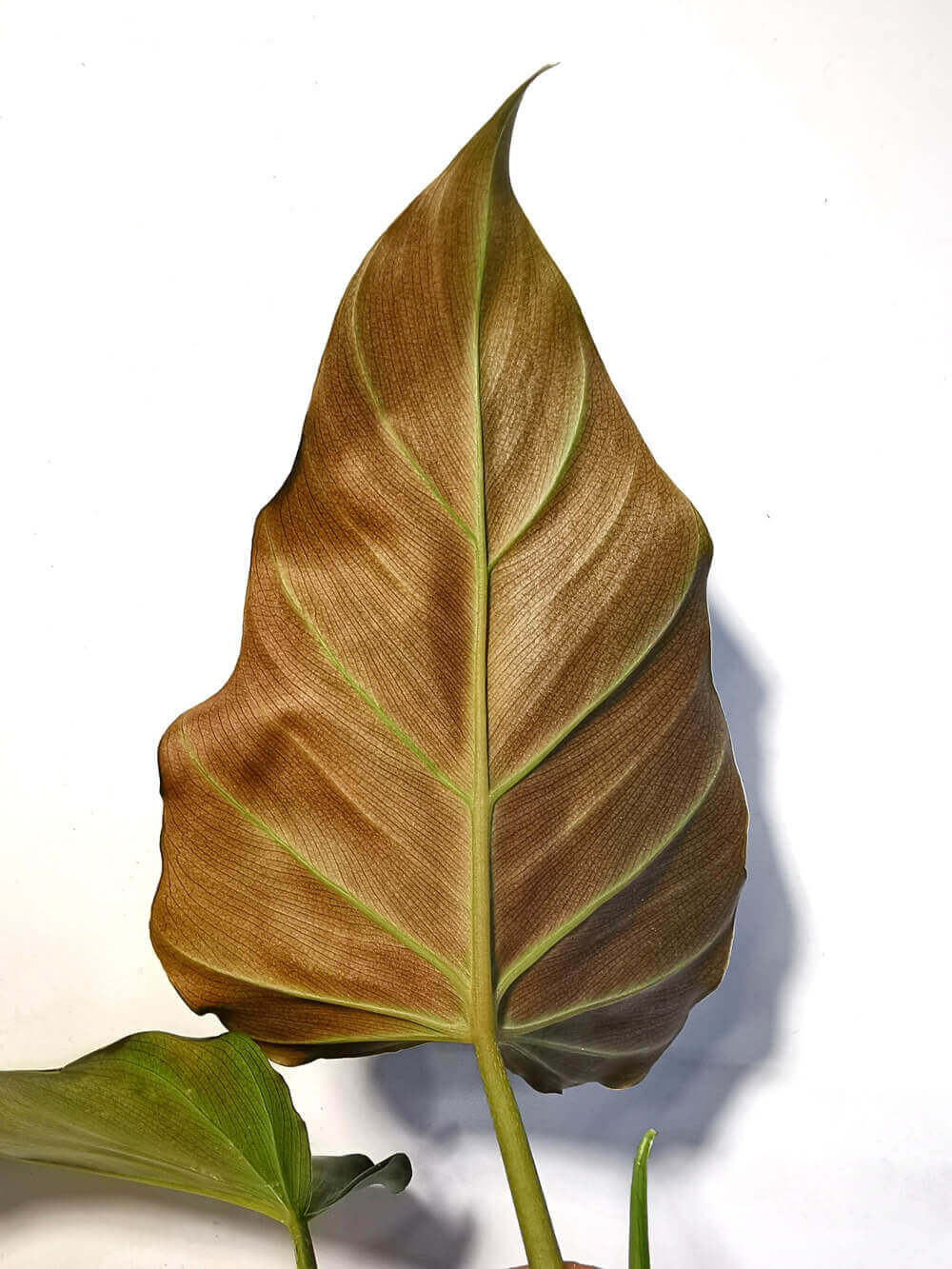
- Warm blush on the underside (abaxial surface) and a noticeable blush in the sinus on mature leaves
- Roughened petioles (a useful structural clue when labels are messy)
| Trait | How it shows on Philodendron 'Splendid' | What it helps with |
|---|---|---|
| Leaf surface | Matte, velvety texture; marks and spots more easily than glossy leaves | Explains why spraying and rough wiping backfire |
| Venation | High-contrast, branching veins on many clones | Useful for ID when trade labels are inconsistent |
| Leaf outline | Heart-shaped to oblong-heart; tends to elongate as it climbs | Helps set expectations: young leaves won’t look “fully mature” |
| Underside / sinus tone | Blushing red tones often visible on mature foliage | Another structure-based ID clue beyond leaf pattern |
| Climbing response | Leaf size and node spacing improve with stable support and stronger light | Explains why poles and light upgrades work |
Label reality: Leaf pattern alone is a poor ID tool. Petiole texture, underside tone, venation style, and node spacing are far more stable clues.

2. Growth Habit and Morphology: What to Expect from Philodendron 'Splendid'
Philodendron 'Splendid' is a climber. Hanging it like a trailing vine can work short-term, but the plant’s “mature mode” is built around vertical growth: tighter nodes, stronger aerial rooting, and larger, more structured leaves.
A climbing habit that rewards support
- Grows upward with a moss pole, coir pole, plank, or trellis
- Produces aerial roots at nodes; roots anchor and stabilise larger foliage
- Can reach around 1–2 m indoors over time in strong conditions
- Without support, internodes usually lengthen and leaves stay smaller
Support choice: what works best (and why)
| Support type | Best for | Watch-outs |
|---|---|---|
| Moss pole | Fastest aerial-root attachment and quickest leaf scaling | Pole moisture needs control so the pot does not stay wet; airflow matters |
| Coir pole | Stable support with less moisture management | Roots attach less aggressively; leaf scaling can be slower than moss |
| Wood/plank | Clean look; excellent stability; easy tying | Attachment varies; training and light quality matter more |
| Trellis | Support for weight and shape control | Less “mature climbing” cue than a vertical surface |
Leaf shape, texture, and realistic indoor size
Leaf size is not fixed. It scales with support, light, warmth, and root health. Under steady indoor conditions with vertical support, mature leaves can reach up to 60 cm long, sometimes more in exceptional setups. Younger plants and unsupported plants stay smaller, which is normal.
- Shape: Heart-shaped to oblong-heart with a notched base (sinus)
- Texture: Velvety (velutinous), prone to marking if handled or sprayed
- Veining: Prominent, branching veins that often stay bright on mature leaves
- Colour notes: Deep green blade; warm blush can appear around the sinus and on the underside

Petioles, stems, nodes, and aerial roots
- Petioles: Often roughened; texture can be a reliable ID hint
- Stem: Segmented with clear nodes; each node can produce roots and new growth points
- Aerial roots: Anchor the plant and provide easy propagation options
- Cataphylls: Protective sheaths appear around new growth; airflow helps prevent sheath rot
Does Philodendron 'Splendid' flower?
Flowering is uncommon in typical home conditions. Philodendron produce inflorescences (spathe + spadix), not showy “flowers.” Seed production is not a practical home propagation route and depends on very specific pollination timing; vegetative propagation is the standard way Philodendron 'Splendid' is multiplied in cultivation.

3. Environmental Preferences: Light, Temperature, and Humidity
Velvet Philodendron care is easiest when the environment is treated as a set of trade-offs: strong-but-filtered light, steady warmth, enough humidity for clean leaf expansion, and enough airflow to keep leaves and substrate from staying damp and stagnant.
Light: bright, filtered, and steady
Philodendron 'Splendid' grows best in bright indirect light, similar to filtered light under a canopy. Direct sun can scorch velvet foliage, especially through glass in warm weather. Weak light slows growth, stretches internodes, and reduces leaf size.
Reliable setups
- Bright east light: Gentle morning sun can work well if heat is low and leaves are not pressed to glass.
- Bright south or west: Filter with a sheer curtain or increase distance from glass.
- Grow lights: Useful in darker homes; increase intensity gradually over 1–2 weeks to avoid stress.
Bright, indirect light is easiest to evaluate by outcomes: tighter nodes and larger new leaves usually mean the light level is finally “real” for Philodendron 'Splendid'.
| What you see | Most likely cause | First fix |
|---|---|---|
| Bleached patches, crispy edges on the sun side | Too much direct sun / heat load | Filter light, increase distance, improve airflow |
| Long internodes, smaller leaves | Light too weak | Move brighter or add grow light gradually |
| Slow unfurling, distorted new leaves | Often low light + uneven moisture + dry air | Improve light first, then stabilise watering and humidity |
Understanding Window Orientations and Houseplants helps if seasonal shifts change drying speed and growth.
Temperature: steady warmth and warm roots
- Comfort range: 18–27 °C supports consistent growth.
- Cool conditions: Growth slows and the mix dries more slowly; watering must be reduced accordingly.
- Avoid: Cold drafts, chilled windows, and cold floors—especially when the substrate is damp.
Root-zone rule: Wet + cold is far more dangerous than “not enough humidity.”
Humidity: leaf quality improves as humidity rises, but airflow still matters
Velvet leaves lose water quickly. Higher humidity helps new leaves expand cleanly and reduces edge crisping. Lower humidity can work, but it demands better watering precision and a stable root zone.
Practical humidity ranges
- Often ideal: 55–75% RH for clean leaf expansion and better edge quality.
- Workable lower: 40–55% RH can still grow well if watering stays steady and the mix is not drying hard between waterings.
- Very dry air: New leaves can stall or tear on unfurl; edges crisp more easily.
Humidity methods that actually help
- Humidifier near the plant (paired with gentle airflow)
- Grouping plants to stabilise local humidity
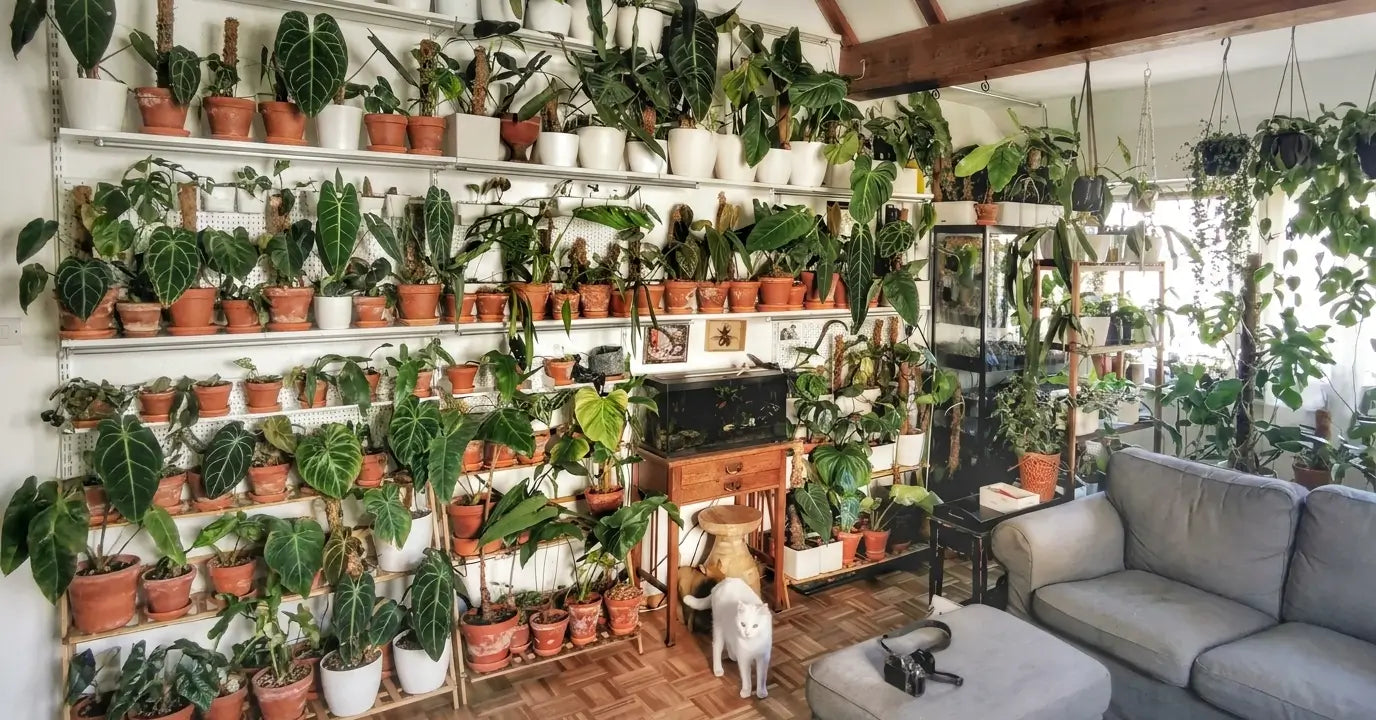
- Cabinet/vitrine setups for consistently high humidity (with ventilation)
Velvet caution: Skip misting. Water droplets can mark velvet surfaces and increase spotting risk if airflow is weak.
humidity guide is useful when winter heating drops RH sharply.

4. Potting and Substrate: How to Keep Those Roots Happy
Philodendron 'Splendid' succeeds or fails in the root zone first. The target is an airy, moisture-buffering substrate that dries predictably. Dense, wet mix turns into oxygen deprivation, then rot.
Root-zone priorities (in order)
- Airflow: Roots need oxygen even when the mix is moist.
- Moisture buffering: Mix should hold water evenly after soaking, then dry without turning hydrophobic.
- Drainage honesty: Pot must drain freely; cachepots need to be managed so water never pools.
Recommended aroid mix (soil-based)
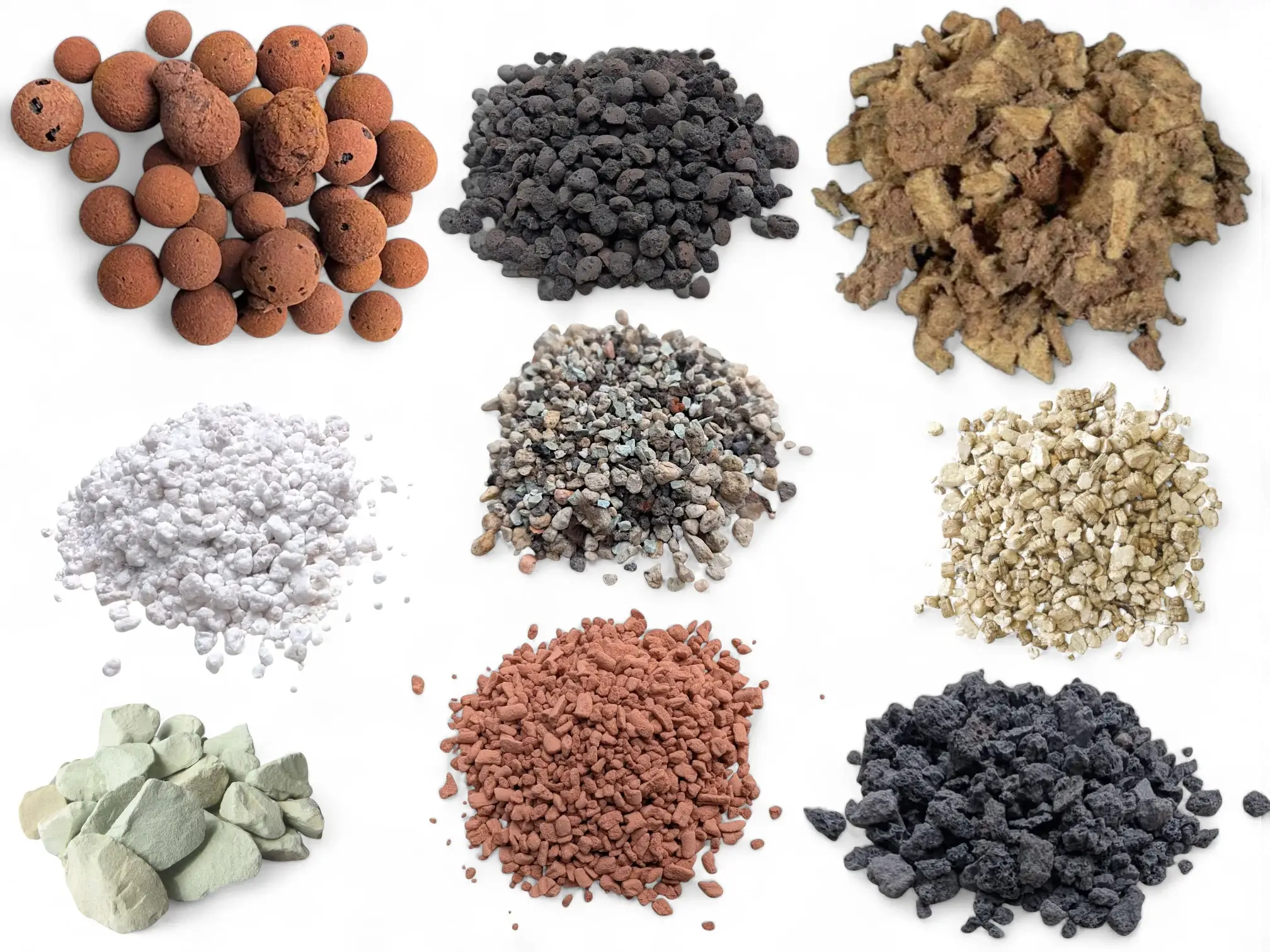
- 30–40%: coco coir or high-quality indoor potting soil (moisture retention)
- 20–30%: orchid bark (structure and airflow)
- 15–25%: perlite or pumice (aeration and drainage)
- 10–15%: worm castings or compost (optional nutrition)
- Optional: a small amount of horticultural charcoal (helps keep the mix fresher)
substrate guide and Repotting Houseplants help tailor mix structure to drying speed at home.
Pot choice: oxygen and drainage first
- Plastic nursery pots: reliable drainage and easy watering control
- Clear orchid pots: helpful for monitoring roots and moisture levels
- Terracotta: can help in very wet homes, but dries faster and may require more frequent watering
- Decorative pots: use as covers; empty excess water every time
Semi-hydro (Pon, LECA, mineral substrates)
Philodendron 'Splendid' can adapt well to mineral substrates when warmth and light are stable. Semi-hydro reduces the “dry to soggy” swing, but it adds a new requirement: managing dissolved minerals so salts do not accumulate in the root zone.
- Start mild: begin with a diluted nutrient solution and increase slowly based on growth response.
- Keep oxygen available: avoid deep, stagnant reservoirs; choose a setup that keeps the medium aerated.
- Flush on purpose: periodic flushing helps prevent salt buildup, especially with hard tap water.
- Transition patiently: older soil roots often decline; judge success by new roots and new leaves.
From Soil to Semi-Hydro covers the transition in detail.
Repotting rhythm (and how to avoid setbacks)
- Typical timing: every 1–2 years, or when the mix becomes stale and drying turns erratic.
- Pot-up rule: increase diameter modestly (about 2–4 cm). Overpotting slows drying and raises rot risk.
- After repot: prioritise stable moisture and warmth; hold back on strong feeding until growth resumes.
Root health red flags
| Symptom | Most likely issue | First move |
|---|---|---|
| Mushy stems, dark base, sour smell | Waterlogged mix / oxygen deprivation / rot | Unpot and inspect roots; repot into fresh, airy substrate |
| Mix dries instantly and turns hydrophobic | Degraded or too-coarse substrate | Rehydrate evenly; adjust mix to buffer moisture better |
| Yellowing + droop while the mix stays damp | Root stress | Check roots before changing light or feeding |
| Roots circling tightly; drying becomes very fast | Rootbound | Repot one size up; refresh the mix |
5. Watering and Fertilising: Balancing Moisture and Nutrition
Philodendron 'Splendid' wants consistent moisture availability without stagnant wetness. Watering works best as a repeatable trigger tied to pot depth and drying speed, not a calendar.
Watering in soil: a reliable trigger
- Water thoroughly until excess drains out the bottom.
- Water again when the top ~25–35% of pot depth is dry.
- In brighter light and warmth, drying speeds up; in cool or dim conditions, drying slows.
- Empty saucers and cachepots every time; never let roots sit in pooled water.
Overwatering signals
- Lower leaves yellow and drop while the mix stays damp for days
- Stem base softens or darkens
- Soil smells sour or stale
- Rapidly spreading brown spots with yellow halos after stress
Underwatering signals
- Leaves lose firmness and curl; petioles feel limp
- Edges crisp, especially on newer leaves in dry air
- Mix pulls away from pot walls and is hard to re-wet
watering guide is helpful when watering swings between “too wet” and “too dry.”
Water quality and salt buildup
Mineral buildup is one of the quieter stressors for velvet-leaf Philodendron, especially in small pots and hard water areas. If leaf tips brown repeatedly while everything else looks “right,” salts are worth checking.
- Clues: white crust on the mix, repeated tip burn, slower growth with otherwise firm leaves.
- Prevention: occasional flushing with clean water and avoiding stacked fertiliser products.
- Adjustment: reduce fertiliser strength before increasing feeding frequency.
Fertiliser: steady and light beats heavy doses
- Use a balanced liquid fertiliser diluted to a gentle strength.
- Feed when the plant is producing new leaves and roots consistently.
- Skip feeding when growth is stalled, even if the calendar says “growing season.”
Beginner’s Guide to Fertilizing Houseplants covers practical dosing and common mistakes.

6. Common Problems and How to Fix Them
Most problems trace back to a small set of causes: root-zone oxygen issues, light mismatch, humidity + airflow imbalance, pests, or salt/nutrient stress. Treat symptoms as clues, then adjust one lever at a time.
Pests on Philodendron 'Splendid'
Velvet leaves can mask early feeding damage. Inspect undersides, petioles, nodes, and the newest growth points—especially after bringing new plants home.
| Pest | Signs | Treatment approach |
|---|---|---|
| Thrips | Silvery scarring, distorted new leaves, tiny black specks (frass), damage concentrated on newest growth | Isolate immediately; treat on a repeat schedule; focus on growth points and leaf undersides |
| Spider mites | Fine speckling, webbing, dull velvet surface | Rinse/wipe where possible; repeat treatments matter more than a single application; stabilise humidity and airflow |
| Mealybugs | White cottony clusters at nodes and petioles | Manual removal plus repeated follow-ups; treat crevices thoroughly |
| Scale | Hard bumps on stems/petioles; sticky residue | Remove physically; repeat follow-ups weekly to catch new crawlers |
| Fungus gnats | Small flies near the pot; larvae thrive in constantly damp mix | Let the mix dry deeper; sticky traps; BTI products for larvae control |
Repeat-control cadence (the part that actually ends outbreaks)
- Day 0: Isolate. Treat thoroughly (undersides, petioles, nodes, newest growth).
- Day 5–7: Treat again. Check new growth for fresh damage.
- Day 12–14: Treat again. Continue weekly checks for a month.
Quarantine works: isolate new plants for 1–2 weeks and inspect twice. Pest Control for Houseplants has targeted guides for specific pests.
Overwatering, root rot, and yellowing
- Unpot the plant and inspect roots if yellowing combines with droop and slow drying.
- Trim dead roots with sterilised tools and repot into fresh, airy substrate.
- After repotting, water once to settle the mix, then let a new drying rhythm establish.
root-rot guide helps decide whether to repot, chop-and-prop, or adjust care.
Stuck leaves, tears, and messy unfurling
| Symptom | Most likely cause | Fix that doesn’t create new problems |
|---|---|---|
| Leaf tip dries and tears on unfurl | Dry air + uneven moisture delivery | Stabilise watering rhythm; raise ambient humidity; keep gentle airflow |
| New leaf emerges small and crumpled | Light too weak or roots stressed | Increase light gradually; verify root health before changing feeding |
| Leaf stalls in sheath | Low humidity + plant underhydrated | Raise humidity and water appropriately; avoid forceful pulling |
Light stress and leaf discolouration
Too much light
- Crispy edges or bleached patches
- Velvet surface looks “washed out” on the sun side
- New leaves emerge pale if heat stress is high
Too little light
- Long internodes, smaller leaves
- Foliage dulls and growth slows
- Mix stays wet longer, increasing root risk
sun-stress guide helps separate light damage from general stress.
Brown tips and edges
Most often tied to dry air + watering swings, salt buildup, or overfeeding. Damaged edges do not reverse; judge success by the next leaves.
- Stabilise watering rhythm first.
- Check for salt crust and reduce fertiliser strength if tip burn repeats.
- Increase humidity for cleaner leaf expansion, paired with gentle airflow.
Shipping stress and acclimation
- Provide stable warmth, bright filtered light, and workable humidity.
- Avoid immediate repotting unless rot is visible or the mix is dangerously waterlogged.
- Use new growth as the signal that the plant has settled.
Post-Purchase Care for New Houseplants covers a calm acclimation routine.

7. Propagation Techniques: How to Multiply Philodendron 'Splendid'
Vegetative propagation is the standard route for Philodendron 'Splendid' in cultivation. Nodes are non-negotiable: a cutting without a node cannot become a new plant.
Method 1: Stem cuttings (most common)
-
Select a healthy section
- Include at least one node
- 1–2 leaves is a practical balance
- An aerial root helps but is not required
-
Cut with sterilised scissors
- Cut just below the node
-
Root in an oxygenated medium
- Water (refresh regularly)
- Damp sphagnum moss (moist, not soaked)
- Perlite or an airy propagation mix
- Propagation box can stabilise humidity if ambient air is very dry
-
Hold steady conditions
- Bright, filtered light
- Warm temperatures (around 20–27 °C)
- Moderate to high humidity for clean rooting
-
Pot up when roots are established
- Wait for multiple roots and some branching
- Keep new roots from drying during the transfer
Method 2: Air layering (low-risk for valuable plants)
- Select a node (ideally with an aerial root forming)
- Wrap with moist sphagnum (moist, not dripping)
- Cover to hold humidity (plastic wrap or a propagation pod)
- Check weekly and keep moss evenly moist
- Cut and pot once a visible root mass forms
Method 3: Division (only when multiple basal shoots exist)
- Divide only if each section has its own roots and a growth point.
- Keep warmth and humidity stable during recovery.
Timing: when propagation works best
| Timing | Suitable? | What matters most |
|---|---|---|
| When light and warmth are stable | ✅ | Rooting speed and rot risk are driven by temperature + light + oxygen in the medium |
| Cool, dim periods | ⚠️ | Rot risk rises if media stays wet and oxygen-poor; use warmer conditions or wait |
propagation guide covers technique choices and transitions in depth.
8. Toxicity and Pet Safety
Philodendron 'Splendid' is not edible and not pet-safe. Like many aroids, plant tissues contain insoluble calcium oxalate crystals that can irritate mouth and throat if chewed.
⚠️ What ingestion can look like
- Oral irritation (burning or swelling of lips, tongue, mouth)
- Drooling or vomiting
- Difficulty swallowing
- Pawing at the mouth (pets)
Skin contact & sap sensitivity
- Mild skin irritation can occur, especially on sensitive skin.
- Eye irritation is possible if sap is transferred by touch.
What to do if exposed
| Exposure | First steps |
|---|---|
| Ingestion (pet or child) | Rinse mouth, offer water, monitor closely, contact a vet/medical professional if symptoms appear |
| Skin contact | Wash with mild soap and water |
| Eye contact | Rinse with clean water for several minutes; seek medical help if irritation persists |

9. Bonus Tips and Collector Setup
Make the support system do real work
- Stability first: anchor the pole firmly so the pot does not wobble as the plant gets heavier.
- Attachment matters: guide nodes toward the pole so aerial roots can grip.
- Moist pole, not soggy pot: keep moss slightly moist if using a moss pole, but avoid soaking the entire pot to “water the pole.”
- Extend over time: as the plant reaches the top, add height or chop-and-extend to keep mature growth going.
Rotate for balance (without chasing perfection)
- Rotate occasionally to prevent severe leaning toward the window.
- Support top-heavy stems early to avoid cracking at nodes.
Clean velvet leaves safely
- Use a soft brush first for dust.
- If wiping is needed, use a very gentle touch; velvet surfaces can mark.
- Avoid spraying leaves; water droplets can spot and leave marks.
After shipping: stabilise first
- Warmth + bright filtered light + steady moisture beats rapid changes.
- Hold off on repotting unless rot is visible or the mix is dangerously waterlogged.
- Wait for new growth before increasing fertiliser or changing substrates.
Seasonal changes: adjust watering to drying speed
- If drying slows, reduce watering frequency rather than watering “as usual.”
- If heating dries the air, stabilise humidity or tighten watering precision to protect leaf edges.
- Judge progress by new leaves, not older foliage that formed under different conditions.
10. Frequently Asked Questions About Philodendron 'Splendid'
❓ Is Philodendron 'Splendid' hard to care for?
Care is straightforward once light, substrate structure, and support are correct. Bright filtered light, an airy mix, and a predictable drying rhythm do most of the work. Higher humidity improves leaf quality, but roots still need oxygen and the mix still needs to dry at a sensible pace.
❓ Why are leaves turning yellow?
- Most common: the mix stays wet too long (dense substrate, low light, overpotting)
- Also possible: sudden cold exposure, pest pressure, or normal aging of the oldest leaf
If yellowing is paired with droop and damp substrate, check roots first.
❓ How do bigger leaves happen?
- Train vertically on a stable pole or plank
- Increase light gradually until internodes tighten
- Keep watering consistent and the root zone oxygenated
- Maintain workable humidity for clean leaf expansion
❓ Can Philodendron 'Splendid' grow in LECA or semi-hydro?
Yes. Semi-hydro can work very well when warmth and light are stable and the setup stays oxygenated. Use modest nutrient strength and flush periodically to avoid mineral accumulation.
❓ Is Philodendron 'Splendid' pet-safe?
No. Calcium oxalate crystals make it unsafe if chewed or ingested. Keep it out of reach of pets and children.
❓ Can it live in low light?
Survival is possible, but growth quality drops: longer internodes, smaller leaves, slower climbing, and a higher chance of watering mistakes because the mix dries slowly. A grow light can make a big difference in darker homes.
❓ How fast does Philodendron 'Splendid' grow?
Growth depends on light and root health. In strong conditions with support, it can produce multiple leaves through the year and climb steadily. In dim or cool conditions, growth slows and watering needs to be reduced.
❓ Does Philodendron 'Splendid' flower?
Flowering can happen, but it is uncommon indoors. Vegetative propagation is the practical method for multiplying and sharing this plant.

Conclusion: Why Philodendron 'Splendid' Deserves a Spot in Your Collection
Philodendron 'Splendid' is a velvet-leaf climber that rewards correct setup rather than constant intervention. Strong filtered light, a root zone with real airflow, and a stable support system create steady climbing growth and larger, more dramatic leaves over time.
Humidity improves leaf quality, but roots decide success. Keep the substrate airy, water based on drying depth, and avoid cold + wet combinations. Do that consistently, and Philodendron 'Splendid' becomes a long-term climber that keeps getting better as it matures.
- Bright, indirect light
- Humidity for healthier houseplants
- An airy, well-draining mix
- Consistent care fundamentals


Leave a comment