Light
Very bright / some direct • approx. 20,000–40,000 lux

Musaceae
Banana Plant
VAT included · plus
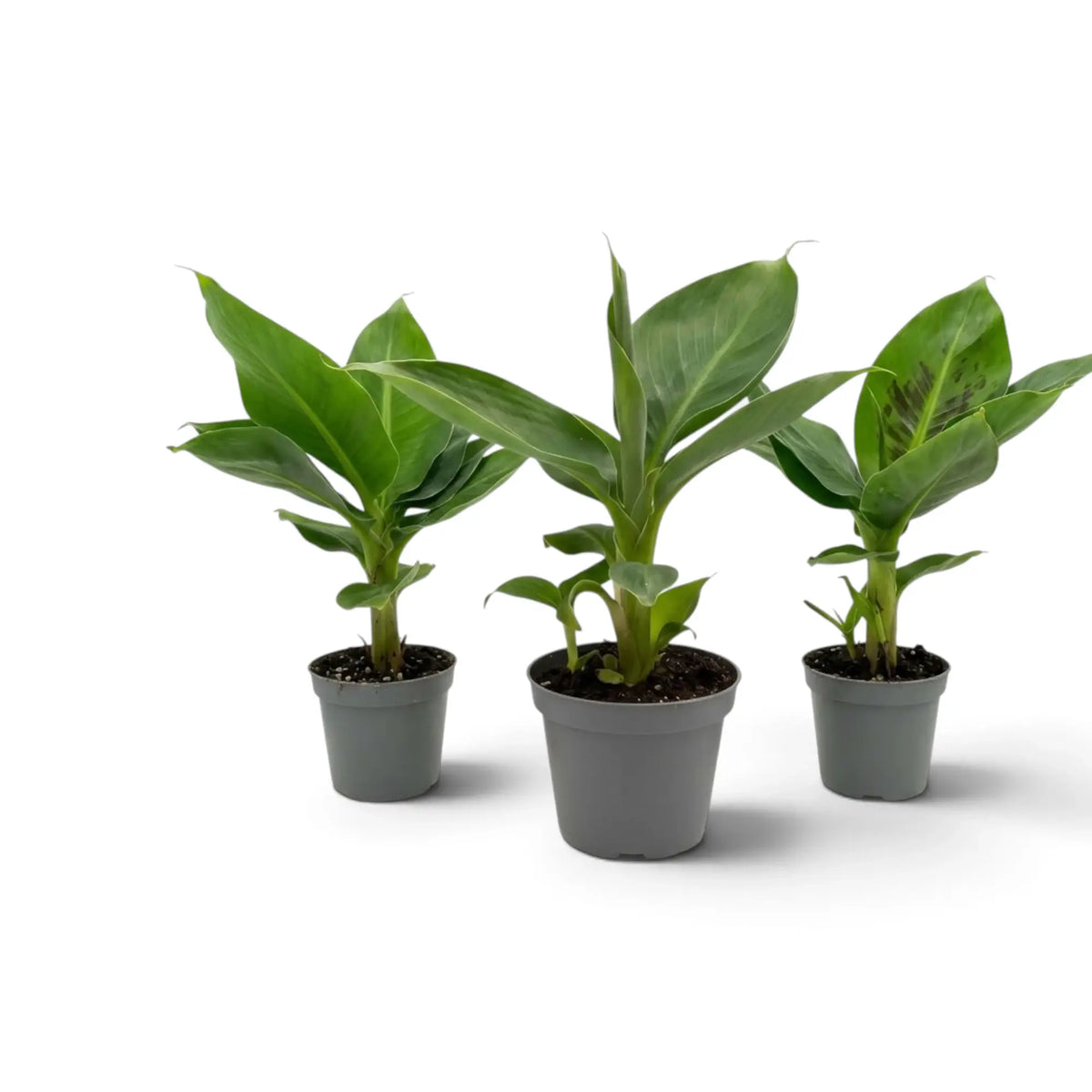
Sizes are approximate. Height is measured from the bottom of the pot to the top of the plant; diameter at the widest point.
Your plant may need a little time to settle after travelling. Our after-delivery care guide covers unpacking and first-week care. The houseplant acclimatisation guide explains what to expect during the following weeks.
Every order is carefully packed and sent with tracking. If your plant arrives damaged or develops a problem covered by our 28-day guarantee, contact us with photos. Full conditions are available under Guarantee & Returns.
Visit our FAQ or contact customer support for help with orders, delivery or plant care.
Musa acuminata 'Cheeka'
Light
Very bright / some direct • approx. 20,000–40,000 lux
Watering
Water when ~10–25% dry
Substrate
Moisture-retentive but aerated • Evenly moist • Organic-leaning • Fine-medium
Temperature
Ideal: 18–30 °C • Avoid below: 10 °C
Humidity
High 60–80% +
Growth habit
Clumping giant herbaceous perennial with a branching corm-like rhizome and pseudostems.
Support
not needed
Growth speed
Average
Cultivated size guide
Height: 30 cm • Spread: 35 cm
Toxicity & safety
Non-toxic
Origin & habitat
Musa acuminata cultivar selected by Magaly Zais-Fast near Bangkok, Thailand, in 1995 as a whole-plant mutation of ‘Kluai Khai’
Outdoor growing
Outside from 14 °C · sheltered spot
These care values give practical guidance for growing the plant. Adjust care for pot size, substrate, temperature and how quickly the substrate dries.
For more detail, read the full product description or visit our Plant Care Guides.
These figures do not describe the size supplied and are not fixed upper limits.
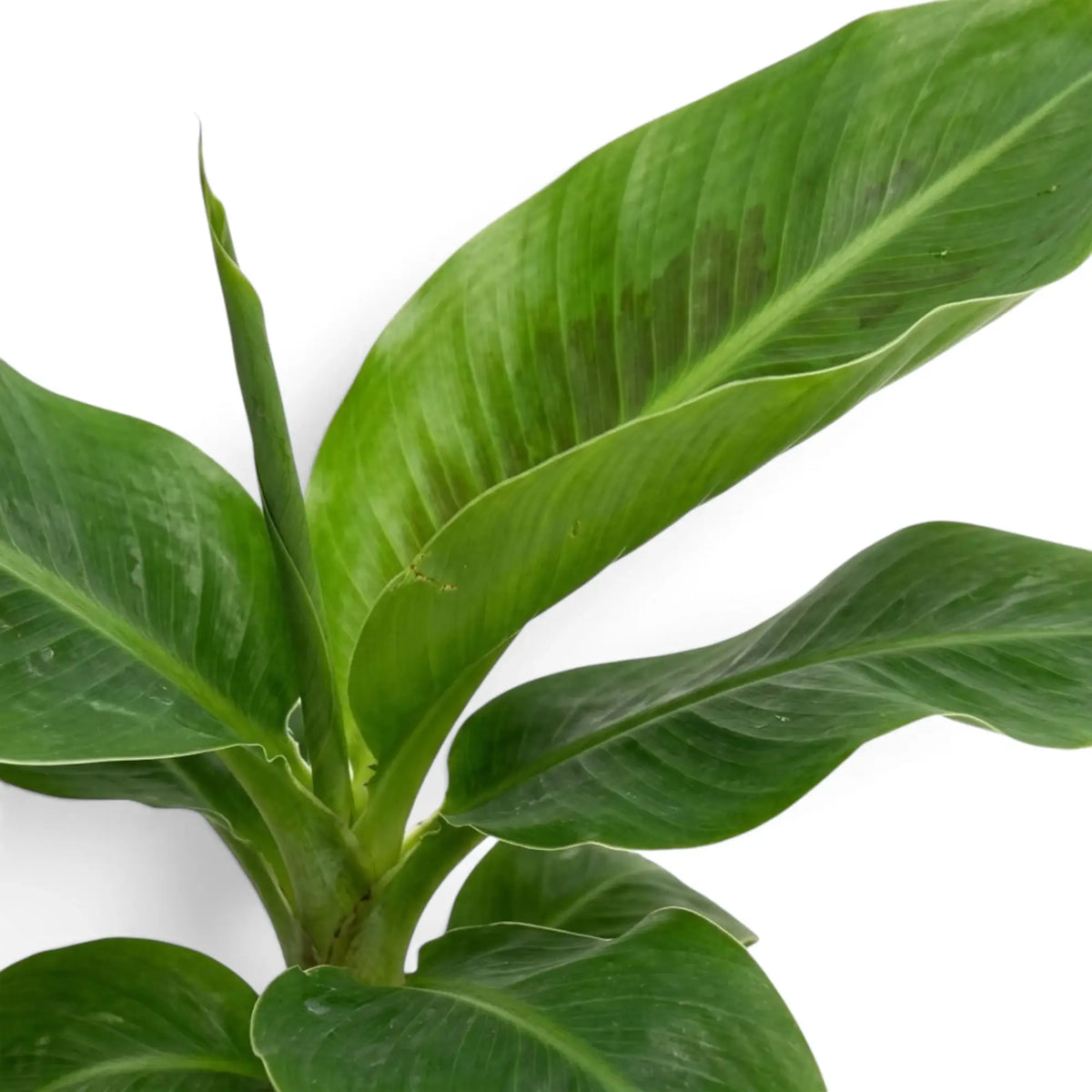
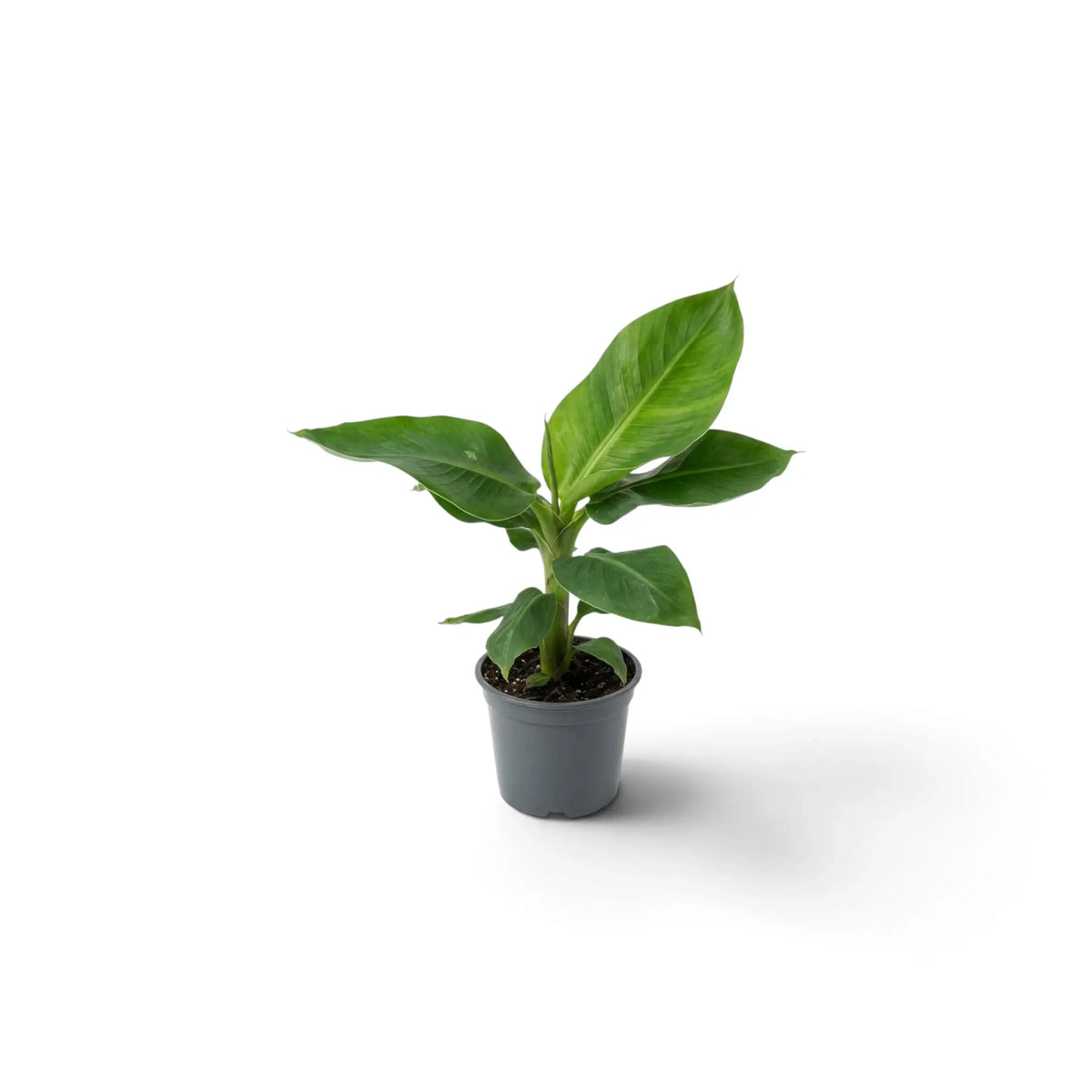
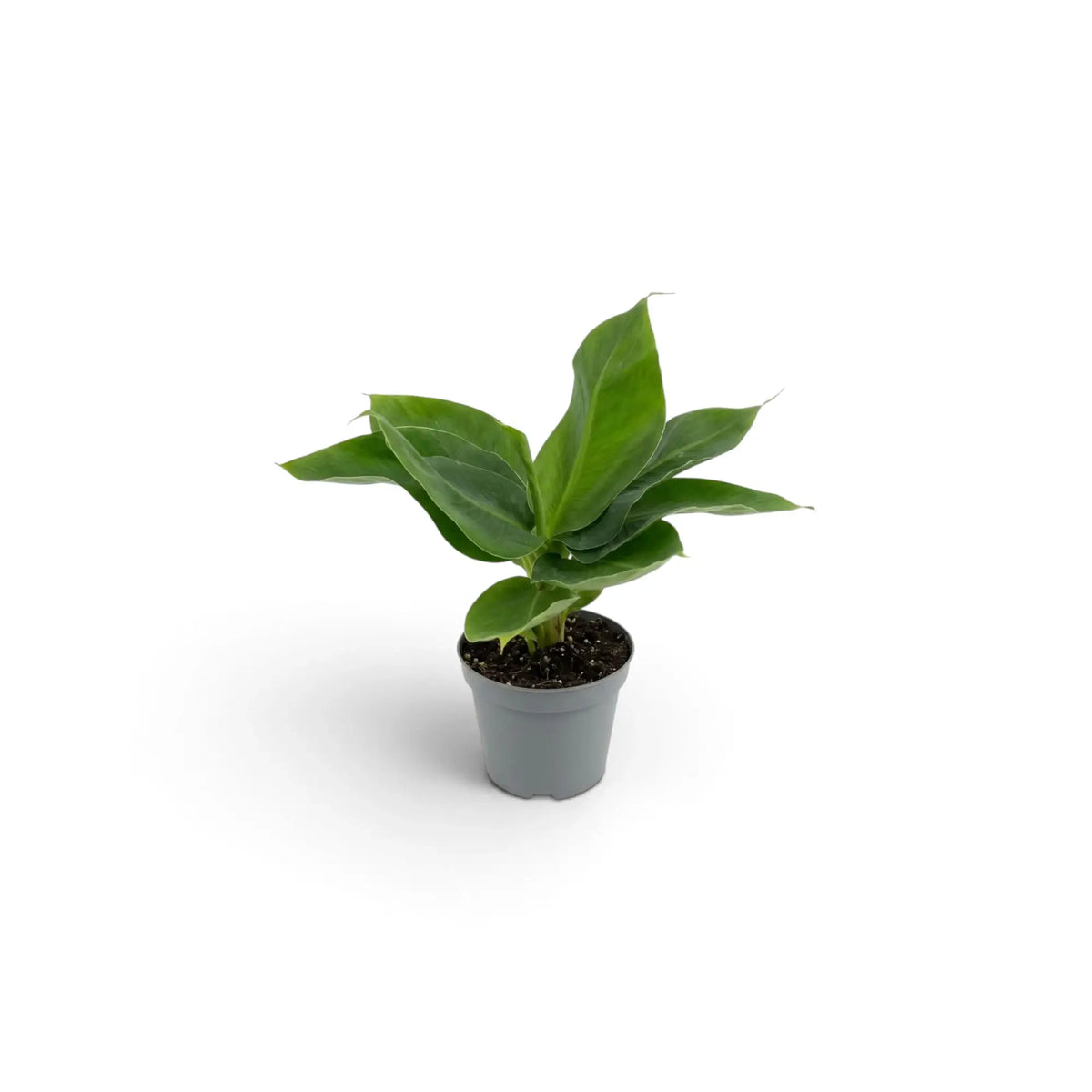
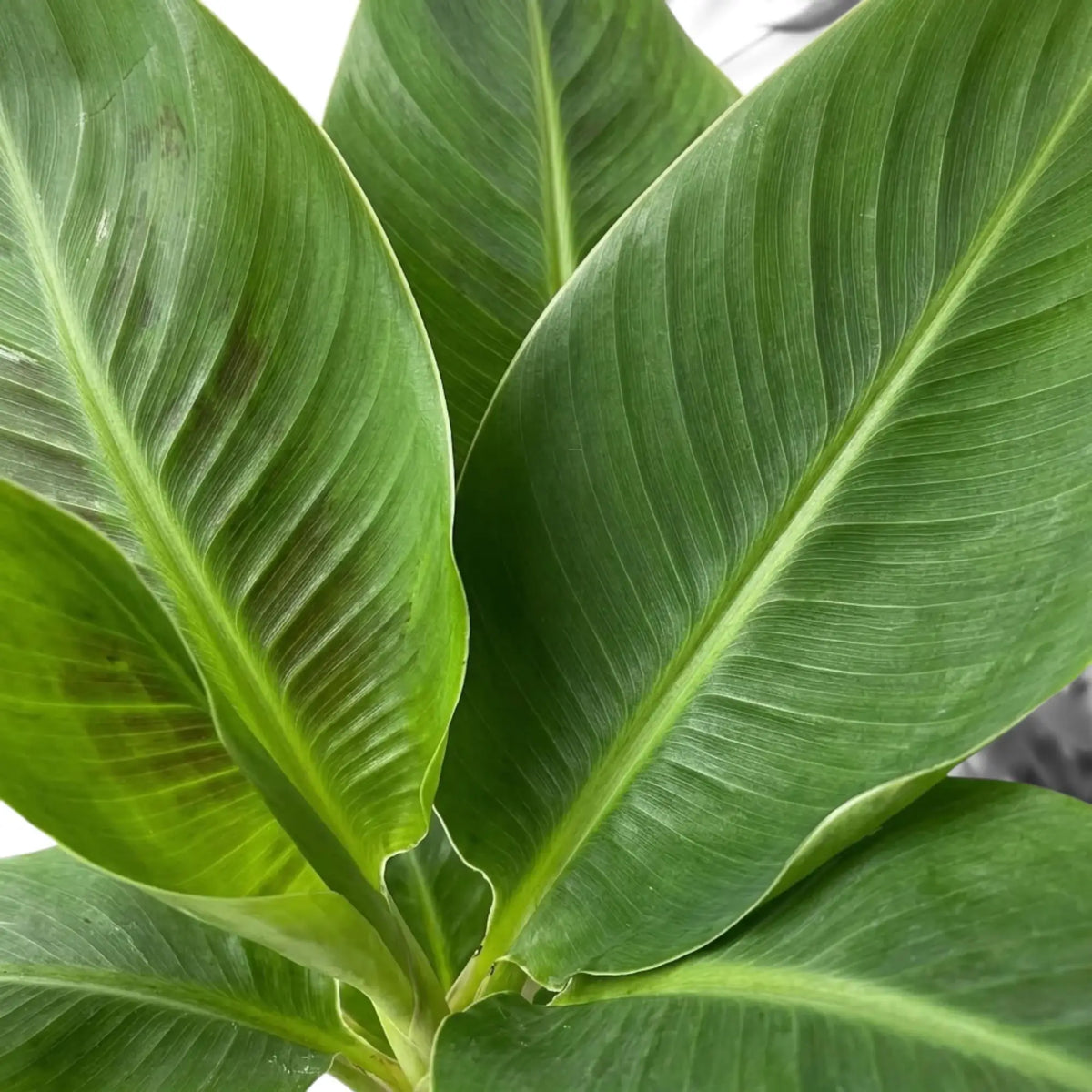
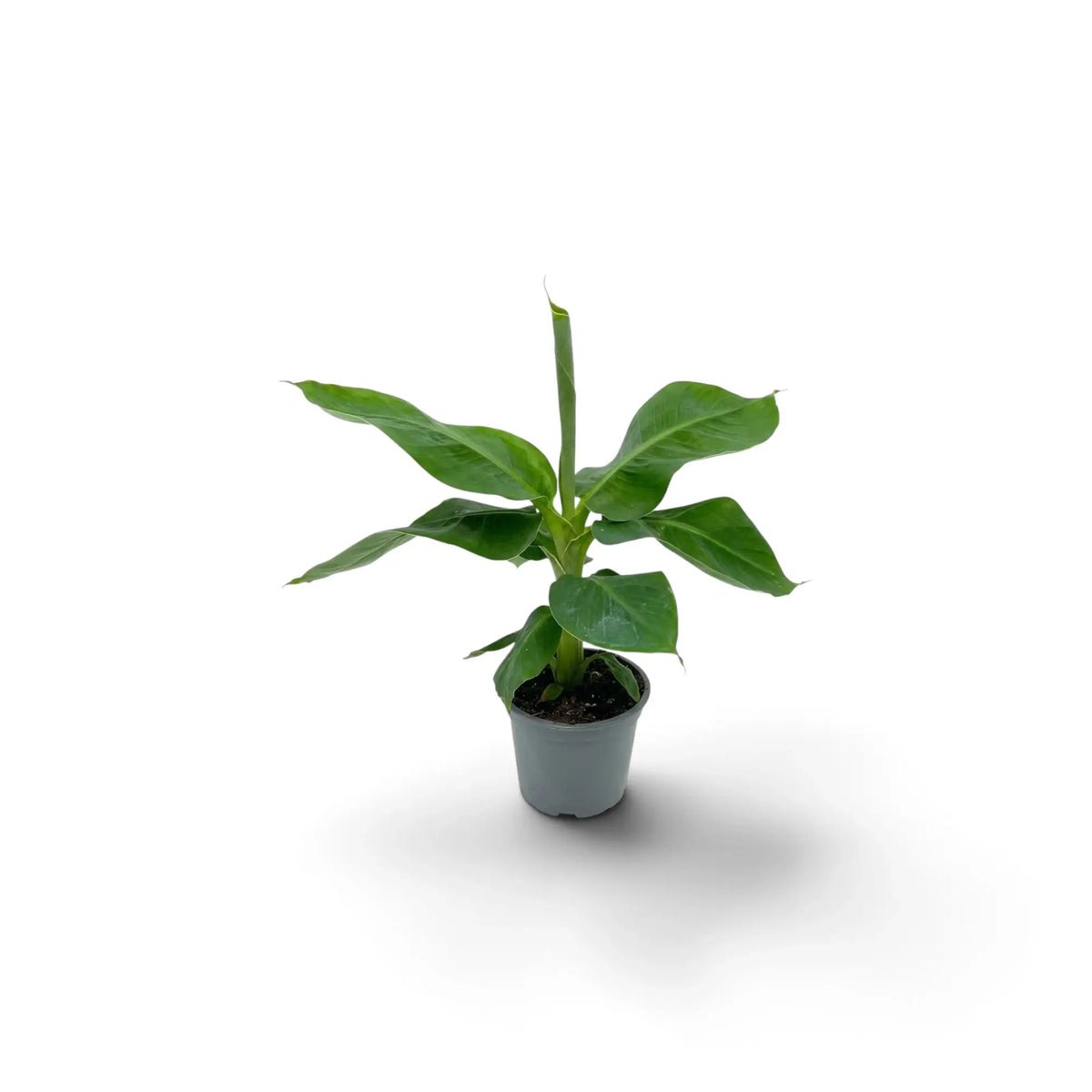
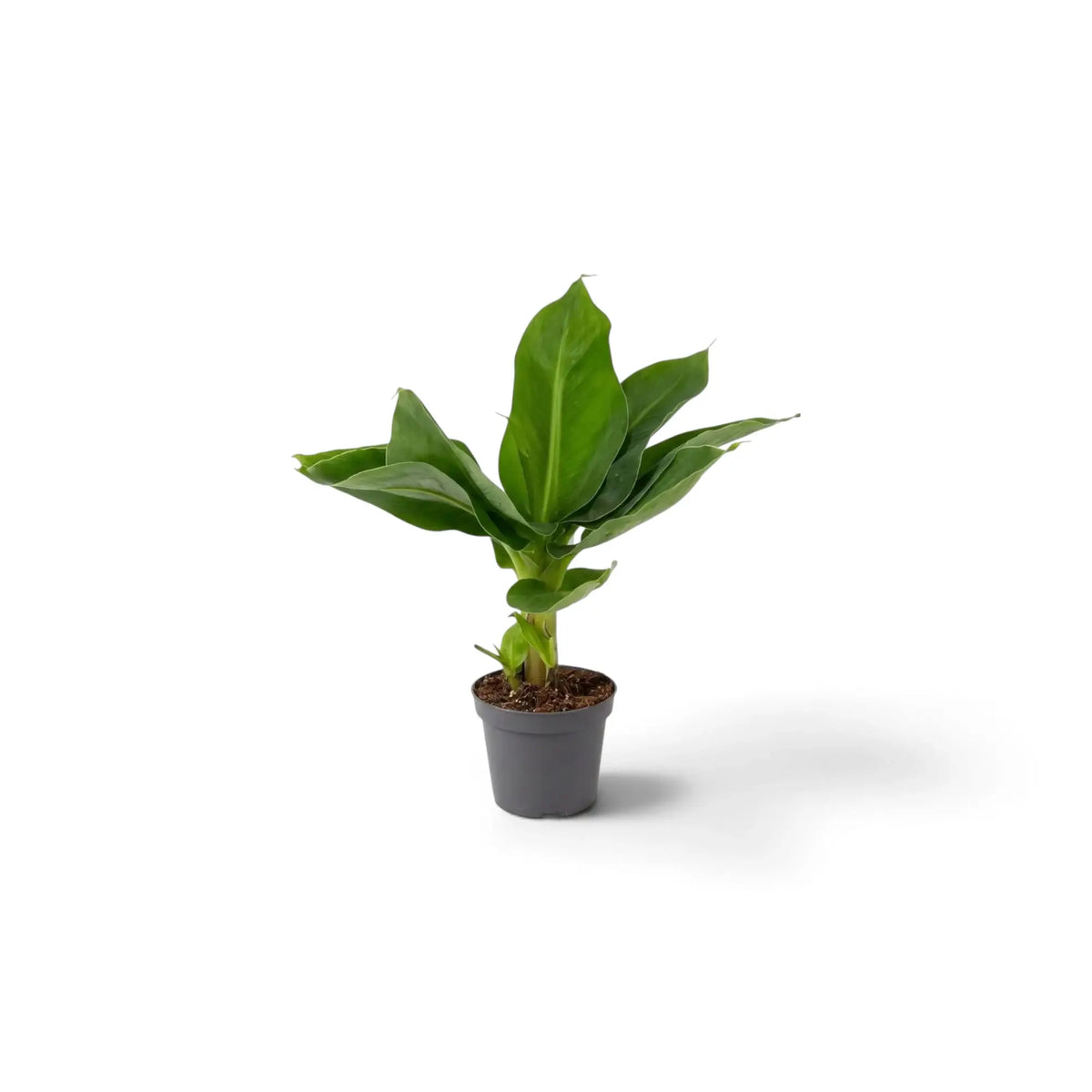
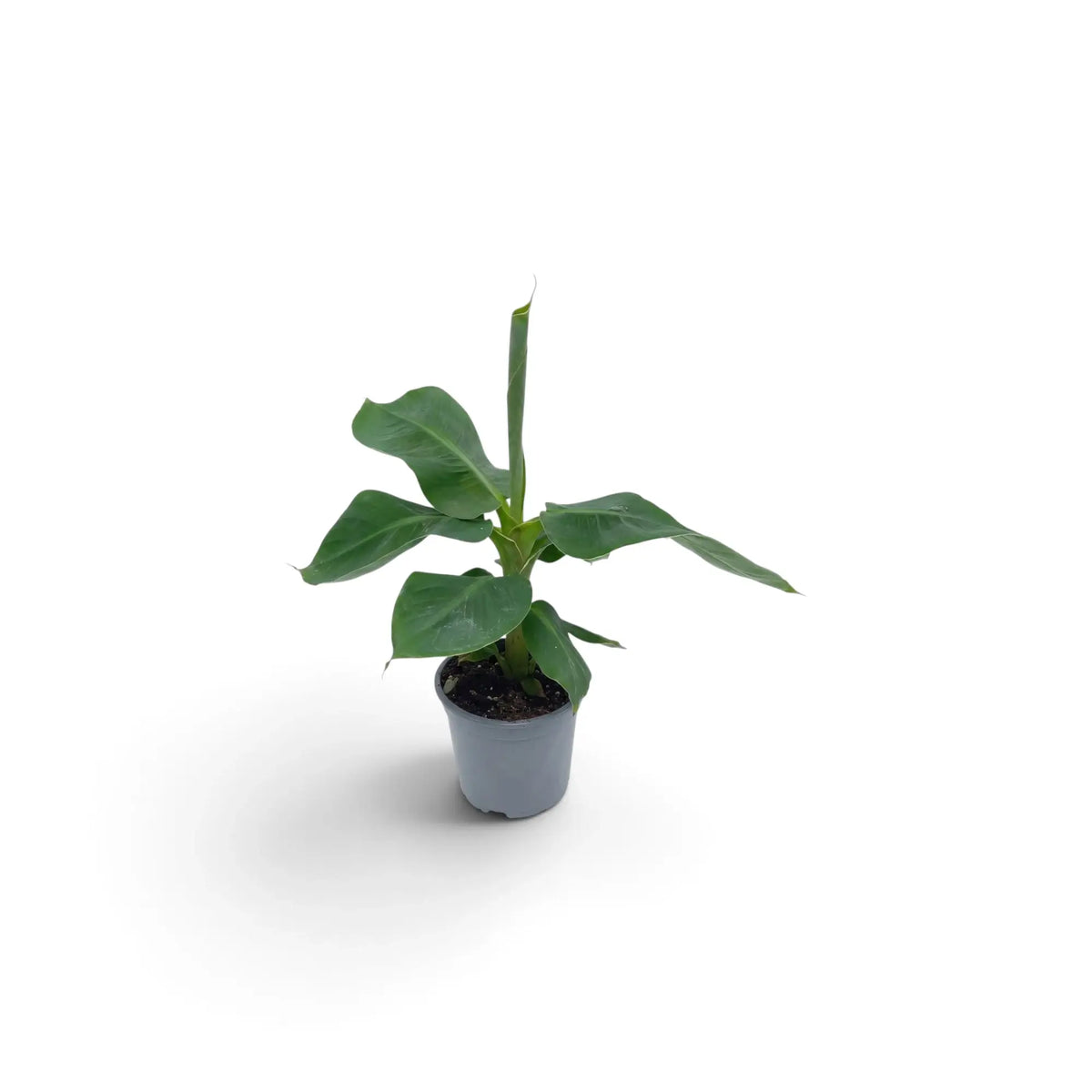
Solid-green leaves rise in a compact upright crown above a short pseudostem formed by overlapping leaf bases. As that central stem matures, grey-purple to red-purple tones deepen through the tissue, adding colour below the green foliage.
Plant names, growth habits, natural habitats and indoor care guidance are checked against trusted botanical, habitat and horticultural references before publication.View our plant care resources and references.

Choose options


Sign up for Foliage Factory newsletter for early access to new arrivals and practical care tips that work in real homes.