Light
Very bright / some direct • approx. 20,000–40,000 lux


VAT included · plus
Quick overview of our standard shipping rates, free-shipping thresholds and typical transit times for the countries we currently serve. Remote-area surcharges for certain postcodes are added automatically at checkout where applicable.
For full details, winter shipping rules and packaging information, please visit our Shipping & Delivery page.
| Country | Shipping | Free from | Transit time |
|---|---|---|---|
| Austria | € 12.95 | € 100 | 2–4 working days |
| Belgium | € 8.95 | € 100 | 1–2 working days |
| Bulgaria | € 21.95 | € 300 | 5–7 working days |
| Croatia | € 29.95 | € 300 | 5–7 working days |
| Cyprus (²) | € 39.95 | No free shipping | 5–7 working days |
| Czechia | € 16.95 | € 150 | 2–4 working days |
| Denmark (¹) | € 16.95 | € 150 | 2–4 working days |
| Estonia | € 18.95 | € 200 | 2–4 working days |
| Finland | € 29.95 | € 300 | 5–7 working days |
| France (¹) | € 12.95 | € 100 | 2–4 working days |
| Germany | € 8.95 | € 70 | 1–2 working days |
| Greece (¹²) | € 29.95 | € 300 | 5–7 working days |
| Hungary | € 18.95 | € 200 | 2–4 working days |
| Ireland | € 14.95 | € 150 | 2–4 working days |
| Italy (¹) | € 14.95 | € 150 | 2–4 working days |
| Latvia | € 18.95 | € 200 | 5–7 working days |
| Lithuania | € 18.95 | € 200 | 2–4 working days |
| Luxembourg | € 12.95 | € 100 | 1–2 working days |
| Malta (²) | € 39.95 | No free shipping | 5–7 working days |
| Netherlands | € 8.95 | € 100 | 1–2 working days |
| Poland | € 12.95 | € 100 | 2–4 working days |
| Portugal (¹) | € 14.95 | € 150 | 2–4 working days |
| Romania | € 21.95 | € 300 | 5–7 working days |
| Slovakia | € 18.95 | € 200 | 5–7 working days |
| Slovenia | € 18.95 | € 200 | 5–7 working days |
| Spain (¹) | € 14.95 | € 125 | 2–4 working days |
| Sweden | € 18.95 | € 200 | 2–4 working days |
| Switzerland | € 29.95 | € 300 | 5–7 working days |
Secure shipping – carefully packed orders with safe delivery across the EU, UK and Switzerland.
28-day plant guarantee – if a plant arrives damaged or fails soon after delivery, we help you make it right.
Free returns – simple, cost-free returns according to our policy.
For full details, please see:
Light
Very bright / some direct • approx. 20,000–40,000 lux
Watering
Water when ~60–80% dry
Potting mix
Airy + fast-draining • Light moisture buffer • Bark-based • Medium-chunky
Temperature
Ideal: 16–24 °C • Avoid below: 10 °C
Humidity
Humid 60–80 % +
Growth habit
twining epiphytic vine
Support
optional
Growth speed
Fast
Max size indoors
Max. trail length: 40 cm • Max. spread: 35 cm
Toxicity & safety
Non-toxic & Pet Friendly
Origin & habitat
E. Himalaya to China (Yunnan); wet tropical biome
These metrics are standardised reference points. We compile them by reviewing and cross-checking multiple botanical and horticultural references, then refining them through real-world growing experience. Source links: Plant Care Resources.
Please use the values as guidance. Conditions vary by home, so the same plant can respond differently. For plant-specific context, read the full product description and browse our Plant Care Guides.
Hoya polyneura was described by Joseph Dalton Hooker in Flora of British India (1883). Native to the eastern Himalayas of India, this rare Himalayan Hoya grows epiphytically on moss-covered branches between 1000 and 3000 m elevation, catching monsoon rain while roots stay aerated.
Unlike many Hoyas, Hoya polyneura is not a climbing vine – it forms arching, shrubby shoots that bend under their own weight, creating a graceful, cascading form ideal for hanging pots or elevated displays.
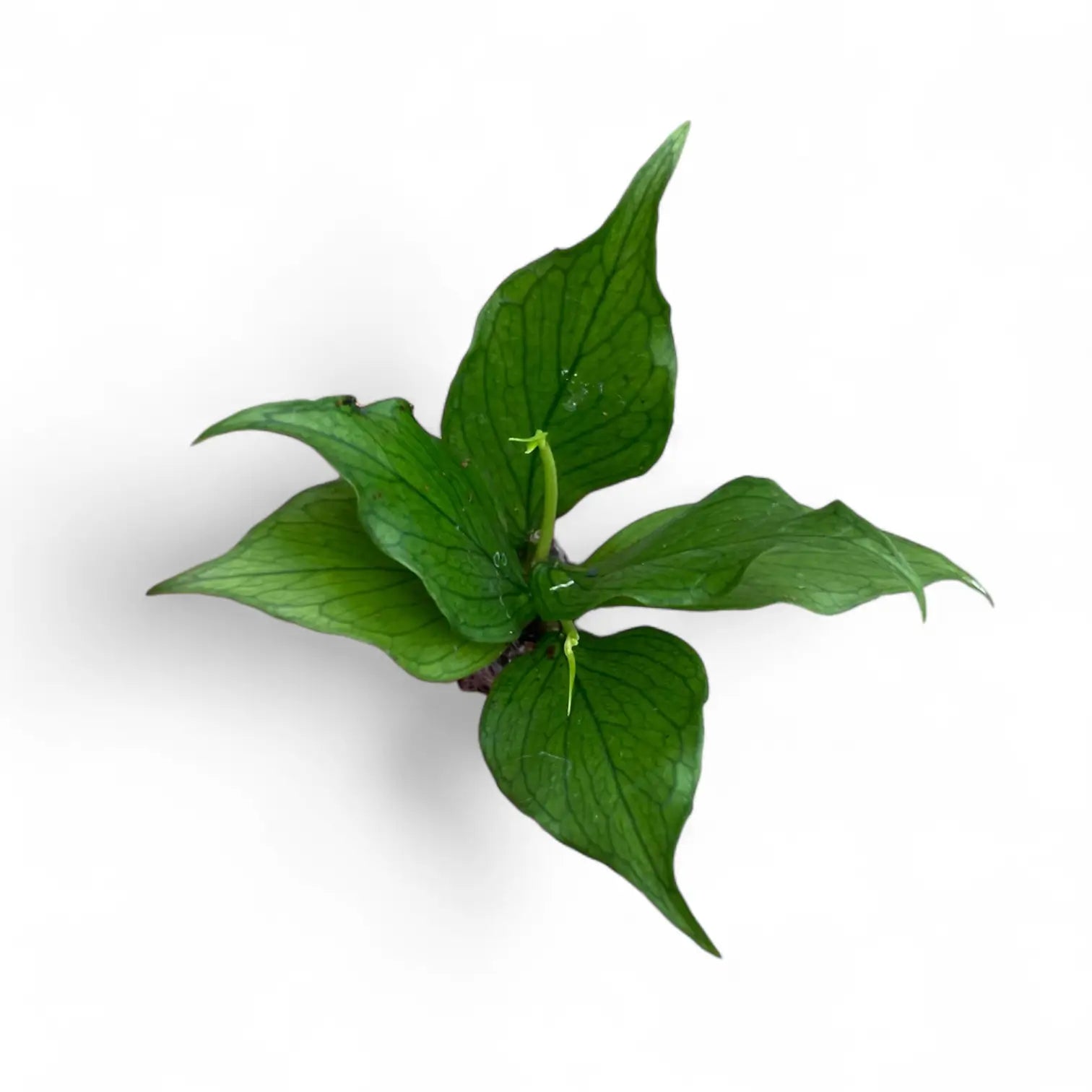
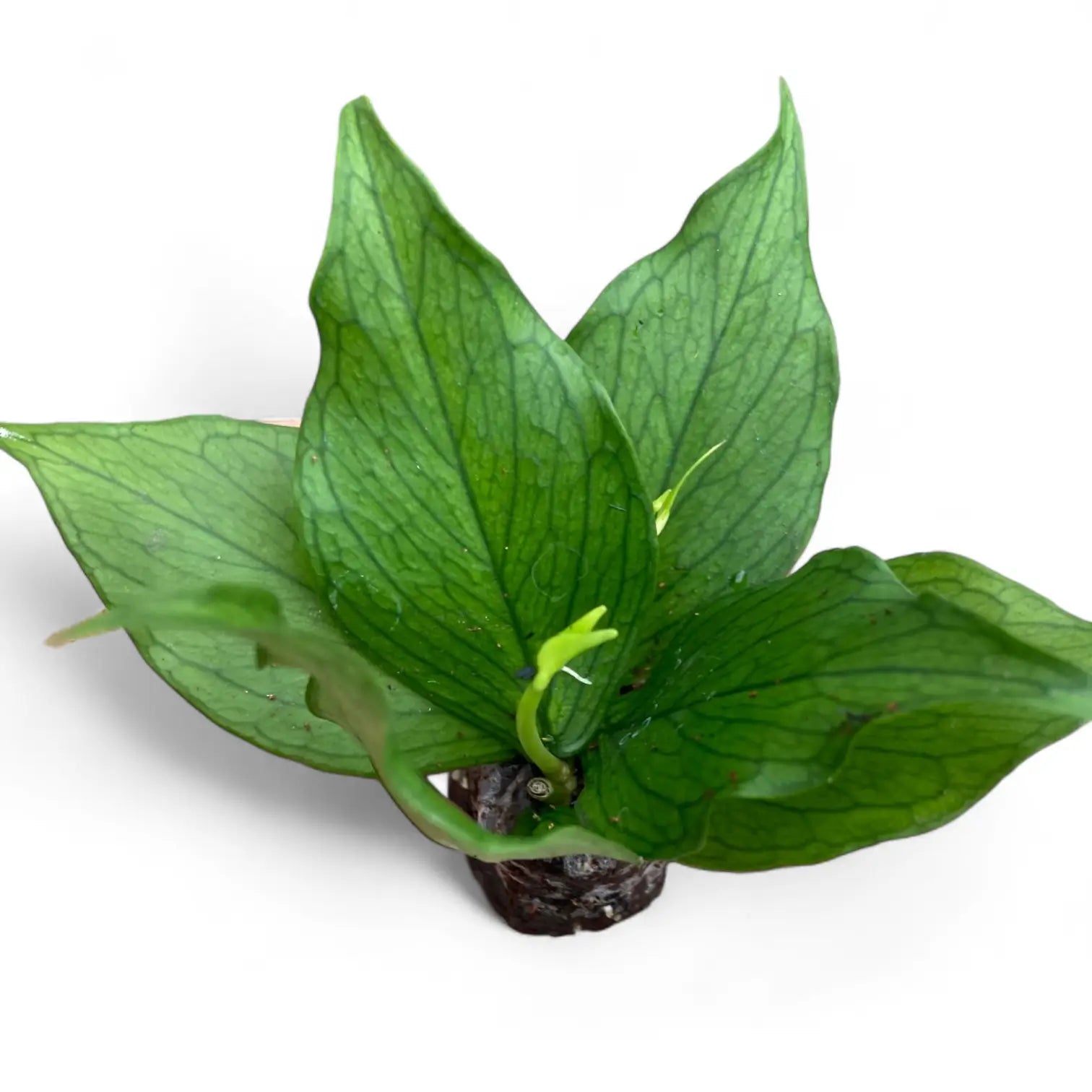
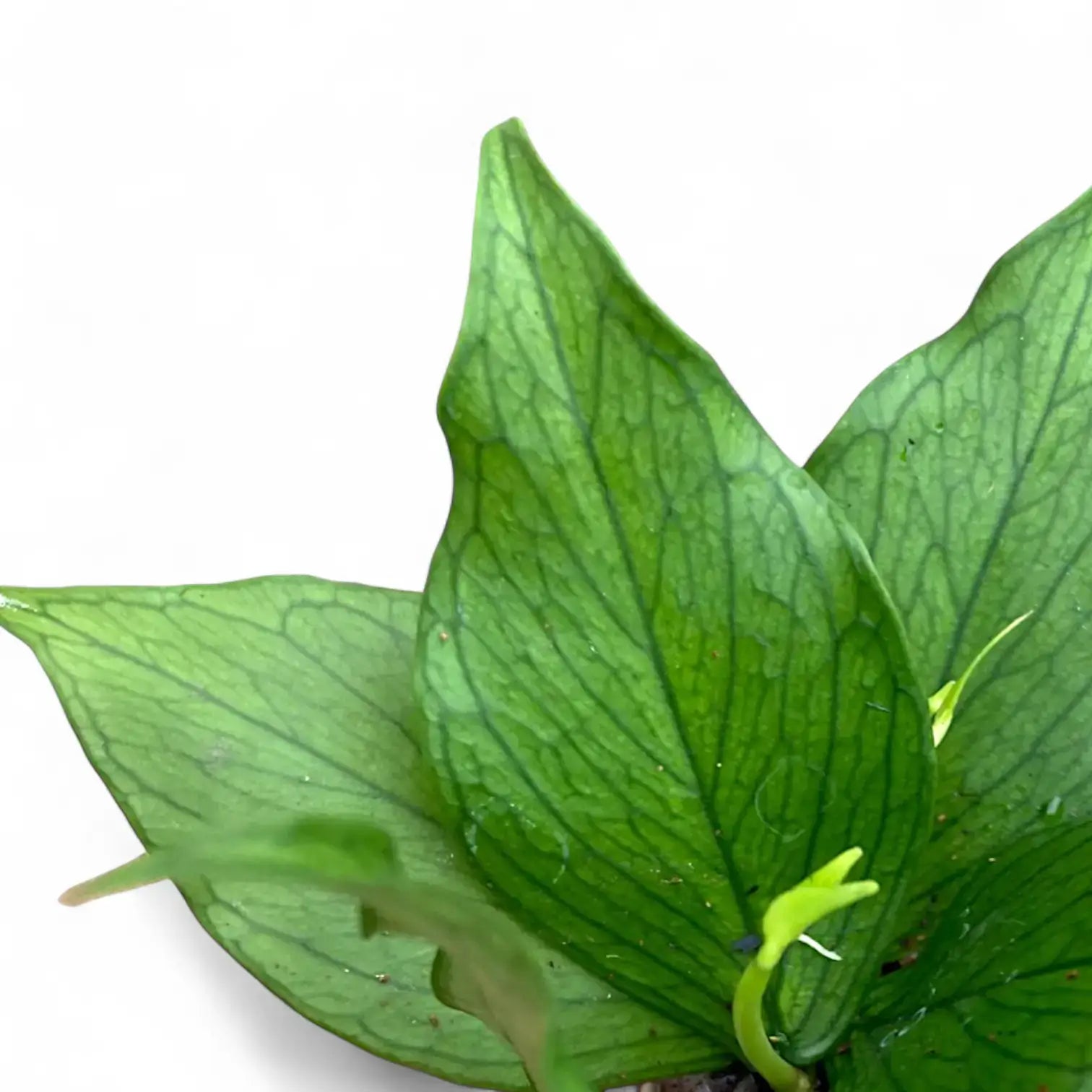
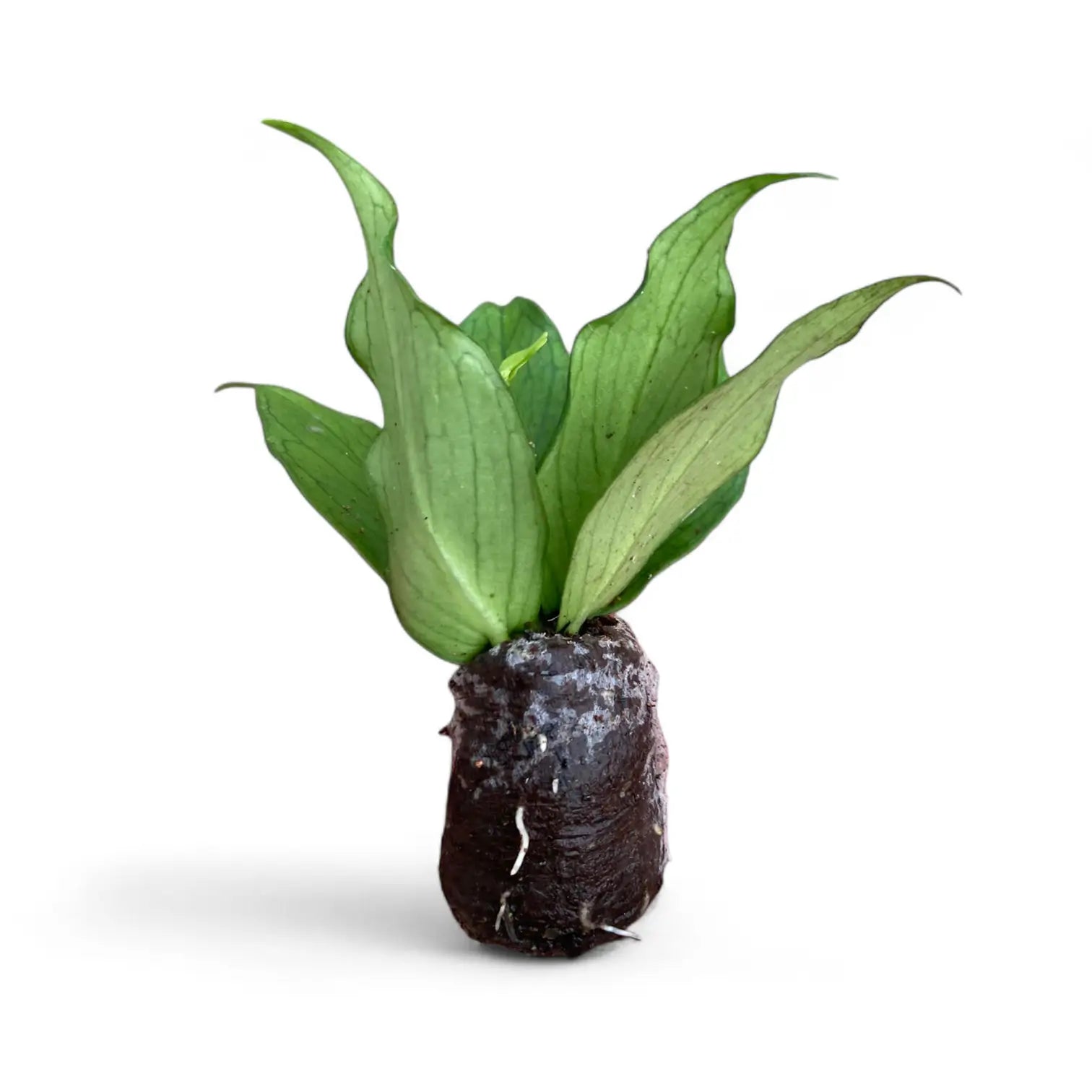
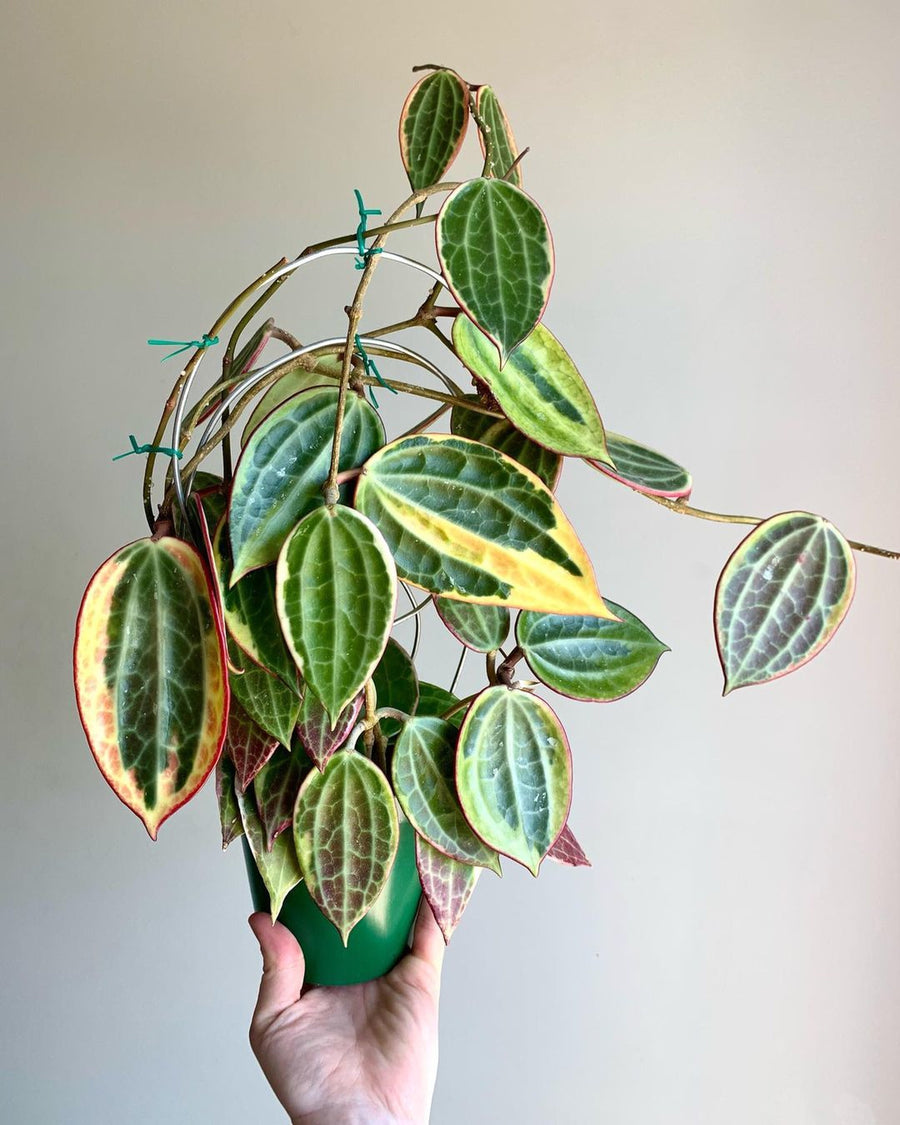
This species is instantly recognisable by its striking leaf pattern. Leaves are opposite, flat and diamond-shaped, typically 6–8 cm long and 2.5–4 cm wide. Their medium-green surface is lined with blue-green veins arranged like a fish skeleton – the feature behind the nickname Fishtail Hoya.
Leaves are slightly succulent, smooth and faintly glossy. With consistent conditions, Hoya polyneura forms a dense, pendulous mound that shows off its pattern beautifully.
Flower umbels appear beneath the paired leaves, often without visible stalks, so blooms are best appreciated from below. Once established, Hoya polyneura blooms reliably and even younger plants may produce peduncles.
Flowers are waxy white with a deep carmine-red corona. Each umbel bears around 7–10 individual blooms, and a single peduncle can flower several times a year. They exude a mild, sweet scent, produce abundant nectar and last roughly a week.
In its native mountain forests, Hoya polyneura grows as an epiphyte in cool, humid air under diffused light. Constant humidity, nightly cooling and good airflow are key to replicating its environment indoors.
When these conditions remain stable, plants respond with steady growth and regular blooming.
Light: Bright, indirect light. Avoid harsh direct sun that burns foliage. Temperature: Cool to moderate, ideally 15–22 °C. Cooler nights are helpful for bud formation. Humidity: High humidity supports healthy leaves and flowers. Regular misting or naturally humid rooms are ideal if airflow is good. Substrate: Slightly heavier than typical Hoya mixes – combine a chunky epiphytic blend with some mineral material or washed sand for drainage and weight. Watering: Keep evenly moist but never soggy. Let the top layer dry slightly before watering again and reduce watering in winter. Feeding: Use diluted liquid fertiliser every 4–6 weeks during active growth. Display: Perfect for hanging pots where arching stems and downward-facing umbels can be viewed clearly.
Hoya polyneura is not the easiest Hoya to grow, but patience and consistency are rewarded with graceful foliage and beautifully scented blooms. It dislikes heat and stagnant air yet thrives in stable, bright, cool conditions.
Prominent leaf veins act like miniature water channels – an adaptation to alternating dry and monsoon periods in its Himalayan habitat.
The genus name Hoya honours English botanist Thomas Hoy (1750–1822). The species epithet polyneura derives from Greek poly (“many”) and neuron (“vein”), referring to the characteristic fishbone venation.
Find carefully cultivated Hoya polyneura at Foliage Factory – grown under stable conditions, plastic-free packed and shipped with a 28-day guarantee. Add this rare collector’s plant to your lineup and watch delicate fishbone leaves unfold under cool, gentle light.
Your new plant has just travelled a long way and needs a calm start in its new home. For step-by-step unboxing and first-week care, check our after-delivery care guide. For deeper tips on how your plant settles in over the next weeks, read our houseplant acclimatization guide.
Please head to our FAQ Page or Contact us.
Choose options


VAT included · plus Shipping costs
Secure shipping – carefully packed orders with safe delivery across the EU, UK and Switzerland.
28-day plant guarantee – if a plant arrives damaged or fails soon after delivery, we help you make it right.
Free returns – simple, cost-free returns according to our policy.
For full details, please see:
Light
Very bright / some direct • approx. 20,000–40,000 lux
Watering
Water when ~60–80% dry
Potting mix
Airy + fast-draining • Light moisture buffer • Bark-based • Medium-chunky
Temperature
Ideal: 16–24 °C • Avoid below: 10 °C
Humidity
Humid 60–80 % +
Growth habit
twining epiphytic vine
Support
optional
Growth speed
Fast
Max size indoors
Max. trail length: 40 cm • Max. spread: 35 cm
Toxicity & safety
Non-toxic & Pet Friendly
Origin & habitat
E. Himalaya to China (Yunnan); wet tropical biome
These metrics are standardised reference points. We compile them by reviewing and cross-checking multiple botanical and horticultural references, then refining them through real-world growing experience. Source links: Plant Care Resources.
Please use the values as guidance. Conditions vary by home, so the same plant can respond differently. For plant-specific context, read the full product description and browse our Plant Care Guides.