Light
Bright indirect • approx. 10,000–20,000 lux


VAT included · plus
Your new plant has just travelled a long way and needs a calm start in its new home. For step-by-step unboxing and first-week care, check our after-delivery care guide. For deeper tips on how your plant settles in over the next weeks, read our houseplant acclimatization guide.
Secure shipping, carefully packed orders with safe delivery across the EU, UK and Switzerland.
28-day plant guarantee, if a plant arrives damaged or fails soon after delivery, we help you make it right.
Free returns, simple, cost-free returns according to our policy.
For full details, please see:
Please head to our FAQ Page or Contact us.
Quick Care Guide
Light
Bright indirect • approx. 10,000–20,000 lux

Watering
Water when ~20–35% dry
Substrate
Aerated • Moisture-buffered • Balanced organic + mineral • Medium
Temperature
Ideal: 20–27 °C • Avoid below: 18 °C
Humidity
Humid 60–80 % +
Growth habit
Upright clumping herbaceous perennial.
Support
not needed
Growth speed
Slow
Max size indoors
Max. height: 60 cm • Max. spread: 50 cm
Toxicity & safety
Toxic
Origin & habitat
Native to Samar Island, Philippines
Outdoor growing
Outside from 15 °C · sheltered spot
These care values are quick reference points for indoor growing. Use them as a guide, then adjust for pot size, substrate, temperature and how quickly the substrate dries.
For more detail, read the full product description or visit our Plant Care Guides.
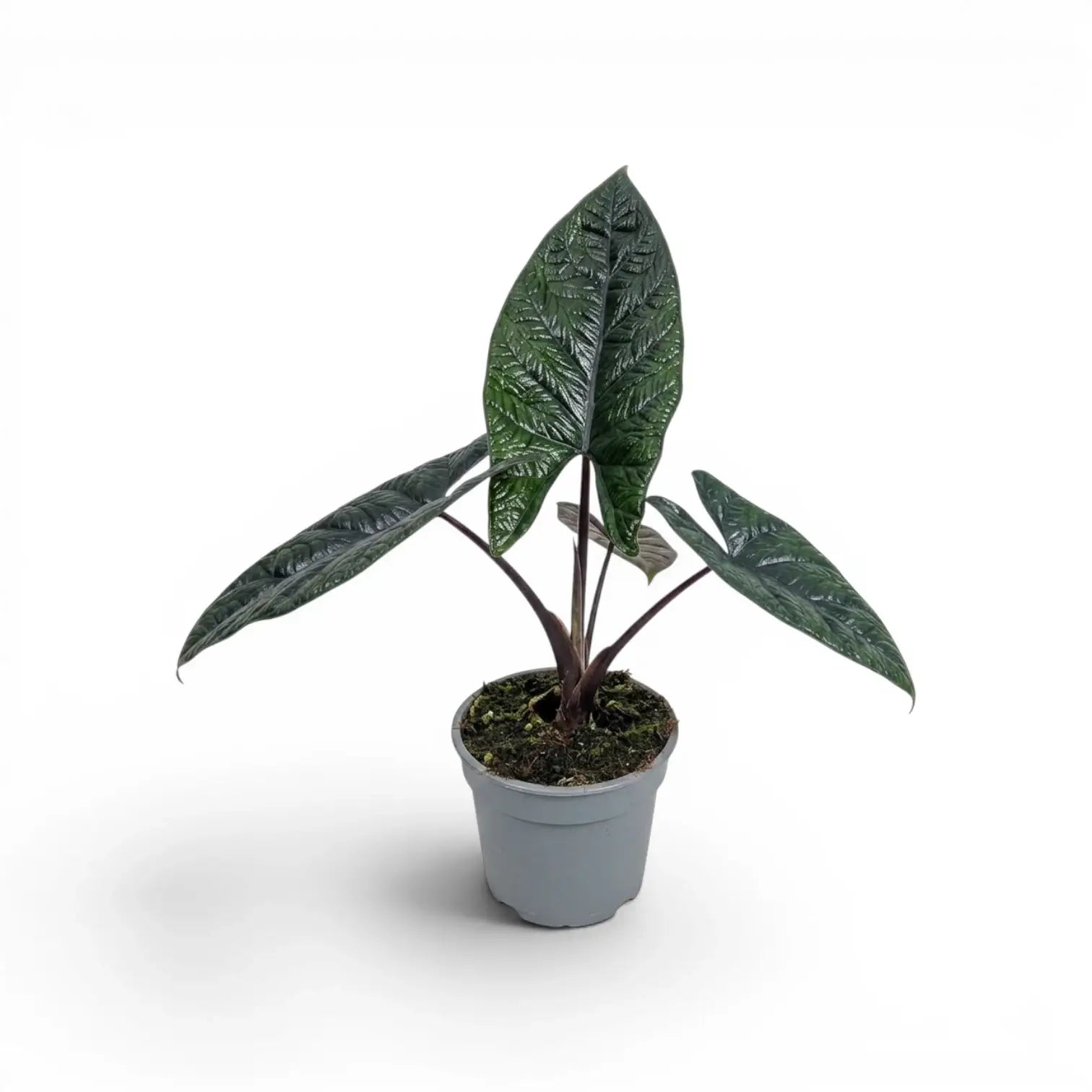
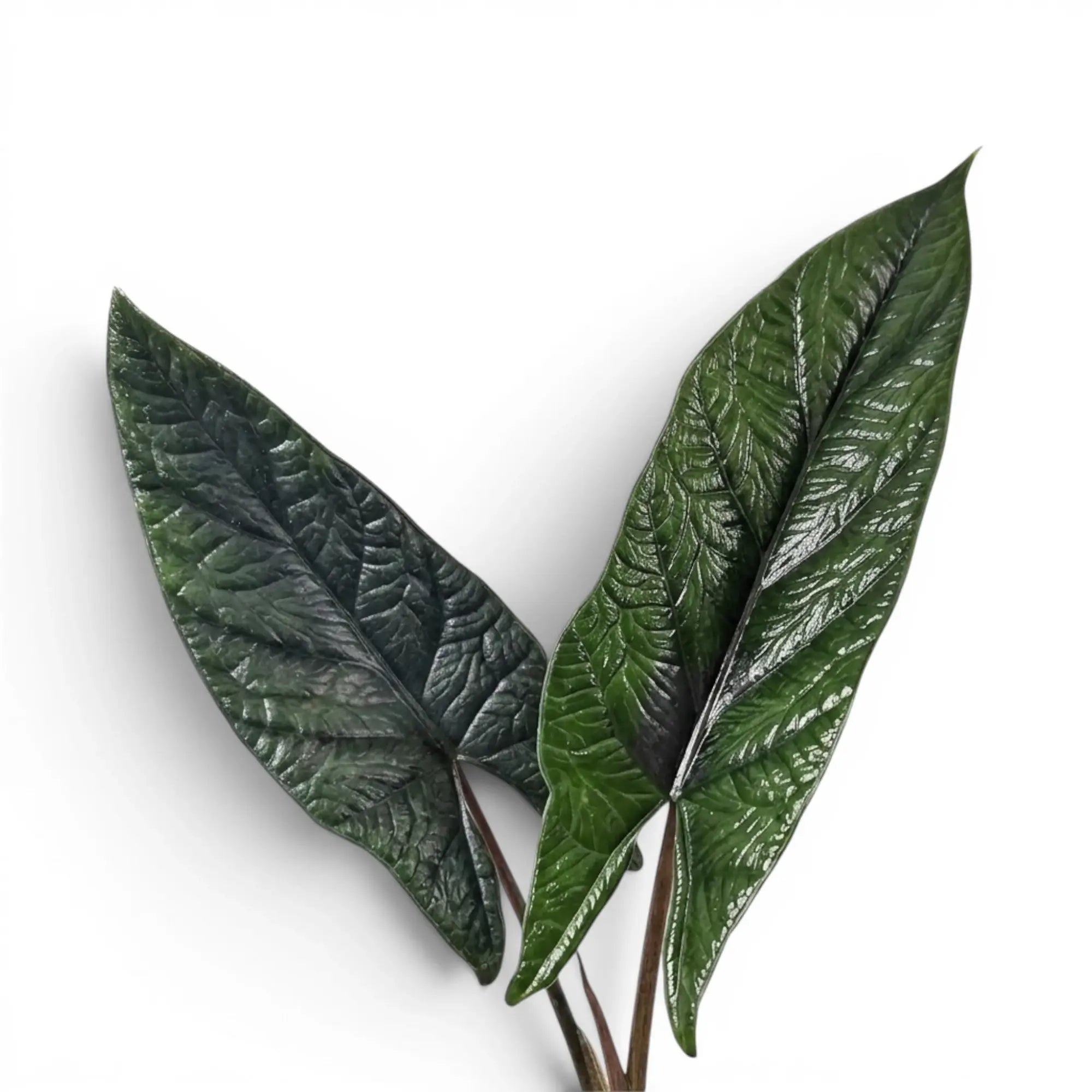
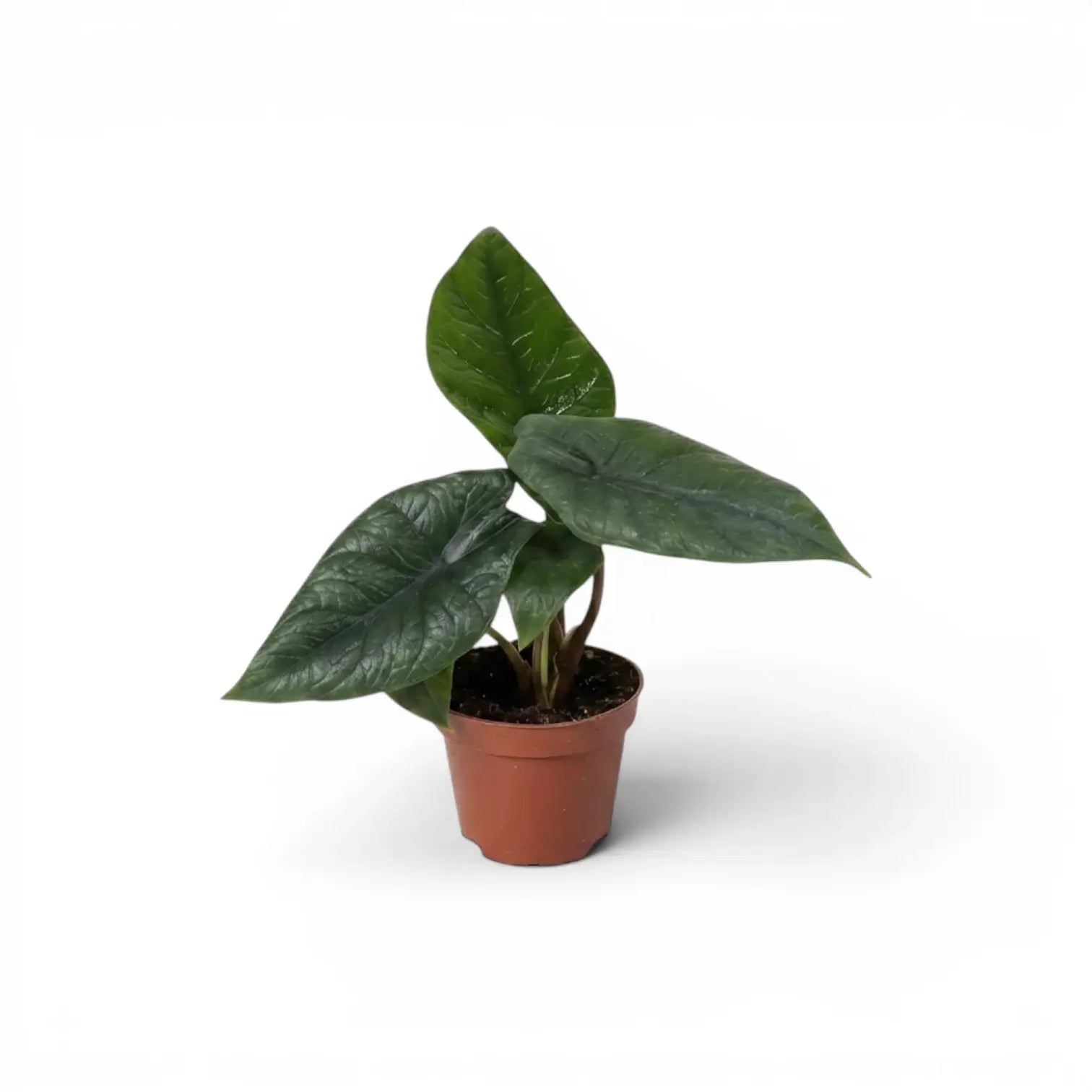
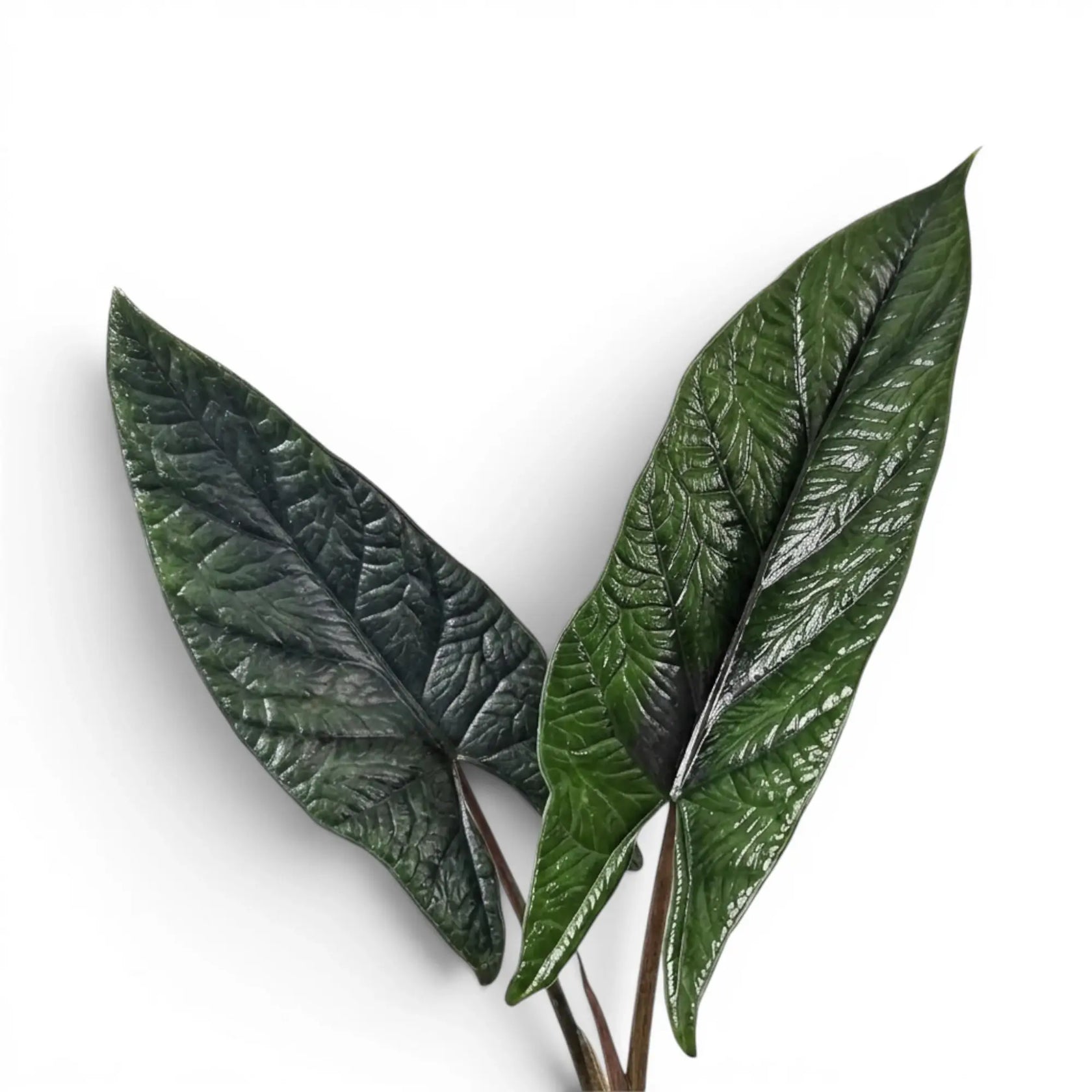
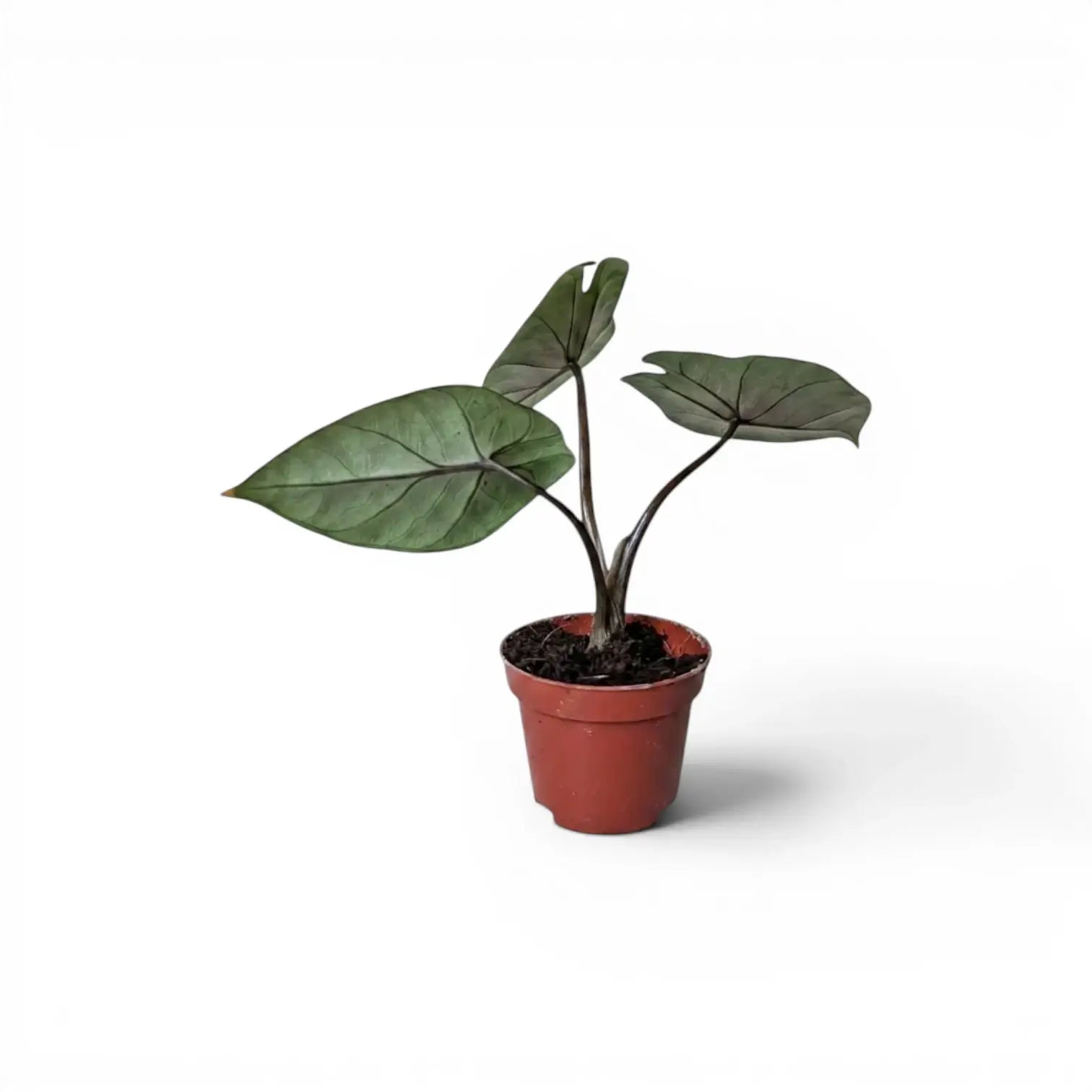
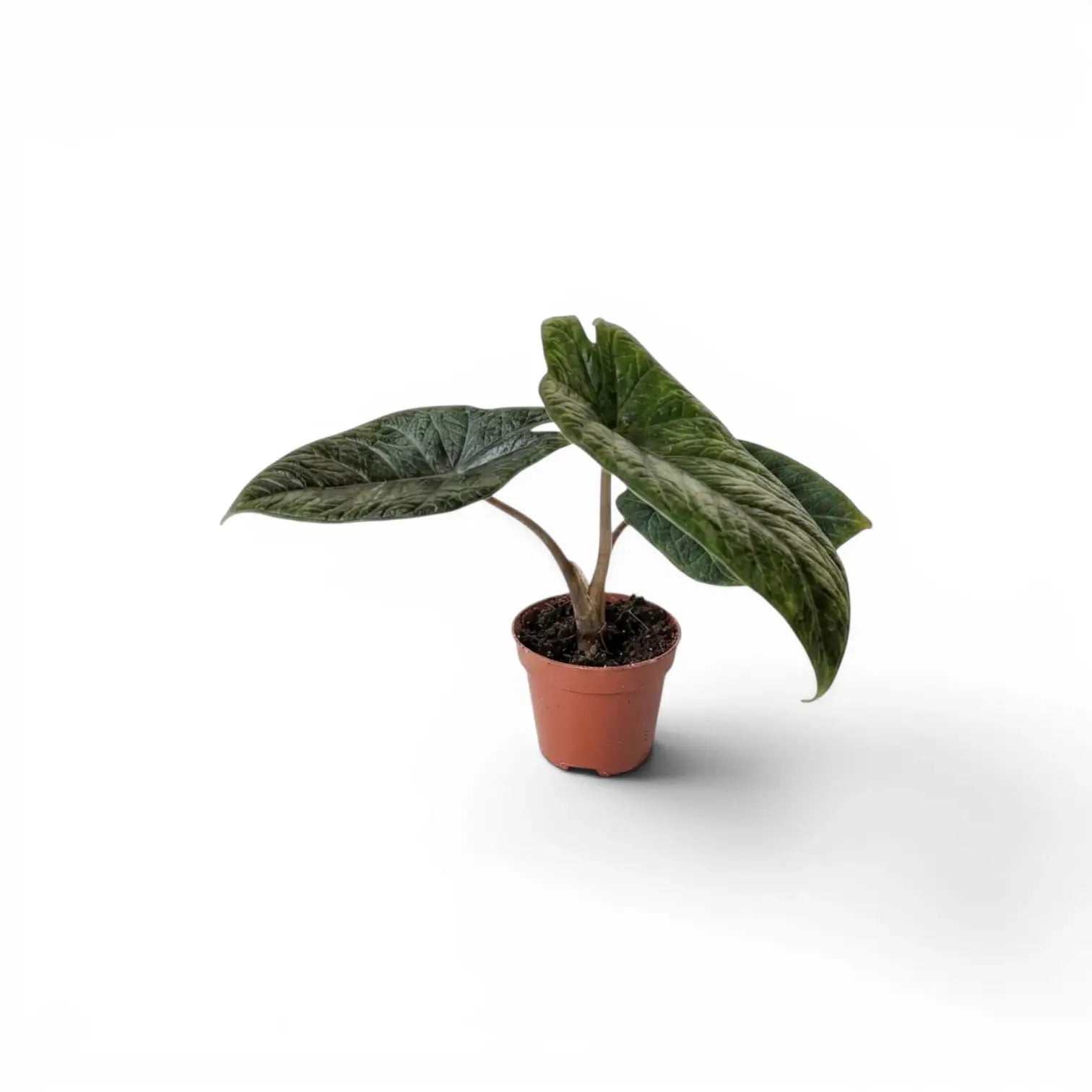
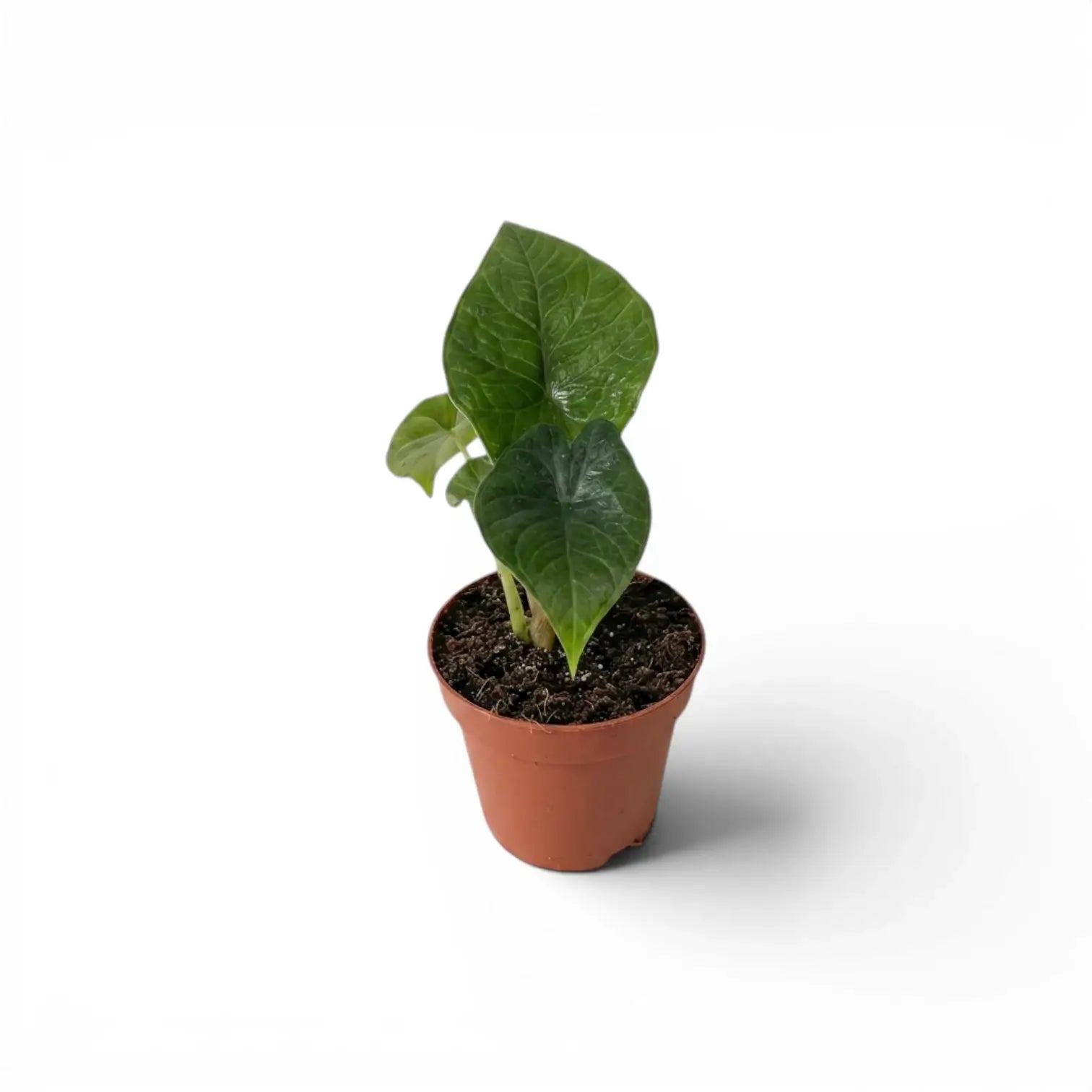
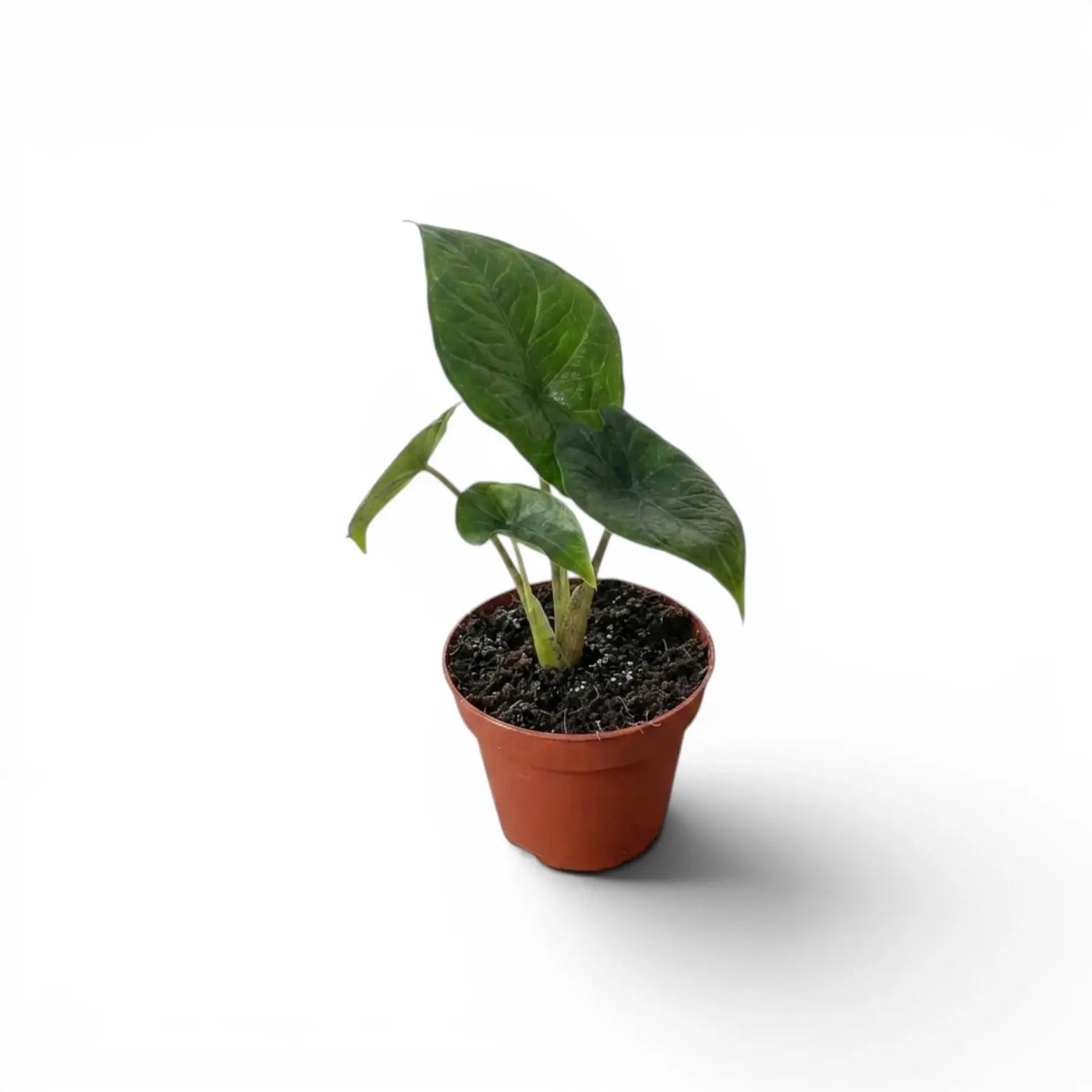
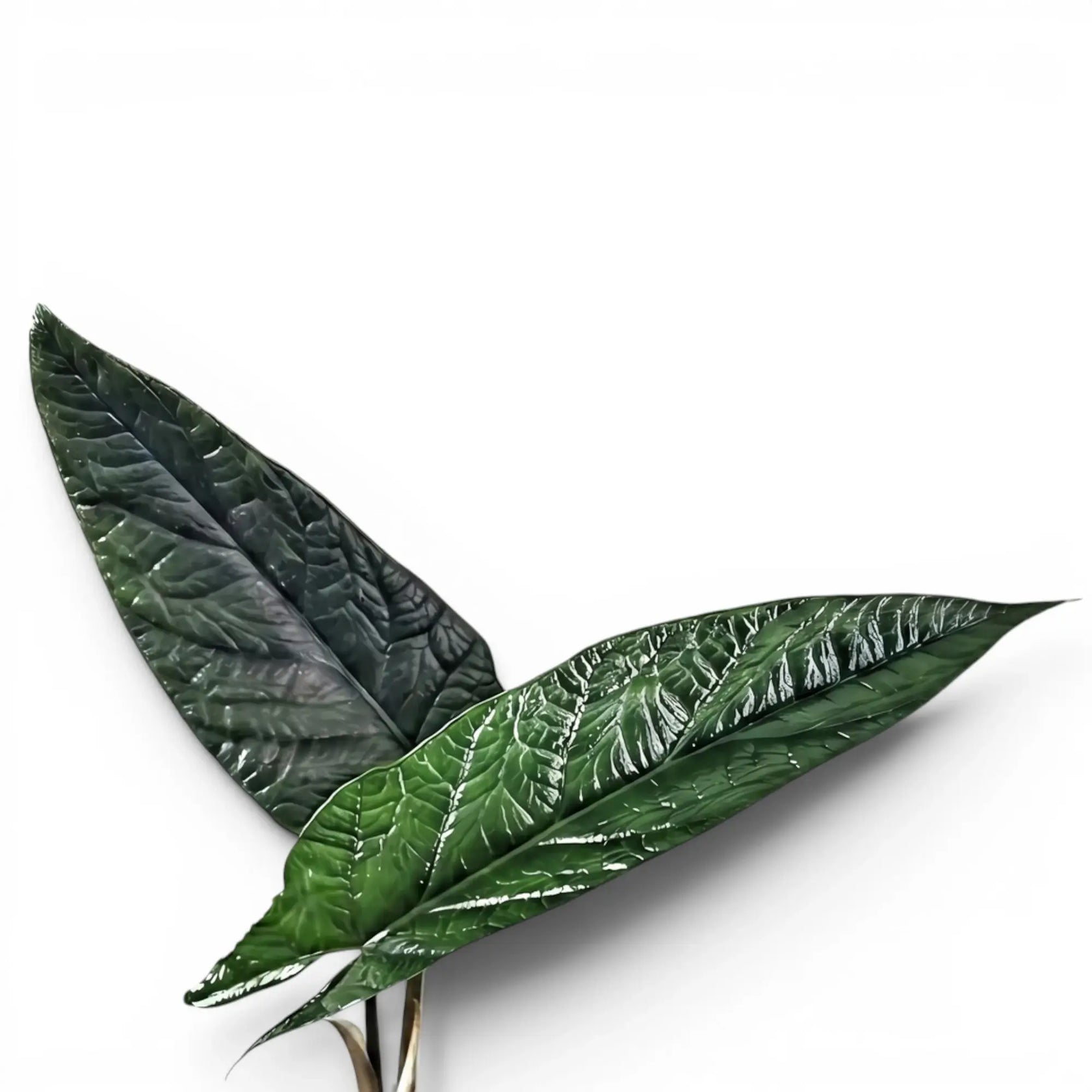
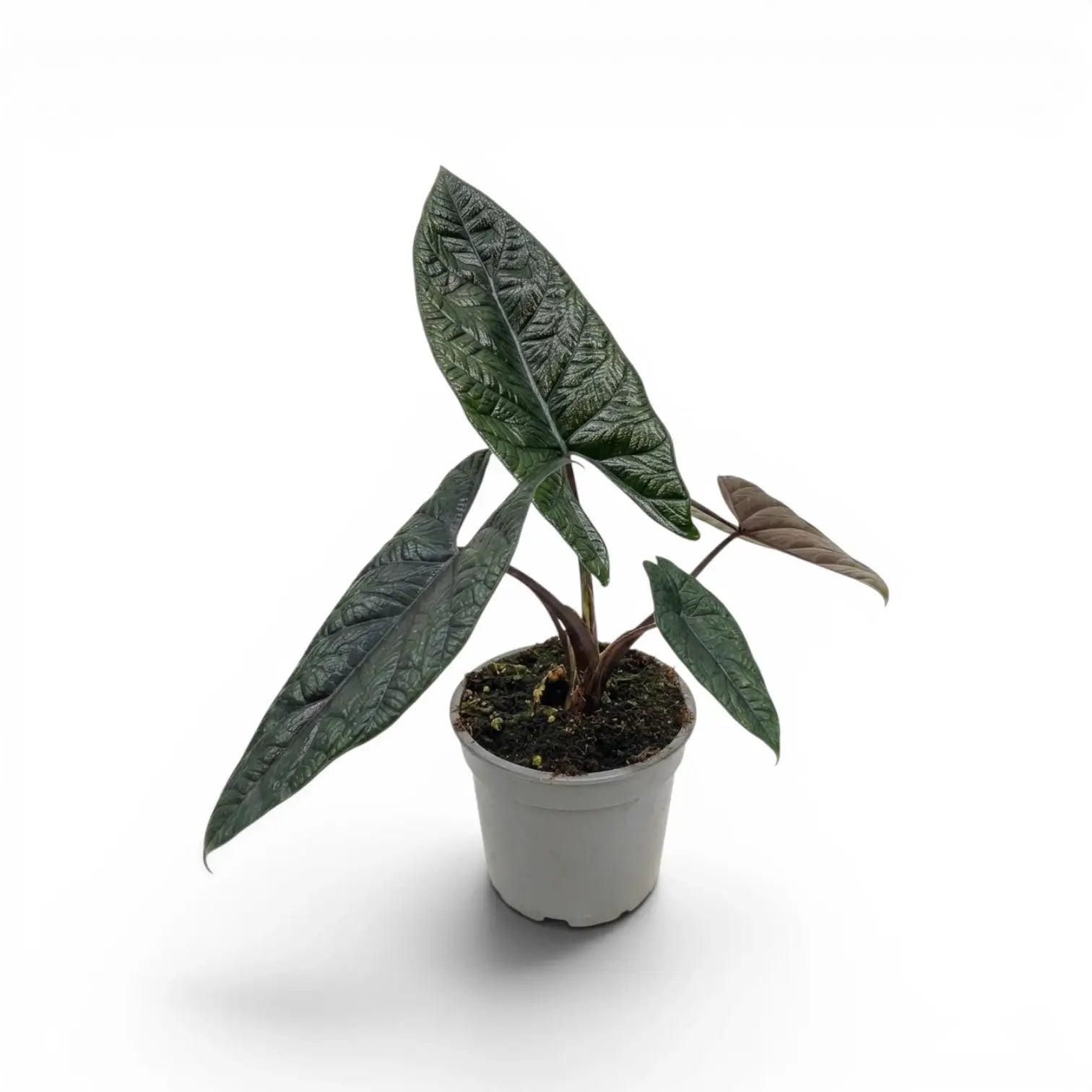
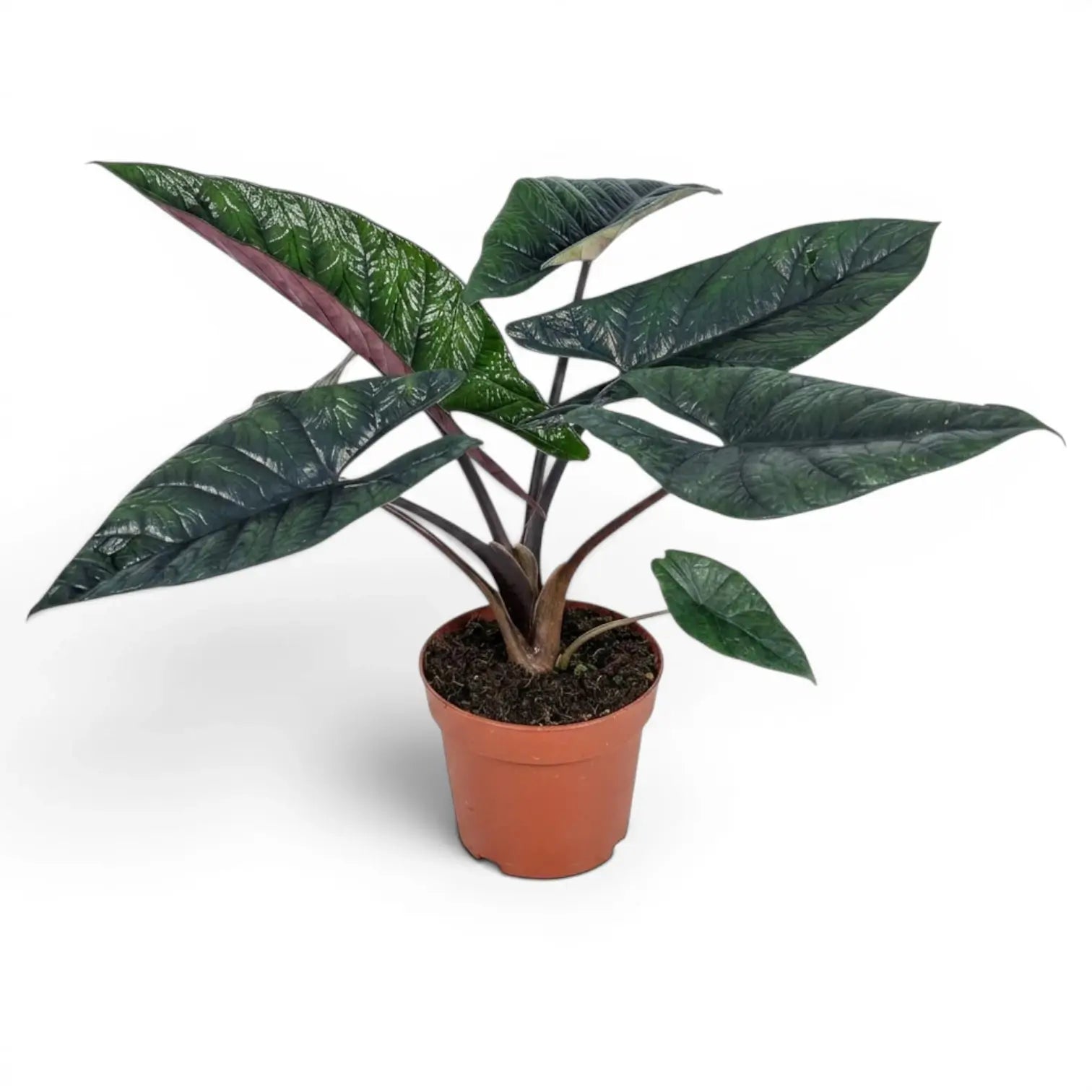
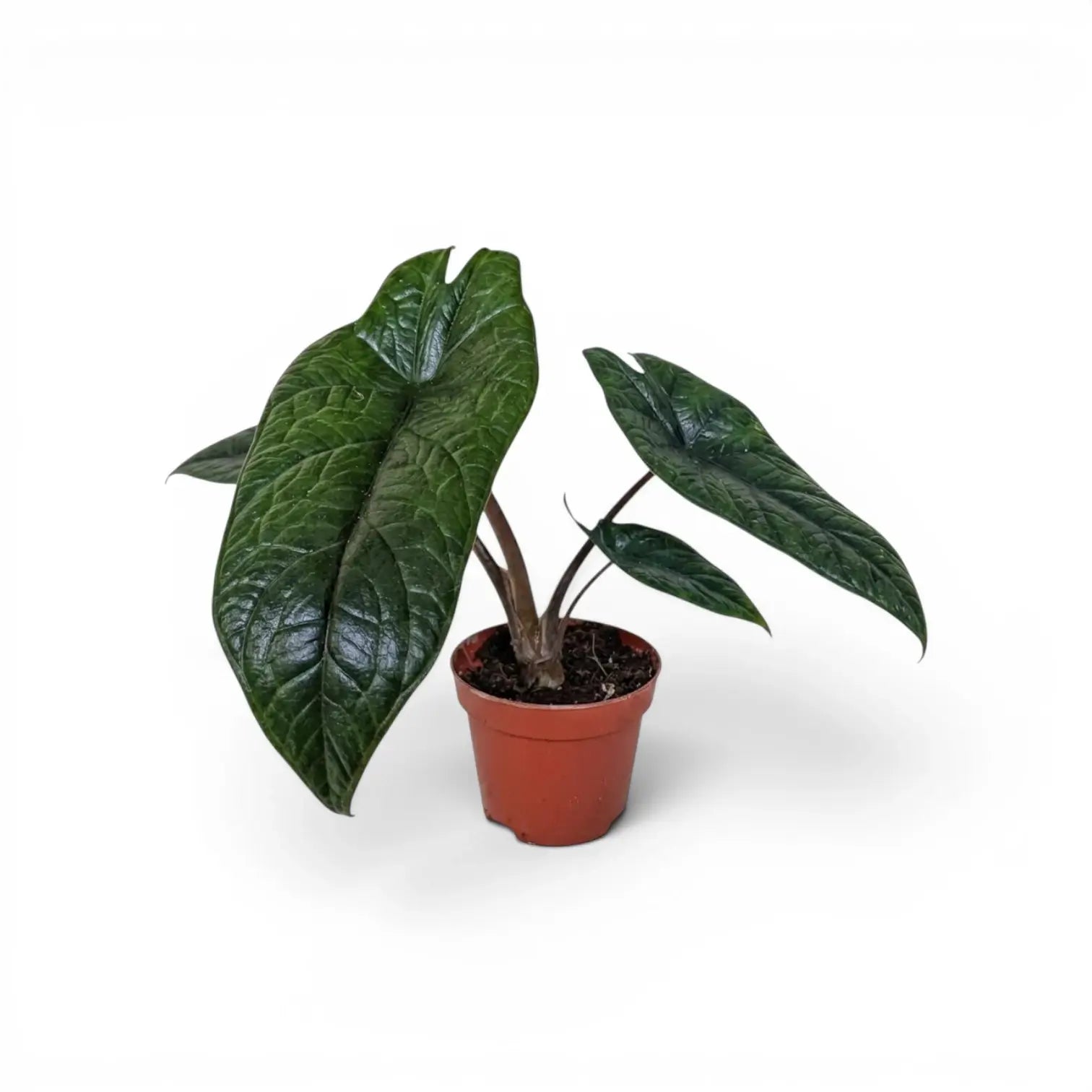
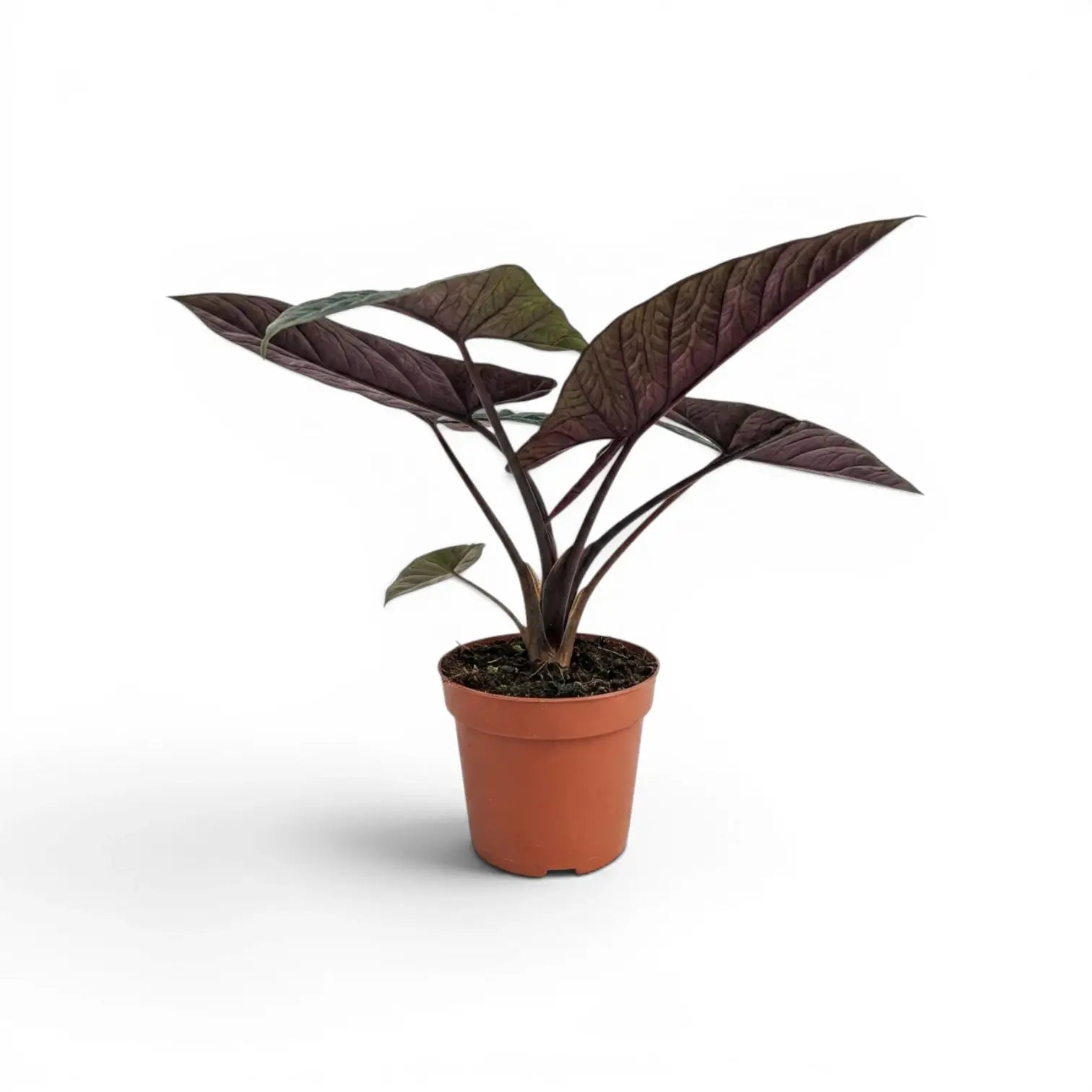
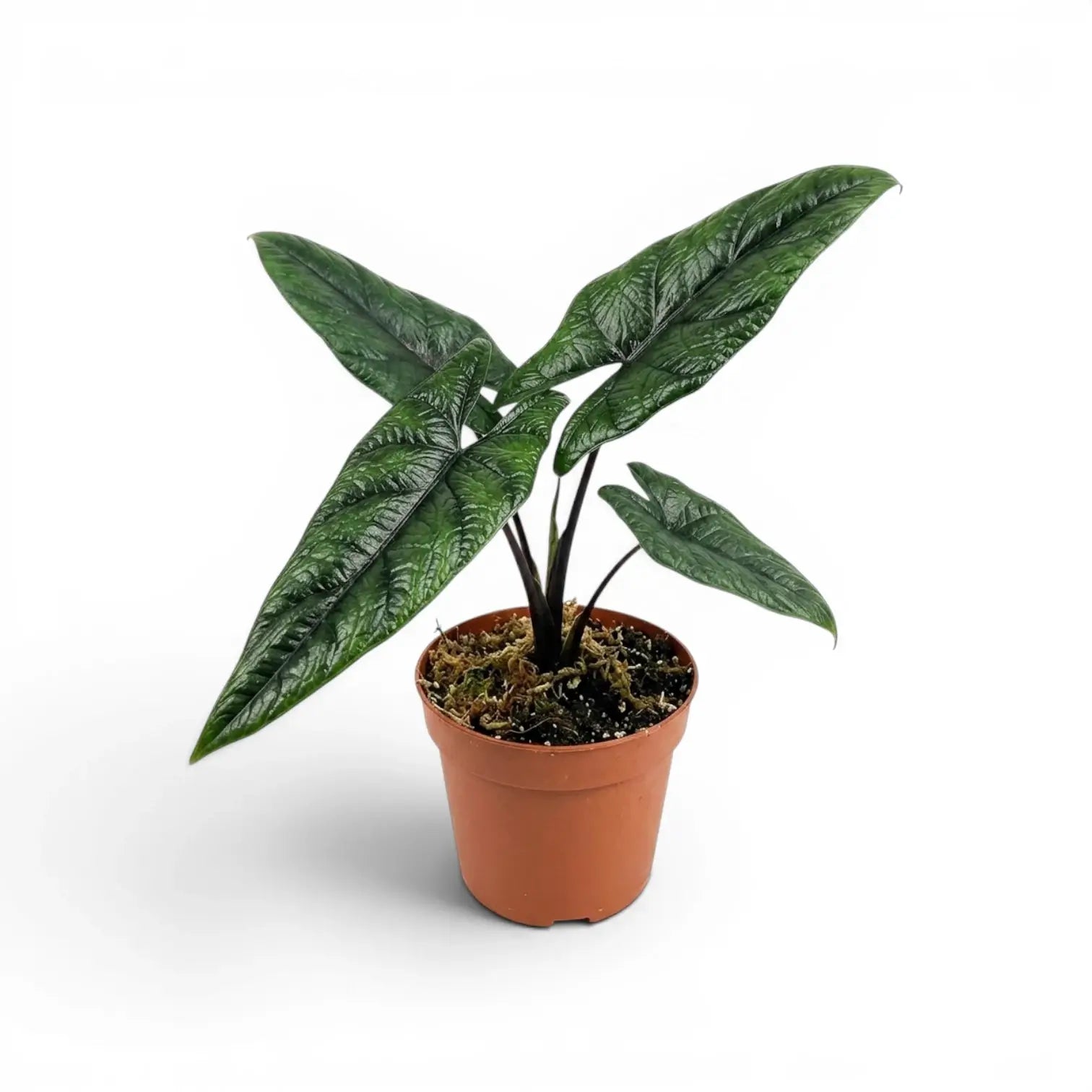
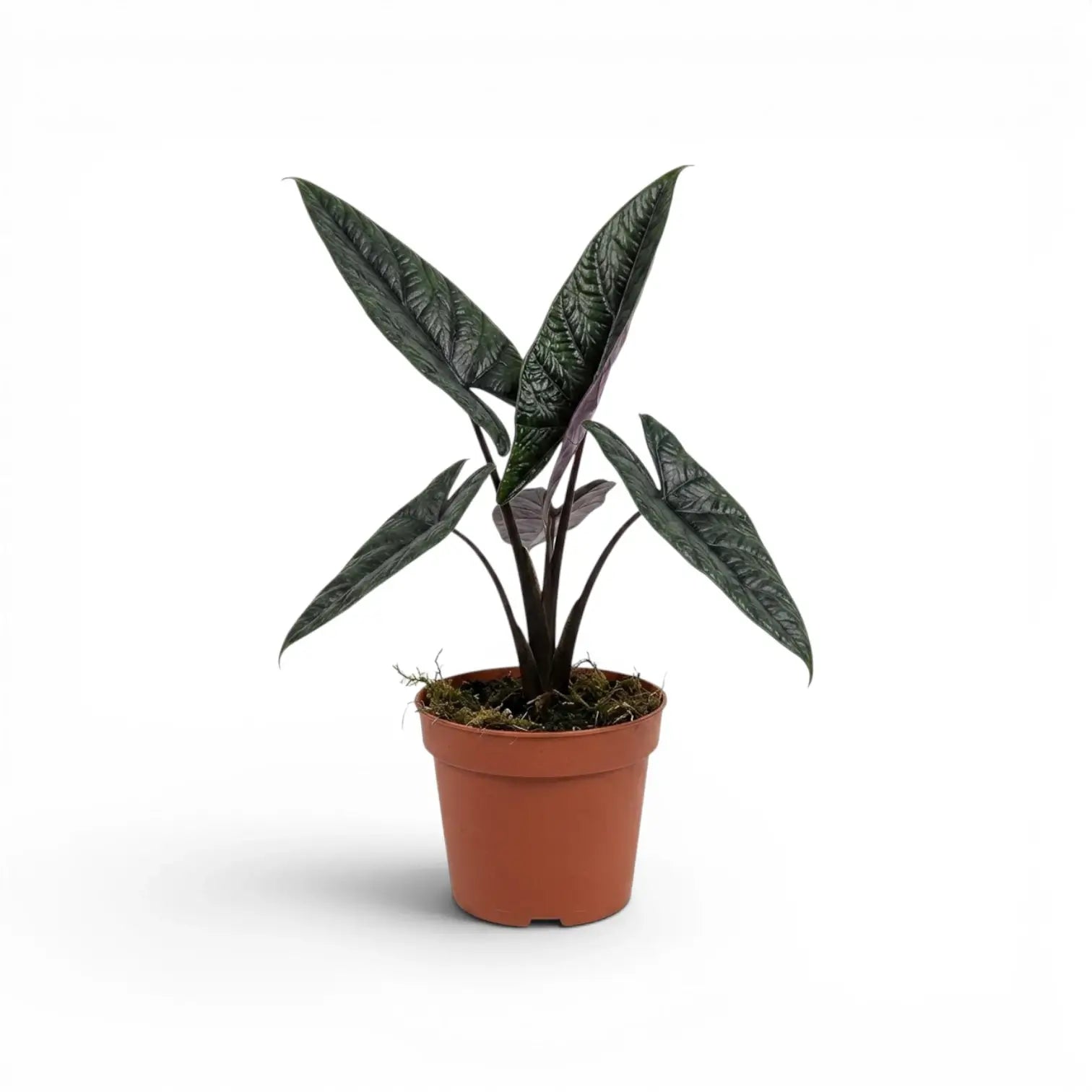
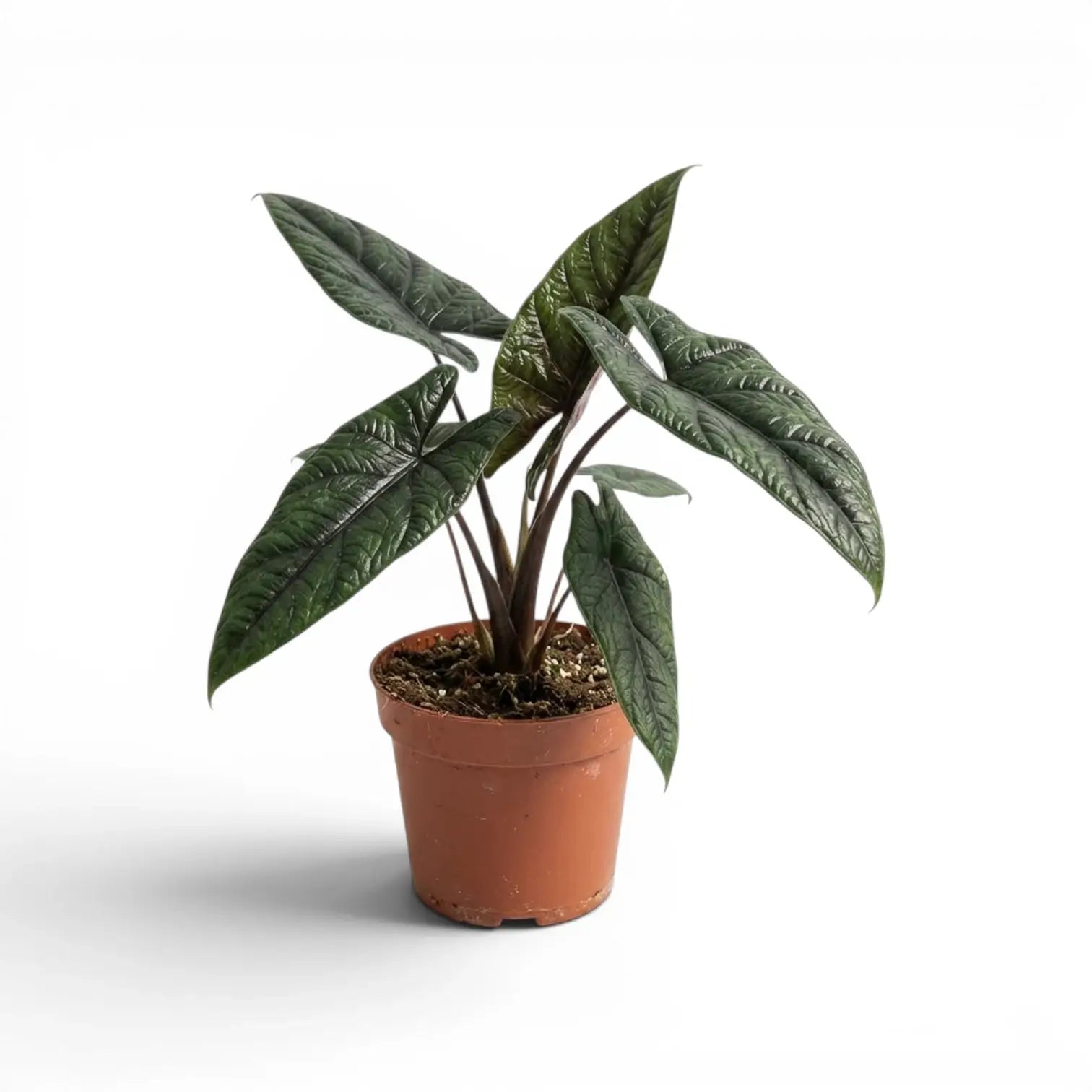
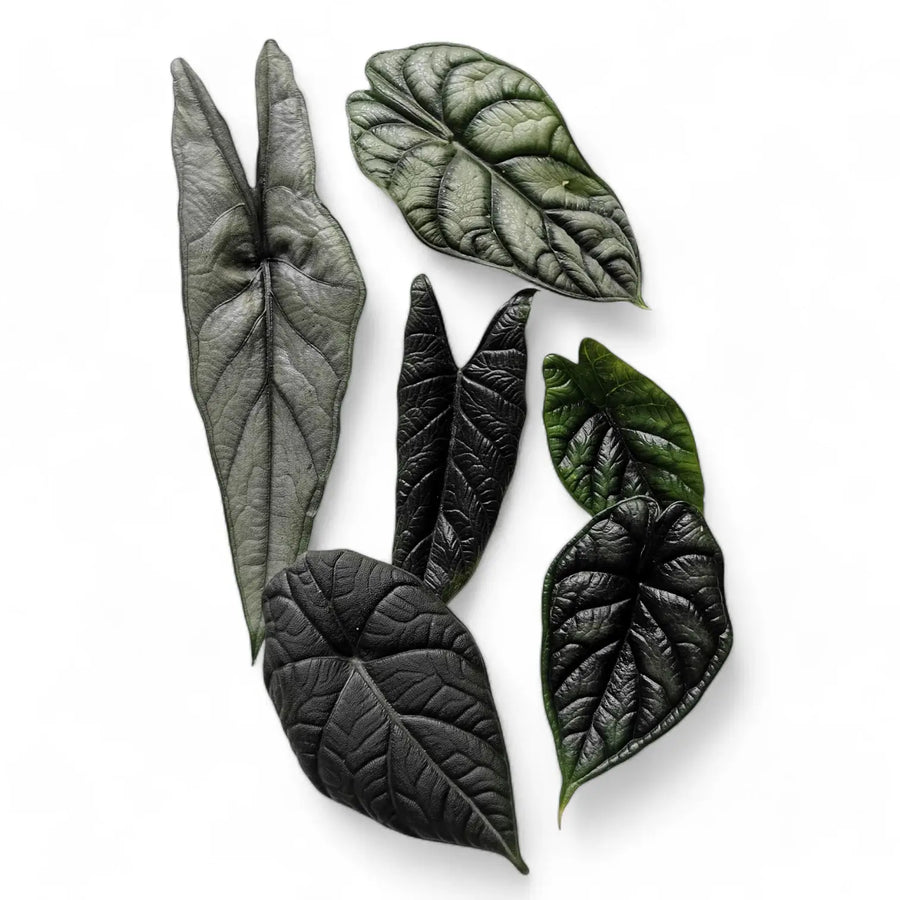
Alocasia scalprum is a small Philippine species from Samar, grown for narrow, blade-like leaves with a firm surface and a blue-green to grey-green mature finish. It is often known as Samar Lance, a name that fits both its origin and its long pointed leaf shape.
A small corm sits at the centre of the plant and gradually forms a compact cluster of narrow leaves. Mature blades are usually around 15–25 cm long and 2–5 cm wide, with short petioles and a slightly curved outline. New leaves emerge softer and greener, then harden into darker, firmer blades with clearer ribbing and a subtle metallic cast.
Alocasia scalprum comes from Samar in the Philippines. In cultivation, its small corm and narrow leaves respond best to warmth, steady moisture, an airy base and light feeding during active growth.
Its compact size suits a small warm pot where the corm can root firmly and new leaves can mature without stress. Older leaves naturally age as fresh growth forms.
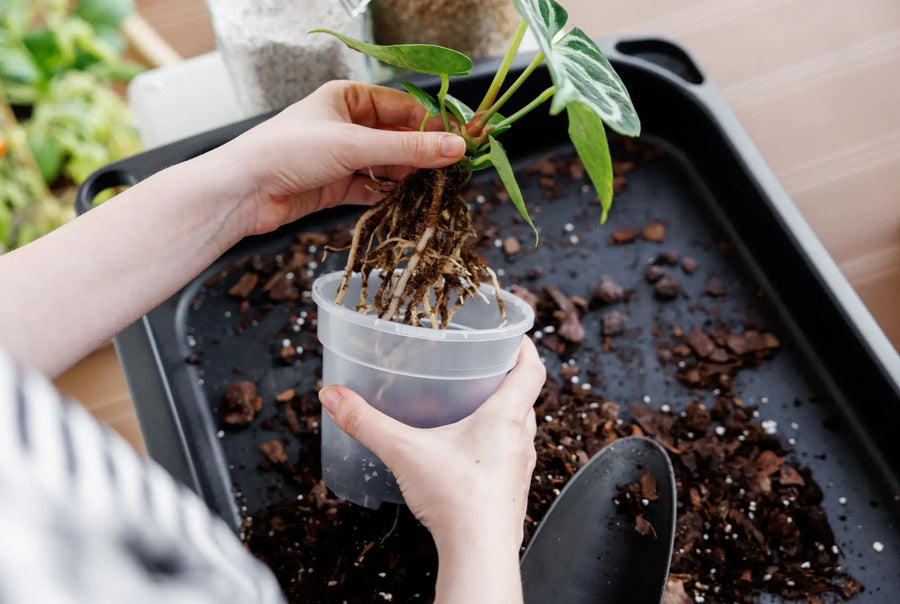
Repot Alocasia scalprum only when the pot is well rooted or the mix has lost structure. A close-fitting pot keeps moisture easier to judge around the small corm. Move up one small pot size and keep the corm firm, warm and slightly raised from the wettest part of the mix. After repotting, water carefully until new roots are active again.
Propagation is by offsets or corm division. Wait until a young growth has its own roots before separating it. Very small corm pieces can rot quickly if kept too wet, so use a small airy pot, steady warmth and gentle humidity. New divisions usually grow slowly at first, then produce stronger narrow leaves once the root system settles.
Alocasia scalprum can grow in mineral mixes when the texture is fine enough for a small root system but still open enough for air. A mix with pumice, perlite, small bark and a little water-retentive material gives the small roots moisture contact while keeping air around the corm. Semi-hydro is best for rooted, unstressed plants; keep the water level low and keep the corm above the wettest layer.
Mature plants can produce a solitary inflorescence with a green spathe and a spadix shorter than the spathe. Indoors, the narrow textured leaves are present far more often than flowers.
Alocasia scalprum contains irritating calcium oxalate crystals and is toxic if ingested. Keep it out of reach of pets and children, and wash your hands after handling cut tissue.
Alocasia scalprum A.Hay was published in 1999 and belongs to Araceae. The epithet scalprum comes from Latin for a cutting or scraping tool, matching the narrow pointed blades. The nickname Samar Lance reflects both its Samar origin and the lance-like leaf shape used in cultivation.
With steady warmth, filtered light and an airy base, Alocasia scalprum keeps the narrow, firm leaves behind the Samar Lance name.
Plant names, growth habits, natural habitats and indoor care guidance are checked against trusted botanical, habitat and horticultural references before publication.View our plant care resources and references.
Choose options