Full-Sun Houseplants: Care, Setup & Species That Love Direct Light
Sun-Loving Houseplants Indoors — Your Guide to Bright Windows and Direct Light
Have a south- or west-facing window that gets real sunlight for several hours a day? That is prime space for sun-loving houseplants — but only if plant choice, acclimation, watering, and airflow all match the light level.
Some indoor plants genuinely need direct sunlight to stay compact, sturdy, colourful, or flower indoors. Others enjoy very bright light but still need protection from harsh midday glass. This guide helps you tell the difference, so you can use your brightest windows without turning them into scorch zones.
You’ll find practical advice on assessing window light, introducing plants safely, choosing species by real sun tolerance, adjusting care through the year, and styling bright spots without sacrificing plant health.
➜ Want to skip straight to plant selection?
Browse our curated Direct Sunlight Houseplants — selected for bright windows, warm rooms, and indoor spaces with stronger light.
Bright windows can suit both true sun lovers and bright-light adapters — as long as each plant is placed, spaced, and acclimated correctly.
In this guide, you’ll find:
Whether you have a bright loft, a warm conservatory corner, or a sunny southern windowsill, this guide helps you match plant to place instead of guessing.
Understanding Your Window: South, West, East… or North?
Window direction matters because indoor light drops sharply once sunlight passes through glass, curtains, balconies, neighbouring buildings, or even a few metres of room depth. A space can look bright to human eyes and still be too dim for a plant that depends on high light.
Before placing anything near glass, start by identifying the type of sun your window actually provides:
South-facing: Usually the strongest and longest light in northern Europe. Best for Aloe, Crassula, Echeveria, Adenium, Citrus, Agave, and other plants that handle real direct sun after acclimation.
West-facing: Strong afternoon sun. Great for tougher succulents and caudex plants, but heat can build quickly behind glass, especially in summer.
East-facing: Cooler morning sun. Useful for bright-light foliage plants, sensitive tropicals, and plants being introduced gradually to stronger conditions.
North-facing: Usually too dim for sun-dependent species. Sun-loving plants in north-facing rooms often need a full-spectrum grow light to avoid weak, stretched growth.
Want to understand your home’s light zones better?
A sunny room is still very different from an outdoor habitat. Glass filters part of the spectrum, reduces intensity, traps heat, and creates local hot spots. Nursery-grown plants are often raised under controlled, diffused conditions, so even a species that loves sun may scorch if moved straight into a hot windowsill after delivery.
That is why acclimation matters. The goal is not to avoid direct sun forever. The goal is to let leaves, stems, roots, and water use adjust before the plant sits in full exposure.
Not Sure How Much Sunlight You Actually Get? Use the Shadow Trick
Your eyes adjust to brightness automatically, so they are not the best tool for judging plant light. A simple shadow test gives a more useful clue.
Test around midday on a clear day:
Crisp, sharply defined shadow: Direct sunlight. Suitable for true sun lovers such as Aloe, Crassula, Echeveria, Adenium, Agave, and many cacti after acclimation.
Soft-edged, blurry shadow: Bright indirect light. Good for many foliage plants and bright-light adapters such as Pachira aquatica, Dracaena reflexa, Zamioculcas zamiifolia, and Croton.
Faint shadow or no shadow: Low light. Not enough for plants that need strong sun to stay compact or flower.
Also check window cleanliness. Dust, mineral film, and dirt reduce usable light. Clean glass can make a real difference, especially in winter when every hour of light counts.
Acclimate Your Plants Slowly — Avoid Setbacks
Even sun-loving species can burn if placed straight against hot glass after growing in softer nursery light, sitting on a shop shelf, or travelling in a box. Newer growth is especially vulnerable because it has not yet adjusted to stronger light, higher leaf temperature, and faster water loss.
Step-by-step acclimation
Start the plant about 1 m from the window for 5–7 days.
Move it 20–30 cm closer every 2–3 days if leaves stay firm and unchanged.
Watch leaf edges, colour, surface texture, and posture before each move.
Pause if leaves bleach, crisp, curl, or drop suddenly.
Only place directly at the window once the plant has adjusted and shows steady growth.
Warning signs you’re moving too fast
Dry, pale, tan, or papery patches on exposed leaves
Curling tips or crispy margins after a move into stronger light
Sudden leaf drop, especially on Ficus, Croton, Heptapleurum, or Pachira aquatica
No visible recovery or new growth 2–3 weeks after a major light increase
Soil drying much faster while the plant still looks stressed or limp
Watch for pests during the adjustment phase
Bright windows can create warm, dry, still air. That combination can favour spider mites, thrips, and scale insects, especially on plants with tougher leaves or woody stems.
Check weekly:
Undersides of leaves for fine webbing, pale speckling, or dark dots
Leaf joints and stems for scale insects or sticky residue
New growth for distortion, silvering, or sudden yellowing
If you catch pests early, isolate the plant and treat with a suitable plant-safe pest product. For more help, see our pest control guides.
Pachira aquatica can grow well in bright indoor light, but it is better treated as a bright-light adapter rather than a harsh full-sun plant.
Bright Light = Different Care Rules
Direct sun changes more than brightness. It raises leaf temperature, speeds up water loss, dries the surface of substrate faster, and can increase pest pressure. Care has to follow what is happening inside the pot, not just how sunny the window looks.
Soil & Drainage: Let Roots Breathe
Sun can dry the top layer quickly while deeper substrate stays wet. That is where many problems start. A plant may sit in a hot window and still rot if roots remain in compact, airless substrate.
Best mixes by plant type:
Succulents, cacti, and caudex plants: Use a gritty cactus or mineral-rich mix with added pumice, lava, coarse perlite, or similar airy material.
Woody foliage plants: Use a well-draining houseplant mix with bark, perlite, or mineral components to keep oxygen around roots.
Palms and larger structural plants: Use a stable, open mix that holds some moisture but does not collapse into dense, wet layers.
Avoid heavy, compacted, peat-dense mixes in glazed pots. They can look dry on top while staying wet below the root crown.
Do not water by calendar. Drying speed changes with pot size, substrate, airflow, plant size, root density, and season.
Succulents and caudex plants: Water only when substrate is dry all the way down.
Bright-light foliage plants: Water when the top 2–4 cm feel dry, depending on pot size and plant type.
Palms and larger tropicals: Keep evenly but lightly moist where appropriate, never stagnant or swampy.
Cooler months: Reduce watering when growth slows, even if the window still receives sun.
Use a wooden skewer, soil probe, moisture meter, or pot-weight check. A dry crust on top does not always mean dry roots.
Feeding: Match Fertilizer to Active Growth
Bright light can support stronger growth, but fertilizer only helps when roots are actively taking up water and nutrients. Feed lightly during active growth, using a balanced houseplant or cactus fertilizer matched to plant type and substrate.
Succulents and cacti: Feed lightly and less often than leafy tropical plants.
Fast-growing foliage plants: Use diluted fertilizer when new leaves are forming steadily.
Plants under grow lights: Feed only if growth is clearly active and watering demand has increased.
Recently delivered or repotted plants: Wait until the plant has settled before feeding.
Too much fertilizer in a hot, bright window can increase salt stress, brown tips, and root damage. More light does not mean heavier feeding by default.
Airflow & Pot Spacing: Small Gap, Big Difference
Stale, hot air builds quickly near sunny glass, especially around dark pots, dense plant groupings, and narrow windowsills.
What helps:
Leave a 2–5 cm gap between pots where possible.
Do not press containers directly against window glass or walls.
Move larger leaves away from hot panes before summer sun intensifies.
Ventilate briefly on mild days to refresh still air.
Use a small fan on a gentle setting if a bright area stays warm and stagnant.
Good airflow also helps reduce fungal leaf spots and makes conditions less favourable for some common pests.
Humidity: Respond to Symptoms, Not Habit
Many true sun lovers are adapted to drier conditions and do not need high humidity. Some bright-light tropicals, however, can crisp at the edges when strong light is combined with dry, stagnant heat.
If leaf tips crisp in a bright spot:
Check roots first: Root stress can look like humidity stress.
Check heat: Glass, radiators, and dark pots can raise local temperature.
Improve airflow: Still air often causes more trouble than low humidity alone.
Use a humidifier if needed: Helpful for Croton, Strelitzia, Areca palm, and other tropical foliage plants showing real symptoms.
Do not micromanage humidity if the plant is firm, growing, and not showing damage.
Leaf Cleaning: More Light Makes Dust More Obvious
Dust blocks usable light and builds up faster on leaves near sunny windows. Clean leaves can photosynthesise more efficiently and are easier to inspect for pests.
Wipe smooth leaves such as Ficus, Strelitzia, Croton, or Pachira aquatica every 2–3 weeks with a soft, damp cloth.
Use lukewarm rainwater or distilled water if hard water leaves visible marks.
Avoid shiny coating products. They can leave residue, collect dust, and interfere with normal leaf surface function.
Do not scrub waxy, hairy, powdery, or delicate succulent leaves.
Toxicity Notes for Homes with Pets or Children
Euphorbia: Milky sap is irritating and toxic. Wear gloves and avoid contact with eyes or broken skin.
Aloe vera and Agave: Toxic if ingested by pets.
Kalanchoe: Toxic to pets if eaten.
Cycas revoluta: Highly toxic if ingested. Not a good choice for homes with chewing pets.
Croton: Sap can irritate skin and is unsafe if ingested.
Zamioculcas zamiifolia: Irritating if chewed or ingested.
Use shelves, stands, or plant-free zones if curious pets or children can reach leaves, stems, or fallen pieces.
Which Indoor Plants Suit Bright Windows and Direct Sun?
Not every plant in a bright room is a full-sun plant. This is where many indoor plant problems start: plants that enjoy brightness get pushed into harsh glass-filtered summer sun and then burn, bleach, or drop leaves.
A more useful approach is to sort plants into three groups:
True direct-sun plants: Best candidates for sunny south or west windows after acclimation.
Acclimated direct-sun plants: Can handle some direct sun indoors, but need gradual exposure, space, and close observation.
Bright filtered-light plants: Thrive near bright windows but should be protected from harsh midday or hot afternoon glass.
True Direct-Sun Plants for Bright Indoor Windows
These plants are the safest starting point for sunny windowsills and high-light indoor setups. They usually prefer sharp drainage, controlled watering, and several hours of strong light to keep their natural shape.
Crassula ovata — Jade Plant
Crassula ovata is one of the most reliable sun-loving houseplants for bright indoor spaces. Thick stems, fleshy oval leaves, and a naturally branching habit make it excellent for sunny sills, compact floor pots, and bonsai-style shaping.
Best with 4–6 hours of direct indoor sun after acclimation.
Use a gritty, fast-draining mix and a pot with drainage holes.
Water only once substrate has dried thoroughly.
Rotate regularly to keep growth balanced and upright.
Crassula ovata stays compact and sturdy in strong light when roots dry properly between waterings.
Aloe vera stores water in thick leaves and suits bright, dry, well-drained indoor setups.
Aloe vera and Other Aloe Species
Aloe vera is a classic bright-window plant because it stores water in thick, fleshy leaves and prefers a dry root zone. Indoors, it grows best where light is strong, substrate is mineral-rich, and watering is restrained.
Place in a south or west window after gradual acclimation.
Let substrate dry fully before watering again.
Use a deeper pot if roots need anchoring space.
Keep away from cold drafts and standing water.
Echeveria spp.
Echeveria rosettes need strong light to stay tight, symmetrical, and compact indoors. Without enough direct sun, growth stretches, leaves space out, and the rosette loses its clean shape.
Aim for 5+ hours of direct indoor sun where possible.
Rotate weekly to prevent one-sided growth.
Use a sharply draining cactus or mineral mix.
Water into substrate, not into the centre of the rosette.
Echeveria keeps its tight rosette form with strong light, careful watering, and sharp drainage.
Curio rowleyanus needs strong light and careful watering to keep growth dense instead of stretched.
Curio rowleyanus — String of Pearls
Curio rowleyanus is a trailing succulent for bright shelves, hanging pots, and sunny windows. Strong light helps keep vines tighter and leaves rounded, while weak light often causes stretched, fragile growth.
Place close to south or west light, but acclimate before harsh exposure.
Use a cactus or mineral-rich substrate.
Let substrate dry well between waterings.
Rotate hanging pots so one side does not stretch toward the window.
Adenium obesum — Desert Rose
Adenium obesum is a caudex-forming succulent shrub with a swollen water-storing base and showy flowers under strong conditions. Indoors, it needs bright warmth, direct sun, and a dry, airy root zone to perform well.
Needs very bright light to flower reliably indoors.
Use a mineral-rich mix and avoid oversized pots.
Water carefully during active growth and keep much drier when growth slows.
Milky sap is toxic and irritating, so handle with care.
Adenium obesum rewards strong light and careful watering with a compact caudex and possible indoor flowering.
Strong-Light Plants That Can Take Some Direct Sun Indoors
These plants can work in bright rooms and may handle direct sun indoors once introduced slowly. They are not as forgiving as desert succulents, so watch heat, watering, and glass proximity carefully.
Cycas revoluta can suit bright indoor sun after acclimation, but its toxicity makes placement important.
Cycas revoluta — Sago Palm
Despite its common name, Cycas revoluta is not a palm. It is a cycad with stiff, glossy fronds arranged around a central crown. It suits bright, open indoor spaces where light is strong and air does not stagnate.
Can handle direct indoor sun if introduced gradually.
Use a free-draining mix and avoid constantly wet roots.
Keep fronds away from hot glass and narrow walkways.
Highly toxic if ingested, especially seeds.
Trachycarpus fortunei — Windmill Palm
Trachycarpus fortunei is an unusual indoor choice, but it can work in very bright interiors with space, airflow, and a cool-tolerant setup. It is better for larger bright areas than tight windowsills.
Provide room for fan-shaped leaves and a widening crown.
Keep substrate lightly moist, never waterlogged.
Give airflow to prevent stale, hot conditions around the crown.
Best for bright conservatory-style spaces, large windows, or airy indoor corners.
Trachycarpus fortunei brings strong structure to bright interiors but needs space and steady airflow.
Ficus benjamina grows best in stable bright placement and can shed leaves if moved, chilled, or dried too abruptly.
Ficus benjamina — Weeping Fig
Ficus benjamina can grow into a dense indoor tree in bright, stable conditions. It tolerates stronger light better than many softer tropical houseplants, but sudden moves, cold drafts, and irregular watering can trigger leaf drop.
Place in bright light with gentle or filtered direct sun.
Avoid moving the pot repeatedly once placement works.
Water when the upper substrate has partly dried.
Keep away from cold drafts and strong radiator heat.
Ceropegia woodii — String of Hearts
Ceropegia woodii sits between succulent vine and delicate trailer. It enjoys strong light, fast drainage, and drying between waterings. Too little light makes vines sparse and internodes longer.
Place near south, west, or bright east windows.
Use cactus mix or a pumice-rich houseplant blend.
Let substrate dry well before watering again.
Loop vines around a small trellis or trim regularly for fuller growth.
Ceropegia woodii stays fuller in strong light when substrate dries properly between waterings.
Bright Filtered-Light Plants — Not Harsh Midday Sun
These plants are often placed in “sunny plant” lists, but they need more nuance indoors. They like brightness. They may tolerate gentle direct sun, especially morning or late afternoon. They are not ideal for scorching midday glass or trapped west-window heat.
Dracaena reflexa
Dracaena reflexa suits bright interiors, but it should be protected from hot direct sun. Strong filtered light supports a neat upright shape without exposing leaves to unnecessary scorch risk.
Best in bright filtered light or gentle morning sun.
Avoid pressing leaves against hot glass.
Water moderately, allowing the upper substrate to dry.
Use rainwater or filtered water if tip browning becomes persistent.
Dracaena reflexa prefers bright filtered light and shade from hot sun rather than harsh windowsill exposure.
Pachira aquatica grows well in bright indoor light but should not be treated like a desert succulent.
Pachira aquatica — Money Tree
Pachira aquatica is often grown with braided trunks and glossy leaflets. It appreciates bright indoor light and can become fuller in a well-lit position, but intense hot glass can stress leaves.
Best in bright light or partial shade indoors.
Gentle morning or filtered sun is safer than harsh afternoon exposure.
Water when the top 2–4 cm of substrate feel dry.
Protect from cold drafts, radiator heat, and stagnant air.
Zamioculcas zamiifolia — ZZ Plant
Zamioculcas zamiifolia is famous for tolerating lower light, but it also grows well in bright indirect light. Treat ZZ Plant as a bright-light adapter, not a full-sun succulent. Direct sun can scorch leaves, especially if exposure changes suddenly.
Best in bright indirect light or gentle filtered sun.
Keep slightly back from hot south or west glass.
Allow substrate to dry well before watering again.
Use a well-draining mix to protect thick rhizomes from rot.
ZZ Plant suits bright indirect light, but harsh direct sun can damage leaves.
Brighamia insignis needs bright light and airflow, with protection from prolonged harsh sun.
Brighamia insignis — Hawaiian Palm
Brighamia insignis has a swollen green stem and a crown of soft leaves, giving it a palm-like silhouette despite not being a true palm. It needs bright indoor conditions, but too much harsh direct sun can scorch leaves.
Best in bright indirect light with some gentle direct sun.
Give warmth, airflow, and a fast-draining airy mix.
Let the upper substrate dry before watering again.
Yellow trumpet-shaped flowers may appear in good conditions.
Croton — Codiaeum variegatum
Codiaeum variegatum, commonly sold as Croton, is a high-light tropical foliage plant with bold colour and thick leaves. It needs very bright conditions to look its best, but harsh summer sun through glass can overheat and scorch leaves.
Best in bright filtered light, warmth, and moderate to higher humidity.
Gentle morning or late-afternoon sun is usually safer than midday sun.
Keep watering consistent without leaving substrate soggy.
Expect leaf drop after sudden moves, cold drafts, or strong stress.
Croton belongs near a bright window, not pressed against hot glass in peak summer.
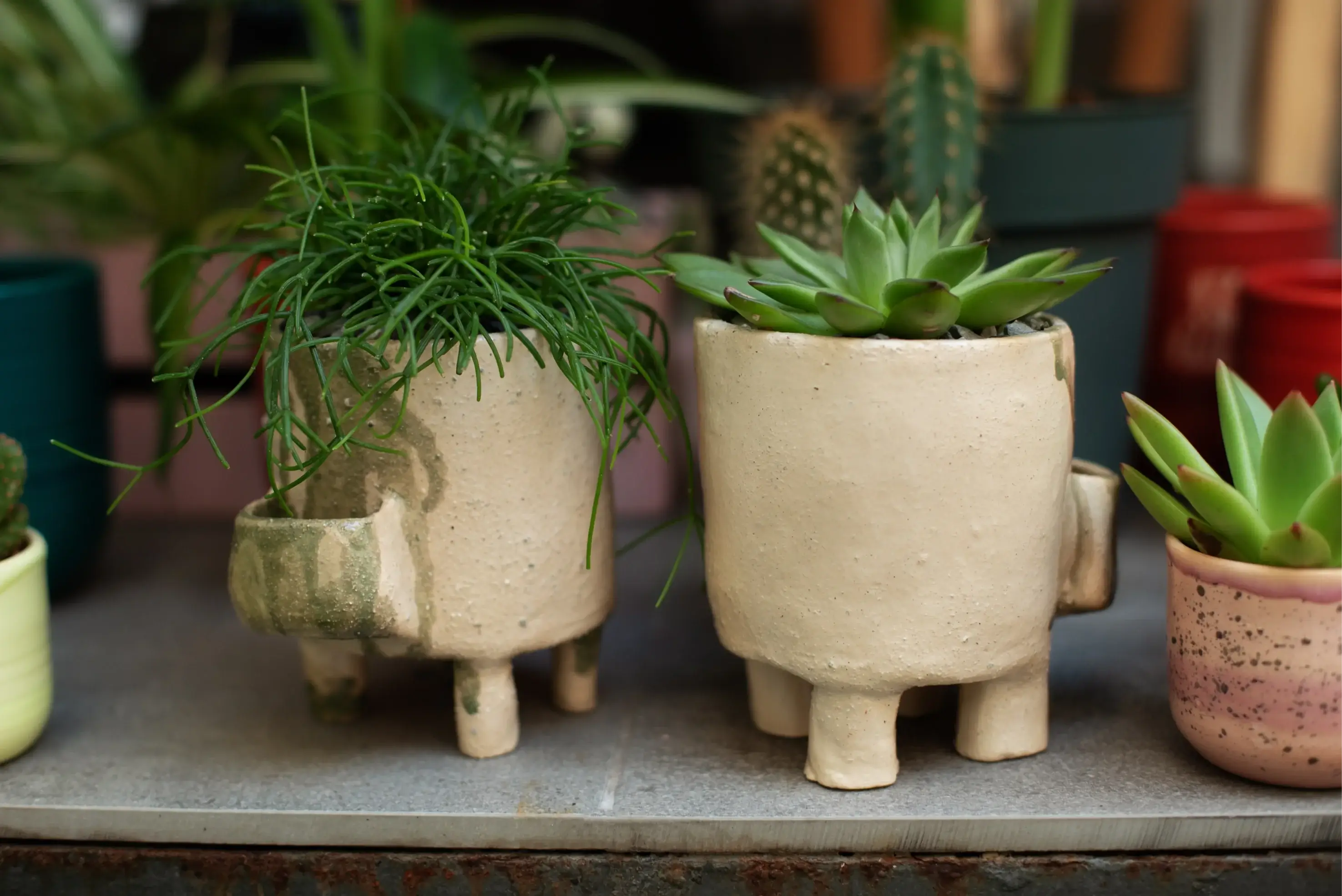
Compact succulents such as Echeveria and Crassula are better direct-sun candidates than many soft tropical foliage plants.
Quick Sun-Tolerance Guide for Bright Indoor Spaces
Use this table as a practical placement guide. It keeps true direct-sun plants separate from plants that prefer bright filtered conditions.
Best Direct-Sun Candidates
Plant Name
Sun Suitability
Best Indoor Placement
Care Priority
Aloe vera
High
South or west window after acclimation
Dry fully, use mineral-rich substrate
Crassula ovata
High
Sunny sill or bright floor pot
Avoid overwatering and rotate for shape
Echeveria spp.
High
Brightest windowsill
Strong light, shallow pot, sharp drainage
Kalanchoe spp.
High
South or west window
Let substrate dry well; prune after flowering
Adenium obesum
High
Warm full-sun window
Caudex-safe watering and excellent drainage
Beaucarnea recurvata
High
Bright direct light
Drought-tolerant; avoid heavy wet soil
Curio rowleyanus
High with care
Bright hanging pot near direct light
Rotate, dry well, avoid overwatering
Sedum morganianum
High
Bright trailing spot
Fragile leaves; minimal handling
Good in Strong Light After Acclimation
Plant Name
Sun Suitability
Best Indoor Placement
Care Priority
Cycas revoluta
Medium-high
Bright direct or filtered light
Free-draining mix; toxic if ingested
Trachycarpus fortunei
Medium-high
Large bright area with airflow
Space, moisture balance, ventilation
Ceropegia woodii
Medium-high
Bright east, south, or west window
Dry between waterings; trim for fullness
Ficus benjamina
Medium-high
Stable bright spot with gentle sun
Avoid frequent moves and cold drafts
Sansevieria / Dracaena trifasciata types
Medium-high
Direct or filtered sun after acclimation
Dry thoroughly; avoid cold wet roots
Ficus lyrata
Medium-high
Bright filtered south or west light
Gradual exposure and stable watering
Bright Filtered Light, Not Harsh Midday Sun
Plant Name
Sun Suitability
Best Indoor Placement
Care Priority
Zamioculcas zamiifolia
Medium
Bright indirect light, set back from hot glass
Dry well; protect rhizomes from rot
Pachira aquatica
Medium
Bright light or partial shade
Avoid drafts, stagnant wet soil, and heat stress
Dracaena reflexa
Medium
Bright filtered light, shade from hot sun
Moderate watering and stable conditions
Croton / Codiaeum variegatum
Medium-high
Very bright filtered light
Warmth, humidity support, no harsh hot glass
Brighamia insignis
Medium-high
Bright indirect light with gentle sun
Airy substrate, warmth, airflow
Ficus elastica
Medium-high
Bright filtered light or gentle morning sun
Avoid sudden exposure and cold roots
Dracaena marginata
Medium
Bright filtered light or east window
Do not overwater; avoid hot glass
Dracaena fragrans
Medium
Bright filtered light
Can bleach or brown in strong hot sun
Heptapleurum arboricola
Medium-high
Bright filtered light
Avoid soggy soil and sudden exposure changes
Pilea peperomioides
Medium
Bright light, slightly set back from intense glass
Rotate often; watch for leaf cupping
How to Adjust Sun-Loving Plant Care Across the Seasons
Even when your window stays in the same place, sunlight changes through the year. Day length, sun angle, glass temperature, and indoor heating all shift. A setup that works beautifully in March can become too hot in July or too dim in December.
In Summer: More Light Can Mean More Heat
South- and west-facing windows can become much hotter than the rest of the room.
Leaves touching glass can scorch or dehydrate.
Small pots may dry rapidly at the edges while the centre stays damp.
West-facing afternoon sun can be stronger than many foliage plants can handle.
What to do:
Add a sheer curtain during peak midday or afternoon sun if scorch appears.
Move sensitive foliage plants slightly back from hot glass.
Check root-level moisture before watering again.
Increase airflow if air near the window feels trapped and warm.
Watch succulents in tiny pots; they can dehydrate faster than expected during heat spikes.
In Winter: Sun May Shine, but Growth Still Slows
Light intensity and day length drop across much of Europe.
Plants may receive less usable light even at the same window.
Growth slows, so water demand usually falls.
Cold glass and windowsill drafts can chill roots and leaf edges.
What helps:
Move true sun lovers closer to the brightest available window.
Clean windows to maximise available light.
Rotate pots weekly to reduce one-sided leaning.
Reduce watering when growth slows and substrate stays wet longer.
Avoid letting pots sit against cold panes.
Pause feeding unless plants are actively growing under strong natural or supplemental light.
Do You Need a Grow Light?
A grow light can help when natural light is blocked, winter days are short, or high-light plants begin stretching despite the brightest available window.
Consider a grow light if your home has:
Obstructed south or west windows
Very short winter light periods
High-light succulents stretching or leaning
Plants flowering poorly despite otherwise good care
Bright rooms that still produce no sharp shadow at midday
Look for:
Full-spectrum LED light suitable for plants
5,000–6,500K colour temperature for a clean daylight look
Strong output at leaf level, not just a high advertised lumen number
Timer control for consistent 10–12 hour winter support
Glass can burn in summer and chill in winter. Keep leaves and pots slightly away from panes, especially for plants with soft leaves, thin stems, or sensitive roots.
Best practice:
Keep a 2–5 cm gap between leaves and glass.
Use stable pots that do not overheat or dry unevenly.
Ventilate periodically when weather allows.
Watch for pests if bright areas stay warm, dry, and still.
If light, airflow, substrate, and watering stay balanced, sun-loving houseplants become much easier to manage through seasonal changes.
Structural plants such as Cycas and palms need more than light: space, airflow, and stable moisture decide long-term success indoors.
Design with Sunlight — How to Style Bright-Light Plants
Bright windows are not just plant storage. They shape how plants cast shadows, show texture, and change the feel of a room. The best setups start with plant needs, then build the styling around light, space, and airflow.
Use Sculptural Plants as Anchors
Plants such as Cycas revoluta, Beaucarnea recurvata, Adenium obesum, and larger Crassula ovata create structure because their forms are clear and stable. Give them room rather than crowding them with plants of similar size.
Best fit: open corners, low plant stands, wide window zones, and floor pots.
Styling note: Pair sculptural plants with simple pots so form stays visible.
Layer Upright Forms with Trailing Growth
Pair upright plants with trailers such as Ceropegia woodii, Curio rowleyanus, or Sedum morganianum. This softens hard windowsill lines and creates movement without blocking light.
Best fit: staggered shelves, hanging pots near bright windows, and plant stands with different heights.
Care note: Rotate trailing plants so growth stays even instead of stretching toward one side.
Use Bright Filtered-Light Plants as the Middle Layer
Plants such as Pachira aquatica, Dracaena reflexa, Zamioculcas zamiifolia, and Croton can sit near the brighter zone without taking the harshest glass exposure. They work well slightly behind true sun lovers.
Best fit: areas just behind succulents, beside sheer curtains, or 0.5–1 m back from hot glass.
Care note: Watch leaf tips and edges; crisping often means heat, dry air, root stress, or exposure changed too quickly.
Create a Sunny Focal Point
A single strong plant can carry a bright area better than a crowded windowsill. Mature Adenium obesum, Cycas revoluta, Beaucarnea recurvata, or a well-shaped Ficus benjamina can become the visual centre of a sunny indoor setup.
Best fit: wide window areas, tall plant stands, or bright floor spaces with airflow.
Styling note: Keep surrounding plants lower or finer in texture so the main plant does not disappear visually.
Let Light Decide the Layout
Do not group plants only by pot colour, trend, or size. Group them by light tolerance, watering rhythm, airflow needs, and growth form.
Before final placement, ask:
Does this plant want direct sun, filtered light, or only brightness?
Can air move around the pot and leaves?
Can I water this plant correctly without soaking neighbouring plants?
Will this placement still work in winter and summer?
Can I rotate the pot without damaging leaves or vines?
Frequently Asked Questions — Bright-Light and Full-Sun Houseplants Indoors
Can all houseplants adapt to full sun?
No. Many tropical houseplants prefer filtered light and will scorch in harsh direct sun, especially through hot glass. Choose true sun lovers for full exposure and keep bright-filtered plants slightly protected.
How do I acclimate a plant to direct sun indoors?
Start in bright indirect light, then introduce short periods of gentle direct sun. Increase exposure over 2–3 weeks while watching for pale patches, crispy edges, curling, or sudden leaf drop.
What kind of window is best for sun-loving houseplants?
South-facing windows usually provide the strongest, longest light. West-facing windows offer strong afternoon sun but can become hot. East-facing windows give gentler morning sun. North-facing windows are usually too dim for true sun-loving species.
Sometimes, but not automatically. Direct sun speeds up drying near the surface, while deeper substrate may still stay wet. Always check root-level moisture before watering.
Succulents: wait until substrate is dry all the way down.
Foliage plants: allow partial drying based on plant type and pot size.
Large palms or tropicals: avoid both drought stress and soggy roots.
What are the best compact plants for sunny windowsills?
Good compact choices include Echeveria, Aloe vera, Crassula ovata, Kalanchoe, Curio rowleyanus, and smaller cactus species. They handle strong light better than most soft tropical foliage plants.
Can I use terracotta or do I need plastic pots?
Terracotta can work well for many sun-exposed succulents and caudex plants because it dries faster and allows more air movement through the pot wall. Plastic retains moisture longer, which can be useful for some foliage plants but risky for plants that need dry roots.
For Adenium obesum, Beaucarnea recurvata, Crassula ovata, and many cacti, terracotta plus a mineral-rich mix is often a safer combination.
Why are leaves turning red, brown, or crispy at the edges?
Red tones on some succulents can be a normal response to strong light, but brown or crispy edges usually signal stress. Possible causes include sudden sun exposure, hot glass, underwatering during high evaporation, dry stagnant air, fertilizer salt buildup, or root damage.
If symptoms appeared after moving the plant closer to a window, reduce exposure and acclimate again more slowly.
Can Adenium obesum flower indoors?
Yes, but only with enough light and warmth. Adenium obesum needs several hours of strong light, a dry root zone between waterings, and active growth conditions. Without sufficient light, it may stay leafy and skip flowering.
Can I move sun-loving indoor plants outdoors in summer?
Yes, but treat outdoor placement as a new acclimation. Start in bright shade for several days, then gradually introduce sun. Outdoor wind, rain, cold nights, and pests are stronger variables than indoor window light.
Is yellowing caused by too much sun or too little light?
It can be either. Pale yellowing or bleaching on exposed upper leaves after a sudden move usually points to too much sun too quickly. Lower leaf yellowing, weak stems, and stretched growth often suggest too little light or inconsistent watering.
Stable placement makes diagnosis much easier.
Can caudex-forming plants rot even in full sun?
Yes. Sun helps substrate dry faster, but it does not fix poor drainage. Adenium obesum and Beaucarnea recurvata store water in thickened stems or bases, so wet, cool, compact substrate can still cause rot.
Is ZZ Plant good for a full-sun windowsill?
ZZ Plant is better for bright indirect light or gentle filtered sun. It can grow well in bright rooms, but harsh direct sun can scorch leaves. Place it slightly back from hot glass instead of treating it like a succulent.
Still unsure which plant fits your brightest window?
A mixed bright-light setup works best when true sun lovers sit closest to the glass and sensitive foliage plants stay slightly protected.
Final Checklist — What Works, What Doesn’t in Full Sun
Success with direct-sun houseplants comes down to matching each plant to the right light tier, giving it time to adjust, and keeping roots healthy while the window environment changes through the year.
What Works
Choosing true sun-loving plants for full exposure: Use Aloe, Crassula, Echeveria, Kalanchoe, Adenium, Beaucarnea, Agave, Citrus, and many cacti for the brightest window positions.
Separating bright-light plants from full-sun plants: Keep ZZ Plant, Pachira aquatica, Dracaena reflexa, Croton, and Brighamia insignis in bright filtered light rather than harsh midday glass.
Gradual acclimation: Move plants closer over days or weeks, not in one dramatic change.
Fast-draining substrate: Use gritty mineral mixes for succulents and airy houseplant mixes for foliage plants.
Root-level moisture checks: Water based on what is happening inside the pot, not by calendar or dry surface crust.
Airflow and spacing: Leave gaps between pots and keep leaves away from hot or cold glass.
Seasonal adjustment: Increase caution in summer heat, reduce watering when winter growth slows, and use grow lights if natural light drops too far.
Plant-led styling: Build the layout around light needs first, then shape, height, colour, and pot style.
What Causes Problems
Putting plants straight into full sun after delivery, repotting, or shipping: Soft growth and unsettled roots burn or dehydrate faster.
Treating every bright-light plant as a full-sun plant: Many foliage plants want brightness, not harsh hot glass.
Letting leaves touch the window: Summer heat and winter chill can damage exposed tissue.
Using heavy substrate for dry-root plants: Direct sun does not prevent root rot in compact wet soil.
Overcrowding sunny windowsills: Stagnant air increases heat stress and pest pressure.
Using shiny leaf coating products: Residue collects dust and can interfere with normal leaf surface function.
Assuming a bright room equals direct sun: Check shadows and actual sun hours before choosing high-light plants.
Your next step
Start with one plant that truly fits your window. Acclimate it slowly. Check the roots before watering. Watch how leaves respond over the first few weeks. Once that setup works, build around it with plants from the same light tier.
When matched properly, sun-loving houseplants can grow with stronger shape, cleaner structure, better flowering potential, and less guesswork.
Ready to find your match?
Browse our Direct Sunlight Houseplants — curated for bright windows, warm indoor spaces, and plants that actually suit stronger indoor light.
Succulent isn’t a plant family — it’s a water-storage strategy. Learn how desert, jungle, and transitional succulents differ, and how photosynthesis, roots, and habitat change watering, light, and ...
Silver streaks, black dots, and a speck that moves? That’s thrips. This guide shows how to confirm them fast, follow a proven three-round rinse + light-film routine, and use monitoring plus biologi...





Leave a comment
This site is protected by hCaptcha and the hCaptcha Privacy Policy and Terms of Service apply.