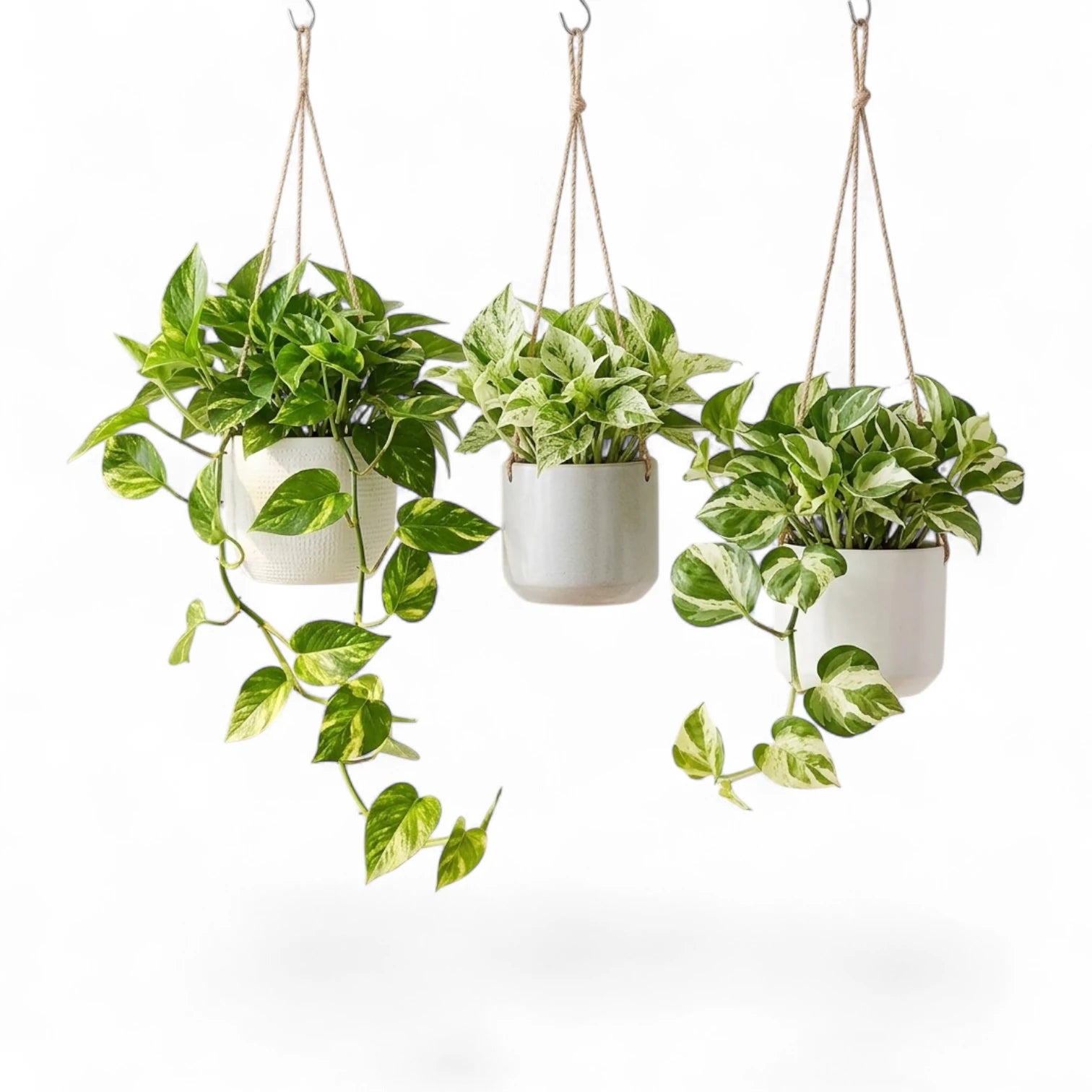
Epipremnum brings together evergreen climbing aroids with long stems, nodes and aerial roots. Indoors, the same climbing habit can be managed in different ways: hanging from a pot, trailing from a shelf, pruned into a fuller planter, or trained upward on a pole, plank or board. The plant’s growth habit stays climbing; the setup decides how that vine is guided.
Most Epipremnum plants are sold young, before their long-term structure is obvious. Choosing well starts with the setup you can offer: do you want a pruned full pot, a hanging vine, or a plant grown upward so aerial roots can attach and leaves can develop over time?
Shop Epipremnum plants · Read the full Epipremnum aureum story
Epipremnum Plants: Climbing Growth, Care, Propagation and Choosing the Right Vine


Epipremnum at a Glance
Start with these core points:
- Epipremnum are evergreen climbing aroids with long stems, nodes and aerial roots.
- Indoors, the same climbing habit can be managed as a hanging plant, trailing shelf plant, pruned full pot, or supported climber.
- Every viable cutting needs at least one node; a leaf without a node will not grow into a complete plant.
- Most plants are sold in juvenile or semi-juvenile form, so mature growth depends on species, age, support, warmth, light and root health.
- Epipremnum aureum forms are practical for hanging pots, shelves and pruning-based renewal because they root and regrow readily.
- Epipremnum pinnatum forms are better suited when the goal is upward growth and larger, more developed foliage over time.
- Long vines do not automatically make a pot look full. Density usually comes from pruning and several rooted growth points.
- Bright indoor light supports compact growth, shorter internodes and better water use, but it does not create variegation.
- Use a breathable, re-wettable substrate that holds some moisture without staying heavy around roots.
- Epipremnum is not pet-safe if chewed.
Learn how to judge indoor light · Build an airy aroid substrate
Epipremnum Naming & Botanical Profile
Epipremnum is an accepted genus in Araceae, the aroid family. These evergreen climbers are native across parts of tropical and subtropical Asia to Pacific regions, depending on species. In habitat, they climb, scramble or creep through warm wet-tropical environments using nodes, aerial roots and long flexible stems.
For indoor growing and shopping, two species groups matter most: Epipremnum aureum and Epipremnum pinnatum. Epipremnum aureum sits behind many familiar golden, neon, marble and compact variegated cultivated forms. Epipremnum pinnatum is especially relevant for plants such as 'Cebu Blue' and variegated selections sold from this species.
Both are climbing aroids, but they are useful in different indoor setups. Epipremnum aureum is often easier to manage as a hanging vine, shelf plant or pruned full pot. Epipremnum pinnatum is better suited when the aim is to guide a vine upward and give mature foliage a stronger route to develop over time.
A note on “pothos”: In houseplant trade, “pothos” is often used for Epipremnum aureum and related-looking cultivated vines. Botanically, Pothos is a separate accepted genus in Araceae, with species such as Pothos barberianus. This page uses Epipremnum for Epipremnum plants and mentions “pothos” only where common-name confusion matters.
Natural Habitat & Indoor Relevance
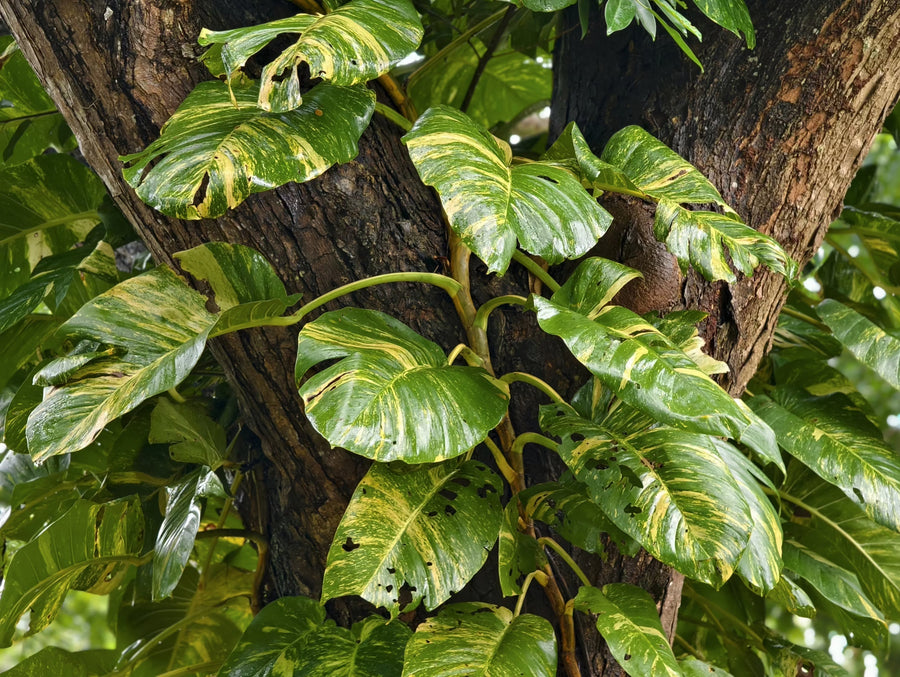
Wild Epipremnum are climbing aroids of wet tropical habitats. They use aerial roots to attach to trees, rocks or other surfaces while stems search for support and light. Indoors, this explains why roots need air, stems should not be buried in wet mix, and long vines are best pruned, rooted back into the pot, or guided onto support.
- Epipremnum aureum: native to Mo‘orea in the Society Islands; a wet-tropical climber.
- Epipremnum pinnatum: widespread from tropical and subtropical Asia to Pacific regions; found in tropical rain forests and mountain forests, climbing or creeping on trees, rocks and stone walls.
- Epipremnum amplissimum: native from New Guinea to Vanuatu; recorded in very low-elevation swampy open forest and rainforest situations in regional habitat data.
- Epipremnum falcifolium: native to northern and central Borneo; wet-tropical climber.
- Epipremnum giganteum: native from Indo-China to Malaya; large wet-tropical climber.
Useful choosing rule
Start with the growing setup: hanging, shelf-grown, pruned full pot, or vertical support. Leaf pattern matters, but long-term behaviour depends on species, stem maturity, support, roots, light and pruning.
Epipremnum: Botanical Snapshot
- Genus: Epipremnum Schott
- Family: Araceae
- Growth form: evergreen climbing aroids with nodes and aerial roots
- Native range: tropical and subtropical Asia to Pacific regions, depending on species
- Key indoor references: Epipremnum aureum cultivated forms and Epipremnum pinnatum selections
- Flowers: aroid inflorescences, but flowering is not the reason these plants are usually grown indoors
Common-name confusion
Trade names are useful for shopping, but genus, species and stem growth are more reliable for understanding how a plant is likely to behave indoors.
Common-Name Confusion Around Epipremnum
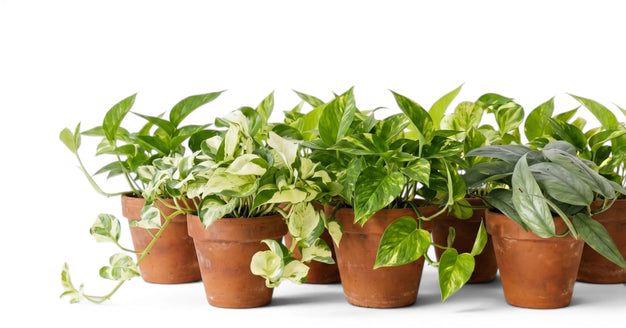
Retail names can make climbing aroids harder to compare than they need to be. In English-speaking houseplant use, “pothos” is now often used almost as shorthand for Epipremnum, especially Epipremnum aureum and its cultivars. Botanically, though, Epipremnum and Pothos are not the same genus, so it is still worth checking the actual plant name instead of relying on retail labels alone.
Epipremnum aureum
Epipremnum aureum is the species most commonly meant by “pothos” in everyday indoor-plant language. This widely cultivated Epipremnum includes many green, golden, neon, marble and compact variegated forms. It is especially practical for full pots, hanging plants, shelves and pruning-based renewal, while also being able to climb and size up when given support.
Epipremnum pinnatum
Epipremnum pinnatum is usually chosen when vertical growth and more developed foliage are part of the goal. 'Cebu Blue', variegated Epipremnum pinnatum 'Marble' selections and forms such as 'Cintho Goldfinger' are useful when the vine will be guided onto a pole, plank or other vertical support over time. Young plants may still be displayed hanging or trailing, but support gives the climbing habit a clearer direction.
Pothos
Pothos is a separate accepted genus in Araceae, not a botanical synonym for Epipremnum. This is where common-name use gets messy: in English-language plant retail, “pothos” often points to Epipremnum, while true Pothos species belong to Pothos. Species such as Pothos barberianus are Pothos; Epipremnum aureum and Epipremnum pinnatum are Epipremnum, even when sold or searched for as “pothos”.
Scindapsus, Philodendron, Rhaphidophora and Monstera
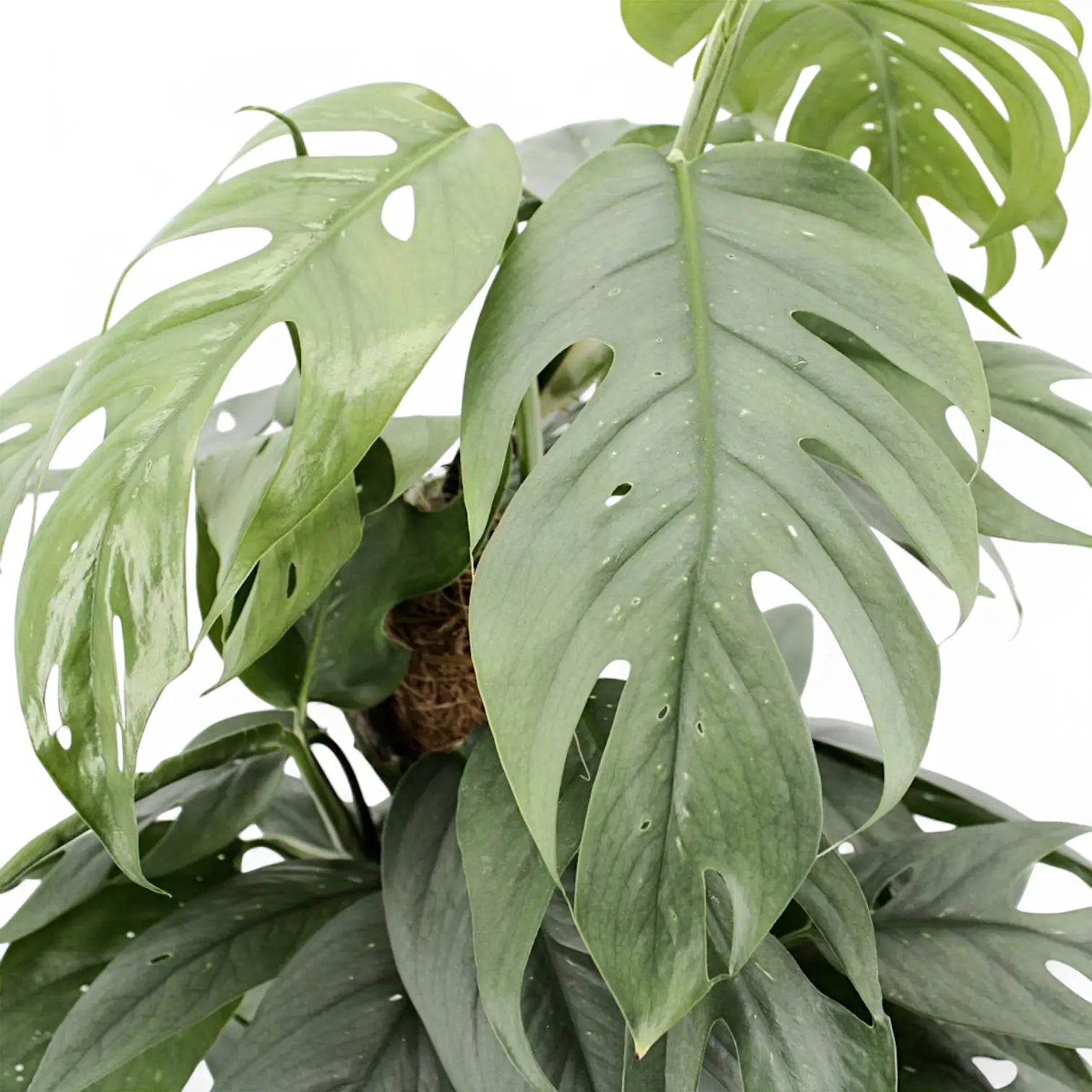
Scindapsus, Philodendron, Rhaphidophora and Monstera are separate genera. Similar juvenile vines, climbing stems or divided adult leaves can create visual overlap, but each should be identified and described on its own terms instead of being grouped under Epipremnum or pothos.

How Epipremnum Grows: Nodes, Aerial Roots and Mature Leaves
Epipremnum care makes more sense once the stem structure is clear. These plants are not built like rosette houseplants. They grow along vines, and each node can matter for rooting, branching, pruning and propagation.
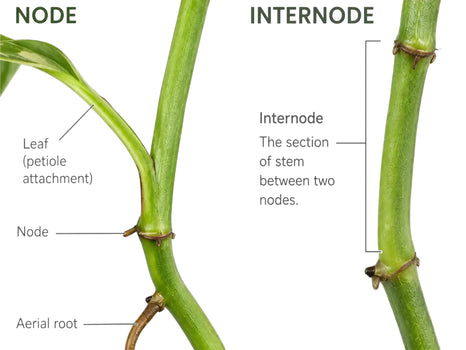
Nodes
Nodes are stem points where leaves, aerial roots and new shoots can form. This is why a cutting needs a node to become a new plant. A leaf can stay fresh in water for a while, but without a node it has no growth point for a complete vine.
Internodes
Internodes are the stem sections between nodes. Short internodes make a plant look denser. Long internodes create a stretched, bare or sparse look. Light level, growth direction, pruning, support and plant age all affect how compact or open vines become.
Aerial roots
Aerial roots help stems grip bark, poles, boards and other textured surfaces. A hanging vine can stay healthy, but a vine with steady upward contact usually develops differently from one left unsupported.
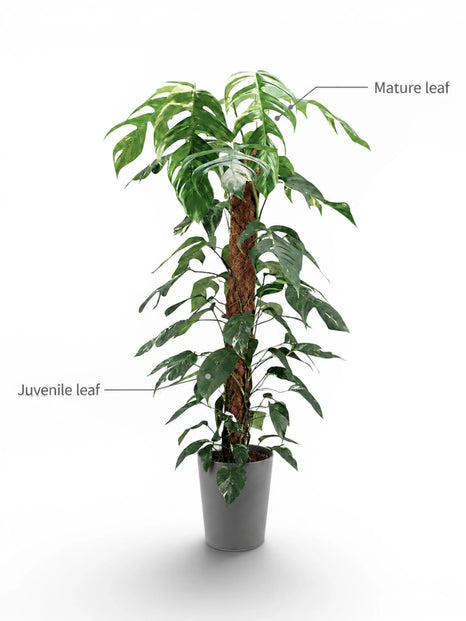
Juvenile leaves and adult growth
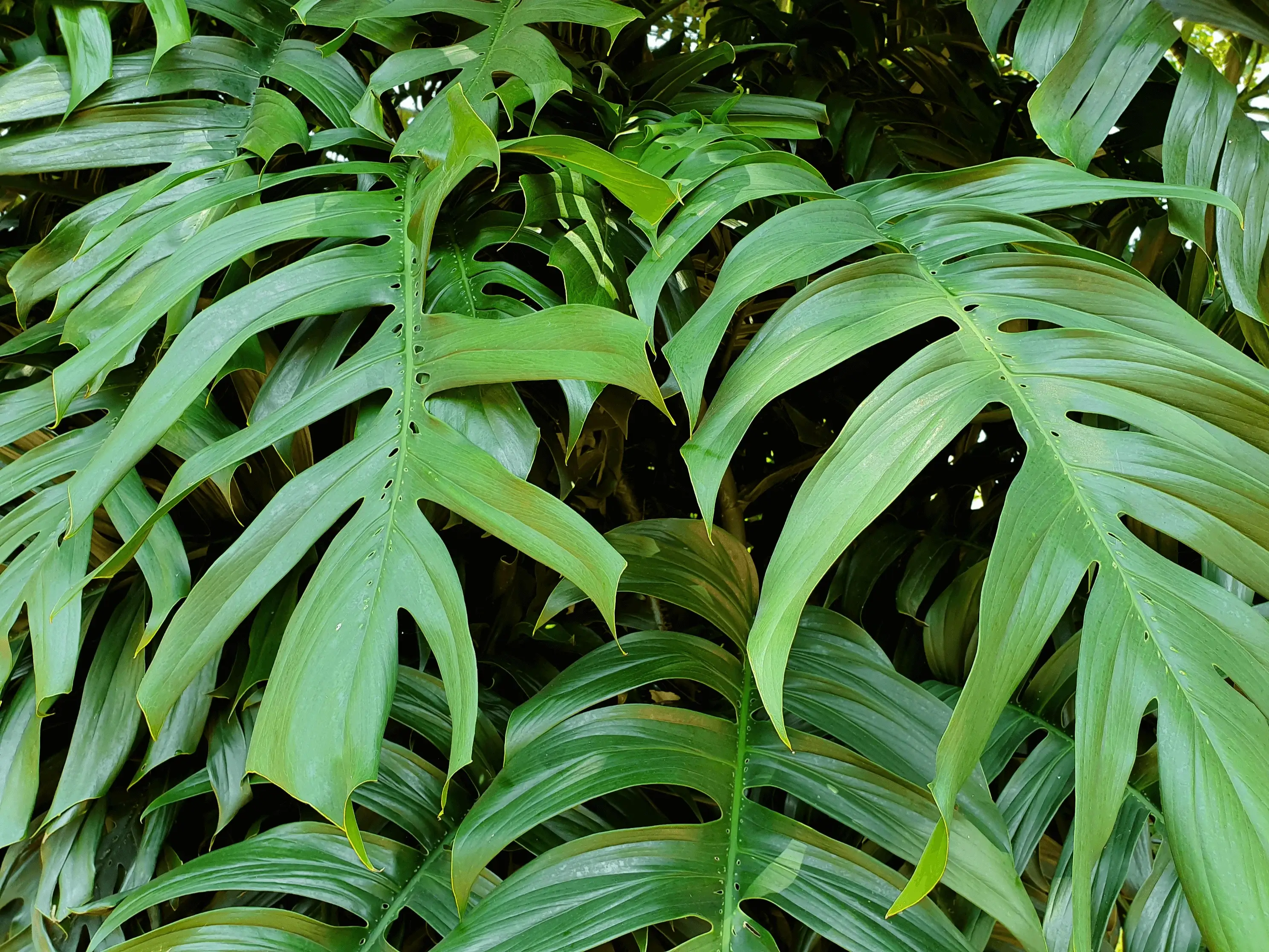
Most indoor Epipremnum plants are sold in juvenile or semi-juvenile form. Compact cultivated forms may stay juvenile-looking indoors because tighter growth is part of their appeal. Some Epipremnum, especially Epipremnum pinnatum forms, can produce larger and more divided leaves as they climb, but support alone does not guarantee adult leaves.
Comparing Epipremnum Species and Cultivars
All Epipremnum are climbing aroids, but not all are equally useful for the same indoor setup. Some are easy to keep dense in hanging pots, on shelves or as pruned planters. Others are better used on vertical support, where aerial roots can attach and leaves have a stronger route toward larger adult growth. Choose the plant by species, growth strength, mature potential and the way you want to manage the vine indoors.
Epipremnum aureum Cultivars
Epipremnum aureum is the main group behind classic pothos-style houseplants. These are still climbers, but many cultivated forms are especially practical as hanging plants, shelf vines or pruned full pots. Greener and yellow-green forms usually recover quickly from pruning. Compact white-variegated forms are better for tighter patterned pots, but often grow more slowly and need steadier conditions.

Epipremnum aureum for a fast, flexible vine that can be kept hanging, pruned dense, or trained upward on support.

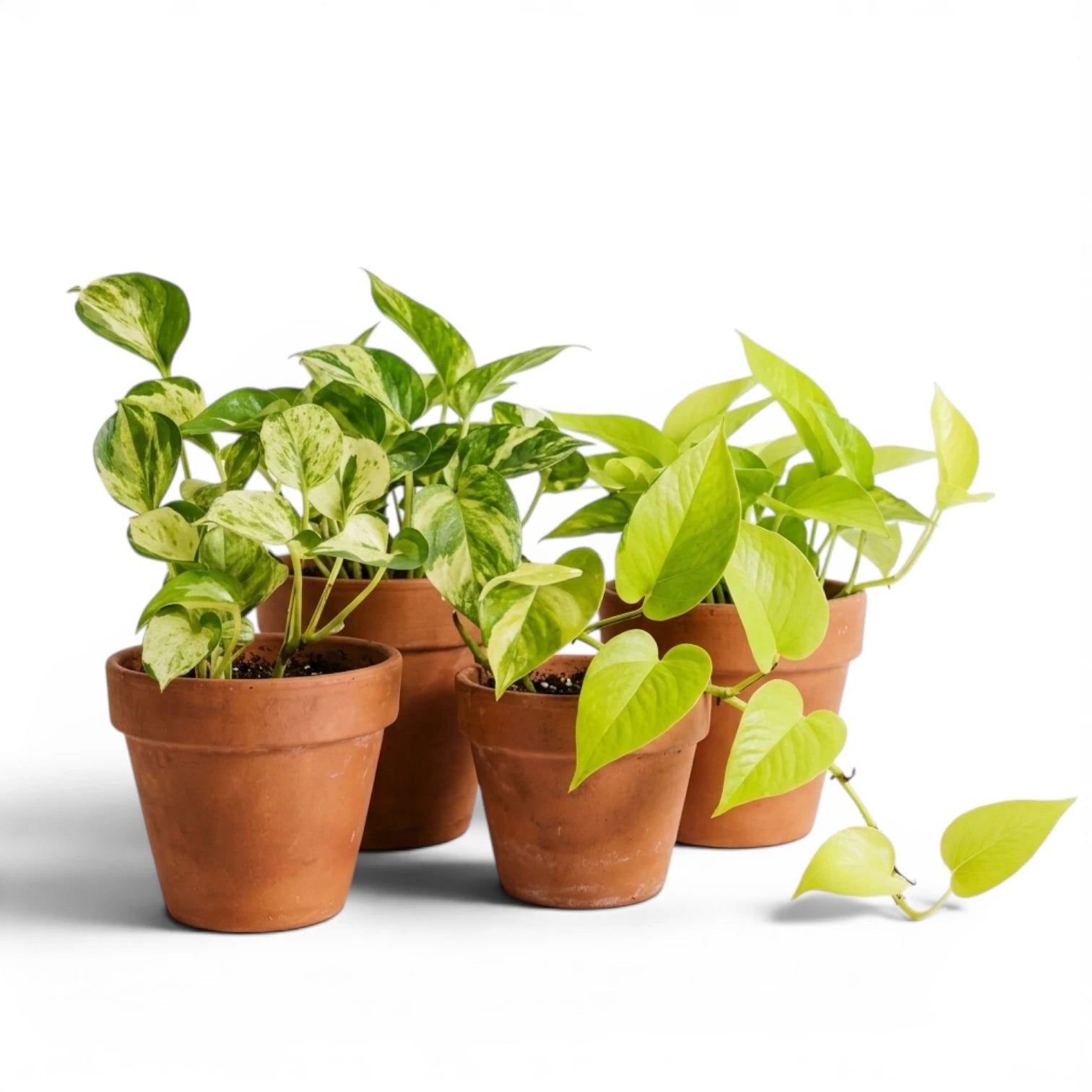
Epipremnum aureum 'Neon' for bright lime-yellow growth on a flexible vine that works well in hanging pots, shelves or pruned fuller planters.

Epipremnum 'Jungle Star' ('Marble Green') for saturated green marbling and flexible growth without cream-heavy contrast.

Epipremnum pinnatum 'Cebu Blue' for blue-green juvenile foliage and strong climbing potential on a pole, plank or board.
Other Epipremnum Species
Less common Epipremnum species show more range than familiar pothos-style cultivars. They are still climbing aroids, but leaf shape, mature scale, growth rhythm and space needs can differ strongly. These are better choices when you can offer warmth, support and enough room for long-term vine growth.

Epipremnum amplissimum for narrow, elongated foliage and a cleaner vertical look. This New Guinea to Vanuatu species is usually chosen for shape and line rather than dramatic leaf splitting.

Epipremnum giganteum for a large-scale green climber from Indo-China to Malaya that needs space, vertical support and long-term growing room.

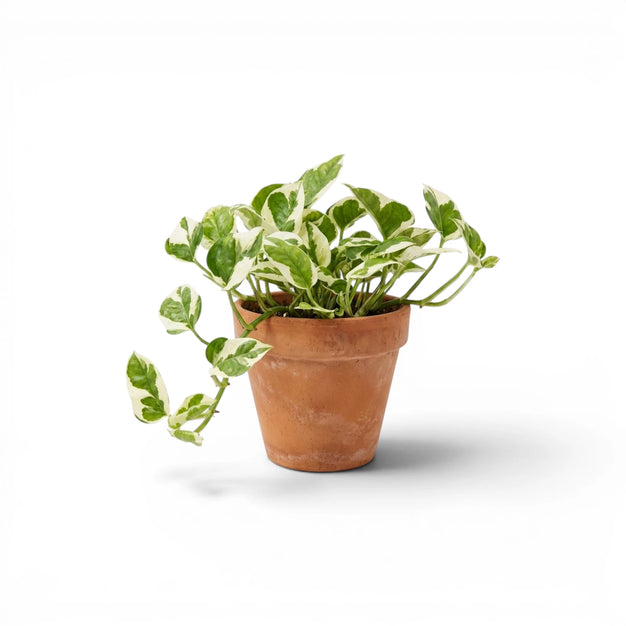
Epipremnum aureum 'N'Joy' for compact white-and-green growth with shorter internodes and a tidy pot shape.

Epipremnum aureum 'Marble Queen' for cream marbling, softer green contrast and a slower, elegant vine.

Epipremnum aureum 'Happy Leaf' ('Manjula') for rounded leaves with soft cream, green and silver-green variegation on a slower, compact vine.
More Epipremnum aureum forms to compare
- Epipremnum aureum 'Global Green' for green-on-green patterning and a calmer look without cream-heavy variegation.
- Epipremnum aureum 'HiColor' for warm yellow and chartreuse splashing on a vigorous, flexible vine.
- Epipremnum aureum 'Pearls and Jade' aka 'White Panther' for smaller leaves, crisp mottling and a naturally tighter pot shape.
Epipremnum pinnatum Selections
Epipremnum pinnatum is the stronger choice when you want to use the plant’s climbing habit indoors. Young plants can look simple at first, but upward growth on a pole, plank or board gives the vine a better route toward larger, more structured leaves with age. It can still be grown hanging or trailing, but that usually keeps it closer to juvenile growth.

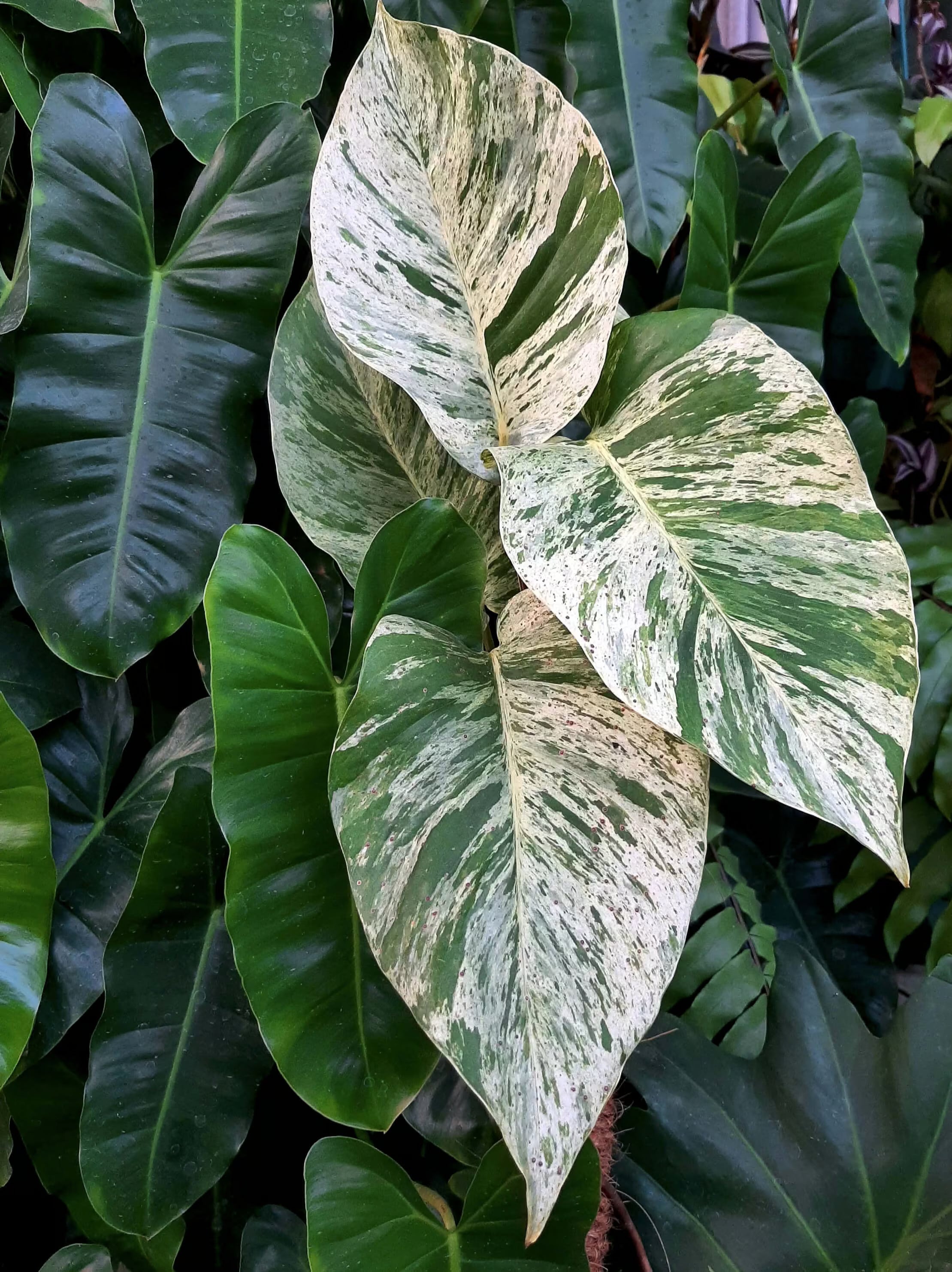
Epipremnum pinnatum variegata 'Marble' for marbled climbing foliage on a plant best grown upward from early on.

Epipremnum pinnatum 'Cintho Goldfinger' for yellow-green climbing growth with strong upward training potential.

Epipremnum falcifolium for a narrow-leaved wet-tropical Bornean species with an elongated, less common collector look.

How to Choose the Right Epipremnum
Epipremnum are climbing aroids by growth habit, but they can be managed indoors in several ways. A vine can hang from a pot, trail from a shelf, be pruned into a fuller planter, or grow upward on a pole, plank or board. The best choice depends on the setup you can offer and the long-term shape you want.
Fast match
- For hanging pots: choose flexible Epipremnum aureum forms such as Epipremnum aureum, 'Neon', 'N'Joy' or 'Marble Queen'.
- For shelves: choose compact or moderate forms such as 'N'Joy', 'Marble Queen' or a pruned 'Neon'.
- For vertical support: choose Epipremnum pinnatum forms such as 'Cebu Blue' or a variegated 'Marble' selection.
- For larger adult-form foliage: choose a species or selection with that potential, then give support early and let the main vine grow upward without repeated cutbacks.
1. Choose by indoor setup first
Leaf colour is only one part of the decision. First decide how the climbing vine should be managed indoors: hanging, shelf-grown, pruned into a fuller pot, or trained upward on support. That choice affects pruning, pot size, support and long-term shape.
- Hanging and shelf-grown vines need pruning and rooted cuttings to stay dense over time.
- Compact cultivated forms still need enough light and healthy roots to keep a full shape.
- Supported vines need early contact with a pole, plank or board before mature growth can develop well.
2. Match the plant to your setup
Choose Epipremnum aureum or 'Neon' for fast, flexible vines that can be pruned and refilled easily. Choose 'N'Joy', 'Marble Queen' or 'Pearls and Jade' for compact patterned pots. Choose 'Cebu Blue' or a variegated Epipremnum pinnatum selection when you want to guide the vine upward.
Variegated selections need steady growth conditions: enough indoor light, healthy roots, careful watering and enough green tissue to keep growing well.
3. Check whether Epipremnum suits the space
- Pet and child access: Epipremnum is not suitable where leaves or stems are likely to be chewed.
- Very low light: vines may stay alive for a while, but growth usually becomes slow, loose and sparse.
- Adult leaf expectations: compact cultivated forms are not reliable choices for guaranteed divided mature leaves.
- Cold wet pots: cold roots and slow-drying substrate increase the risk of decline.
- Fullness expectations: dense pots usually need pruning, rooted cuttings or support over time.

Indoor Epipremnum Care
Epipremnum is adaptable, but it still needs roots that can breathe, enough light for active growth and vines managed before they turn sparse. Many problems start when low light, slow drying, dense substrate and long unpruned growth happen together.
Light
Give Epipremnum bright indoor light for compact growth, stronger stems and shorter internodes.
- Lower light may keep many plants alive, but growth usually becomes slower and looser.
- Variegated forms need enough light for steady growth, but brighter placement does not create variegation the growth point is not producing.
- Long gaps between leaves usually mean the vine needs better light, pruning, support, or a combination of these.
Watering
Water by pot depth, not by calendar. As a starting point, water when roughly the top 25–40% of pot depth has dried, then soak and drain fully.
- Drying speed changes with light, warmth, pot size, root mass and substrate.
- Long vines do not always mean a large root system.
- Wet, compacted substrate is riskier than a full watering followed by proper drainage.
Substrate
Use a breathable, re-wettable aroid-style substrate that holds some moisture while keeping air around roots.
- Dense wet mixes can stay heavy around roots and buried stems.
- Very coarse mixes can dry unevenly in small pots or warm rooms.
- The best mix is the one that dries at a workable pace in your actual conditions.
Pot size & repotting
Choose pot size by root mass and drying speed, not vine length.
- A long hanging vine can still have a modest root system.
- Move up only slightly when roots fill the pot or the substrate breaks down.
- Supported plants need a stable base, but oversized pots can leave too much wet volume around roots.
Support & pruning
Use support when you want to guide the climbing habit upward. Use pruning when vines become too long, bare or uneven.
- Cut above a node.
- Root healthy cuttings to refill sparse pots.
- Give Epipremnum pinnatum forms support early if larger climbing foliage is the goal.
Temperature
Keep Epipremnum warm and stable indoors.
- Avoid cold windowsills, cold floors and repeated cold drafts.
- Cold plus wet substrate is the risky combination.
- After shipping, moving or repotting, steady conditions are better than repeated interventions.
Humidity & airflow
Many commonly grown Epipremnum forms handle average indoor humidity better than many thin-leaved tropical houseplants, as long as roots, light and watering are also working.
- Stable humidity can help aerial roots and supported growth.
- Airflow helps prevent stale, damp conditions around leaves and stems.
- Humidity does not replace light, root health, substrate structure or support.
Feeding
Feed lightly while the plant is actively growing and roots are healthy.
- Fertiliser supports growth already in progress; it does not fix low light, cold roots or failing substrate.
- Do not use heavy feeding to force adult leaves.
- Pause or reduce feeding if growth stalls, roots are stressed or the pot stays wet for too long.
Safety
Epipremnum is not pet-safe if chewed. Plant tissue contains irritating calcium oxalate crystals and can cause mouth irritation, drooling, vomiting or difficulty swallowing.
- Keep away from pets and children likely to chew leaves or stems.
- Wear gloves if sap irritates your skin.
- Wash hands and tools after heavy pruning.
Light
Light
Give Epipremnum bright indoor light for compact growth, stronger stems and shorter internodes.
- Lower light may keep many plants alive, but growth usually becomes slower and looser.
- Variegated forms need enough light for steady growth, but brighter placement does not create variegation the growth point is not producing.
- Long gaps between leaves usually mean the vine needs better light, pruning, support, or a combination of these.
Watering
Watering
Water by pot depth, not by calendar. As a starting point, water when roughly the top 25–40% of pot depth has dried, then soak and drain fully.
- Drying speed changes with light, warmth, pot size, root mass and substrate.
- Long vines do not always mean a large root system.
- Wet, compacted substrate is riskier than a full watering followed by proper drainage.
Substrate
Substrate
Use a breathable, re-wettable aroid-style substrate that holds some moisture while keeping air around roots.
- Dense wet mixes can stay heavy around roots and buried stems.
- Very coarse mixes can dry unevenly in small pots or warm rooms.
- The best mix is the one that dries at a workable pace in your actual conditions.
Pot & Repotting
Pot size & repotting
Choose pot size by root mass and drying speed, not vine length.
- A long hanging vine can still have a modest root system.
- Move up only slightly when roots fill the pot or the substrate breaks down.
- Supported plants need a stable base, but oversized pots can leave too much wet volume around roots.
Support & Pruning
Support & pruning
Use support when you want to guide the climbing habit upward. Use pruning when vines become too long, bare or uneven.
- Cut above a node.
- Root healthy cuttings to refill sparse pots.
- Give Epipremnum pinnatum forms support early if larger climbing foliage is the goal.
Temperature
Temperature
Keep Epipremnum warm and stable indoors.
- Avoid cold windowsills, cold floors and repeated cold drafts.
- Cold plus wet substrate is the risky combination.
- After shipping, moving or repotting, steady conditions are better than repeated interventions.
Humidity & Airflow
Humidity & airflow
Many commonly grown Epipremnum forms handle average indoor humidity better than many thin-leaved tropical houseplants, as long as roots, light and watering are also working.
- Stable humidity can help aerial roots and supported growth.
- Airflow helps prevent stale, damp conditions around leaves and stems.
- Humidity does not replace light, root health, substrate structure or support.
Feeding
Feeding
Feed lightly while the plant is actively growing and roots are healthy.
- Fertiliser supports growth already in progress; it does not fix low light, cold roots or failing substrate.
- Do not use heavy feeding to force adult leaves.
- Pause or reduce feeding if growth stalls, roots are stressed or the pot stays wet for too long.
Safety
Safety
Epipremnum is not pet-safe if chewed. Plant tissue contains irritating calcium oxalate crystals and can cause mouth irritation, drooling, vomiting or difficulty swallowing.
- Keep away from pets and children likely to chew leaves or stems.
- Wear gloves if sap irritates your skin.
- Wash hands and tools after heavy pruning.
Support, Pruning and Propagation
Support, pruning and propagation shape how Epipremnum grows indoors. The same climbing habit can be managed as a hanging vine, a shelf plant, a fuller pruned pot, or a supported climber with upward growth.
Hanging, trailing or supported?
A hanging pot lets vines fall downward. A shelf lets vines trail outward. A pole, plank or board gives aerial roots something to attach to. Pruning and rooted cuttings help rebuild density when vines become long and bare.
Choosing support
Aerial roots need contact. Coir poles, moss poles, planks, bark boards and textured supports can all help, depending on your setup. Smooth, dry supports may hold stems in place, but they usually give aerial roots less to attach to.
Before cutting
- Use firm, healthy stems with visible nodes.
- Cut above a node when pruning the mother plant.
- Each cutting needs at least one node to produce a new vine.
- Top cuttings restart more neatly; mid-stem cuttings can work but need time.
- Keep propagation warm and clean, with moisture plus air.
- Do not use soft, rotting or hollow stems as rescue cuttings.

Pruning for shape and fullness
Cut above a node when vines become too long, sparse or uneven. New shoots can restart from nodes left on the plant, while healthy cuttings can be rooted separately.
- A bare vine rarely becomes a full pot by length alone.
- Rooted cuttings can be planted back into the same pot for density.
- Use pruning to redirect growth before the plant becomes a few long strings.
Water, substrate, moss or perlite?
Water propagation is easy to monitor and works well for many healthy cuttings. Substrate propagation avoids a later water-to-substrate transition but needs steady moisture without soaking. Moss or perlite can be useful for small nodes, valuable cuttings or variegated material when warmth and hygiene are controlled.
- Use firm stem sections with nodes.
- Keep cuttings warm, bright and out of harsh sun.
- Give roots moisture and air; soaked setups rot quickly.
Rebuilding a fuller pot
Root several cuttings, then plant them back into the original pot once roots are established. Keep pot size modest, use a breathable substrate, and avoid burying long unrooted stems in wet mix.
- Fullness comes from multiple rooted growth points.
- Do not hide bare stems under substrate.
- Let newly rooted pieces settle before heavy feeding.
Pruning & Fullness
Pruning for shape and fullness
Cut above a node when vines become too long, sparse or uneven. New shoots can restart from nodes left on the plant, while healthy cuttings can be rooted separately.
- A bare vine rarely becomes a full pot by length alone.
- Rooted cuttings can be planted back into the same pot for density.
- Use pruning to redirect growth before the plant becomes a few long strings.
Rooting Cuttings
Water, substrate, moss or perlite?
Water propagation is easy to monitor and works well for many healthy cuttings. Substrate propagation avoids a later water-to-substrate transition but needs steady moisture without soaking. Moss or perlite can be useful for small nodes, valuable cuttings or variegated material when warmth and hygiene are controlled.
- Use firm stem sections with nodes.
- Keep cuttings warm, bright and out of harsh sun.
- Give roots moisture and air; soaked setups rot quickly.
Rebuilding a Fuller Pot
Rebuilding a fuller pot
Root several cuttings, then plant them back into the original pot once roots are established. Keep pot size modest, use a breathable substrate, and avoid burying long unrooted stems in wet mix.
- Fullness comes from multiple rooted growth points.
- Do not hide bare stems under substrate.
- Let newly rooted pieces settle before heavy feeding.
Propagation Timing Matters
Use firm, healthy stem sections and keep the setup warm, clean and lightly moist. Small cuttings fail fastest when they are kept cold, buried too deeply, or surrounded by wet substrate they cannot use yet.
For fuller pots, root several cuttings first, then plant them back into a breathable mix once roots are established and new growth can support itself.


What to skip
- Leaf-only cuttings without nodes.
- Cold propagation setups.
- Soaked media around small cuttings.
- Oversized pots for newly rooted pieces.
- Fully white cuttings with too little green tissue.
- Soft, rotting or hollow stems used as rescue cuttings.
Fullness comes from rooted growth points, not from hiding bare vines under wet substrate.
Troubleshooting Epipremnum
Most Epipremnum problems are linked to low light, long unpruned vines, dense wet substrate, root stress, pest damage or propagation mistakes.
- Start with the stem: nodes, internode length and stem firmness tell you a lot.
- Check the pot: wet, heavy substrate changes the diagnosis.
- Look at new growth: smaller leaves, distortion or greener sections can point to different causes.
Yellow houseplant leaves diagnosis guide · Root rot in houseplants
Read the growth pattern first
Similar symptoms can come from opposite causes. Check light, pot moisture, roots, stems and recent changes together before changing several things at once.
Long bare vines, smaller leaves, yellowing and limp growth often make more sense once you compare the stem pattern with the root zone.
Epipremnum Symptom Checks
Use the visible pattern to decide what to inspect first. Check vine length, internodes, pot moisture, root condition, stem firmness and recent changes before changing the whole setup.
Long bare vines
Usually points to low light, old unpruned growth, sparse original planting, or vines that have not been cut and restarted. Shorten bare sections, improve indoor light, and root healthy cuttings to rebuild density.
Smaller new leaves
Often linked to weaker light, no climbing support, recent propagation, root stress or low nutrition during active growth. If you want larger growth, start with the right species or selection and give it upward support early.
No mature or divided leaves
This usually comes down to plant type and growth stage before care. Compact Epipremnum aureum forms are not grown for dramatic mature divided leaves. Epipremnum pinnatum forms have stronger adult-growth potential, but they still need time, support, warmth, light and healthy roots.
Yellow lower leaves
One older leaf yellowing can be normal turnover. Several yellow leaves, especially with wet substrate or soft stems, need a closer check. Look at pot drying speed, root health, temperature and recent changes before watering again.
Several yellow leaves at once
This usually points to broader stress: wet substrate, cold roots, damaged roots, pests, or a major change after shipping, repotting or relocation. Check the root zone first if the pot has stayed wet for too long.

Brown tips or edges
Possible causes include repeated dry/wet swings, salt buildup, root stress, heat, low humidity or damage to pale variegated tissue. Read brown edges together with pot moisture and overall growth, not as a single-cause symptom.
Pale variegated areas browning
Pale tissue is less resilient than green tissue and can mark faster from stress, handling, heat, dehydration or root problems. Do not treat this as a sign that light should be pushed harder. Support steady growth first.
Greener new growth
Greener growth can come from cultivar behaviour, a greener stem section, pruning point, juvenile regrowth or overall growth quality. Better indoor light supports stronger growth, but light does not create variegation the plant is not producing.
Black or mushy stem sections
Treat black, soft or collapsing stems as rot risk. Common triggers include wet stale substrate, cold conditions, buried stems, overlarge pots or failed propagation setups. Remove soft tissue and restart only from firm, healthy sections with nodes.
Fine stippling, sticky residue, cottony clusters or distorted new leaves
Check for spider mites, scale, mealybugs and thrips. Look along nodes, stem joints, leaf undersides and pot edges, then treat in repeated cycles. Good light, steady watering and a healthy root zone help the plant recover, but they do not replace pest treatment.
Epipremnum FAQ
Not botanically. Epipremnum and Pothos are separate genera in Araceae. In everyday houseplant trade, “pothos” usually means Epipremnum aureum or one of its cultivars, while true Pothos species, such as Pothos barberianus, belong to another genus.
No. Scindapsus is a separate genus. Some silver-patterned houseplants are confused with Epipremnum in trade, but they are not the same plant group.
No. Epipremnum and Philodendron are separate genera in Araceae. They can look similar as juvenile vining plants, but their labels and mature growth behaviour are not identical.
Epipremnum aureum and many of its cultivated forms are usually the most forgiving starting point. They respond well to pruning, root readily from nodes and handle ordinary indoor conditions better than many collector aroids when light, watering and substrate are sensible.
Long bare vines usually come from low light, old unpruned growth, sparse planting or a lack of pruning. Cut healthy vines above nodes, root the cuttings and replant several rooted pieces into the pot for a fuller shape.
Use pruning and rooted cuttings. Cut above nodes, root healthy pieces, then plant several cuttings back into the same pot. More rooted growth points create a fuller plant than one or two long vines.
Yes. Epipremnum are climbing aroids by growth habit. Indoors they can be grown hanging, trailing or supported, but a pole, plank, board or textured support is needed when you want the vine to attach and grow upward. Epipremnum pinnatum 'Cebu Blue' and other Epipremnum pinnatum forms are especially useful when larger adult-form foliage is part of the goal.
Start with a species or selection that has adult-form potential, give it vertical support early, keep it in bright indoor light and avoid repeatedly cutting back the main climbing stem. Larger adult-form leaves need time, steady roots and uninterrupted upward growth. Support helps, but it does not guarantee mature leaves on every compact cultivated form.
No, not as a complete new plant. A viable cutting needs at least one node. A leaf without a node may stay fresh for a while, but it has no growth point for a new vine.
No. Epipremnum should be kept away from pets likely to chew plants. Plant tissue contains irritating calcium oxalate crystals and can cause mouth irritation, drooling, vomiting or difficulty swallowing.