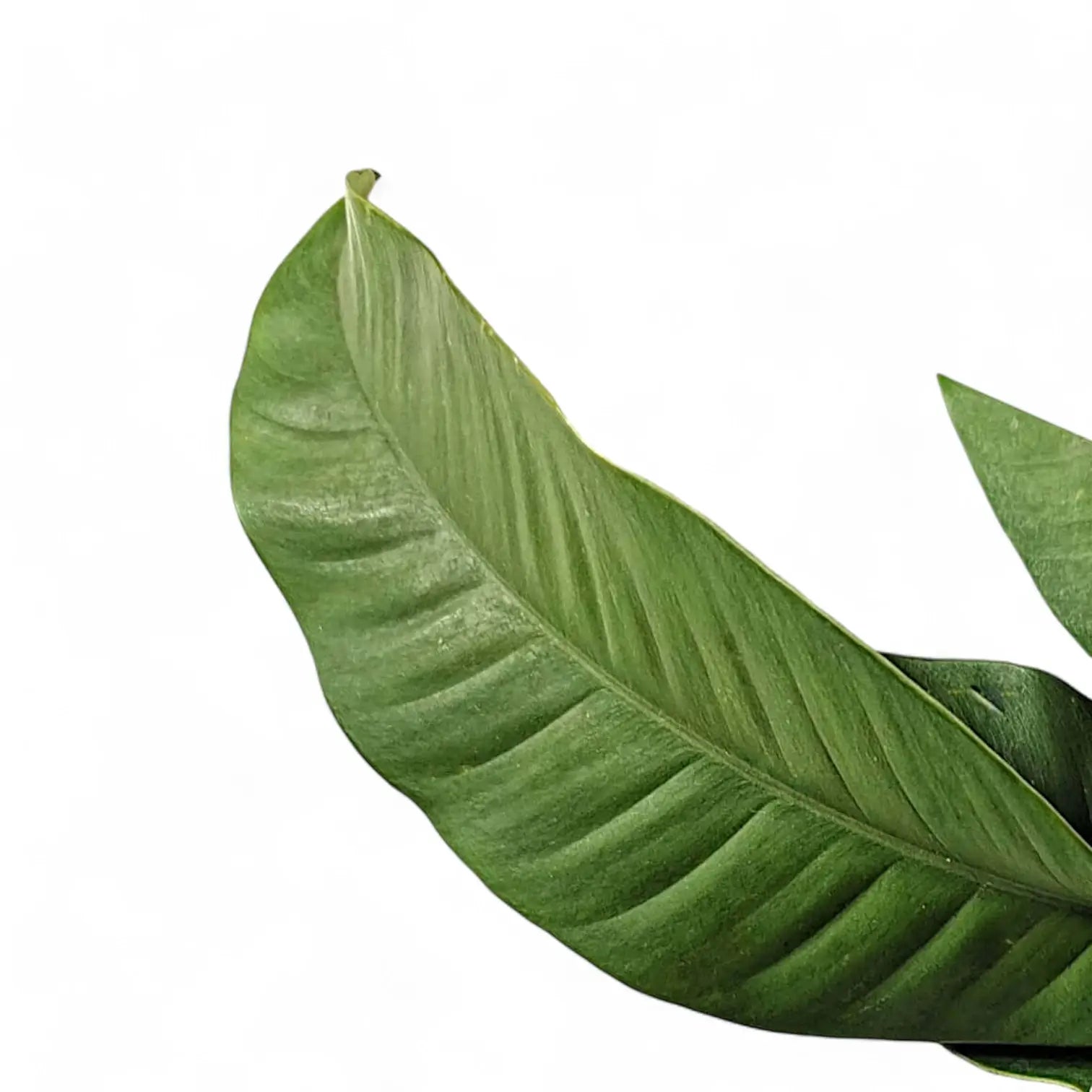
Epipremnum (pothos) - forgiving jungle vines, not plastic décor
Epipremnum indoors-what you are actually bringing home
Epipremnum: sold under names like pothos and devil’s ivy-is the classic “easy vine” that people buy, forget about and then realise it has quietly taken over the bookcase. Thick, flexible stems, heart-shaped leaves and a habit of rooting at every node make it very hard to kill and very easy to shape into curtains, columns or simple trailing lines.
That forgiving nature does not mean it wants to live in a dark corner in mud. Treat Epipremnum as a real tropical climber-bright forest light, airy mix, sensible watering-and it moves from “cheap filler” to a genuinely good structural plant. If you enjoy the backstory, our Epipremnum aureum profile walks through how a single species ended up everywhere.
Forest-floor start, canopy ambitions-Epipremnum in nature
Wild Epipremnum species creep along forest floors and fallen trunks in Southeast Asia and the Pacific, then climb once they find rough bark or rock. Juvenile vines root into loose leaf litter and fibrous debris; aerial roots then hook into bark and support the plant as it heads for brighter canopy layers.
Indoors you are freezing that climbing stage in a pot: roots need loose organic material with air gaps, stems do better with something to lean on over time, and leaves do better in light that feels like bright forest shade rather than full desert sun or permanent twilight.
Light for Epipremnum - “survives” vs “actually thrives”
Epipremnum has the reputation of a low-light champion because it does not die immediately in dim rooms. In practice, there is a clear difference between surviving and looking good. In proper light, vines are dense, leaves are a decent size and variegation stays crisp; in gloom, you get long bare pieces and small, flat-green leaves.
Good starting points:
- Close to an east or west window with no harsh midday beam.
- A little back from a bright south window behind sheer fabric.
- Under LED grow lights at bright-indirect intensity for 10-12 hours.
If you want to stop guessing, the shadow tests in our bright-indirect light guide show exactly what “enough light for pothos to thrive” looks like at different windows.
Watering and mix-pothos is tough, not amphibious
Epipremnum can forgive missed waterings, but its roots still need oxygen. Aim for a simple cycle:
- Let the top 2-4 cm of mix dry and the pot feel lighter in your hand.
- Water slowly until the whole root ball is soaked and water drains freely.
- Tip away all excess-no standing water in cachepots.
Constant wet, compact mix gives yellow lower leaves, soft stems near the base and eventually brown, hollow roots. Chronic deep drought gives limp, curled leaves and hard, hydrophobic soil that repels water. If you want a system instead of vibes, adapt the checks from our watering-houseplants guide to your pots and room temperature.
For substrate, think “light rainforest litter” rather than pure compost. A practical mix is a good indoor soil cut with bark, coco chips and perlite or pumice so a squeezed handful springs back instead of smearing into paste. That structure makes it much harder to overwater by accident.
Temperature, humidity and airflow-everyday comfort for Epipremnum
Epipremnum is happy in the same band most people like: roughly 18-27 °C. Short, mild dips are fine; long spells with cold, wet soil are not. Avoid pressing pots against icy winter glass or leaving them in the path of often-open doors.
Humidity does not need to be rainforest-level. Most vines adapt to typical indoor air if watering and light are reasonable. Medium humidity (around 40-60 %) simply keeps foliage a bit fresher and slows crisping on thin variegated sections. What matters more is gentle air movement so leaves dry after watering and roots are not sitting in stale, stagnant conditions.
Growth habit, supports and pruning-from shelf creeper to pole-climber
Epipremnum is genetically wired to climb. Juvenile vines trail happily from shelves and hanging pots, but once you give them a moss pole, textured stake or piece of bark, they usually respond with shorter internodes and larger leaves. That is how you move from “random tangle” to “actual vine with presence”.
Pruning is straightforward. Cut leggy stems just above a node to force branching, then replant the cut tops back into the same pot if you want a thicker base. Nodes with aerial roots are nearly ready-made cuttings. If propagation feels like unexplored territory, our propagation guide gives a clean framework for turning pothos trimmings into backup plants.
Feeding can stay modest. During active growth, a diluted balanced fertiliser every few weeks on already moist mix is plenty. Throwing strong fertiliser at a plant in bad light or swampy soil just burns roots faster.
Toxicity and placement in homes with pets and kids
Like most aroids, Epipremnum contains insoluble calcium oxalate crystals. Chewing stems or leaves can cause mouth and throat irritation, drooling and mild digestive upset in pets and children. Treat pothos as “look, don’t chew”.
Hang plants or place them where habitual grazers cannot turn vines into toys, and clear away fallen leaves instead of leaving them on the floor. Wash hands after heavy pruning, especially before touching your face or eyes.
What Epipremnum usually does after shipping
Freshly shipped pothos often look a bit annoyed: a few yellowing older leaves, some droop or a tangle of stems is normal after days in the dark. Substrate is rarely at the exact moisture level you would choose yourself.
Unpack, untangle gently without snapping stems and put the plant straight into its long-term bright, indirect spot. Check the root ball: if the top layer is still clearly moist and the pot feels heavy, wait before watering; if mix has dried a lot in transit, water once slowly and thoroughly, then let excess drain. Save repotting and heavy pruning for once you see fresh, confident growth and a stable watering rhythm.
Epipremnum troubleshooting-quick pattern matching
- Yellow leaves one by one on lower stems, mix heavy and cool: overwatering in compact soil. Let the top layer dry further, check drainage holes and consider moving to a looser mix.
- Long bare stretches with tiny leaves, vines racing to the window: chronic low light. Move much closer to a bright window or under a decent grow light; pruning back to stronger nodes will help the plant rebuild.
- Brown tips and margins, especially on variegated parts: usually a mix of dry air, irregular watering or salt build-up from hard water and fertiliser. Flush the pot with plain water, steady your watering rhythm and avoid hot air streams.
- Whole vine limp, pot feather-light, soil pulling from the sides: deep drought. Rehydrate slowly and thoroughly once, drain well and do not allow the pot to reach that state regularly.
- Sticky patches, webbing or distorted new leaves: signs of pests such as spider mites, thrips or mealybugs. Isolate, rinse foliage if you can, and work through a careful treatment plan before damage spreads.
Back to top Ready to build an indoor jungle that forgives the odd missed watering? Scroll up and pick the Epipremnum vines that match your light and support plans ↑