

Article: Why Is My Houseplant Not Growing? Light, Roots, Fertiliser and Recovery
Why Is My Houseplant Not Growing? Light, Roots, Fertiliser and Recovery
Indoors, new growth depends on usable light, working roots, steady moisture, air in the substrate, suitable temperature and living growth points.
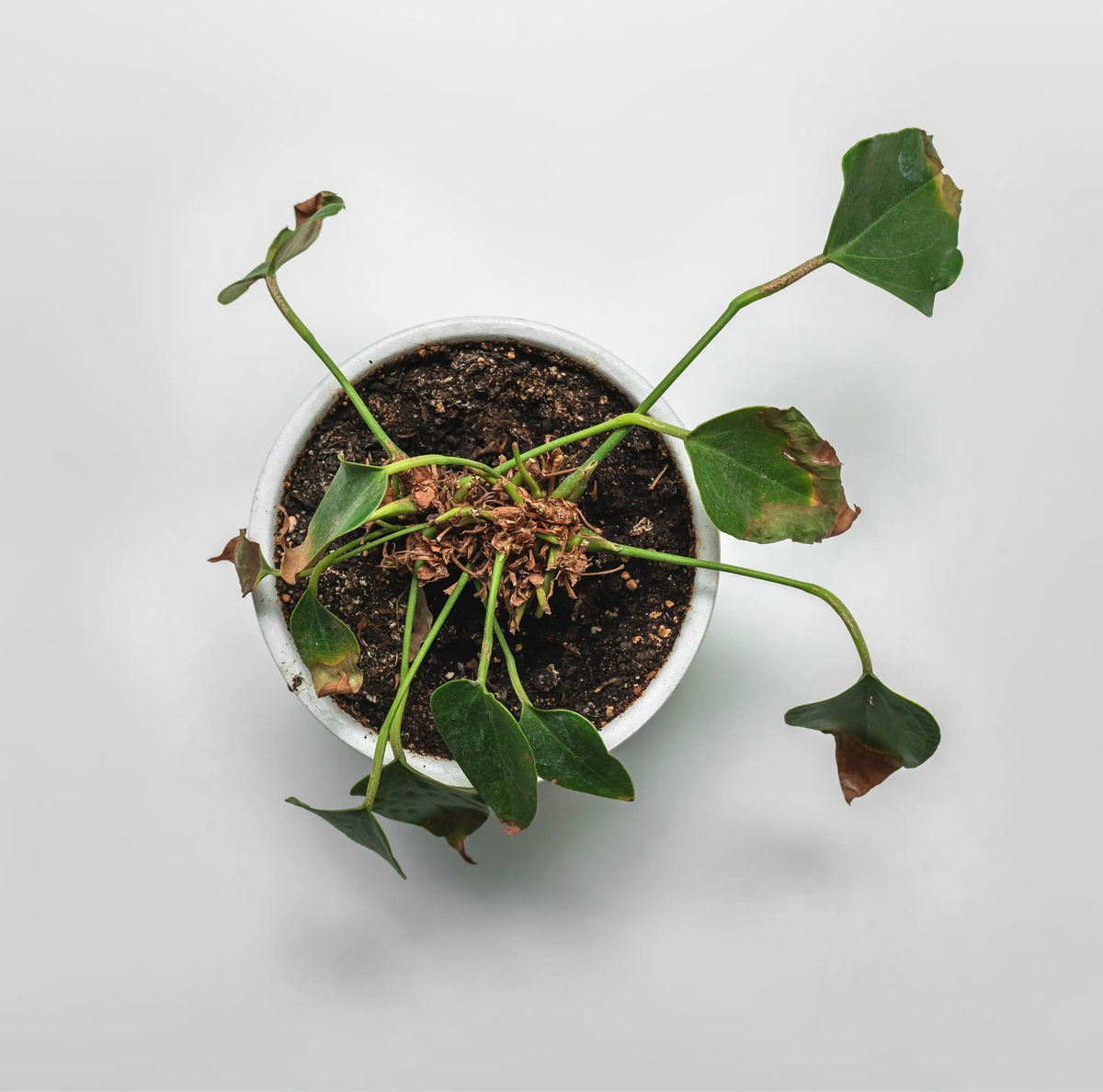
Existing leaves may stay green for a long time while new leaves stop, stems stretch, roots slow down, or substrate dries much more slowly than expected. Before feeding, check light, roots, watering and temperature.
Most stalls start with weak light, root trouble, uneven watering, pests, temperature stress or damaged growing tissue. Fertiliser helps once the plant has enough energy, working roots and living tissue to use it.
A plant needs usable light and working roots before fertiliser can help.

Fast diagnosis: why your houseplant is not growing
| No-growth pattern | Likely cause | First thing to look at | What to do now |
|---|---|---|---|
| No new leaves for months | Low light, seasonal slowdown, inactive roots | Light level, season, root condition | Improve usable light before feeding |
| Tiny new leaves | Low energy, root stress, pests, salt build-up | Light, roots, new growth, fertiliser history | Improve light, root health or watering before adding more fertiliser |
| Long gaps between leaves | Low light or stretched growth | Distance from light source | Move closer to suitable light or add a grow light |
| Weak, stretchy growth | Not enough usable light | Stem strength, leaf spacing, window distance | Increase light before pruning or fertilising |
| Plant is green but not growing | Holding steady rather than growing | Light, temperature, roots | Keep conditions predictable and reassess gradually |
| No growth with wet substrate | Oxygen stress around roots, dense mix, overpotting | Drying speed, pot size, root smell | Reduce wetness and improve aeration |
| No growth with a dry root ball | Chronic drought, hydrophobic substrate, uneven watering | Moisture inside root ball | Rehydrate evenly and settle into a better watering rhythm |
| No growth after repotting | Root recovery or changed moisture rhythm | Time since repotting, pot size, substrate | Keep the setup unchanged while roots re-establish |
| No growth after delivery | Acclimation pause | Timing, leaf stability, root moisture | Settle the plant first and intervene if decline continues |
| No growth with damaged new leaves | Pests feeding on young tissue | Undersides, leaf joints, stippling, residue | Isolate and treat before encouraging growth |
| No growth despite fertiliser | Wrong limiting factor or fertiliser salt stress | Light, roots, feeding frequency, substrate age | Pause feeding and reassess the full setup |
| No growth in winter | Low seasonal light, short days, cooler roots | Window exposure, temperature, drying speed | Accept slower growth or add supplemental light |
Act sooner if: stalled growth appears together with soft stems, collapsing petioles, wet sour-smelling substrate, spreading black tissue, severe yellowing, webbing, sticky residue, or distorted new leaves.

Does your houseplant have enough light, warmth and root activity?
A plant can look stable while root and shoot growth are paused. New leaves need usable light, working roots, suitable temperature, oxygen around the roots and living growth points that can push new tissue.
Old leaves can stay green while the plant lacks enough light, warmth, root activity, or water movement for new growth. A tolerant foliage plant may survive in a dim position for a while, but regular leaf production, compact growth and strong root activity need better conditions than survival alone.
Signs of active growth:
- New leaves: fresh leaves opening at a normal size for that plant.
- New roots: pale, firm root tips visible through a clear pot or near drainage holes.
- New shoots: active growth points, basal shoots, side shoots, or climbing growth.
- Normal spacing: stems or vines growing without long, weak gaps between leaves.
- Regular water use: substrate drying at a predictable rhythm instead of staying wet for too long.
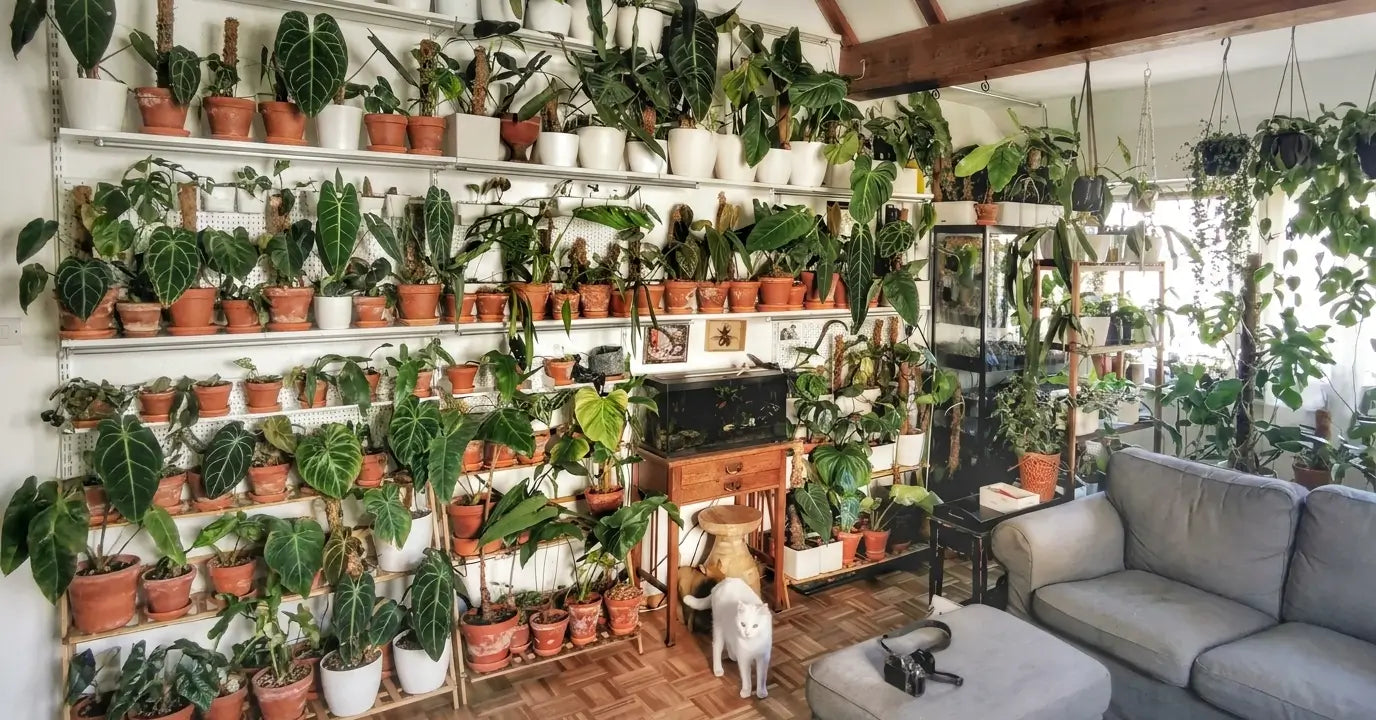
Indoor light drops quickly with distance from a window. A plant 2 m from glass may receive far less usable light than one close to the window, even when the room looks bright to human eyes. Plants also respond to the total amount of usable light received across the day, not only to how bright a spot looks at one moment.

In winter, shorter days and a lower sun angle reduce that daily light total. Warm indoor air cannot fully compensate for weak seasonal light. Cold roots slow the whole plant too. A pot on a cold windowsill may have a cooler root area than the surrounding air, so water use drops and new leaves become less likely.
Humidity matters most when new leaves tear, stick or crisp while roots are already dry or stressed. Check light, roots and watering first, then raise local humidity if new leaves keep opening badly.
Light, watering and roots are usually the first places to check: bright indirect light, watering rhythm, and root rot warning signs.
When fertiliser can help
Fertiliser supplies nutrients, but the plant still needs light, working roots, oxygen in the substrate, healthy new tissue and enough warmth to use them.
Repeated feeding can make a stalled plant worse when the real issue is weak light, damaged roots, slow dry-down, mineral build-up, or pests. Fertiliser salts can accumulate in substrate, especially when the plant is using little water or producing no new growth. Brown tips, dull growth, crust on the substrate surface, damaged root tips, or no improvement after repeated feeding all point toward a wider care issue.
Feeding makes sense when:
- The plant is actively growing: new leaves, roots, or shoots are developing.
- Light is adequate: the plant receives enough light to use nutrients.
- Roots are healthy: roots are firm, functional, and not sitting in stale wet substrate.
- Watering is consistent: the plant is not swinging between drought and saturation.
- The substrate is not overloaded: salts are not already building up.
Weak light, wet substrate, damaged roots, or active pests need their own fixes first. Once the plant is growing again, fertiliser can support the next leaves and roots.
Start with a mild dose matched to the plant, season and substrate. Increase only after new growth responds.
When nutrients actually are the issue
A nutrient shortage is more likely when the plant is already in growing conditions but the substrate or feeding routine no longer supplies enough nutrients. The plant still needs usable light, healthy roots, suitable temperature and some active growth.
Nutrients may be involved when:
- Leaves or roots are still forming: new tissue appears, but leaves are smaller, paler, or thinner than expected despite better light and regular watering.
- The substrate is old or very lean: the plant has been in the same mix for a long time, or it grows in a mineral, bark-heavy, coco-based, or otherwise low-nutrient medium.
- Watering has been heavy for months: repeated watering can gradually wash nutrients out of some substrates, especially when the plant is actively growing.
- Older leaves pale evenly: gradual paling on older leaves can point toward mobile nutrient shortage, especially when roots are healthy and new growth continues.
- Light and roots look sound: the plant has usable light, firm roots, a suitable moisture rhythm, and no obvious pest pressure.
- No salt-stress signs appear: no white crust, burnt tips after feeding, damaged root tips, or sour slow-drying substrate.
Start modestly. Use a balanced fertiliser at a mild indoor strength while the plant is actively growing, then watch the next leaves and the drying rhythm. Higher doses help only when the plant can use them. If tips burn, growth dulls, or a pale crust appears on the substrate or pot edge, pause feeding and look for salt build-up before continuing.
Salt build-up, hard water and old substrate can slow new growth
A plant that has been fed often but still does not grow may already have more minerals around its roots than it can handle. Fertiliser salts and minerals from water can build up in substrate over time, especially when the plant is using little water, light is weak, or the pot dries slowly.
Mineral deposits can come from both fertiliser and water. Hard tap water can leave calcium and magnesium deposits on the substrate surface, pot edge, saucer, or outer pot. Household softened water can create a separate issue when an ion-exchange softener adds sodium. Sodium adds to soluble salt pressure in the root area and is a poor choice for potted houseplants.
Salt stress can damage fine roots and make water uptake harder. Indoors, this may show as brown tips, dull new growth, crust on the substrate surface, weak roots, or no clear improvement after feeding.
Water-quality and mineral-salt issues are more likely when:
- White crust appears: pale deposits form on the substrate surface, terracotta, nursery pot edge, or drainage holes.
- Brown tips keep returning: especially on Dracaena, prayer plants, ferns, Anthurium, Spathiphyllum and other salt-sensitive foliage plants.
- The plant has been fertilised while barely growing: nutrients remain in the substrate instead of being used in new growth.
- Tap water is very hard: mineral residues build up faster over time.
- Softened water is used: sodium-based softeners can create problems for potted plants.

With salt build-up, pause fertiliser and inspect the roots before adding more water or nutrients. If the substrate is cold, wet, and poorly aerated, improve aeration and dry-down before flushing. If the plant is stable and the pot drains well, run water through the substrate to remove soluble salts, then let it drain fully. For sensitive plants or hard-water homes, rainwater, filtered water, distilled water, or reverse-osmosis water can reduce new deposits.
Low light can keep a houseplant alive but stalled
Low light often lets a houseplant stay alive while slowing leaf and root growth. A low-light tolerant plant can cope with reduced light better than many others, but it will usually grow more slowly, produce smaller leaves, or hold its shape rather than push frequent large growth in a dark position.
Low-light growth problems can look like this:
- No new leaves: plant holds existing leaves but does not produce fresh growth.
- Tiny new leaves: new leaves appear, but they are smaller than before.
- Long internodes: gaps between leaves become longer, especially on vining plants.
- Weak stems: stems stretch toward the nearest light source.
- Leaning growth: leaves and stems angle strongly toward window glass.
- Slower dry-down: substrate remains damp for longer because plant uses less water.
Low light also slows water use below the surface. When a plant uses less water, substrate remains wet for longer. If the pot is large, the mix is dense, or ambient temperature is cool, the lower pot may stay damp long enough to reduce oxygen around roots. The plant is then short on energy above the pot and oxygen around the roots.
Move the plant closer to suitable natural light, reduce obstacles between plant and window, or use a grow light if the position cannot provide enough light for active growth. If the plant is stretching, making long gaps between leaves, or leaning strongly toward the window, compare the symptoms with etiolation. For many indoor foliage plants, supplemental lighting gives steadier growth when natural light stays too weak.
Wet substrate and inactive roots
Roots need moisture, but they also need air. When substrate remains wet for too long, air spaces fill with water and oxygen drops around the roots. Oxygen-stressed roots cannot support strong shoot growth, even when leaves still look mostly green.
A houseplant can stall before obvious root rot appears. Slow dry-down, yellowing lower leaves, a heavy pot, and a sour or swampy smell from substrate all point toward trouble below the surface.
Wet-substrate growth stalls are common when:
- The pot is too large: roots occupy only part of the substrate, so unused mix holds moisture for too long.
- The substrate is dense: fine, compacted material holds too much water and too little air.
- Light is weak: plant uses less water, so the pot dries more slowly.
- Air around the plant is cool: cooler roots and slower evaporation extend damp periods.
- The plant was recently repotted: disturbed roots use water less efficiently while they recover.
Compare the upper and lower pot. If the top looks dry but the lower mix remains wet for many days, the plant may be sitting above an inactive, poorly aerated area. Clear nursery pots help you see root activity and moisture distribution without repeatedly disturbing the plant. A moisture meter can add a second check, especially when the upper and lower mix dry at different speeds.

If the lower mix dries too slowly, adjust the root environment before feeding. Use a more open substrate, choose a pot size that matches the root system, improve gentle airflow around the plant, and water only when the root area has dried to the right level for that plant type. Chunky ingredients such as bark, perlite, pumice, lava rock granules, and suitable mineral components can improve structure and air space when used appropriately.
Slow dry-down often comes from the mix, pot size and watering rhythm working against each other. Compare drainage and aeration, substrate structure, and watering rhythm before changing the plant again. When the current substrate stays wet too long, a ready mix or separate ingredients from the growing media collection can make the mix more open around the roots.
Dry roots and hydrophobic substrate
Other stalled plants are too dry. A plant can stop growing because the root ball is dry, dries unevenly, or no longer absorbs water properly.
Chronic underwatering limits growth because roots cannot maintain a steady water supply to expanding tissues. New leaves need consistent hydration while they develop. If the root ball repeatedly dries hard, shrinks away from the pot, or becomes hydrophobic, water may run down the sides instead of soaking through the centre.
Dry-root problems can look like this:
- Water running straight through: pot drains quickly but the centre remains dry.
- Gap at pot edge: root ball has pulled away from the pot wall.
- Dry centre: top layer looks damp after watering, but deeper roots remain dry.
- Crispy older leaves: older growth dries while plant produces little or no new growth.
- Wrinkled leaves: succulent leaves, Hoya leaves, or thick foliage lose firmness.
Tiny surface sips rarely rehydrate a dry root ball. Water slowly, pause, and water again so the root ball has time to absorb moisture. For severely hydrophobic substrate, bottom watering can help rewet the mix, followed by thorough drainage. After rehydration, settle into a more even watering rhythm instead of swinging between bone-dry and soaked.

If the root ball dries extremely fast because it is packed with roots, the plant may need a slightly larger pot. If it dries fast because the substrate has collapsed, become hydrophobic, or no longer holds moisture evenly, a substrate refresh may help more than a much larger pot.
No growth after repotting
A houseplant may pause after repotting, even when the repot was needed. Repotting changes the root environment. Fine roots can be disturbed, root contact with substrate changes, and the plant has to adjust to a new moisture rhythm.
After repotting, a plant may prioritise root recovery before visible leaf growth. A pause becomes more concerning when the plant also shows yellowing, wilting in damp substrate, soft stems, a sour smell, collapsing petioles, or roots that look brown and mushy.
Common reasons for no growth after repotting include:
- Fine-root disturbance: small absorbing roots were damaged during the repot.
- Loose root contact: roots are not yet settled into the new mix.
- Sudden substrate change: new mix holds water differently from the old one.
- Overpotting: new pot contains more substrate than the root system can use.
- Low light after repotting: roots recover more slowly when energy supply is weak.
Repeated repotting restarts the disturbance. Keep light, temperature, and watering predictable while roots recover. Avoid heavy fertilising during this phase, especially if the substrate is already nutrient-charged or the plant is not actively growing.
A repot should give roots better structure, better moisture balance, and more suitable space. A small root system struggles in a large volume of wet substrate, so pot size should follow the roots rather than the leaf size.
No growth after delivery
A newly delivered houseplant may pause before it grows again. Delivery changes light, temperature, handling, and moisture rhythm. The plant may have spent time in darkness, moved through different temperatures, or arrived with a root ball that is wetter or drier than it would be in normal care.
A stable pause and active decline look different. If existing leaves remain firm, stems are stable, and the root ball is not staying dangerously wet or dry, give the plant time to settle. Focus on predictable conditions rather than forcing growth.
Early repotting, fertilising, pruning, or moving the plant every few days can make adjustment harder. Place it in suitable light, feel moisture below the surface, keep it away from cold draughts or heat stress, and watch the growth points.
Act sooner if the plant is actively declining. Wet substrate with yellowing leaves, soft stems, collapsing petioles, mushy roots, spreading black tissue, or pest symptoms needs investigation. A simple pause with firm existing leaves usually needs time and consistency.
After unpacking, follow the plant care after delivery steps before repotting, feeding, or changing the setup again. If the plant stays stable but paused, the houseplant acclimatisation guide explains why the adjustment period can take time.
Winter slowdown and seasonal indoor growth
Many common tropical houseplants slow down indoors in winter rather than entering a true, predictable dormancy. Shorter days, weaker light angle, cooler windowsills, and slower water use all reduce growth potential.
A warm room can still give poor growing conditions. In winter, indoor air may feel comfortable while the plant receives much less daily light than it did in spring or summer. If the pot is close to cold glass, roots may also be cooler than expected. When roots are cooler and light is weaker, substrate dries more slowly and nutrient demand drops.
Root-zone temperature can be lower than room temperature
The temperature around roots can be different from the temperature you feel in the room. Pots on cold windowsills, stone floors, unheated shelves, exterior walls, draughty corners, or directly against cold glass can have a cooler root area than the surrounding air. Roots drive water uptake, nutrient uptake and new root growth. When they are too cool, they work more slowly and support fewer new leaves.
This is especially important when a plant is watered in winter and then sits wet for days. Water amount is only part of the problem. Cool, wet substrate has slower evaporation, lower root activity and less oxygen movement around roots. Moving the pot away from cold glass, lifting it off a cold surface, using a better-insulated outer pot, and watering only when the lower mix is ready can help growth resume when light also improves.
Winter slowdown can look like this:
- No new leaves: plant holds steady but does not push fresh growth.
- Slower unfolding: new leaves take longer to open.
- Smaller leaves: new growth appears, but with reduced size.
- Slower dry-down: plant uses less water between waterings.
- Less root activity: fewer visible new root tips appear in clear pots.
In winter, a pause can be normal. Adjust watering to slower dry-down and reduce fertiliser when growth is weak or absent. If active winter growth is wanted, increase usable light with a grow light and keep the pot away from cold surfaces and cold glass.
Seasonal light changes also affect watering and feeding, especially in darker rooms. Adjust watering and fertilising when winter light drops.
Rootbound or overpotted? Two opposite problems
Rootbound and overpotted plants can both stall for opposite reasons. One has too little usable root space and poor moisture stability. The other has too much unused substrate around a small root system.
Rootbound plants
A rootbound plant has roots circling heavily around the pot, filling most available space, and often drying out very quickly. Growth may slow because roots have limited room, water runs through too fast, and the plant cannot maintain steady moisture between waterings.
Rootbound signs include:
- Very fast dry-down: pot becomes dry soon after watering.
- Wilting soon after watering: plant cannot hold moisture long enough.
- Water running through: water drains quickly without soaking evenly.
- Dense root circling: roots wrap around the inside of the pot.
- Stalled top growth: roots are present, but moisture stability is poor.
A rootbound plant may need a slightly larger pot and a substrate refresh. A several-size jump creates a new problem: too much unused wet mix around roots that were already struggling with moisture rhythm.
Overpotted plants
An overpotted plant has a root system that is too small for the amount of substrate around it. The trouble comes from slow dry-down, poor oxygen availability, and unstable moisture around roots.
Overpotted signs include:
- Heavy pot for many days: substrate remains wet long after watering.
- Small root ball in a large pot: roots occupy only a small part of the mix.
- Yellowing with wet substrate: leaves decline while pot remains damp.
- No new roots visible: plant is not colonising new substrate.
- Sour smell: lower substrate may be staying too wet.
If overpotting is clearly causing slow dry-down and root stress, downsizing may be safer than leaving a small root system in a large volume of wet substrate. Use a pot that matches roots, not leaf size. Pair that with a substrate that gives both moisture and air.
Pests can stop new growth before you notice them
Pests can slow new growth before the infestation is obvious. Many pests target tender new tissue, leaf undersides, petioles, stem joints, and sheltered growth points. A plant with no new growth and damaged young leaves needs a pest inspection.
Look especially for:
- Thrips: silvering, black flecks, distorted new leaves, scarred growth, or damaged unfurling leaves.
- Spider mites: fine stippling, dull leaves, webbing, and damage on leaf undersides.
- Mealybugs: white cottony clusters around nodes, petioles, roots, or leaf joints.
- Scale: small raised bumps on stems, petioles, or leaf undersides.
- Sap residue: sticky surfaces, honeydew, or sooty mould linked to sap-feeding pests.
No growth plus distorted new leaves is a strong reason to inspect the plant closely. Use a bright light and look at leaf undersides, new shoots, the base of each leaf stalk, cataphylls on aroids, and tight growth points. Isolate affected plants before treatment so pests do not spread through nearby plants.

Treat pests first, then judge recovery by clean new growth. Damaged leaves will keep their scars; improvement shows in the next leaves, stems and shoots.
If pest damage is part of the pattern, compare the symptoms in the thrips guide and the guide to stuck, torn or deformed new leaves before treating.
Does the plant still have a working growth point?
A stalled plant also needs living tissue capable of producing new shoots. On vining plants, that means viable nodes. On rosette plants, it means a healthy crown. On Alocasia, ZZ plant, Sansevieria and similar plants, it means firm underground storage tissue or rhizomes.
Assess the plant according to its growth habit. A vining aroid with a dead tip may still grow from a lower node if the stem is firm and at least one node is alive. A cane plant may push from dormant buds if the stem is still firm. A rosette plant depends heavily on the crown; once the central crown is rotten, recovery becomes much less likely. Plants with corms, rhizomes or tubers may pause above the substrate while living storage tissue remains below.
Growth-point signs:
- Living node: the node is firm, filled, healthy coloured, and attached to firm stem tissue.
- Dead growing tip: the end of a stem has dried or rotted, but lower nodes may still be able to branch.
- Healthy crown: the centre is firm, clean, and new leaves are not collapsing before they open.
- Firm corm or rhizome: underground storage tissue feels solid rather than mushy, hollow, sour-smelling, or collapsing.
- No viable tissue left: stems are hollow, the crown is rotten, roots are gone, and storage tissue is soft or dead.

If the main tip is gone but nodes remain, pruning back to living tissue or propagating a healthy node may save the plant. If roots are damaged but the crown, stem or storage tissue is still firm, recovery may start with roots before leaves. Dead tissue will not restart under brighter light or stronger fertiliser.
How to get a houseplant growing again
Change the condition most likely to be blocking growth, then give the plant time to respond. Applying every possible care change at once makes the plant harder to read.
When light is weak
Move the plant closer to a suitable window, remove obstacles blocking light, rotate only when needed for balanced growth, or add a grow light. Existing stretched stems will stay stretched, but future growth can improve under better light.
When substrate dries too slowly
Reduce watering frequency, review pot size, improve aeration, and consider a more open substrate. Roots need a better oxygen and moisture balance before they can support new growth.
When the root ball is too dry
Rehydrate evenly and stop relying on surface moisture alone. Make sure water reaches the centre of the root ball. After rehydration, keep watering more even so roots are not repeatedly pushed between drought and saturation.
After repotting
Keep conditions predictable. Avoid repeated repotting, heavy feeding, or constant repositioning. Make sure pot size and substrate are suitable, then let roots re-establish contact with the mix.
When pests are present
Isolate the plant and treat pests before trying to stimulate growth. New leaves will remain weak or damaged if pests are still feeding on young tissue. Recovery should be judged by clean new growth after treatment.
During winter slowdown
Accept slower growth or add supplemental light. Reduce watering to match slower dry-down and avoid heavy feeding while the plant is barely growing. Watch the pot temperature, especially near cold windows.
How long does it take a houseplant to start growing again?
Most houseplants do not restart visible growth overnight. After light, roots, watering, or pest pressure improves, the first sign may be steadier water use, firmer growth points, or new root tips before new leaves appear.
Fast-growing vines may respond within a few weeks when conditions are genuinely suitable. Slower plants such as Hoya, Anthurium, Ficus, cacti, succulents, ZZ plant, and Sansevieria may take longer. A plant recovering from root damage, delivery stress, repotting, or winter low light may also restart below the surface before visible shoots return.
Old damage remains; new tissue shows recovery. Look for new root growth, cleaner new leaves, stronger petioles, shorter gaps between nodes, and a more predictable watering rhythm.
Match the fix to the problem
Use the symptom pattern to decide what changes first. A plant stalled in weak light needs a different change from a plant stalled in wet substrate.
- Weak light: move the plant closer to a suitable window, remove shade from curtains or furniture, or add a grow light.
- Slow-drying substrate: use a more open mix, adjust pot size, and improve airflow around the plant.
- Unclear watering rhythm: compare pot weight, feel deeper into the mix where possible, look through clear nursery pots, or use a moisture meter as a support tool.
- Root uncertainty: clear nursery pots make root activity, dry patches and wet lower substrate easier to see without repeated disturbance.
- Pest pressure: isolate the plant and treat the pest problem before trying to push fresh growth.
- Growth has returned: light feeding can begin once the plant is making new leaves, roots, or shoots again.
Care changes that can prolong the stall
Stalled growth often lasts longer when too many care changes are stacked on top of each other. A plant already dealing with weak light, root stress, moisture problems, or pests usually needs a clearer setup and fewer changes.
- Repeated fertiliser without light and root inspection: feeding cannot compensate for poor light or damaged roots.
- Repotting only because growth is slow: repotting helps when roots, pot size, or substrate are part of the problem.
- Moving the plant every few days: constant change makes acclimation harder and makes the real issue harder to read.
- Adding water to an already wet pot: wet roots need air and better dry-down, not another watering.
- Misreading winter slowdown as failure: lower seasonal light often slows growth indoors, even in a warm room.
- Heavy pruning without active growth points: wait until the plant has the tissue and energy to replace what is removed.
- Ignoring pests on new growth: distorted young leaves often point to feeding damage before the infestation looks obvious.
Plant-specific no-growth notes
Alocasia not growing
Alocasia may pause after delivery, repotting, cold exposure, or root disturbance. Firm existing leaves usually point to a pause rather than a crisis. Wet substrate, yellowing leaves, soft petioles, or collapsing stems need a root inspection. Alocasia relies on a healthy underground storage structure and active roots, so repeated watering in slow-drying substrate can quickly turn a simple pause into a root problem.
Anthurium not growing
Anthurium often grows more slowly than many vining aroids, especially velvet-leaved and collector types indoors. Stalled growth with wet substrate usually points toward oxygen issues around the roots, especially in dense mixes. Small or distorted new leaves need pest, root, and salt checks. Many Anthurium respond better to predictable conditions than to frequent changes in potting, feeding, or placement.
Philodendron and Monstera not growing
Philodendron and Monstera usually slow down from low light, cool conditions, poor root contact, dense substrate, or lack of suitable support in climbing species. Small leaves and long internodes usually point toward light first. For climbing types, support can help the plant produce more mature growth once light, roots, and watering are already working.
Pothos, Epipremnum and Scindapsus not growing
Pothos-type vines, Epipremnum, and Scindapsus can stay alive in reduced light while producing little new growth. Long gaps between leaves, smaller leaves, and vines reaching strongly toward a window usually point toward low usable light. If substrate also stays damp for too long, inspect roots and pot size before adding fertiliser.
Hoya not growing
Hoya can pause for long periods after environmental change. Roots, light, warmth, and watering rhythm matter more than frequent feeding. Soft or wrinkled leaves need a root and moisture assessment before repeated watering. Some Hoya prefer a lean, airy substrate and may stall when roots remain wet too long.
Prayer plants not growing
Prayer plants such as Goeppertia, Maranta, Ctenanthe, and Stromanthe can stall from unstable moisture, salt build-up, low light, pests, or root stress. Crispy edges plus stalled growth usually need checks beyond humidity: water quality, substrate moisture, root health and pest pressure all matter.
Ficus not growing
Ficus often slows or drops leaves after movement, delivery, or a major light change. New growth usually resumes once light and watering settle. Wet substrate plus no growth needs a root assessment. Repeated relocation can prolong the pause because Ficus responds strongly to changes in light and environment.
ZZ plant and Sansevieria not growing
ZZ plant and Sansevieria are naturally slow indoors compared with many leafy tropical plants. Long pauses are common, especially in lower light. Soft bases, wet substrate, wrinkled leaves, rotting rhizomes, or collapsing sections are more concerning than slow growth alone. Better light and careful watering usually help more than frequent feeding.
Dracaena not growing
Dracaena can hold its shape for a long time without obvious new growth. Slow extension is common indoors, but weak light, cold roots, overwatering, salt build-up, or root damage can make growth even slower. Brown tips and stalled growth often need a water-quality, fertiliser, root, and substrate assessment rather than one single fix.
Succulents not growing
Succulents often stall in low light. Insufficient light needs a brighter position; fertiliser may encourage weak growth when conditions are poor. Soft leaves with wet substrate are a rot warning. Wrinkled leaves can mean thirst, but they can also mean roots are damaged and unable to take up water, so inspect the root area before watering repeatedly.
Cacti not growing
Cacti may grow very slowly indoors, especially in low light or during cooler, darker months. Long, pale, thin growth is weak growth and usually points to insufficient light. If light and temperature are low, watering and fertiliser should follow actual growth rather than a fixed calendar.
FAQ: houseplant not growing
Why is my houseplant not growing?
A houseplant usually stops growing when light, roots, water, temperature, pests or growth points are limiting new leaves and roots. Start with light and roots before feeding.
Why is my plant alive but not growing?
A plant can stay alive in conditions that are too weak for active growth. Existing leaves may remain green while light, roots, temperature, or moisture rhythm are too limited for new leaves. This is common indoors, especially in low light or winter.
Why is my indoor plant growing slowly?
Slow growth indoors is often linked to lower usable light, shorter days, cooler roots, limited root activity, or naturally slow plant habit. Some plants grow in visible flushes rather than continuously. Firm leaves, healthy roots, and normal dry-down usually point to a slow but stable plant.
Should I fertilise a plant that is not growing?
Feed only after the basics support growth: enough light, healthy roots, and some active development. Wet substrate, damaged roots, weak light, pests, or existing salt build-up need separate fixes before fertiliser can help.
When is fertiliser actually the right fix?
Fertiliser becomes more likely to help when the plant is already growing, roots are healthy, light is adequate, watering is consistent, and the substrate is old, lean, or depleted. Feed lightly and judge the result by the next leaves.
Can hard water stop a houseplant from growing?
Hard water can add mineral deposits over time, especially in pots that dry slowly or are fertilised often. White crust, recurring brown tips, dull growth, and no improvement after feeding can point toward mineral or fertiliser salt build-up. Sensitive plants may do better with rainwater, filtered water, distilled water, or reverse-osmosis water.
Can low light stop houseplants from growing?
Low light can slow or stall growth, even in plants sold as low-light tolerant. A tolerant plant may survive in reduced light but produce smaller leaves, longer stems, fewer new leaves, or no visible growth. Better light or a grow light is often the most effective fix when roots are healthy.
Should I use a grow light if my plant is not growing?
A grow light can help when the plant is healthy enough to grow but natural light is consistently too weak. Rotting roots, active pests, hydrophobic substrate, severe drought stress, or a badly overpotted plant need separate treatment.
Why did my plant stop growing after repotting?
Repotting can disturb fine roots and change how water moves through the root ball. A short pause after repotting is normal if the plant remains stable. Problems are more likely when the new pot is too large, substrate stays wet, roots were heavily damaged, or the plant is kept in weak light after repotting.
Why is my plant not growing in winter?
Winter brings shorter days, weaker light, cooler windowsills, and slower water use. Many tropical houseplants do not become truly dormant indoors, but they often slow down because light and root conditions are less favourable. Expect slower growth, water according to slower dry-down, and use a grow light for steadier winter growth.
Can overwatering stop plant growth?
Yes. When substrate stays wet too long, roots lose access to enough oxygen. Oxygen-stressed roots cannot support strong shoot growth, and the plant may stop producing new leaves before obvious rot appears. Slow dry-down, heavy pots, yellowing, and no growth are warning signs.
Why are my plant’s new leaves so small?
Small new leaves usually point to low light, root stress, pests, salt build-up, or unstable care. On climbing plants, lack of suitable support can also keep growth juvenile. Look at light first, then inspect roots and new growth for pests or damage.
Should I repot a houseplant that is not growing?
Repot when roots, pot size, or substrate are part of the problem. A rootbound plant may need a slightly larger pot. An overpotted plant may need a smaller pot and better aeration. A plant that has slowed because of low light or winter usually needs better light, adjusted watering, or patience before repotting.
Can a plant be healthy but not growing?
Yes. A plant can be stable but not actively growing, especially in lower light, winter, or after delivery or repotting. Firm leaves, stable stems, healthy roots, and normal dry-down usually point to a pause rather than failure. Soft stems, rotten roots, spreading yellowing, pests, or sour substrate need faster action.
Before encouraging new growth
New growth is most likely when light and roots improve together.
Most stalled plants improve only after the real problem changes. Better light raises the plant’s ability to use water and nutrients. Healthy roots then need to keep up: damaged, dry, cold, or oxygen-stressed roots cannot support new leaves, even in a brighter position. Once new roots, leaves, or shoots appear, feeding can support new growth instead of stressing weak roots.
Sources and further reading
- White et al. (2016), Journal of Experimental Botany – How can we make plants grow faster? A source–sink perspective on growth rate
- Sugano et al. (2024), Scientific Reports – Adaptation of indoor ornamental plants to various lighting levels in growth chambers simulating workplace environments
- Gavhane et al. (2023), Scientific Reports – Determination of optimal daily light integral (DLI) for indoor cultivation of iceberg lettuce in an indigenous vertical hydroponic system
- University of Georgia Extension – Growing Indoor Plants with Success
- Tong et al. (2021), Plants – Opportunities for Improving Waterlogging Tolerance in Cereal Crops
- Heiskanen (1997), Acta Horticulturae – Air-filled porosity of eight growing media based on sphagnum peat during drying from container capacity
- Seleiman et al. (2021), Plants – Drought Stress Impacts on Plants and Different Approaches to Alleviate Its Adverse Effects
- Poorter et al. (2012), Functional Plant Biology – Pot size matters: a meta-analysis of the effects of rooting volume on plant growth
- Yin et al. (2014), Journal of the American Society for Horticultural Science – Fine Root Hydraulic Conductance Is Related to Post-transplant Recovery of Two Quercus Tree Species
- University of Maryland Extension – Mineral and Fertilizer Salt Deposits on Indoor Plants
- Levine et al. (2023), Annals of Botany – Controlling root zone temperature improves plant growth and pigments in hydroponic lettuce
- Wang et al. (2025), Frontiers in Plant Science – Response of ornamental plants to salinity: impact on species-specific growth, visual quality, photosynthetic parameters, and ion uptake
- Steenbergen et al. (2018), Journal of Experimental Botany – Thrips advisor: exploiting thrips-induced defences to combat pests on crops
- Parmagnani et al. (2023), International Journal of Molecular Sciences – Biology of Two-Spotted Spider Mite (Tetranychus urticae): Ultrastructure, Photosynthesis, Guanine Transcriptomics, Carotenoids and Chlorophylls Metabolism, and Decoyinine as a Potential Acaricide


Leave a comment