
Light
Very bright / some direct • approx. 20,000–40,000 lux


VAT included · plus
Quick overview of our standard shipping rates, free-shipping thresholds and typical transit times for the countries we currently serve. Remote-area surcharges for certain postcodes are added automatically at checkout where applicable.
For full details, winter shipping rules and packaging information, please visit our Shipping & Delivery page.
| Country | Shipping | Free from | Transit time |
|---|---|---|---|
| Austria | € 12.95 | € 100 | 2–4 working days |
| Belgium | € 8.95 | € 100 | 1–2 working days |
| Bulgaria | € 21.95 | € 300 | 5–7 working days |
| Croatia | € 29.95 | € 300 | 5–7 working days |
| Cyprus (²) | € 39.95 | No free shipping | 5–7 working days |
| Czechia | € 16.95 | € 150 | 2–4 working days |
| Denmark (¹) | € 16.95 | € 150 | 2–4 working days |
| Estonia | € 18.95 | € 200 | 2–4 working days |
| Finland | € 29.95 | € 300 | 5–7 working days |
| France (¹) | € 12.95 | € 100 | 2–4 working days |
| Germany | € 8.95 | € 70 | 1–2 working days |
| Greece (¹²) | € 29.95 | € 300 | 5–7 working days |
| Hungary | € 18.95 | € 200 | 2–4 working days |
| Ireland | € 14.95 | € 150 | 2–4 working days |
| Italy (¹) | € 14.95 | € 150 | 2–4 working days |
| Latvia | € 18.95 | € 200 | 5–7 working days |
| Lithuania | € 18.95 | € 200 | 2–4 working days |
| Luxembourg | € 12.95 | € 100 | 1–2 working days |
| Malta (²) | € 39.95 | No free shipping | 5–7 working days |
| Netherlands | € 8.95 | € 100 | 1–2 working days |
| Poland | € 12.95 | € 100 | 2–4 working days |
| Portugal (¹) | € 14.95 | € 150 | 2–4 working days |
| Romania | € 21.95 | € 300 | 5–7 working days |
| Slovakia | € 18.95 | € 200 | 5–7 working days |
| Slovenia | € 18.95 | € 200 | 5–7 working days |
| Spain (¹) | € 14.95 | € 125 | 2–4 working days |
| Sweden | € 18.95 | € 200 | 2–4 working days |
| Switzerland | € 29.95 | € 300 | 5–7 working days |
Secure shipping – carefully packed orders with safe delivery across the EU, UK and Switzerland.
28-day plant guarantee – if a plant arrives damaged or fails soon after delivery, we help you make it right.
Free returns – simple, cost-free returns according to our policy.
For full details, please see:
Light
Very bright / some direct • approx. 20,000–40,000 lux
Watering
Water when ~100% dry
Potting mix
Unpotted • Air-hydrated (no buffer) • None • N/A
Temperature
Ideal: 15–30 °C • Avoid below: 12 °C
Humidity
Moist 50–60 %
Growth habit
air plant, epiphytic
Support
none
Growth speed
Average
Max size indoors
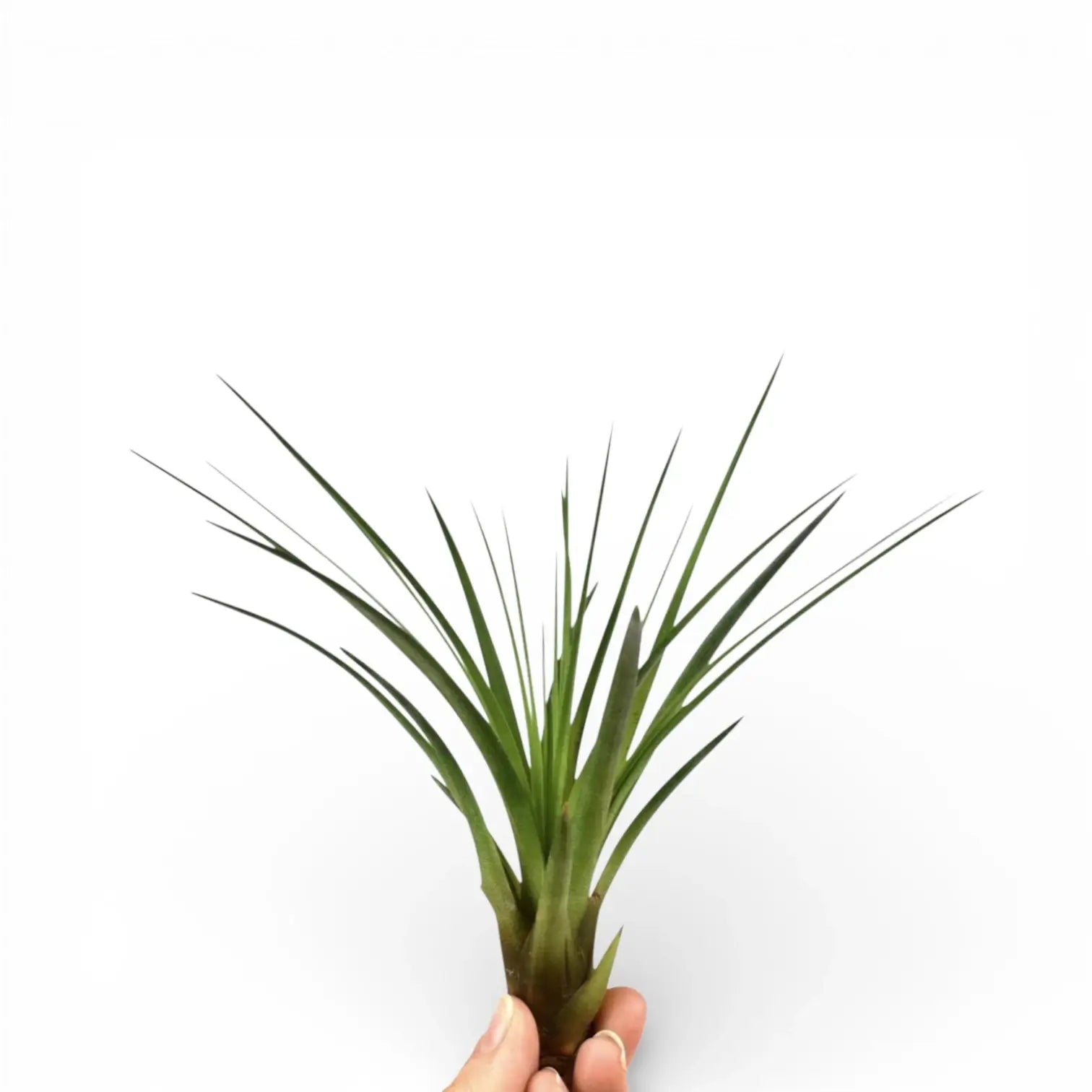
Max. height: 20 cm • Max. spread: 20 cm
Toxicity & safety
Unknown – not confirmed on ASPCA/reliable vet sources
Origin & habitat
S. Mexico to Central America; wet tropical biome
These metrics are standardised reference points. We compile them by reviewing and cross-checking multiple botanical and horticultural references, then refining them through real-world growing experience. Source links: Plant Care Resources.
Please use the values as guidance. Conditions vary by home, so the same plant can respond differently. For plant-specific context, read the full product description and browse our Plant Care Guides.
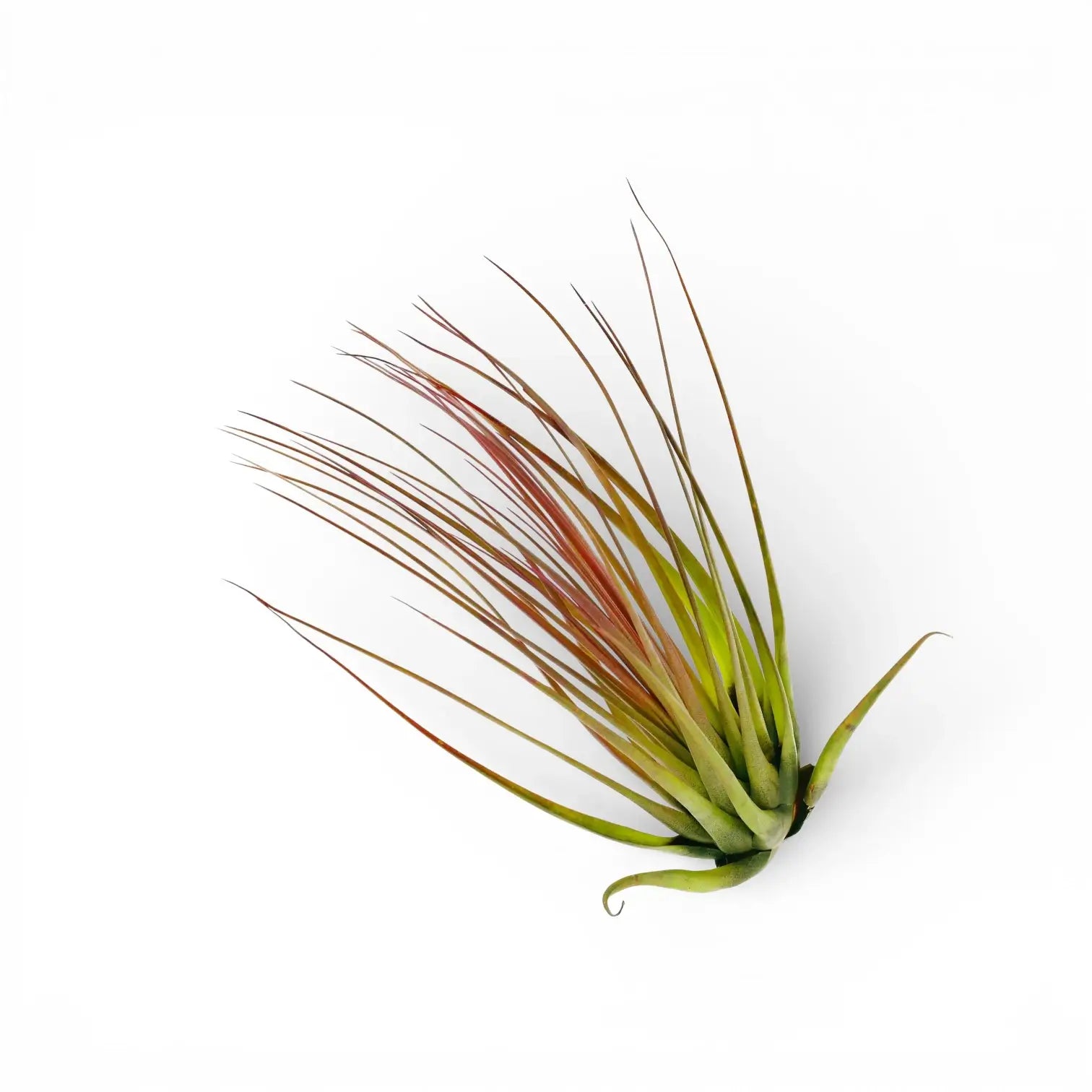
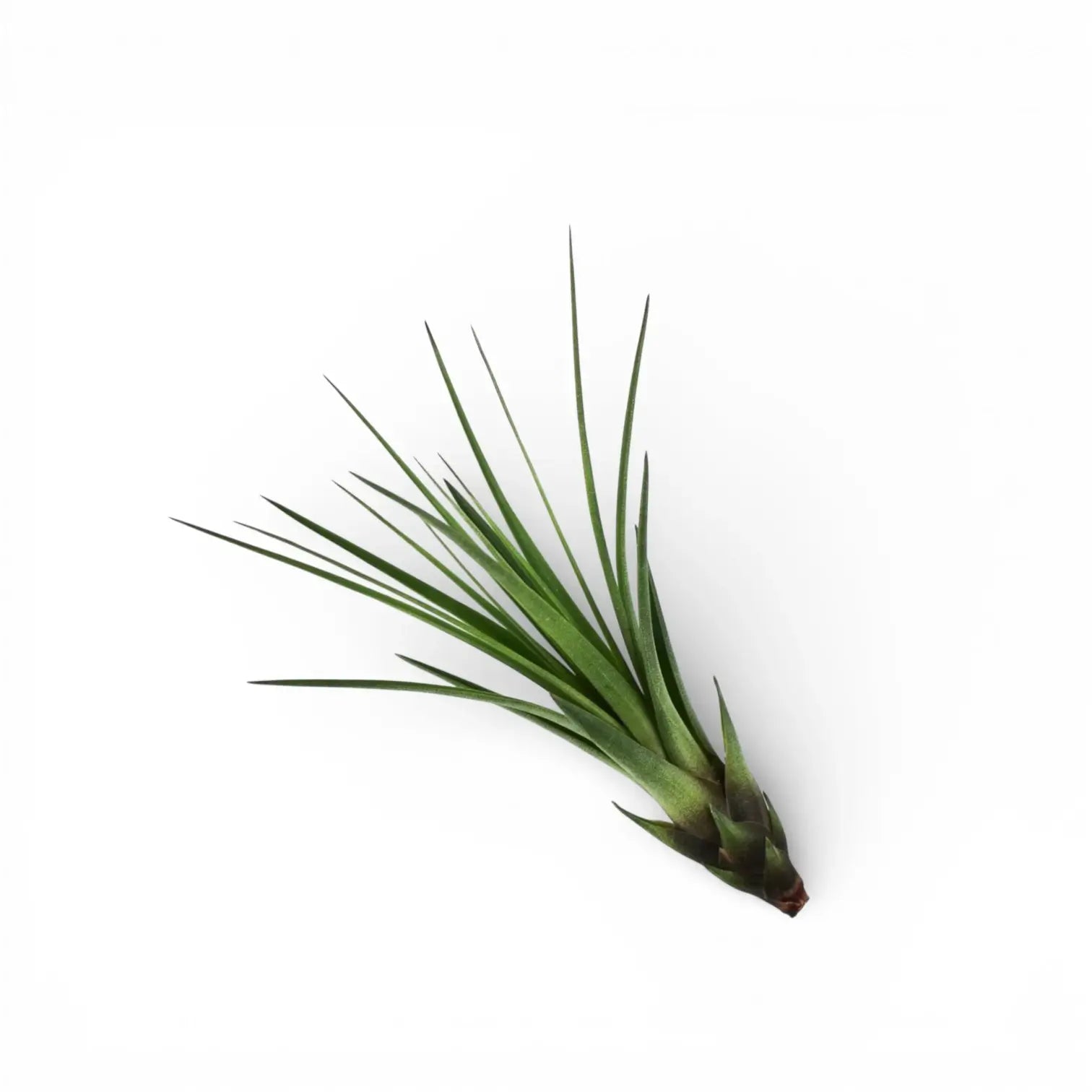
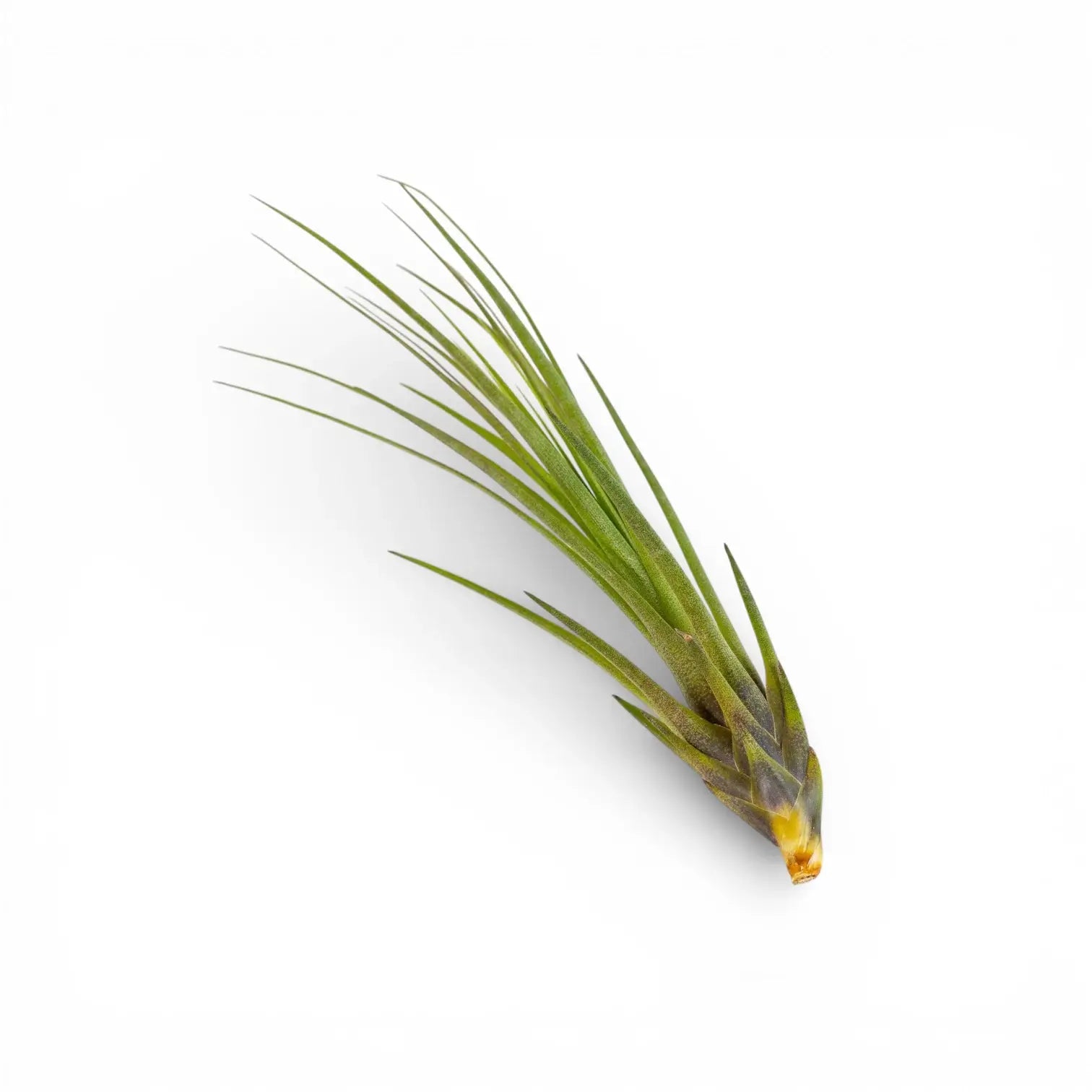
Tillandsia tricolor is a good choice if you want an air plant with more presence than a tiny silver rosette. It grows upright, keeps a firmer shape than many smaller Tillandsias, and develops a colourful bloom spike that gives the species its name. It is still sometimes sold under the older synonym Tillandsia melanocrater, but the plant itself is the same species.
This is not one of the tougher, drier, silver air plants that can sit around for long periods with barely any care. Tillandsia tricolor is a greener, more moisture-dependent species that still needs fast drying and airflow, but it usually wants more regular watering and gentler light than xeric Tillandsias. Get that balance right and it is a very rewarding plant for open indoor displays.
Tillandsia tricolor has a stronger vertical habit than many commonly sold air plants. The leaves are narrow, fairly firm, and arranged in a tidy rosette that holds its shape well. When the plant flowers, the central inflorescence adds much more colour than the foliage alone, which is why this species works well as a single specimen rather than only as part of a mixed air plant grouping.
Tillandsia tricolor is native from southern Mexico into Central America, where it grows attached to branches as an epiphyte. The older name Tillandsia melanocrater is a synonym, so both names still appear in cultivation and older references. For care, the useful point is that this species comes from wetter conditions than many grey, drought-tolerant air plants sold for very dry displays.
That is why Tillandsia tricolor does best when it is watered properly and then allowed to dry fully, instead of being left dry for too long or baked in harsh sun. It still should not be planted in soil, but it also should not be treated like a decoration that never really gets watered.
Tillandsia tricolor needs more than occasional misting. In most homes, thorough watering followed by full drying is the safer routine.
Bright, diffused light with airflow is ideal. An east- or west-facing window usually works well, and a bright south-facing window can also suit it if harsh midday sun is softened. Strong light helps keep the plant compact, but hard direct sun through glass can still scorch the leaves.
Open displays are usually the safest option. Tillandsia tricolor works well on bark, cork, stone, wood, or in open dishes where air can move around it freely. Glass displays can also work if they stay bright and well ventilated, but sealed or stale setups that stay damp for too long are where problems usually start.
Like other Tillandsias, Tillandsia tricolor is monocarpic. Each rosette flowers once and then slowly declines, but that is not the end of the plant. Before the flowering rosette dies back fully, it usually produces offsets from the base.
Leave the pups attached if you want a fuller clump, or separate them once they are about one third the size of the parent. Remove the mother rosette only after it has completely dried and finished declining.
This species reacts fairly quickly when care is off, so small changes are worth catching early.
Tillandsia honours Elias Tillandz, a Swedish botanist and physician. tricolor means “three-coloured,” referring to the colourful flowering display. Accepted botanical name is Tillandsia tricolor Schltdl. & Cham., while Tillandsia melanocrater is a synonym still seen on some labels.
Your new plant has just travelled a long way and needs a calm start in its new home. For step-by-step unboxing and first-week care, check our after-delivery care guide. For deeper tips on how your plant settles in over the next weeks, read our houseplant acclimatization guide.
Please head to our FAQ Page or Contact us.
Choose options
VAT included · plus Shipping costs
Secure shipping – carefully packed orders with safe delivery across the EU, UK and Switzerland.
28-day plant guarantee – if a plant arrives damaged or fails soon after delivery, we help you make it right.
Free returns – simple, cost-free returns according to our policy.
For full details, please see:
Light
Very bright / some direct • approx. 20,000–40,000 lux
Watering
Water when ~100% dry
Potting mix
Unpotted • Air-hydrated (no buffer) • None • N/A
Temperature
Ideal: 15–30 °C • Avoid below: 12 °C
Humidity
Moist 50–60 %
Growth habit
air plant, epiphytic
Support
none
Growth speed
Average
Max size indoors
Max. height: 20 cm • Max. spread: 20 cm
Toxicity & safety
Unknown – not confirmed on ASPCA/reliable vet sources
Origin & habitat
S. Mexico to Central America; wet tropical biome
These metrics are standardised reference points. We compile them by reviewing and cross-checking multiple botanical and horticultural references, then refining them through real-world growing experience. Source links: Plant Care Resources.
Please use the values as guidance. Conditions vary by home, so the same plant can respond differently. For plant-specific context, read the full product description and browse our Plant Care Guides.


