

Curio
Curio is for sunny windows and shallow pots where sculptural succulents can trail or stack without any tropical fuss. You will find string-of-pearls types, banana-like or bead-like trailers and upright blue-grey forms, all of them at their best with strong light and real dry-downs.
Curio feels playful, graphic and slightly arid without becoming bulky. In bright ledges, hanging spots and small containers, it brings a very particular kind of movement that looks sharper and cleaner than many softer tropical trailers. It suits homes that want something sculptural and light rather than broad, leafy volume.
About Our Filters
Filters help you narrow things down fast and without guessing. We put a lot of time and effort into keeping filter values consistent across the shop by cross-checking references and validating them against real-world indoor growing and handling.
Use them as guidance, not guarantees. Homes vary a lot, so for the full context (and any exceptions), open the product page and read the description.
How filtering works
- Filters stack: each selection narrows results.
- Multiple picks in one filter are usually either/or within that filter.
- Undo anytime: click a selected option again (or clear filters).
Safety
- Non-toxic: not known for relevant chemical toxicity for common pets (chewing can still cause irritation).
- Non-toxic & Pet Friendly: stricter shortlist that also avoids many physical hazards like spines, sharp tips, thorns, and bristles.
Common care filters
- Light level: Low indirect → Full sun/direct.
- Water Needs: Low / Medium / High.
- Humidity Level: Normal (40–50%) / Moist (50–60%) / Humid (60–80%+).
Growth & size
- Growth Habit: climbing, trailing, crawling, upright, self-heading, clumping, rosette.
- Needs support? none / optional / needed.
- Delivered size: pot size + plant height at shipping.
- Max size indoors: realistic long-term height + spread indoors.
Looks & botanical browsing
- Leaf Shape & Size + Foliage Colour: quick visual categories.
- Plant Type / Genus / Family: browse by broad group or taxonomy.
If you want to see the references we use, Plant Care Resources is simply a curated list of source links (POWO, Kew, and more).
Sort by
Filters


Curio hallianus
Sold out


Curio herreianus 'Purple flush'
Sold out


Curio radicans 'Blue Pickle'
Sold out


Curio rowleyanus
Regular price
From €8,50


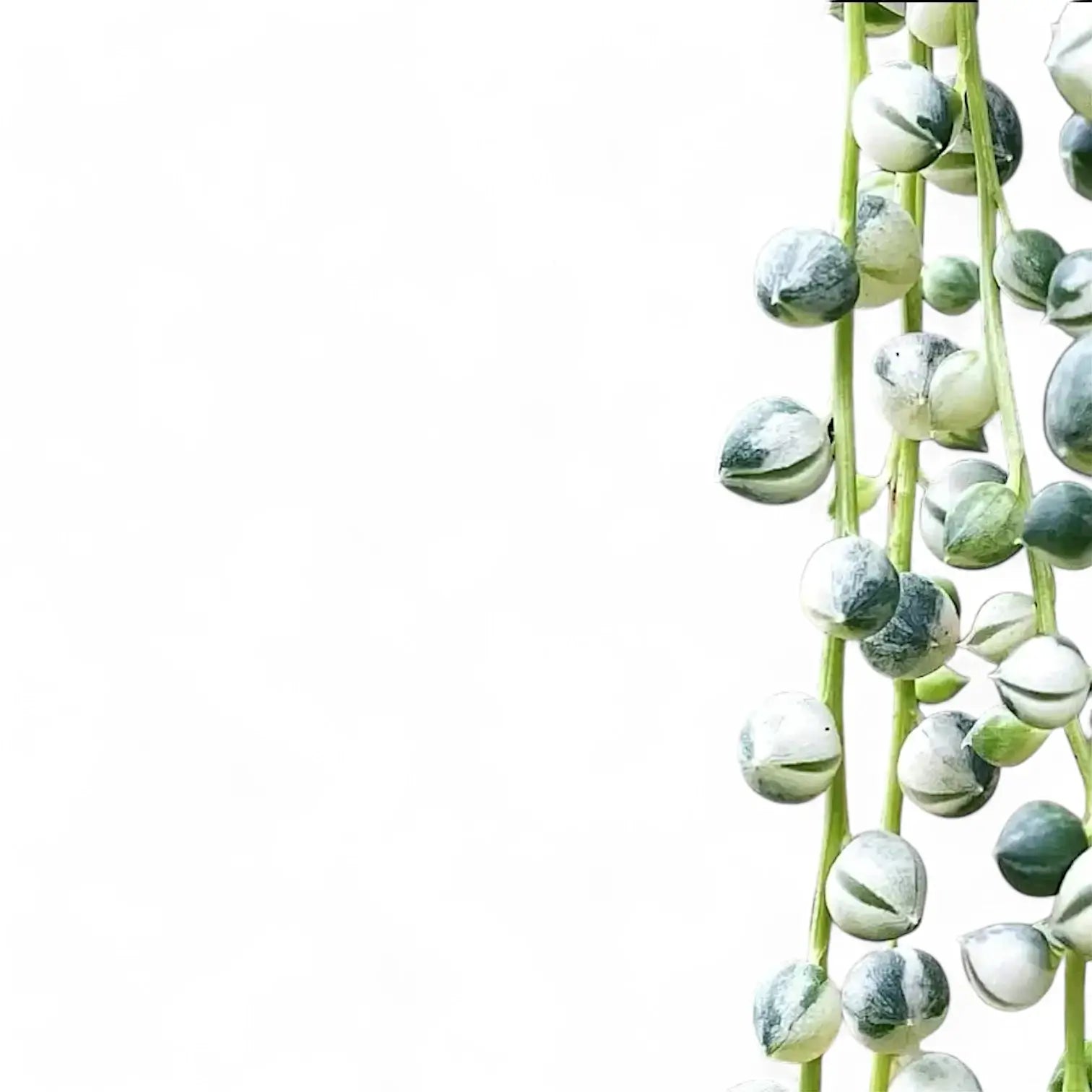
Curio rowleyanus variegata
Regular price
From €9,00
Asteraceae
Curio
Quick Overview
Curio (string succulents) - high-light trailing care
- Look: trailing succulent stems with bead-, banana- or finger-like leaves; ideal for sunny shelves and hanging pots.
- Light: wants very bright light and usually several hours of sun to keep strings tight and compact.
- Water: water thoroughly, then allow substrate to dry almost completely; roots rot easily in permanently damp, cool mix.
- Substrate: best in sharply draining, mineral-heavy succulent mix; avoid water-holding peat-heavy composts.
- Climate: tolerates dry air well; cold, wet roots below about 10 °C are far more dangerous than low humidity.
- Toxicity: many Curio are considered mildly toxic if eaten; hang out of reach of pets and children.
Botanical Profile
Curio is an accepted genus in Asteraceae native to southern Africa. Many indoor plants in this group were formerly sold under Senecio, so the newer genus name helps distinguish the succulent, high-light species now placed in Curio.
Details & Care
Curio care and buying guide
Curio indoors-string-of-pearls and other sculptural succulents
Curio is a whole group of compact, sculptural succulents that seem made for sunny windowsills: pea-like strings on Curio rowleyanus, banana-shaped leaves on Curio radicans and chalky blue stems on Curio ficoides. As indoor Curio houseplants they read almost like jewellery-fine chains or upright brushes of water-storing leaves that love light and shrug off dry air.
The trade-off is simple: Curio care is unforgiving of soggy, cold roots. Treat these plants as bright, dry-climate succulents first and decorative trailers second, and most of the “mystery deaths” disappear.
Dry-climate origins and what they demand in a pot
Curio species come from sunny, low-rainfall regions in southern Africa. Stems creep over rock and gravel, rooting where nodes touch, while leaves sit in moving air and bake in high light. Rain arrives in pulses, so roots see short, heavy soakings followed by thorough dry-downs in very airy, mineral soil.
Indoors you are copying that rocky slope in miniature: strong light from above, a gritty Curio potting mix that never stays heavy for long, and a root zone that spends more time on the dry side than the wet side. Humidity tricks and constant “sips” of water are the opposite of what this genus evolved for.
Light for compact, bead-like growth
Most Curio houseplants want as much light as you can reasonably give them. A south- or west-facing window with several hours of direct sun suits string-of-pearls care well once plants are acclimated. Strong east windows also work if pots sit close to the glass and see real morning sun.
In weak light, stems stretch, gaps open between leaves and strings lose their plump, beaded look. Long, pale, soft growth is a clear sign that Curio is surviving, not thriving. Swinging a plant straight from a gloomy shelf into hard midday sun can cause flat, bleached or brown plates on the sun-facing side of leaves.
Shift pots towards stronger light over a week or two so tissue can adapt. For help reading your exposures and choosing locations for sun-hungry succulents, have a look at our window orientation guide and the full-sun houseplants guide.
Watering and substrate for Curio roots
Below the surface, Curio behaves like a textbook succulent. Roots want a clear on-off pattern: a deep drink, then a genuine dry spell. Water only when substrate has dried out almost completely from top to bottom. In practice that means the surface looks pale, the pot feels very light in your hand and a finger or moisture probe pushed deeper still finds dry mix.
When it is time, water hard once until liquid runs from drainage holes, then empty the saucer. Frequent little top-ups leave the centre of the pot damp and airless even when the surface looks dry. Firm leaves with a hint of wrinkling that plump back up after watering are normal; pearls or leaves that turn translucent, mushy or split are almost always the result of overwatering or cold, wet substrate.
Substrate needs to be sharply draining and heavily mineral. A reliable starting point is a cactus or succulent base cut with extra pumice, perlite, coarse sand or fine gravel so a saturated pot can dry again within a few days of good light. Organic material should be just enough to hold structure and a little nutrient, not a thick, sponge-like mass. If you like to mix your own media, our houseplant substrates guide pairs well with the more detailed watering guide for houseplants to show how grain size and ingredients change drying speed.
Self-watering containers and decorative cachepots with standing water are advanced mode for Curio. If you use them at all, keep reservoirs very low and build in regular dry periods so roots still spend time in fully aerated mix.
Temperature, humidity and airflow in real homes
Curio is happy in normal indoor temperatures around 18-26 °C. Brief dips a little cooler are usually survivable if substrate is already dry, but lingering under about 10 °C with any moisture in the pot is a fast route to root and stem collapse. In winter, avoid pressing pots right against cold glass or leaving them in unheated window bays.
Dry air is not a problem-these succulents evolved to lose water slowly. What does cause trouble is cold, still, damp air around a wet pot. A touch of airflow from normal room use helps, as long as it is not an icy draught. When days shorten and Curio slows or pauses, prioritise maximum light and longer gaps between waterings over attempts to “help” with extra humidity. Our winter houseplant care guide explains how to adjust routines when light drops across the whole collection.
How Curio grows, trails and feeds
Trailing Curio species grow as long, segmented vines from a tight crown, while upright kinds such as Curio ficoides behave more like miniature shrubs with stacked, fleshy leaves along woody stems. New growth appears at the tips; older sections gradually lignify or shed their lowest leaves.
Pruning is straightforward. Overlong strings or stems can be trimmed to tidy the shape; the pieces you remove are ready-made cuttings. Lay them on fresh, dry mix and pin a few nodes into contact with the surface-they usually root with minimal fuss in warm, bright conditions. Bare, woody bases that no longer carry attractive foliage are better replaced entirely by fresh, rooted cuttings than nursed along.
Feeding needs are modest. During active growth in strong light, a very dilute succulent fertiliser or general balanced fertiliser every few waterings is plenty. If you cannot see new leaves forming or strings are clearly resting, skip fertiliser and focus on light and root health instead of pushing with nutrients.
Toxicity and handling indoors
Curio, including popular forms such as Curio rowleyanus, Curio herreanus and Curio radicans, is generally treated as mildly toxic when chewed. Sap and leaf tissue can irritate mouths and stomachs and may trigger drooling or vomiting in sensitive pets.
Keep hanging baskets and trailing pots where cats, dogs and small children cannot easily reach and snack on strings. If your skin reacts to plant sap in general, gloves for big pruning sessions and a quick hand wash afterwards keep things simple.
What Curio is likely to do after shipping
Travel often leaves Curio a bit deflated. Some pearls or leaves arrive wrinkled, marked or slightly shrunk, especially near the tips of strings, and an odd yellowed bead may drop off in the first days. That is usually just temporary water loss and minor mechanical damage, not a sign the plant is doomed.
After unpacking, cut away any sections that are clearly black, mushy or foul-smelling so rot cannot creep further. Give a deliberate first drink in a bright, warm spot, let all excess water drain away and then leave the pot alone until mix has again dried almost fully. Avoid repotting or repositioning every few days; Curio settles fastest when light, temperature and watering rhythm are steady.
Curio problem solver-what the strings are telling you
- Wrinkled, slightly shrivelled leaves in a very light pot: Normal thirst. Time for one thorough watering, then let the mix dry almost completely again before you reach for the can.
- Pearls or leaves turning translucent, mushy or splitting in a damp mix: Early rot from chronic overwatering or cold, heavy substrate. Trim off damaged parts, let the rest dry hard, and move remaining plants into a much grittier mix if current soil stays wet for more than a few days.
- Strings are long, pale and sparsely leafed, all leaning at the window: Classic low-light etiolated growth. Shift Curio right into a strong window or under a high-output grow light; no amount of watering tweaks will fix stretched internodes.
- Flat, bleached patches on the sun-facing side of leaves: Sunburn after an abrupt jump in intensity. Nudge the pot a little back from the glass or add a sheer curtain, then increase light in smaller steps next time.
- Whole stems collapsing from the crown in a cool room: Roots have failed in cold, wet mix. Salvage firm tips as cuttings into fresh, dry, airy substrate and discard the rotting base rather than trying to rescue it with more water.
Back to top and choose the Curio that fits your brightest shelves, from trailing strings to stranger sculptural stems ↑
Frequently Asked Questions About Curio
Is Curio the same as Senecio?
In many shops, yes in practice, but not in current naming. Curio is an accepted genus, while many familiar trailing houseplants in this group are still sold under older Senecio names or under common names only.
Does Curio need direct sun?
Bright light is essential. Many common houseplant Curio cope well with some direct sun, especially string-of-pearls, banana, and tear types, but weak light is one of the fastest ways to get stretched, thin growth.
How often should I water Curio?
Wait until most or nearly all of the potting mix has dried, roughly 70–100%, before watering again. In winter, water very sparingly. These plants store water in their leaves and cope far better with short dry spells than with constantly damp mix.
Why is my Curio getting leggy or thin?
Almost always because the light is too weak. In dimmer conditions the stems stretch, the spaces between leaves get longer, and the plant loses the dense trailing look that makes it attractive in the first place.
Is Curio toxic to cats and dogs?
Treat common houseplant Curio as unsafe around pets. String of pearls, still often sold under an older Senecio name, is flagged as toxic if eaten, and the sap can also irritate.


Limited discounts, extras, and bundle deals for subscribers.
Get points with every order to redeem them for discounts.
Give your friends 10 € off and get 200 Foliage Points.
Use your 10% code on plants when you're ready to order.