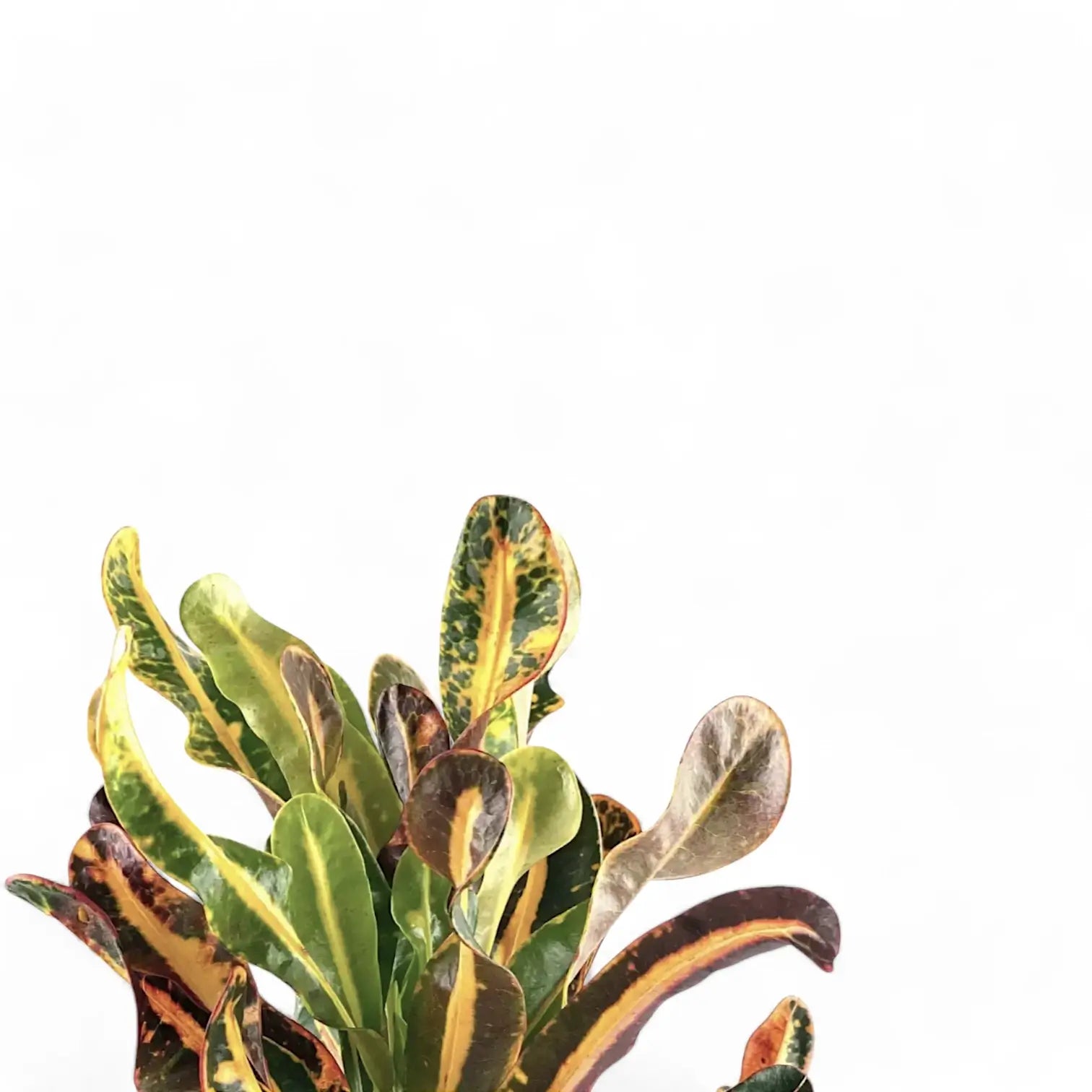
Codiaeum (Croton) – keeping painted foliage actually colourful
Is Codiaeum (Croton) really your kind of plant?
Codiaeum (Croton) is not a quiet background shrub. Thick, glossy leaves painted in yellow, orange, red and almost-black green turn into a living colour block as soon as light and care are on point. In return, Codiaeum expects discipline: stable light, thoughtful watering and no wild temperature swings. If that sounds manageable, you get one of the most dramatic foliage plants you can grow indoors.
Most forms stay compact enough for containers but still read as small shrubs rather than vines. New leaves often emerge greenish and gain colour as they harden; stressed plants reverse that pattern and retreat to dull, green-heavy foliage. Treat that shift as early feedback, not a mystery, and Codiaeum becomes a very honest plant to work with. For a deeper look at how pigment patterns behave, cross-check this overview with our article on coloured variegation in houseplants.
Where Codiaeum comes from and what that implies indoors
Codiaeum variegatum originates from tropical Asia and the western Pacific region. In nature, many plants grow as shrubs in bright, warm environments with moving air and free-draining, mineral-influenced soils. Roots explore coarse material that never stays waterlogged for long, while foliage sees a lot of light filtered through taller vegetation or open sky.
Indoors, that translates into three priorities: plenty of brightness, a potting mix that drains fast but does not collapse, and a climate that avoids cold, damp stagnation around the root system. If those three are in place, details like fertiliser brand or exact pot shape matter a lot less.
Light for saturated Codiaeum foliage
Codiaeum needs strong brightness to keep patterns sharp. Aim for a position close to a south- or west-facing window, or directly in front of a large east window, where leaves see many hours of high, indirect light and possibly some gentler direct rays.
If light is too weak, new leaves emerge softer, more green and spaced further apart; stems stretch towards glass and the whole plant starts to look tired even if watering is correct. On the other hand, pushing a shade-grown Codiaeum straight into intense midday sun behind glass is a fast way to get pale, papery scorch patches along exposed areas.
Gradual adjustment works best: move Codiaeum closer to stronger exposures over a couple of weeks. If you want objective reference points for different window types, compare your room to the examples in our guide to bright indirect light for houseplants and choose a level near the upper end of that range.
Moisture balance and Codiaeum roots
Woody Codiaeum roots hate sitting in a cold, airless bog, but they also do not enjoy being forgotten for long periods. A practical approach is to water once the upper layer of mix feels dry and pot weight has clearly dropped, while deeper substrate is still faintly cool rather than bone dry. When you do water, do it properly: soak the entire root ball until water runs from the drainage holes, then discard any standing water.
Letting the whole pot swing from “soaked for days” to “dust-dry with shrinking substrate” is where most problems start. Soft, yellowing leaves that start inside the canopy and drop without browning usually trace back to wet, under-oxygenated roots, especially in cool rooms. Crispy tips and edges across several leaves more often point to extended dryness, very low humidity or fertiliser salts building up.
A well-structured mix makes this easier. Codiaeum responds best to a loose, slightly chunky blend: a quality indoor plant base combined with additions such as perlite, pumice and fine bark so water moves through quickly while finer particles still hold some moisture. Our houseplant substrates guide explains how particle size and composition change behaviour in pots; the same principles apply here.
Room climate, humidity and airflow for Codiaeum
Codiaeum prefers a warm, steady environment. Temperatures around 18–26 °C suit most indoor setups. Brief cooler spells are rarely a problem if mix is only lightly moist, but prolonged periods much below 16 °C in wet substrate are a classic trigger for leaf drop and root issues. Window ledges that feel cold to the touch in winter or draughty door areas often cause more stress than growers realise.
Humidity in the 45–60 % range works for many specimens if watering and light are well managed. Very dry heated air, especially directly above radiators or in narrow hot corners, tends to show as brown margins, curled tips and increased spider mite pressure. Short, casual misting does little to fix that; it mostly spots leaves. A better strategy is to improve overall room humidity slightly and keep gentle airflow around foliage so leaves dry predictably without being blasted by cold air. For realistic ways to shift humidity without gimmicks, see our humidity guide for houseplants.
How Codiaeum grows, branches and uses fertiliser
Codiaeum behaves like a woody shrub in a pot. Plants build a framework of stems over time; new leaves emerge near the tips, while older foliage lower down is gradually shed, especially after stress or repotting. Without pruning, many plants eventually look like a single coloured stick carrying a tuft of leaves at the top.
Structured pruning keeps things in check. Shortening long shoots back to a node with healthy leaves encourages branching and produces a fuller crown over time. It is perfectly normal to cut stems back by a third or even half on well-rooted plants, as long as you keep some foliage and active buds. Do heavier reshaping during periods of active growth so recovery is quick.
For feeding, think “support” rather than “forcing colour”. During phases with clear new leaf production, light, regular fertiliser at reduced strength is usually enough. Use a balanced product and apply onto already moist substrate every few waterings, flushing the pot occasionally to avoid salt build-up. Colour quality and leaf size depend more on light and stable roots than on high nutrient concentrations in the pot.
Toxicity and handling considerations for Codiaeum
Codiaeum sits in Euphorbiaceae and, like many relatives, carries milky latex in stems and leaves. Sap can irritate skin and eyes and is not suitable for ingestion. Chewing foliage may cause mouth irritation, drooling or digestive upset in pets and children.
Treat Codiaeum as a toxic ornamental: give it a spot where curious animals and young children cannot easily chew leaves, avoid rubbing eyes while pruning and wash hands after handling broken stems or sap. Gloves are a simple extra layer of protection during major reshaping or repotting sessions.
How Codiaeum settles in after shipping
Codiaeum often reacts strongly to moves. After shipping, expect some combination of slight droop, a handful of yellowing older leaves or temporary loss of a few interior leaves as plants adjust to new light and humidity. This does not automatically mean you are “losing” the plant.
Once unpacked, place Codiaeum straight into its long-term bright position, check moisture in the root ball and water only if the upper portion has already dried. Avoid immediate heavy pruning or repotting unless substrate is clearly collapsing or sour. Focus on consistency for the first weeks; new, firm leaves emerging at the tips are a better indicator of success than whether a few older leaves were shed.
Codiaeum troubleshooting: reading the warning signs
- Leaves dropping from inside the plant while tips stay green: often points to cold, wet roots or a sudden change in environment. Check for chilly drafts, let mix dry more between waterings and stabilise light and temperature.
- New growth pale, soft and mostly green: usually insufficient light over many weeks. Move Codiaeum into much brighter conditions or supplement with strong grow lights; colour on future leaves should improve once light is adequate.
- Brown, crispy edges across several leaves: commonly linked to extended dryness, very low humidity or fertiliser salts. Flush the pot thoroughly with room-temperature water, adjust watering rhythm and keep plants away from direct hot air streams.
- Soft stems at soil level or a sour smell from the pot: clear sign of root stress from heavy, saturated mix. Unpot, remove mushy tissue, shift into a more open substrate and water more cautiously until growth resumes.
- Fine webbing and speckled leaves, especially in warm rooms: typical spider mite activity. Improve humidity and airflow, rinse foliage thoroughly and treat with appropriate pest control before damage spreads.
Back to top Pick bold Codiaeum forms that match your light, shape them into compact shrubs and let those painted leaves become a permanent highlight in your collection ↑