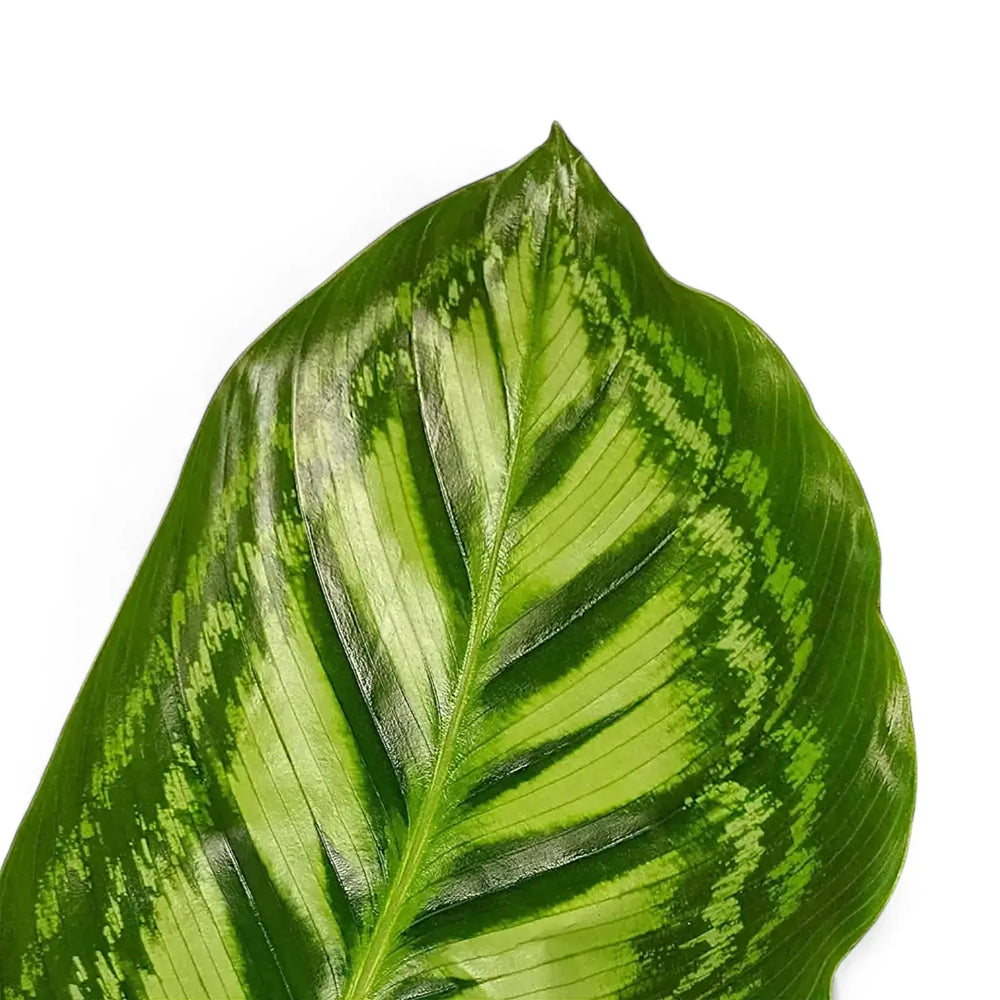
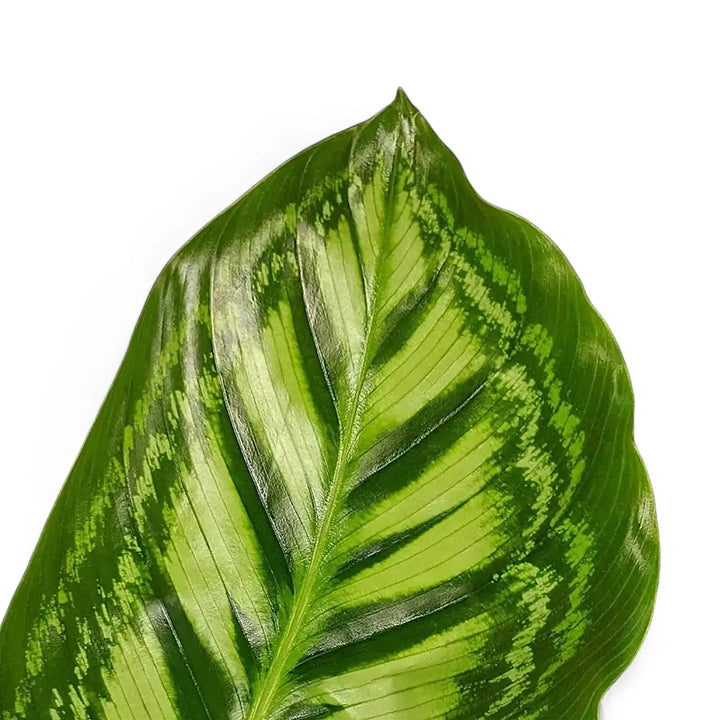
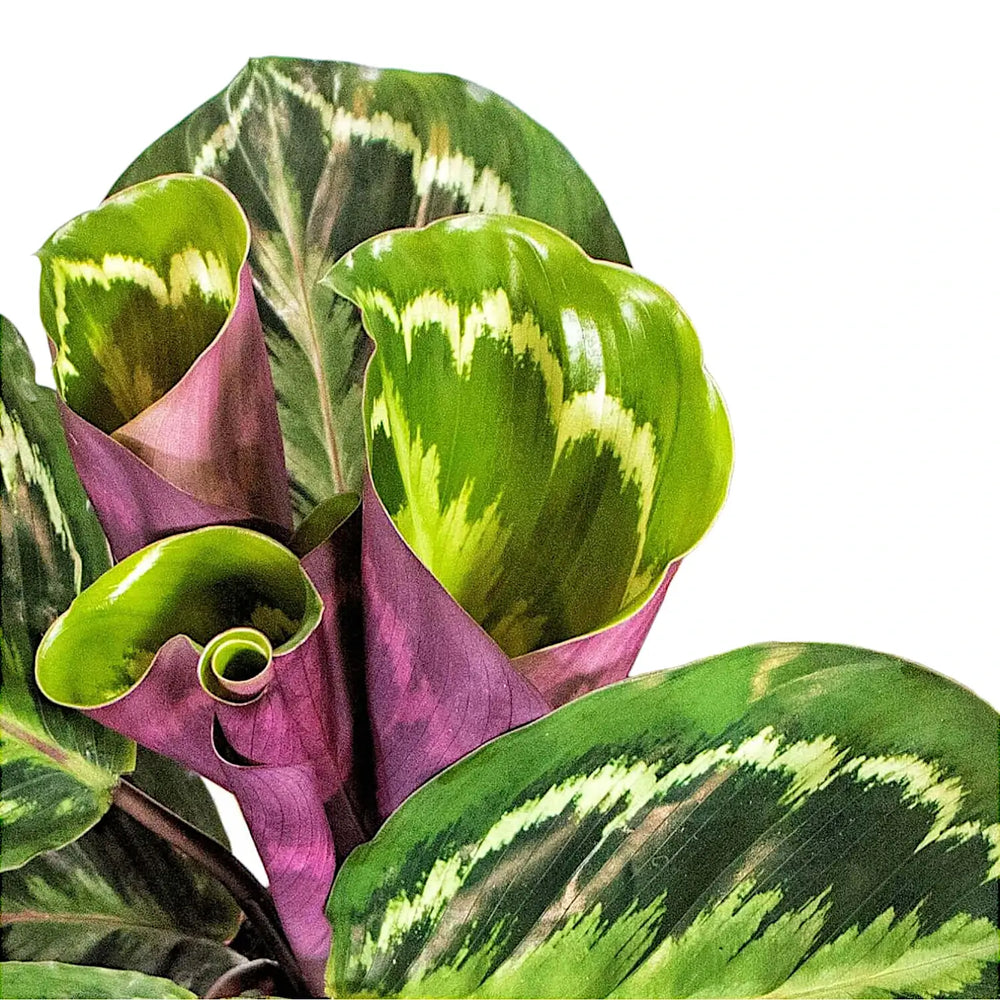
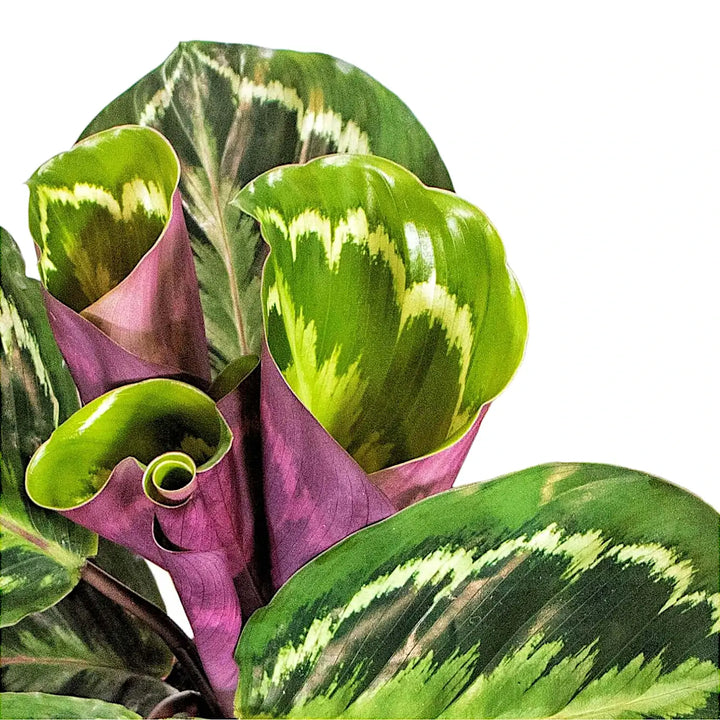
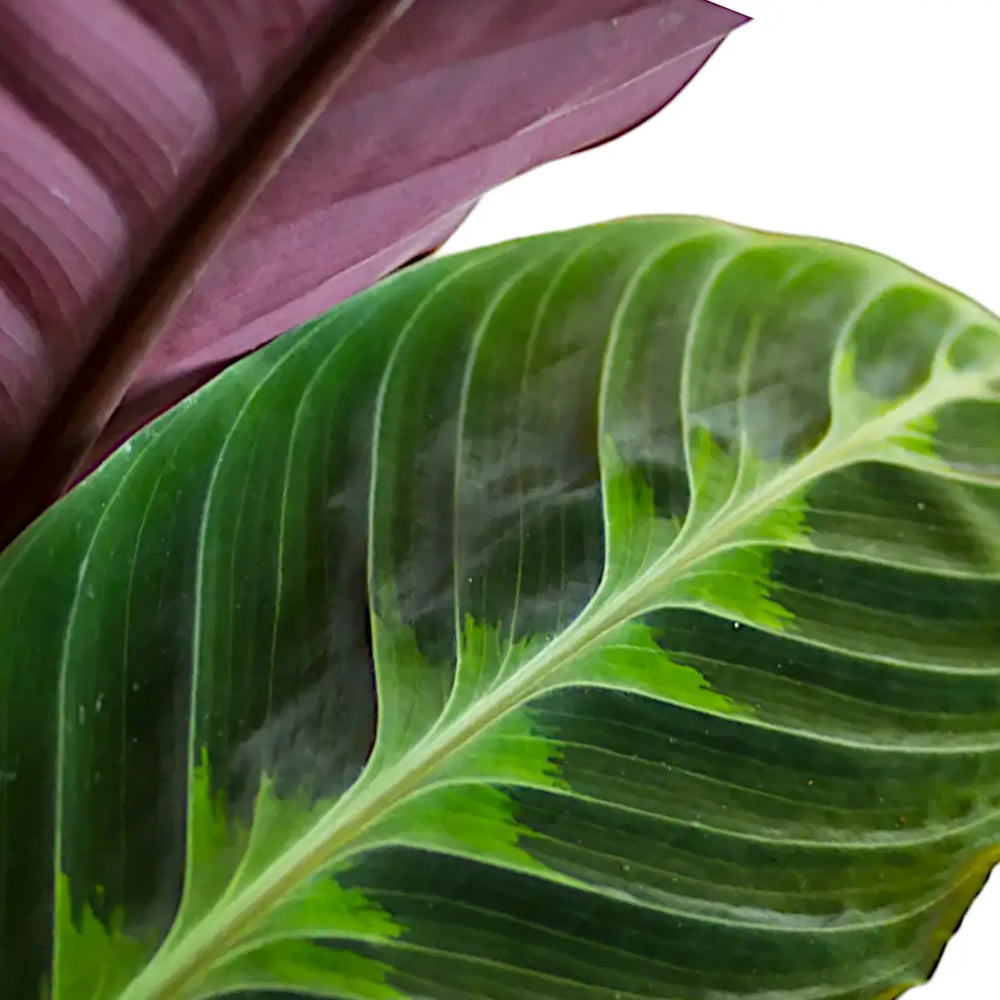
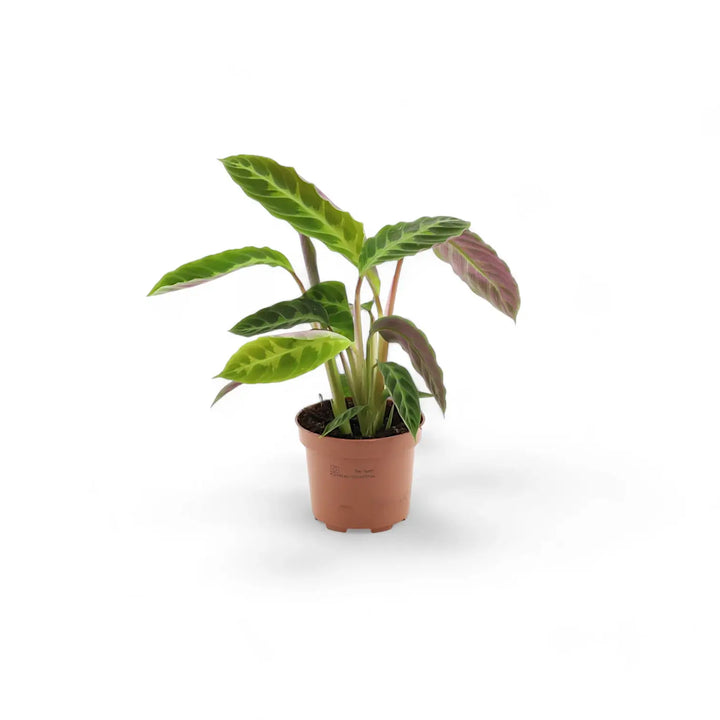
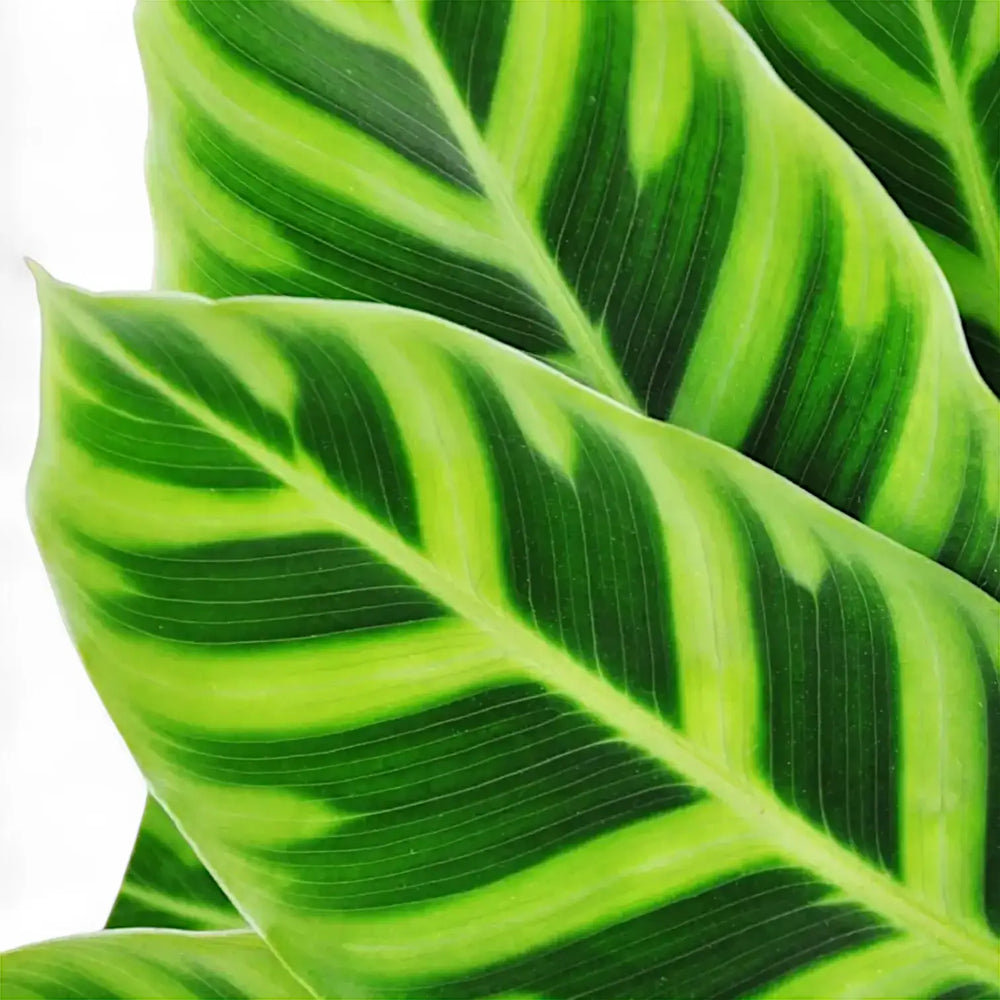
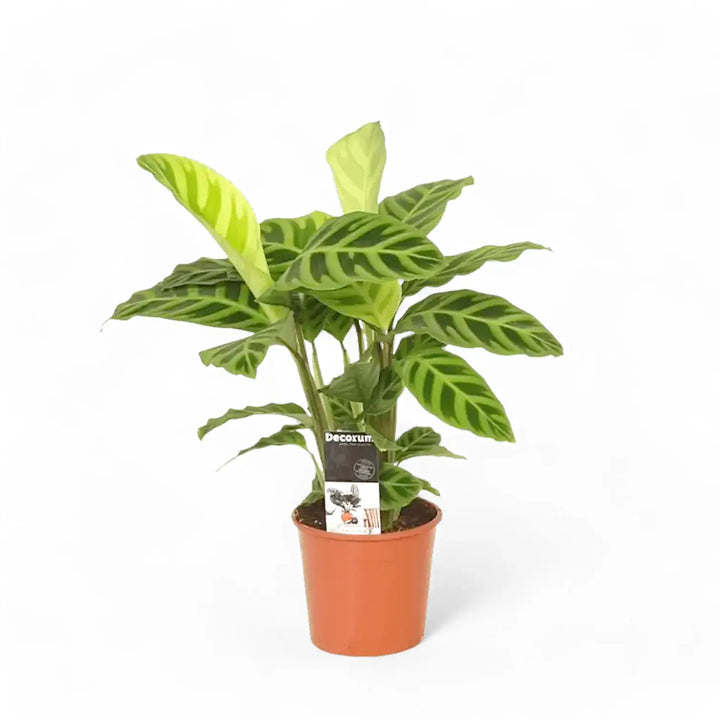
Goeppertia (Calathea) – patterned houseplants with clear ground rules
Goeppertia at home – what these “Calathea” actually need from you
Goeppertia (still widely sold as Calathea) looks soft and decorative, but the care brief is sharp: stable warmth, decent humidity, mild water and no wild swings in moisture. If your flat runs warm, you have at least one window with comfortable reading light and you can resist the urge to “just top up” wet soil, you are in the right zone for these patterned understory plants.
If you want a genus-level deep dive before committing, Foliage Factory’s dedicated Calathea / Goeppertia care guide walks through the bigger picture in detail.
Light for Goeppertia – bright enough, but never harsh
Indoors, Goeppertia wants light that feels like a bright forest path, not a sun-baked terrace. Good spots are close to east- or north-facing windows, or a little back from stronger west and south windows behind sheer fabric. Leaves should never feel hot; a soft-edged, blurry hand shadow is about right.
If patterns wash out, new leaves stay small and the plant leans hard towards the glass, light is too low over many weeks. If pale, papery patches appear on the window side, intensity or speed of change was too high. Once you know your windows properly, it becomes much easier to match different Goeppertia cultivars to the right sill.
Water, substrate and water quality – where Goeppertia fails fastest
Roots want permanently oxygenated, gently moist mix – never dust-dry, never cold sludge. Let the top layer lose its wet sheen and feel just dry, then water slowly so the whole root ball is saturated and excess drains away. Routine deep drought shows up as curled, crisp edges; constant saturation in compact soil gives yellowing from the base and that sour, stagnant smell you never want from a pot.
A workable mix starts with a good indoor substrate loosened with small bark or coco chips and mineral material like perlite or pumice, so a squeezed handful breaks apart instead of smearing. For moisture-checking techniques that beat calendar schedules, use Foliage Factory’s watering houseplants guide and adapt the habits there to this genus.
Tap water matters. Very hard, mineral-heavy water and strong fertiliser build-up often show first as yellow rims and brown tips while the rest of the leaf still looks fine. If your local water is known to be hard, Goeppertia repays the effort of using filtered, rested or rainwater – new leaves tell you quickly whether that change helped.
Humidity, temperature and airflow – keeping those edges clean
Goeppertia is built for warm, slightly humid air. Temperatures around 20–26 °C with small day–night swings keep growth moving. Long spells below the mid-teens, especially with wet soil, are exactly when “mysterious” yellowing and collapse show up.
For leaf quality, a band around 50–70 % relative humidity is a sensible target. Constantly dry, heated air produces a slow ring of brown along leaf edges even if watering is technically fine. A small humidifier on low in the plant corner and avoiding radiator hotspots do more than endless misting. If you need pragmatic, non-gimmicky options, the humidity guide for houseplants is written exactly with this kind of situation in mind.
How Goeppertia grows and how to read early warning signs
Growth is clumping: short rhizomes sit just under the surface, and each growing point pushes rolled leaves that unfurl over a few days. Older outer leaves age out and can be removed when they are clearly tired. Nightly leaf lifting and morning lowering are normal; they are not a cry for help.
- Crispy tips on otherwise firm leaves: typically long-term water quality plus dry air. Future leaves improve once those root and humidity factors change; old scars stay.
- Margins rolling inwards: usually thirst or very dry air, unless the pot is still heavy and cold – then the issue is suffocated roots, not lack of water.
- Random yellow leaves near the base in slow-drying soil: a classic low-oxygen root zone problem rather than a fertiliser issue.
- No new leaves for ages: often low light plus collapsed mix. Fixing those two beats any “booster” product.
First month with a Goeppertia from Foliage Factory
After shipping, expect Goeppertia to look slightly off-balance. A few older leaves may show crease lines, dull patches or minor edge browning. Focus on the centre of each clump: firm petioles and new leaves pushing up are the health indicators that matter.
- Unpack, remove only leaves that are fully broken or rotting.
- Check moisture in the middle of the root ball, not just the surface; water only if it is no longer cool and faintly damp.
- Park the plant straight into its long-term spot and stop moving it around every few days “to test”.
- Delay repotting until you see confident new growth unless the mix is clearly sour or collapsing.
FAQ – Goeppertia (Calathea) How “fussy” is Goeppertia compared with other patterned plants?
It is unforgiving about a few things – cold roots, hard water and bone-dry radiators – but once light, mix and water quality are set, care becomes repetitive rather than dramatic. If your basic habits work for one or two cultivars, they usually work for the rest.
Why do leaves keep getting brown tips even though I water regularly?
Regular is not the same as appropriate. Hard tap water, strong feed and swings between soaked and almost dust-dry all stress the edges. Softer water, a more open mix and steady “damp, not wet” moisture almost always show up as cleaner new growth.
Can I treat Goeppertia as a low-light plant?
It will hang on in dim rooms, but patterns fade, growth slows and the plant spends its time replacing tired leaves instead of building a fuller clump. For the “Instagram” look, it needs real, indirect daylight near a window.
Will misting fix brown edges?
No. Misting shifts humidity for minutes, not hours, and often leaves water sitting on tissue in stagnant air. It is more effective to slightly increase background humidity and stabilise watering and temperature.
How often should I change the pot?
Every one to two years is typical, but the plant decides. Repot when roots clearly fill the container or when soil stays heavy and wet for too long after a sensible watering. Move only one size up into a structured, airy mix.
Back to top Then pick the Goeppertia patterns that match your actual light, water and patience – not just your favourite print ↑