Spring Reset: How to Reboot Your Indoor Jungle After Winter
The Indoor Jungle Wake-Up Call
After months of dim skies, dry air, and slower drying pots, indoor plants often look a little… tired. Some stretched toward the window. Others yellowed, dropped a leaf or two, or sat in mix that compacted into a dense sponge. Spring is a real turning point—but only if you respond to what changed in your home: light angle, daylength, temperature swings, and how long your pots stay wet.
“Time to repot!” gets shouted every spring. Sometimes it’s right. Often it’s the wrong move at the wrong time.
Use this reset to read cues like a grower: how fast the pot dries, what the roots look like, where the light lands now, and whether pests are quietly rebuilding. That’s what gets plants back on track—without a weekend of stress-stacking.
Spring isn’t a to-do list. It’s a shift in cues—light, temperature, drying time—and your plants react fast when you match those changes.
Contents:
What Actually Happens to Houseplants in Winter
The biggest misconception: most foliage houseplants don’t “hibernate” on a timer. Indoors, they usually slow down because the environment changes—short days, weaker light, cooler window zones, and slower evaporation that keeps pots wet longer. That slowdown can look like “dormancy,” but it’s often a response to cues, not a built-in winter shutdown.
ℹ️ Dormancy vs. a Slowdown: Same look, different cause
True dormancy is a programmed rest phase (common in many temperate plants and in some storage-organ houseplants). Many popular indoor plants—Monstera, Philodendron, Hoya, Goeppertia, ferns, indoor palms—are built to keep growing when they have enough light, warmth, and oxygen at the roots. In their native ranges, the big swings are often rainfall, cloud cover, and temperature, not freezing winters.
No frost-driven winter: tropical habitats don’t have freezing seasons, even though many still have strong wet/dry patterns.
Light is steadier near the equator: daylength shifts less than it does in Europe, so growth cues are different.
Slowdowns are usually cue-driven: lower light, cooler nights, and “wet for too long” pots reduce growth long before a plant is truly “resting.”
➜ What changes indoors in winter
Lower usable light: short days + low sun angle + heavy cloud cover reduce energy for growth.
Cooler root zones: especially near glass; cold substrate slows root activity.
Drier air: heating drops humidity and can increase leaf-edge stress in thin-leaved plants.
Longer wet periods: pots dry slowly, oxygen drops, and roots stagnate if the mix is dense.
Most “winter issues” aren’t a mystery. They’re the predictable result of less light + cooler roots + slower drying.
For a deeper breakdown of the winter cues that cause stretch, slow drying, and root trouble, see Winter houseplant care guide.
➜ Examples by plant type (typical patterns)
Plant type
Common winter behavior indoors
Aroids (Monstera, Philodendron, Anthurium)
Often slower, not dormant. Low light tends to increase internode length and reduce leaf size.
Hoyas
Frequently “static but fine” in low light. They restart when light and warmth are consistently better.
Ferns
Dry air + uneven moisture show up fast: crisping, frond drop, and weak new growth.
Goeppertia (often sold as Calathea)
Leaf-edge browning and curling are usually humidity swings, cold drafts, or erratic moisture—not a seasonal rest.
Arid succulents & desert cacti
Many slow sharply in low light/cool rooms. Water uptake drops; long wet periods raise rot risk.
Jungle cacti (Rhipsalis, Lepismium, Epiphyllum)
They still want moisture, but pots must dry reliably. Cold + wet is the danger combo.
Indoor palms (Areca, Parlor)
Dry air and low light can stall growth and cause tip burn. They dislike root disturbance year-round.
ℹ️ A quick exception list: when “real dormancy” is a thing
Some common houseplants really do go down for the season, especially those with storage organs.
Caladium and many tuberous aroids: leaf loss can be a true rest phase. Watering should follow what the plant is actually doing, not what a leafy plant would want.
Some cacti: cool, bright, drier winters can matter for flowering in spring.
📌 It’s not the date. It’s the cues.
If light and warmth stay stable all year, many indoor plants keep growing. When cues drop, growth slows. That’s why one plant can look perfect in March while another looks scrappy: they experienced different conditions, even in the same home.
Plants don’t respond to “spring.” They respond to light and drying speed—and both change dramatically as days lengthen.
Spring Light Reset: It’s Not Just Brighter—It’s Different
Spring doesn’t just increase light. It changes where light lands and how intense it gets near glass. The sun sits higher, daylength climbs fast, and windows that felt “safe” in winter can suddenly deliver strong direct sun.
Bigger leaves, shorter internodes, and faster drying pots are common spring signals. That’s your cue to reassess placement—especially within the first 1–2 meters of windows.
ℹ️ Why spring light changes plant behavior so quickly
Sun angle shifts: winter light often enters low and deep; spring light is more overhead and more intense at the window zone.
Daylength increases sharply at mid-latitudes: plants read photoperiod and total daily light, not just “brightness to your eyes.”
Glass concentrates risk: direct sun through windows can heat leaf tissue quickly, especially on clear days.
ℹ️ How plants typically react
More growth: once light and warmth are consistently higher, new leaves and roots ramp up.
Better structure: improved light often reduces stretching and improves leaf size.
Sun stress if the jump is sudden: bleaching, scorched patches, crisp edges, or curled leaves after a move into direct sun.
💡 What to do: practical light adjustments
Use plant behavior as feedback. When light rises, water use rises—so placement and watering need to change together.
Plants in south- or west-facing windows
Check for sun stress: bleached spots, crispy patches, curled leaves, or sudden limpness after a sunny day.
Buffer direct sun: sheer curtains or pulling plants back 30–80 cm can drop intensity a lot without making the spot “dark.”
Rotate for even growth: a quarter turn every 5–10 days is usually enough.
Plants in north or east windows
Morning light is gentler: many plants handle it well, and it often improves structure compared to winter corners.
Good upgrade zone: Hoyas, Ficus, and many succulents often do better here than in a dim shelf spot.
Plants that sat far from windows in winter
Move in stages: step them closer over 1–2 weeks rather than jumping straight to the brightest zone.
Watch internodes: shorter spacing and sturdier petioles usually mean the new spot is working.
Grow light users
Consistency matters more than “seasonal syncing”: strong, stable light can keep growth steadier year-round.
If you extend photoperiods, do it gradually: aim for 10–14 hours depending on plant and intensity, and adjust watering to match faster drying.
Keep distance sensible: too close can stress leaves; too far becomes “bright to you, dim to the plant.”
➜ Example-based adjustments
Plant
Winter setup
Spring shift suggestion
Monstera deliciosa
1.5 m from a west window
Move closer in steps, then rotate regularly once growth speeds up
Hoya carnosa
North-facing shelf
Upgrade to brighter morning light or a stronger grow light zone
Alocasia zebrina
Bright corner with filtered light
Keep stable, but watch watering needs rise as light increases
Sansevieria (Dracaena)
Far corner
Leave if healthy; if growth is stalled for months, step it closer to a brighter zone
Jungle cacti (Rhipsalis, Lepismium)
Hanging in low light
Brighter morning light often improves growth without harsh midday burn
Spring pruning isn’t about “neat.” It’s about structure: removing what won’t recover and guiding new growth where it can actually thrive.
Pruning, Cleaning & Reshaping: Prepping Plants for a Comeback
If winter left plants stretched, lopsided, or dusty, it’s more than cosmetic. Structure affects light capture, airflow, stability, and where new growth gets prioritized. Spring is a strong window for resets because light is rising and plants generally recover faster when they have more energy coming in.
ℹ️ Why pruning works (the simple science)
Tips suppress branching: the active shoot tip helps keep side buds quiet (apical dominance). Removing the tip can free buds to activate—when light and energy are sufficient.
Structure matters: trimming back long, weak growth can shift the plant toward sturdier growth in better light.
Risk management: dead or failing tissue is a pest/pathogen magnet and doesn’t recover. Removing it reduces problems spreading.
➜ What to prune now (and what to leave alone)
Target
Why it matters
Leggy growth
Weak structure from low light. Cutting back can improve branching and balance.
Dead/dying leaves
They won’t bounce back and can harbor pests and rot-causing microbes.
Spent flower stalks
On Hoyas, keep peduncles. On Anthurium or many orchids, remove only when fully dried.
Broken stems
Cut back to a healthy node or base to prevent rot and improve stability.
💡 Reshaping tips by plant type
Aroids (Monstera, Philodendron)
Cut above a node: nodes are where new shoots and roots can form.
Support matters: stable climbing support often improves leaf size and reduces floppy growth.
Don’t “scalp” a struggling plant: if roots are weak, fix drying/oxygen first, then prune once growth resumes.
Hoyas
Keep peduncles: they commonly rebloom from the same spur.
Trim for shape: light pruning can reduce tangles and encourage fuller growth.
Goeppertia & ferns
Remove whole failing leaves/fronds at the base: it’s cleaner and reduces decay.
Don’t “haircut” healthy tissue: it doesn’t fix the cause of browning and can leave more stressed edges.
Propagation needs dry healing time: let cut ends callous before rooting.
Palms
Keep green fronds: they feed the plant. Remove only fully yellow/brown fronds.
➜ Spring cleaning: a small job with big payoff
Dust reduces light capture and makes pests harder to spot. A quick clean improves both photosynthesis and monitoring.
✔ Cleaning checklist
Smooth leaves: wipe with a soft, damp cloth.
Textured or fuzzy leaves: use a soft brush or a gentle rinse; avoid aggressive rubbing.
Routine cleaning: water is usually enough.
If pests are present: use a proper insecticidal soap or horticultural soap at label rates—avoid household detergents.
Skip leaf shine: it looks glossy, but it’s not plant care.
💡 Shaping without shears: training and support
Use supports early: moss poles, trellises, stakes, and clips help new growth develop in a stable position.
Stabilize top-heavy pots: a heavier pot or better support is safer than cutting off healthy growth for balance.
Repotting vs. Substrate Refresh: What Your Roots Really Need
Spring triggers a lot of unnecessary repotting. Indoors, the best repotting reason isn’t the season—it’s the root zone: oxygen, structure, and drying time. A plant can “want a repot” in October, and it can absolutely not want one in April.
Use this section to choose the lowest-stress fix that actually solves the problem.
❌ Myth: “Spring is the best time to repot everything”
Repotting is disruption. If a plant is stable and the mix dries well in your current conditions, repotting can slow it down—especially if you stack changes (repot + move + fertilize + prune).
Repot when the root zone is failing, not when the calendar flips.
➜ Choose the right level of intervention
1) Substrate refresh (top-up) — best when the plant is stable
Best for: large plants in heavy pots, palms, root-sensitive plants, and anything that’s healthy but “running out of structure.”
What it does: restores porosity and nutrients in the top zone without ripping roots apart.
How: remove and replace the top 3–5 cm with a fresh, airy mix suited to the plant.
2) Slip-pot (minimal disturbance upsize) — best when roots are tight but healthy
Best for: plants with dense, healthy roots that dry too fast or are circling the pot.
What it does: adds fresh mix around the root ball while keeping the core intact.
Pot size jump: usually 2–5 cm wider than the current pot. Big jumps keep the mix wet too long and starve roots of oxygen.
3) Full repot (root work + mix replacement) — best when the mix is failing
Best for: sour, compacted, waterlogged mixes; confirmed root rot; severe rootbinding; chronic drying problems that refresh won’t fix.
What it does: resets the root zone—structure, oxygen, and hygiene.
➜ When a full repot is genuinely useful
Symptom
What it usually means
Roots circling tightly or pushing out of drainage holes
Rootbound or close to it. A small upsize or slip-pot often helps.
Water runs through too fast or pools on top
Hydrophobic pockets, compaction, or broken-down mix causing uneven moisture.
Sour smell, persistent mold, or algae despite careful watering
Low oxygen and microbial imbalance in a too-dense, too-wet root zone.
Pot stays wet “forever” in decent light and warmth
Overpotting, dense mix, or cold root zone—often an oxygen problem, not a “thirst” problem.
Plant wobbles or leans because the root ball can’t anchor
Root-to-pot mismatch or unstable structure. Support + correct potting often fixes it.
ℹ️ What happens to potting mix over time
Particles break down: fine material increases, pores collapse, and oxygen drops.
Water becomes uneven: some areas stay soggy while others turn hydrophobic.
Drying slows: and that’s when “mystery yellowing” often starts.
Most indoor problems start in the root zone. Better structure beats a bigger pot.
Root checks that actually answer the question
If you’re unsure, unpot gently and look. Guessing costs plants.
✔ Healthy roots are usually
firm and pale (white/cream/beige)
mild-smelling (earthy, not sour)
distributed through the mix, not trapped in a tight coil
dense tangles with very little mix visible (severe rootbinding)
lots of dead, brittle roots with a dry core (past dehydration damage)
Quick rescue logic (when rot is real)
Trim obviously rotted roots with clean scissors.
Remove collapsing, sour mix completely.
Repot into a fresh, airy mix in a sensibly sized pot.
Keep conditions stable (bright, warm, airy), and let the pot dry a bit faster for the first 7–10 days.
➜ Repot sensitivity by plant type (realistic)
Plant
Notes
Aroids (Monstera, Philodendron)
Usually tolerate repotting when needed. Prioritize chunky, oxygen-rich structure.
Hoyas
Often prefer tighter pots. Upsize only when roots are packed and drying becomes too fast.
Goeppertia
Root-sensitive. Refresh or slip-pot is often safer than a full root disruption.
Ferns
Fragile root balls. Refresh or gentle upsizing is usually best unless the mix is failing.
Cacti & succulents
Repot into dry mix, then wait before watering. Root mealybugs are worth checking for.
Palms
Dislike root disturbance. Only upsize when necessary; top refresh is the default move.
Repotting is a tool, not a tradition. Root oxygen and drying time decide what your plant needs.
Spring Pest Check & Prevention: Because They’re Waking Up Too
As light and warmth increase, pests don’t just “appear.” They accelerate. Life cycles shorten, eggs hatch faster, and populations that stayed quiet in winter can surge when plants put out soft new growth.
The smartest spring pest move is simple: inspect, confirm, isolate, act. Routine spraying “just in case” usually creates more problems than it solves.
ℹ️ Why pest pressure ramps up in spring
Warmth speeds development: eggs to adults happens faster.
Plants produce tender new tissue: pests prefer fresh growth points.
Watering often increases: and constantly moist pots invite fungus gnats.
➜ What to check (fast, effective scan)
Checkpoint
What to look for
Leaf undersides
fine speckling, webbing (mites), silvery scarring (thrips), clusters (aphids)
Growth points
distorted new leaves, black specks, sticky residue
Stem joints & crevices
cottony masses (mealybugs), hard bumps (scale)
Soil surface
gnats, larvae signs, algae, persistent mold
Make it easy: phone zoom + flashlight beats guessing. If you can’t confirm a pest, don’t treat blindly.
➜ First moves that work (without chemical overkill)
1) Mechanical reset (works for most minor infestations)
Rinse plants (especially undersides) with lukewarm water.
Wipe stems/petioles where scale and mealybugs hide.
Remove the worst-affected leaves if they’re beyond saving.
2) Isolation (stops a collection-wide mess)
Separate any suspect plant for 10–14 days.
Re-check twice a week. Spring pests move fast.
3) Targeted treatment (only once the pest is identified)
Use label-based products and intervals (soap/oil/biologicals), and follow safety guidance for indoor use.
Test on one leaf first—some plants burn easily, especially in brighter spring light.
Combine treatment with environment fixes (better airflow, correct drying), or pests return.
➜ High-risk plants (worth extra inspection)
Goeppertia and Alocasias (mites, thrips)
Hoyas and jungle cacti (mealybugs, scale)
Ferns (gnats, aphids when stressed)
➜ Fungus gnats: fix the root zone, not the room
Let the surface dry appropriately between waterings (without letting the whole pot turn to dust).
Use yellow sticky cards to monitor adults.
If the problem is persistent, treat larvae with a soil-applied biological like Bti and correct mix structure.
Severe cases often improve most after a mix reset in a clean pot.
💡 Not every spot is a pest
Guttation: droplets at tips/edges (often overnight) can be normal.
Mineral residue: hard-water spots dry chalky, not “alive.”
Extrafloral nectaries: some plants produce sticky nectar as a normal feature.
If you’re unsure, isolate and observe. Random spraying is rarely the win it feels like.
Microclimates matter. Stability and airflow prevent stress and make pests easier to control.
Humidity & Microclimate Transitions: Keep the Balance, Lose the Stress
Spring humidity indoors is often messy: sunny afternoons, cold nights, windows cracked open, radiators still running. Sensitive plants feel those swings more than they care about “the season.”
Humidity helps some plants, but it’s not magic. Root-zone oxygen, drying speed, and airflow still decide whether a plant thrives or starts spotting and crisping.
ℹ️ What actually changes indoors in spring
Heating may still run: air can stay dry even when days look “warm.”
Temperature swings increase: sunny windows warm up fast, then cool hard at night.
Transpiration shifts: stronger light increases water use, and plants can dehydrate faster if roots can’t keep up.
➜ Signs humidity (or humidity swings) are still a problem
Symptom
Common drivers
Brown edges on thin-leaved plants
low humidity, cold drafts, or repeated dry-to-soaked cycles
Rolled/curling leaves
transpiration stress (air too dry, roots too slow, or both)
Spider mites escalating
dry air + warm, stagnant pockets
Weak new leaves that tear or deform
unstable moisture + low humidity + inconsistent root function
💡 How to adjust without overcorrecting
1) Measure where plants actually live
A small digital hygrometer on the plant shelf tells you more than a general “room reading.” Many collections do well around 45–60%, while truly thin-leaved plants often look better with higher stability.
2) Raise humidity with control, not guesswork
Use a humidifier to stabilize swings, not to chase tropical rainforest numbers.
Clean it regularly—spring is prime time for biofilm and mold.
Pair higher humidity with gentle airflow to prevent stagnant pockets.
3) Build microclimates that make sense
Group plants: collections buffer each other and reduce sharp local swings.
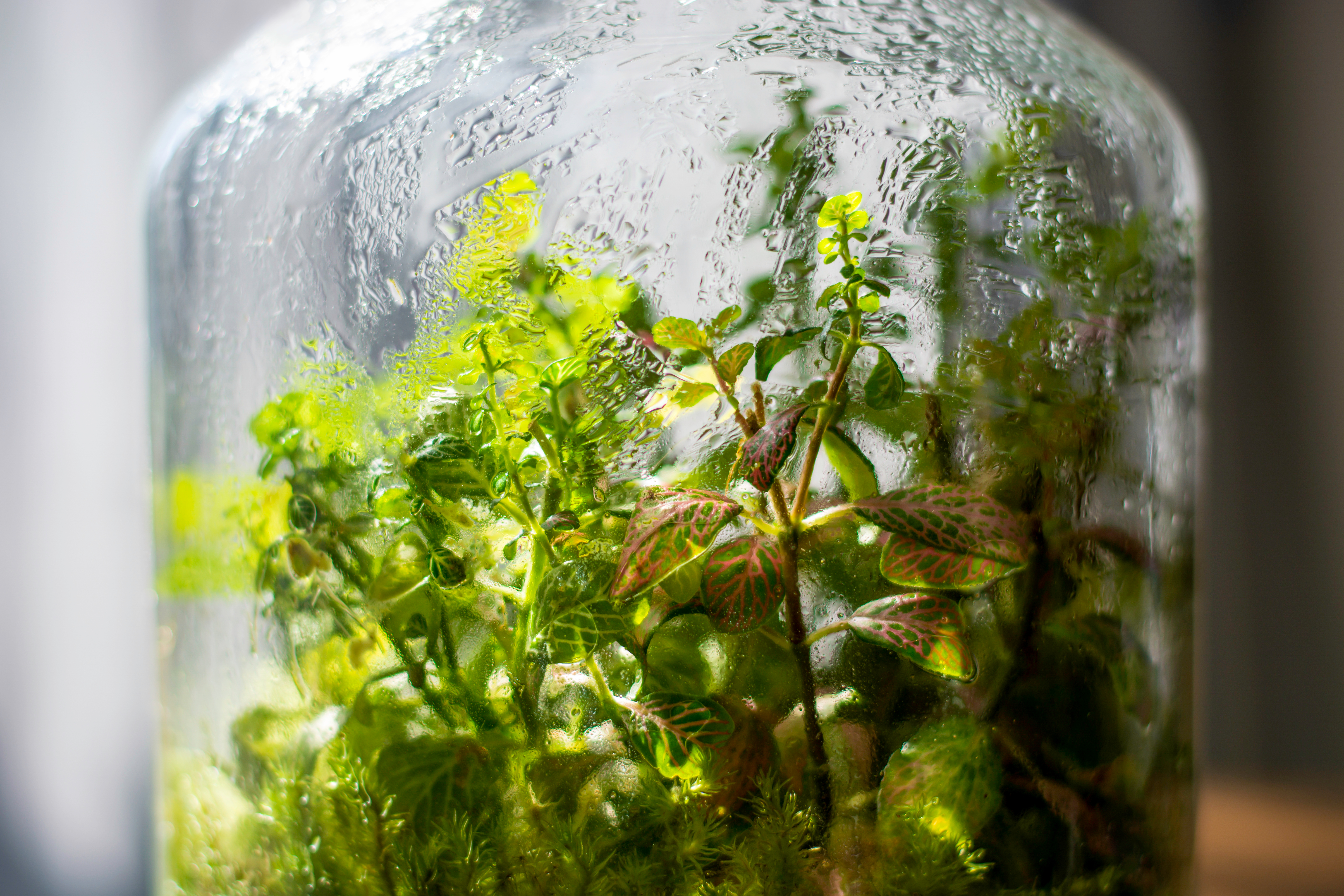
Use enclosures wisely: cabinets/vitrines and propagation boxes work best with airflow and gradual venting.
Watch for condensation: if surfaces drip or windows run constantly, humidity is too high for the temperature and airflow you have.
➜ A practical reminder for arid plants
Desert cacti and many arid succulents don’t need elevated humidity. They usually care more about strong light, fast drying, and airflow. If they rot, the cause is almost always “wet for too long,” not “humidity wasn’t perfect.”
➜ When to reduce domes and enclosed setups
Vent daily, then increase ventilation over 5–10 days.
Don’t remove covers right before a bright-light jump—stacking stress slows recovery.
Keep airflow gentle but consistent; stagnant air is the real mold trigger.
Spring Mistakes to Avoid: When Good Intentions Go Wrong
Spring enthusiasm is how plants get stressed: more water, more food, more pruning, more moving—often all at once. The win is timing: change one variable, watch response, then adjust the next.
❌ Mistake #1: Watering more because “spring started”
Leaves can respond to light faster than roots recover from winter conditions. If the pot is still drying slowly, extra watering is the quickest route to root trouble.
➜ Do this instead
Use drying time as your data: if a pot stays wet for a long time, reduce watering or fix mix/pot size.
Increase watering only when light + warmth + drying speed are consistently higher.
For thick-leaved plants and succulents, waiting longer is usually safer than “just a bit more.”
❌ Mistake #2: Feeding too early (or too strong)
Fertilizer doesn’t “wake” a plant without growth cues. In low light or cool roots, it mainly builds salts in the pot and can scorch sensitive roots.
➜ Do this instead
Start once new growth is clearly active (new leaves, roots, or moving tips).
Begin at ¼ to ½ strength if using liquid feeds, then adjust based on response.
Water thoroughly occasionally so salts don’t accumulate in the root zone (especially in hard-water areas).
❌ Mistake #3: Repotting “because it’s time”
If the mix is working and drying well, repotting is just disruption. Solve the problem you actually have: compaction, overpotting, degraded mix, or rootbinding.
➜ Do this instead
Choose refresh, slip-pot, or full repot based on root zone reality.
Avoid big pot jumps. Bigger pots often mean “wet for too long,” not “room to grow.”
❌ Mistake #4: Moving plants into full sun without a buffer
Spring sun through glass can scorch leaves fast—especially after a winter in dim light.
➜ Smart transitions
Increase direct sun exposure gradually over 7–14 days.
Use sheers to soften harsh midday sun.
Move plants in stages rather than “one big jump.”
❌ Mistake #5: Stacking changes on the same day
Repot + prune + move + fertilize is a stress pile-up. The plant can’t tell which change caused the problem, and neither can you.
➜ Do this instead
Space major interventions by 7–10 days.
Stabilize light first, then adjust watering, then decide on pruning/repotting.
💡 Keep spring as a steady shift, not a sprint
The best resets happen in steps. The plant’s response is the schedule.
More change isn’t better. Better timing is better—especially when light is rising and pots dry faster week by week.
Additional Notes: Support, Timing & Your Role as an Indoor Climate Manager
Spring care works when you manage cues: light, warmth, drying speed, airflow, and stability. Small adjustments beat dramatic makeovers.
💡 Structural support pays off now
Install or adjust moss poles, stakes, trellises, and support clips before new growth gets long and floppy.
Climbers often produce stronger leaves and better structure when they can anchor and climb.
💡 Use drying time as your “plant reading”
If a pot dries much faster than winter, watering needs rise—especially near windows.
If a pot still stays wet for a long time, don’t force growth with water or fertilizer. Fix oxygen and structure first.
💡 Space out interventions
A stable plant adapts faster. Spread major changes out over 3–6 weeks if needed.
After a repot, hold off on strong feeding until you see clear new growth.
FAQs About Spring Reset
Spring changes light, airflow, and drying rhythm quickly. These answers help you choose your first move based on what the plant is showing.
My Hoya isn’t growing yet—should I repot or fertilize?
Not yet. Hoyas commonly pause in low light and restart once light is reliably stronger.
Upgrade light for 2–3 weeks (brighter morning light or a stronger grow light zone).
Once tips are actively moving, resume light feeding at low strength.
Repot only if roots are tightly circling, the mix is degraded, or the pot is staying wet too long.
I see sticky drops on leaves—are those pests?
Not automatically. Some plants produce guttation droplets when water uptake exceeds transpiration, often overnight at leaf tips/edges.
More likely guttation: droplets at tips/edges, mostly overnight/early morning, plant otherwise looks normal.
More likely pests: sticky film appears in random patches, stays tacky, and you can usually find insects or sooty mold.
When unsure, check undersides and stem joints with a flashlight before changing watering.
Can I restart a plant that looks completely dead after winter?
Maybe. Check tissue and roots before writing it off.
Scratch a stem gently: green tissue underneath often means it’s alive.
Check roots: firm and pale is a good sign; black and mushy is rot.
Remove dead parts, then keep conditions stable (warm + bright indirect light). Recovery can take weeks.
Repot only if the mix is failing or roots need a reset.
Goeppertia has crispy edges—should I prune or repot?
Start with stability: consistent moisture, fewer swings, and less cold/dry stress. Crispy edges are usually environment + watering rhythm, not “pot size.”
Keep moisture steady (avoid bone-dry to soaked cycles).
Reduce drafts and sudden temperature drops near windows.
If a leaf is mostly damaged, remove it at the base. If tips are minor, leave them—trimming is cosmetic and doesn’t fix the cause.
Repot only if the mix is compacted, staying wet too long, or roots are genuinely struggling.
Should I start fertilizing succulents now that it’s spring?
Only once you see active growth. Without strong light, feeding doesn’t create growth—it creates salt stress.
Look for signs like fresh tip growth, new offsets, or visibly plumper new tissue.
Start with a diluted, lower-nitrogen option and don’t fertilize a fully dry pot.
If light is still weak or temperatures are low, skip feeding and focus on placement first.
My fern looks limp and faded—what helps most in spring?
Fix environment first, then tidy up.
Increase stability: brighter indirect light, steady moisture, and higher humidity if your air is dry.
Refresh the top layer if the mix is crusty or compacted.
Remove fully dead fronds at the base once the plant is stable.
I just bought a new plant—should I repot right away?
No. Let it settle first. Immediate repotting stacks stress on top of shipping and a new environment.
Inspect and isolate for pests for 10–14 days.
Watch drying time and overall response in your home.
Repot early only if the mix is staying soggy, smells sour, or roots are clearly failing.
My cactus shriveled over winter—should I water more now?
Possibly, but confirm root health first. Dehydration and rot can look similar from a distance.
If the base is firm and roots look healthy, reintroduce water gradually as light improves.
Water only when the mix is fully dry, and keep airflow decent.
If the base is soft or the plant wobbles, investigate roots before watering again.
Can I move plants outside now that days are warm?
Wait for nights to stay consistently above 12–15°C for tropicals. Day warmth doesn’t protect plants from cold nights.
Harden off slowly: start with 1–2 hours outside in shade, then increase.
Avoid sudden full sun—spring sun can scorch leaves quickly.
Bring plants back in during cold snaps or strong wind spells.
If you want a plant-type-by-plant-type approach (sun, wind, rain, acclimation, and what typically fails), Houseplants outdoors for summer guide lays it out clearly.
Should I rotate plants more often in spring?
Yes. As sun angle and intensity shift, uneven growth ramps up quickly.
Rotate pots 90° every 5–10 days for more even structure.
If one side keeps reaching, adjust placement instead of rotating forever.
Spring Reset Checklist (Quick Reference)
Use this as a rapid action guide:
Recheck light placement: sun angle changed—move plants in stages and watch for stress.
Clean leaves: better light capture and easier pest detection.
Prune with intent: remove failing tissue, fix structure, support new growth.
Assess the root zone: refresh, slip-pot, or repot based on drying time and roots.
Resume feeding carefully: only when growth is clearly active; start diluted.
Inspect for pests: undersides, nodes, growth points, soil surface.
Stabilize humidity and airflow: reduce swings, avoid stagnant pockets.
Demmig-Adams, B., & Adams, W. W. (1992). Photoprotection and Other Responses of Plants to High Light Stress. Annual Review of Plant Biology, 43, 599–626.
Burnett, S. E., Mattson, N. S., & Williams, K. A. (2016). Substrates and fertilizers for organic container production of herbs, vegetables, and herbaceous ornamentals in U.S. greenhouses. Scientia Horticulturae, 202, 74–83.
Limp leaves in wet soil, collapsing stems, black roots? This guide explains the real causes of root rot, how to diagnose it, rescue plants, and prevent it in aroids, Hoyas, ferns, and more.
Looking for fast-growing houseplants that make a visible impact indoors? This guide covers 10 fast-growing indoor plants that reward you with fresh leaves, longer vines, offsets, or fuller clumps i...





Leave a comment
This site is protected by hCaptcha and the hCaptcha Privacy Policy and Terms of Service apply.